Long track speedskating — sometimes referred to simply as “long track” or just “speedskating” — was a part of the original Winter Olympics back in 1924, when only men participated, and is quite different from short track. Here's what to know about the competition at the Milan Cortina Winter Olympics:
In most long track events, two skaters compete against each other on a 400-meter oval, racing counterclockwise in an attempt to record the fastest time. There are two lanes, and the athletes alternate which portion of the course they are in during each lap.
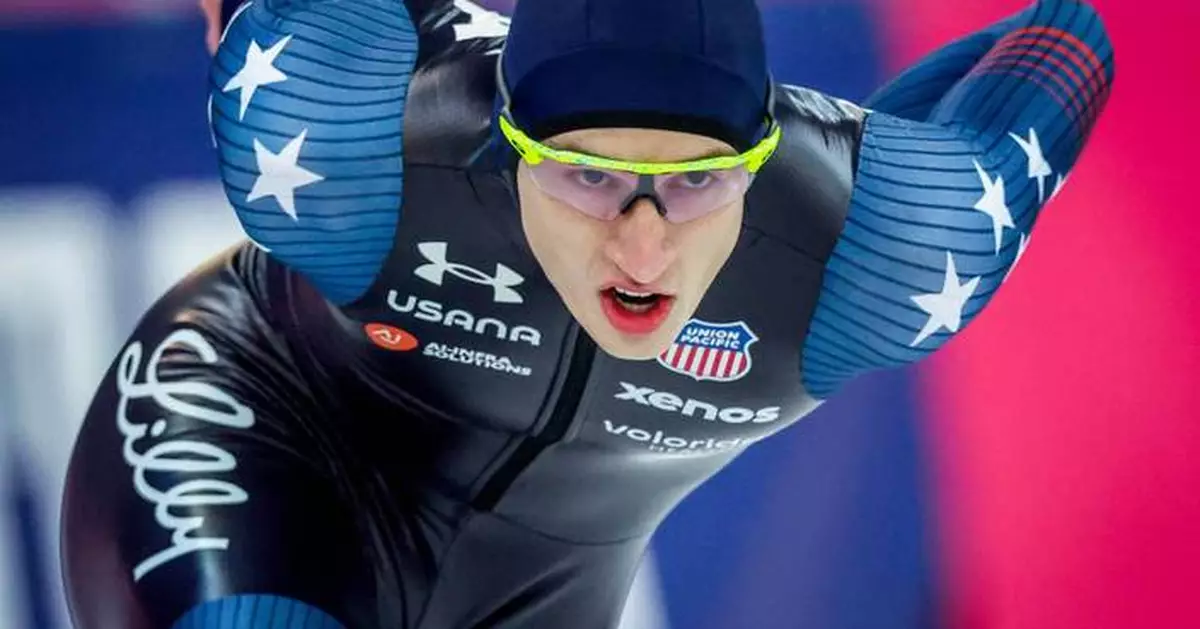
The biggest name in speedskating right now is Jordan Stolz, a 21-year-old from Wisconsin who could line up in five events in Milan and will be favored to win multiple gold medals. He is the best in the world over 500, 1,000 and 1,500 meters at the moment, dominating the World Cup season. The Dutch have a strong tradition in this sport, and Jenning de Boo should be Stolz's biggest challenger in the sprints. Erin Jackson will seek to defend her gold medal at 500 meters from the 2022 Beijing Games, where the American became the first Black woman to win an individual title at a Winter Olympics. She'll need to fend off Femke Kok of the Netherlands. The U.S. men hold the world record, and swept the World Cup races, in the team pursuit.
Speedskating will be held Feb. 7-21 at the Milano Speed Skating Stadium, part of the Milano Ice Park in Rho, just outside the city. The competition begins with the women's 3,000 meters on Feb. 7 and ends with the women's and men's mass start on Feb. 21.
Eric Heiden of the U.S. went 5-for-5 at the 1980 Lake Placid Olympics, winning gold medals in every individual race: 500, 1,000, 1,500, 5,000 and 10,000 meters. Another American, Bonnie Blair, was the first woman to repeat as Winter Games champion in the 500 meters, and she wound up taking home the gold three times in a row — in 1988, 1992 and 1994 — part of a career haul of six Olympic medals, five golds. Dan Jansen's gold and world record in the 1,000 meters at the 1994 Lillehammer Games stands out as one of the most memorable moments in any sport or at any Olympics. Six years earlier, in Calgary, Jansen fell twice in races held shortly after his sister died of leukemia.
Speedskating is one of just a half-dozen sports that have been a part of every Winter Olympics — although women were not included in its races until the 1960 Squaw Valley Games. The Netherlands has been by far the most successful nation, collecting 48 golds and 133 total medals. The U.S. has 30 golds, 71 medals.
AP Winter Olympics: https://apnews.com/hub/milan-cortina-2026-winter-olympics
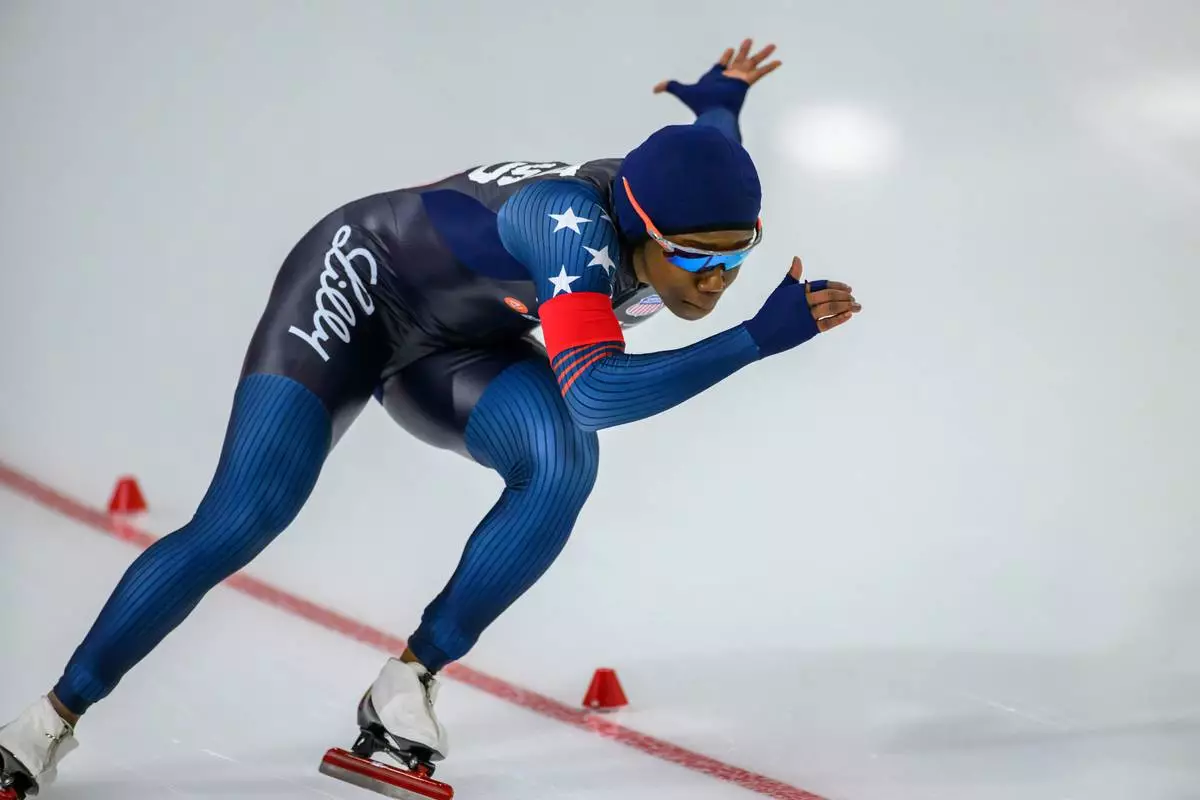
FILE - Erin Jackson, of the United States, skates during the women's 500 meters at the World Cup speedskating event, Sunday, Nov. 16, 2025, in Salt Lake City. (AP Photo/Tyler Tate, File)
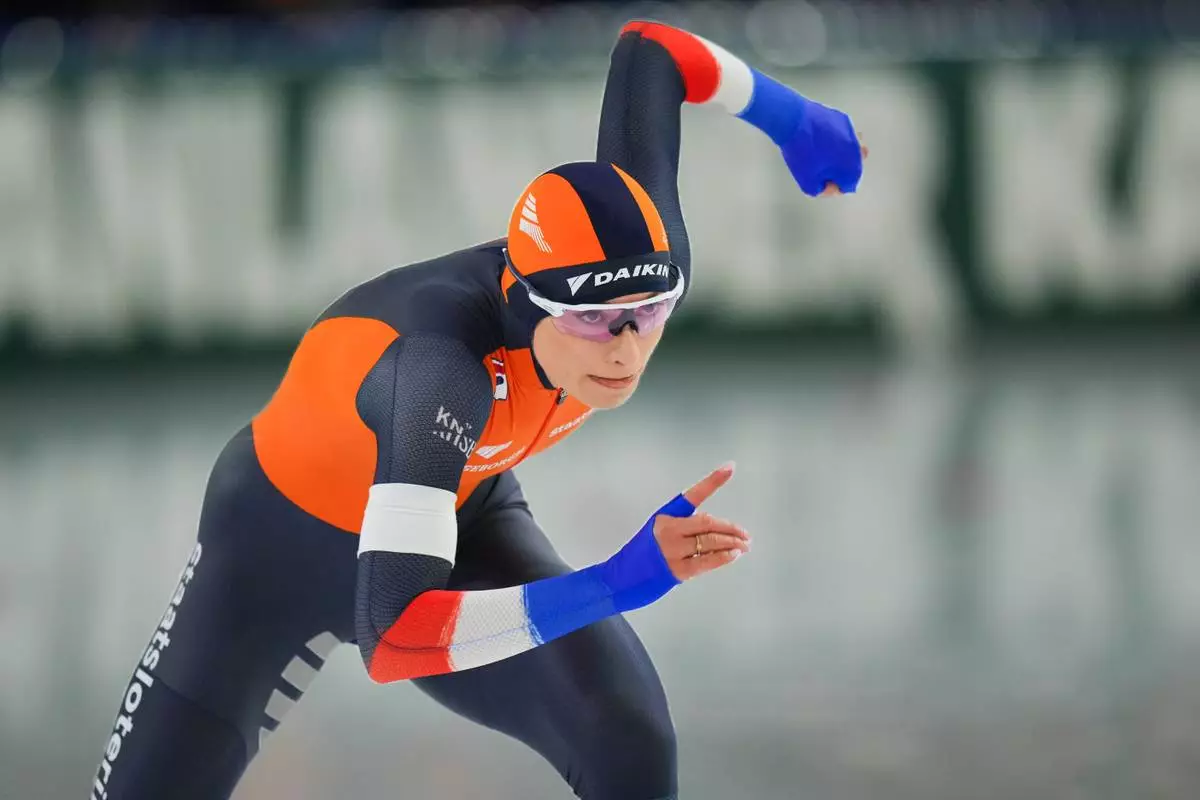
FILE - Femke Kok of the Netherlands in action during a 500 meter race of the World Cup Speedskating at the Thialf ice arena in Heerenveen, northern Netherlands, Friday, Feb. 28, 2025. (AP Photo/Peter Dejong, File)

FILE - Jordan Stolz, center of the United States, competes in the men's 1,500-meters race at the World Cup speedskating event, Friday, Dec. 12, 2025 in Hamar, Norway. (Geir Olsen/NTB Scanpix via AP, File)
ISLAMABAD (AP) — Pakistanis faced record fuel price increases Friday, as petrol and diesel prices rose by up to 54% driven by the war in the Middle East that has caused global oil prices to surge.
The increase adds pressure to a cash-strapped nation already grappling with high inflation, as economists warned the hike would push up food prices and living costs.
Pakistan's Petroleum Minister Pervez Malik said late Thursday that the increase was “unavoidable.” He said the government was compelled to raise petrol prices by 137 rupees (49 cents) per liter, following a 20% increase last month.
Diesel prices were increased overnight by 184.49 rupees (67 cents) per liter, a rise of about 54.9%.
Malik said the adjustments were “necessary and unavoidable” in line with global market trends, adding that the government plans to subsidize fuel for motorcyclists, though a mechanism has yet to be finalized. Motorcycles overwhelmingly outnumber cars in Pakistan, accounting for nearly 78% of all vehicles on the road, as they are among the most affordable modes of commuting.
On Friday, Interior Minister Mohsin Naqvi said public transport in Islamabad will be free for 30 days from Saturday on the prime minister’s instructions, and his ministry will cover the fuel costs.
Pakistan in recent weeks has used alternate routes to get oil due to the closure of the Strait of Hormuz.
The unprecedented price increase came after Prime Minister Shehbaz Sharif said regional instability had affected Pakistan’s fragile economy. He said the government was pursuing diplomatic efforts to ease tensions and encourage dialogue between the parties involved.
Pakistan has offered to host peace talks, though no dates have been announced for any such meetings in Islamabad.
However, for many citizens, the impact of the ongoing tensions and recent fuel price increases was immediate, with households and commuters bracing for higher transportation and daily living costs.
“It’s not just gas,” said Mohammad Zain Alvi, a commuter waiting for a bus in Islamabad. “Life was already very difficult for us, and now everything will become more expensive.”
Across major cities Friday, fuel stations were unusually quiet and traffic noticeably lighter as many people stayed home, unable or unwilling to bear the higher costs. At some stations, customers stood in silence after hearing the new rates.
“We have nothing to do with the war,” said Azhar Ali, a junior government employee who uses an old motorcycle to commute from Rawalpindi to Islamabad. “Why are we being made to pay for it? This will affect everything — transport, food, our entire lives.”
In the northwestern city of Peshawar, motorcycle rider Sher Khan said he was uncertain how he would continue working after the spike in fuel prices. He delivers food in the capital of Khyber Pakhtunkhwa province.
“I earn so little for each ride, and now most of it will go into fuel,” he told The Associated Press.
Jabran Sarfraz, a prominent economist in Karachi, said the immediate burden would fall on consumers, warning that higher fuel prices would raise the cost of daily necessities and disproportionately affect lower-income groups. He said the duration of the impact would depend on how quickly global prices ease.
__
Khan reported from Peshawar, Pakistan.
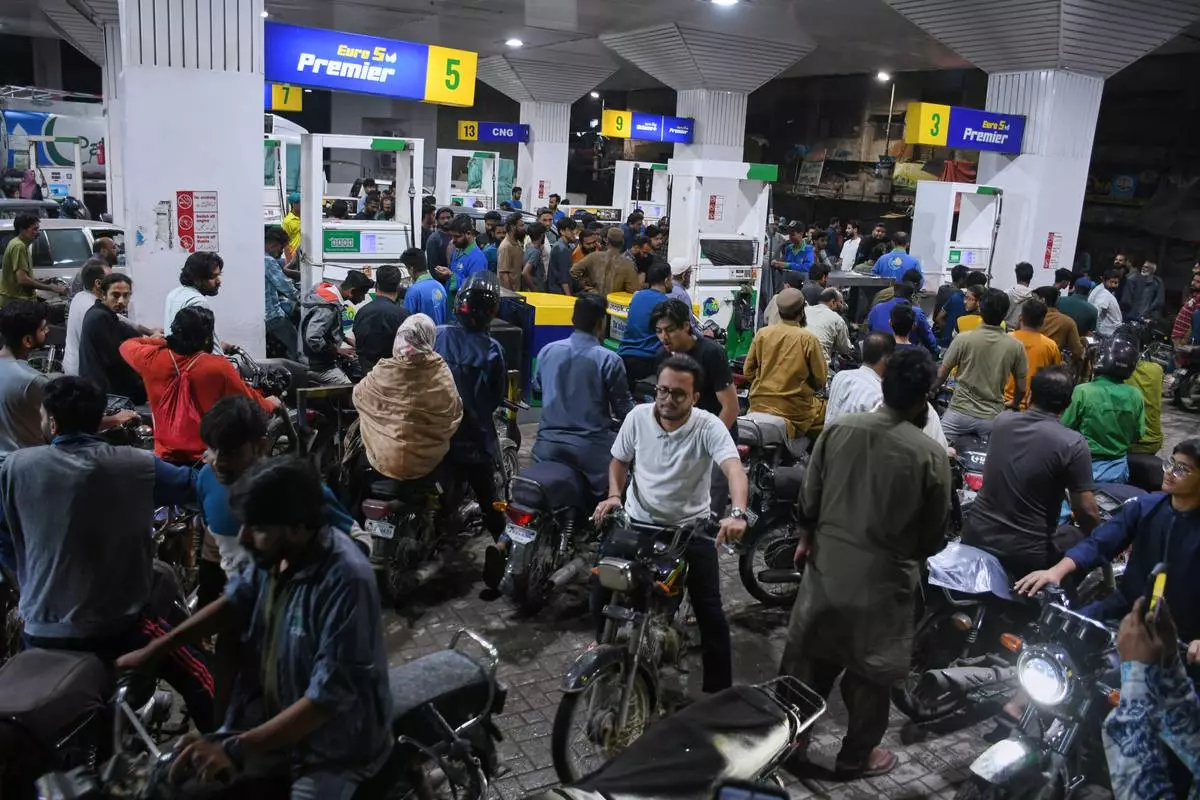
Motorcyclists crowd into a filling station as they wait their turn to buy fuel, in Karachi, Pakistan, Thursday, April 2, 2026. (AP Photo/Ali Raza)
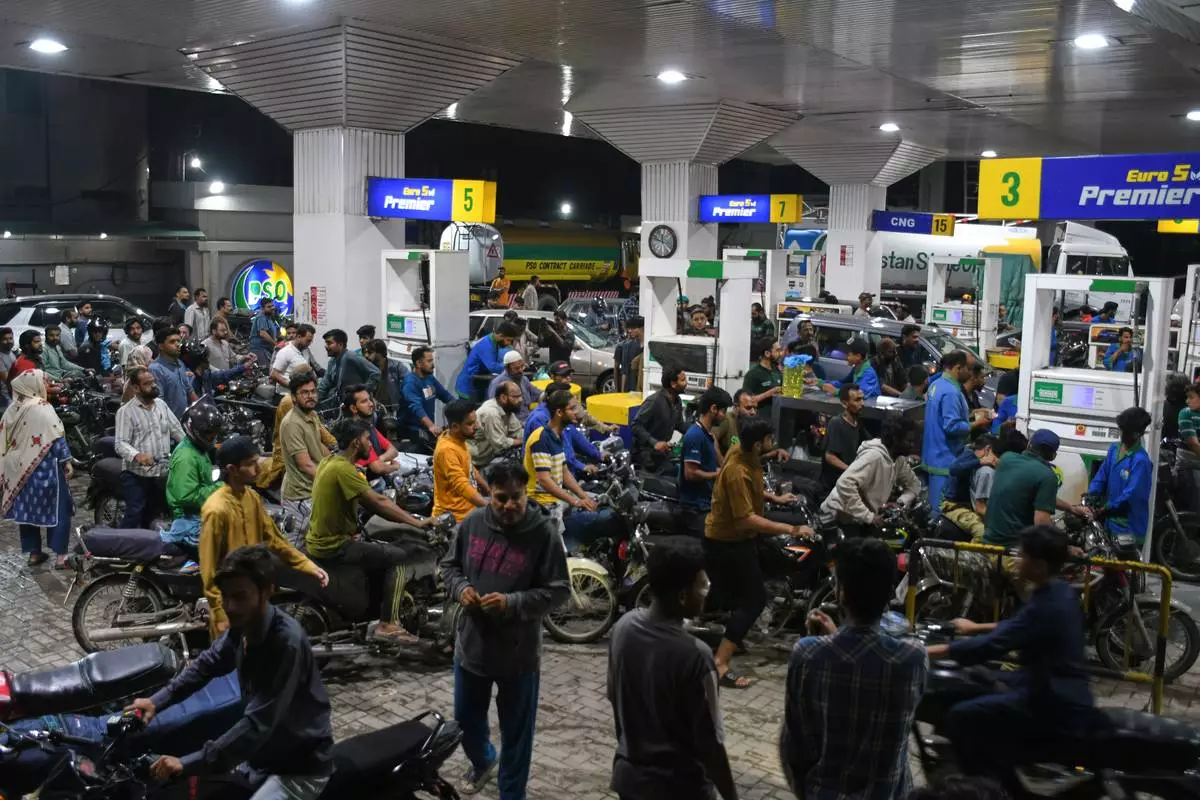
Motorcyclists crowd into a filling station as they wait their turn to buy fuel, in Karachi, Pakistan, Thursday, April 2, 2026. (AP Photo/Ali Raza)
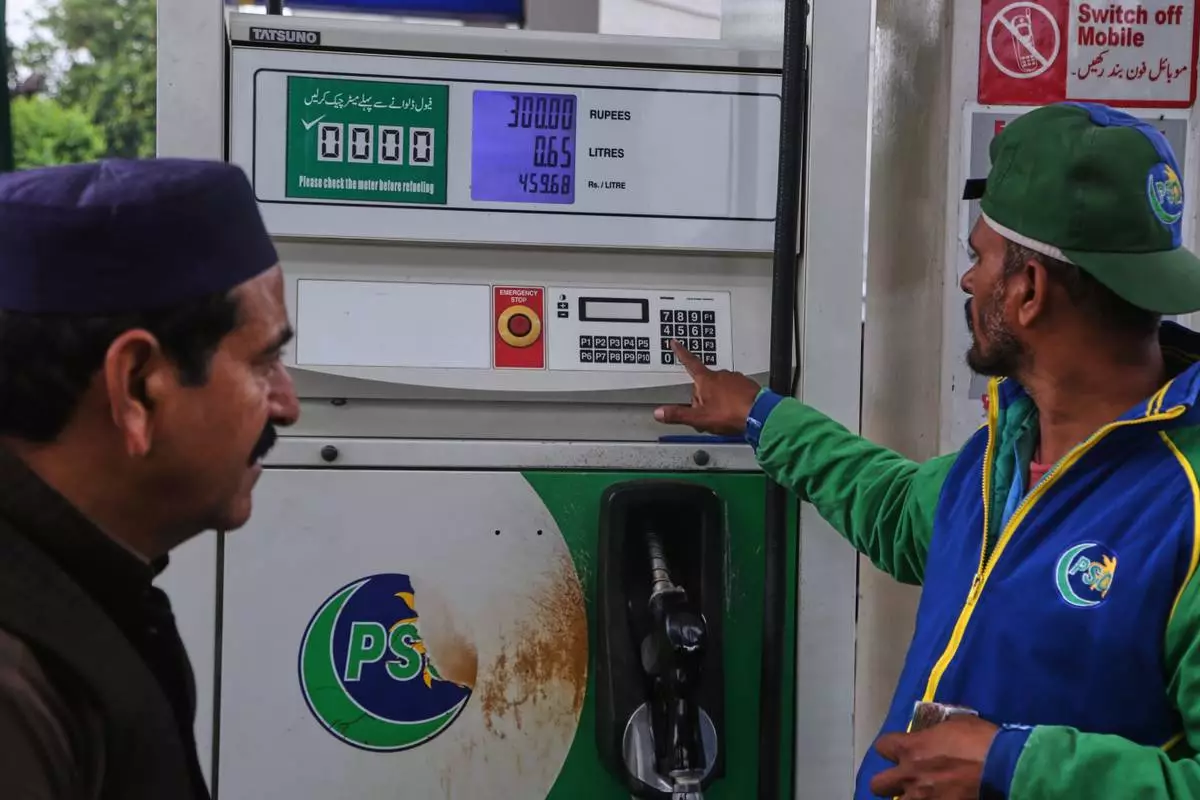
A motorcyclist looks at the display at a fuel station as he buys fuel after the government increased fuel prices amid surging global oil prices due to the Iran war, in Peshawar, Pakistan, Friday, April 3, 2026. (AP Photo/Muhammad Sajjad)
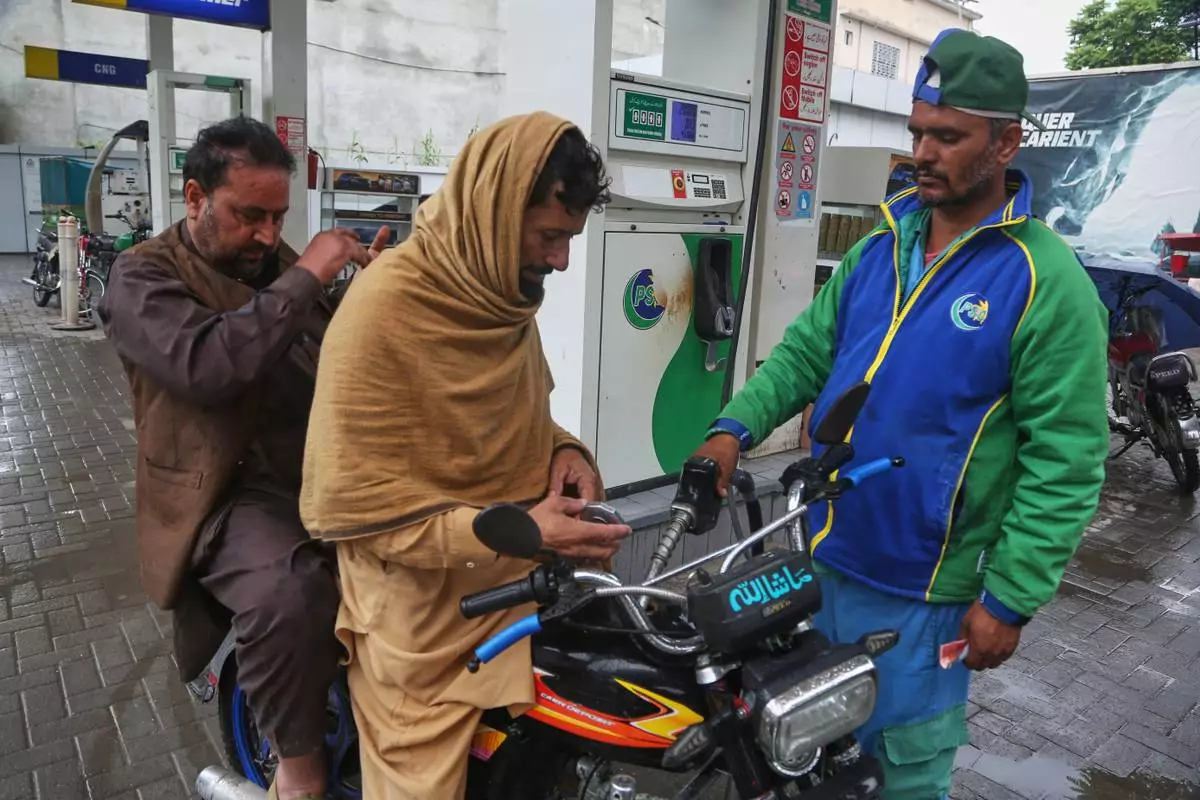
A motorcyclist buys fuel after the government increased fuel prices amid surging global oil prices due to the Iran war, in Peshawar, Pakistan, Friday, April 3, 2026. (AP Photo/Muhammad Sajjad)
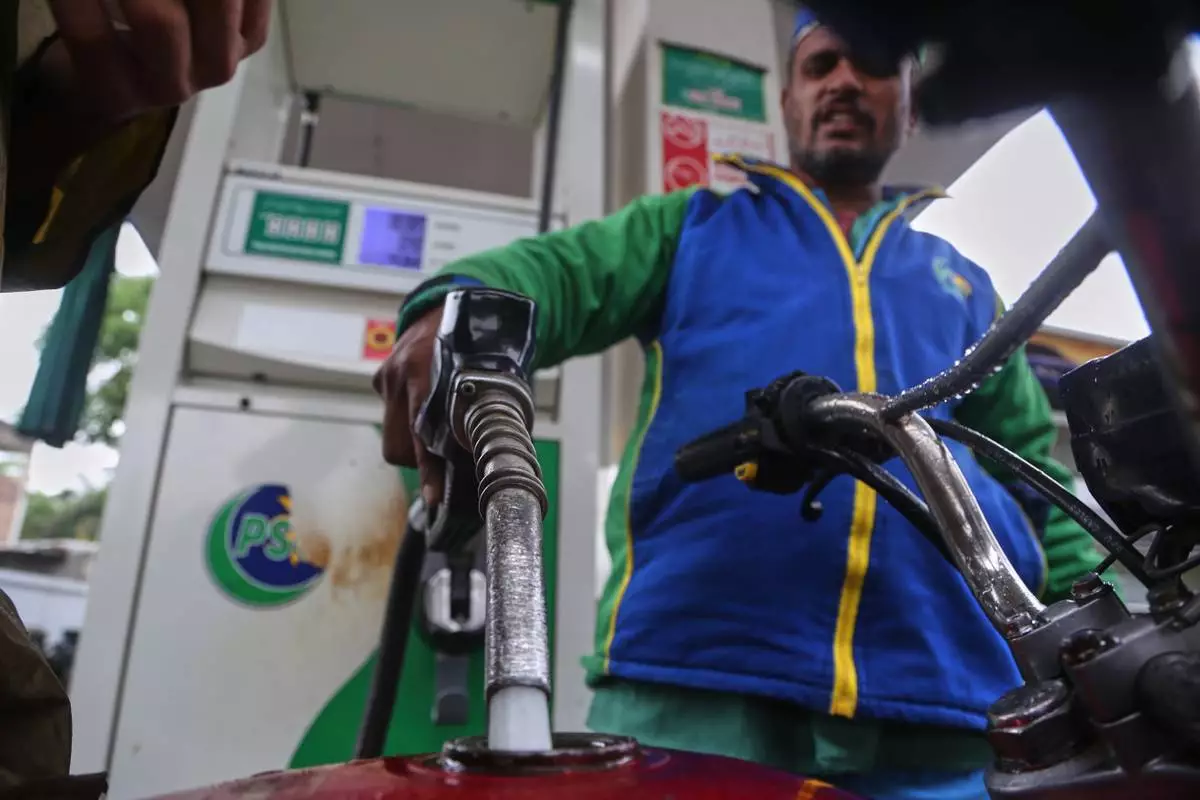
A worker fills fuel into a motorbike after the government increased fuel prices amid surging global oil prices due to the Iran war, in Peshawar, Pakistan, Friday, April 3, 2026. (AP Photo/Muhammad Sajjad)