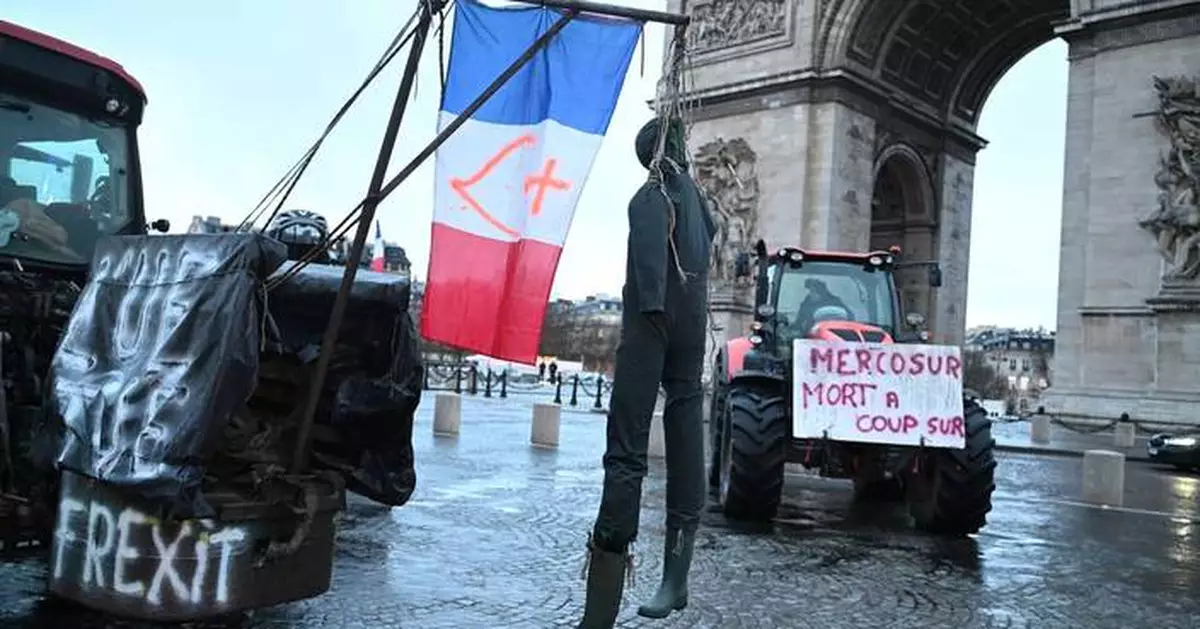
PARIS (AP) — Dozens of angry farmers demonstrated in France and Greece Thursday, halting traffic and blocking key roads with tractors to protest European Union plans to move forward with a free trade deal with five South American nations.
Farmers drove about a hundred tractors into Paris and gathered in front of France's powerful lower house of parliament, the National Assembly, under close watch from a large number of police officers.
Click to Gallery
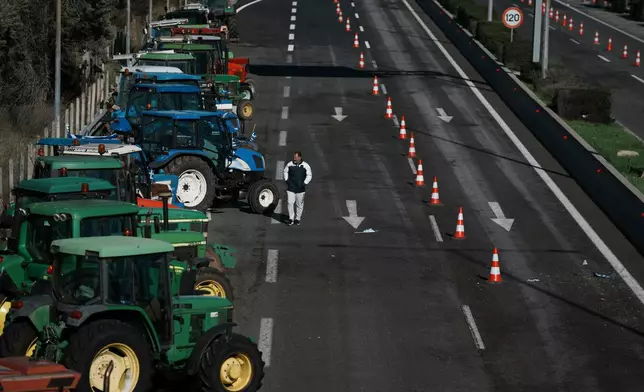
Tractors block a highway as farmers protest in Kastro, about 130 kilometers (81 miles) north of Athens, Greece, over delays in the payment of European Union-backed agricultural subsidies, on Thursday, Jan. 8 2025. (AP Photo/Thanassis Stavrakis)
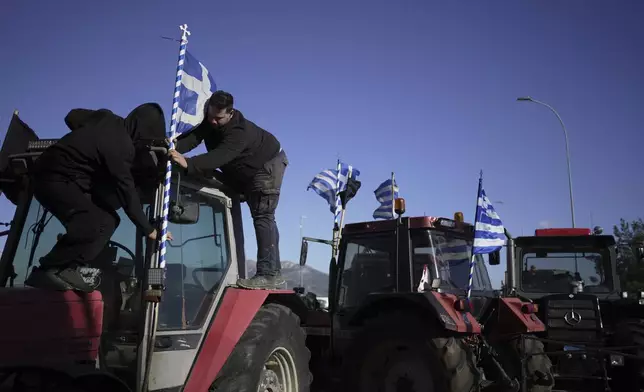
Farmers place a Greek flag on a tractor blocking the highway during a protest in Thiva, about 70 kilometers (44 miles) north of Athens, Greece, over delays in the payment of European Union-backed agricultural subsidies, Thursday, Jan. 8 2025. (AP Photo/Thanassis Stavrakis)
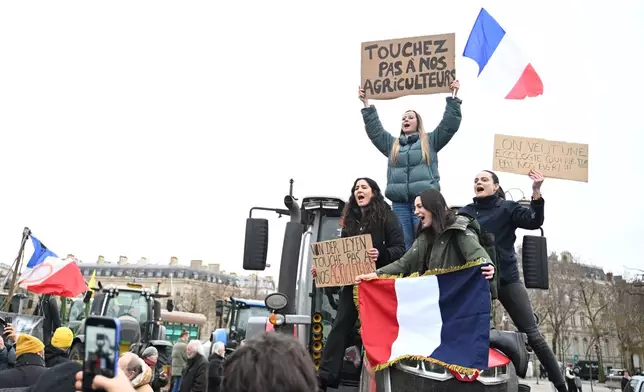
Women atop a tractor support farmers as they protest at the Arc de Triomphe against against the European Union's negotiations over the Mercosur trade deal with five South American nations, Thursday, Jan. 8, 2026 in Paris. (AP Photo/Emma Da Silva)
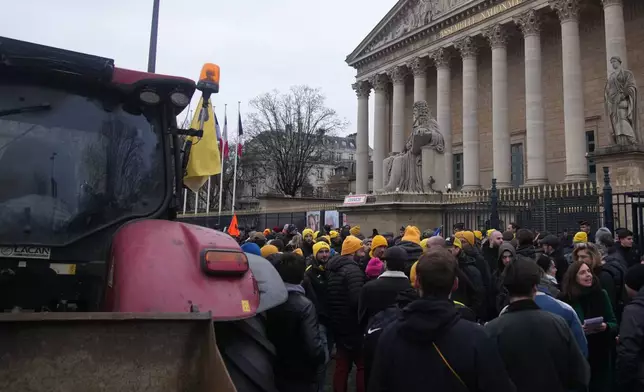
Farmers arrive at the National Assembly as they protest the European Union intention to move forward with the Mercosur trade deal with five South American nations, in Paris Thursday, Jan. 8, 2026 in Paris. (AP Photo/Christophe Ena)
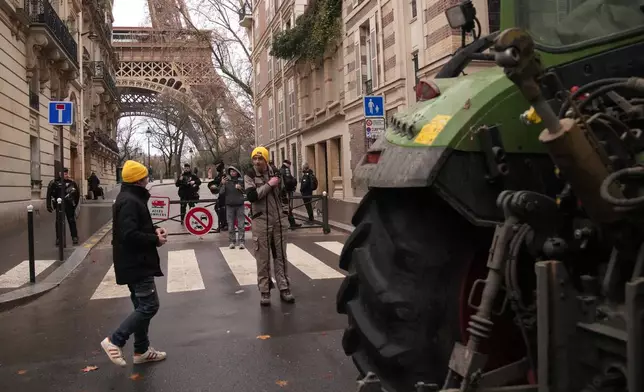
Farmers demonstrate by the Eiffel Tower to protest the European Union intention to move forward with the Mercosur trade deal with five South American nations, in Paris Thursday, Jan. 8, 2026 in Paris. (AP Photo/Christophe Ena)
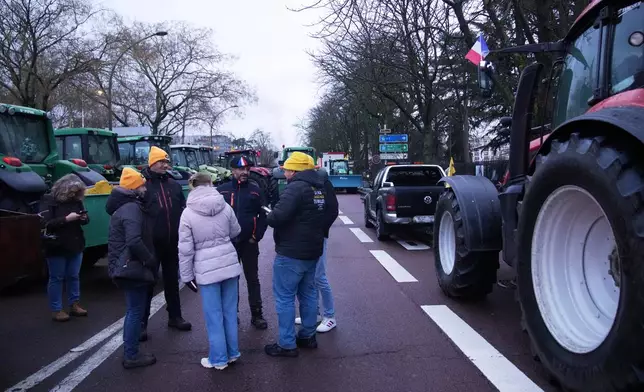
Farmers gather at a blockade as farmers protest against the Mercosur trade alliance with South America countries but also against EU farming policy or mass cull of cows ordered to contain the spread of a skin disease in Paris Thursday, Jan. 8, 2026 in Paris. (AP Photo/Christophe Ena)
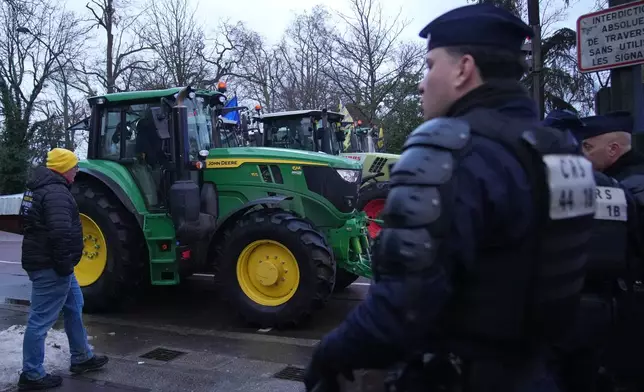
Police officer watch farmers at a blockade as farmers protest against the Mercosur trade alliance with South America countries but also against EU farming policy or mass cull of cows ordered to contain the spread of a skin disease in Paris Thursday, Jan. 8, 2026 in Paris. (AP Photo/Christophe Ena)
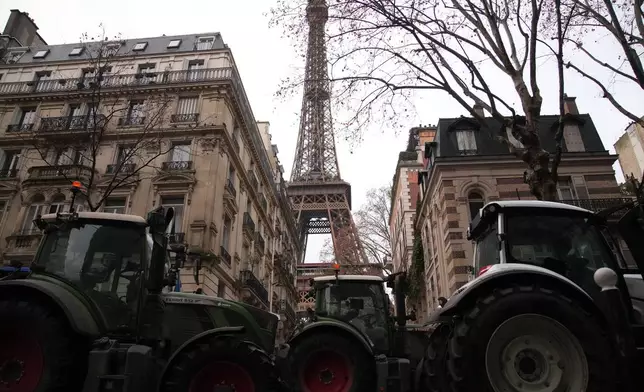
Tractors line up near the Eiffel Tower as farmers protest the European Union intention to move forward with the Mercosur trade deal with five South American nations, in Paris Thursday, Jan. 8, 2026 in Paris. (AP Photo/Christophe Ena)
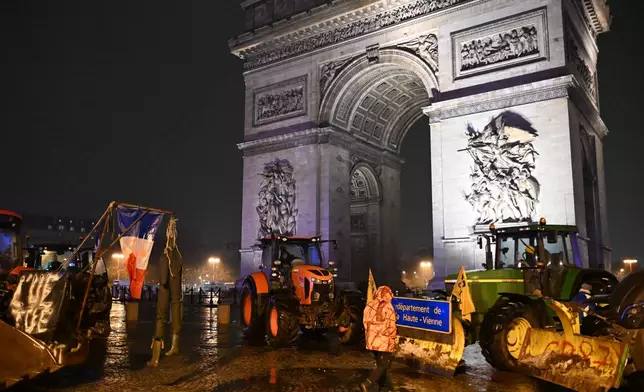
French farmers park their tractor in front of the Arc de Triomphe to protest against the Mercosur trade alliance with South America countries but also EU farming policy or mass cull of cows ordered to contain the spread of a skin disease Thursday, Jan. 8, 2026 in Paris. (AP Photo/Emma Da Silva)
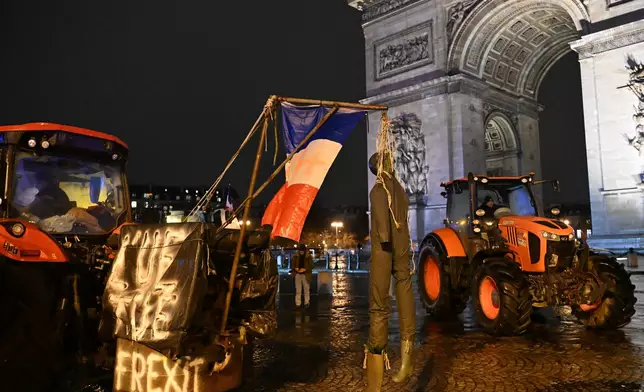
French farmers protest at the Arc de Triomphe against the Mercosur trade alliance with South America countries but also against EU farming policy or mass cull of cows ordered to contain the spread of a skin disease, Thursday, Jan. 8, 2026 in Paris. Poster reads: EU kills. (AP Photo/Emma Da Silva)
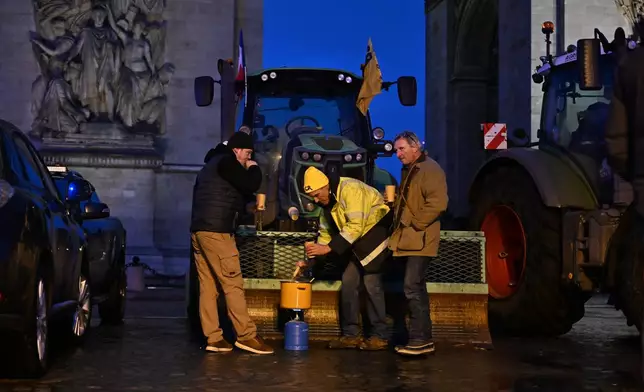
French farmers cook as they protest at the Arc de Triomphe against the Mercosur trade alliance with South America countries but also against EU farming policy or mass cull of cows ordered to contain the spread of a skin disease, Thursday, Jan. 8, 2026 in Paris. (AP Photo/Emma Da Silva)
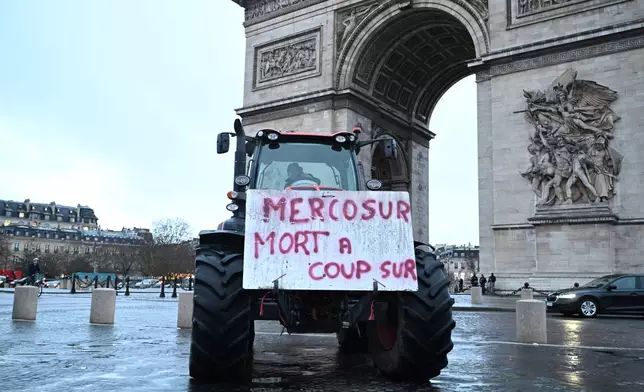
A poster on a tractor reads 'Mercosur, death for sure' as farmers protest at the Arc de Triomphe against the Mercosur trade alliance with South America countries but also against EU farming policy or mass cull of cows ordered to contain the spread of a skin disease, Thursday, Jan. 8, 2026 in Paris. (AP Photo/Emma Da Silva)
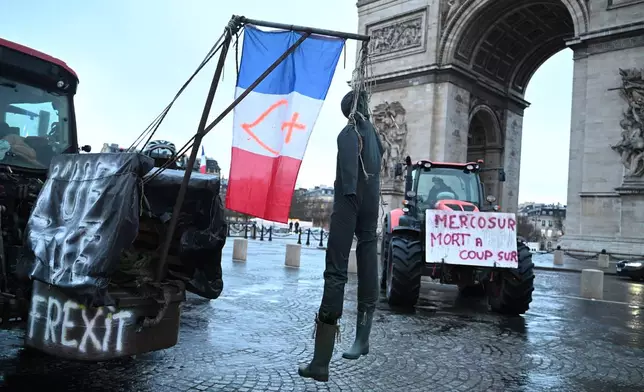
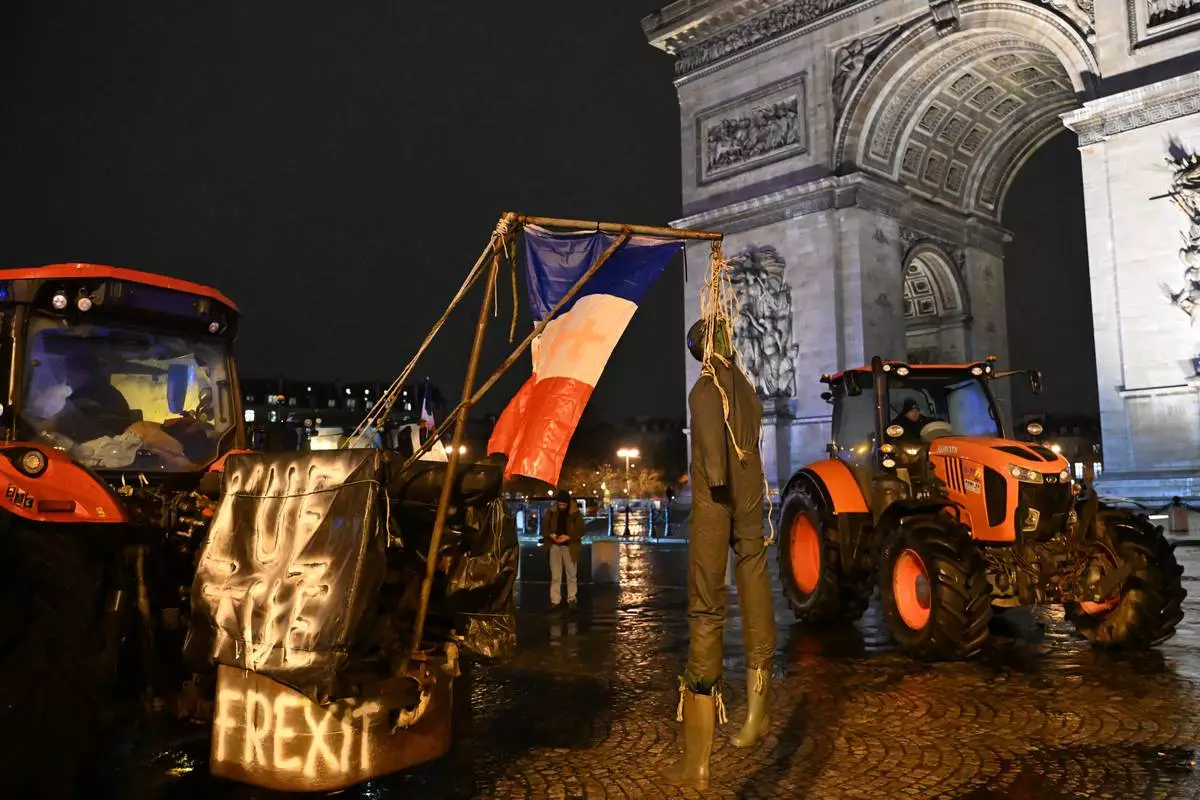
A mannequin hangs from a tractor as farmers protest at the Arc de Triomphe against the Mercosur trade alliance with South America countries but also against EU farming policy or mass cull of cows ordered to contain the spread of a skin disease, Thursday, Jan. 8, 2026 in Paris. Poster at right reads: Mercosur, death for sure. (AP Photo/Emma Da Silva)
In Greece, farmers escalated nationwide protests, launching a 48-hour blockade of major highways, junctions and toll stations. Tractors lined key routes across the country, halting all traffic except emergency vehicles in protest of the contentious EU-Mercosur agreement and rising costs.
European farmers have long denounced the trade deal with the Mercosur nations of Brazil, Argentina, Bolivia, Paraguay and Uruguay, arguing that it would hurt their livelihoods and flood the market with cheaper imports.
Ludovic Dupeux, of the Rural Coordination branch in Corsica, came all the way from the Mediterranean island by boat, tractor and train to reach Paris. He said centrist President Emmanuel Macron has not done enough to prevent the deal from being signed.
“We want President Macron to stand by the side of farmers,” he said. “He needs to clearly tell it out loud and to impose it, too.”
Greece's main highway connecting Athens to the northern city of Thessaloniki was shut in both directions at several points, as farmers demanded stronger state support.
Police directed traffic to secondary routes when possible and did not intervene to counter the blockades.
But the country’s conservative government has warned that it would not tolerate more extended blockades.
“We’ve reached a breaking point,” Yiannis Baritas, a cabbage farmer and father of five, said at roadblock in southern Greece. “We’ll stay here as long as it takes to support our families. They’ve pushed us to desperation.”
The protests, which began in November, initially centered on rising production costs, worsened by a series of crises: a subsidy fraud scandal delaying legitimate payments, and a sheep and goat pox outbreak.
The government on Wednesday announced concessions to try and head off the latest protests, including cheaper electricity rates for farmers and fuel tax rebates.
The proposed trade deal would create a vast free-trade zone between Europe and South American nations.
“If this agreement goes through, Greek agriculture is finished,” Vangelis Roubis, a protest organizer, told The Associated Press outside the southern city of Halkida.
“Greece depends on agriculture and tourism," he said. "We don’t have heavy industry like Germany or France. Production costs here are 300% higher than in Latin America.”
Roubis pointed to potatoes as an example: Greek farmers need 35 to 40 cents per kilogram to break even, compared with roughly 10 cents in Brazil.
“We want Greece to join the block of EU nations that rejects this deal," he added.
French farmers set up roadblocks across the country in recent days. On Thursday about 20 tractors were in the Paris city center, some at the Arc de Triomphe monument and others in the Eiffel Tower neighborhood, despite a ban issued by authorities, the Interior Ministry said.
Convoys of tractors “bypassed and forced their way,” the ministry said.
But most of the tractors were blocked further from the center at key traffic arteries that mark Paris’ limit.
Thursday's protest was staged by the Rural Coordination union to put further pressure on France's government, which protesters say has not shown strong enough opposition to the deal.
José Perez, President of the Rural Coordination in the Lot-et-Garonne region in southwestern France, said “the goal today is to come to Paris to express our demands closer to those who have the power.”
“It’s a strong symbol,” he told The Associated Press.
Farmers’ concerns about the Mercosur trade deal are combining with anger about government sanitary measures against the spread of a bovine disease, Perez stressed.
The Rural Coordination, which has links to the far right, said in a statement farmers expect “quick, effective decisions to face ongoing challenges.”
The EU this week renewed internal negotiations over a free trade agreement with five South American nations, amid speculation that a deal could be signed in Paraguay on Jan. 12. The deal’s supporters, led by Germany, may be able to pass over objections from France and Poland.
Fierce opposition from France derailed the deal last month.
French Agriculture Minister Annie Genevard reaffirmed France’s opposition to the Mercosur deal on Wednesday, saying it threatens the production of beef, chicken, sugar, ethanol and honey, among other sectors.
Gatopoulos reported from Kastro, Greece. Associated Press journalists Jeffrey Schaeffer in Paris, Costas Kantouris in Malgara, Greece, and Thanassis Stavrakis and Lefteris Piratakis in Kastro contributed.
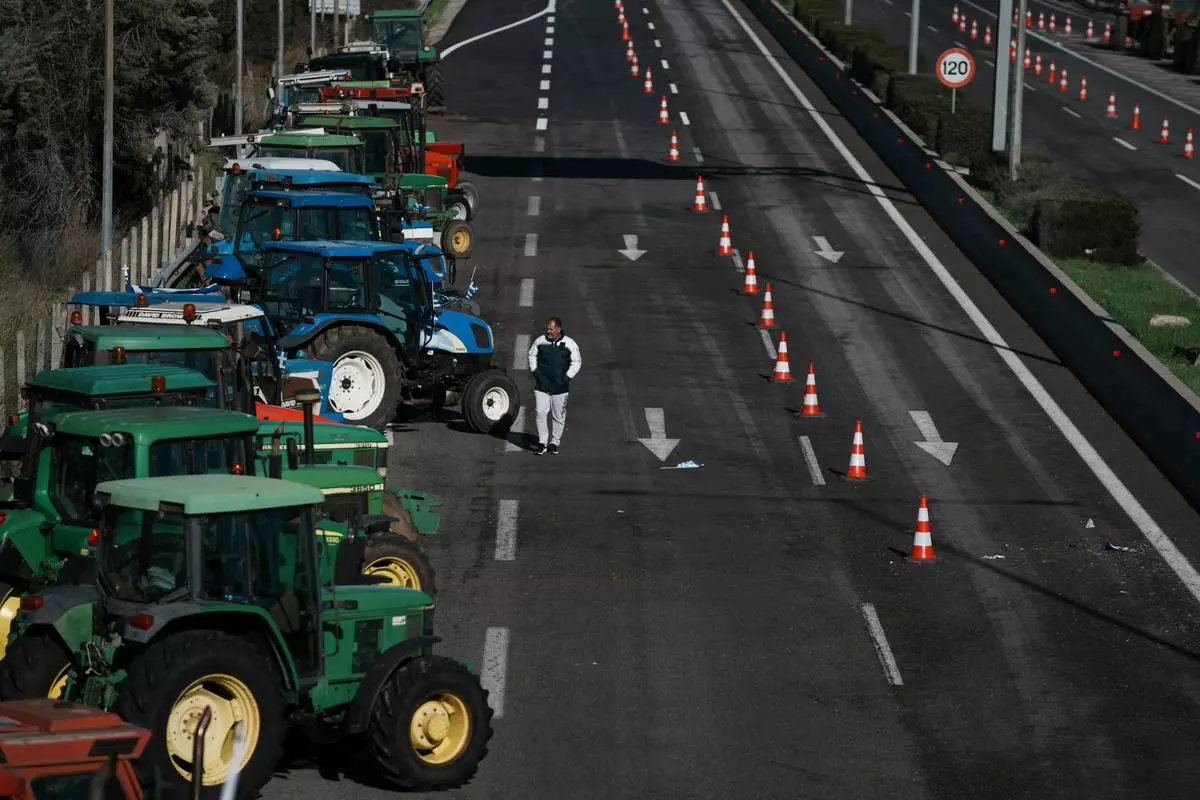
Tractors block a highway as farmers protest in Kastro, about 130 kilometers (81 miles) north of Athens, Greece, over delays in the payment of European Union-backed agricultural subsidies, on Thursday, Jan. 8 2025. (AP Photo/Thanassis Stavrakis)
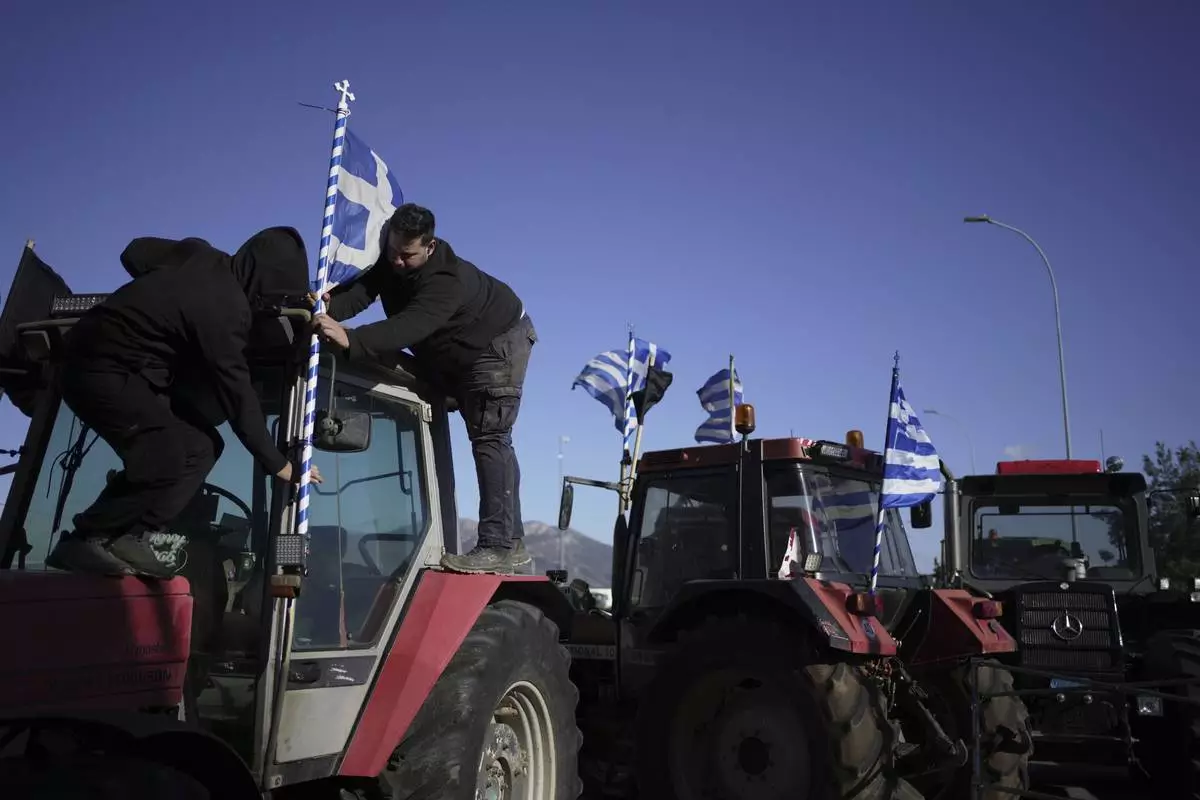
Farmers place a Greek flag on a tractor blocking the highway during a protest in Thiva, about 70 kilometers (44 miles) north of Athens, Greece, over delays in the payment of European Union-backed agricultural subsidies, Thursday, Jan. 8 2025. (AP Photo/Thanassis Stavrakis)
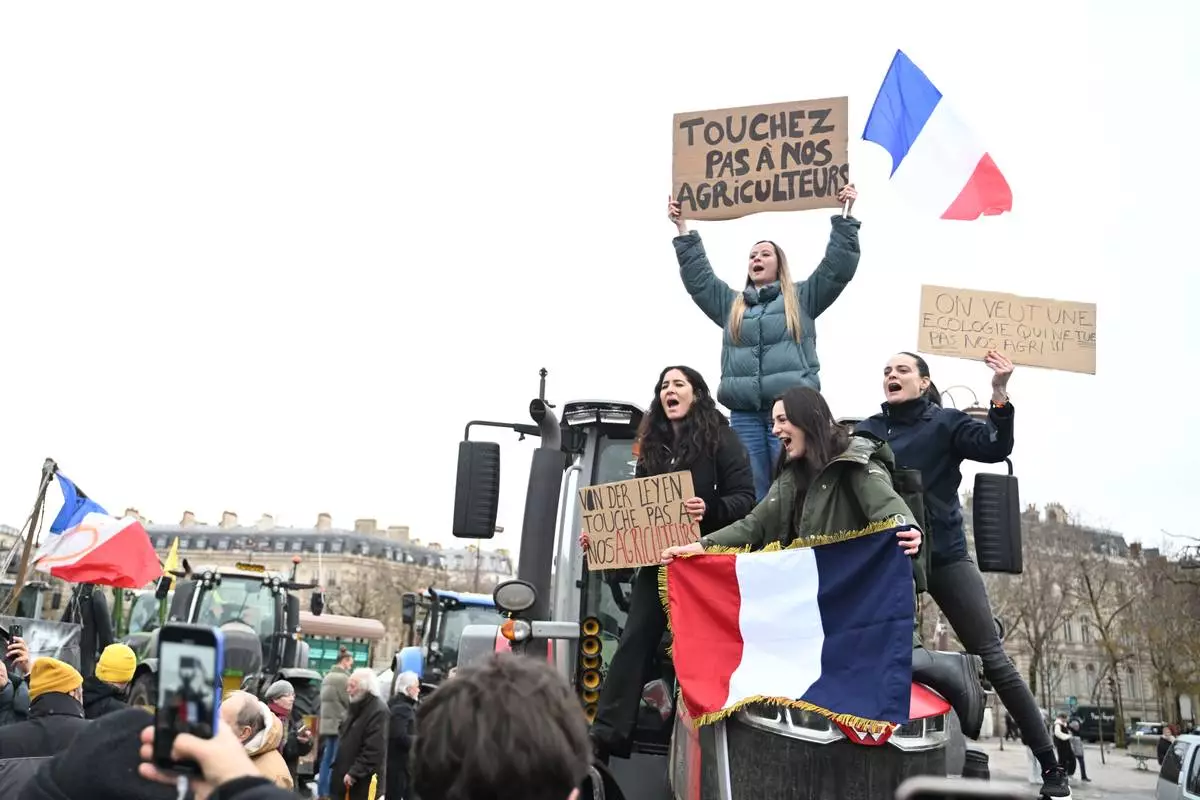
Women atop a tractor support farmers as they protest at the Arc de Triomphe against against the European Union's negotiations over the Mercosur trade deal with five South American nations, Thursday, Jan. 8, 2026 in Paris. (AP Photo/Emma Da Silva)
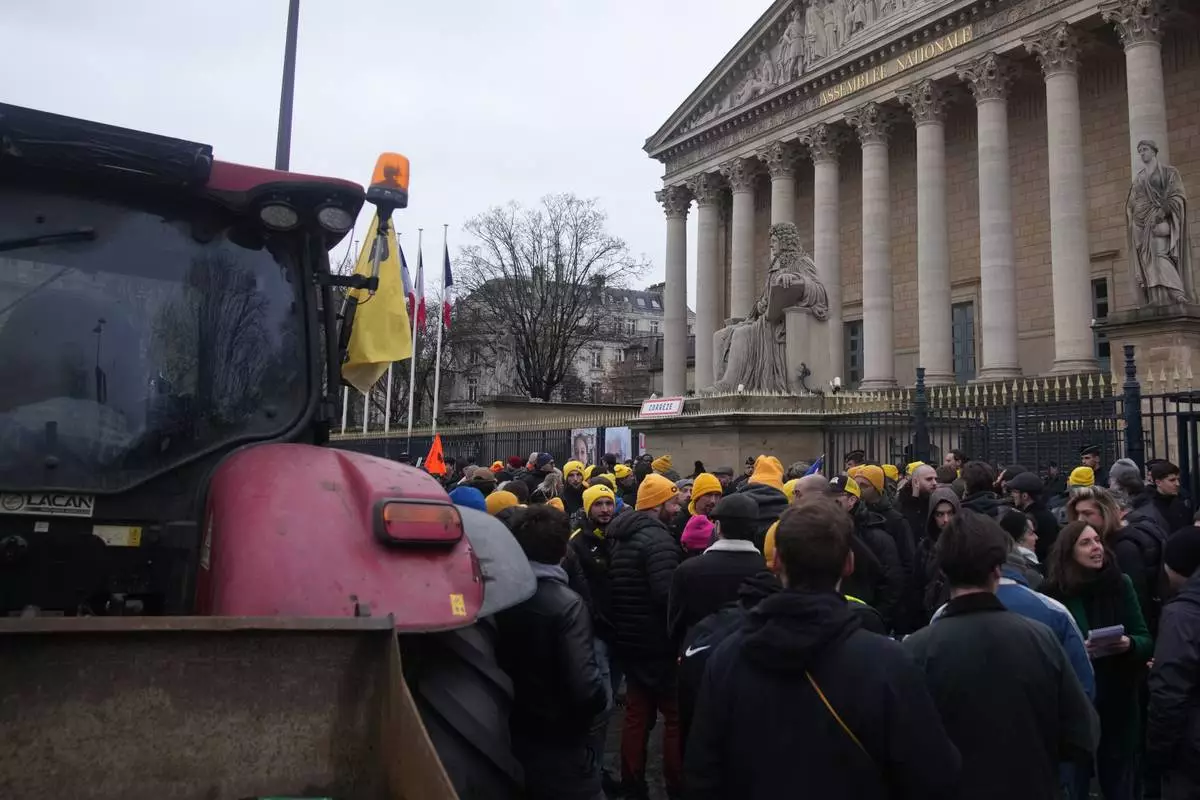
Farmers arrive at the National Assembly as they protest the European Union intention to move forward with the Mercosur trade deal with five South American nations, in Paris Thursday, Jan. 8, 2026 in Paris. (AP Photo/Christophe Ena)
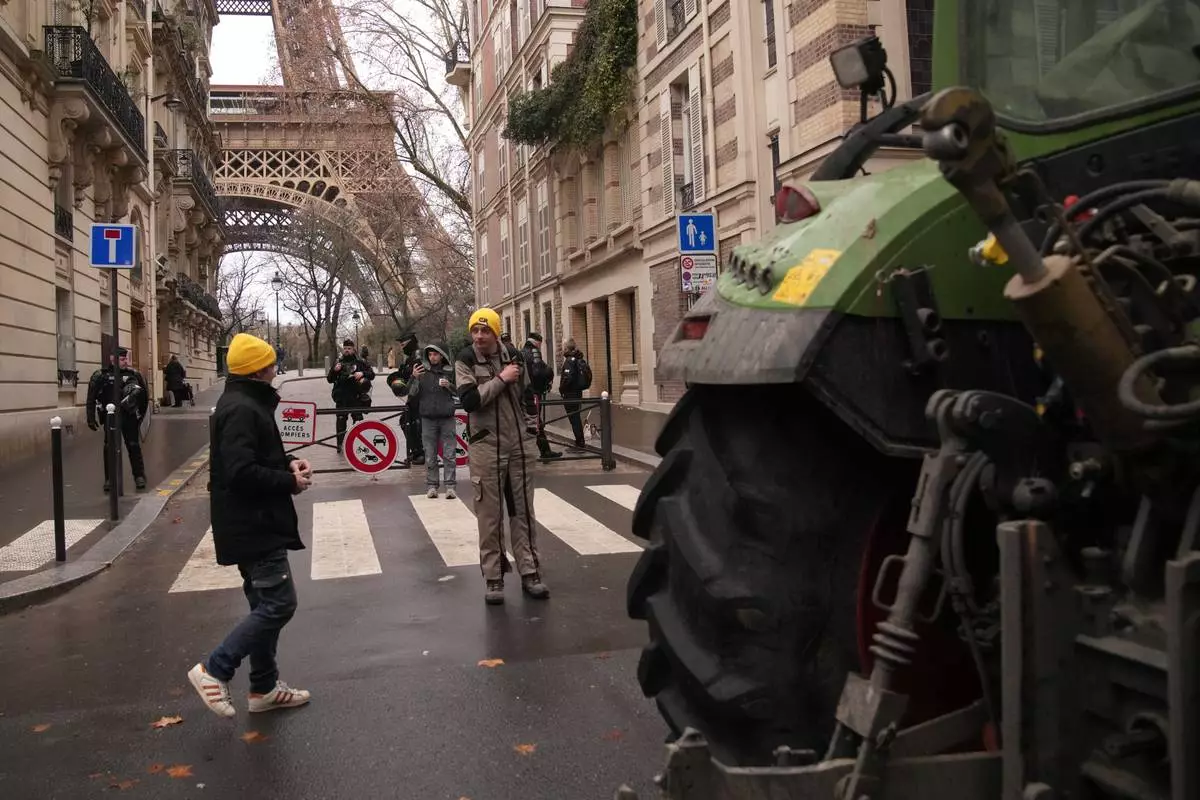
Farmers demonstrate by the Eiffel Tower to protest the European Union intention to move forward with the Mercosur trade deal with five South American nations, in Paris Thursday, Jan. 8, 2026 in Paris. (AP Photo/Christophe Ena)
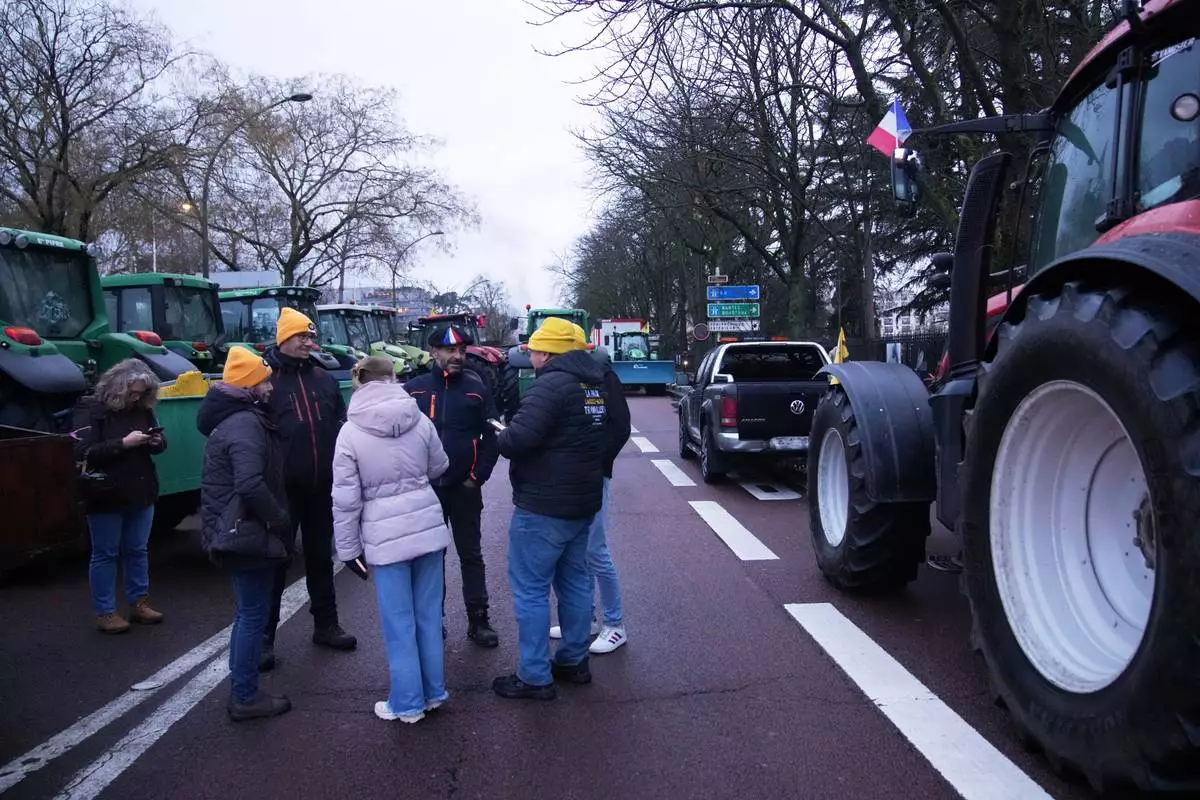
Farmers gather at a blockade as farmers protest against the Mercosur trade alliance with South America countries but also against EU farming policy or mass cull of cows ordered to contain the spread of a skin disease in Paris Thursday, Jan. 8, 2026 in Paris. (AP Photo/Christophe Ena)
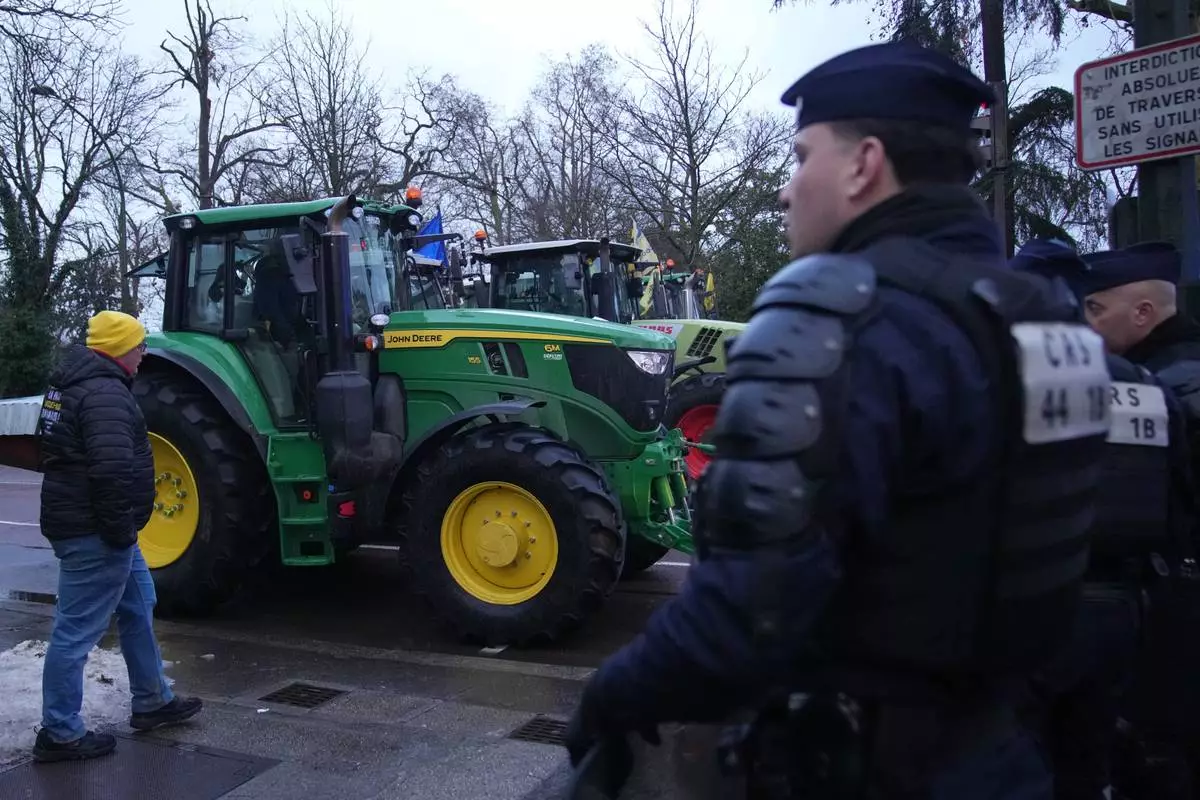
Police officer watch farmers at a blockade as farmers protest against the Mercosur trade alliance with South America countries but also against EU farming policy or mass cull of cows ordered to contain the spread of a skin disease in Paris Thursday, Jan. 8, 2026 in Paris. (AP Photo/Christophe Ena)
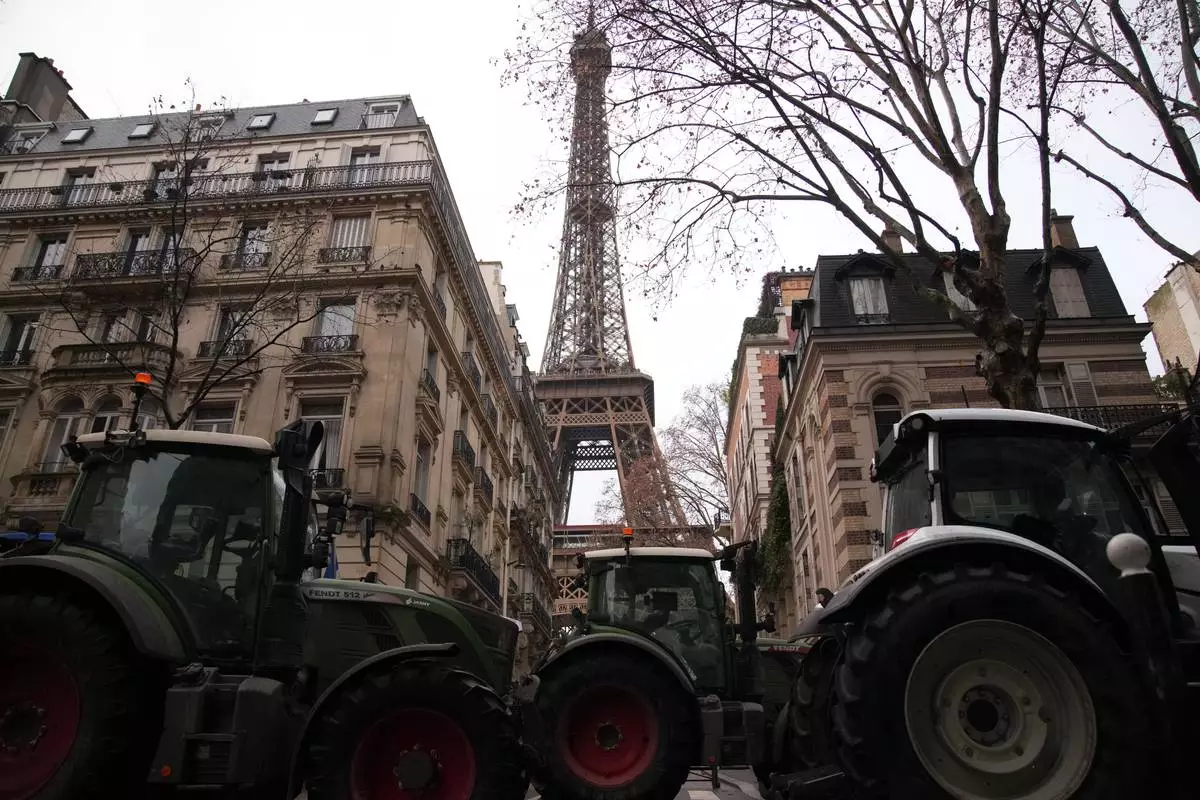
Tractors line up near the Eiffel Tower as farmers protest the European Union intention to move forward with the Mercosur trade deal with five South American nations, in Paris Thursday, Jan. 8, 2026 in Paris. (AP Photo/Christophe Ena)
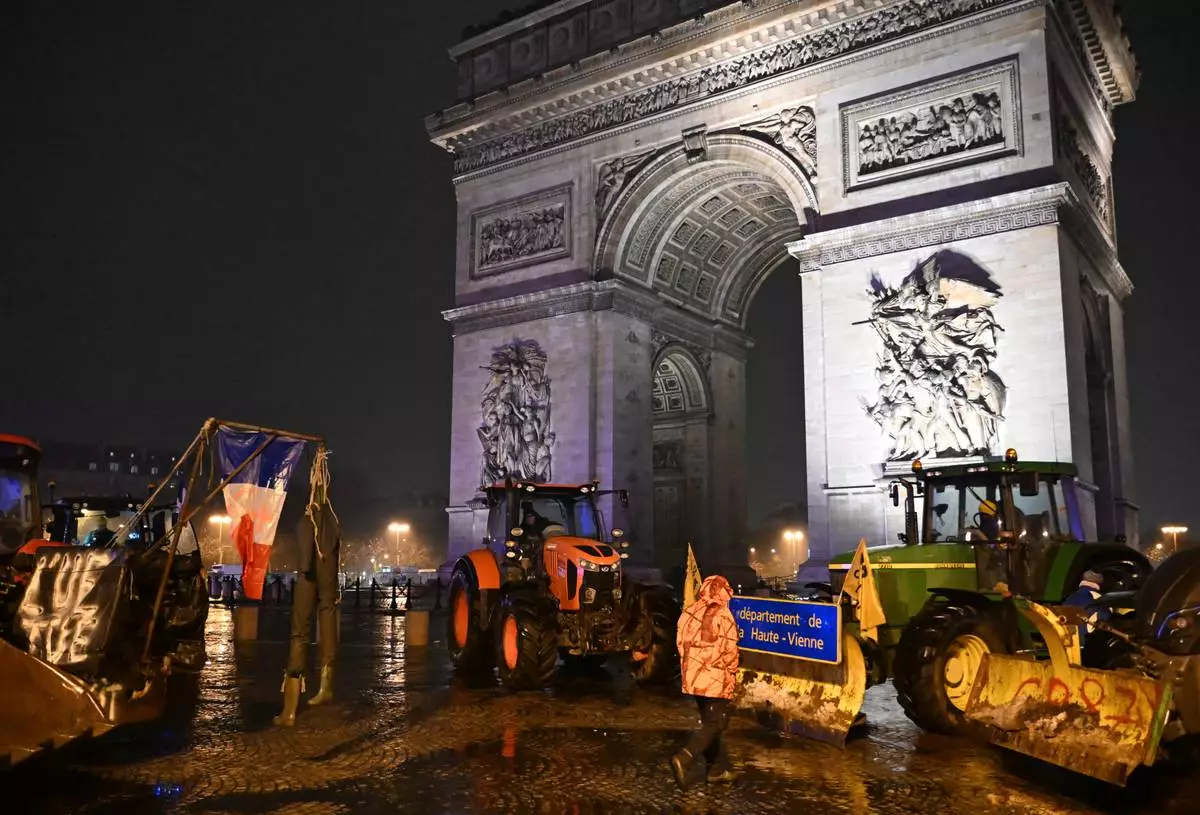
French farmers park their tractor in front of the Arc de Triomphe to protest against the Mercosur trade alliance with South America countries but also EU farming policy or mass cull of cows ordered to contain the spread of a skin disease Thursday, Jan. 8, 2026 in Paris. (AP Photo/Emma Da Silva)
French farmers protest at the Arc de Triomphe against the Mercosur trade alliance with South America countries but also against EU farming policy or mass cull of cows ordered to contain the spread of a skin disease, Thursday, Jan. 8, 2026 in Paris. Poster reads: EU kills. (AP Photo/Emma Da Silva)
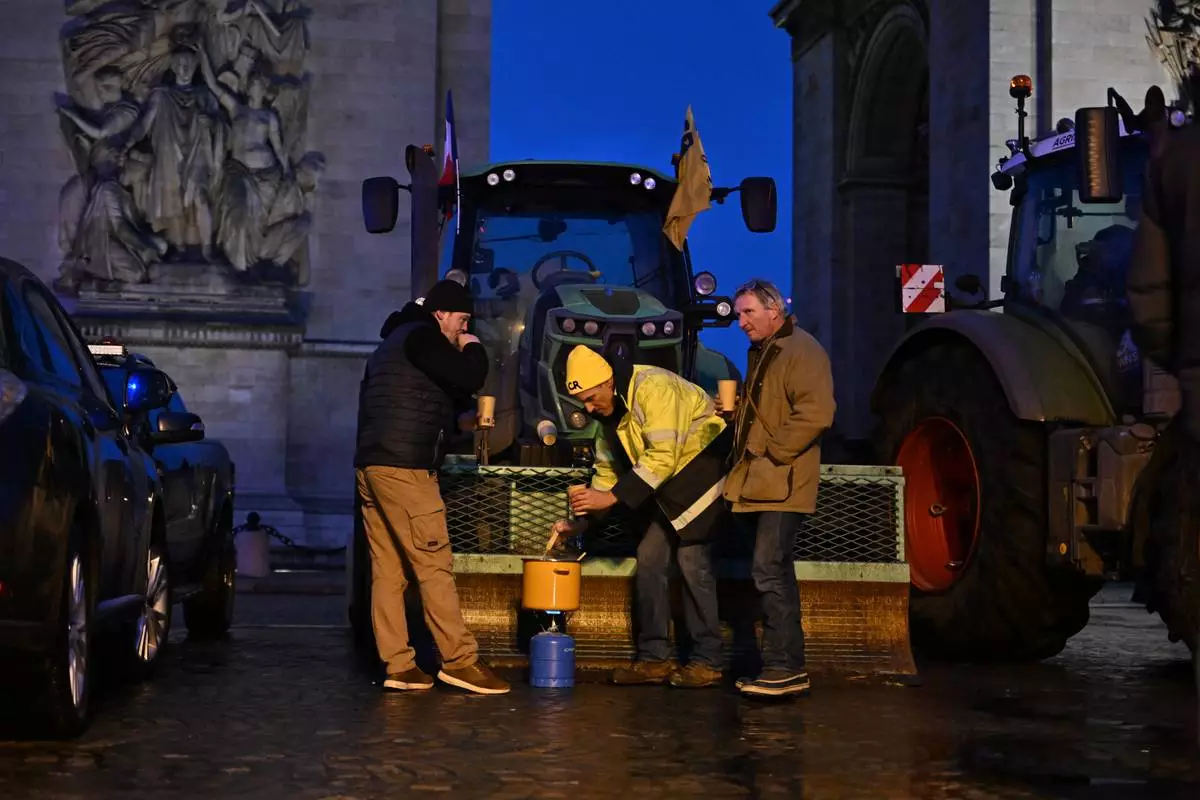
French farmers cook as they protest at the Arc de Triomphe against the Mercosur trade alliance with South America countries but also against EU farming policy or mass cull of cows ordered to contain the spread of a skin disease, Thursday, Jan. 8, 2026 in Paris. (AP Photo/Emma Da Silva)

A poster on a tractor reads 'Mercosur, death for sure' as farmers protest at the Arc de Triomphe against the Mercosur trade alliance with South America countries but also against EU farming policy or mass cull of cows ordered to contain the spread of a skin disease, Thursday, Jan. 8, 2026 in Paris. (AP Photo/Emma Da Silva)
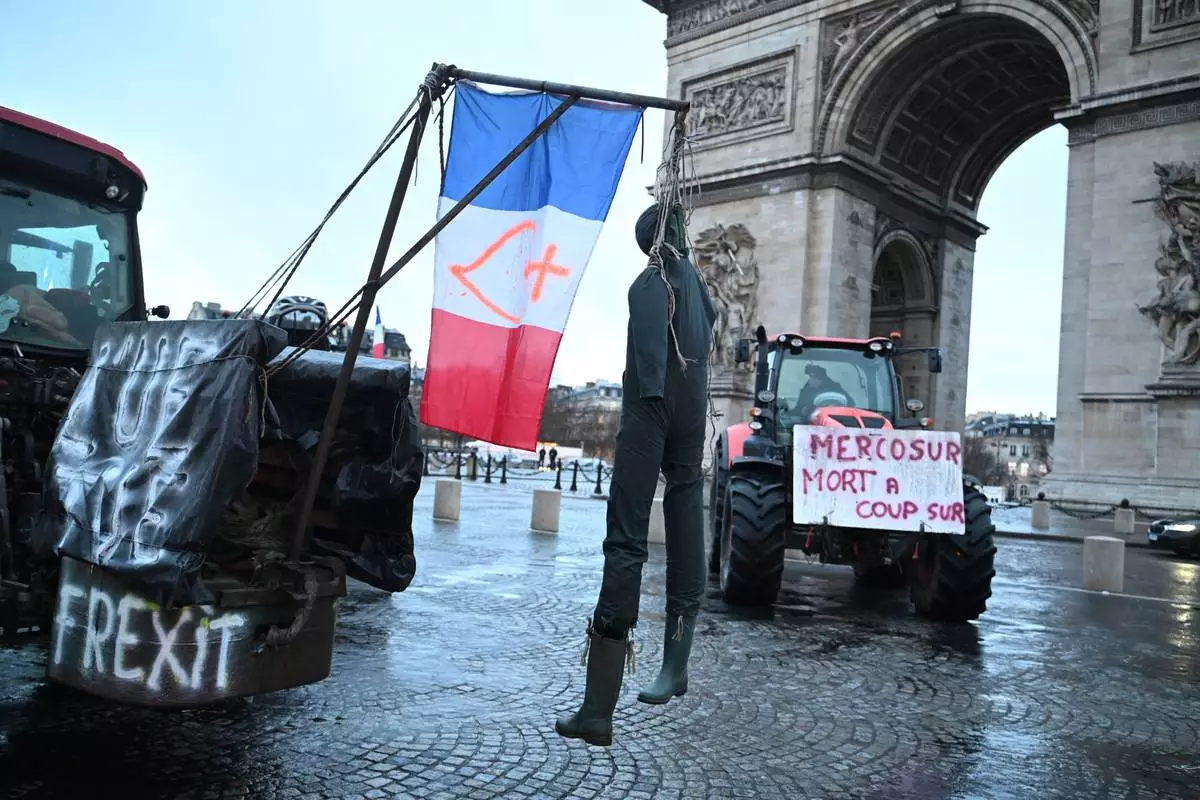
A mannequin hangs from a tractor as farmers protest at the Arc de Triomphe against the Mercosur trade alliance with South America countries but also against EU farming policy or mass cull of cows ordered to contain the spread of a skin disease, Thursday, Jan. 8, 2026 in Paris. Poster at right reads: Mercosur, death for sure. (AP Photo/Emma Da Silva)