Former politicians and leading analysts from countries around the world have denounced the United States' military attacks in Venezuela, arguing that the U.S. external actions are not isolated incidents but rather a contemporary revival of the Monroe Doctrine.
The U.S. military launched a series of attacks against Venezuela on January 3, which led to the forcible seizure of Venezuelan President Nicolas Maduro and his wife.
In a striking rebuke, former officials and scholars have accused the U.S. of seeking to reimpose hegemony in Latin America, saying that it severely infringed upon the sovereignty of the entire region.
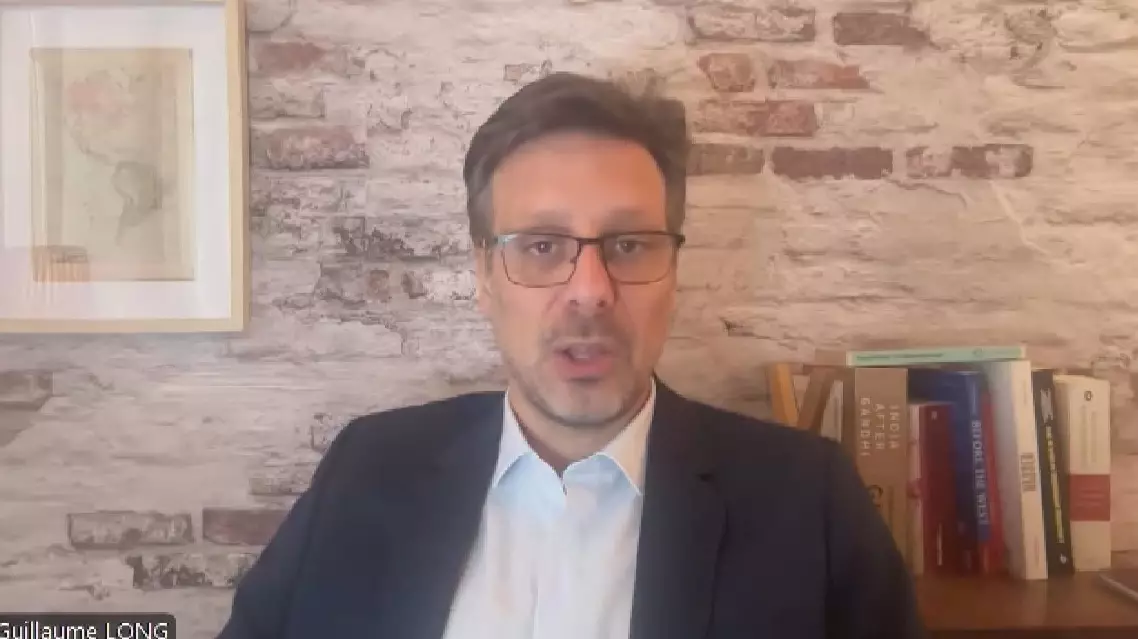
"The Trump administration has publicly portrayed this action as a strategic power game, aimed at enabling the United States to reestablish dominance in the Western Hemisphere and restore its hegemonic position in Latin America. Meanwhile, it is implicated in a contest for natural resources, especially Venezuela's oil -- a move that constitutes a clear violation of the sovereignty of Venezuela and, by extension, the broader Latin American region," said Guillaume Long, Ecuador's former Foreign Minister.
Cristina Pecequilo, a professor of the Federal University of Sao Paulo (Unifesp), said that the U.S. actions send a clear and perilous message to the international community.
"So if you do not follow the framework of our policies, if you do not follow the leadership of the United States, there's going to be some consequences. So it's an open door for more political violations and for more dangers to the sovereignty, (by either) military or political intervention," she said.
Chas W. Freeman Jr., former U.S. assistant secretary of defense, remarked that the Trump administration's actions have even gone beyond the historical paradigms of American interventionism.
"This is an unprovoked aggression by the United States. It is the product of a decision by the Trump administration to go beyond the original Monroe Doctrine and exercise a sort of tyranny over the Western Hemisphere in which the only sovereignty that counts is that of the United States. The war was unconstitutional. The Congress defaulted on its responsibility to authorize the use of force against another nation. It was illegal, therefore, under American law. But more importantly, it was a violation of many many elements of international law, and particularly the seizure of the sovereign, the chief of state and government, President Maduro," he said.
Many experts and scholars noted that under the banner of so-called democracy and the ostensible pretext of combating drug crimes, the U.S. is in fact practicing imperialism -- a pattern of behavior that is undermining the international order built on cooperation and solidarity.
"This is an unacceptable action taken by the United States. Of course, international law should be upheld rather than to be undermined. This just gives leverage to -- 'if we have the power, we have that fist to do whatever we want in international law without any repercussions,' especially with his remarks maybe towards Mexico, Cuba and Colombia -- threatening those countries as well as threatening the sovereignty of Greenland, which is under jurisdiction of Denmark. So, all of these claims -- of course, rather than having an international order which is built on cooperation and cohesion -- are trying, basically, to break away," said Abdulla Abdulrahman Alkhaja, a researcher at TRENDS Research and Advisory's Dubai Office.
"I would use the word imperialism to describe what Donald Trump is doing. Yet Trump is making mistakes with his arguments. He talks about drug running, he talks about democracy, but we know that he wants his oil companies to have more access to cheap oil," said Patrick Bond, a professor of international relations and political economy at the University of Johannesburg.
Additionally, some analysts stressed that the recent series of U.S. actions reveals its underlying anxiety over the decline of its own global hegemony.
"So it's quite clear that this is a push for unilateralism. It's a push by a failing empire, a failing hegemon. And, this desperate, illegal, terrorist act that the United States have now done in sovereign countries such as Venezuela -- it's further indication that they want to go it alone. The implications are far reaching. Donald Trump and his administration is taking us back to a period of anarchy and chaos. International law is out the window," said Oscar van Heerden, a South African scholar of international relations.
Former politicians, experts condemn U.S. 'unprovoked aggression' on Venezuela