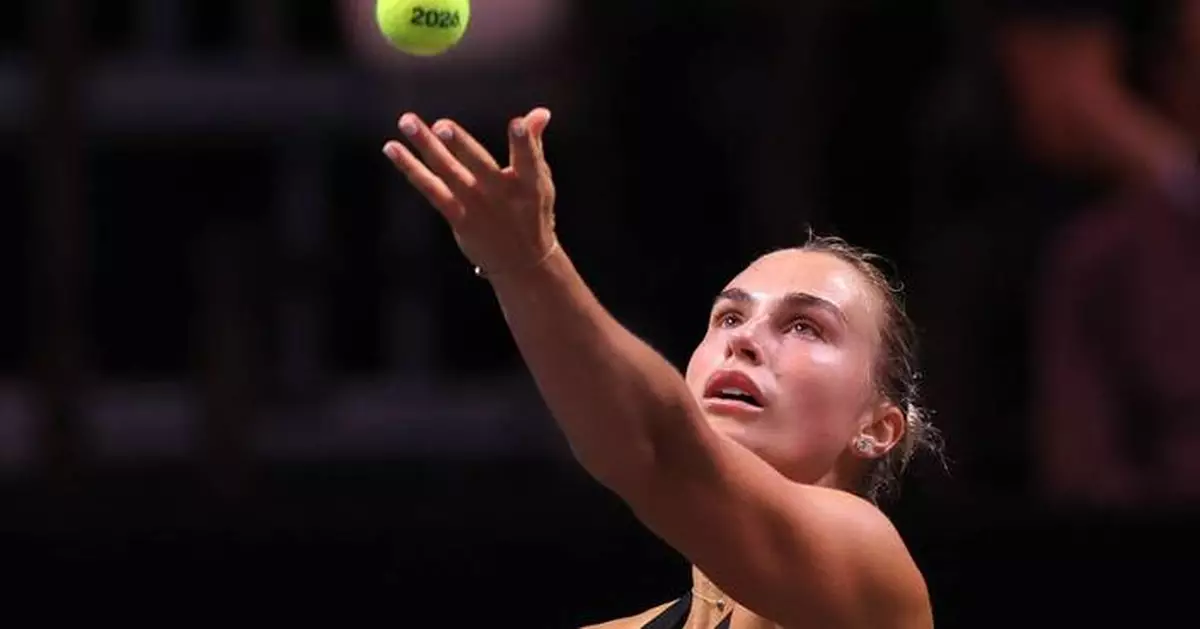
BRISBANE, Australia (AP) — This rematch between the Australian Open finalists was lopsided, and Aryna Sabalenka flipped the outcome with a straight-sets win over Madison Keys.
Top-ranked Sabalenka broke Keys' in five straight service games on the way to a 6-3, 6-3 win in 1 1/2 hours Friday to reach the semifinals of the Brisbane International, a tuneup event for the Australian Open which begins Jan. 18.
“I didn’t really have the throwback to the Australian Open last year, to be honest," Sabalenka said. "I know that I lost in Australia against her and it's a big motivation, of course, to go out and get the win.
"But I always look into the (next) match as like a new match against a new player. That's my approach."
The defending Brisbane champion will next take on 11th-seeded Karolina Muchova, who had a 6-2, 2-6, 6-4 win over Elena Rybakina to end a 13-match streak for the No. 3 seed. Fourth-seeded Jessica Pegula had a 6-3, 7-6 (3) quarterfinal win over No. 10 Liudmila Samsonova and will next play No. 16 Marta Kostyuk, who beat sixth-seeded Mirra Andreeva 7-6 (7), 6-3.
Muchova has the better of the career head-to-head meetings against WTA Finals champion Rybakina. She also has a 3-1 record against No. 1 Sabalenka.
“Doesn’t matter if I’m the one who is leading head-to-head or I’m the one who is losing — I don’t care,” Sabalenka said, adding that her focus is to control the kinds of emotions that derailed her sometimes when she was younger.
“In the past, I could lose a match because I’d be so frustrated. Now I’m just trying to move on like, ‘OK, whatever,'” she said. “I feel like it’s been working well for me.”
Keys will head to Adelaide aiming to retain the title there and then hope to repeat the sequence from 2025, when she went on to win her first Grand Slam title two weeks later in Melbourne.
“Hopefully I can gain and then just keep a lot of momentum going,” she said. “Hopefully there is many more firsts to come.”
On a warm Friday afternoon on Pat Rafter Arena, Sabalenka got the first service break in the seventh game and then took six of the next seven games. Keys broke serve to open the second set in the only interruption in that sequence.
The 30-year-old American faced immense pressure on her second serve, finishing the match with eight double-faults and winning just 33% of points on her second serve.
Keys saved two match points in the eighth game of the second set but it barely slowed down Sabalenka, who served out at love.
Sabalenka has two straight-set wins over Keys — the other was 6-0, 6-1 at Indian Wells — since that loss at Melbourne Park almost 12 months ago. She also reached the French Open final, won the U.S. Open and finished the competitive season with a runner-up finish at the WTA Finals.
Earlier at the Brisbane tournament, she described the season schedule as “insane” and said she’ll risk fines in order to skip tournaments to avoid injuries or burnout. Still, she wants as much competition as possible before the season's first major.
“I’m just trying to get some matches, get some wins,” she said, "and get the rhythm going again.”
In the men's tournament, top-seeded Daniil Medvedev came from a set down to beat Kamil Majchrzak 6-7 (4), 6-3, 6-2 and advance to the semifinals.
“I managed to stay composed and hit some great shots to win the match,” Medvedev said.
Medvedev will face Alex Michelsen in the semis.
AP tennis: https://apnews.com/hub/tennis
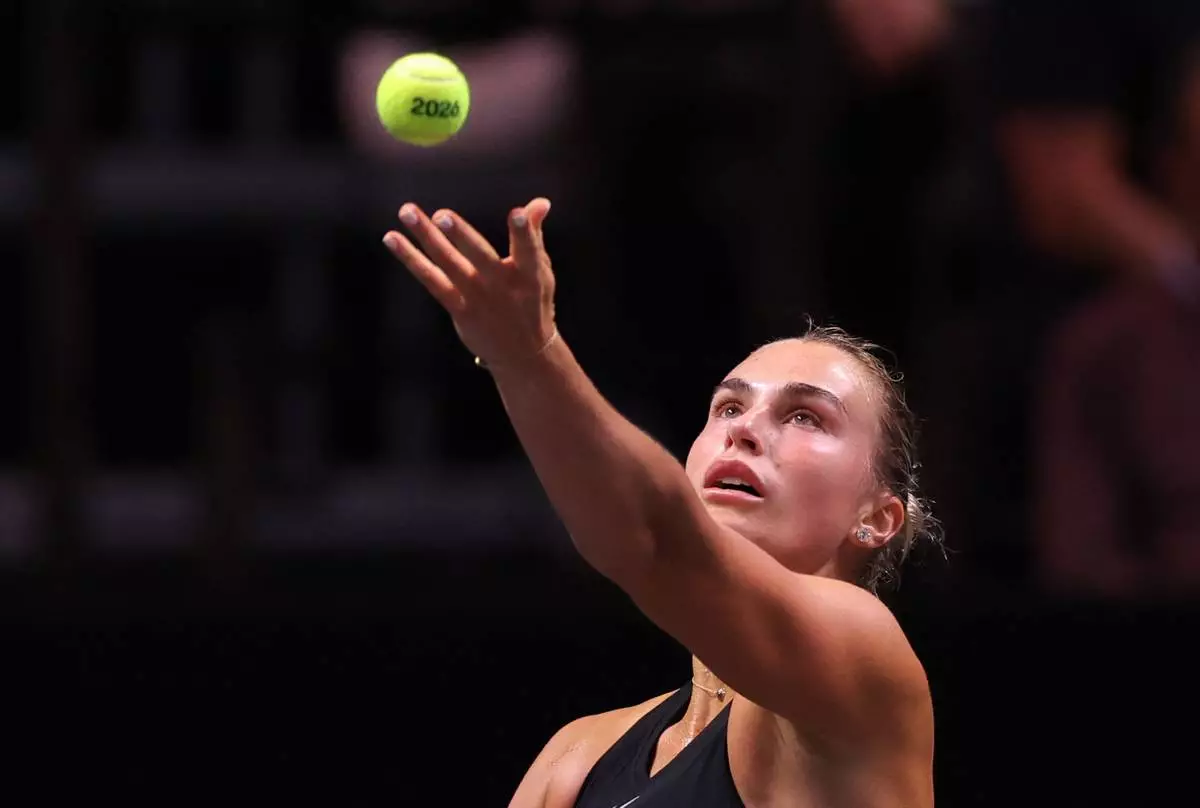
Aryna Sabalenka serves against Nick Kyrgios during their Battle of the Sexes tennis match, in Dubai, United Arab Emirates, Sunday Dec. 28, 2025. (Amr Alfiky/Pool Photo via AP)
MADRID (AP) — Atletico Madrid could be without striker Ademola Lookman when it takes on Arsenal looking to return to the Champions League final for the first time in a decade.
Arsenal, trying to get back to the final two decades later, is expected to have attacking midfielder Eberechi Eze available for Wednesday's match.
Atletico and Arsenal will meet at the Metropolitano stadium in the first leg of the semifinals, seeking their first Champions League title.
Lookman has been key for Atletico since arriving from Atalanta this year, but he missed the last two games because of a muscle issue from the Copa del Rey final on April 19.
He practiced with the rest of the squad in the last few days and seemed ready to make his return. But Atletico coach Diego Simeone said on Tuesday the Nigeria striker was still a doubt to start at Metropolitano.
“We'll see if he recovers well tomorrow,” said Simeone, who turned 56 on Tuesday. “He still has some discomfort.”
Lookman has seven goals for Atletico since arriving, one of them in the second leg of the Champions League quarterfinal against Barcelona, when Atletico advanced 3-2 on aggregate.
“His arrival has made a very positive impact on the team,” Simeone said. “He brings new things to our attack. He has been working much better in the defensive phase as well.”
The 28-year-old Lookman said it's been great to have the trust of Simeone and acknowledged he has improved in all areas under the coach.
“My all-around game has improved,” he said. “Definitely, my defensive side of the game has also improved, which has allowed me to be more of a complete player who can help the squad even more.”
Lookman, who was born in London, signed with Atletico in February. He played for Fulham and Leicester before joining Atalanta in 2022. He also previously played for Leipzig and Everton.
“Atleti is one of the biggest clubs in the world, with top players,” he said. “The team is amazing, the squad is amazing, so it's a blessing to be here. The work that we've shown together has been amazing, so its been great.”
Atletico is playing in its fourth Champions League semifinal since Simeone arrived in late 2011. It lost finals to Real Madrid in 2014 and 2016.
“It’s extraordinary that Atletico is in a semifinal again, the fourth in 14 years," Simeone said. "We’re playing against a great team, but we’ll go for it.”
He said winning the title was “not pressure, it’s responsibility.”
“It’s a huge objective, something the club has never achieved," Simeone said. "But it’s a soccer match and, ultimately, it’s the players who decide these games.”
Kai Havertz has been ruled out. The Germany international was substituted in the first half of Arsenal’s win over Newcastle in the Premier League on Saturday because of a muscle problem. Jurrien Timber also won’t make it to Wednesday’s match.
Arsenal’s only previous final was in 2006 when it lost to Samuel Eto’o’s Barcelona. The London club was eliminated by eventual champion Paris Saint-Germain in last year’s semifinals.
“What an opportunity and we’re going to grab it with both hands,” Arsenal coach Mikel Arteta said. “We have shown in Europe at any ground what we are capable of. We have to play with that confidence and that desire.”
Arteta called Simeone “an absolute role model.”
“A lot of the work he’s carried out, he has transformed the club in 15 years," said Arteta, a Spaniard. "The way he has done it, I have always had admiration for these kind of people. He is very connected to the club.”
AP soccer: https://apnews.com/hub/soccer
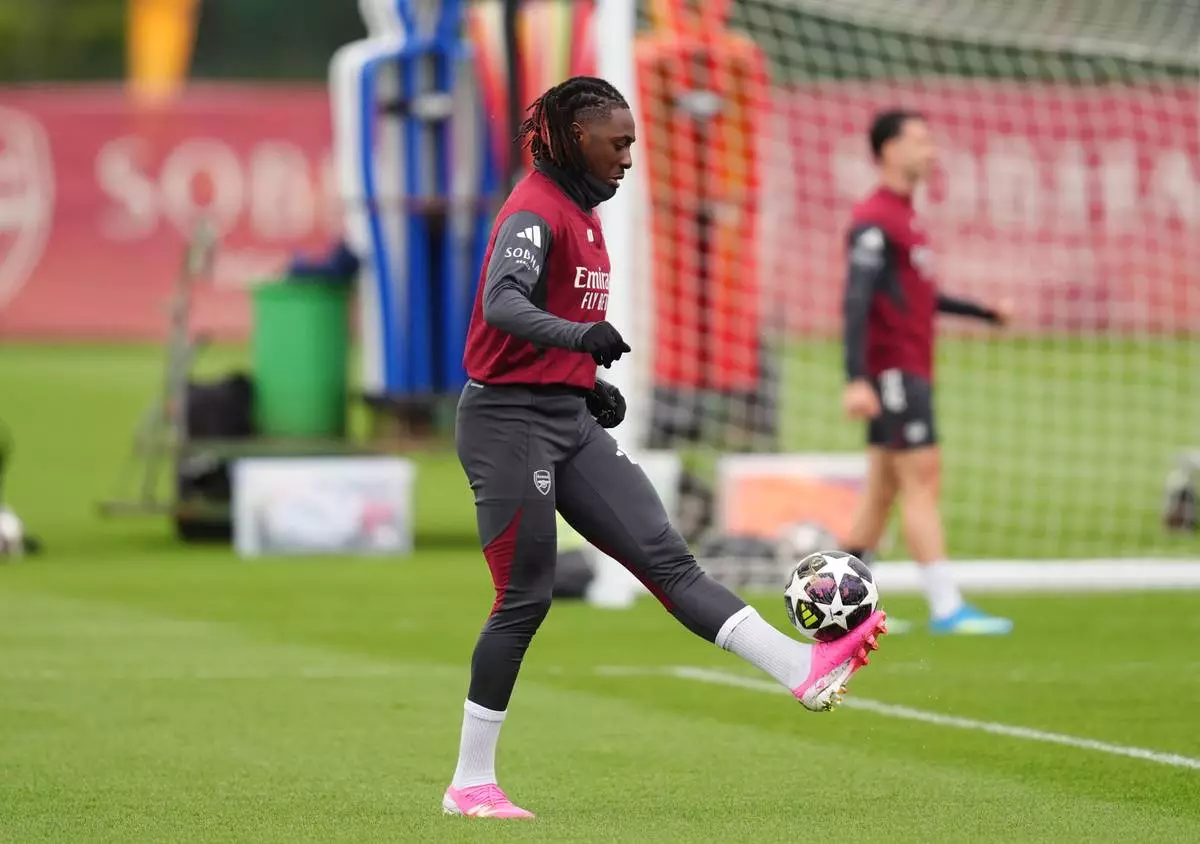
Arsenal's Eberechi Eze during a training session in London, Tuesday, April 28, 2026. (John Walton/PA via AP)
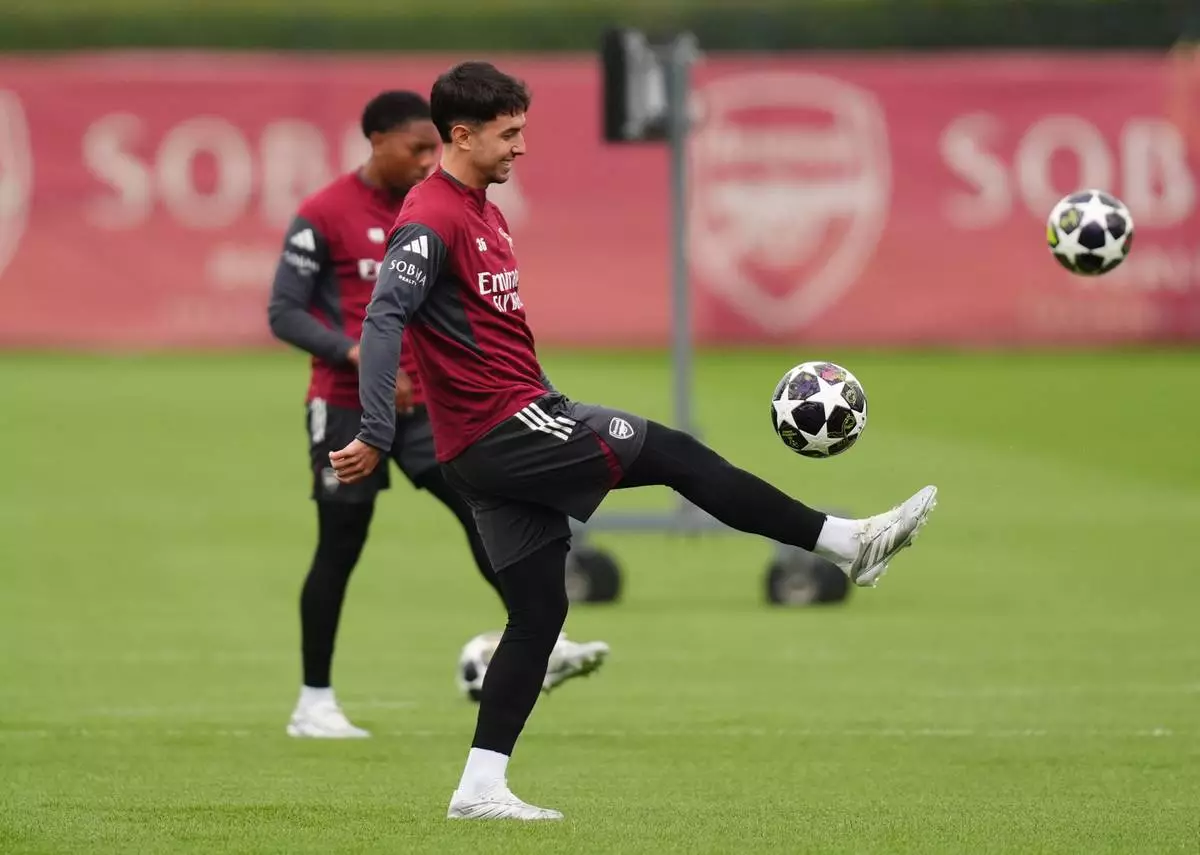
Arsenal's Martin Zubimendi during a training session in London, Tuesday, April 28, 2026. (John Walton/PA via AP)
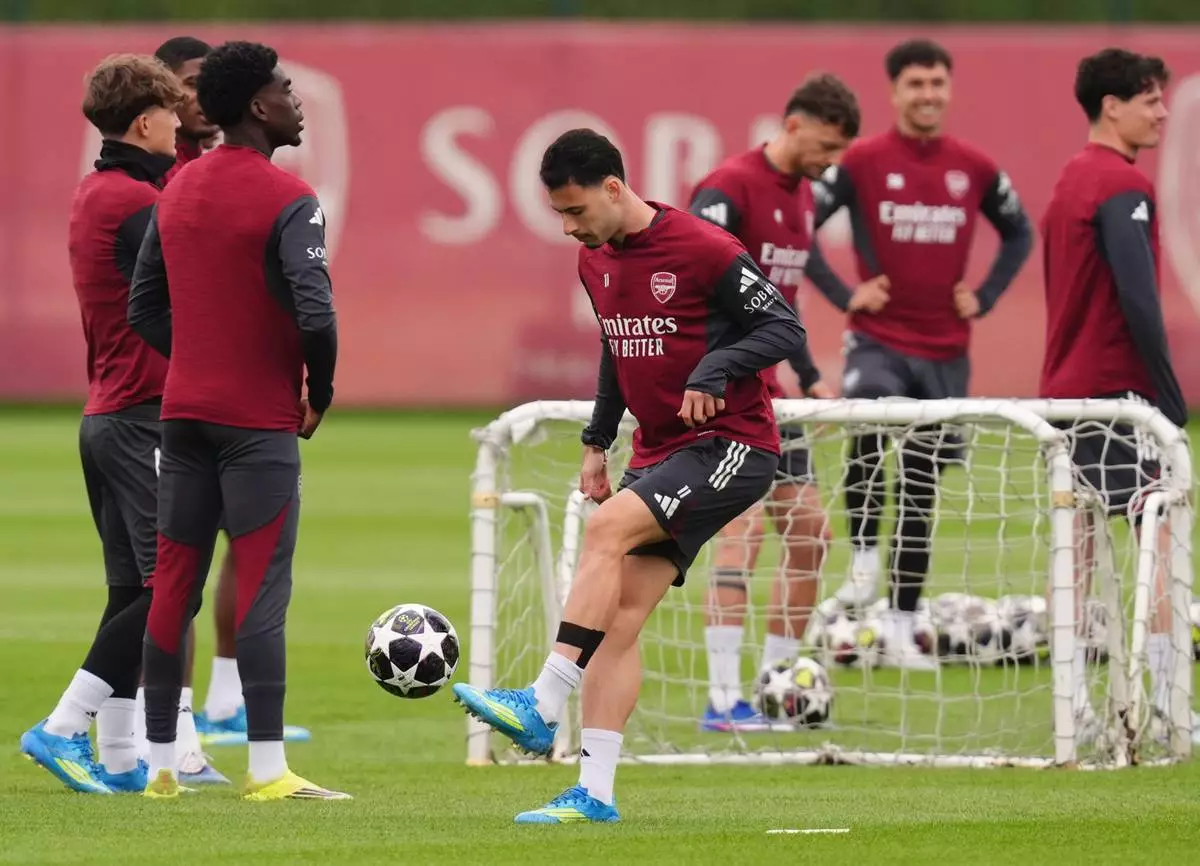
Arsenal's Gabriel Martinelli during a training session in London, Tuesday, April 28, 2026. (John Walton/PA via AP)
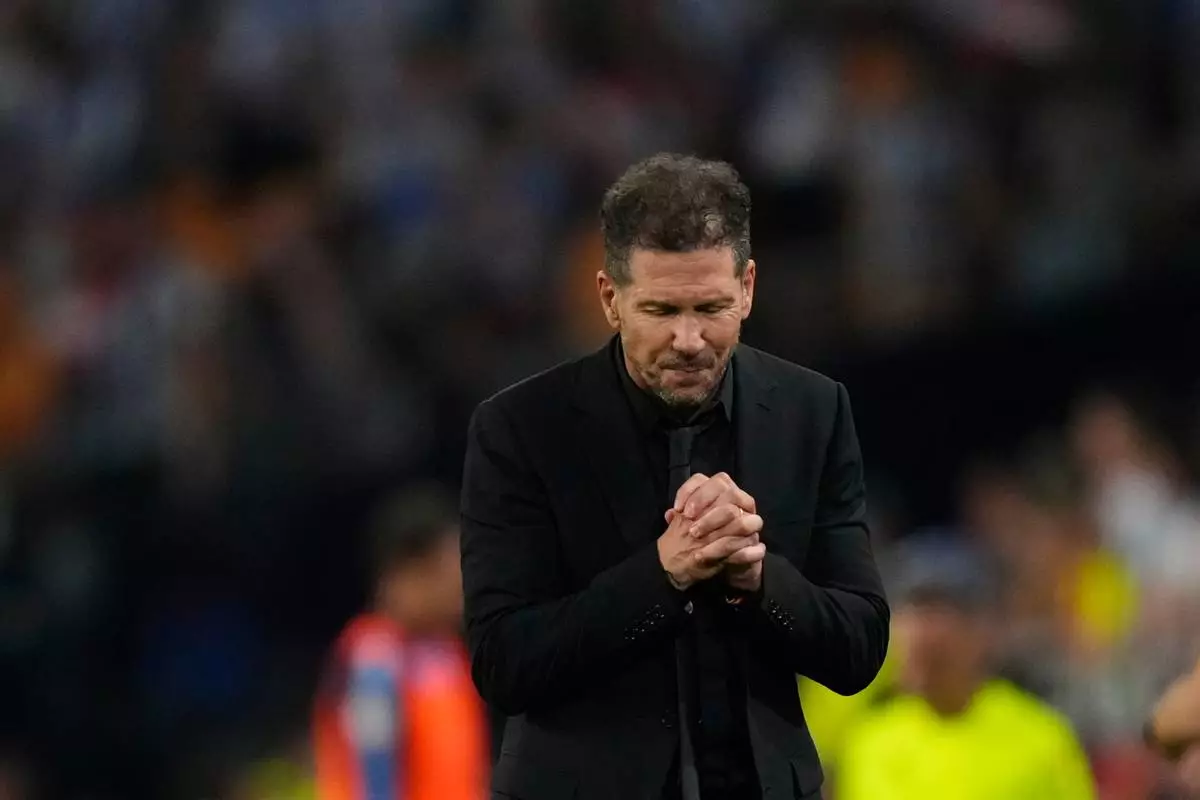
Atletico Madrid's head coach Diego Simeone reacts during the Copa del Rey final soccer match between Atletico Madrid and Real Sociedad in Seville, Spain, Saturday, April. 18, 2026. (AP Photo/Jose Breton)
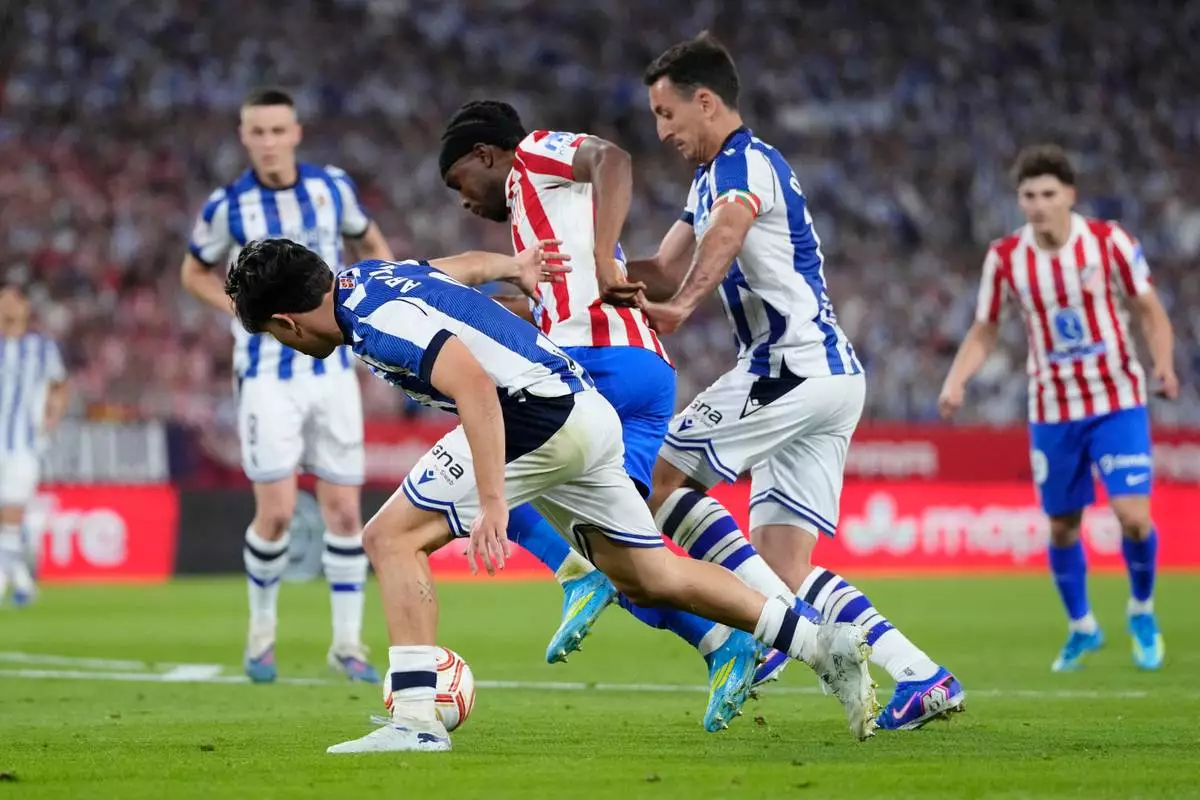
Real Sociedad's Jon Aramburu, left, and Mikel Oyarzabal, centre right, challenge for the ball with Atletico Madrid's Ademola Lookman during the Copa del Rey final soccer match between Atletico Madrid and Real Sociedad in Seville, Spain, Saturday, April. 18, 2026. (AP Photo/Jose Breton)