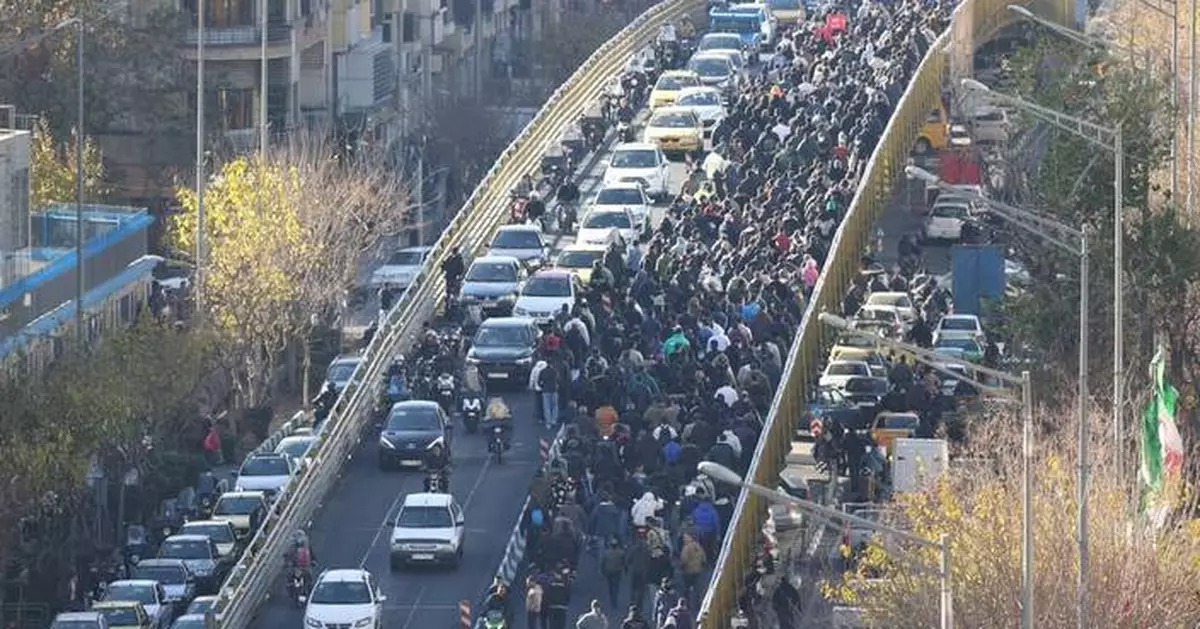
DUBAI, United Arab Emirates (AP) — Demonstrations broke out in Iran on Dec. 28 and have spread nationwide as protesters vent their increasing discontent over the Islamic Republic's faltering economy and the collapse of its currency. Dozens of people have been killed and thousands arrested as the daily protests have grown and the government seeks to contain them. While the initial focus had been on issues like spikes in the prices of food staples and the country's staggering annual inflation rate, protesters have now begun chanting anti-government statements as well.
Here is how the protests developed:
Dec. 28: Protests break out in two major markets in downtown Tehran, after the Iranian rial plunged to 1.42 million to the U.S. dollar, a new record low, compounding inflationary pressure and pushing up the prices of food and other daily necessities. The government had raised prices for nationally subsidized gasoline in early December, increasing discontent.
Dec. 29: Central Bank head Mohammad Reza Farzin resigns as the protests in Tehran spread to other cities. Police fire tear gas to disperse protesters in the capital.
Dec. 30: As protests spread to include more cities as well as several university campuses, Iranian President Masoud Pezeshkian meets with a group of business leaders to listen to their demands and pledges his administration will “not spare any effort for solving problems” with the economy.
Dec. 31: Iran appoints Abdolnasser Hemmati as the countrys new central bank governor. Officials in southern Iran say that protests in the city of Fasa turned violent after crowds broke into the governor's office and injured police officers.
Jan. 1: The protests' first fatalities are officially reported, with authorities saying at least seven people have been killed. The most intense violence appears to be in Azna, a city in Iran’s Lorestan province, where videos posted online purport to show objects in the street ablaze and gunfire echoing as people shouted: “Shameless! Shameless!” The semiofficial Fars news agency reports three people were killed. Other protesters are reported killed in Bakhtiari and Isfahan provinces while a 21-year-old volunteer in the paramilitary Revolutionary Guard’s Basij force was killed in Lorestan.
Jan. 2: U.S. President Donald Trump raises the stakes, writing on his Truth Social platform that if Iran “violently kills peaceful protesters,” the United States “will come to their rescue.” The warning, only months after American forces bombed Iranian nuclear sites, includes the assertion, without elaboration, that: “We are locked and loaded and ready to go.” Protests, meantime, expand to reach more than 100 locations in 22 of Iran's 31 provinces, according to the U.S.-based Human Rights Activists News Agency.
Jan. 3: Iran's Supreme Leader Ayatollah Ali Khamenei says “rioters must be put in their place,” in what is seen as a green light for security forces to begin more aggressively putting down the demonstrations. Protests expand to more than 170 locations in 25 provinces, with at least 15 people killed and 580 arrested, HRANA reports.
Jan. 6: Protesters conduct a sit-in at Tehran's Grand Bazaar until security forces disperse them using tear gas. The death toll rises to 36, including two members of Iranian security forces, according to HRANA. Demonstrations have reached over 280 locations in 27 of Iran’s 31 provinces.
Jan. 8 to 9: Following a call from Iran's exiled crown prince, a mass of people shout from their windows and take to the streets in an overnight protest. The government responds by blocking the internet and international telephone calls, in a bid to cut off the country of 85 million from outside influence. HRANA says violence around the demonstrations has killed at least 42 people while more than 2,270 others have been detained.
Rising reported from Bangkok
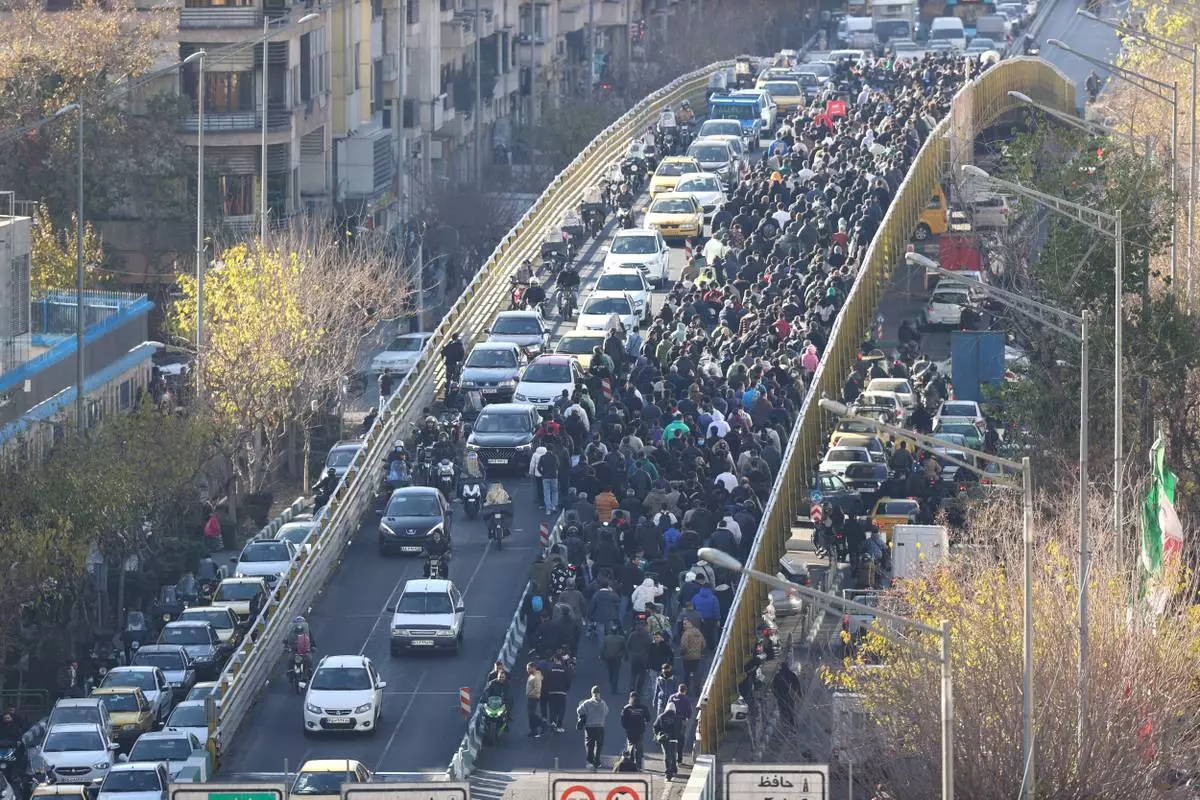
FILE - Protesters march on a bridge in Tehran, Iran, on Dec. 29, 2025. (Fars News Agency via AP, File)
WASHINGTON (AP) — For House Republicans, the political year started with a pep rally of sorts as President Donald Trump gathered them at Washington's Kennedy Center for a stemwinder of a speech. But by the time lawmakers had completed their first week of work this midterm election year, fractures in the party were already showing.
From pushback to Trump's self-described “Donroe doctrine” of aggression in the Western Hemisphere to breaks in party unity over health care, Republican lawmakers are displaying signs of independence from Trump after spending much of the last year acquiescing to his practically every demand. It showed a new dynamic in the GOP as Republicans embark on difficult campaign to keep control of both the House and Senate.
Senate Majority Leader John Thune, speaking at the U.S.-Mexico border Friday with a group of Republican Senate candidates, said that Republicans were “going to be focused like a laser” on issues of affordability and pointed to legislation in the works on housing and health care.
Thune's border trip and talk of affordability were a nod back to some of the core themes of Trump's presidential campaign. But the focus in Washington of late has instead been dominated by Trump's military operation to capture Venezuelan leader Nicolás Maduro, his threats to use military force to take control of Greenland, the release of case files on Jeffrey Epstein and a debate over extending subsidies for insurance offered under the Affordable Care Act — an issue where Republicans have long struggled to find unity.
Recent shootings by Immigration and Customs Enforcement officers in several U.S. cities, including one that killed a woman in Minneapolis, have also raised new questions about Republicans' hard-line immigration agenda and shifted attention away from Trump's handling of the border, which they see as a political success.
Even so, Trump still has plenty of command over most of the party. That was demonstrated this week by a pair of unsuccessful House veto override votes in which most GOP members stuck with the president despite previously voting for the low-profile bills.
Rep. Thomas Massie, a Kentucky Republican who has been one of the few Republicans to consistently defy Trump, said that “there was some bully pulpit intimidation going on” from the president that caused the veto overrides to fail.
Still, Democrats are making the case that Trump is becoming distracted from the needs of Americans, especially after the attack on Venezuela.
“He's lurching towards another endless, expensive war, all the while American families here are struggling with skyrocketing costs,” said Senate Democratic Leader Chuck Schumer.
To prove their point, Democrats are forcing votes on war powers resolutions that would stop Trump from attacking Venezuela without congressional approval. Such measures are rarely successful, but a procedural vote on the legislation drew support from five Republicans Thursday, setting up a final vote next week. House Democrats are also pushing forward a similar resolution.
The GOP senators who voted for the legislation tried to defuse the conflict with Trump by arguing their positions were in line with his own campaign promises to scale back U.S. commitments overseas.
“A drawn-out campaign in Venezuela involving the American military, even if unintended, would be the opposite of President Trump’s goal of ending foreign entanglements,” Sen. Todd Young, an Indiana Republican who voted for the war powers resolution, said in a lengthy statement explaining his vote.
Trump reacted with fury. The president promptly called for the five Republicans, which included Maine Sen. Susan Collins, who is up for reelection this year, to “never be elected to office again.”
Republicans are already dealing with retirements from several lawmakers who had uneasy relationships with Trump, and there was worry that such clashes could complicate their campaign picture even more.
“If Susan isn’t the senator from Maine, we’re going to end up with a Democrat,” said Sen. Bernie Moreno, an Ohio Republican. “That would be 10 times worse. But I do appreciate that President Trump is absolutely pissed off.”
Trump's desire to possess Greenland and his administration's decision not to rule out military force also met significant resistance from GOP lawmakers this week.
Sen. Thom Tillis, a North Carolina Republican who is retiring after crossing Trump last summer, took to the Senate floor to proclaim that he was “sick of stupid.” He specifically criticized White House deputy chief of policy Stephen Miller, who made comments that Greenland should be part of the U.S.
“I want good advice for this president, because I want this president to have a good legacy,” Tillis added. “And this nonsense on what’s going on with Greenland is a distraction from the good work he’s doing, and the amateurs who said it was a good idea should lose their jobs.”
Other Republicans, including Thune and Senate Armed Services Committee chair Sen. Roger Wicker, also gently pushed back on military threats against Denmark, which is a NATO ally of the U.S.
After meeting with the Danish ambassador, Wicker said it was Denmark's right not to sell Greenland.
“I’m troubled by Greenland. I'm troubled by some of the things he does. I don’t get it,” said Nebraska Rep. Don Bacon, another retiring Republican. “I do feel like Congress should be more independent and should provide checks and balances here.”
Bacon added that Trump still had the ability to “bully” his Republican colleagues, but that Trump's threats had “stiffened my spine.”
During Trump's speech at the Kennedy Center on Tuesday, he urged Republicans to own the issue of health care. Yet when the House voted Thursday on a Democratic proposal to extend expired health care subsidies for Affordable Care Act health plans, 17 Republicans broke with party leadership to help pass the bill.
“People recognize the challenge here, which is to address health care affordability,” said Rep. Mike Lawler, a New York Republican who voted for the proposal.
He still criticized the Affordable Care Act, a hallmark piece of legislation for Democrats, yet the health care debate unfolding in Congress is one that Democrats feel confident making a central campaign issue.
“In this first, full week of the new year, House Democrats — every single one of us joined by 17 Republicans — have partnered in a bipartisan way to protect the health care of the American people,” said House Democratic leader Hakeem Jeffries following the vote.
On the fifth anniversary of the attack on the Capitol, Trump told House Republicans that he had told his supporters to go “peacefully and patriotically” to confront Congress from certifying the 2020 presidential election. The White House also unveiled a website that portrayed the Jan. 6 attack as a “witch hunt” against him by Democrats and some Republicans in Congress.
But the Senate, which Republicans control, this week agreed to display a plaque honoring the police who defended the Capitol — a cause that has become a point of contention with Trump as president. The plaque had been kept in storage rather than being displayed because House Speaker Mike Johnson had said the memorial did not comply with the law.
It was Tillis again who pushed the issue on the Republican side. He said it was important to honor the police and staff who risked their own lives and safety that day.
Democrats who joined in the effort said they were alarmed by the White House's attempt to recast the narrative.
“It's so important we be honest with the American people about what happened,” said Sen. Jeff Merkley, an Oregon Democrat.
Associated Press writers Kevin Freking, Steven Sloan, Lisa Mascaro and Nathan Ellgren contributed.
__
This story has corrected the party affiliation of Rep. Mike Lawler. He is a Republican, not a Democrat.
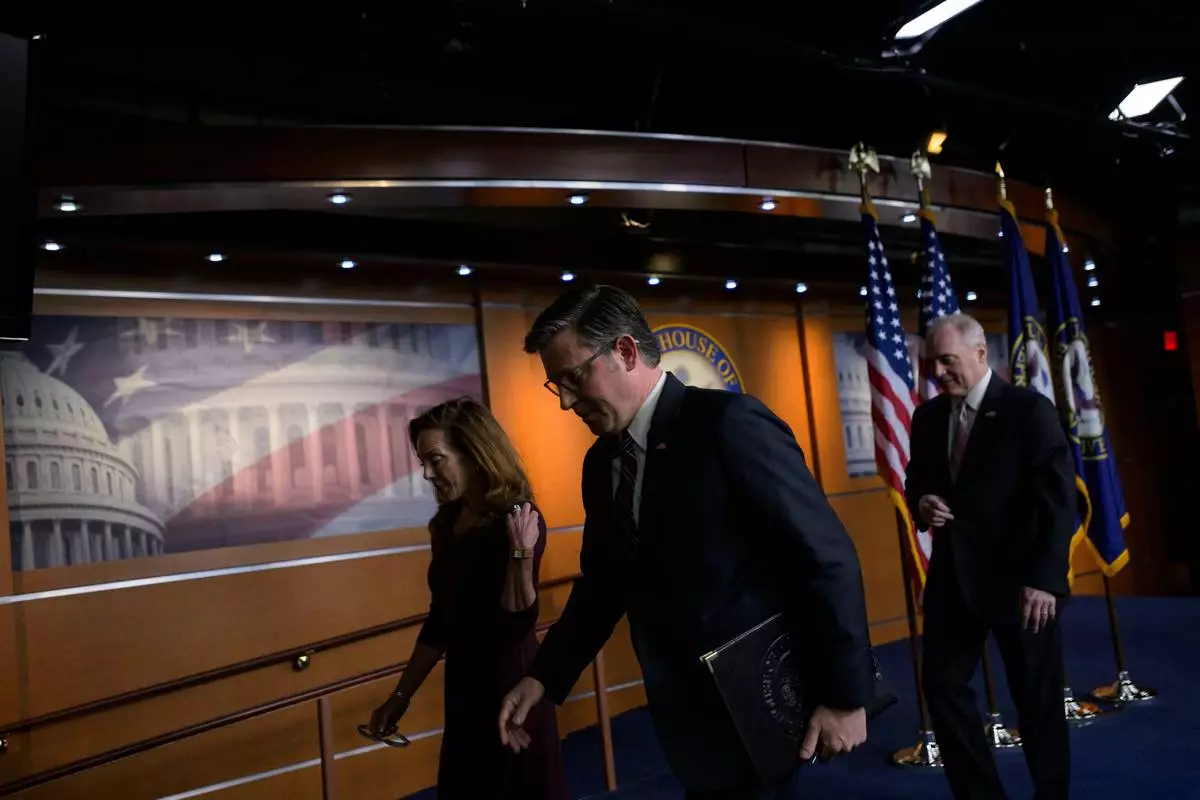
Speaker of the House Mike Johnson, R-La., center, House Republican Conference Chairwoman Lisa McClain, R-Mich., left, and House Majority Leader Steve Scalise, R-La., depart following a news conference at the Capitol, Wednesday, Jan. 7, 2026, in Washington. (AP Photo/Rod Lamkey, Jr.)
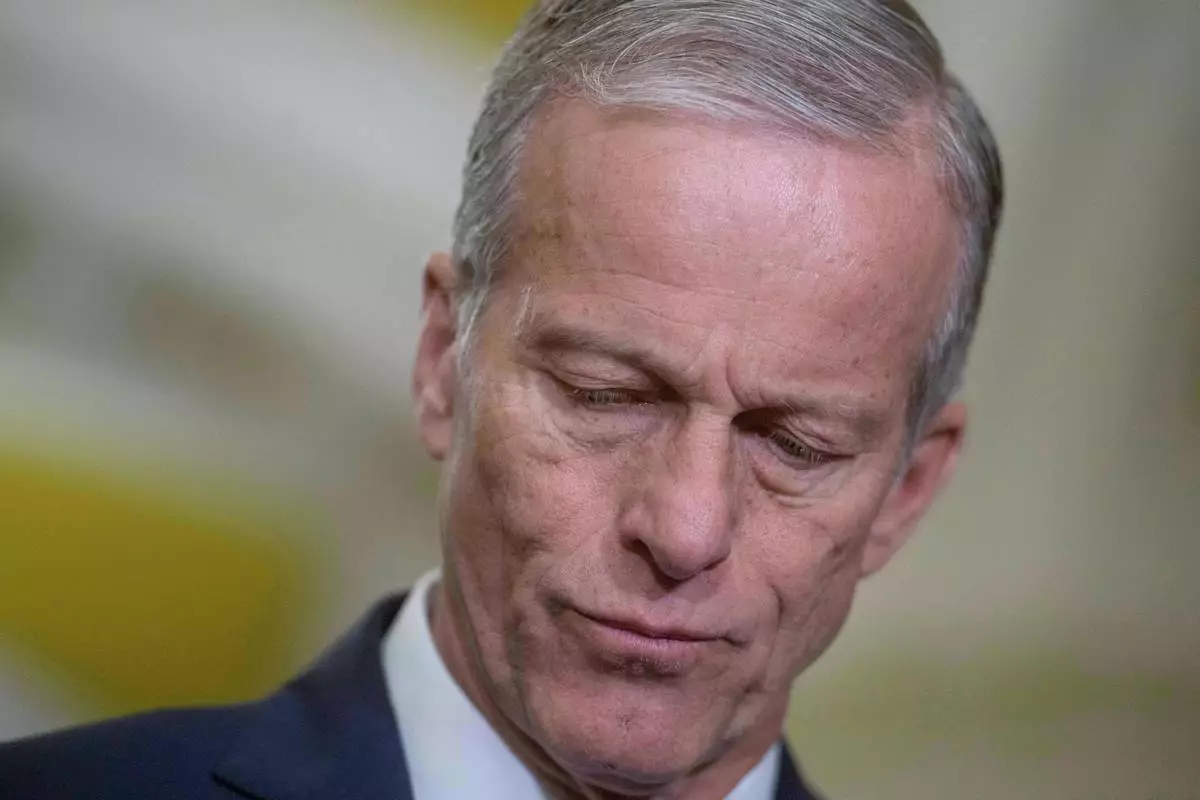
Senate Majority Leader John Thune, R-S.D., speaks during the Senate Republican policy luncheon news conference at the Capitol, Tuesday, Jan. 6, 2026, in Washington. (AP Photo/Rod Lamkey, Jr.)
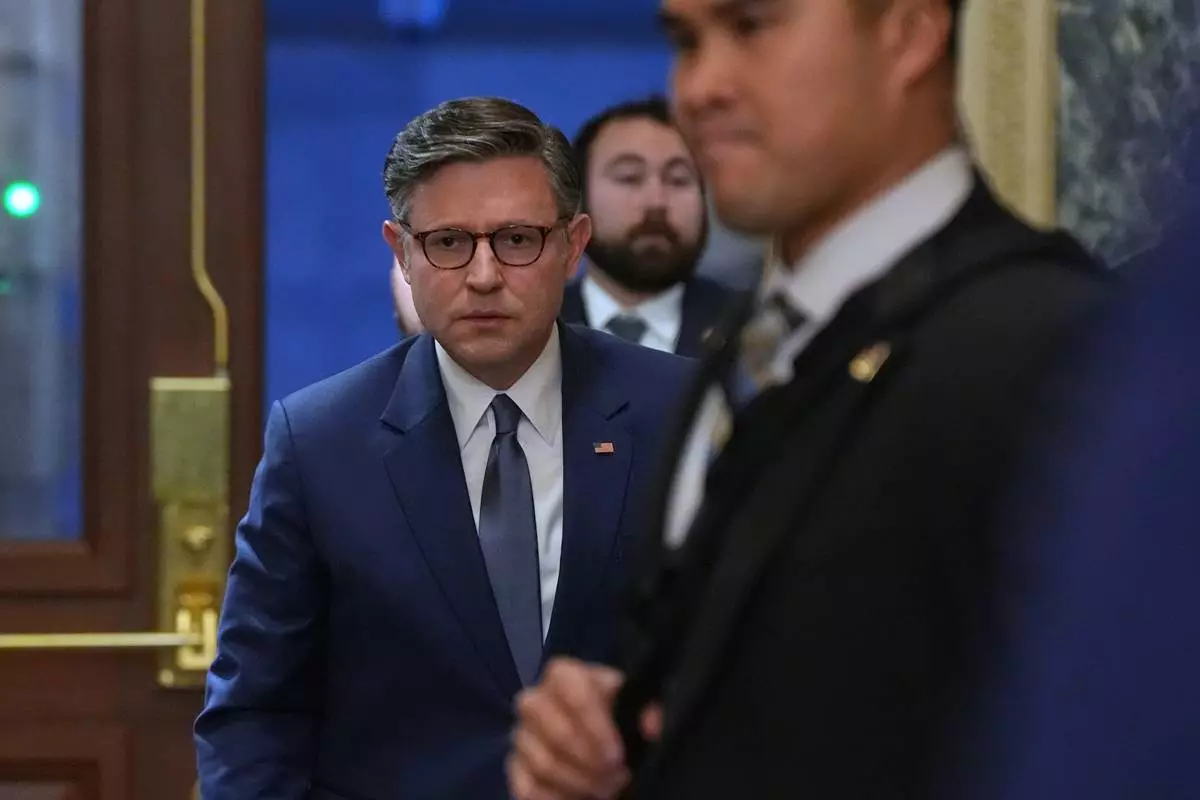
House Speaker Mike Johnson of La., arrives at the U.S. Capitol Monday, Jan. 5, 2026, in Washington, for a closed-door briefing after President Donald Trump directed U.S. forces to capture Venezuelan President Nicolas Maduro. (AP Photo/Jacquelyn Martin)
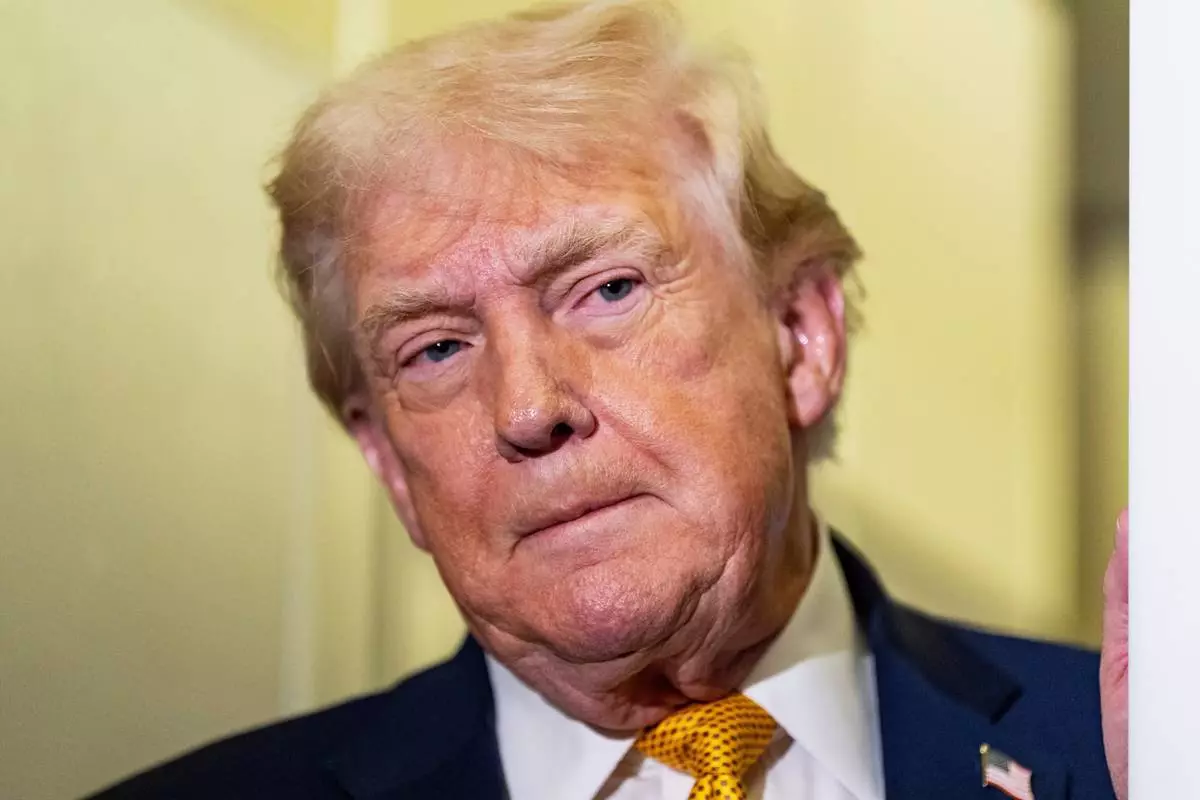
President Donald Trump listens as he was speaking with reporters while in flight on Air Force One, Sunday, Jan. 4, 2026, as returning to Joint Base Andrews, Md. (AP Photo/Alex Brandon)