A transfer portal spiraling out of control prompted the new regulatory body for college sports to issue a memo to athletic directors Friday night saying it has “serious concerns” about some of the multimillion-dollar contracts being offered to players.
The “reminder” from the College Sports Commission came out about an hour before kickoff of the semifinal between Indiana and Oregon in a College Football Playoff that has shared headlines with news of players signing seven-figure deals to move or, in some cases, stay where they are.
The CSC reminded the ADs that, according to the rules, third-party deals to use players' name, image and likeness “are evaluated at the time of entry in NIL Go, not before, and each deal is evaluated on its own merits.”
"Without prejudging any particular deal, the CSC has serious concerns about some of the deal terms being contemplated and the consequences of those deals for the parties involved," the memo said.
Under terms of the House settlement that dictated the rules for NIL payments, schools can share revenue with their players directly from a pool of $20.5 million. Third-party deals, often arranged by businesses created to back the schools, are being used as workarounds this so-called salary cap.
The CSC, through its NIL Go portal, is supposed to evaluate those deals to make sure they are for a valid business purpose and fall within a fair range of compensation for the services being provided.
The CSC did not list examples of unapproved contracts, but college football has seen its share of seven-figure deals luring players to new schools since the transfer portal opened on Jan. 2.
One high-profile case involved Washington quarterback Demond Williams Jr., who initially sought to enter the transfer portal and turn his back on a reported deal worth $4 million with the Huskies. Legal threats ensued and Williams changed course and stayed at Washington.
"Making promises of third-party NIL money now and figuring out how to honor those promises later leaves student-athletes vulnerable to deals not being cleared, promises not being able to be kept, and eligibility being placed at risk," the CSC letter said.
The commission listed two rules about contracts it evaluates, some of which have been termed “agency agreement” or “services agreement” in what look like attempts to bypass the rules.
—"The label on the contract does not change the analysis; if an entity is agreeing to pay a student-athlete for their NIL, the agreement must be reported to NIL Go within the reporting deadline."
—"An NIL agreement or payment with an associated entity or individual ... must include direct activation of the student-athlete’s NIL rights." This is a reference to the practice of “warehousing” NIL rights by paying first, then deciding how to use them later.
Get poll alerts and updates on the AP Top 25 throughout the season. Sign up here and here (AP News mobile app). AP college football: https://apnews.com/hub/ap-top-25-college-football-poll and https://apnews.com/hub/college-football
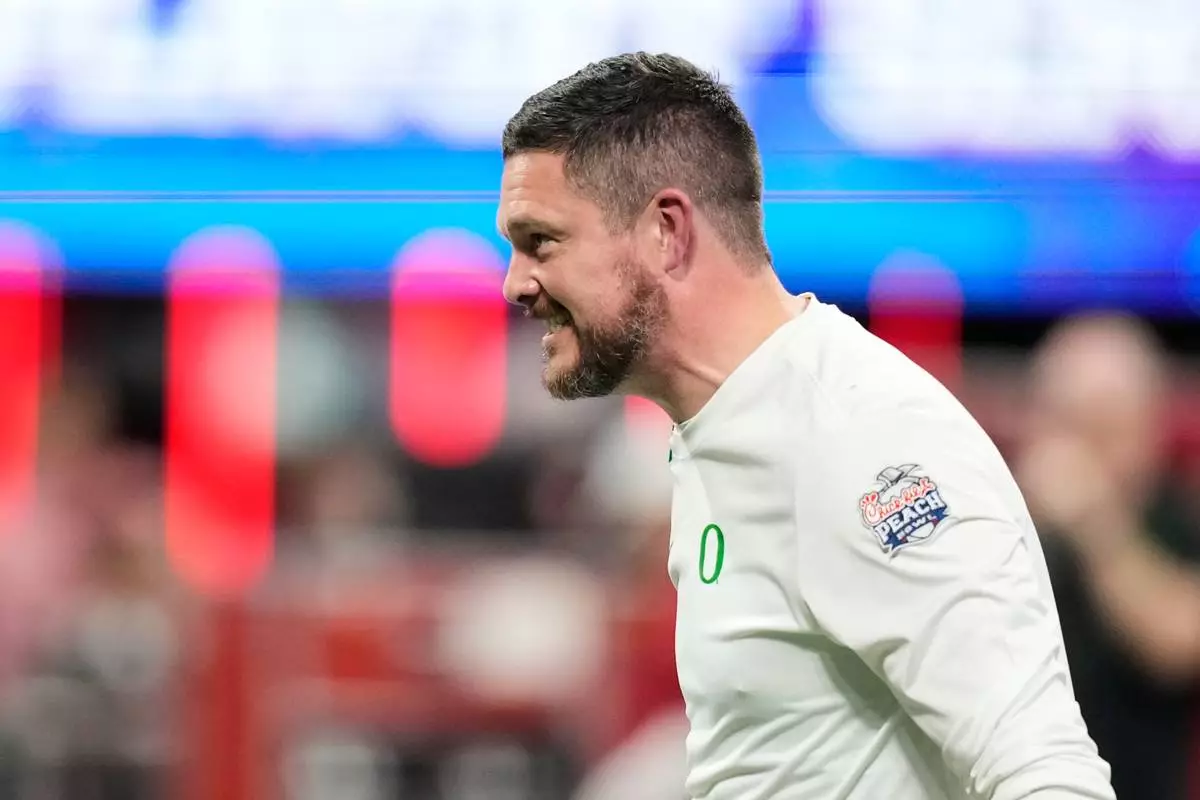
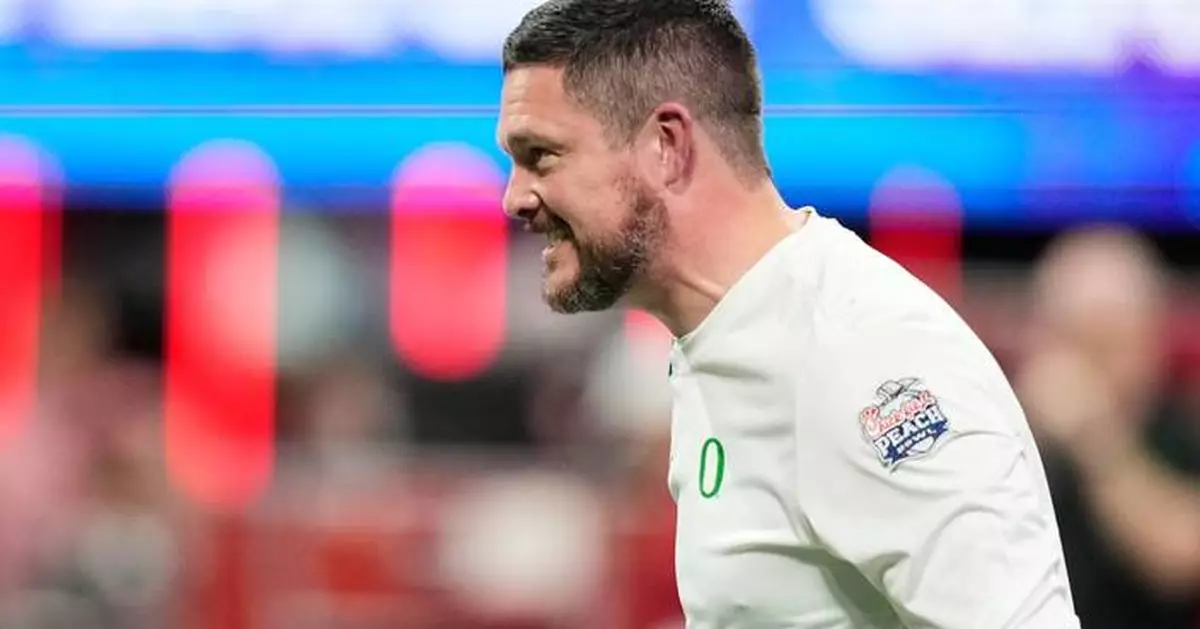
Oregon head coach Dan Lanning walks on the field before the Peach Bowl NCAA college football playoff semifinal against Indiana, Friday, Jan. 9, 2026, in Atlanta. (AP Photo/Brynn Anderson)
MINNEAPOLIS (AP) — A Minnesota prosecutor on Friday called on the public to share with investigators any recordings and evidence connected to the fatal shooting of Renee Good as a new video emerged showing the final moments of her encounter with an immigration officer.
The Minneapolis killing and a separate shooting in Portland, Oregon, a day later by the Border Patrol have set off protests in multiple cities and denunciations of immigration enforcement tactics by the U.S. government. The Trump administration has defended the officer who shot Good in her car, saying he was protecting himself and fellow agents.
The reaction to the shooting has largely been focused on witness cellphone video of the encounter. A new, 47-second video that was published online by a Minnesota-based conservative news site, Alpha News, and later reposted on social media by the Department of Homeland Security shows the shooting from the perspective of ICE officer Jonathan Ross, who fired the shots.
Sirens blaring in the background, he approaches Good’s vehicle in the middle of the road while apparently filming on his cellphone. At the same time, Good’s wife also was recording the encounter and can be seen walking around the vehicle and approaching the officer. A series of exchanges occurred:
“That’s fine, I’m not mad at you,” Good says as the officer passes by her door. She has one hand on the steering wheel and the other outside the open driver side window.
“U.S. citizen, former f---ing veteran,” says her wife, standing outside the passenger side of the SUV holding up her phone. “You wanna come at us, you wanna come at us, I say go get yourself some lunch big boy.”
Other officers at the scene are approaching the driver’s side of the car at about the same time and one says: “Get out of the car, get out of the f---ing car.” Good reverses briefly, then turns the steering wheel toward the passenger side as she drives ahead and Ross opens fire.
The camera becomes unsteady and points toward the sky and then returns to the street view showing Good’s SUV careening away.
“F---ing b---,” someone at the scene says.
A crashing sound is heard as Good’s vehicle smashes into others parked on the street.
Federal agencies have encouraged officers to document encounters in which people may attempt to interfere with enforcement actions, but policing experts have cautioned that recording on a handheld device can complicate already volatile situations by occupying an officer’s hands and narrowing focus at moments when rapid decision-making is required.
Under an ICE policy directive, officers and agents are expected to activate body-worn cameras at the start of enforcement activities and to record throughout interactions, and footage must be kept for review in serious incidents such as deaths or use-of-force cases. The Department of Homeland Security has not responded to questions about whether the officer who opened fire or any of the others who were on the scene were wearing body cameras.
Meanwhile, Hennepin County Attorney Mary Moriarty said that although her office has collaborated effectively with the FBI in past cases, she is concerned by the Trump administration's decision to bar state and local agencies from playing any role in the investigation into Good's killing.
She also said the officer who shot Good in the head does not have complete legal immunity, as Vice President JD Vance declared.
“We do have jurisdiction to make this decision with what happened in this case,” Moriarty said at a news conference. “It does not matter that it was a federal law enforcement agent.”
Moriarty said her office would post a link for the public to submit footage of the shooting, even though she acknowledged that she wasn't sure what legal outcome submissions might produce.
Good's wife, Becca Good, released a statement to Minnesota Public Radio on Friday saying, “kindness radiated out of her.”
"On Wednesday, January 7th, we stopped to support our neighbors. We had whistles. They had guns," Becca Good said.
“I am now left to raise our son and to continue teaching him, as Renee believed, that there are people building a better world for him,” she wrote.
The reaction to Good's shooting was immediate in the city where police killed George Floyd in 2020, with hundreds of protesters converging on the shooting scene and the school district canceling classes for the rest of the week as a precaution and offering an online option through Feb. 12.
On Thursday night, hundreds marched in freezing rain down a major thoroughfare, chanting “ICE out now!” And on Friday, protesters were outside a federal facility serving as a hub for the immigration crackdown that began Tuesday in Minneapolis and St. Paul.
The Portland shooting happened outside a hospital Thursday. A federal border officer shot and wounded a man and woman in a vehicle, identified by the Department of Homeland Security as Venezuela nationals Luis David Nico Moncada and Yorlenys Betzabeth Zambrano-Contreras. Police said they were in stable condition Friday after surgery.
Just as it did following Good’s shooting, DHS defended the actions of its officers in Portland, saying the shooting occurred after the driver with alleged gang ties tried to “weaponize” his vehicle to hit them. Portland Police Chief Bob Day confirmed that the two people shot had “some nexus” to Tren de Aragua, a Venezuelan gang.
Day said they came to the attention of police during an investigation of a July shooting believed to have been carried out by gang members, but they were not identified as suspects.
The chief said any gang affiliation did not necessarily justify the shooting by U.S. Border Patrol. The Oregon Department of Justice said it would investigate.
The Minneapolis shooting happened on the second day of the immigration crackdown in the Twin Cities, which Homeland Security said is the biggest immigration enforcement operation ever. More than 2,000 officers are taking part and Homeland Security Secretary Kristi Noem said they have made more than 1,500 arrests.
The government is also shifting immigration officers to Minneapolis from sweeps in Louisiana, according to documents obtained by The Associated Press. This represents a pivot, as the Louisiana crackdown that began in December had been expected to last into February.
Good's death — at least the fifth tied to immigration sweeps since President Donald Trump took office — has resonated far beyond Minneapolis, with protests planned for this weekend, according to Indivisible, a group formed to resist the Trump administration.
Noem, Trump and others in his administration have repeatedly characterized the Minneapolis shooting as an act of self-defense and cast Good as a villain, suggesting she used her vehicle as a weapon to attack the officer who shot her.
Several bystanders captured video of Good's killing, which happened in a neighborhood south of downtown. Minneapolis Mayor Jacob Frey said any self-defense argument is “garbage.”
The federal agent who fatally shot Good is an Iraq War veteran who has served for nearly two decades in the Border Patrol and ICE, according to records obtained by AP.
Noem has not publicly named him, but a Homeland Security spokesperson said her description of his injuries last summer refers to an incident in Bloomington, Minnesota, in which court documents identify him as Ross.
Ross got his arm stuck in the window of a vehicle whose driver was fleeing arrest on an immigration violation. Ross was dragged and fired his Taser. A jury found the driver guilty of assault.
Attempts to reach Ross, 43, at phone numbers and email addresses associated with him were not successful.
Associated Press reporters Steve Karnowski and Mark Vancleave in Minneapolis; Ed White in Detroit; Valerie Gonzalez in Brownsville, Texas; Graham Lee Brewer in Norman, Oklahoma; Michael Biesecker in Washington; Jim Mustian and Safiyah Riddle in New York; Ryan Foley in Iowa City, Iowa; and Hallie Golden in Seattle contributed.
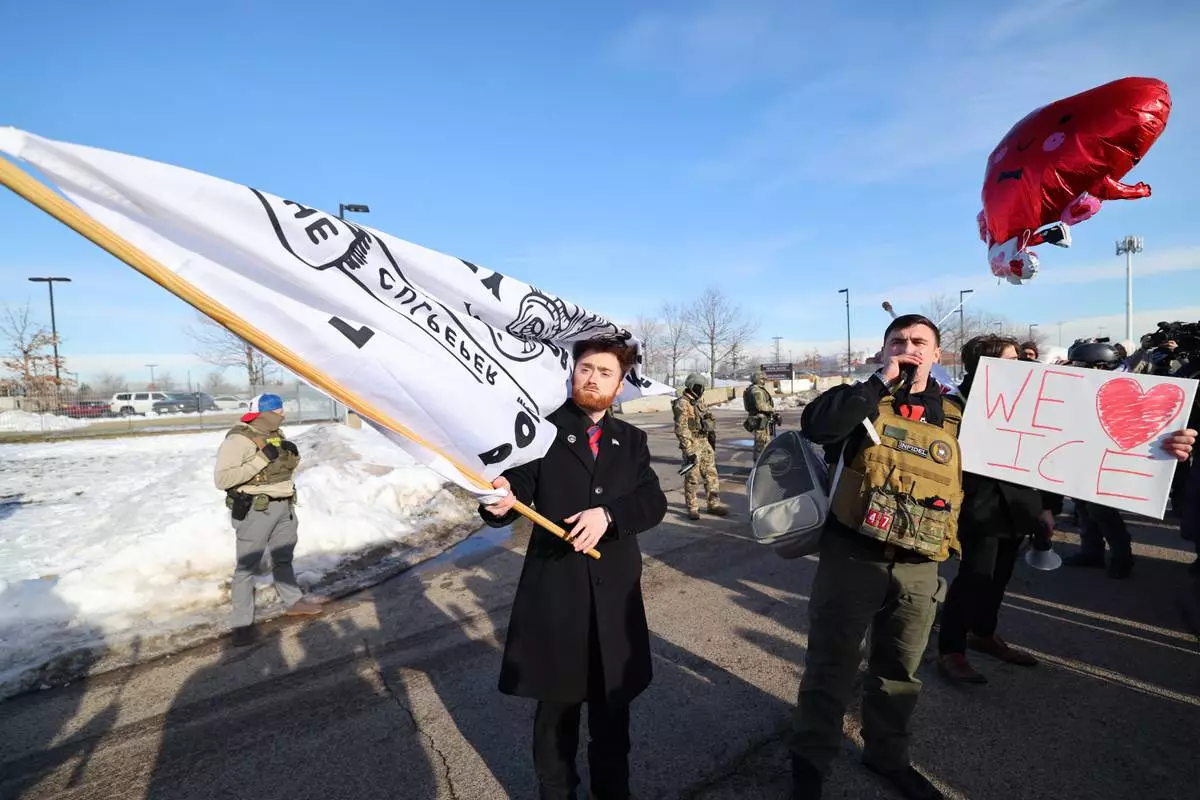
Supporters of United States Immigration and Customs Enforcement rally outside the Bishop Henry Whipple Federal Building in Minneapolis, Friday, Jan. 9, 2026. (AP Photo/Adam Bettcher)
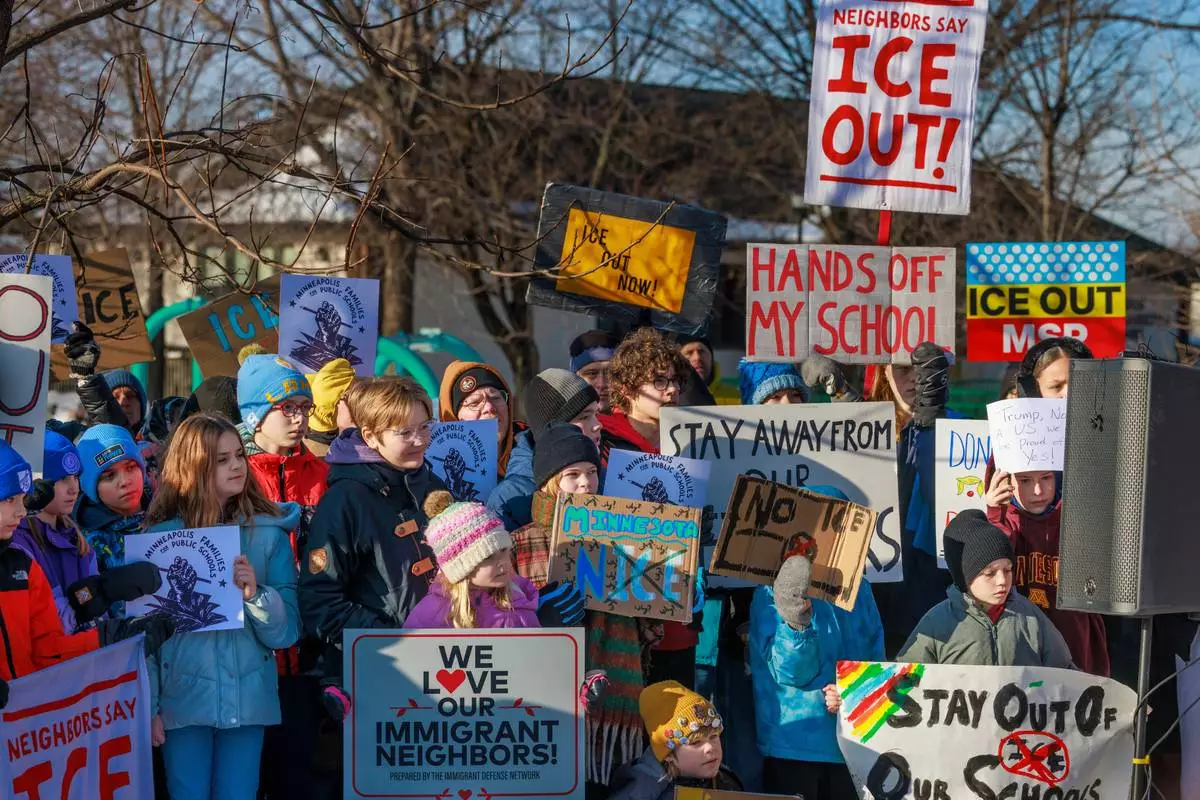
Minneapolis Public Schools families, educators and students hold signs during a news conference at Lake Hiawatha Park in Minneapolis, on Friday, Jan. 9, 2026, demanding Immigration and Customs Enforcement be kept out of schools and Minnesota following the killing of 37-year-old mother Renee Good by federal agents earlier on Wednesday. (Kerem Yücel/Minnesota Public Radio via AP)
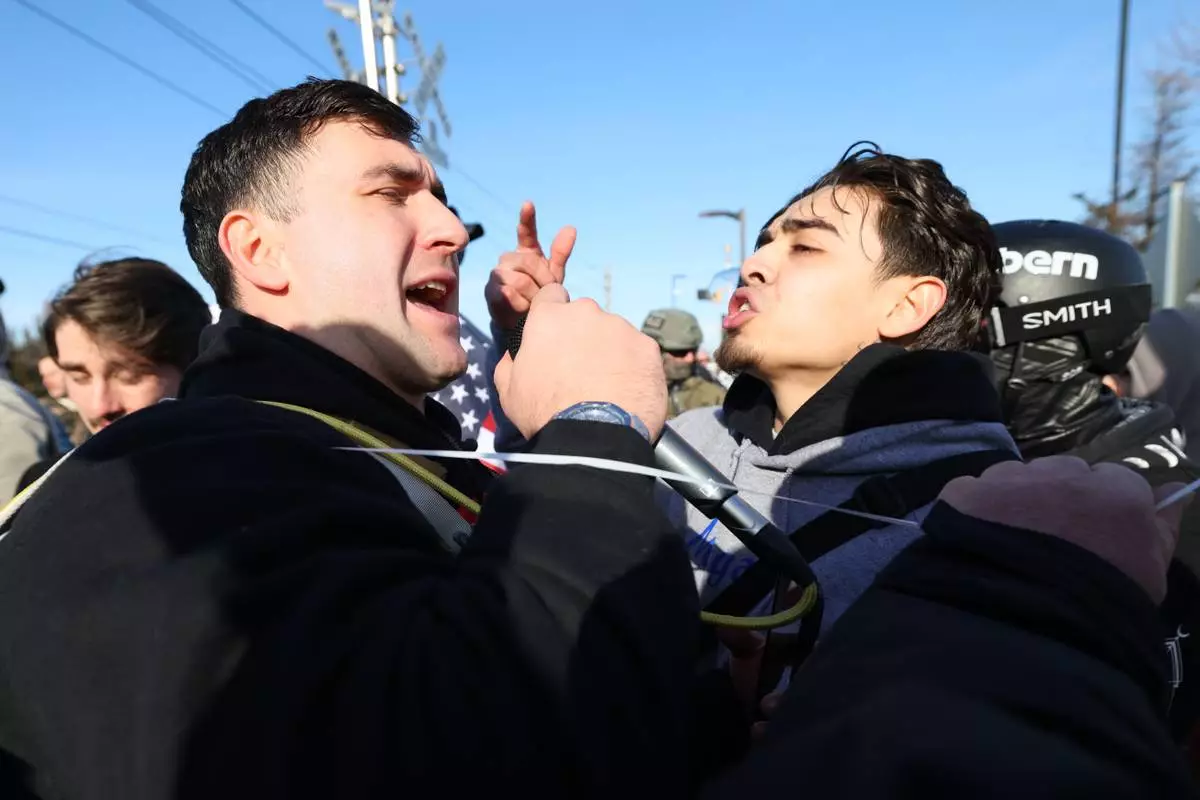
A supporter of United States Immigration and Customs Enforcement argues with a counter protester outside the Bishop Henry Whipple Federal Building in Minneapolis, Friday, Jan. 9, 2026. (AP Photo/Adam Bettcher)
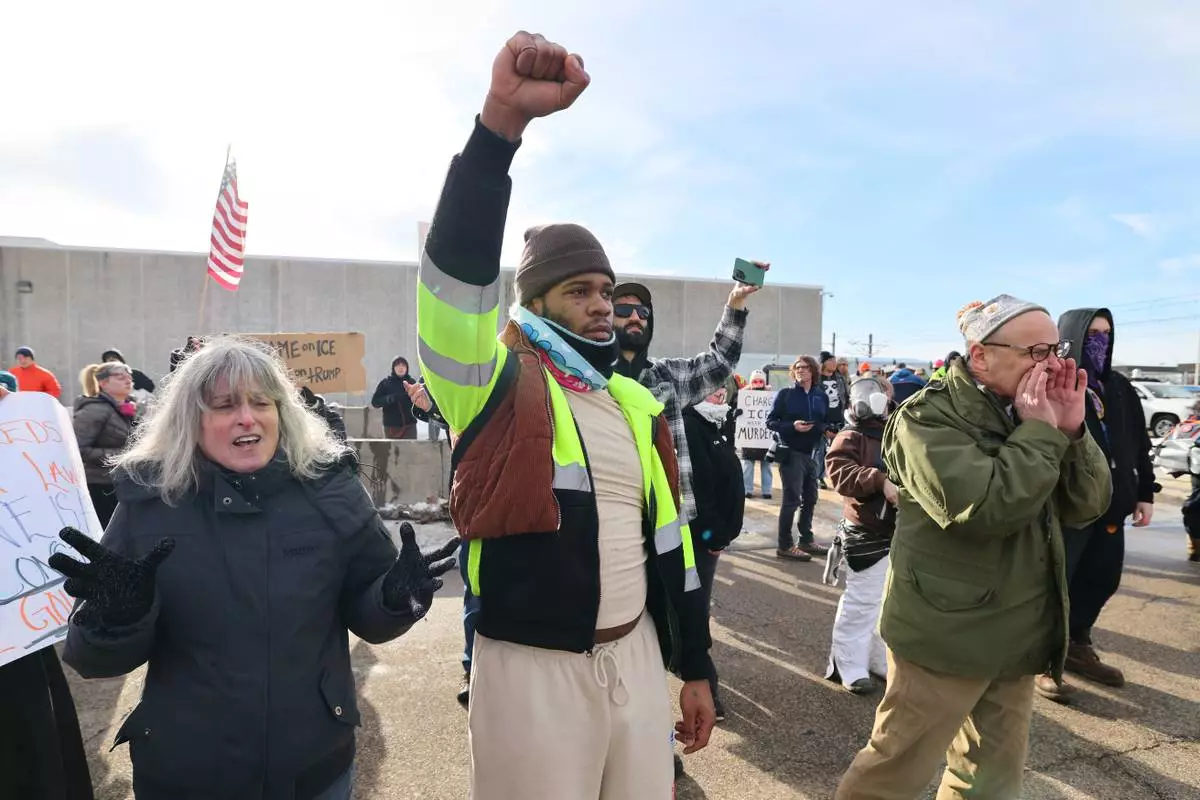
Protesters confront law enforcement outside the Bishop Henry Whipple Federal Building in Minneapolis, Friday, Jan. 9, 2026.(AP Photo/Adam Bettcher)
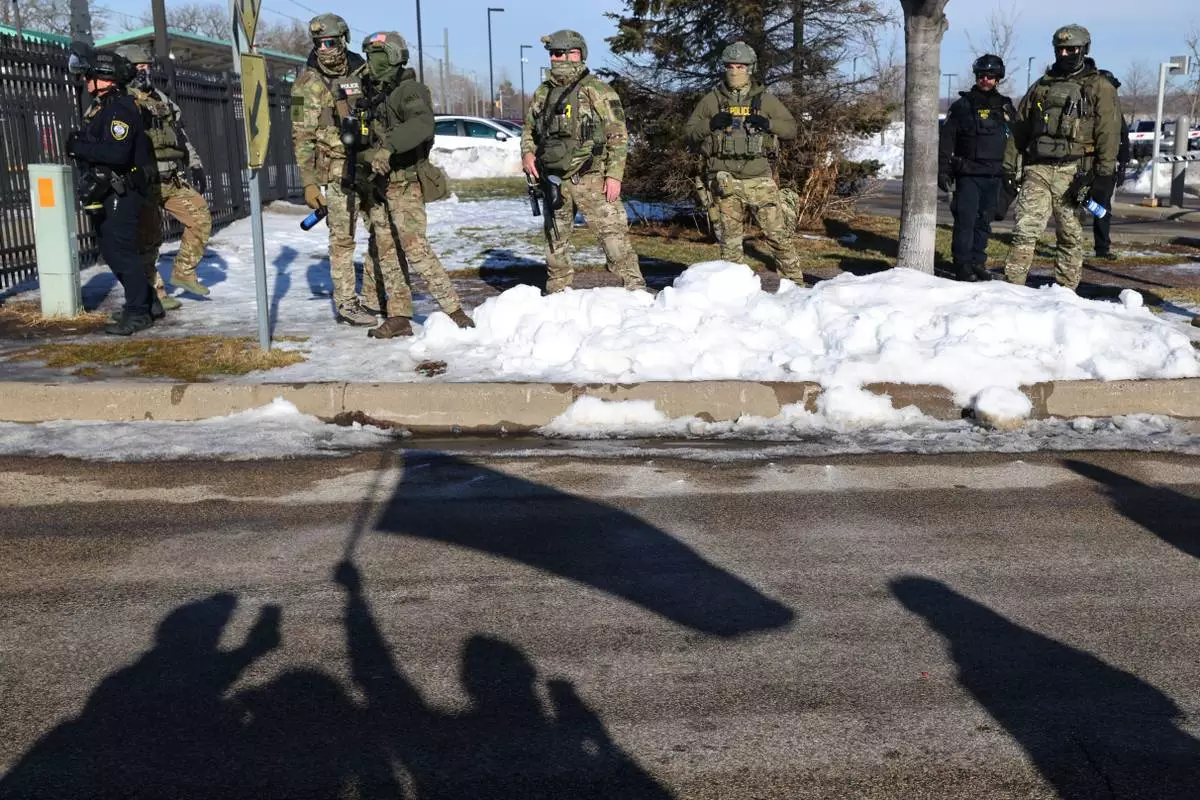
Protesters' shadows are cast on the street near law enforcement outside the Bishop Henry Whipple Federal Building in Minneapolis, Friday, Jan. 9, 2026. (AP Photo/Adam Bettcher)
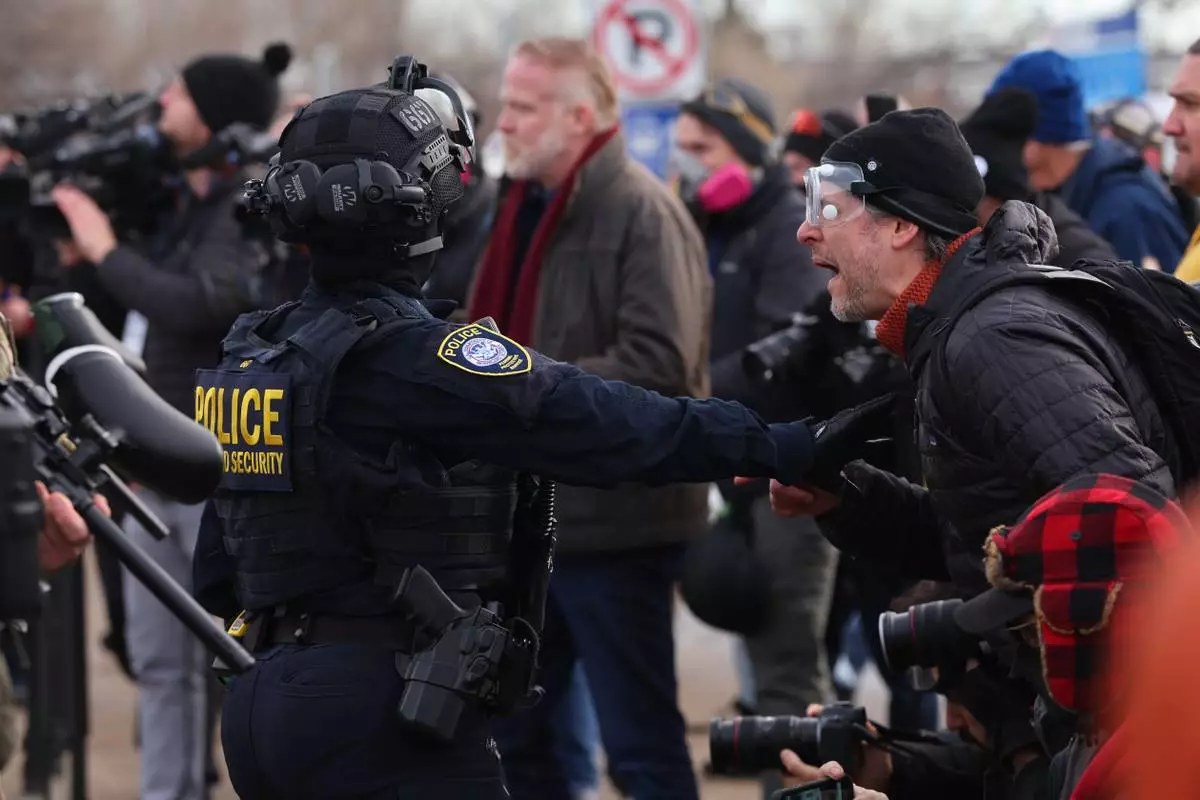
Protesters confront law enforcement outside the Bishop Henry Whipple Federal Building in Minneapolis, Friday, Jan. 9, 2026.(AP Photo/Adam Bettcher)
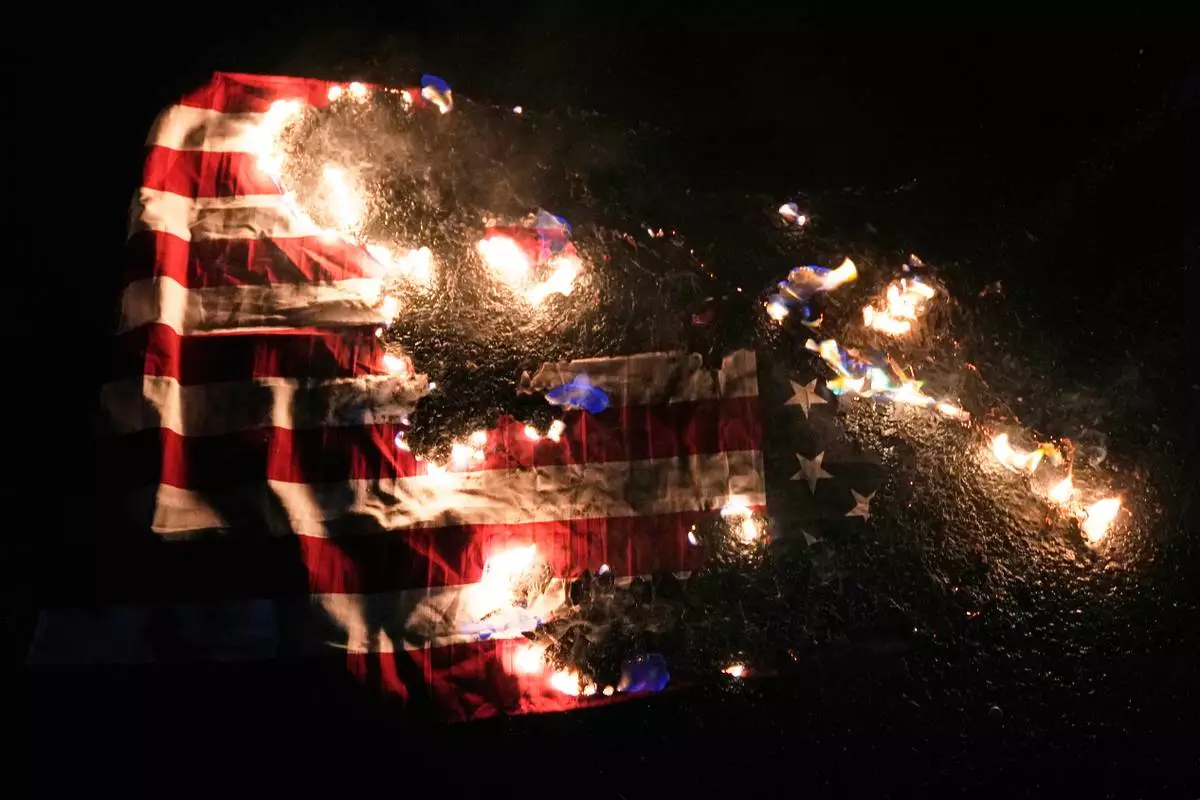
An American flag burns outside the U.S. Immigration and Customs Enforcement facility on Thursday, Jan. 8, 2026, in Portland, Ore. (AP Photo/Jenny Kane)
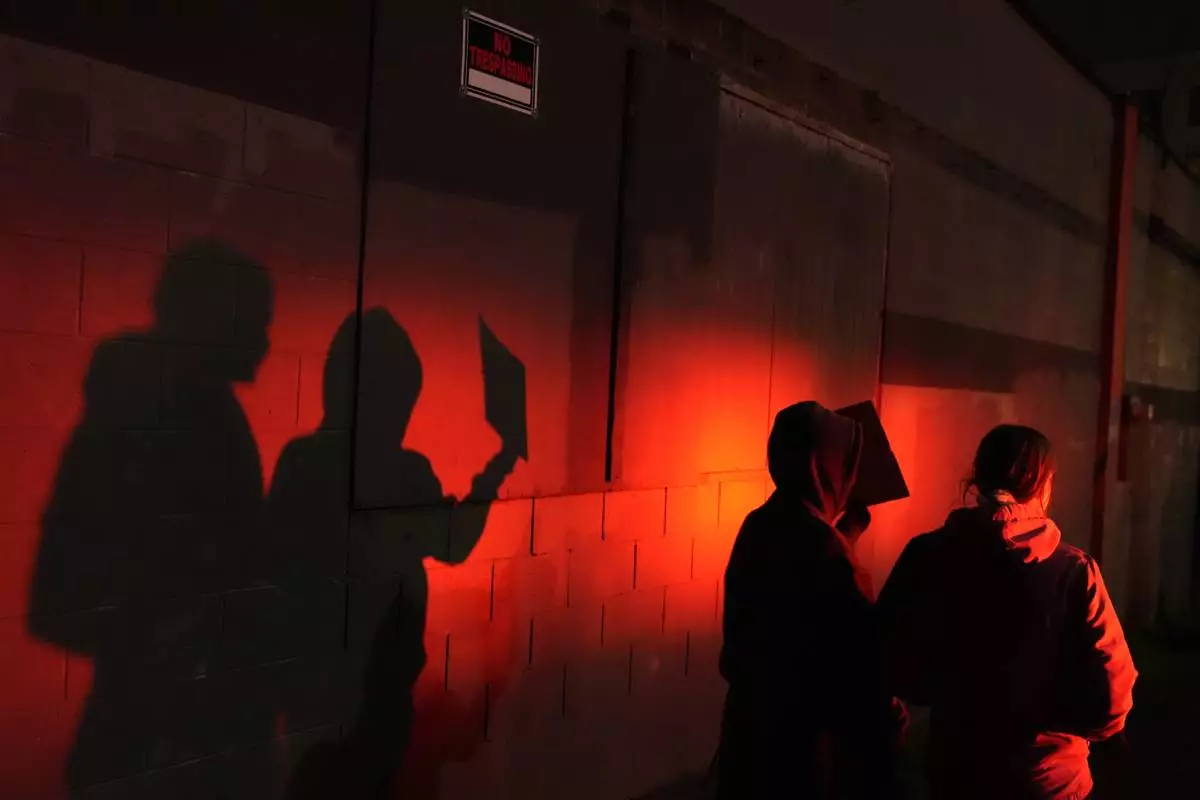
Two protesters are lit by a police light as they walk outside the U.S. Immigration and Customs Enforcement facility on Thursday, Jan. 8, 2026, in Portland, Ore. (AP Photo/Jenny Kane)
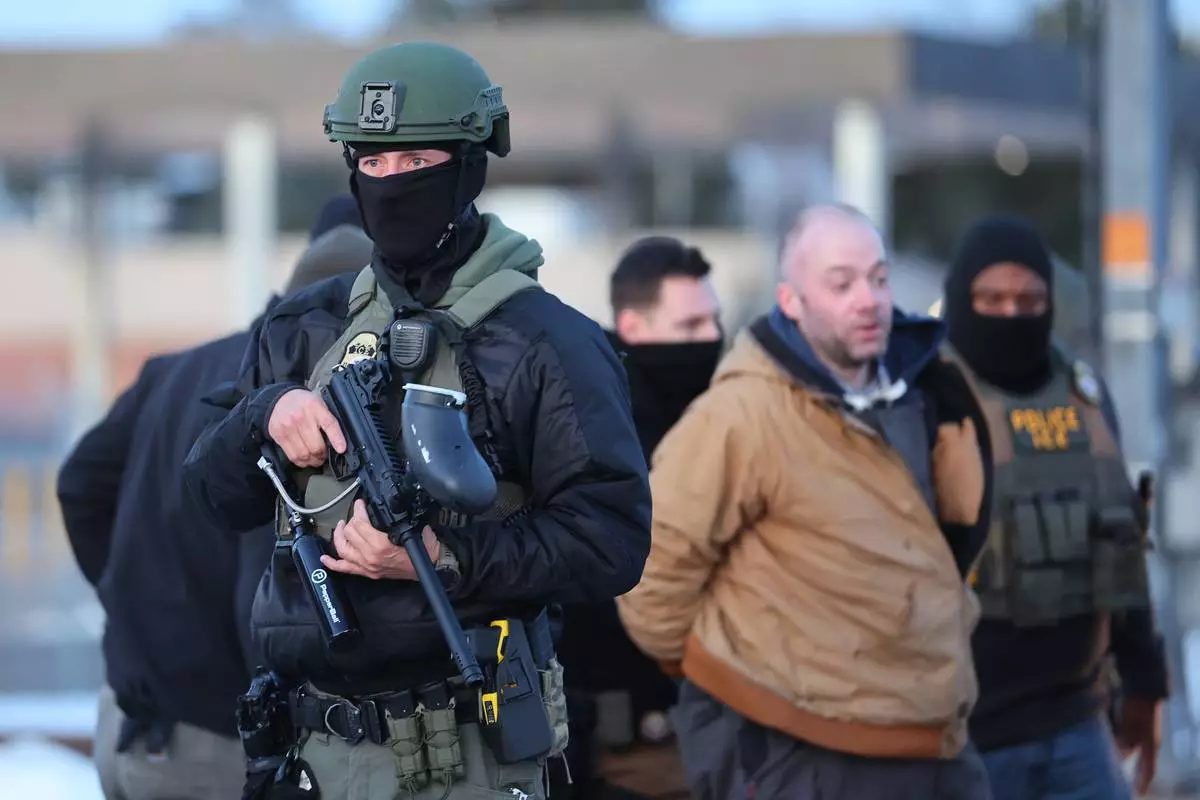
Protesters are arrested by federal agents outside the Bishop Henry Whipple Federal Building in Minneapolis, Friday, Jan. 9, 2026. (AP Photo/Adam Bettcher)
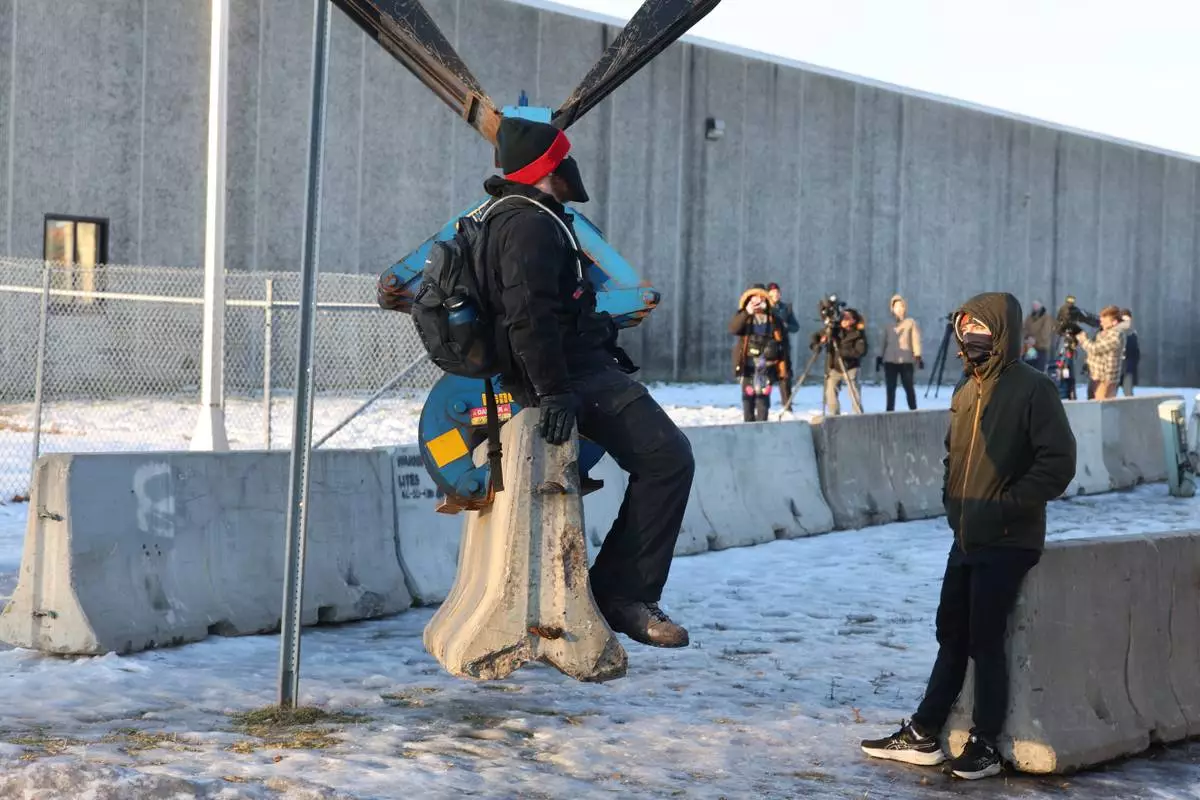
Protesters sit on a barrier that is being assembled outside the Bishop Henry Whipple Federal Building as protesters gather in Minneapolis, Friday, Jan. 9, 2026. (AP Photo/Adam Bettcher)
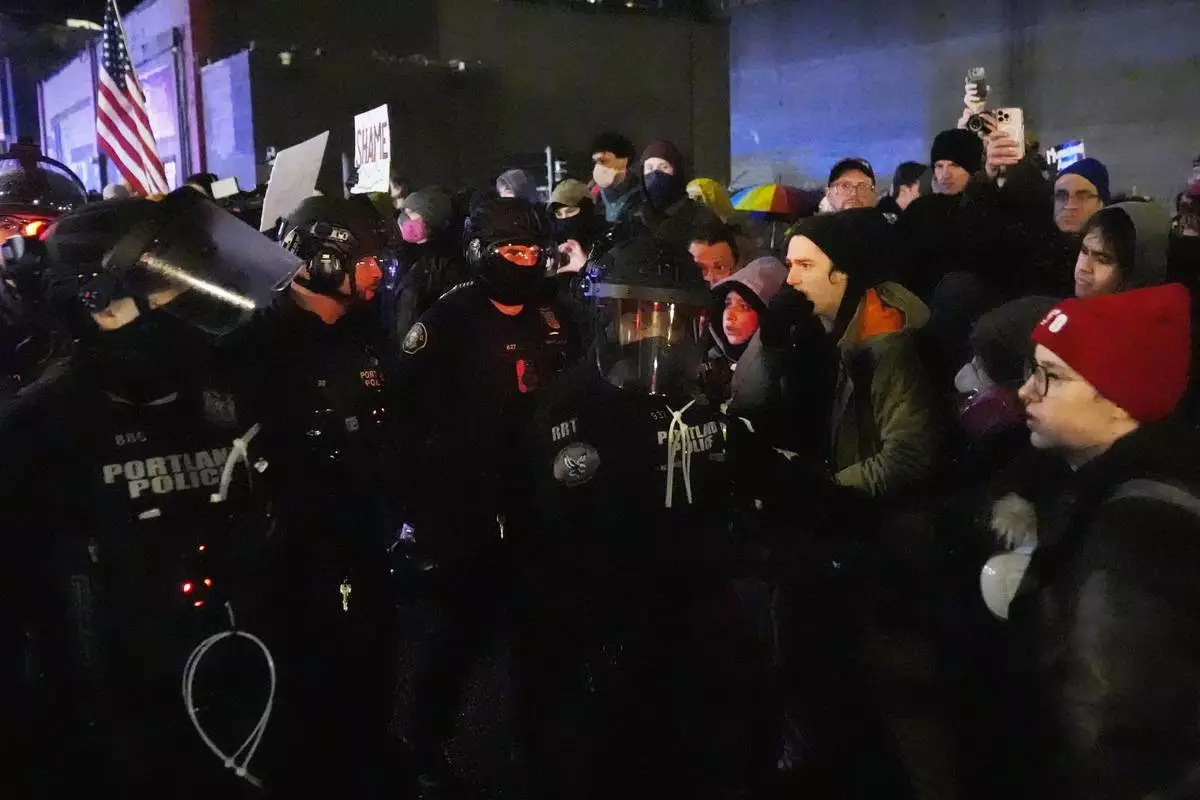
Protesters stand off against law enforcement outside the U.S. Immigration and Customs Enforcement facility in Portland, Ore., Thursday, Jan. 8, 2026. (AP Photo/Jenny Kane)
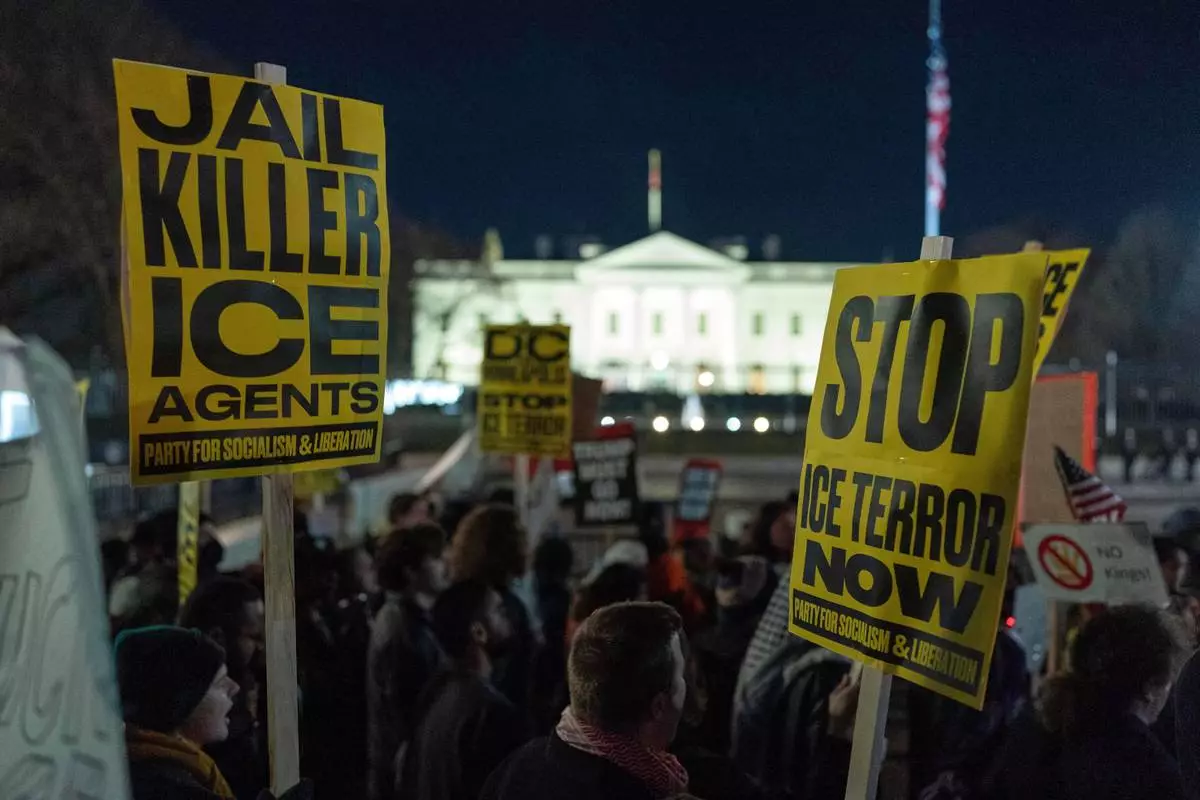
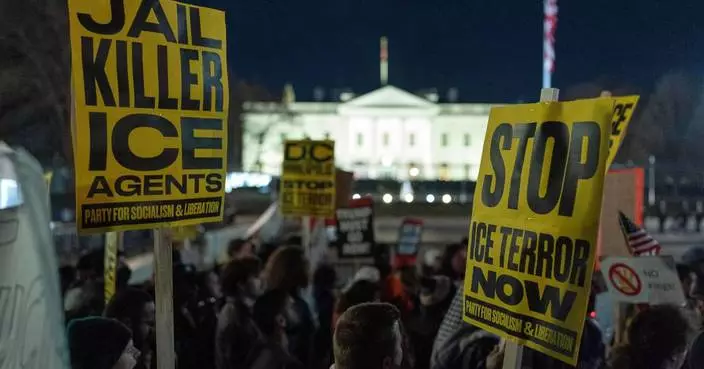
Demonstrators protest outside the White House in Washington, Thursday, Jan. 8, 2026, against the Immigration and Customs Enforcement (ICE) agent who fatally shot Renee Nicole Good in Minneapolis. (AP Photo/Jose Luis Magana)
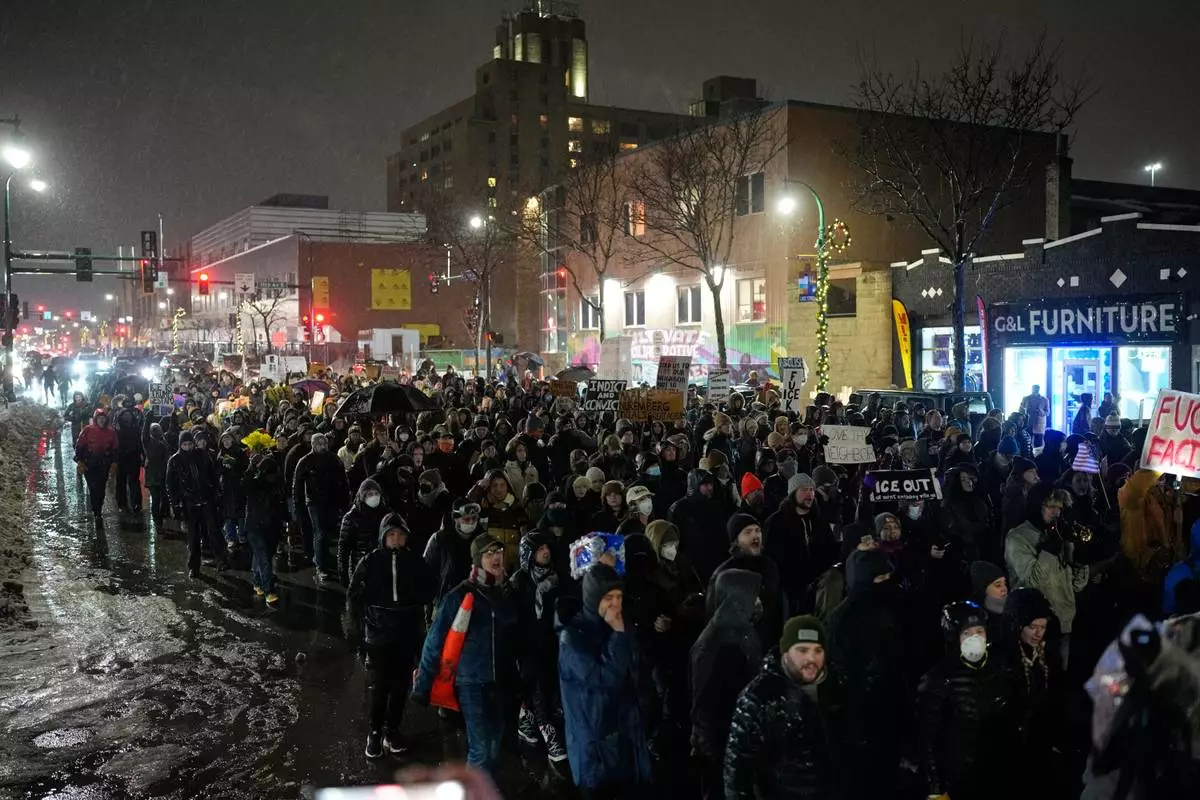
Protesters chant and march during a rally for Renee Good, who was fatally shot by an ICE officer the day before, Thursday, Jan. 8, 2026, in Minneapolis. (AP Photo/John Locher)
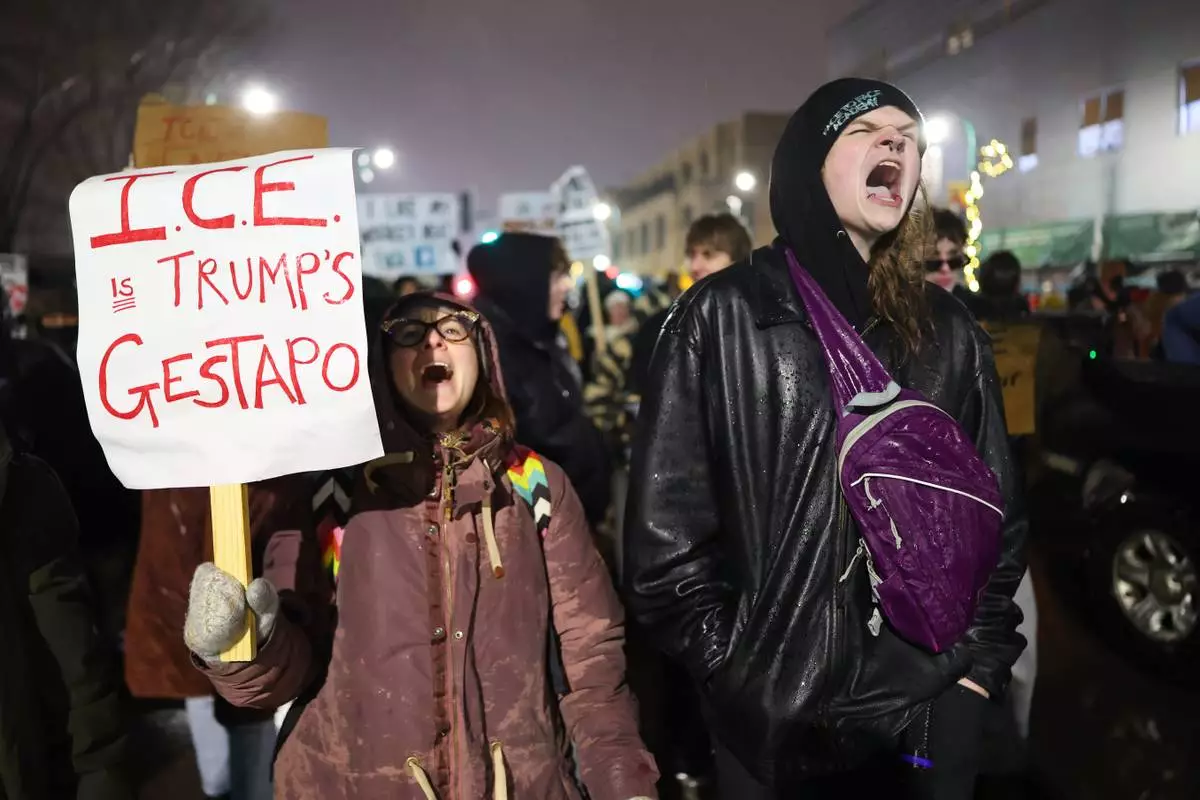
Protesters gather during a rally for Renee Good, Thursday, Jan. 8, 2026, in Minneapolis, after she was fatally shot by an ICE officer the day before. (AP Photo/Adam Bettcher)
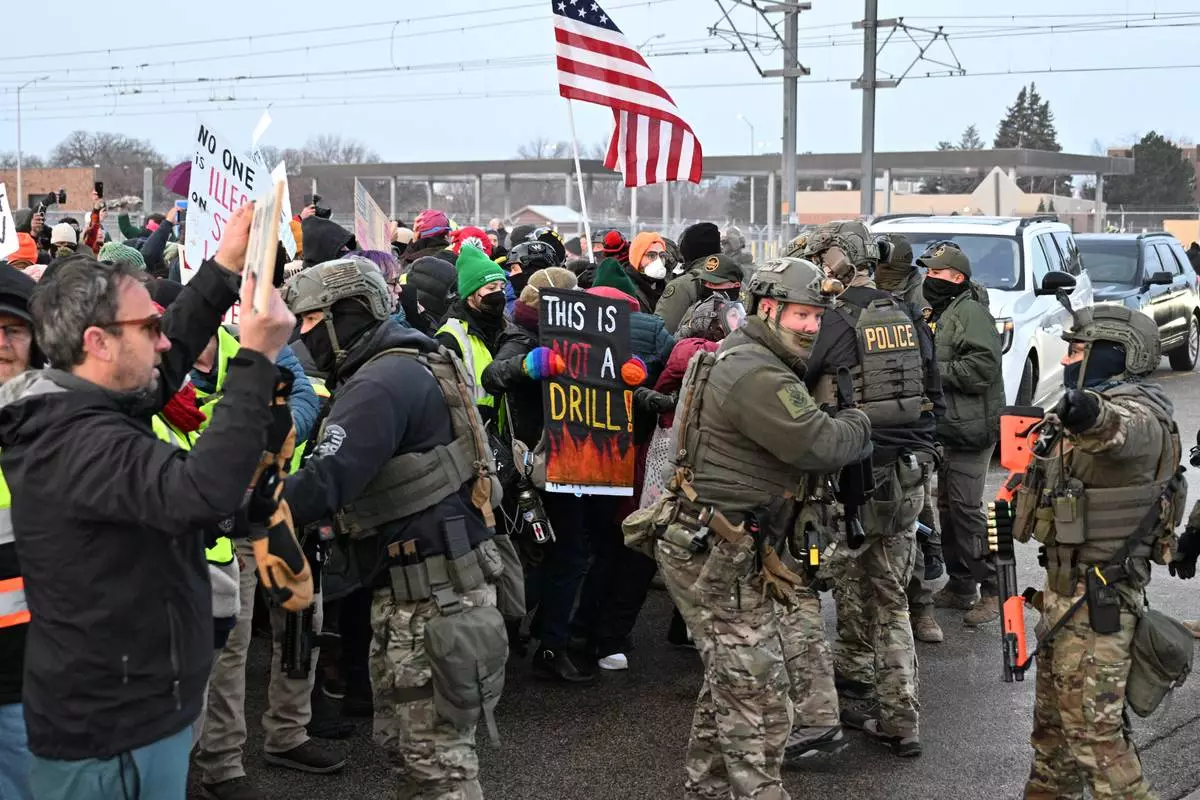
Protesters confront federal agents outside the Bishop Henry Whipple Federal Building, Thursday, Jan. 8, 2026, in Minneapolis, Minn. (AP Photo/Tom Baker)
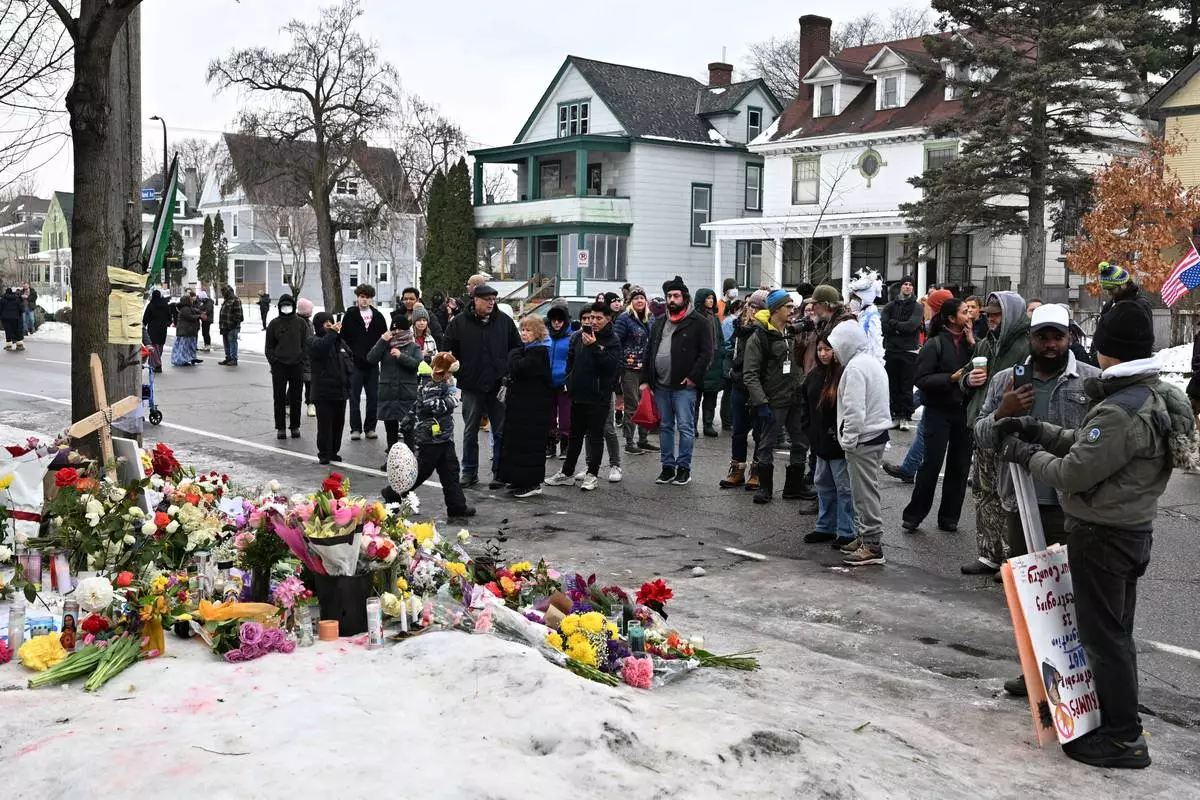
People gather around a makeshift memorial honoring the victim of a fatal shooting involving federal law enforcement agents, near the site of the shooting, Thursday, Jan. 8, 2026, in Minneapolis. (AP Photo/Tom Baker)
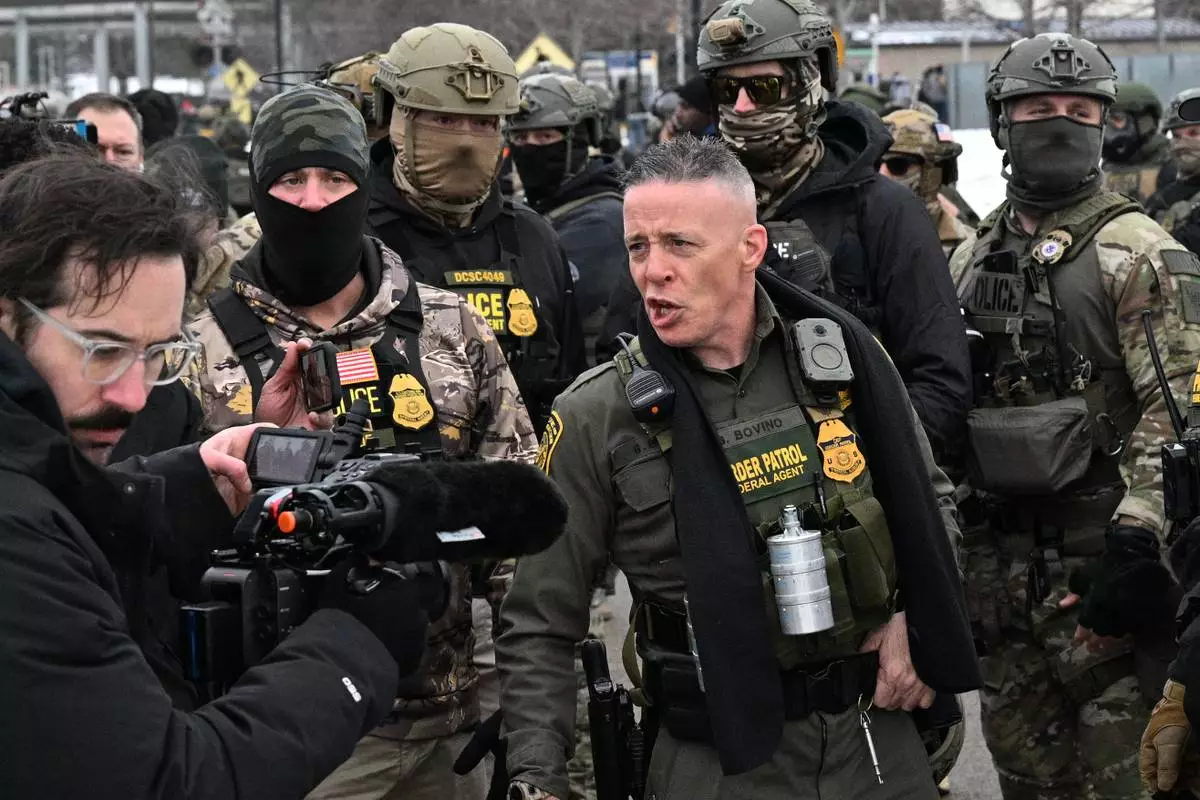
U.S. Border Patrol Cmdr. Gregory Bovino arrives as protesters gather outside the Bishop Henry Whipple Federal Building, Thursday, Jan. 8, 2026, in Minneapolis, Minn. (AP Photo/Tom Baker)
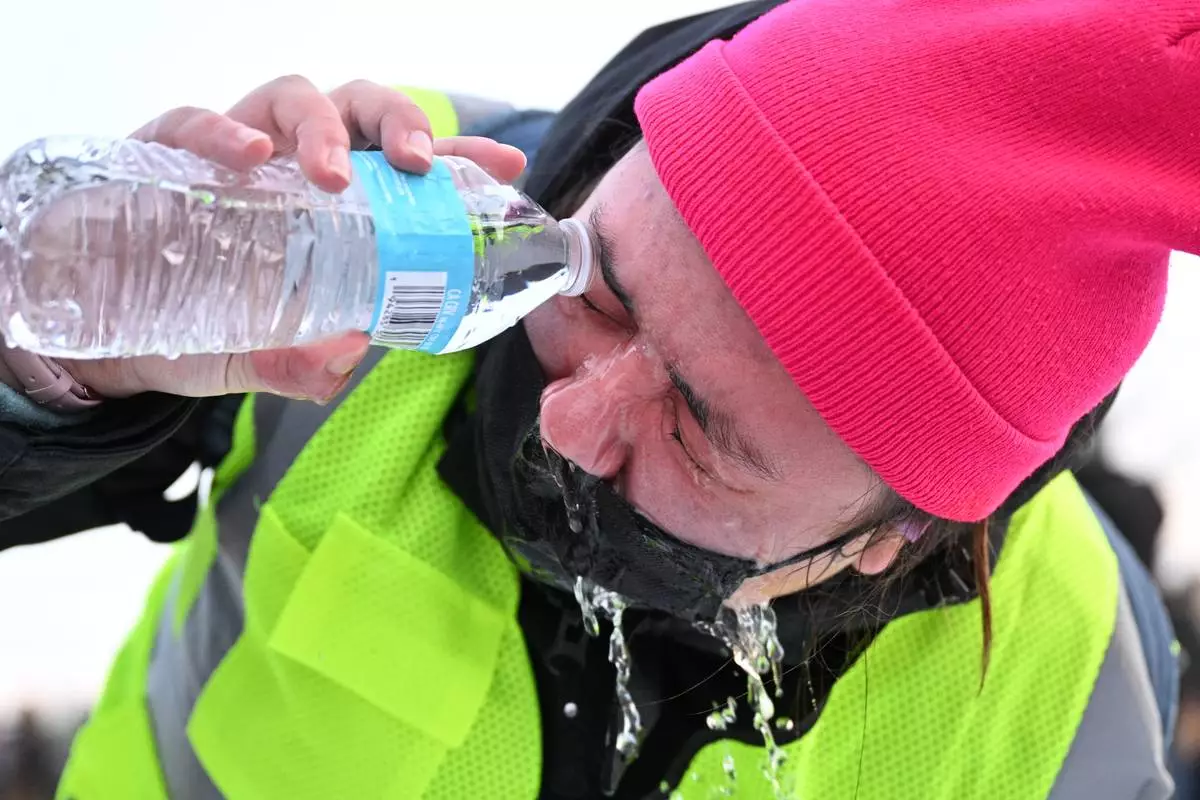
A protester pours water in their eye after confronting law enforcement outside the Bishop Henry Whipple Federal Building, Thursday, Jan. 8, 2026, in Minneapolis, Minn. (AP Photo/Tom Baker)
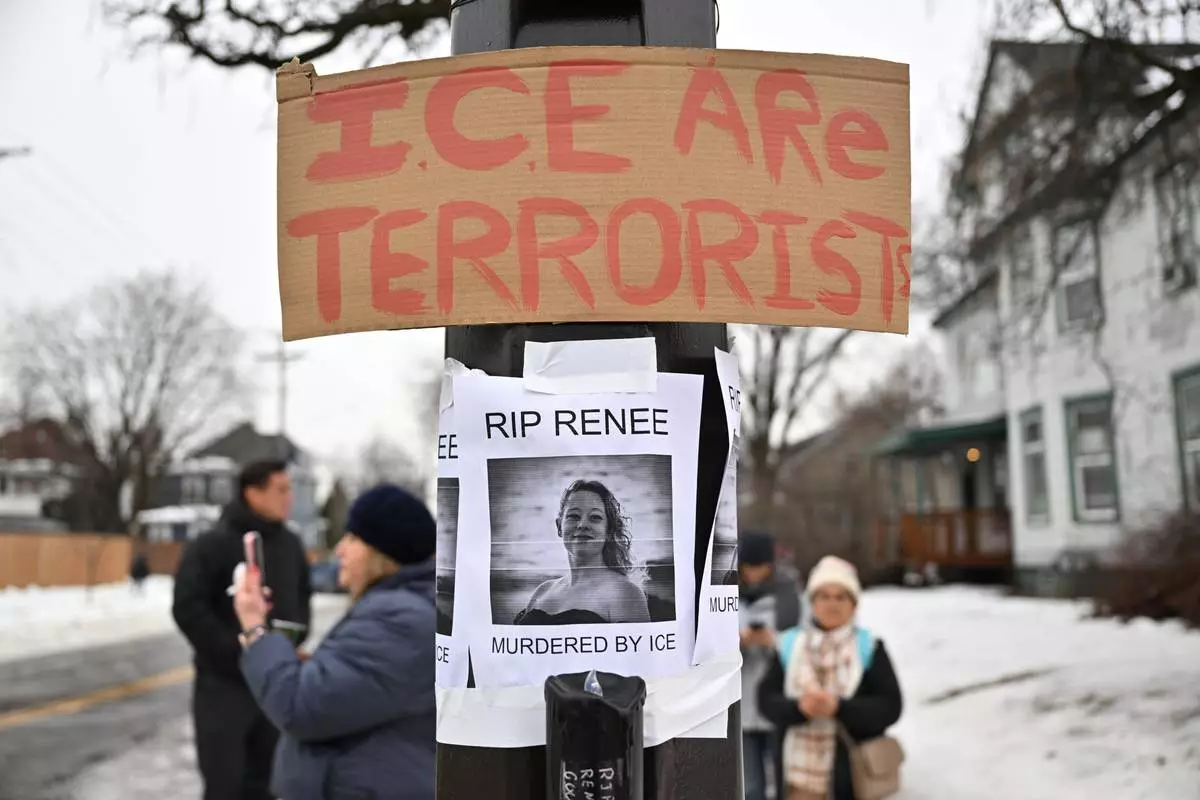
People gather around a makeshift memorial honoring the victim of a fatal shooting involving federal law enforcement agents, near the site of the shooting, Thursday, Jan. 8, 2026, in Minneapolis. (AP Photo/Tom Baker)