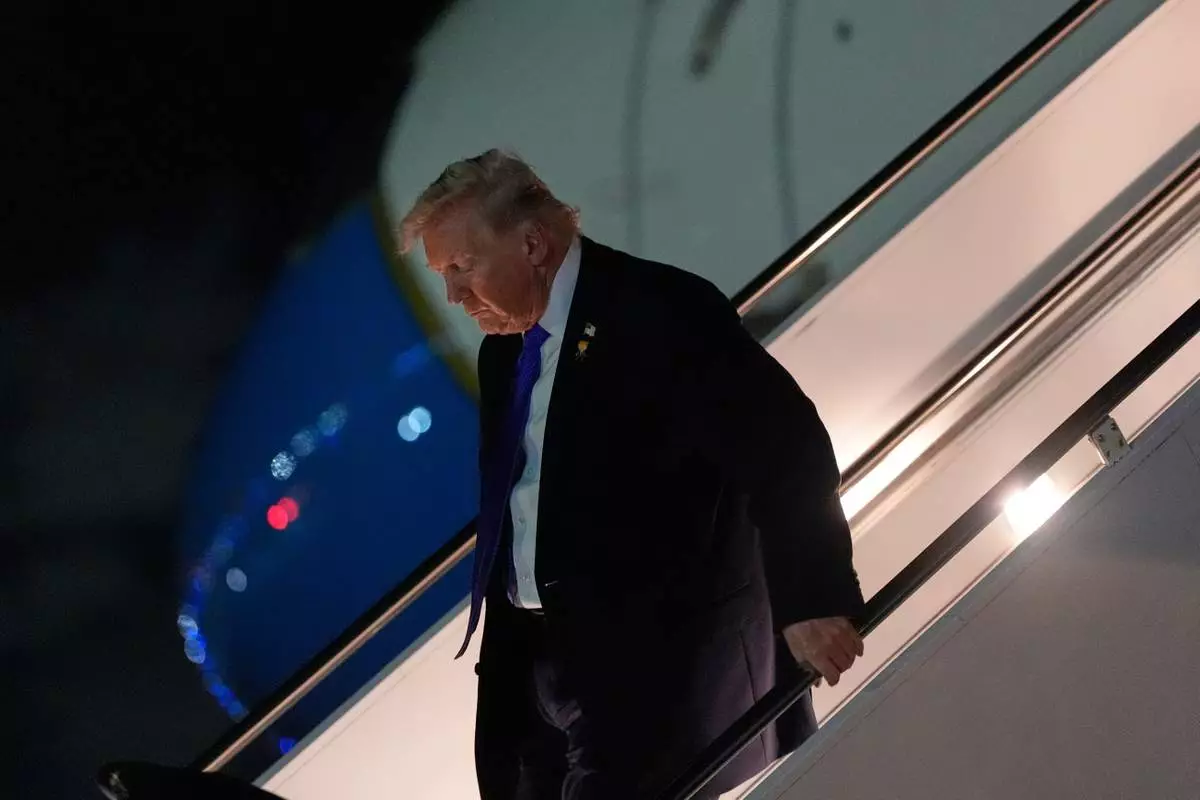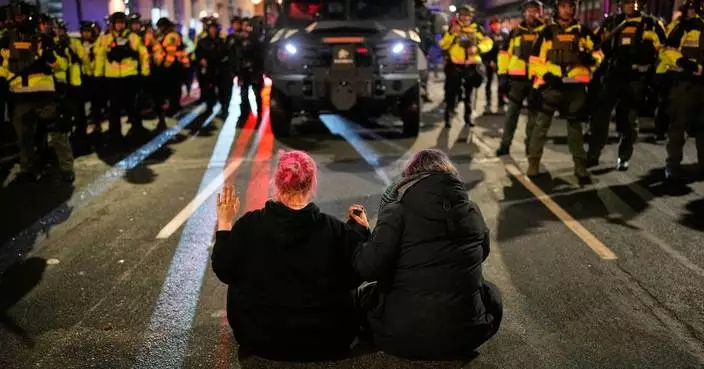
U.S. President Donald Trump wants to own Greenland. He has repeatedly said the United States must take control of the strategically located and mineral-rich island, which is a semiautonomous region that's part of NATO ally Denmark.
Officials from Denmark, Greenland and the United States met Thursday in Washington and will meet again next week to discuss a renewed push by the White House, which is considering a range of options, including using military force, to acquire the island.
Click to Gallery
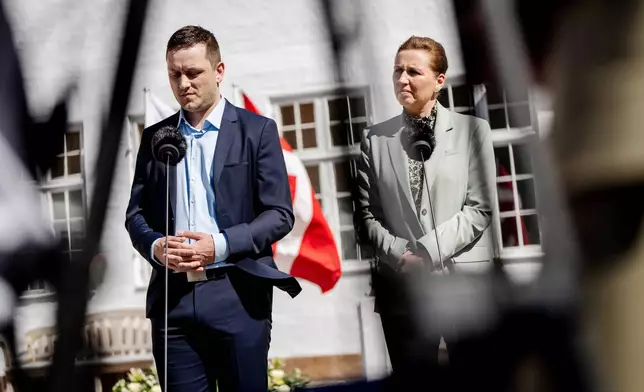
CORRECT THE ORDER OF SPEAKERS, FILE - Denmark's Prime Minister Mette Frederiksen, right, and Greenland's Prime Minister Jens-Frederik Nielsen, left, speak on April 27, 2025, in Marienborg, Denmark. (Mads Claus Rasmussen/Ritzau Scanpix via AP, File)
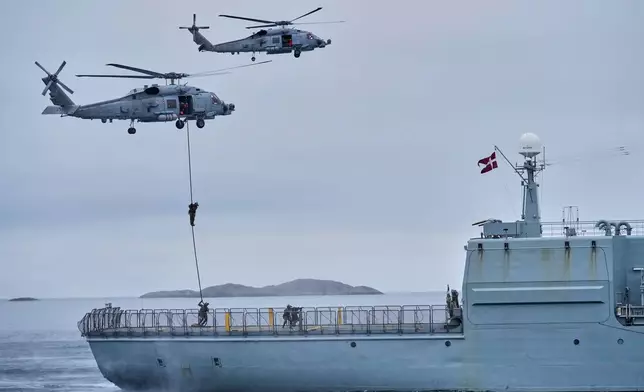
FILE - Danish military forces participate in an exercise with hundreds of troops from several European NATO members in the Arctic Ocean in Nuuk, Greenland, Sept. 15, 2025. (AP Photo/Ebrahim Noroozi, File)
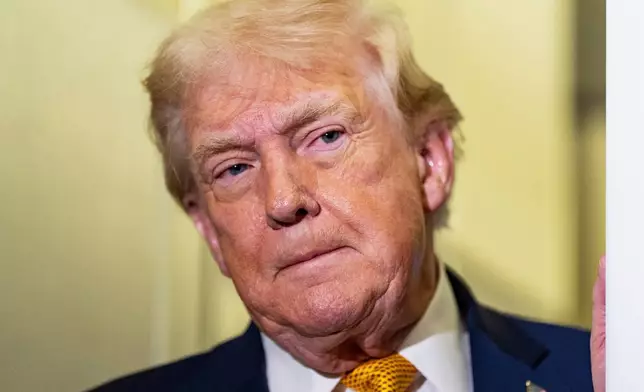
President Donald Trump listens as he was speaking with reporters while in flight on Air Force One, Sunday, Jan. 4, 2026, as returning to Joint Base Andrews, Md. (AP Photo/Alex Brandon)

Danish Prime Minister Mette Frederiksen arrives for a meeting of the Coalition of the Willing at the Elysee Palace in Paris, France, Tuesday, Jan.6, 2026. (Yoan Valat, Pool photo via AP)
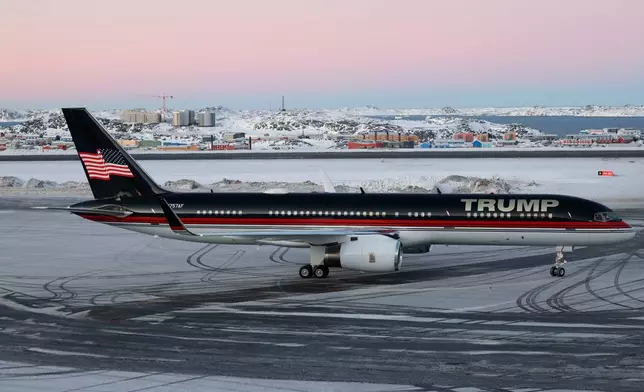
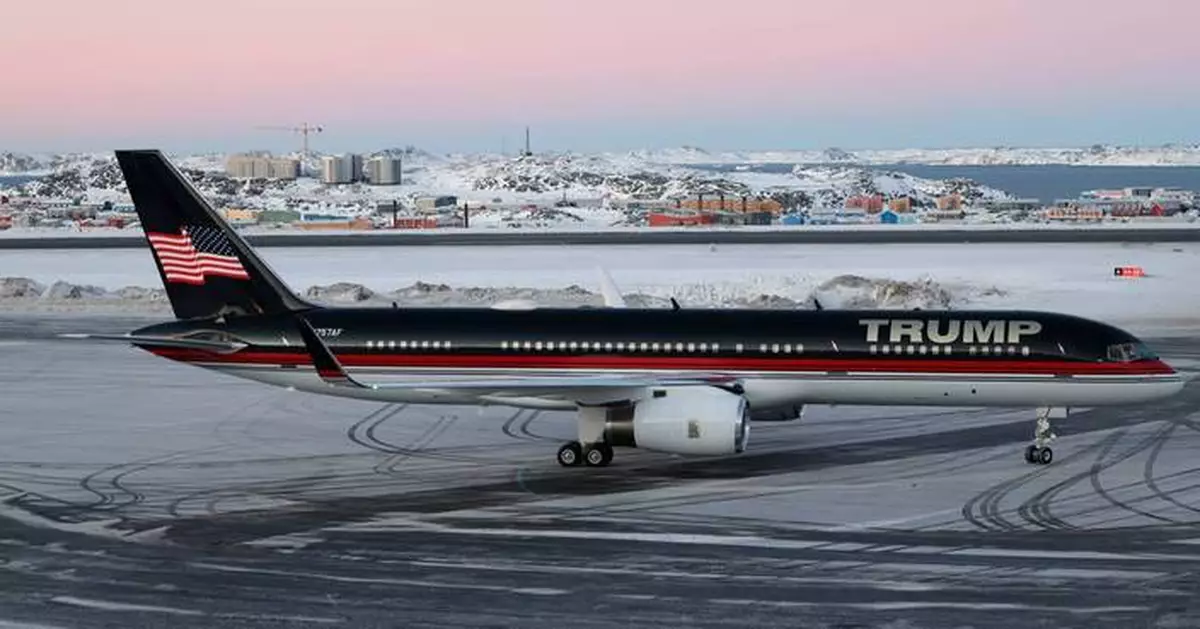
FILE - A plane carrying Donald Trump Jr. lands in Nuuk, Greenland, Jan. 7, 2025. (Emil Stach/Ritzau Scanpix via AP, file)
Trump said Friday he is going to do “something on Greenland, whether they like it or not.”
If it's not done “the easy way, we're going to do it the hard way," he said without elaborating what that could entail. In an interview Thursday, he told The New York Times that he wants to own Greenland because “ownership gives you things and elements that you can’t get from just signing a document.”
Danish Prime Minister Mette Frederiksen has warned that an American takeover of Greenland would mark the end of NATO, and Greenlanders say they don't want to become part of the U.S.
This is a look at some of the ways the U.S. could take control of Greenland and the potential challenges.
Trump and his officials have indicated they want to control Greenland to enhance American security and explore business and mining deals. But Imran Bayoumi, an associate director at the Atlantic Council’s Scowcroft Center for Strategy and Security, said the sudden focus on Greenland is also the result of decades of neglect by several U.S. presidents towards Washington's position in the Arctic.
The current fixation is partly down to “the realization we need to increase our presence in the Arctic, and we don’t yet have the right strategy or vision to do so,” he said.
If the U.S. took control of Greenland by force, it would plunge NATO into a crisis, possibly an existential one.
While Greenland is the largest island in the world, it has a population of around 57,000 and doesn't have its own military. Defense is provided by Denmark, whose military is dwarfed by that of the U.S.
It's unclear how the remaining members of NATO would respond if the U.S. decided to forcibly take control of the island or if they would come to Denmark's aid.
“If the United States chooses to attack another NATO country militarily, then everything stops,” Frederiksen has said.
Trump said he needs control of the island to guarantee American security, citing the threat from Russian and Chinese ships in the region, but “it's not true” said Lin Mortensgaard, an expert on the international politics of the Arctic at the Danish Institute for International Studies, or DIIS.
While there are probably Russian submarines — as there are across the Arctic region — there are no surface vessels, Mortensgaard said. China has research vessels in the Central Arctic Ocean, and while the Chinese and Russian militaries have done joint military exercises in the Arctic, they have taken place closer to Alaska, she said.
Bayoumi, of the Atlantic Council, said he doubted Trump would take control of Greenland by force because it’s unpopular with both Democratic and Republican lawmakers, and would likely “fundamentally alter” U.S. relationships with allies worldwide.
The U.S. already has access to Greenland under a 1951 defense agreement, and Denmark and Greenland would be “quite happy” to accommodate a beefed up American military presence, Mortensgaard said.
For that reason, “blowing up the NATO alliance” for something Trump has already, doesn’t make sense, said Ulrik Pram Gad, an expert on Greenland at DIIS.
U.S. Secretary of State Marco Rubio told a select group of U.S. lawmakers this week that it was the Republican administration’s intention to eventually purchase Greenland, as opposed to using military force. Danish and Greenlandic officials have previously said the island isn't for sale.
It's not clear how much buying the island could cost, or if the U.S. would be buying it from Denmark or Greenland.
Washington also could boost its military presence in Greenland “through cooperation and diplomacy,” without taking it over, Bayoumi said.
One option could be for the U.S. to get a veto over security decisions made by the Greenlandic government, as it has in islands in the Pacific Ocean, Gad said.
Palau, Micronesia and the Marshall Islands have a Compact of Free Association, or COFA, with the U.S.
That would give Washington the right to operate military bases and make decisions about the islands’ security in exchange for U.S. security guarantees and around $7 billion of yearly economic assistance, according to the Congressional Research Service.
It's not clear how much that would improve upon Washington's current security strategy. The U.S. already operates the remote Pituffik Space Base in northwestern Greenland, and can bring as many troops as it wants under existing agreements.
Greenlandic politician Aaja Chemnitz told The Associated Press that Greenlanders want more rights, including independence, but don't want to become part of the U.S.
Gad suggested influence operations to persuade Greenlanders to join the U.S. would likely fail. He said that is because the community on the island is small and the language is “inaccessible.”
Danish Foreign Minister Lars Løkke Rasmussen summoned the top U.S. official in Denmark in August to complain that “foreign actors” were seeking to influence the country’s future. Danish media reported that at least three people with connections to Trump carried out covert influence operations in Greenland.
Even if the U.S. managed to take control of Greenland, it would likely come with a large bill, Gad said. That’s because Greenlanders currently have Danish citizenship and access to the Danish welfare system, including free health care and schooling.
To match that, “Trump would have to build a welfare state for Greenlanders that he doesn’t want for his own citizens,” Gad said.
Since 1945, the American military presence in Greenland has decreased from thousands of soldiers over 17 bases and installations to 200 at the remote Pituffik Space Base in the northwest of the island, Rasmussen said last year. The base supports missile warning, missile defense and space surveillance operations for the U.S. and NATO.
U.S. Vice President J.D. Vance told Fox News on Thursday that Denmark has neglected its missile defense obligations in Greenland, but Mortensgaard said that it makes “little sense to criticize Denmark,” because the main reason why the U.S. operates the Pituffik base in the north of the island is to provide early detection of missiles.
The best outcome for Denmark would be to update the defense agreement, which allows the U.S. to have a military presence on the island and have Trump sign it with a “gold-plated signature,” Gad said.
But he suggested that's unlikely because Greenland is “handy” to the U.S president.
When Trump wants to change the news agenda — including distracting from domestic political problems — “he can just say the word ‘Greenland' and this starts all over again," Gad said.
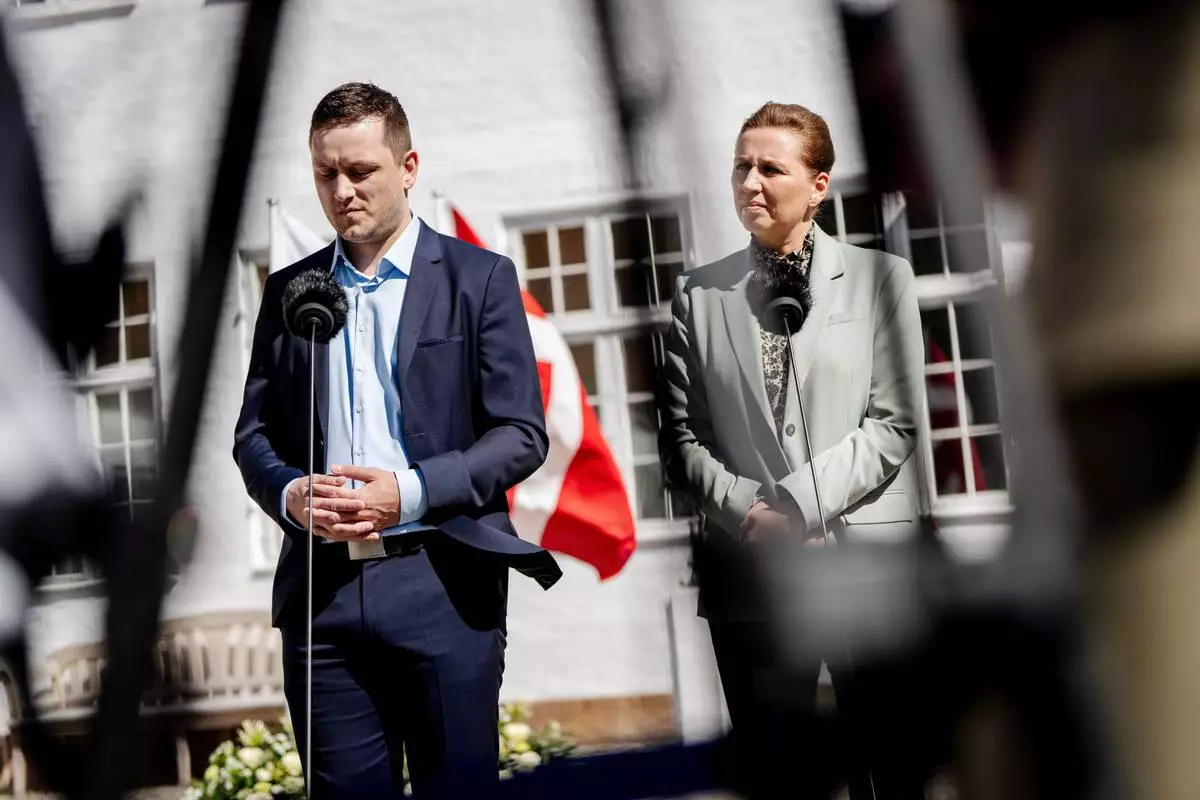
CORRECT THE ORDER OF SPEAKERS, FILE - Denmark's Prime Minister Mette Frederiksen, right, and Greenland's Prime Minister Jens-Frederik Nielsen, left, speak on April 27, 2025, in Marienborg, Denmark. (Mads Claus Rasmussen/Ritzau Scanpix via AP, File)
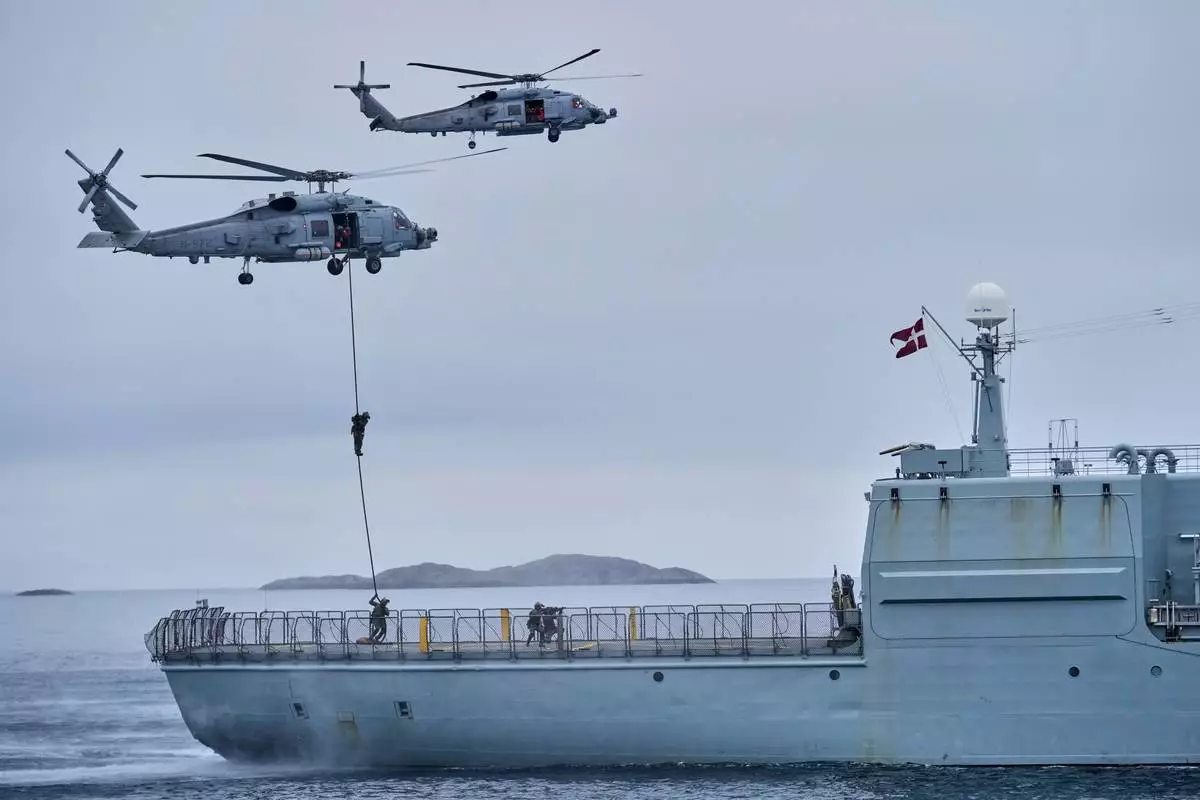
FILE - Danish military forces participate in an exercise with hundreds of troops from several European NATO members in the Arctic Ocean in Nuuk, Greenland, Sept. 15, 2025. (AP Photo/Ebrahim Noroozi, File)
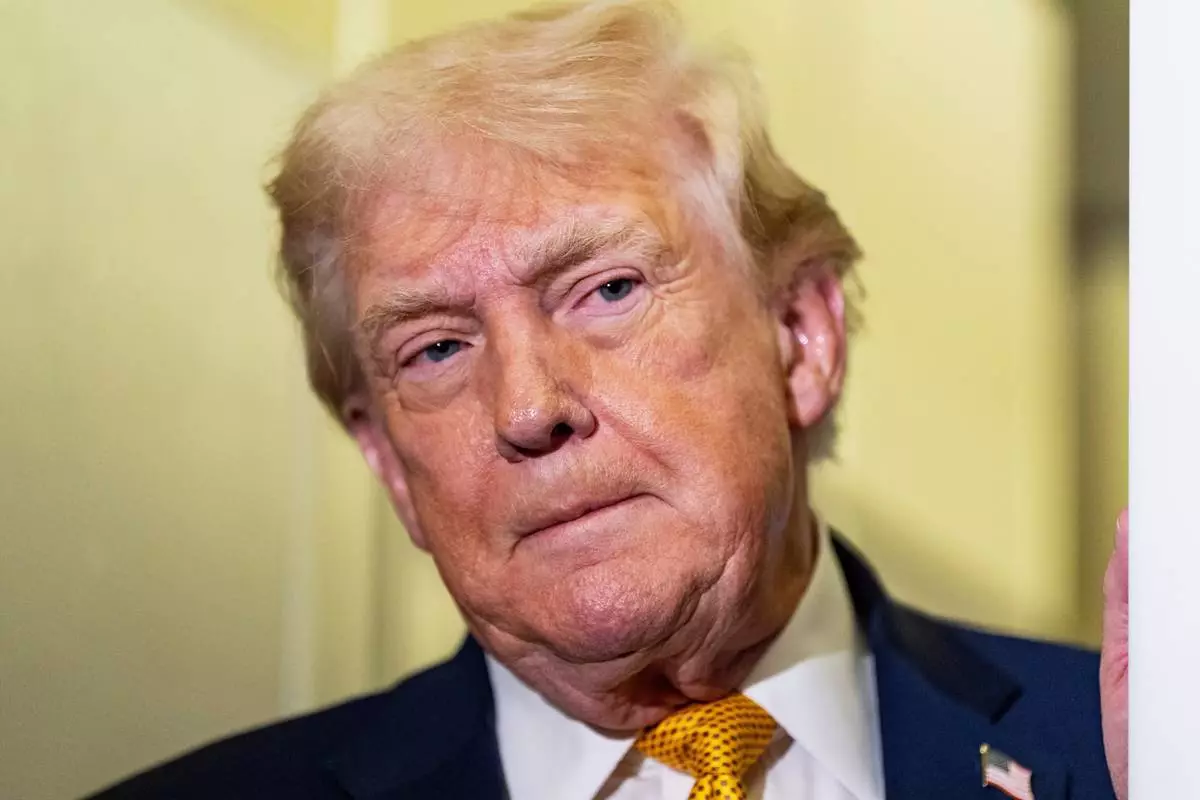
President Donald Trump listens as he was speaking with reporters while in flight on Air Force One, Sunday, Jan. 4, 2026, as returning to Joint Base Andrews, Md. (AP Photo/Alex Brandon)

Danish Prime Minister Mette Frederiksen arrives for a meeting of the Coalition of the Willing at the Elysee Palace in Paris, France, Tuesday, Jan.6, 2026. (Yoan Valat, Pool photo via AP)
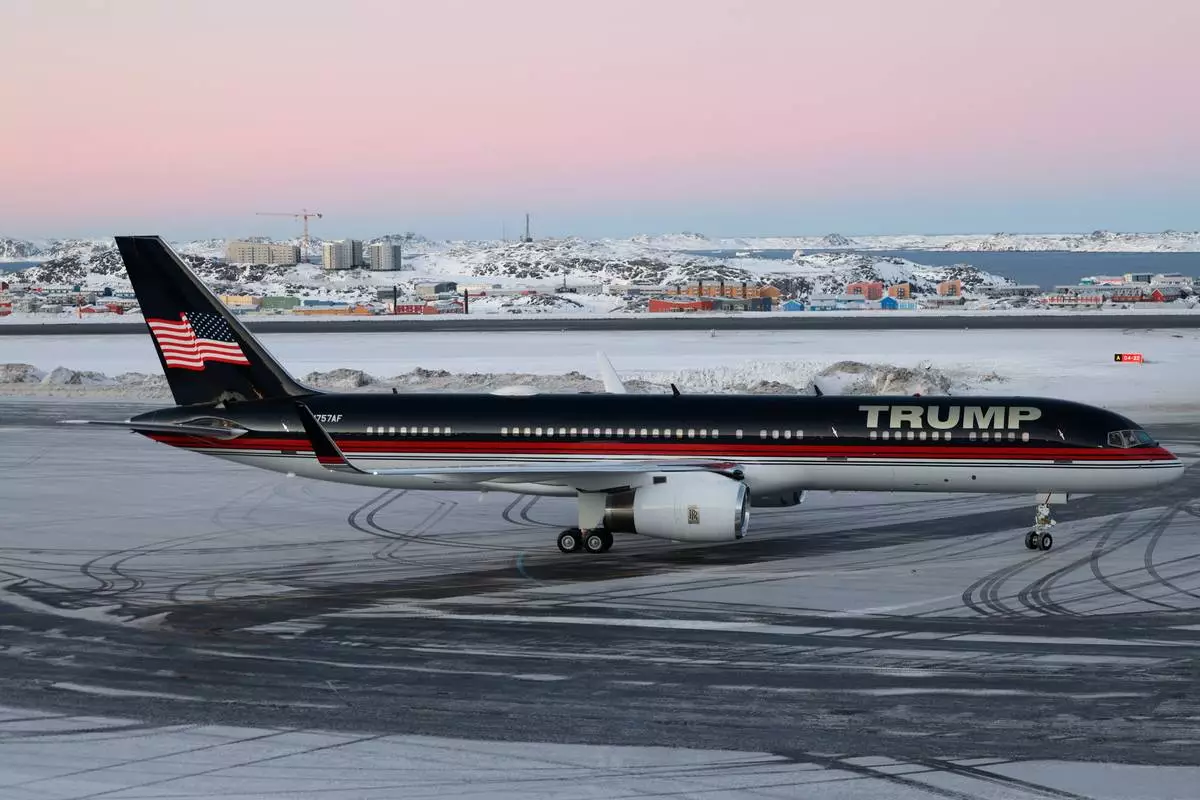
FILE - A plane carrying Donald Trump Jr. lands in Nuuk, Greenland, Jan. 7, 2025. (Emil Stach/Ritzau Scanpix via AP, file)