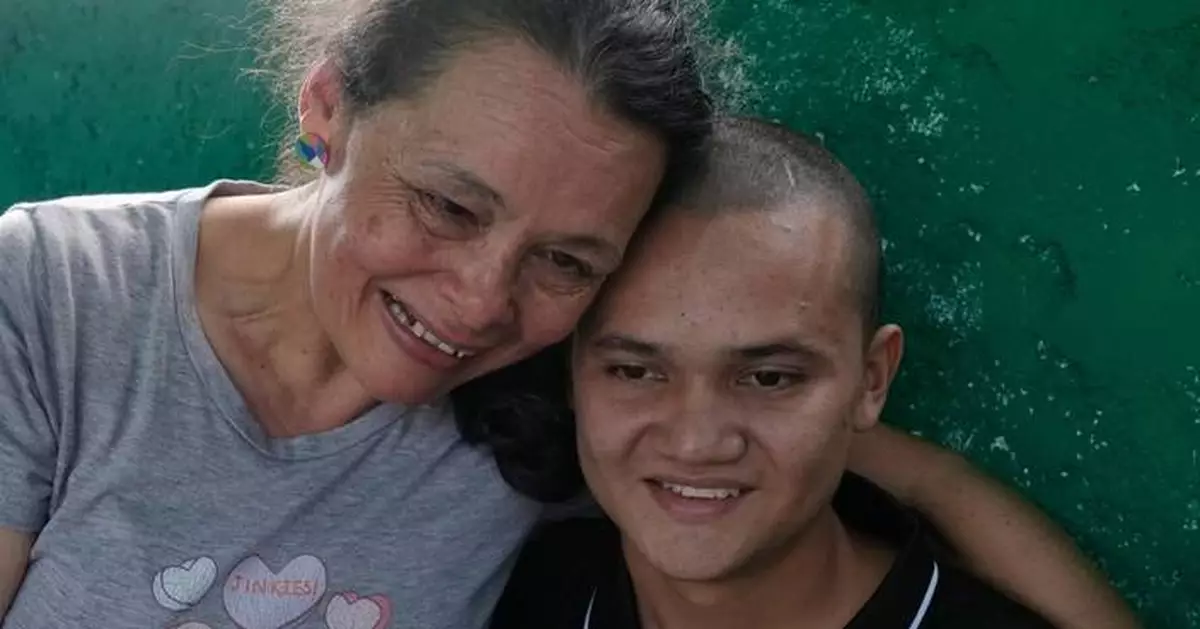
SAN FRANCISCO DE YARE, Venezuela (AP) — As Diógenes Angulo was freed Saturday from a Venezuelan prison after a year and five months, he, his mother and his aunt trembled and struggled for words. Nearby, at least a dozen other families hoped for similar reunions.
Angulo’s release came on the third day that families had gathered outside prisons in the capital, Caracas, and other communities hoping to see loved ones walk out after Venezuela's government pledged to free what it described as a significant number of prisoners. Members of Venezuela’s political opposition, activists, journalists and soldiers were among the detainees that families hoped would be released.
Click to Gallery
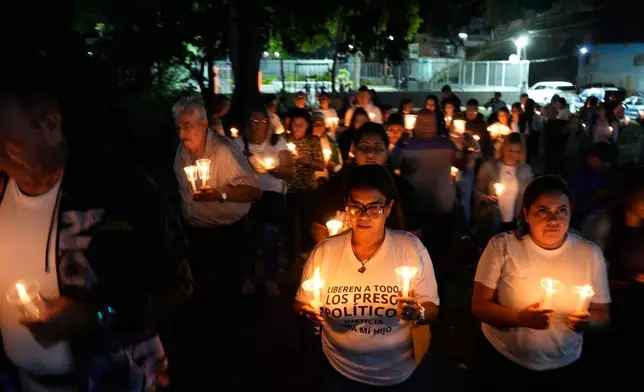
Relatives and friends of political prisoners hold candles calling for their loved ones to be set free outside the Rodeo I prison in Guatire, Venezuela, Friday, Jan. 9, 2026 after the government announced prisoners would be released. (AP Photo/Matias Delacroix)
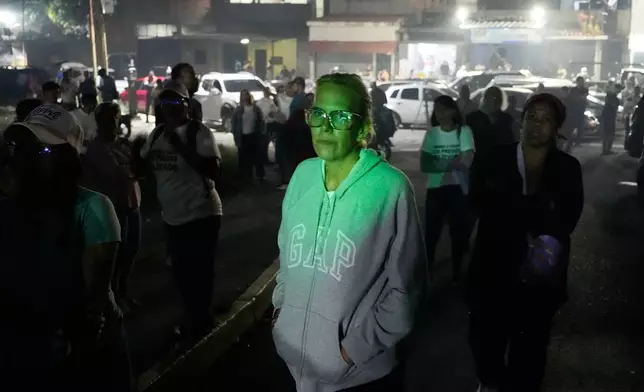
Mariana Gonzalez, the daughter of opposition leader Edmundo Gonzalez, whose husband is detained, waits outside the Rodeo I prison in Guatire, Venezuela, Thursday, Jan. 8, 2026, after National Assembly President Jorge Rodriguez said the government would release Venezuelan and foreign prisoners. (AP Photo/Matias Delacroix)
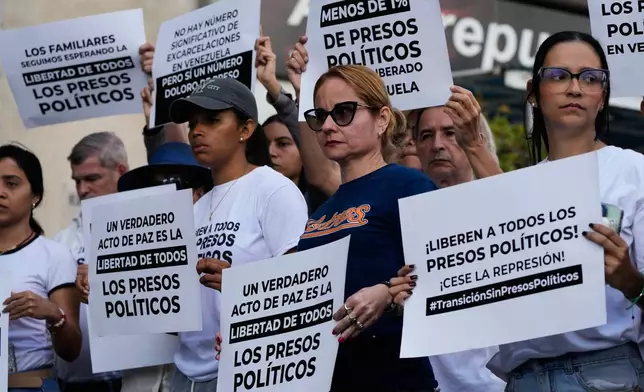
Relatives and friends of political prisoners hold banners calling for their loved ones to be set free outside El Helicoide, the headquarters of Venezuela's intelligence service and detention center, in Caracas, Venezuela, Friday, Jan. 9, 2026 after the government announced prisoners would be released.(AP Photo/Ariana Cubillos)
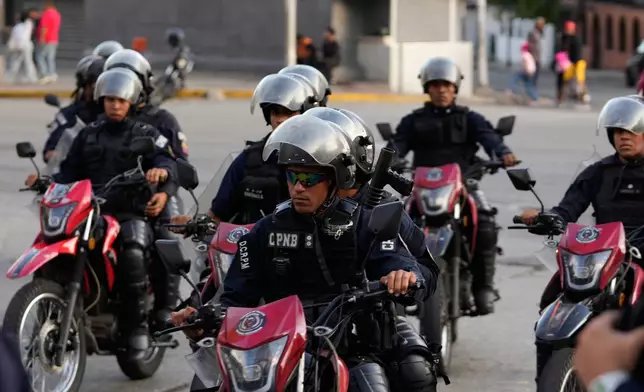
Police patrol near El Helicoide, headquarters of Venezuela's intelligence service and a detention center, in Caracas, Venezuela, Saturday, Jan. 10, 2026.(AP Photo/Matias Delacroix)
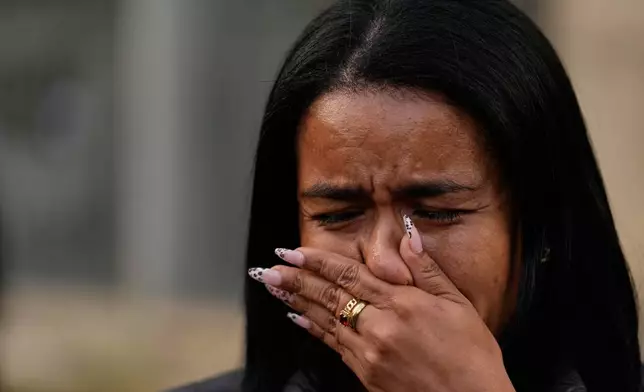
Narwin Gil cries as she waits for news of her detained sister, Marylyn Gil, outside El Helicoide, headquarters of Venezuela's intelligence service and a detention center, in Caracas, Venezuela, Saturday, Jan. 10, 2026. (AP Photo/Matias Delacroix)
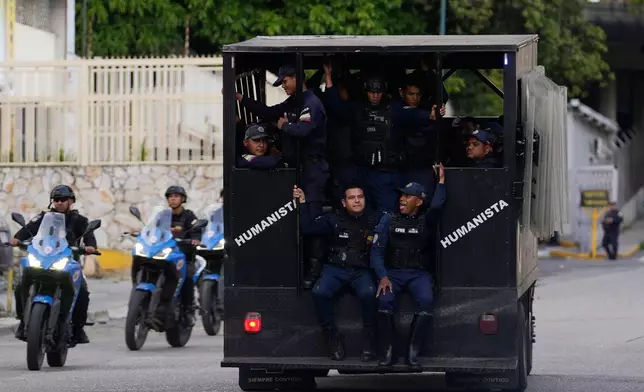
Police patrol near El Helicoide, headquarters of Venezuela's intelligence service and a detention center, in Caracas, Venezuela, Saturday, Jan. 10, 2026.(AP Photo/Matias Delacroix)
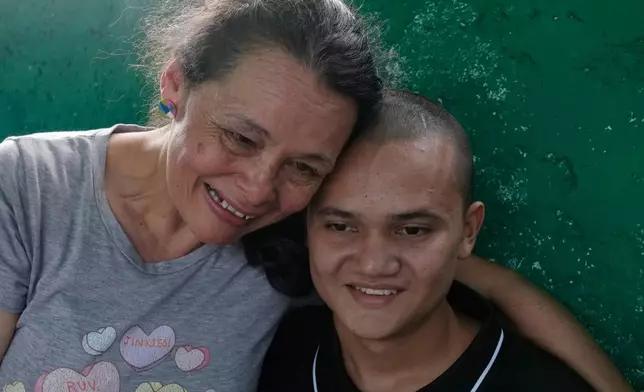
A relative embraces Diogenes Angulo after his release from prison in San Francisco de Yare, Venezuela, Saturday, Jan. 10, 2026. Angulo had been detained two days before the 2024 presidential election. (AP Photo/Ariana Cubillos)
Angulo was detained two days before the 2024 presidential election after he posted a video of an opposition demonstration in Barinas, the home state of the late President Hugo Chávez. He was 17 at the time.
“Thank God, I’m going to enjoy my family again,” he told The Associated Press, adding that others still detained “are well” and have high hopes of being released soon. His faith, he said, gave him the strength to keep going during his detention.
Minutes after he was freed, the now 19-year-old learned former President Nicolás Maduro had been captured by U.S. forces Jan. 3 in a nighttime raid in Caracas.
Venezuela's government on Thursday pledged to free a significant number of prisoners in what it described as a gesture to “seek peace.” Officials have not identified or given a number of prisoners being considered for release, leaving rights groups scouring for hints of information and families to watch the hours tick by with no word.
U.S. President Donald Trump said the release of people detained for political reasons came at Washington’s request.
"Venezuela has started the process, in a BIG WAY, of releasing their political prisoners," Trump wrote Saturday on his Truth Social platform. “Thank you! I hope those prisoners will remember how lucky they got that the USA came along and did what had to be done.”
Trump added that should prisoners forget, “it will not be good for them.”
As of Saturday night, only 16 people imprisoned for political reasons had been released, according to Foro Penal, a Venezuelan advocacy group for prisoners. Eight hundred and four remained imprisoned, the group said.
A brother of human rights attorney Rocío San Miguel, one of the first to be released and who immediately relocated to Spain, said in a statement that her release “is not full freedom, but rather a precautionary measure substituting deprivation of liberty.” The conditions of her release ban her from speaking to the media.
“This situation does not constitute exile, nor a waiver of her rights, but is part of the humanitarian and diplomatic agreements reached to facilitate her release,” José Manuel San Miguel said of his sister's move to Spain.
Among the prominent members of the country’s political opposition who were detained after the 2024 presidential elections and remain in prison are former lawmaker Freddy Superlano and Perkins Rocha, lawyer for opposition leader María Corina Machado. Juan Pablo Guanipa, a former governor and one of Machado's closest allies, and Rafael Tudares, the son-in-law of opposition presidential candidate Edmundo González, also remain imprisoned.
One week after the U.S. military intervention in Caracas, Venezuelans aligned with the government marched in several cities across the country demanding the return of Maduro and his wife Cilia Flores. The pair were captured and transferred to the U.S., where they face charges including conspiracy to commit narco-terrorism. Both pleaded not guilty.
In Caracas, many demonstrators waved Venezuelan flags and chanted, “Maduro, keep on going, the people are rising.”
Acting president Delcy Rodríguez, speaking at a public social-sector event in Caracas, again condemned the U.S. military action on Saturday.
“There is a government, that of President Nicolás Maduro, and I have the responsibility to take charge while his kidnapping lasts ... We will not stop condemning the criminal aggression,” she said, referring to Maduro’s ousting.
After the shocking military action that overthrew Maduro, Trump stated the U.S. would “run” the South American country and demanded access to oil resources, which he promised to use “to benefit the people” of both nations.
“I love the Venezuelan people and I am already making Venezuela prosperous and safe again,” Trump said in his Saturday post.
The U.S. and Venezuelan governments on Friday announced they are evaluating the restoration of diplomatic relations, broken since 2019, and the reopening of their respective diplomatic missions. A U.S. delegation visited Venezuela for several hours Friday.
Venezuelan Foreign Minister Yván Gil responded to Pope Leo XIV's statement Friday calling for maintaining peace and “respecting the will of the Venezuelan people.”
“With respect for the Holy Father and his spiritual authority, Venezuela reaffirms that it is a country that builds, works, and defends its sovereignty with peace and dignity,” Gil said in a social media post, inviting the pontiff “to get to know this reality more closely.”
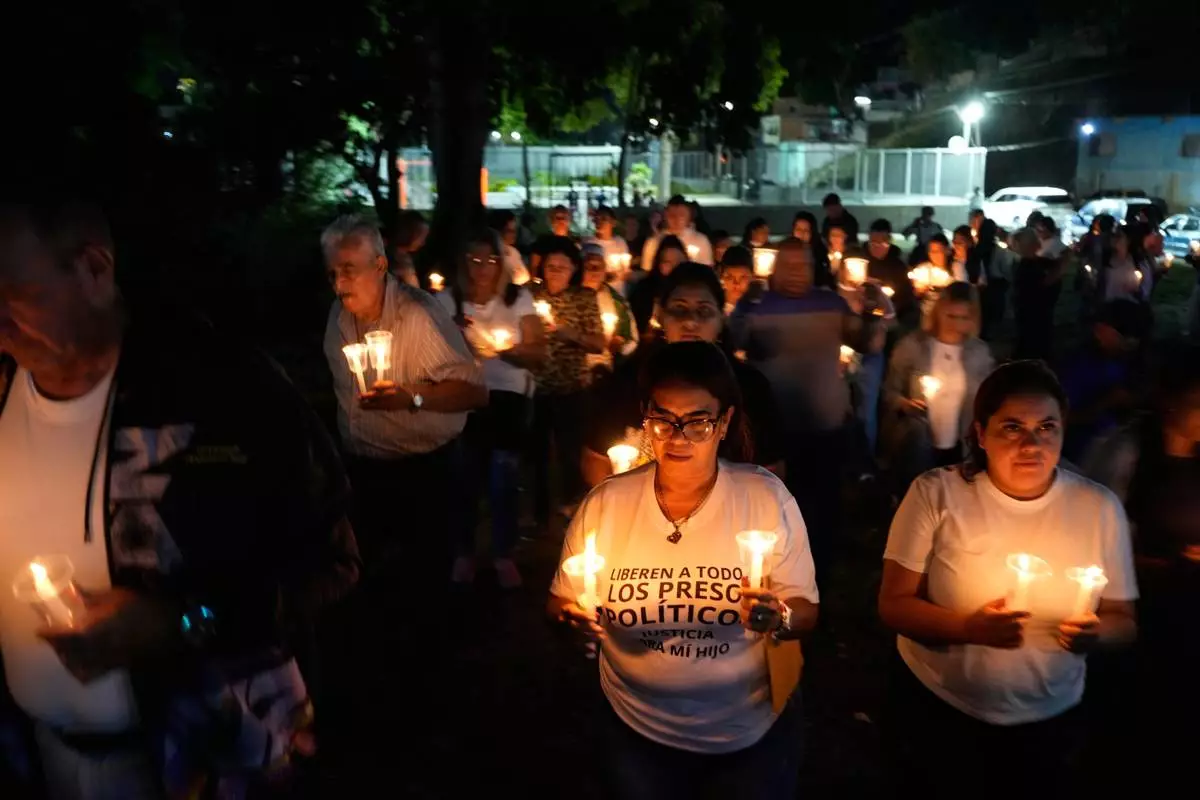
Relatives and friends of political prisoners hold candles calling for their loved ones to be set free outside the Rodeo I prison in Guatire, Venezuela, Friday, Jan. 9, 2026 after the government announced prisoners would be released. (AP Photo/Matias Delacroix)
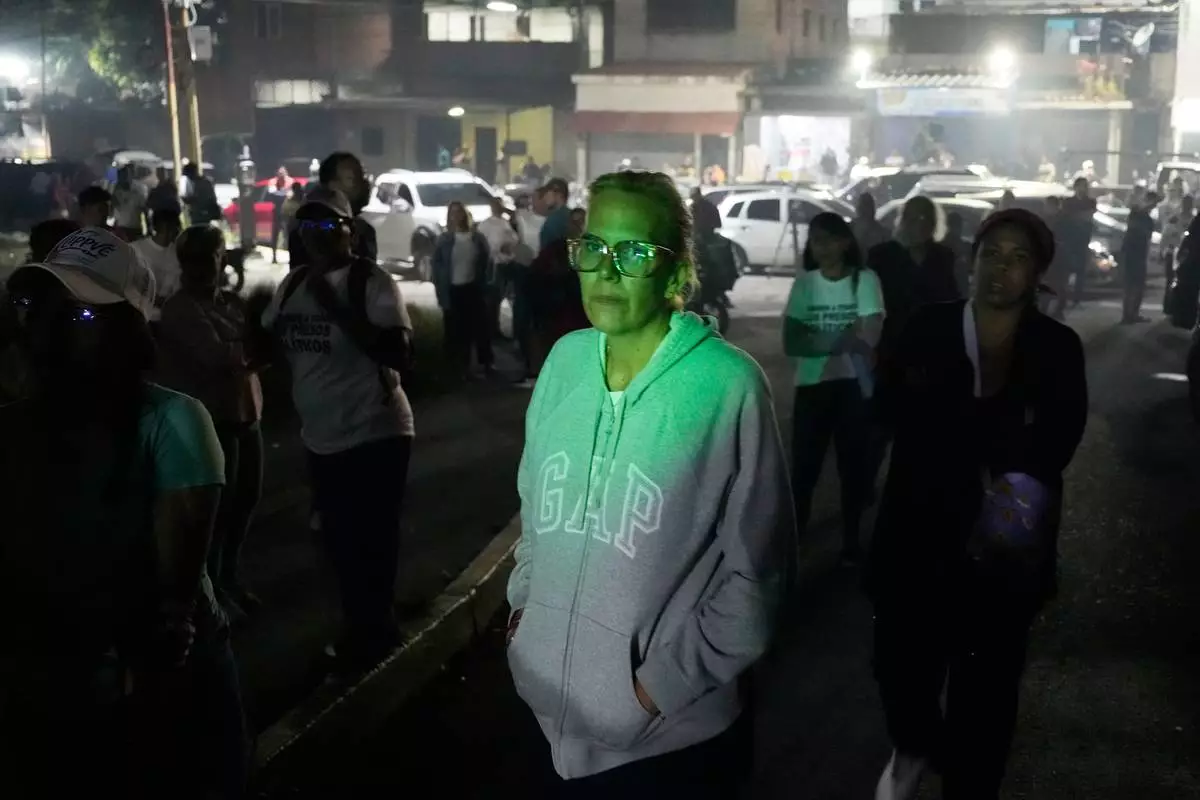
Mariana Gonzalez, the daughter of opposition leader Edmundo Gonzalez, whose husband is detained, waits outside the Rodeo I prison in Guatire, Venezuela, Thursday, Jan. 8, 2026, after National Assembly President Jorge Rodriguez said the government would release Venezuelan and foreign prisoners. (AP Photo/Matias Delacroix)
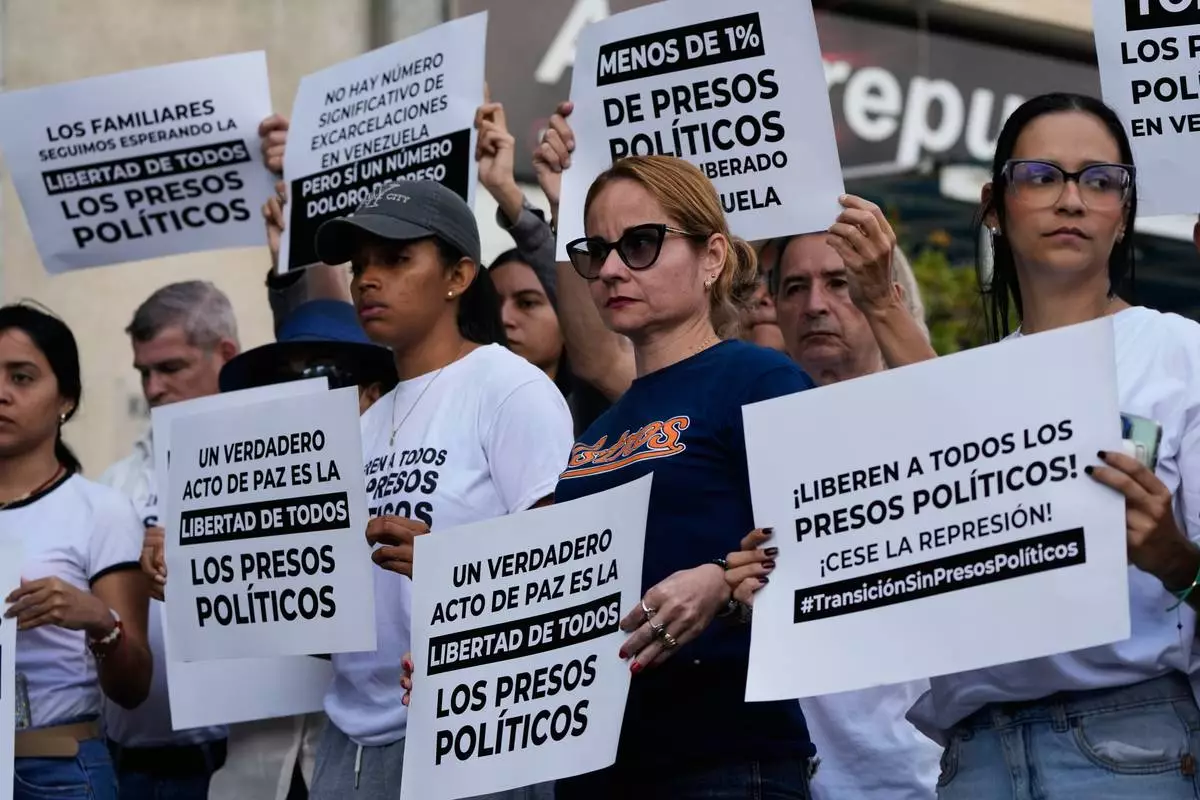
Relatives and friends of political prisoners hold banners calling for their loved ones to be set free outside El Helicoide, the headquarters of Venezuela's intelligence service and detention center, in Caracas, Venezuela, Friday, Jan. 9, 2026 after the government announced prisoners would be released.(AP Photo/Ariana Cubillos)
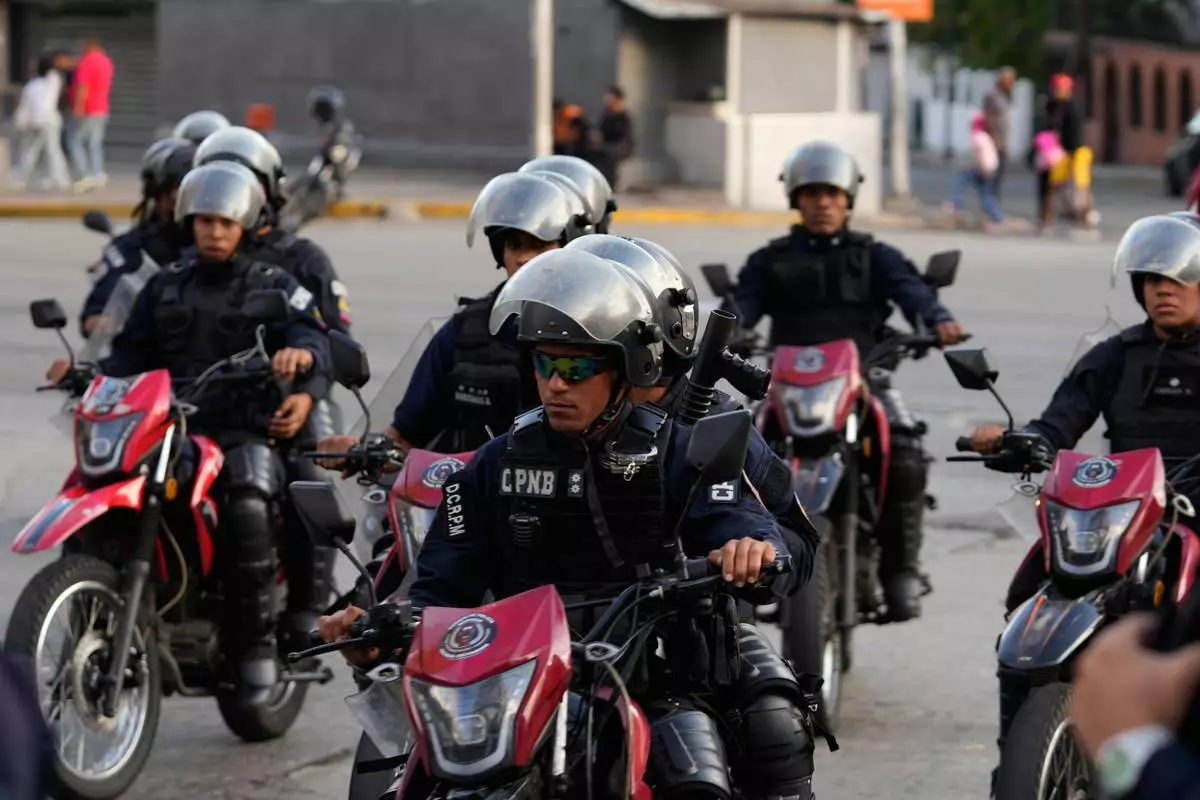
Police patrol near El Helicoide, headquarters of Venezuela's intelligence service and a detention center, in Caracas, Venezuela, Saturday, Jan. 10, 2026.(AP Photo/Matias Delacroix)
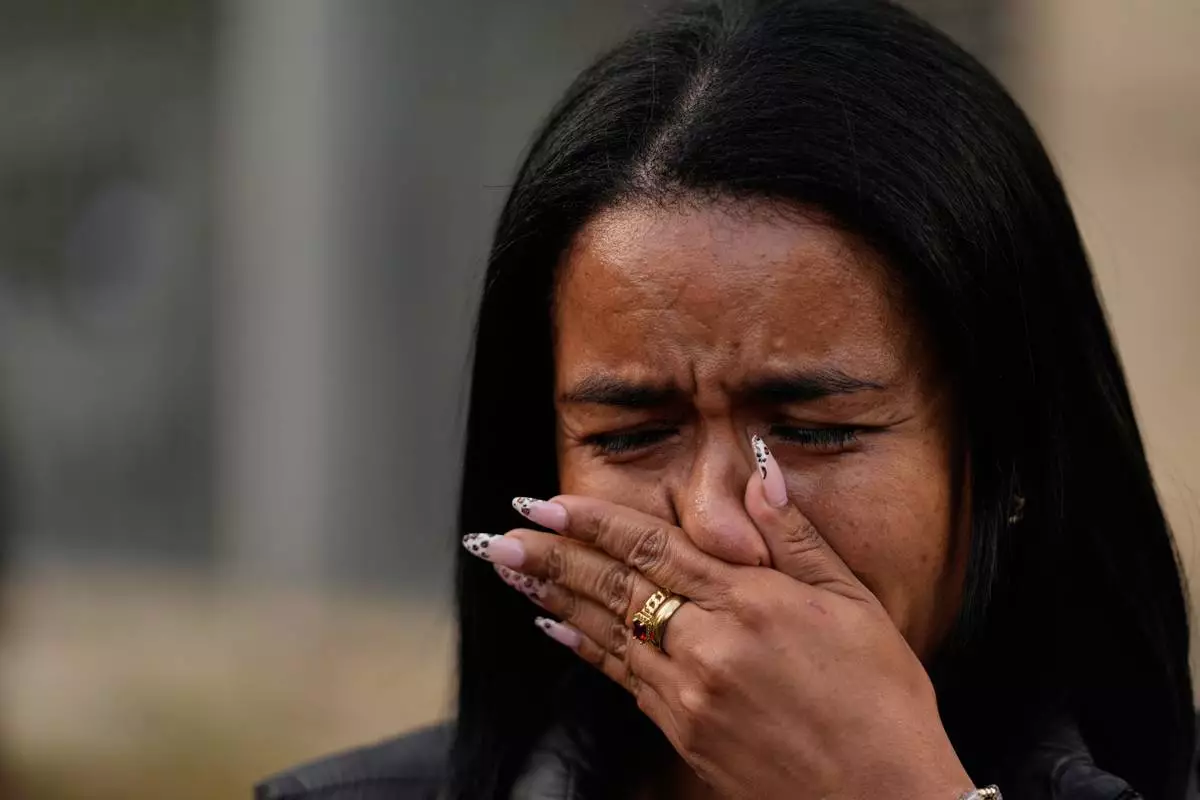
Narwin Gil cries as she waits for news of her detained sister, Marylyn Gil, outside El Helicoide, headquarters of Venezuela's intelligence service and a detention center, in Caracas, Venezuela, Saturday, Jan. 10, 2026. (AP Photo/Matias Delacroix)
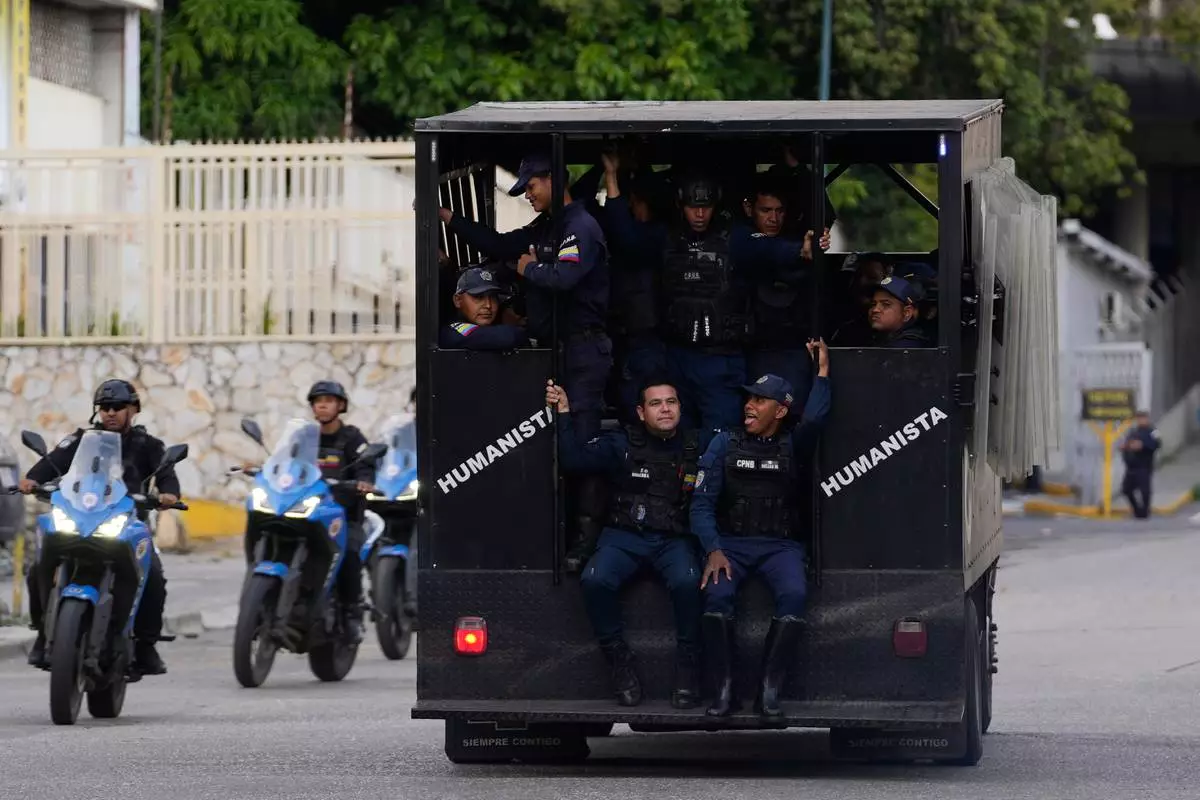
Police patrol near El Helicoide, headquarters of Venezuela's intelligence service and a detention center, in Caracas, Venezuela, Saturday, Jan. 10, 2026.(AP Photo/Matias Delacroix)
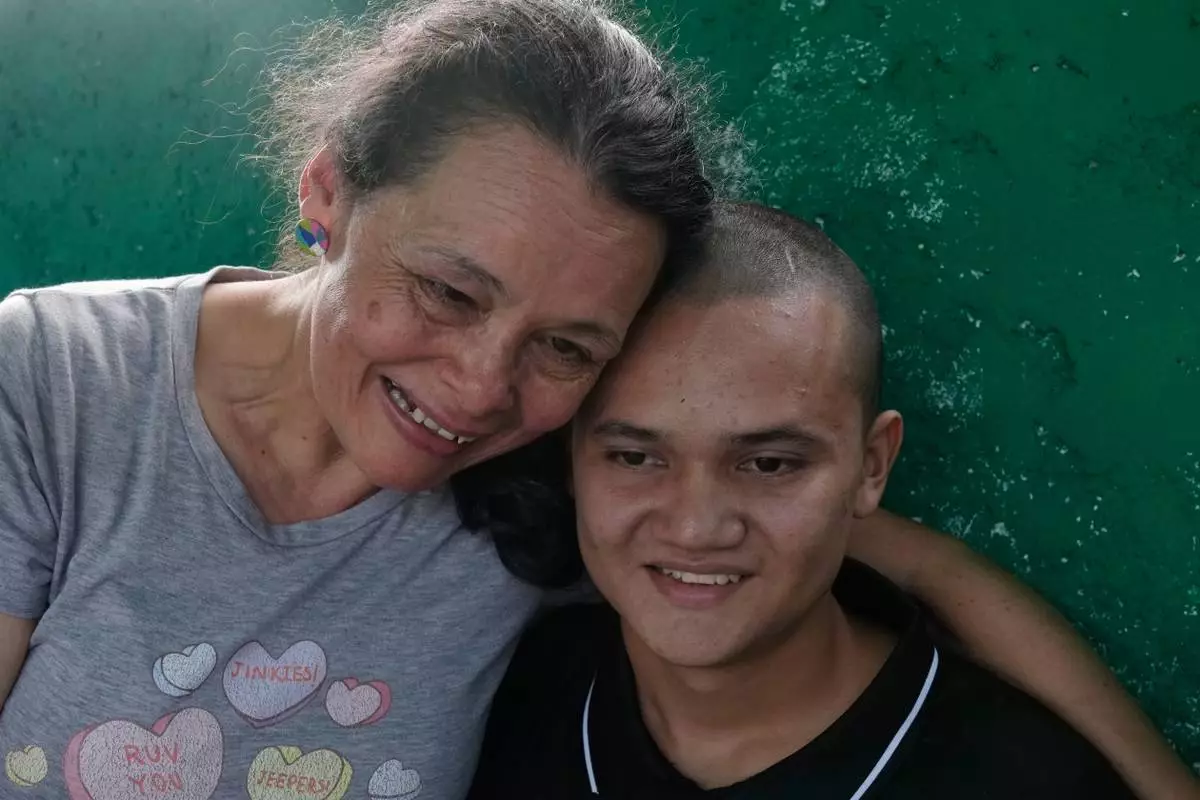
A relative embraces Diogenes Angulo after his release from prison in San Francisco de Yare, Venezuela, Saturday, Jan. 10, 2026. Angulo had been detained two days before the 2024 presidential election. (AP Photo/Ariana Cubillos)