Skip to Content Facebook Feature Image

Germany sharply rejects RFK Jr.'s claims that it prosecutes doctors for vaccine exemptions

News

Germany sharply rejects RFK Jr.'s claims that it prosecutes doctors for vaccine exemptions
News

News

Germany sharply rejects RFK Jr.'s claims that it prosecutes doctors for vaccine exemptions

2026-01-11 20:16 Last Updated At:20:20

BERLIN (AP) — The German government has sharply rejected accusations by U.S. Health Secretary Robert F. Kennedy Jr. claiming that it has been sidelining patient autonomy, especially during the COVID-19 pandemic.

“The statements made by the US Secretary of Health are completely unfounded, factually incorrect, and must be rejected,” German Health Minister Nina Warken said in a statement late Saturday.

Kennedy said in a video post earlier on Saturday that he had sent the German minister a letter based on reports coming out of Germany that the government was “limiting people’s abilities to act on their own convictions when they face medical decisions.”

The American health secretary said that “I've learned that more than a thousand German physicians and thousands of their patients now face prosecution and punishment for issuing exemptions from wearing masks or getting COVID-19 vaccines during the pandemic."

Warken rejected Kennedy’s claims, saying that “during the coronavirus pandemic, there was never any obligation on the medical profession to administer COVID-19 vaccinations. Anyone who did not want to offer vaccinations for medical, ethical, or personal reasons was not liable to prosecution, nor did they have to fear sanctions.”

Kennedy did not give provide specific examples or say which reports he was referring to but added that “in my letter, I explained that Germany is targeting physicians who put their patients first and punishing citizens for making their own medical choices.”

He concluded that "the German government is now violating the sacred patient physician relationship, replacing it is a dangerous system that makes physicians enforcers of state policies.”

Kennedy said that in his letter he made clear that “Germany has the opportunity and the responsibility to correct this trajectory, to restore medical autonomy, to end politically motivated prosecutions.”

Warken pointed out that there were no professional bans or fines for not getting vaccinated.

“Criminal prosecution was only pursued in cases of fraud and document forgery, such as the issuance of false vaccination certificates or fake mask certificates," the minister said.

She also clarified that in general in Germany “patients are also free to decide which therapy they wish to undergo.”

Former German Health Minister Karl Lauterbach, who was in charge during the pandemic, also replied, addressing Kennedy directly on X saying that he “should take care of health problems in his own country. Short life expectancy, extreme costs, tens of thousands of drug deaths and murder victims."

“In Germany, doctors are not punished by the government for issuing false medical certificates. In our country, the courts are independent,” Lauterbach wrote.

While a majority of Germans were eager to get vaccinated against the COVID-19 virus during the pandemic, there were also protests by a small minority of vaccine skeptics in Germany which were sometimes supported by far-right movements.
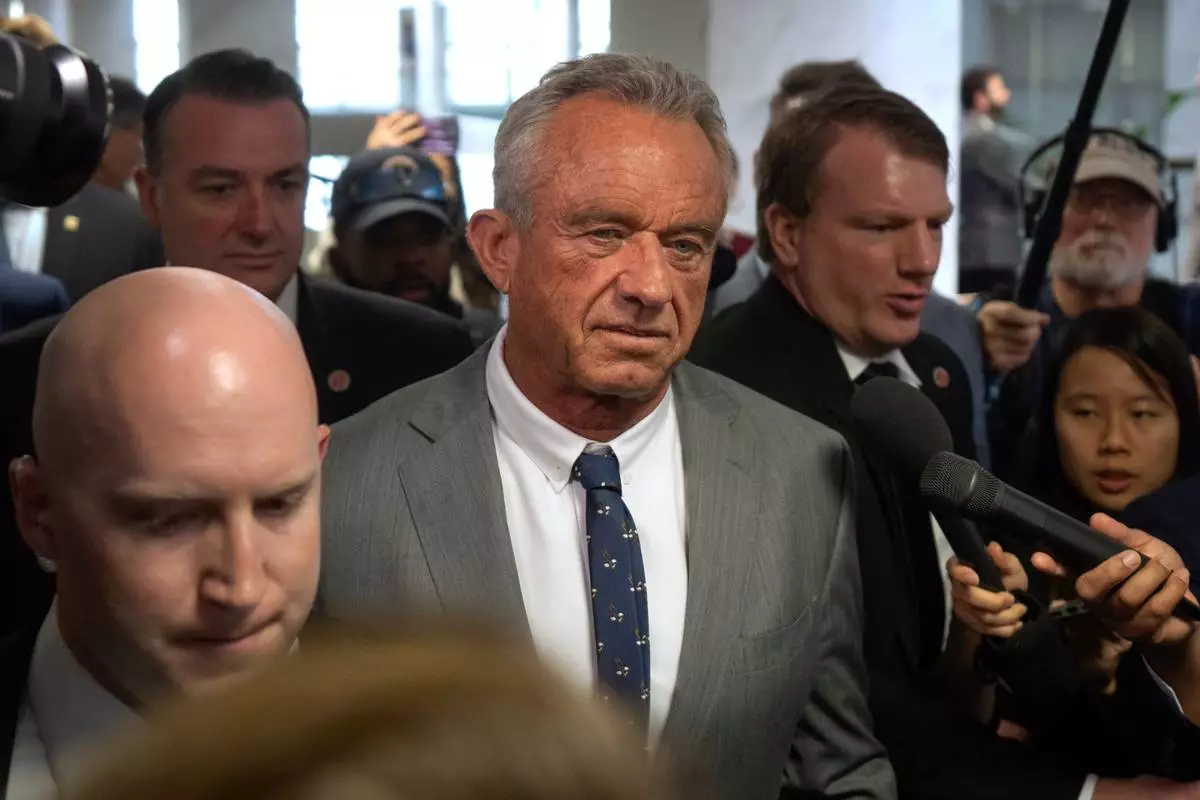
FILE - Robert Kennedy Jr., center, President-elect Donald Trump's pick to lead the Health and Human Services Department, walks between meetings with senators on Capitol Hill, Tuesday, Dec. 17, 2024, in Washington. (AP Photo/Mark Schiefelbein, File)
FILE - Robert Kennedy Jr., center, President-elect Donald Trump's pick to lead the Health and Human Services Department, walks between meetings with senators on Capitol Hill, Tuesday, Dec. 17, 2024, in Washington. (AP Photo/Mark Schiefelbein, File)
A Ukrainian drone strike killed one person and wounded three others in the Russian city of Voronezh, local officials said Sunday.

A young woman died overnight in a hospital intensive care unit after debris from a drone fell on a house during the attack on Saturday, regional Gov. Alexander Gusev said on Telegram.

Three other people were wounded and more than 10 apartment buildings, private houses and a high school were damaged, he said, adding that air defenses shot down 17 drones over Voronezh. The city is home to just over 1 million people and lies some 250 kilometers (155 miles) from the Ukrainian border.

The attack came after Russia bombarded Ukraine with hundreds of drones and dozens of missiles overnight into Friday, killing at least four people in the capital Kyiv, according to Ukrainian officials. For only the second time in the nearly four-year war, Russia used a powerful new hypersonic missile that struck western Ukraine in a clear warning to Kyiv and NATO.

Ukraine’s largest private energy supplier, DTEK, said Sunday that 30,000 people in Kyiv were still without power following the attack. Mayor Vitali Klitschko said around half the apartment buildings — nearly 6,000 — in snowy Kyiv were left without heat in daytime temperatures of about minus 8 degrees Celsius (17.6 Fahrenheit).

The intense barrage and the launch of the nuclear-capable Oreshnik missile followed reports of major progress in talks between Ukraine and its allies on how to defend the country from further aggression by Moscow if a U.S.-led peace deal is struck.

Ukrainian President Volodymyr Zelenskyy said Saturday in his nightly address that Ukrainian negotiators “continue to communicate with the American side.”

Chief negotiator Rustem Umerov was in contact with U.S. partners on Saturday, he said.

Separately, Ukraine’s General Staff said Russia targeted Ukraine with 154 drones overnight into Sunday and 125 were shot down.

The Ukrainian Defense Ministry’s main intelligence directorate said Sunday that Russia this month deployed the new jet-powered “Geran-5” strike drone against Ukraine for the first time. The Geran is a Russian variant of the Iranian-designed Shahed.

According to the directorate, the drone can carry a 90-kilogram (200-pound) warhead and has a range of nearly 1,000 kilometers (620 miles).

Follow the AP’s coverage of the war in Ukraine at https://apnews.com/hub/russia-ukraine

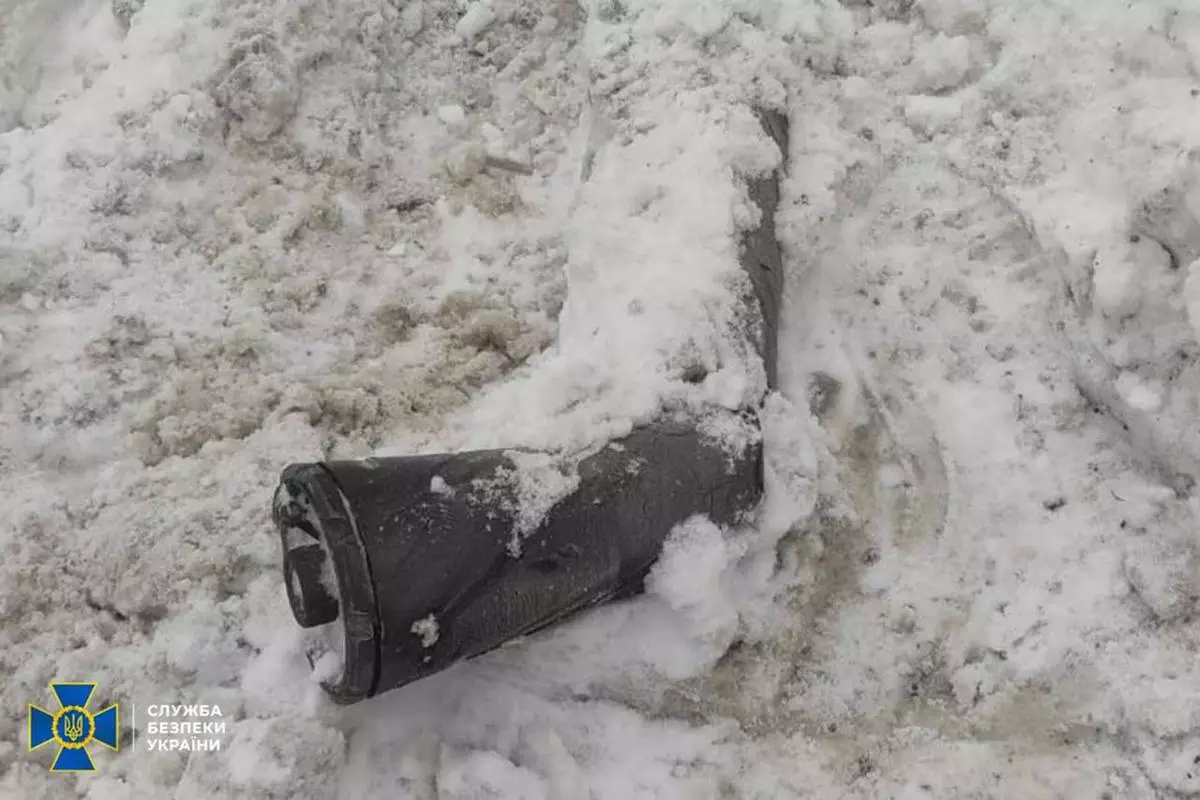
This photo provided by the Ukrainian Security Service on Friday, Jan. 9, 2026, shows a fragment believed to be a part of a Russian Oreshnik intermediate range hypersonic ballistic missile that hit the Lviv region. (Ukrainian Security Service via AP)

This photo provided by the Ukrainian Security Service on Friday, Jan. 9, 2026, shows a fragment believed to be a part of a Russian Oreshnik intermediate range hypersonic ballistic missile that hit the Lviv region. (Ukrainian Security Service via AP)

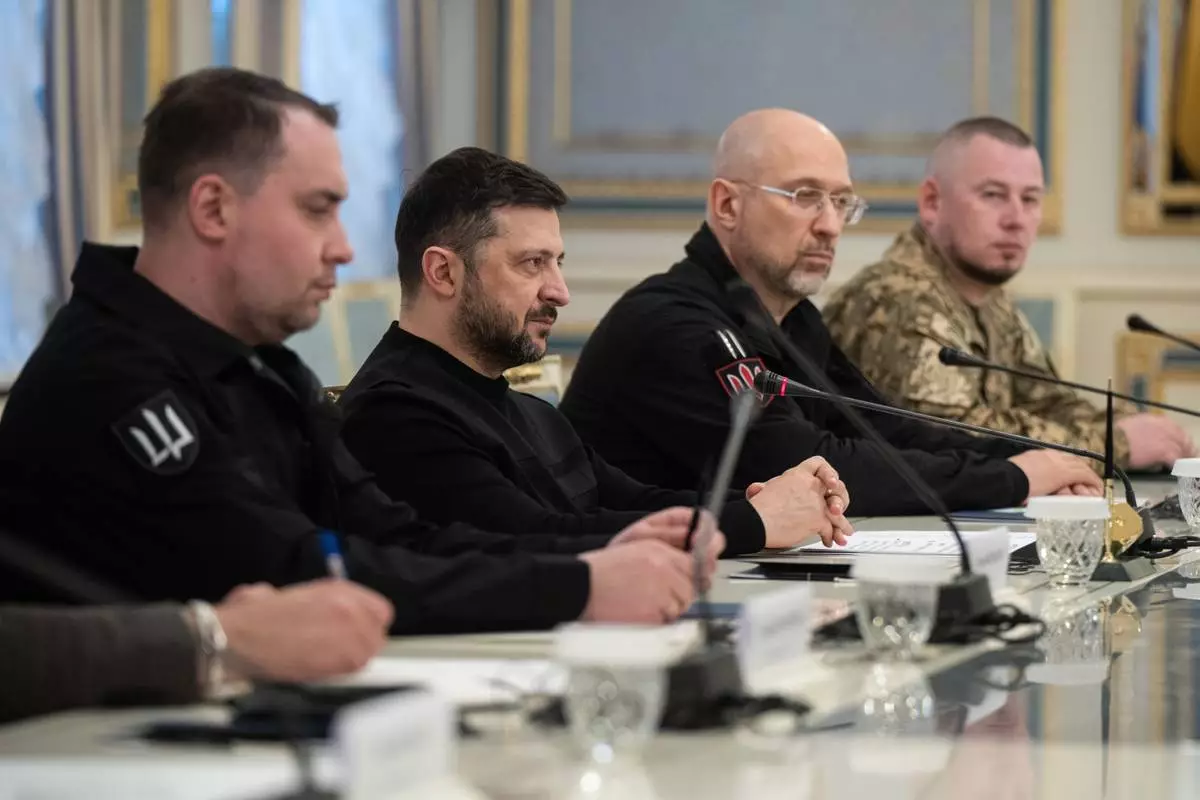
President of Ukraine Volodymyr Zelenskyy, second left, listens to British Defense Secretary John Healey during their meeting in Kyiv, Ukraine, Friday, Jan. 9, 2026. (AP Photo/Danylo Antoniuk)

President of Ukraine Volodymyr Zelenskyy, second left, listens to British Defense Secretary John Healey during their meeting in Kyiv, Ukraine, Friday, Jan. 9, 2026. (AP Photo/Danylo Antoniuk)

Recommended Articles