A wide range of rare Chinese artworks from Beijing's Forbidden City, on display at Kunsthistorisches Museum in Vienna, Austria, highlights connections between Asian and Western art in a months-long exhibition.
Titled "Art and Aesthetics from China's Forbidden City", the special exhibition showcases 76 masterpieces from the Palace Museum in Beijing, most of which were being shown in Europe for the first time.
The works on display include jade, porcelain, lacquerware, enamel objects, and clocks, reflecting the artistic and technical achievements of 18th-century Chinese court art and craftsmanship.
"Asian art is very different than Western art. So, I think it's very beautiful personally, yeah," said a visitor.
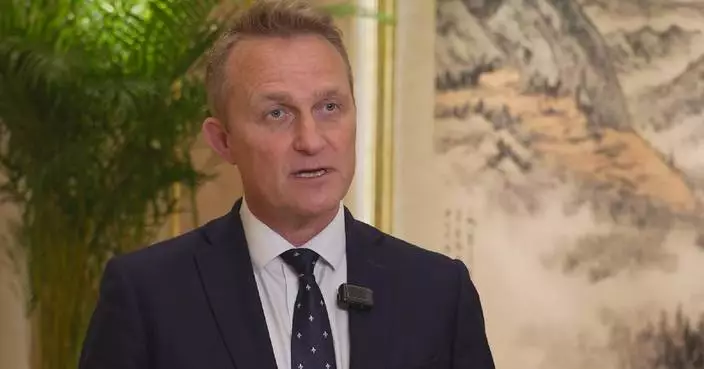
Bringing the Chinese artworks to Vienna offered a good opportunity for European visitors to appreciate the connections between Asian and Western art, said Jonathan Fine, director at the Kunsthistorisches Museum.
"The chance to show the treasures of the Palace Museum from Beijing here, next to the treasures of the Habsburg Kunstkammer, was something that I thought was tremendously exciting. The works of art that are selected show a real bridge between Asian art and European art," he said.
Fine said some of the masterpieces showcased at the exhibition are clear demonstrations of cultural convergence.
"One of the most special pieces here is a jade-carved landscape. The landscape circle itself is absolutely classical Chinese art. The base itself is clearly influenced by European Baroque forms. And so, you see in this work the meeting of East and West," he said.
Liu Zhenghong, deputy director of the Department of Court History at the Palace Museum, said that Vienna remains one of Europe's cultural capitals, and this exhibition builds a cultural bridge between the city and the Forbidden City.
He expressed hope for more exchanges and cooperation between the Palace Museum and international institutions.

Forbidden City masterpieces on display in Vienna highlight bonds between Asian, Western art
Chinese Foreign Minister Wang Yi said on Thursday that there are no winners in the prolonged wars, and a ceasefire and an end to the hostilities are the will of the people.
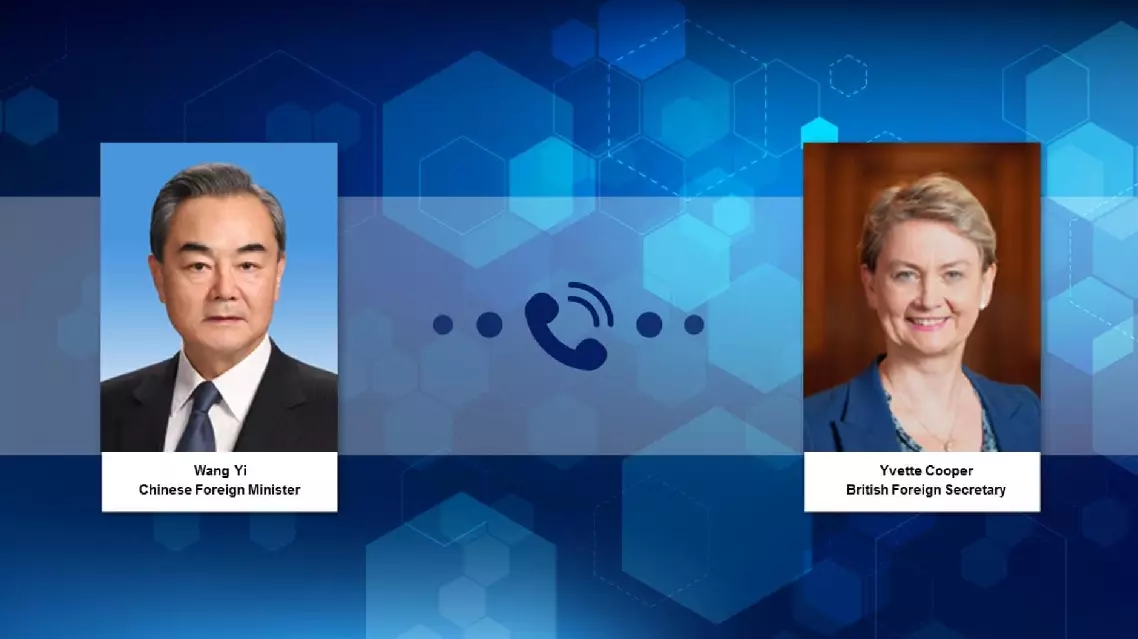
Wang, also a member of the Political Bureau of the Communist Party of China Central Committee, made the remarks in a phone conversation with British Foreign Secretary Yvette Cooper.
The two sides mainly exchanged views on the situation in the Middle East.
Cooper expounded on Britain's view on the current situation in the Middle East, stating that in the face of an increasingly turbulent world, the British side hopes to maintain close communication with China, push for an early end to the war, resume diplomatic negotiations, and seek long-term solutions.
Wang elaborated on China's position, saying that the current conflict in the Middle East is escalating, and the war is expanding, which not only impacts regional peace and stability, but also directly affects international energy, finance, trade and shipping, undermining the common interests of all countries.
China urges all parties to immediately cease military operations, resolve differences through equal dialogue, and jointly safeguard regional peace and stability, Wang said.
As permanent members of the UN Security Council, China and Britain shoulder the responsibility of upholding international peace and security, he noted.
Both sides should enhance communication, remain committed to actions conducive to peace, and jointly uphold the purposes and principles of the UN Charter and the basic norms governing international relations, so as to prevent the international order from being further undermined and the foundations of world peace from being eroded, said the foreign minister.
The two sides also exchanged views on China-Britain relations and agreed that they should actively implement the consensus reached by the leaders of the two countries, enhance exchanges, and continuously promote the long-term and consistent comprehensive strategic partnership between China and Britain, thereby providing stability and certainty for a world fraught with changes and turmoil.
Chinese FM says prolonged wars have no winners