Skip to Content Facebook Feature Image

Danish expert urges global response to U.S. threat over Greenland

HotTV

HotTV

HotTV

Danish expert urges global response to U.S. threat over Greenland

2026-01-12 17:15 Last Updated At:23:28

Danish scholar Jan Oberg has issued a stark warning about the escalating militarization of the Arctic and the implications of the United States' pursuit of Greenland, criticizing the U.S. approach as a violation of international norms and calling for a global nonviolent campaign to counter what he perceives as a dangerous shift in global politics.

In an interview with China Global Television Network (CGTN) on Sunday, Oberg, who is the founder of the Transnational Foundation for Peace and Future Research, described the U.S. interest in Greenland, particularly under the Trump administration, as a move driven by a desire for resource control and a unilateral vision of American survival.

"This is a violation of everything, as the Danish Prime Minister said. And I would say there are moments in international politics where we lack words. Europe is not going to do anything. It will state things, but it cannot prevent Trump from doing things. He has a plan, and the plan is to make America able to survive by holding on to resources around the world. It can survive without cooperating with the rest of the world. That is what Greenland is about. We're facing something fundamentally new where the old international politics, international relations, and political science concepts no longer cover what is going on. We're into psychology, we're into the end views of the world. We are into militarism, we're into emotionalism. And he will do what he wants to do. He can do it because he has a stronger military behind him than any other country in the world. Well, I have never seen anything like that," he said.

Oberg advocated for a non-violent global campaign to counter U.S. threats.

"We need to have a global campaign where non-violence comes to the surface again. There's nobody who wants to fight the United States with military means. We have to do it nonviolently. It means throwing the American bases out of Europe, it means preventing American planes from landing, it means citizens boycotting American products, etc., etc. We've got to tell (U.S. President Donald) Trump that he cannot continue, because if we don't, he will continue," he said.

Beyond resistance, Oberg also highlighted the media's role in promoting alternative, positive futures for the Arctic. He sees the region as ripe for global, regional, and national cooperation, advocating its complete demilitarization through international treaties. Oberg expressed concern over the rapid expansion of U.S. military presence in Nordic countries.

The Danish expert believes that Greenland should serve as a hub for global cooperation, not militarization.

"The media must also think of alternatives and positive futures. This is a region in which there's ample opportunity for global, regional and national cooperation. It means that this area must be demilitarised by treaty once and for all. We have 42 new American bases in Denmark, Sweden, Finland, and Norway within two years and no public discussion. This must stop, and instead we must look at this as a wonderful opportunity for global cooperation to the benefit of the locals, to the benefit of the Nordic countries and that region and Greenland in the middle, and to the benefit of the rest of the world," he said.

In the latest developments, U.S. President Donald Trump on Sunday once again claimed that the United States will acquire Denmark's Greenland "one way or the other.” Speaking aboard Air Force One, Trump said that, regarding Greenland, he was not considering leasing or short-term arrangements, but "acquiring" the territory.

Danish expert urges global response to U.S. threat over Greenland

Danish expert urges global response to U.S. threat over Greenland

Danish expert urges global response to U.S. threat over Greenland

Danish expert urges global response to U.S. threat over Greenland

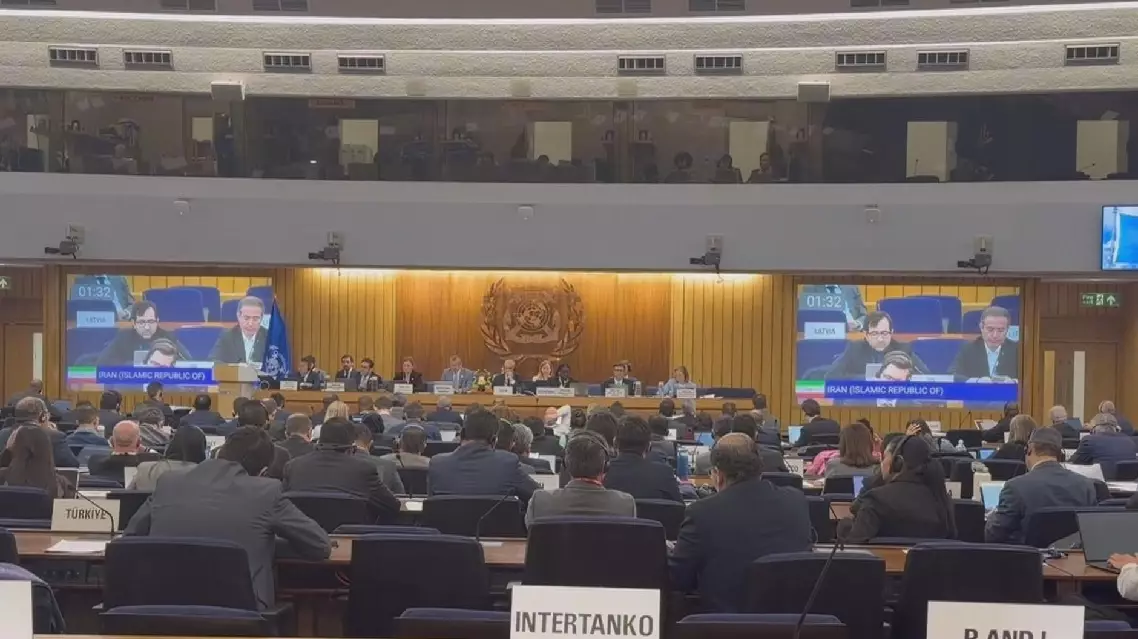
The 36th extraordinary session of the Council of the International Maritime Organization (IMO) concluded on Thursday in London, with member states split over who should be held accountable for the closure of the Hormuz Strait.

As a specialized UN agency, the IMO's responsibility is to safeguard global shipping safety and the rights and interests of seafarers. At the meeting, all parties had obvious differences regarding the root causes of the situation and the wording of the documents.

According to data provided by the IMO, since the outbreak of the conflict involving the United States, Israel and Iran, at least seven seafarers have been killed in attacks on merchant vessels in the Strait of Hormuz area, with several others seriously injured. Around 20,000 seafarers remain stranded aboard ships in the region.

Some countries urged condemning the actions of certain country that led to the blockade, while others believe that the root cause of the current maritime tensions in the Middle East lies in the military action launched by the United States and Israel against Iran, and that unilaterally blaming one country is neither objective nor comprehensive.

Multiple representatives emphasized that the IMO should not serve as a platform for political confrontation. They called for balanced, neutral language in resolutions and urged the organization to focus on pragmatic measures within the framework of IMO regulations to safeguard maritime corridors.

Iran's delegate pointed out that the IMO must not become a tool for political pressure, and any coordination on navigation security must involve Iran.

The Russian delegate warned that current international maritime declarations appear biased and one-sided, which hinders efforts to ease the crisis. He called on the IMO to adopt a more balanced stance.

China's delegate echoed the need for inclusive and impartial language, proposing that the resolutions reflect a constructive consensus rather than unilateral accusations. The Chinese side also suggested that language condemning or opposing military actions that lead to the escalation of tensions in the Strait should be added to proposal.

The IMO Council highlighted the urgent need to address the peril faced by numerous stranded commercial ships. It encouraged exploring frameworks, such as maritime safety corridors, as an emergency humanitarian measure to facilitate the voluntary evacuation of ships from high-risk zones to safer waters.

Regarding the U.S. proposal to provide naval escort operations, IMO Secretary-General Arsenio Dominguez said that naval escorts are not a long-term sustainable solution to the current crisis in the Strait of Hormuz, and only an end to the conflict can prevent shipping from becoming collateral damage.

While acknowledging that the root causes of the crisis lie beyond the IMO's mandate, he said he would continue to work with countries engaged in diplomatic efforts to address the situation.

Over the past few days, U.S. President Donald Trump has urged European countries and other allies to join naval escort operations in the Strait of Hormuz. However, European powers have largely rebuffed the request, citing concerns that direct military involvement would escalate regional tensions and risk drawing them into a wider conflict.

IMO members divided over accountability for closure of Hormuz Strait

IMO members divided over accountability for closure of Hormuz Strait

Recommended Articles