MINNEAPOLIS (AP) — Minnesota and its two largest cities sued the Trump administration Monday to try to stop an immigration enforcement surge that led to the fatal shooting of a Minneapolis woman by a federal officer and evoked outrage and protests across the country.
The state, joined by Minneapolis and St. Paul, said the Department of Homeland Security is violating the First Amendment and other constitutional protections. The lawsuit seeks a temporary restraining order to halt the enforcement action or limit the operation.
Click to Gallery
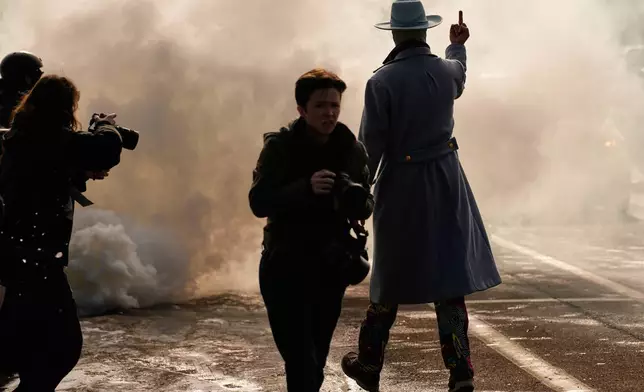
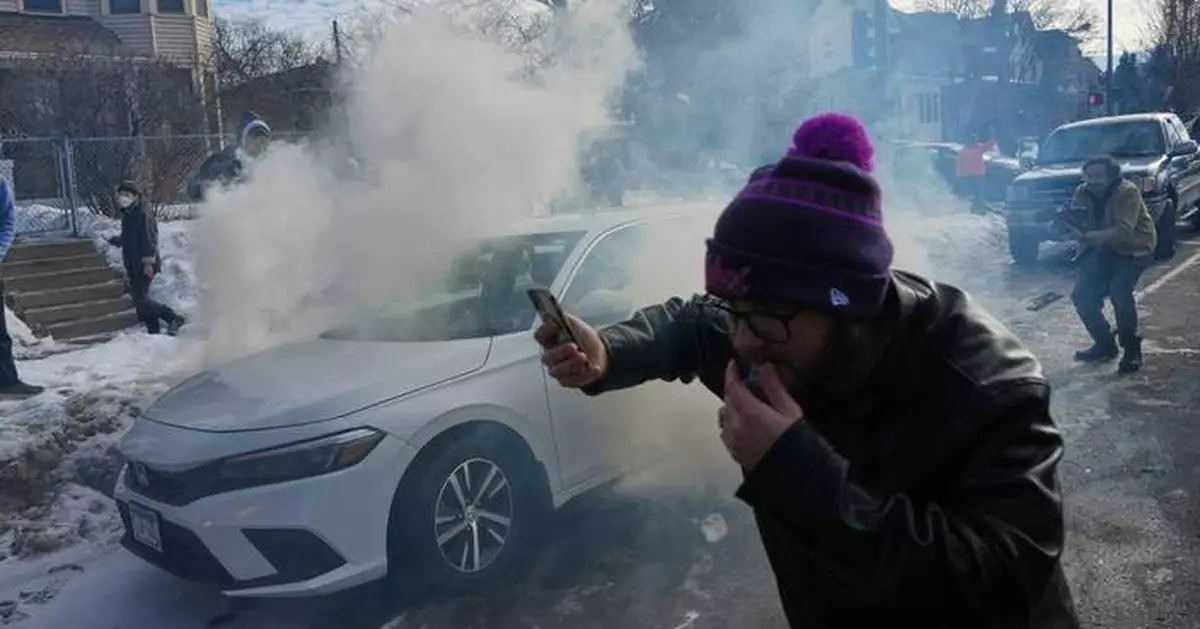
EDS NOTE: OBSCENITY - A man gestures as he walks toward a cloud of tear gas that was deployed by federal immigration officers Monday, Jan. 12, 2026, in Minneapolis. (AP Photo/John Locher)
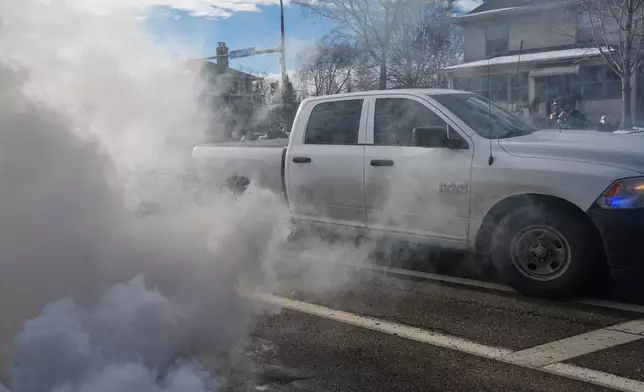
Federal agents drive through smoke from tear gas dispersed during a protest, Monday, Jan. 12, 2026 in Minneapolis (AP Photo/Adam Gray)
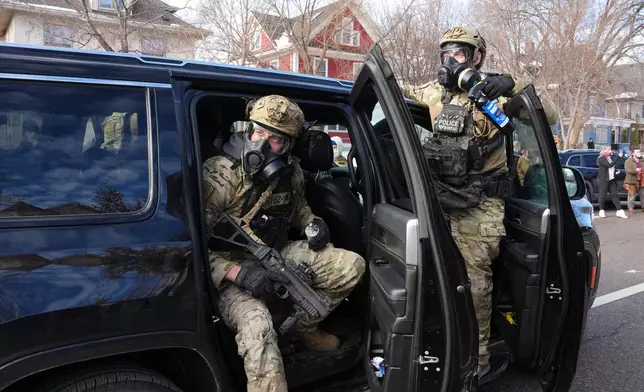
Federal agents get ready to disperse tear gas into a crowd at a protest, Monday, Jan. 12, 2026 in Minneapolis (AP Photo/Adam Gray)

A protester's face is doused in water after he was pepper sprayed outside of the Bishop Whipple Federal Building, Monday, Jan. 12, 2026, in Minneapolis. (AP Photo/Jen Golbeck)
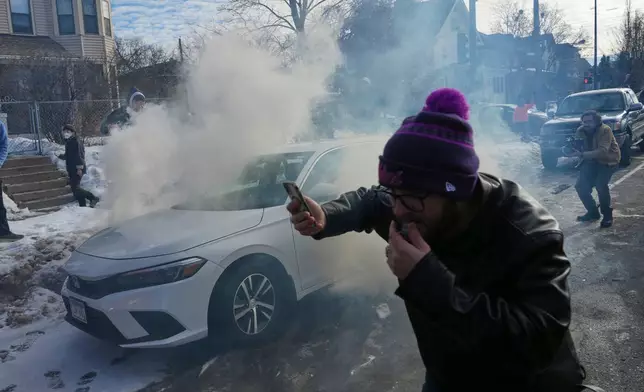
Protesters try to avoid tear gas dispersed by federal agents, Monday, Jan. 12, 2026 in Minneapolis (AP Photo/Adam Gray)
“This is, in essence, a federal invasion of the Twin Cities in Minnesota, and it must stop,” state Attorney General Keith Ellison said at a news conference. “These poorly trained, aggressive and armed agents of the federal state have terrorized Minnesota with widespread unlawful conduct.”
Homeland Security is pledging to put more than 2,000 immigration officers into Minnesota and says it has made more than 2,000 arrests since December. Immigration and Customs Enforcement has called the surge its largest enforcement operation ever.
Monday was another day brimming with tension, five days after the death of Renee Good, who was shot in the head by an ICE officer while behind the wheel of her SUV. There have been dozens of protests or vigils across the U.S. to honor the 37-year-old mother of three and to passionately criticize the Trump administration’s tactics.
Since the deployment in the Twin Cities, whistle-burst warnings by activists are commonly heard when immigration agents flood streets. Witnesses have regularly posted video of federal officers using tear gas to discourage the public from following them.
The Minnesota lawsuit accuses the Republican Trump administration of violating free speech rights by focusing on a progressive state that favors Democrats and welcomes immigrants.
“They’re targeting us based on what we look and sound like. Our residents are scared. And as local officials, we have a responsibility to act,” said St. Paul Mayor Kaohly Her, who was born in Laos.
In response, Homeland Security spokesperson Tricia McLaughlin accused Minnesota officials of ignoring public safety.
“President Trump’s job is to protect the American people and enforce the law — no matter who your mayor, governor, or state attorney general is," McLaughlin said. "That’s what the Trump administration is doing; we have the Constitution on our side on this, and we look forward to proving that in court.”
The Trump administration has repeatedly defended the immigration agent who shot Good, saying she and her vehicle presented a threat. But that explanation has been widely panned by Minnesota Gov. Tim Walz, Minneapolis Mayor Jacob Frey and others based on videos of the confrontation.
The government also faces a new lawsuit over a similar immigration crackdown in Illinois. More than 4,300 people were arrested last year in “Operation Midway Blitz” as masked agents swept the Chicago area. The lawsuit by the city and state says the campaign had a chilling effect, making residents afraid to leave home.
The lawsuit seeks restrictions on certain tactics, among other remedies. McLaughlin called it “baseless.”
Earlier Monday, agents fired tear gas to break up a crowd of people who showed up to see the aftermath of a car crash in Minneapolis, just a few blocks from where Good was killed.
A crowd emerged to witness a man being questioned by agents who had rear-ended his car. Agents used tear gas to discourage onlookers, then drove off as people screamed, “cowards!”
“I’m glad they didn’t shoot me or something,” Christian Molina told reporters.
Standing near his mangled fender, he wondered aloud: “Who’s going to pay for my car?”
In St. Cloud, 65 miles (104 kilometers) northwest of Minneapolis, hundreds of people gathered outside a strip of Somali-run businesses Monday when news spread that dozens of ICE officers were there.
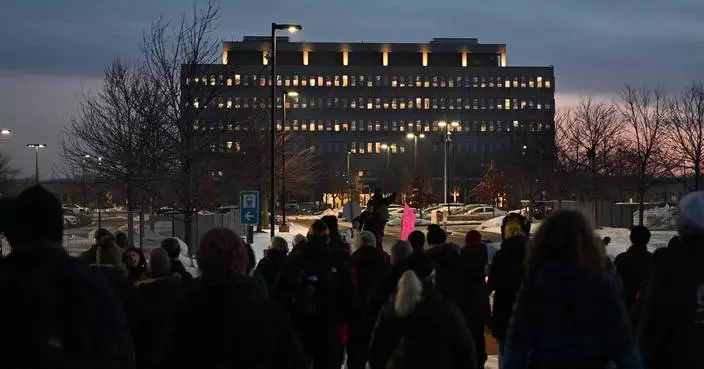
Hundreds of students, meanwhile, walked out of Roosevelt High School in Minneapolis, where federal agents had deployed tear gas on students and staff last week. Adults wearing safety vests cleared traffic, and many parents who are Roosevelt alumni showed up in old school wear.
Marchers held signs that said, “ICE out” and “Welcome to Panem,” a reference to the dystopian society from the “Hunger Games” book series.
Meanwhile, in Portland, Oregon, federal authorities filed charges against a Venezuelan national who was one of two people shot there by U.S. Border Patrol on Thursday. The U.S. Justice Department said the man used his pickup truck to strike a Border Patrol vehicle and escape the scene with a woman.
They were shot and eventually arrested. Their wounds were not life-threatening. The FBI said there was no video of the incident, unlike the Good shooting.
Associated Press reporters Ed White in Detroit, Sarah Raza in Sioux Falls, South Dakota, and Sophia Tareen in Chicago contributed to this report.
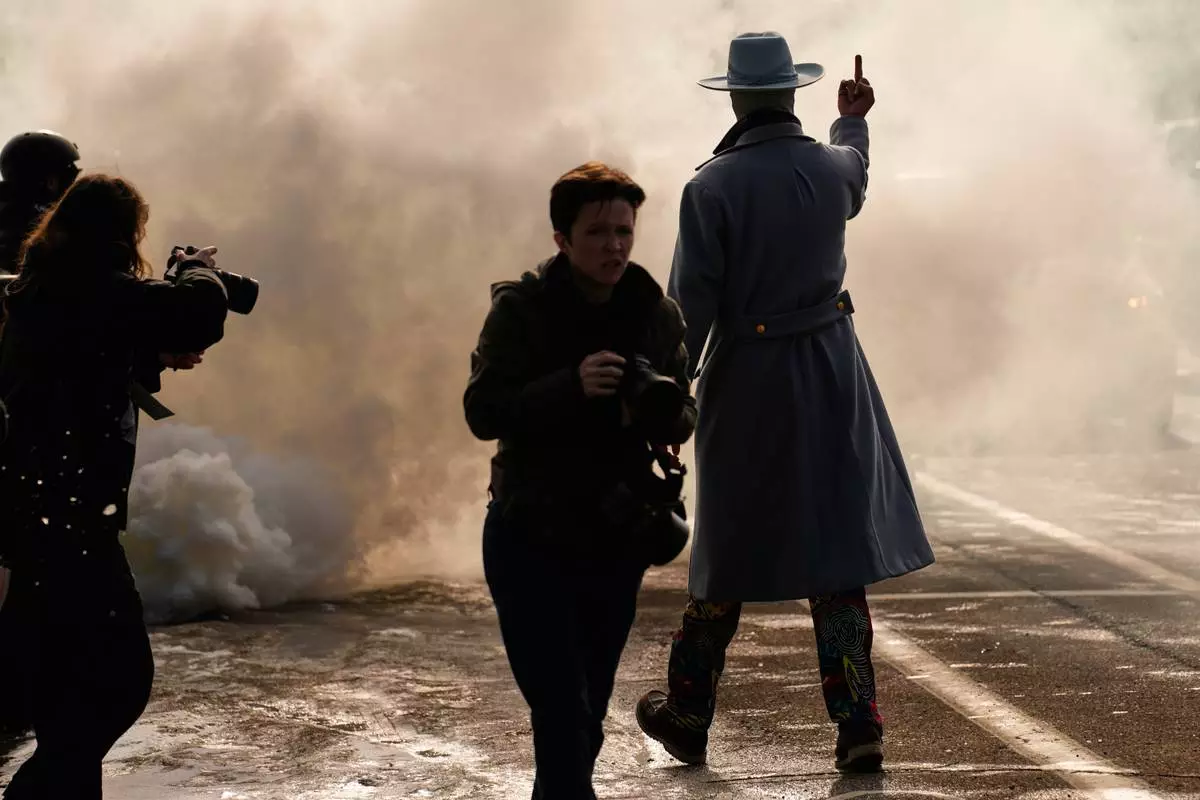
EDS NOTE: OBSCENITY - A man gestures as he walks toward a cloud of tear gas that was deployed by federal immigration officers Monday, Jan. 12, 2026, in Minneapolis. (AP Photo/John Locher)
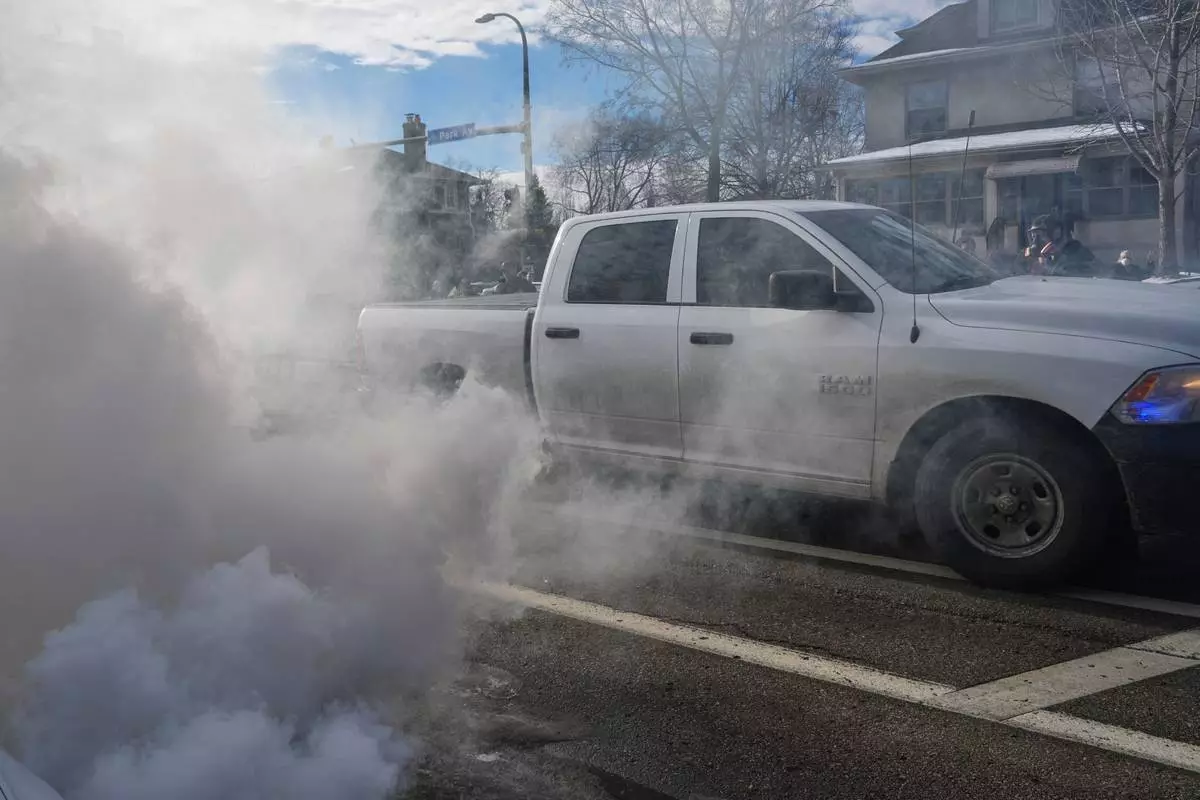
Federal agents drive through smoke from tear gas dispersed during a protest, Monday, Jan. 12, 2026 in Minneapolis (AP Photo/Adam Gray)
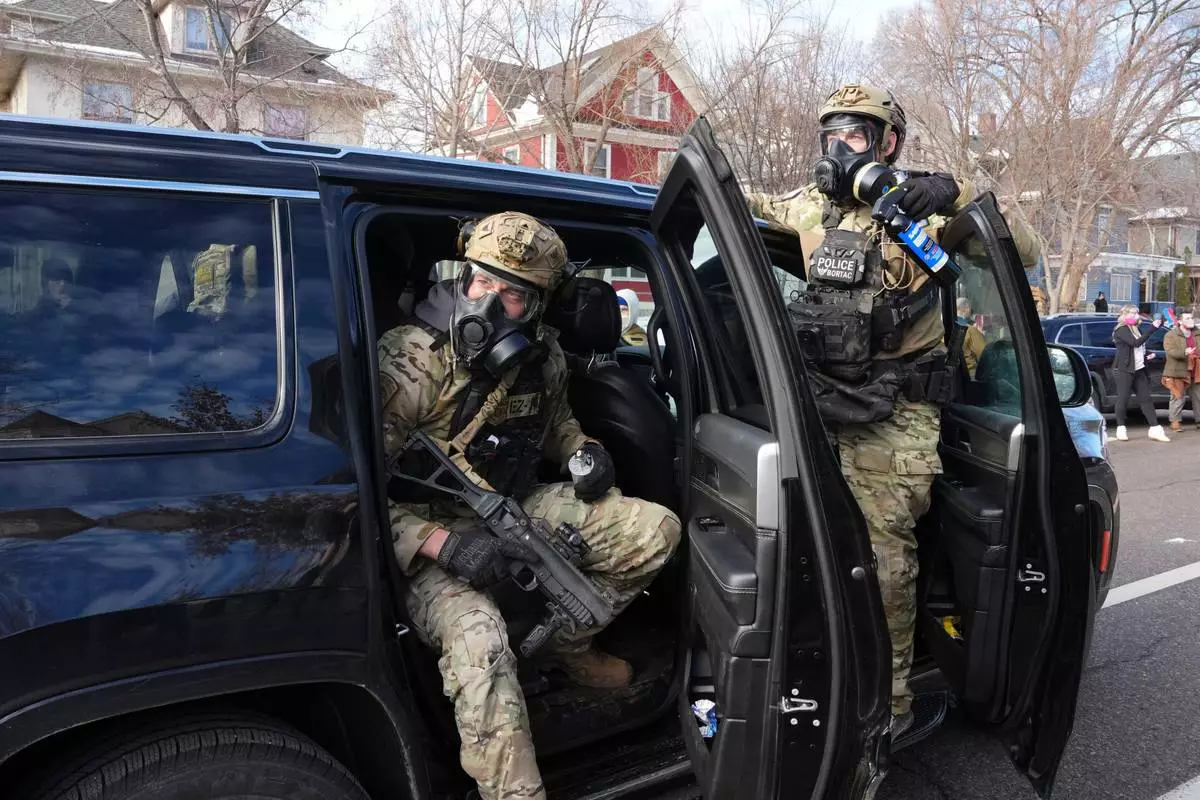
Federal agents get ready to disperse tear gas into a crowd at a protest, Monday, Jan. 12, 2026 in Minneapolis (AP Photo/Adam Gray)

A protester's face is doused in water after he was pepper sprayed outside of the Bishop Whipple Federal Building, Monday, Jan. 12, 2026, in Minneapolis. (AP Photo/Jen Golbeck)
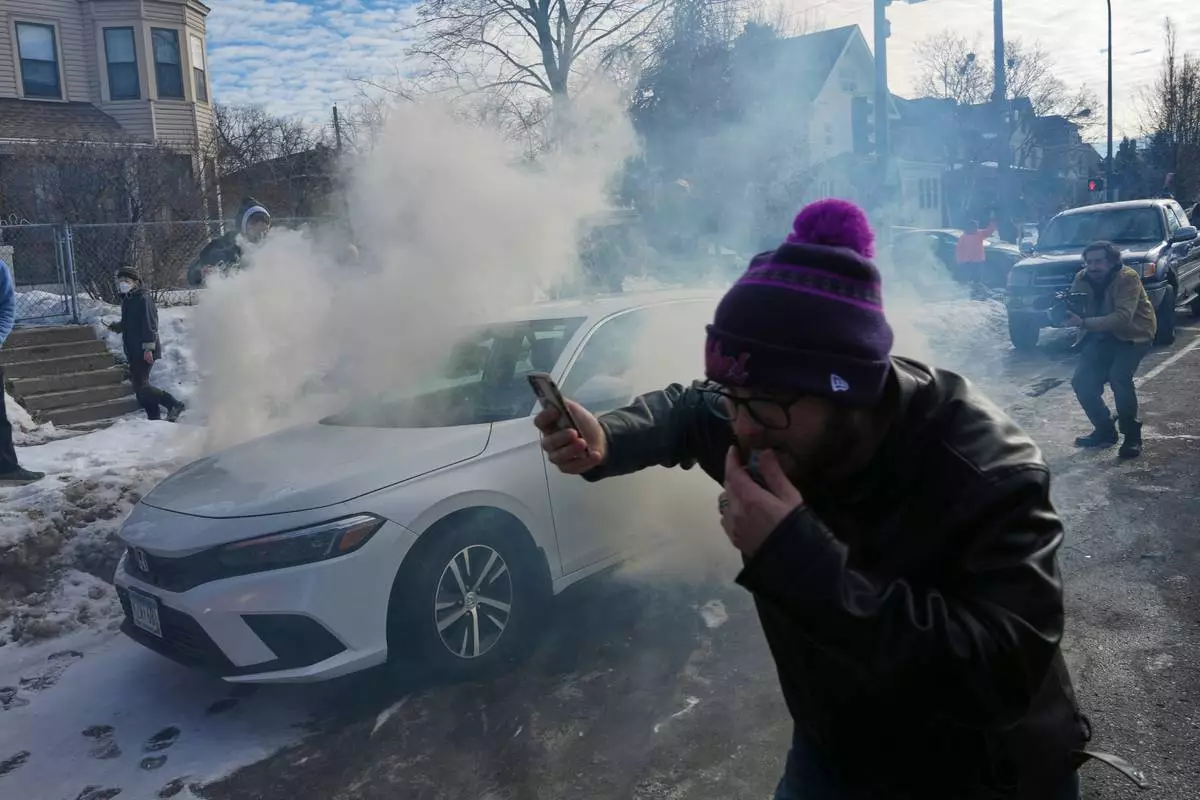
Protesters try to avoid tear gas dispersed by federal agents, Monday, Jan. 12, 2026 in Minneapolis (AP Photo/Adam Gray)