The aluminum battery leader's Elevator Regenerative Power System reclaims wasted power and yields carbon credits with every lift.
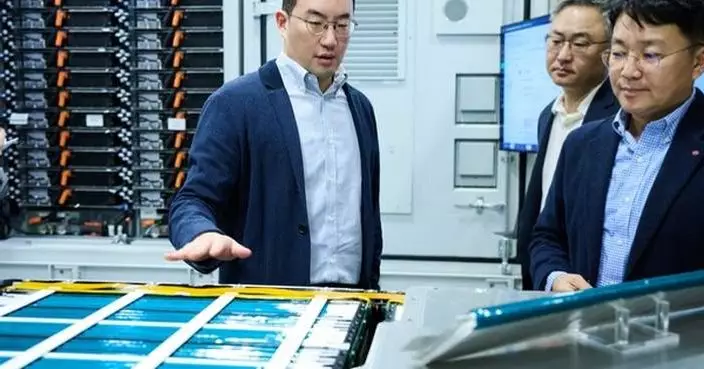
KAOHSIUNG, Jan. 13, 2026 /PRNewswire/ -- APh ePower, the global leader in commercialized aluminum battery technology, announced today that it has received the prestigious 2025 R&D 100 Award. This honor recognizes the company's innovative Elevator Regenerative Power System (ERPS), which reimagines one of modern life's most ubiquitous machines as a high-performance distributed energy-recovery engine. By capturing kinetic energy from every ride, APh ePower provides an industrial-grade solution that bridges the gap between energy efficiency and sustainable asset management.
Elevators generate recoverable energy during two predictable phases: ascending with a light load and descending with a heavy one. The ERPS captures that energy using high-efficiency DC-to-DC converters, achieving over 90% conversion efficiency – and stores it in an ultra-safe aluminum battery capable of rapid charge and discharge.
The result is instant energy recovery and storage, ensuring power is available when needed. This system guarantees continued elevator operation during outages and enhances occupant safety, providing buildings with a level of resilience that traditional systems cannot match.
In April 2025, APh ePower achieved another major milestone: Gold Standard approved the first globally applicable methodology enabling elevator regenerative power systems to generate carbon credits. The methodology defines how regenerative energy savings are quantified and verified, transforming those savings into tradable emission reductions. This approval opens a new pathway for elevator projects within the voluntary carbon market.
The potential impact of ERPS is immense. With over 15 million elevators operating worldwide, APh ePower's system can cut energy use by more than 40%, unlocking 164 TWh of annual savings—a figure that surpasses the total power consumption of many hyperscale AI data centers. This positions APh ePower at the forefront of industrial decarbonization by creating a significant new stream for carbon credits from verified energy savings.
Gold Standard CEO Margaret Kim praised the technology, stating, "We're proud to endorse APh ePower's innovative methodology for harnessing regenerative energy from elevator operations. Such practical application of regenerative energy not only drives down overall consumption but also delivers real, verifiable reductions in carbon emission. This is exactly the kind of scalable, high-integrity solution we champion at Gold Standard."For APh ePower, elevators are only the first step. The company is currently extending its aluminum-based dynamic storage technology into AI data center backup systems, hybrid mobility platforms, automated guided vehicles (AGVs), robotics, and the infrastructure shaping next-generation smart cities. As global electrification accelerates, aluminum batteries are emerging as an essential pathway for applications requiring rapid charge-discharge performance and enhanced safety. APh ePower's broader ambition is to redefine how everyday devices capture, store, and monetize energy—turning routine operational dynamics into measurable, financeable gains.
APh ePower's website: https://www.global.aph-epower.com/
** The press release content is from PR Newswire. Bastille Post is not involved in its creation. **

APh ePower Secures 2025 R&D 100 Award for Pioneering Elevator Energy Recovery
|
The new SPARK 50 and SPARK 50 5G redefine durable entry tech by combining massive batteries, military-grade toughness, and practical AI features for the young, always-on generation.
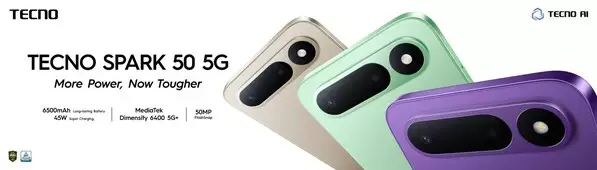
HONG KONG, April 3, 2026 /PRNewswire/ -- Global innovative technology brand TECNO today announced the launch of the first two models in its latest SPARK 50 Series: the SPARK 50 5G and SPARK 50. Built on the core aim of "Massive Power & Durable," this new lineup sets a fresh benchmark in its category by democratizing flagship-level Practical AI. Seamlessly blending industry-leading battery capacity in its class—an astounding 7000mAh on the SPARK 50 and 6500mAh with 45W fast charging on the SPARK 50 5G —with intelligent features designed to make a tangible difference in daily life, both devices are crafted to become the ultimate productivity and creativity boosters for young users navigating work, study, and everything in between.
Unleash the Power: Monster Battery Life with Lightning-Fast Charging
Power users know that endurance isn't just about capacity—it's about how long a phone lasts and how quickly it bounces back. The SPARK 50 5G and SPARK 50 deliver on both fronts with a revolutionary approach to battery longevity and charging speed.
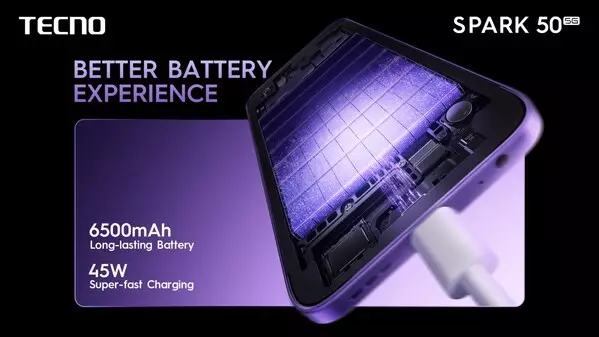
The SPARK 50 5G serves as the all-round 5G pioneer in its class, packing a massive 6500mAh battery complemented by 45W super-fast charging that powers the device from zero to full in just one hour. Its advanced battery system supports an incredible 1,800 charging cycle, maintaining over 80 percent health for up to six years of reliable use. The SPARK 50, meanwhile, stands as the endurance champion of its segment, boasting a colossal 7000mAh mega battery that enables up to 48 hours of continuous talk time, with intelligent power management ensuring the battery retains over 80 percent health even after five years of consistent use.
This commitment to longevity extends well beyond the battery. The SPARK 50 5G has been certified by TECNO Lab for six years of lasting fluency, lag-free performance, ensuring both devices remain fast and responsive for the long haul. Built to withstand the rigors of daily life, both models feature IP64 dust and water resistance and Wet Touch 2.0 technology, allowing for accurate touch control even with wet or oily fingers.
The SPARK 50 5G further raises the bar with MIL-STD-810H military-grade certification for enhanced toughness, while the SPARK 50 is certified to survive drops from up to 1.8 meters. From physical structure to smart touch interaction, the SPARK 50 Series is fortified against accidental drops, splashes, and humid environments, making it a reliable companion for outdoor adventures and daily commutes alike.
Flagship-level Practical AI at Your Fingertips
Raw power is only half the story; the intelligence within is what truly sets the SPARK 50 Series apart. With TECNO AI, both models transform from simple smartphones into intuitive companions that anticipate and adapt to user needs.
They come equipped with the Ella AI voice assistant and introduce AI FlashMemo, a feature that instantly captures on-screen content while automatically generating summaries, titles, and tags for easy recall via the AI MindHub—a private, searchable knowledge base that grows smarter with use. For crystal-clear communication in any environment, the SPARK 50 5G features all-scenario AI noise cancellation for calls, and recordings, while the SPARK 50 utilizes AI voice cancellation to ensure voices cut through, whether on a crowded street or in a windy park.
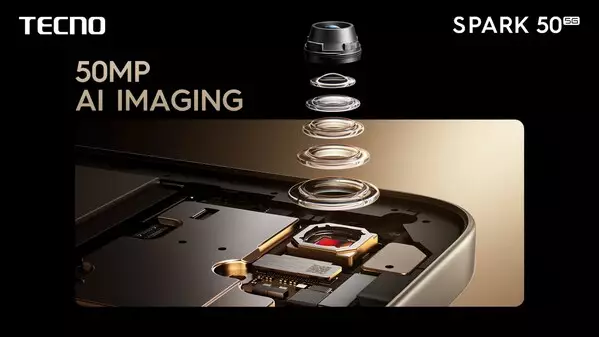
Both models also prove themselves as a versatile creative tool, featuring a 50MP AI main camera with AI FlashSnap to freeze fast-moving action and BestMoment to automatically capture the perfect shot just as the moment unfolds. Users can bring their memories to life with LivePhoto support, preserving not just images but the seconds of motion and sound that surround them. Adding to its everyday utility, an integrated IR blaster can control over 2,000 home appliance brands across 15 categories, turning the phone into a universal remote that manages entertainment and home devices with effortless ease.
Unbreakable Connectivity for Every Scenario
The SPARK 50 5G is powered by the MediaTek Dimensity 6400 5G+ processor, achieving an AnTuTu score of 450,000+, delivering beyond-class performance across every connected experience. With 5G Carrier Aggregation technology, it offers download speeds of up to 200% faster than standard 5G . It has also received the TÜV Rheinland High Network Performance Certification (available in selected markets) and supports smooth gaming at up to 90 frames per second, delivering zero-lag entertainment for mobile gamers who demand the best.
Beyond traditional networks, both models feature FreeLink 2.0, TECNO's revolutionary off-grid communication technology. It enables free voice calls, texts, and image sharing up to an impressive 1.5-kilometer range when no cellular network is available—a potential lifesaver during outdoor adventures, remote travel, or large crowded events where networks are overwhelmed. The SPARK 50 further enhances this capability with a dedicated SA1 signal-boosting chip, improving call distance by 30% in weak signal environments to keep users connected when it matters most. Additionally, the SPARK 50 5G features NFC which exclusively supports Touch Transfer, enabling lightning-fast, one-touch sharing of Live Photos and large files with iPhones, seamlessly bridging the gap between ecosystems for users living in a multi-device world.
A Fresh Iconic Design Language with Premium Durability
The SPARK 50 Series debuts a fresh, stylish look that doesn't compromise on durability. The SPARK 50 5G features a premium six-series aviation-grade aluminum design, which is 1.4 times harder than five-series aluminum, providing a sophisticated metallic sheen and robust lens protection that feels as good as it looks.
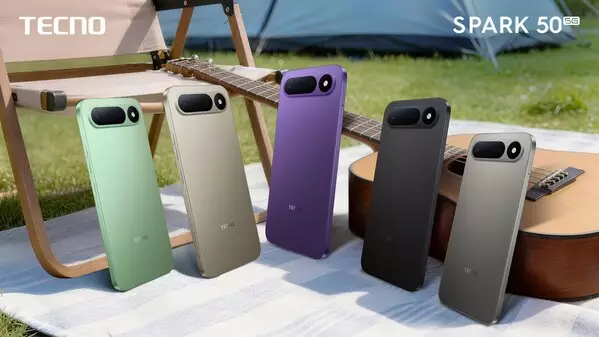
Both models are available in a dynamic palette of trend-forward colors to suit every personality and style preference. The SPARK 50 5G comes in Ink Black, Titanium Grey, Fantasy Purple, Mint Green, and Champagne Gold, with Midnight Blue and Ripple Green to follow in select markets. The SPARK 50 is offered in Dynamic Orange, Ink Black, Titanium Grey, Halo Blue, Aurora Purple, and Flowery Pink. While availability may vary by country and region, the goal remains the same: ensuring a perfect match for everyone, from the understated professional to the bold trendsetter.
Availability
The TECNO SPARK 50 5G is now gradually becoming available in the markets, while SPARK 50 will be available from early April. With cutting-edge technology, exceptional durability, and practical AI at an unbeatable value, they represent TECNO's commitment to empowering young consumers with lifestyle tools built for a generation that refuses to compromise.
About TECNO
TECNO is an AI-driven innovative technology brand with a presence in over 70 markets across five continents. Committed to transforming the digital experience in global emerging markets, TECNO relentlessly pursues the perfect integration of contemporary aesthetic design with the latest technologies and artificial intelligence. Today, TECNO offers a comprehensive ecosystem of AI-powered products, including smartphones, smart wearables, laptops, tablets, smart gaming devices, the HiOS operating system, and smart home products. Guided by its brand essence of "Stop At Nothing," TECNO continues to pioneer the adoption of cutting-edge technologies and AI-driven experiences for forward-looking individuals, inspiring them to never stop pursuing their best selves and brightest futures. For more information, please visit TECNO's official site: www.tecno-mobile.com.
The new SPARK 50 and SPARK 50 5G redefine durable entry tech by combining massive batteries, military-grade toughness, and practical AI features for the young, always-on generation.
HONG KONG, April 3, 2026 /PRNewswire/ -- Global innovative technology brand TECNO today announced the launch of the first two models in its latest SPARK 50 Series: the SPARK 50 5G and SPARK 50. Built on the core aim of "Massive Power & Durable," this new lineup sets a fresh benchmark in its category by democratizing flagship-level Practical AI. Seamlessly blending industry-leading battery capacity in its class—an astounding 7000mAh on the SPARK 50 and 6500mAh with 45W fast charging on the SPARK 50 5G —with intelligent features designed to make a tangible difference in daily life, both devices are crafted to become the ultimate productivity and creativity boosters for young users navigating work, study, and everything in between.
Unleash the Power: Monster Battery Life with Lightning-Fast Charging
Power users know that endurance isn't just about capacity—it's about how long a phone lasts and how quickly it bounces back. The SPARK 50 5G and SPARK 50 deliver on both fronts with a revolutionary approach to battery longevity and charging speed.
The SPARK 50 5G serves as the all-round 5G pioneer in its class, packing a massive 6500mAh battery complemented by 45W super-fast charging that powers the device from zero to full in just one hour. Its advanced battery system supports an incredible 1,800 charging cycle, maintaining over 80 percent health for up to six years of reliable use. The SPARK 50, meanwhile, stands as the endurance champion of its segment, boasting a colossal 7000mAh mega battery that enables up to 48 hours of continuous talk time, with intelligent power management ensuring the battery retains over 80 percent health even after five years of consistent use.
This commitment to longevity extends well beyond the battery. The SPARK 50 5G has been certified by TECNO Lab for six years of lasting fluency, lag-free performance, ensuring both devices remain fast and responsive for the long haul. Built to withstand the rigors of daily life, both models feature IP64 dust and water resistance and Wet Touch 2.0 technology, allowing for accurate touch control even with wet or oily fingers.
The SPARK 50 5G further raises the bar with MIL-STD-810H military-grade certification for enhanced toughness, while the SPARK 50 is certified to survive drops from up to 1.8 meters. From physical structure to smart touch interaction, the SPARK 50 Series is fortified against accidental drops, splashes, and humid environments, making it a reliable companion for outdoor adventures and daily commutes alike.
Flagship-level Practical AI at Your Fingertips
Raw power is only half the story; the intelligence within is what truly sets the SPARK 50 Series apart. With TECNO AI, both models transform from simple smartphones into intuitive companions that anticipate and adapt to user needs.
They come equipped with the Ella AI voice assistant and introduce AI FlashMemo, a feature that instantly captures on-screen content while automatically generating summaries, titles, and tags for easy recall via the AI MindHub—a private, searchable knowledge base that grows smarter with use. For crystal-clear communication in any environment, the SPARK 50 5G features all-scenario AI noise cancellation for calls, and recordings, while the SPARK 50 utilizes AI voice cancellation to ensure voices cut through, whether on a crowded street or in a windy park.
Both models also prove themselves as a versatile creative tool, featuring a 50MP AI main camera with AI FlashSnap to freeze fast-moving action and BestMoment to automatically capture the perfect shot just as the moment unfolds. Users can bring their memories to life with LivePhoto support, preserving not just images but the seconds of motion and sound that surround them. Adding to its everyday utility, an integrated IR blaster can control over 2,000 home appliance brands across 15 categories, turning the phone into a universal remote that manages entertainment and home devices with effortless ease.
Unbreakable Connectivity for Every Scenario
The SPARK 50 5G is powered by the MediaTek Dimensity 6400 5G+ processor, achieving an AnTuTu score of 450,000+, delivering beyond-class performance across every connected experience. With 5G Carrier Aggregation technology, it offers download speeds of up to 200% faster than standard 5G . It has also received the TÜV Rheinland High Network Performance Certification (available in selected markets) and supports smooth gaming at up to 90 frames per second, delivering zero-lag entertainment for mobile gamers who demand the best.
Beyond traditional networks, both models feature FreeLink 2.0, TECNO's revolutionary off-grid communication technology. It enables free voice calls, texts, and image sharing up to an impressive 1.5-kilometer range when no cellular network is available—a potential lifesaver during outdoor adventures, remote travel, or large crowded events where networks are overwhelmed. The SPARK 50 further enhances this capability with a dedicated SA1 signal-boosting chip, improving call distance by 30% in weak signal environments to keep users connected when it matters most. Additionally, the SPARK 50 5G features NFC which exclusively supports Touch Transfer, enabling lightning-fast, one-touch sharing of Live Photos and large files with iPhones, seamlessly bridging the gap between ecosystems for users living in a multi-device world.
A Fresh Iconic Design Language with Premium Durability
The SPARK 50 Series debuts a fresh, stylish look that doesn't compromise on durability. The SPARK 50 5G features a premium six-series aviation-grade aluminum design, which is 1.4 times harder than five-series aluminum, providing a sophisticated metallic sheen and robust lens protection that feels as good as it looks.
Both models are available in a dynamic palette of trend-forward colors to suit every personality and style preference. The SPARK 50 5G comes in Ink Black, Titanium Grey, Fantasy Purple, Mint Green, and Champagne Gold, with Midnight Blue and Ripple Green to follow in select markets. The SPARK 50 is offered in Dynamic Orange, Ink Black, Titanium Grey, Halo Blue, Aurora Purple, and Flowery Pink. While availability may vary by country and region, the goal remains the same: ensuring a perfect match for everyone, from the understated professional to the bold trendsetter.
Availability
The TECNO SPARK 50 5G is now gradually becoming available in the markets, while SPARK 50 will be available from early April. With cutting-edge technology, exceptional durability, and practical AI at an unbeatable value, they represent TECNO's commitment to empowering young consumers with lifestyle tools built for a generation that refuses to compromise.
About TECNO
TECNO is an AI-driven innovative technology brand with a presence in over 70 markets across five continents. Committed to transforming the digital experience in global emerging markets, TECNO relentlessly pursues the perfect integration of contemporary aesthetic design with the latest technologies and artificial intelligence. Today, TECNO offers a comprehensive ecosystem of AI-powered products, including smartphones, smart wearables, laptops, tablets, smart gaming devices, the HiOS operating system, and smart home products. Guided by its brand essence of "Stop At Nothing," TECNO continues to pioneer the adoption of cutting-edge technologies and AI-driven experiences for forward-looking individuals, inspiring them to never stop pursuing their best selves and brightest futures. For more information, please visit TECNO's official site: www.tecno-mobile.com.
** This press release is distributed by PR Newswire through automated distribution system, for which the client assumes full responsibility. **
TECNO Debuts SPARK 50 Series with Two Powerful Models: Next-Level AI Goes Mainstream Alongside a 5G Pioneer and a 7000mAh Endurance King
TECNO Debuts SPARK 50 Series with Two Powerful Models: Next-Level AI Goes Mainstream Alongside a 5G Pioneer and a 7000mAh Endurance King
TECNO Debuts SPARK 50 Series with Two Powerful Models: Next-Level AI Goes Mainstream Alongside a 5G Pioneer and a 7000mAh Endurance King
TECNO Debuts SPARK 50 Series with Two Powerful Models: Next-Level AI Goes Mainstream Alongside a 5G Pioneer and a 7000mAh Endurance King