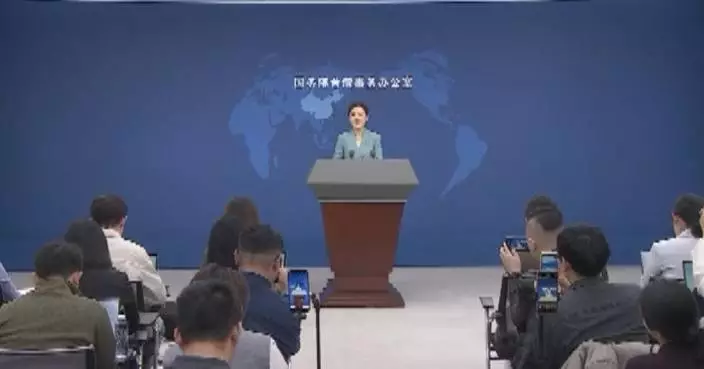
Japanese Prime Minister Takaichi Sanae's erroneous remarks on China's Taiwan are obviously in incitement to war, and are in violation of the country's diplomatic commitments to China, a Japanese expert said on Monday.
Kikuzaki Takeshi, Chair of the Nagaoka Peace Committee in Japan, called on the Japanese government to face up to history, halt military expansion, and work to safeguard regional stability through peaceful diplomacy.
"Takaichi's remarks are clearly provocative and amount to incitement to war. They run counter not only to the spirit of Japan's Constitution, but also to the four political documents between China and Japan signed since the conclusion of the 1972 Japan-China Joint Statement. The Taiwan question is China's internal affair, and no other country has the right to interfere. Thus, I found such remarks intolerable and must be retracted," said the expert.
He was referring to the blatant and provocative remarks on China's Taiwan region made by Takaichi on November 7, 2025, claiming that a Taiwan contingency could constitute a "survival-threatening situation" for Japan, and implying that Japan might invoke the so-called "right to collective self-defense" for armed intervention across the Taiwan Strait.
Takeshi pointed out that Japan's involvement in any arms race would only distance the country from peace and stability.
"If Japan stirs up a so-called arms race, it will gradually distance itself from peace. The claim that military strength is necessary to protect peace is, in my view, purely nonsense and also unconstitutional in Japan," said Kikuzaki.
"Following her remarks, Takaichi has been pushing for revising Japan's three non-nuclear principles, while the country's defense budget has surged. The defense budget for the next fiscal year is reportedly set to exceed 9 trillion yen (56.61 billion U.S. dollars). Japan is moving toward military expansion at an alarming pace, and that deeply frightens me," he said.

Takaichi's erroneous remarks push Japan toward war, violate constitution: expert

Takaichi's erroneous remarks push Japan toward war, violate constitution: expert
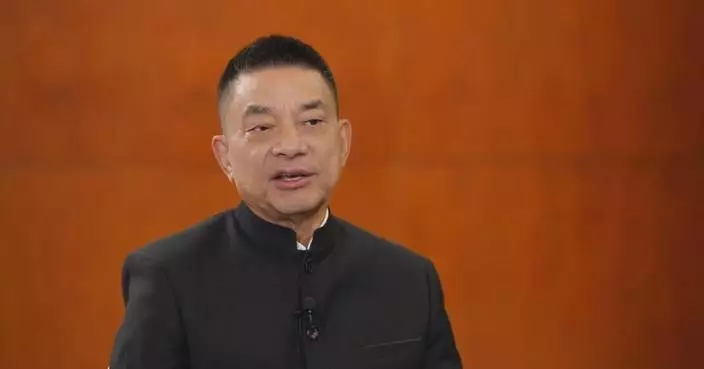
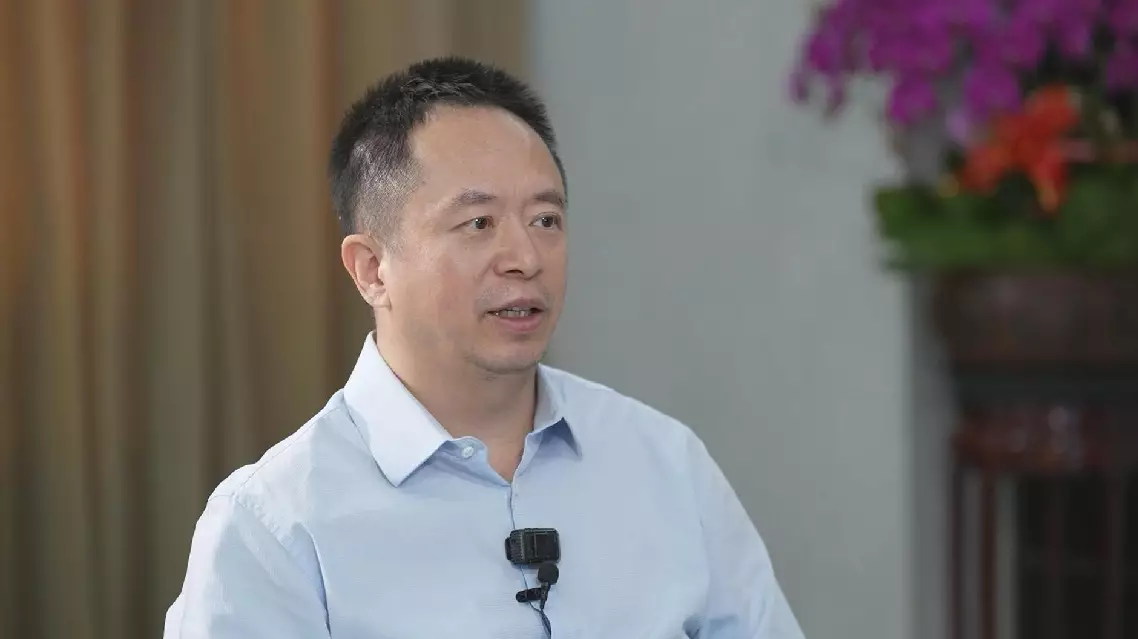
Zhou Hongyi, founder of Chinese cybersecurity giant Qihoo 360 and a member of China’s top political advisory body, has stressed the need to harness artificial intelligence (AI) to confront mounting security threats in a recent interview with China Global Television Network (CGTN).
As a member to the 14th National Committee of the Chinese People's Political Consultative Conference (CPPCC), Zhou placed "AI plus” security at the core of his proposals to this year's "two sessions," which convene this week, framing it as China's frontline strategy for strengthening cybersecurity.
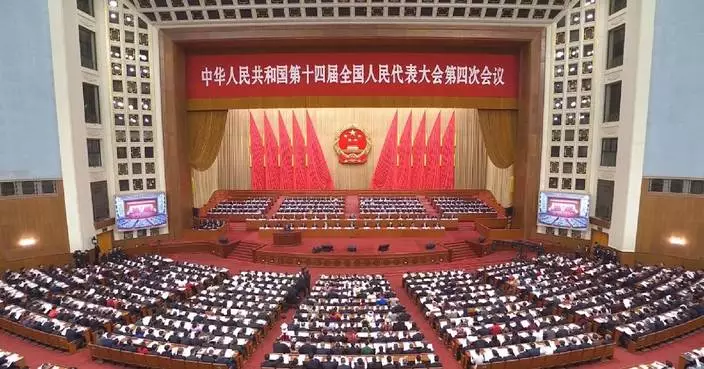
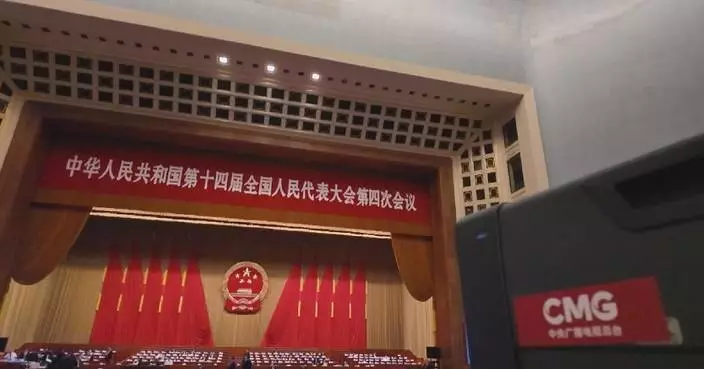
The "two sessions" are the yearly meetings of the National People's Congress (NPC) and the National Committee of the CPPCC, which serve five-year terms and convene each March. The fourth session of the 14th NPC and the fourth session of the 14th National Committee of the CPPCC kicked off on Thursday and Wednesday, respectively.
Expanding on the "AI plus" security agenda, Zhou said it would enable China to simulate cyberattacks, uncover weaknesses, and deploy digital agents across industries, measures he sees as vital to safeguarding enterprises in the AI era.
"This year I would like to first focus on 'AI plus' security, which means we must use AI's abilities to solve traditional security issues. For example we can simulate an attack to an enterprise's network, identifying its vulnerabilities and then fix them. Secondly, I think AI agents would be a key factor for 'AI plus' to be truly implemented into various industries, because large models have their own limits. Only by transforming large models into AI agents, and into digital experts and digital interns, can it be integrated with the business of enterprises," Zhou said.
Turning to the humanoid robots showcased at this year's Spring Festival Gala, Zhou said their appearance highlighted China's rapid progress in robotics and signaled that the era of intelligent machines is approaching.
"I am not surprised. I feel quite lucky I didn't do boxing with those robots on the stage of the Spring Festival Gala, because I don't think I can hit them. I think China's robots manufacturing industry has seen huge progress over the past year. On the other hand, I think that show also reflects our country's industrial strategy, which is sending us a signal that an era of robots is coming. How shall we empower our enterprises through AI? That's a question our entrepreneurs and investors need to think about," he said.
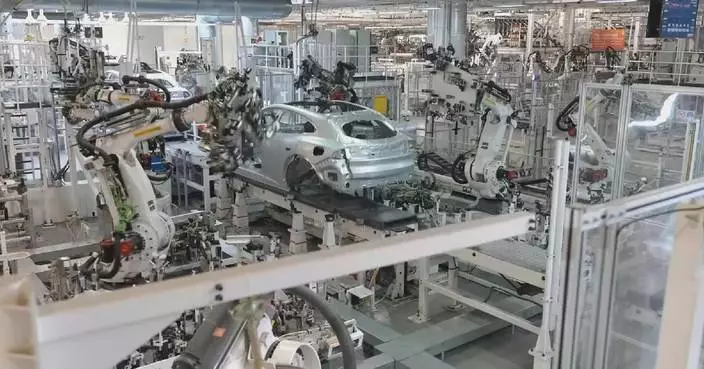
As China embarks on its 15th Five-Year Plan in 2026, Zhou projects that the continued development of AI will drive substantial demand in key sectors, such as energy, raw materials, and chips.
"First I think energy, as well as some of the raw materials that can align with the development of computing power would see huge progress. The chips industry will also be developed. I think China needs more inference chips. And there would also be a huge demand for electricity," he said.
This year marks the start of China's 15th Five-Year Plan period, spanning from 2026 to 2030, a period widely seen as pivotal for the country's long-term development. The plan is expected to be formally endorsed by the NPC during the "two sessions" with more detailed targets released later.
CPPCC member calls for AI-driven defenses to safeguard enterprises amid rising cyber threats