Under the influence of a powerful cold front across northwest China's Xinjiang Uygur Autonomous Region, Turpan City -- one of China's hottest places known for enduring over 100 days of scorching heat exceeding 35 degrees Celsius in summer annually -- saw its first snowfall of 2026 on Sunday.
The snow brought winter scenery to the region, with light flakes dusting the surface of the Aydingkol Lake in Turpan's Gaochang District, creating a scene of a white velvet blanket spread across the water.
Notably, the Aydingkol Lake sits at 154.31 meters below sea level, making it the lowest terrestrial point in China. The area is known for its extreme aridity and complex terrain, making such snowfall a rare occurrence.
Currently, in addition to the central part of Xinjiang, snowfall has also been reported in several northern parts of the autonomous region, including the Ili Kazak Autonomous Prefecture, the Tacheng Prefecture, and the Bortala Mongolian Autonomous Prefecture.
In Altay City in northern Xinjiang, snowfall began in the early hours of Tuesday and continued through the day, leaving roads covered with about 3-4 centimeters of snows.
Although not heavy, the snow has created slippery conditions. Local traffic police began duty at major intersections from 8:00 on Tuesday, reminding drivers to slow down and proceed with caution to prevent potential accidents.
Municipal crews launched snow-clearing operations shortly after the snowfall started and have conducted multiple rounds to maintain road accessibility.
The meteorological department in the Altay Prefecture issued a severe cold wave weather alert on Monday. Official data indicate that from the night of the Monday to January 18, the area will experience further snowfall, strong winds, and a significant temperature plunge.
Starting Tuesday night, temperatures in the region are expected to drop sharply by 20-30 degrees Celsius, with lows in Altay City approaching minus 35 degrees Celsius in the coming days. Light snow is forecast in plain areas, while mountainous areas may experience moderate to heavy snow.
According to the China Meteorological Administration (CMA), from Tuesday to Friday, multiple cold air movements are expected in northern China, leading to frequent temperature fluctuations.
Temperatures are forecast to drop by 4-8 degrees Celsius in central and southern parts of northeast China, northern Xinjiang, central and western Inner Mongolia Autonomous Region, western Gansu Province, and western and northern parts of north China, with localized decreases exceeding 10 degrees Celsius.

Cold wave triggers temperature dips, snowfall in northwest China's Xinjiang
Zhou Hongyi, founder of Chinese cybersecurity giant Qihoo 360 and a member of China’s top political advisory body, has stressed the need to harness artificial intelligence (AI) to confront mounting security threats in a recent interview with China Global Television Network (CGTN).
As a member to the 14th National Committee of the Chinese People's Political Consultative Conference (CPPCC), Zhou placed "AI plus” security at the core of his proposals to this year's "two sessions," which convene this week, framing it as China's frontline strategy for strengthening cybersecurity.
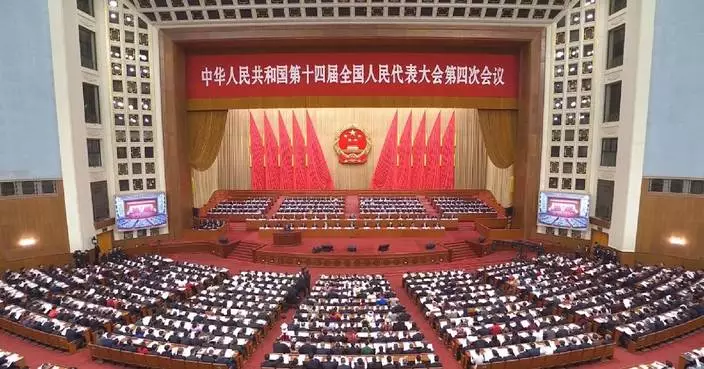
The "two sessions" are the yearly meetings of the National People's Congress (NPC) and the National Committee of the CPPCC, which serve five-year terms and convene each March. The fourth session of the 14th NPC and the fourth session of the 14th National Committee of the CPPCC kicked off on Thursday and Wednesday, respectively.
Expanding on the "AI plus" security agenda, Zhou said it would enable China to simulate cyberattacks, uncover weaknesses, and deploy digital agents across industries, measures he sees as vital to safeguarding enterprises in the AI era.
"This year I would like to first focus on 'AI plus' security, which means we must use AI's abilities to solve traditional security issues. For example we can simulate an attack to an enterprise's network, identifying its vulnerabilities and then fix them. Secondly, I think AI agents would be a key factor for 'AI plus' to be truly implemented into various industries, because large models have their own limits. Only by transforming large models into AI agents, and into digital experts and digital interns, can it be integrated with the business of enterprises," Zhou said.
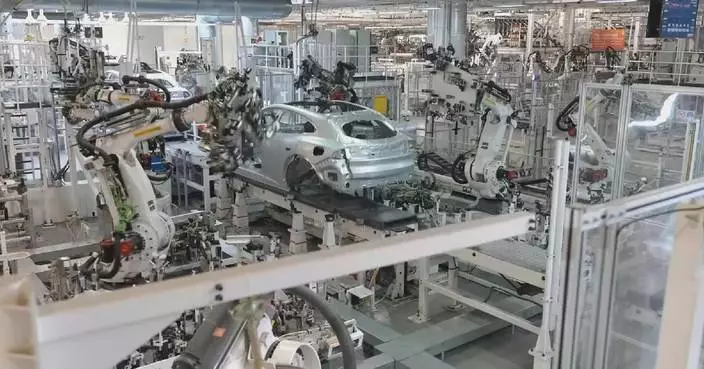
Turning to the humanoid robots showcased at this year's Spring Festival Gala, Zhou said their appearance highlighted China's rapid progress in robotics and signaled that the era of intelligent machines is approaching.
"I am not surprised. I feel quite lucky I didn't do boxing with those robots on the stage of the Spring Festival Gala, because I don't think I can hit them. I think China's robots manufacturing industry has seen huge progress over the past year. On the other hand, I think that show also reflects our country's industrial strategy, which is sending us a signal that an era of robots is coming. How shall we empower our enterprises through AI? That's a question our entrepreneurs and investors need to think about," he said.
As China embarks on its 15th Five-Year Plan in 2026, Zhou projects that the continued development of AI will drive substantial demand in key sectors, such as energy, raw materials, and chips.
"First I think energy, as well as some of the raw materials that can align with the development of computing power would see huge progress. The chips industry will also be developed. I think China needs more inference chips. And there would also be a huge demand for electricity," he said.
This year marks the start of China's 15th Five-Year Plan period, spanning from 2026 to 2030, a period widely seen as pivotal for the country's long-term development. The plan is expected to be formally endorsed by the NPC during the "two sessions" with more detailed targets released later.
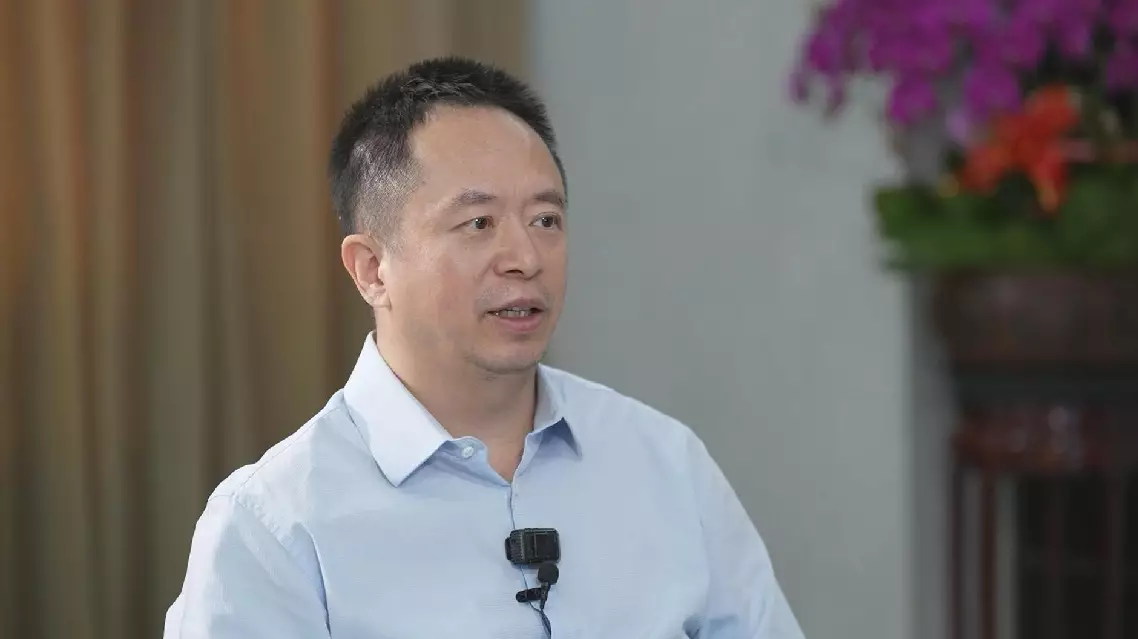
CPPCC member calls for AI-driven defenses to safeguard enterprises amid rising cyber threats