CALGARY, Canada--(BUSINESS WIRE)--Jan 13, 2026--
Blackline Safety Corp. (TSX: BLN), a global leader in connected safety technology, today announced G8, the next evolution of worksite safety and the most connected wearable the company has ever built. Designed from the ground up as a true platform, G8 combines advanced gas detection, lone worker protection, and radio-quality communication in one rugged device that connects workers to each other, to their safety teams, and to the broader digital worksite—with real-time data streamed to the cloud to keep safety and operations leaders informed.
This press release features multimedia. View the full release here: https://www.businesswire.com/news/home/20260113439071/en/
“G8 gives workers access to the tools and information they need to confidently get the job done and get home safe,” said Cody Slater, CEO and Chair, Blackline Safety. “By unifying gas detection, real-time monitoring, and communication in one connected device, we’re delivering more than incremental improvement. We’re giving every worker a direct line to the people, data, systems and support they need to make faster, safer decisions.”
G8 builds on the proven foundation of Blackline’s G7 line, while introducing breakthrough capabilities that set a new standard for connected safety and productivity.
A Connected Gas Detector That Does More
At its core, G8 is a fully featured, connected gas detector with a rugged, IP-67 rating that’s built to meet the most demanding industrial environments.
But G8 also goes further, consolidating several critical tools into one intrinsically safe device, so workers no longer need to carry and manage multiple devices. Plus, real-time cloud connectivity so teams get the field data they need to respond faster and keep operations running smoothly. With G8, organizations get:
Safety and situational awareness:
3 ways to communicate (in emergencies or for everyday productivity) with enhanced speaker and mic technology:
Visibility and usability:
Real-Time Data That Drives Safer, More Productive Work
Every G8 streams live data to Blackline’s data and analytics platform—Blackline Live—via the cloud. This gives safety leaders real-time visibility into worker status, gas readings, and site conditions, and it gives operations teams actionable insights to prevent incidents, reduce delays, and keep projects moving.
A Platform Built for Today—and What Comes Next
Unlike traditional gas detectors, G8 functions as a connected platform that’s built to be able to integrate with the rest of the digital worksite. It’s future-ready to plug into other digital platforms that organizations use today, from human resource management systems (HRMS) to field service management tools to hot-permitting applications and more, helping eliminate manual workflows and remove barriers to getting work done.
And because G8 receives automatic firmware updates, it will continue to evolve with new capabilities, expanded integrations, and emerging technologies like AI-driven insights.
“We’re talking about a platform built to grow with you,” said Phil Benson, VP, Product, Blackline Safety. “As worksites become more connected, automated and data-driven, G8 has the flexibility to meet tomorrow’s needs, not just today’s. It lays the foundation for future capabilities like AI integrations, expanded calling features, and predictive analytics that will continue to raise the bar for connected work for years to come.”
G8 is protected by more than a dozen patents with additional patents pending.
Blackline is taking orders today, with first shipments expected in February 2026. To learn more about G8 and some upcoming events, including a LinkedIn Live on February 2 and a product webinar on February 25, visit www.blacklinesafety.com/G8.
About Blackline Safety: Blackline Safety is a technology leader driving innovation in the industrial workforce through IoT (Internet of Things). With connected safety devices and predictive analytics, Blackline enables companies to drive towards zero safety incidents and improved operational performance. Blackline provides wearable devices, personal and area gas monitoring, cloud-connected software and data analytics to meet demanding safety challenges and enhance overall productivity for organizations with customers in more than 75 countries. Armed with cellular and satellite connectivity, Blackline provides a lifeline to tens of thousands of people, having reported over 300 billion data-points and initiated over eight million emergency alerts. For more information, visit BlacklineSafety.com and connect with us on Facebook, X (formerly Twitter), LinkedIn and Instagram.

G8 features enhanced audio quality and an optional remote speaker microphone for clear, reliable communication in extremely loud environments.
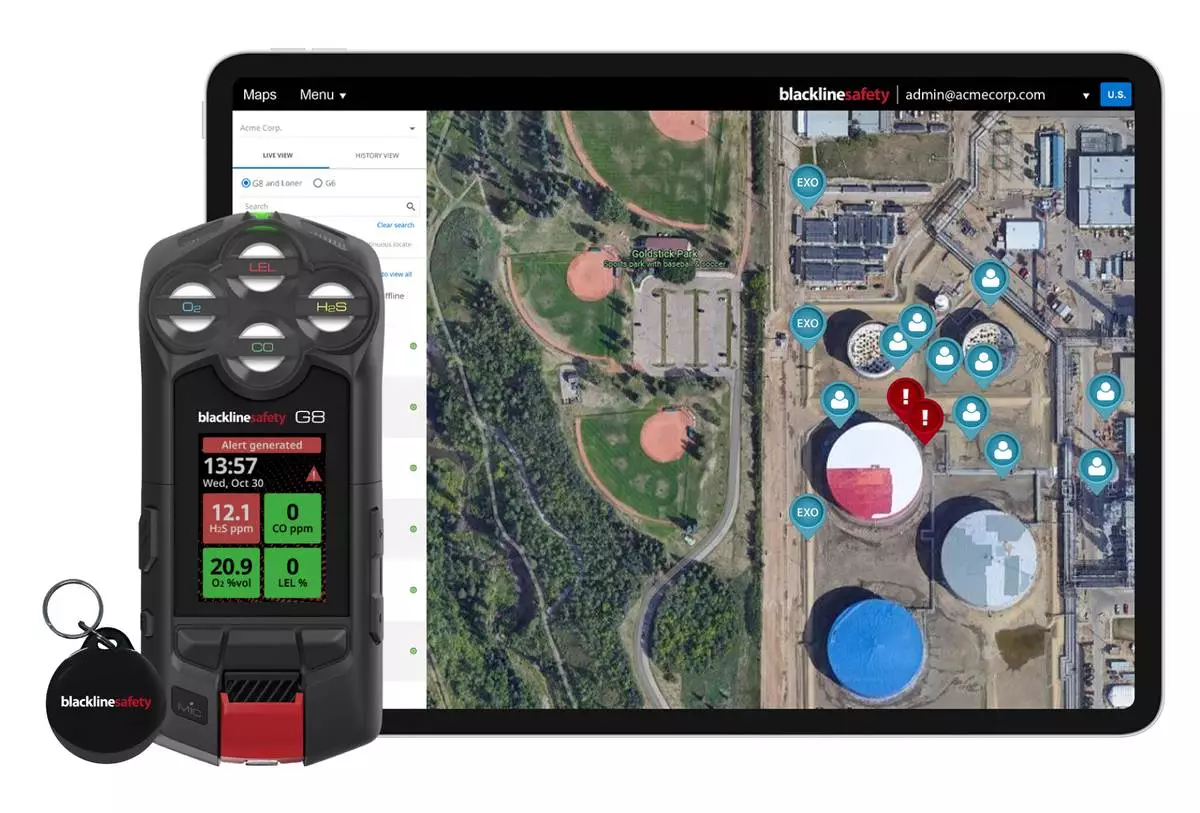
G8 feeds live field data to Blackline Live software for a real-time view of workers and worksites, and all-new TagAssignTM capabilities allow for one-tap device assignment.
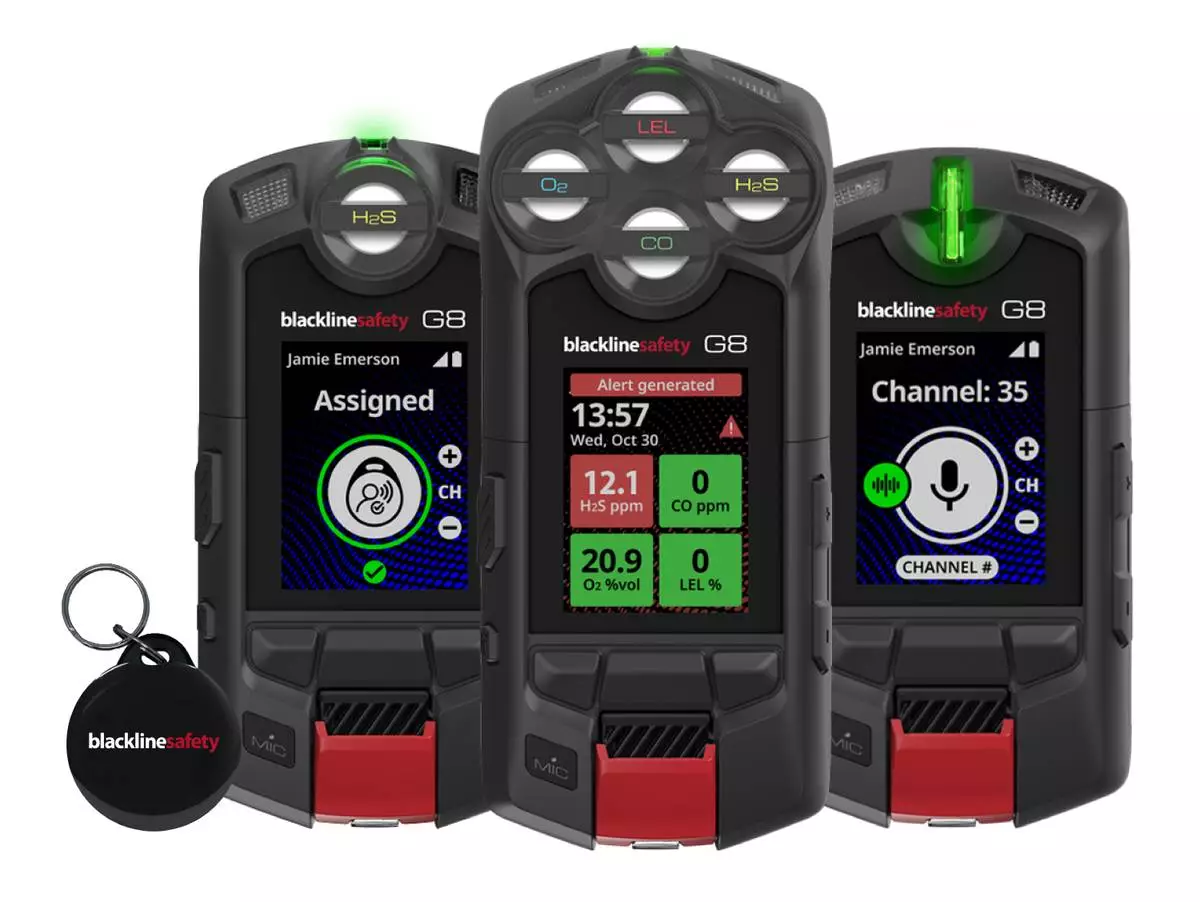
G8 has a 64-color backlit display that's nearly twice the size of its predecessor G7's display for clearer visibility in any work environment.
PARIS (AP) — Novak Djokovic placed ice packs around his neck and on top of his head during changeovers to keep cool amid the Paris heat wave at the French Open on Wednesday.
The 39-year-old Djokovic was pushed by 74th-ranked French player Valentin Royer — who is 15 years younger than him — for more than 3½ hours before he reached the third round with a 6-3, 6-2, 6-7 (7), 6-3 victory.
For the fourth straight day of this year’s tournament, the temperature rose beyond 32 degrees Celsius (90 Fahrenheit).
When Djokovic won a key point early in the fourth set with a forehand that he whipped around the net post from far off the court, the 24-time Grand Slam champion waved his arms toward the crowd inside Court Philippe-Chatrier.
Djokovic wasted a chance to close the match out earlier when he missed a backhand long in the third-set tiebreaker then required four more match points in his final service game before a forehand from Royer finally landed in the net to conclude a long rally.
Before arriving in Paris, Royer had earned only one tour-level win across 11 tournaments he played this season.
Djokovic came to Roland Garros with questions over his form after getting beat in his only clay-court match before the tournament. He lost to Croatian qualifier Dino Prizmic at the Italian Open after two months out due to a right shoulder injury.
But Djokovic is playing himself back into form after coming back from a set down to beat Giovanni Mpetshi Perricard, another Frenchman, in a first-round match that lasted nearly three hours.
Djokovic improved to 14-0 in his career against Frenchmen at Roland Garros and reached the third round in Paris for a 21st straight year. He raised the Coupe des Mousquetaires trophy in 2016, 2021 and 2023.
One duo of Djokovic fans inside the main stadium held up a sign with a goat on it — for “Greatest of All Time” — that read “39 is the new 29.”
Up next for Djokovic is potentially a bigger test against either 19-year-old Brazilian Joao Fonseca or the 20-year-old Prizmic, who were playing later. Fonseca has been touted as a future Grand Slam contender, while Djokovic himself pointed to big things ahead for Prizmic after their meeting in Rome.
Later, second-seeded Alexander Zverev was playing Tomas Machac in the night session.
Elena Rybakina, this year’s Australian Open winner, was beaten by Ukrainian opponent Yuliia Starodubtseva 3-6, 6-1, 7-6 (4).
Also advancing were in-form Ukrainians Elina Svitolina and Marta Kostyuk, who are coming off trophies at the Madrid Open and Italian Open, respectively.
The seventh-seeded Svitolina beat Kaitlin Quevedo 6-0, 6-4 to extend her winning streak to eight matches. The 15th-seeded Kostyuk beat Katie Volynets 6-7 (4), 6-3, 6-3 to extend her winning streak to 13 matches.
Four-time champion Iga Swiatek improved her career record at Roland Garros to 42-3 by eliminating 35th-ranked Sara Bejlek 6-2, 6-3.
Swiatek won Roland Garros in 2020, 2022, 2023 and 2024.
Swiatek next faces Magda Linette in the first all-Polish meeting at Roland Garros in the professional era (since 1968). Linette eliminated 2017 champion Jelena Ostapenko 6-2, 2-6, 6-2.
Also, 11th-seeded Belinda Bencic beat American opponent Caty McNally 6-4, 6-0.
AP tennis: https://apnews.com/hub/tennis
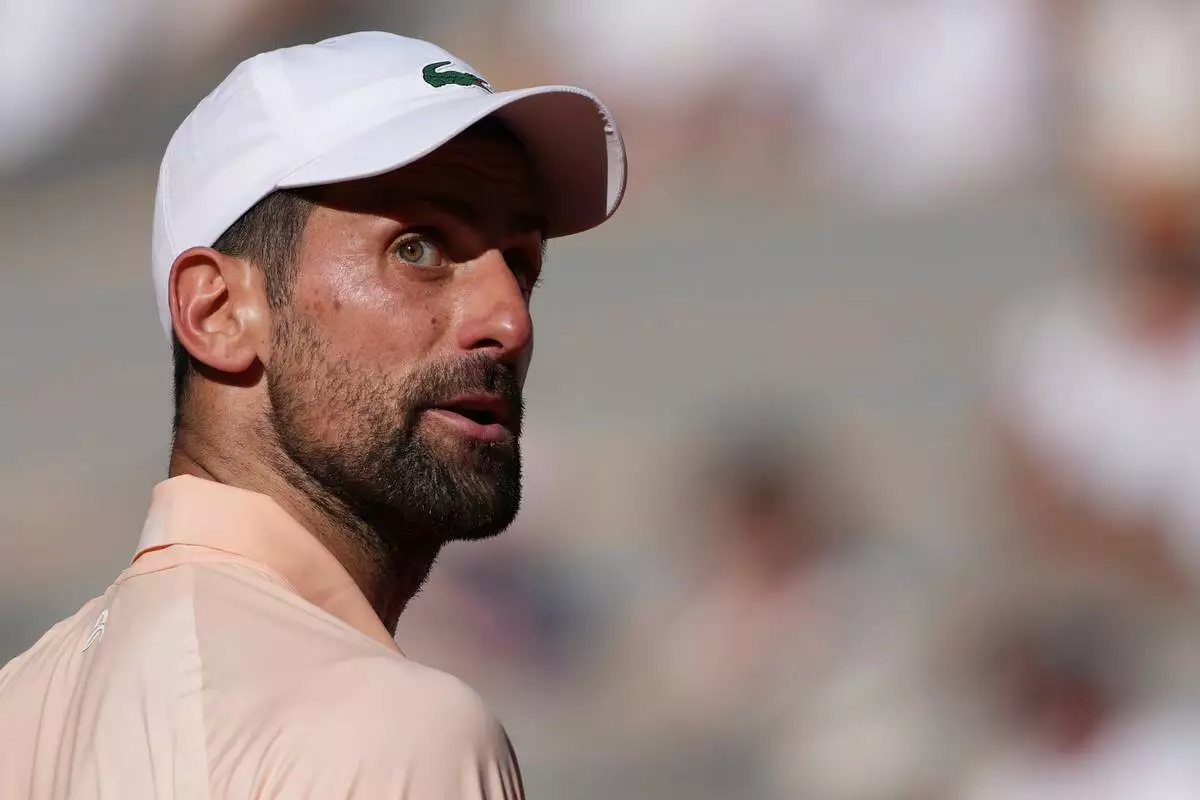
Novak Djokovic of Serbia reacts as he plays against Valentin Royer of France during their second round men's singles tennis match at the French Open tennis tournament in Paris, Wednesday, May 27, 2026. (AP Photo/Thibault Camus)
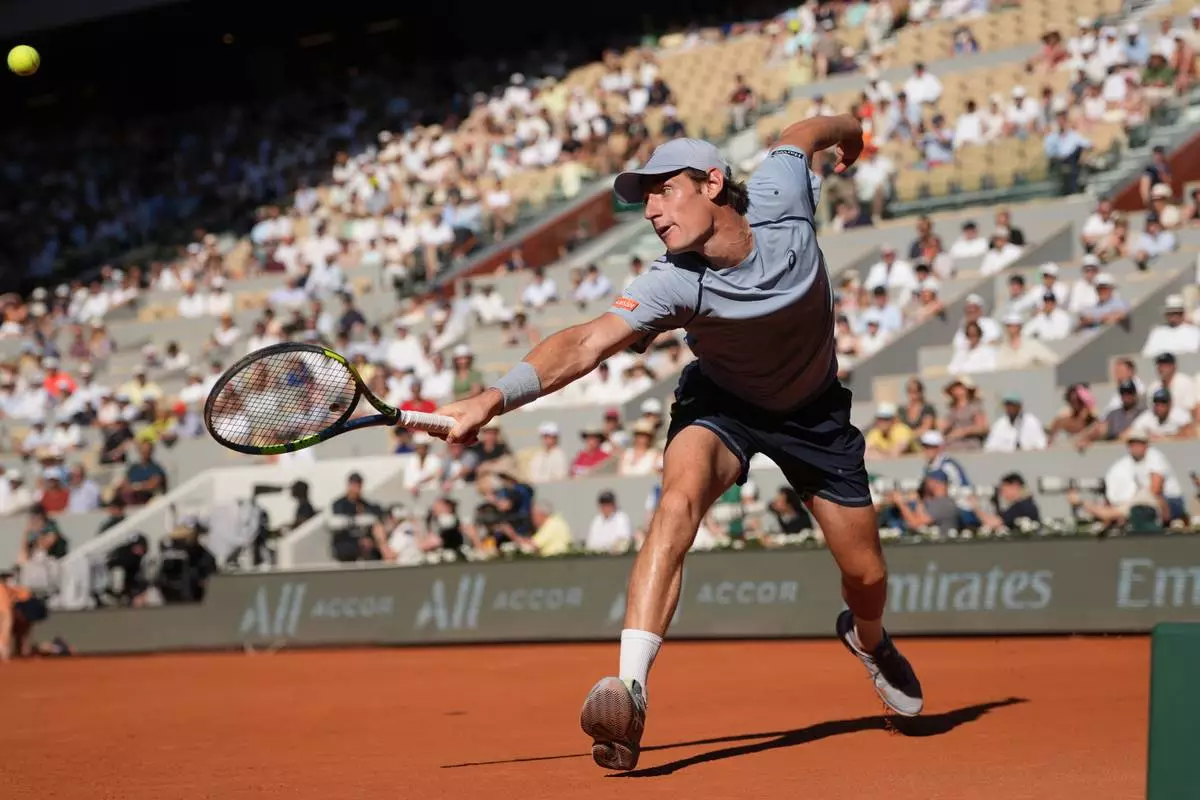
Valentin Royer of France returns to Novak Djokovic of Serbia during their second round men's singles tennis match at the French Open tennis tournament in Paris, Wednesday, May 27, 2026. (AP Photo/Thibault Camus)
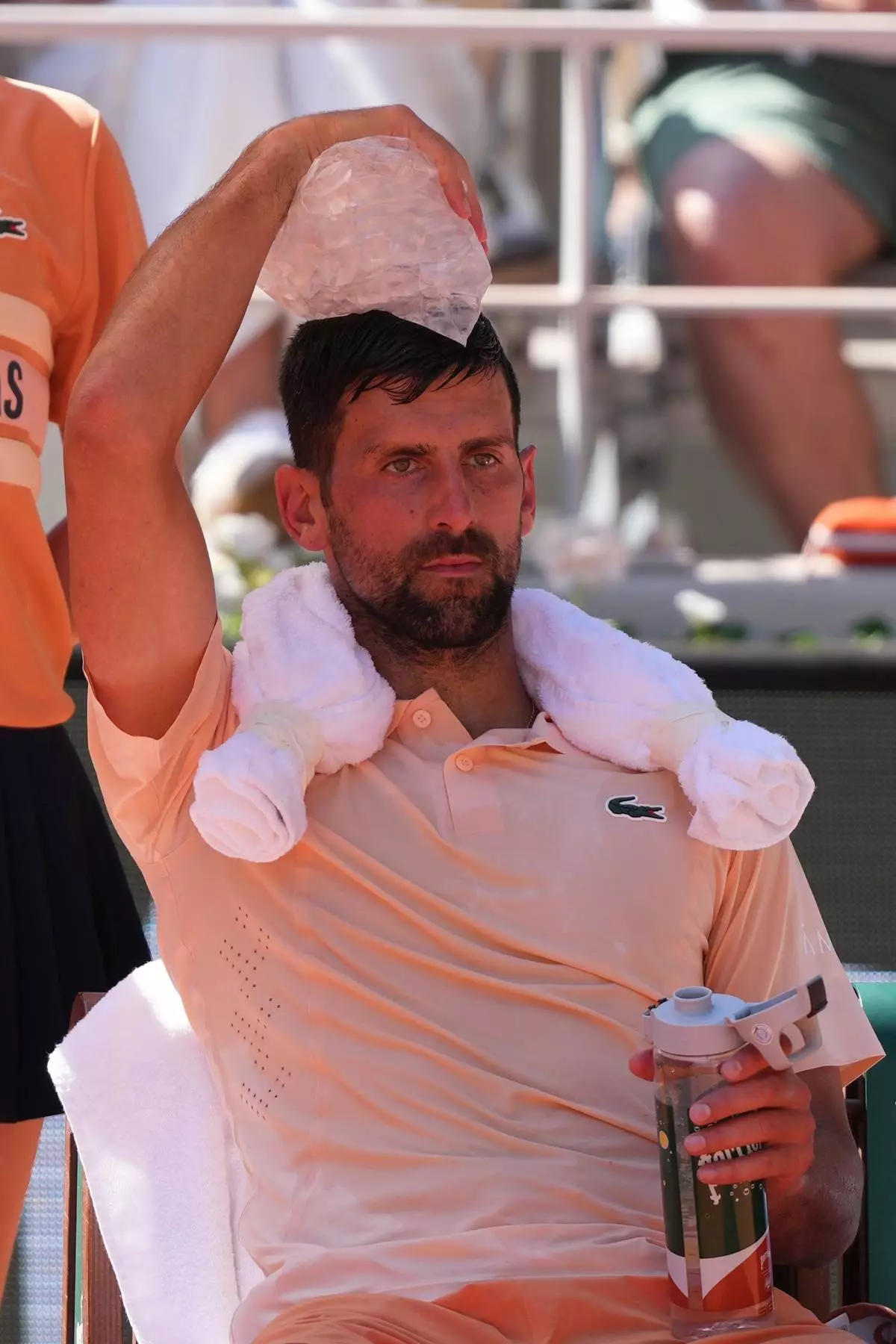
Novak Djokovic of Serbia cools himself with the ice during a break of the second round men's singles tennis match against Valentin Royer of France at the French Open tennis tournament in Paris, Wednesday, May 27, 2026. (AP Photo/Thibault Camus)
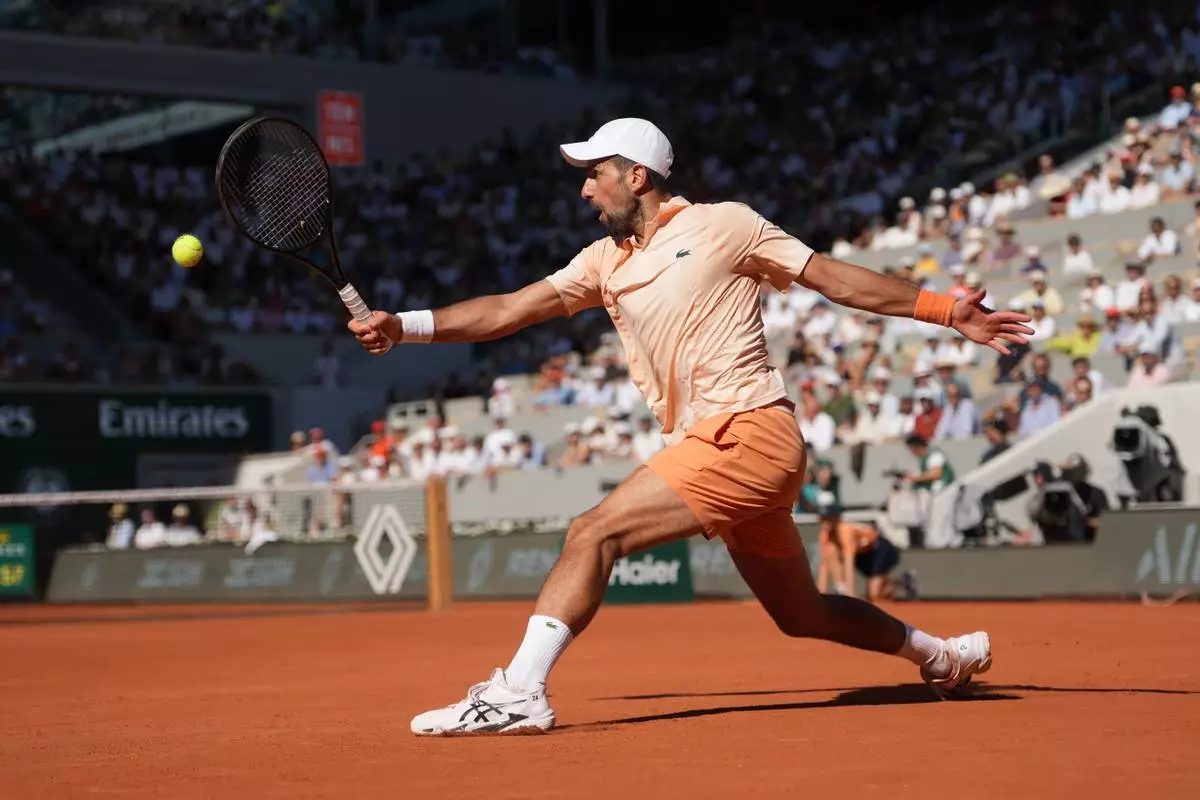
Novak Djokovic of Serbia returns to Valentin Royer of France during their second round men's singles tennis match at the French Open tennis tournament in Paris, Wednesday, May 27, 2026. (AP Photo/Thibault Camus)
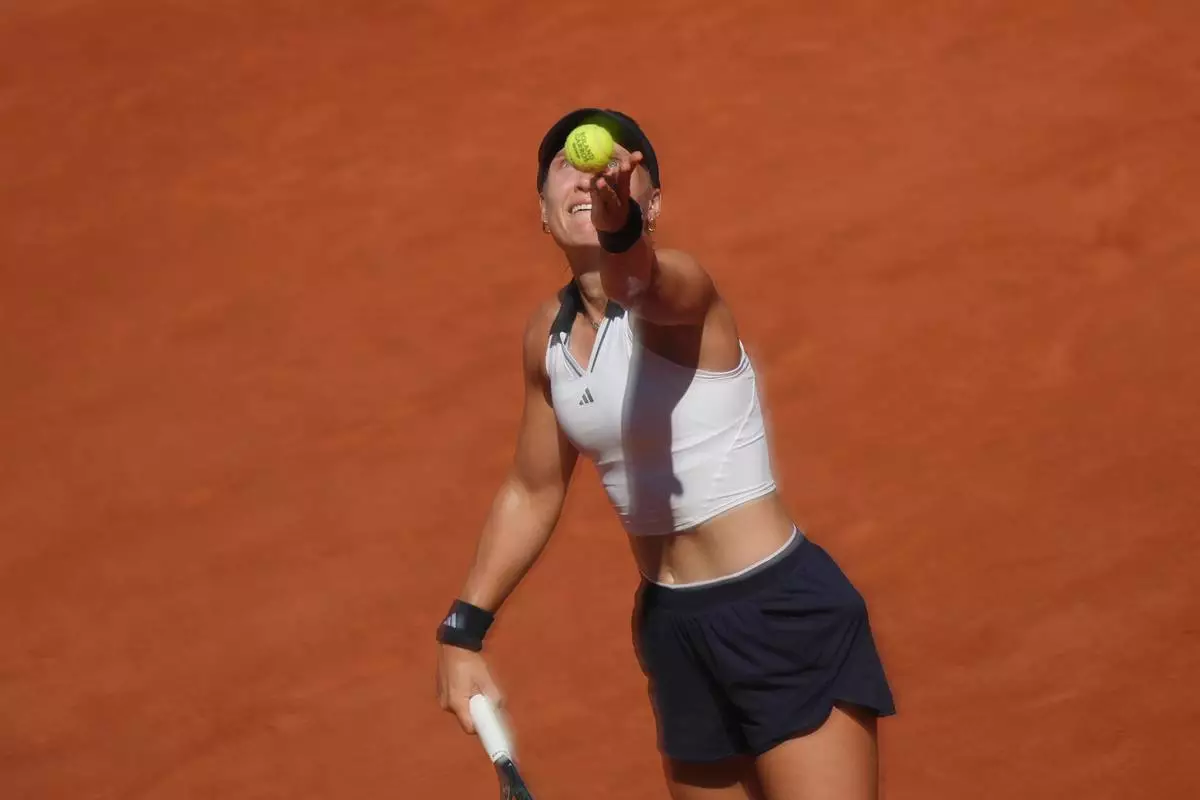
Yuliia Starodubtseva of Ukraine serves to Elena Rybakina of Kazakhstan during their second round women's singles tennis match at the French Open tennis tournament in Paris, Wednesday, May 27, 2026. (AP Photo/Aurelien Morissard)
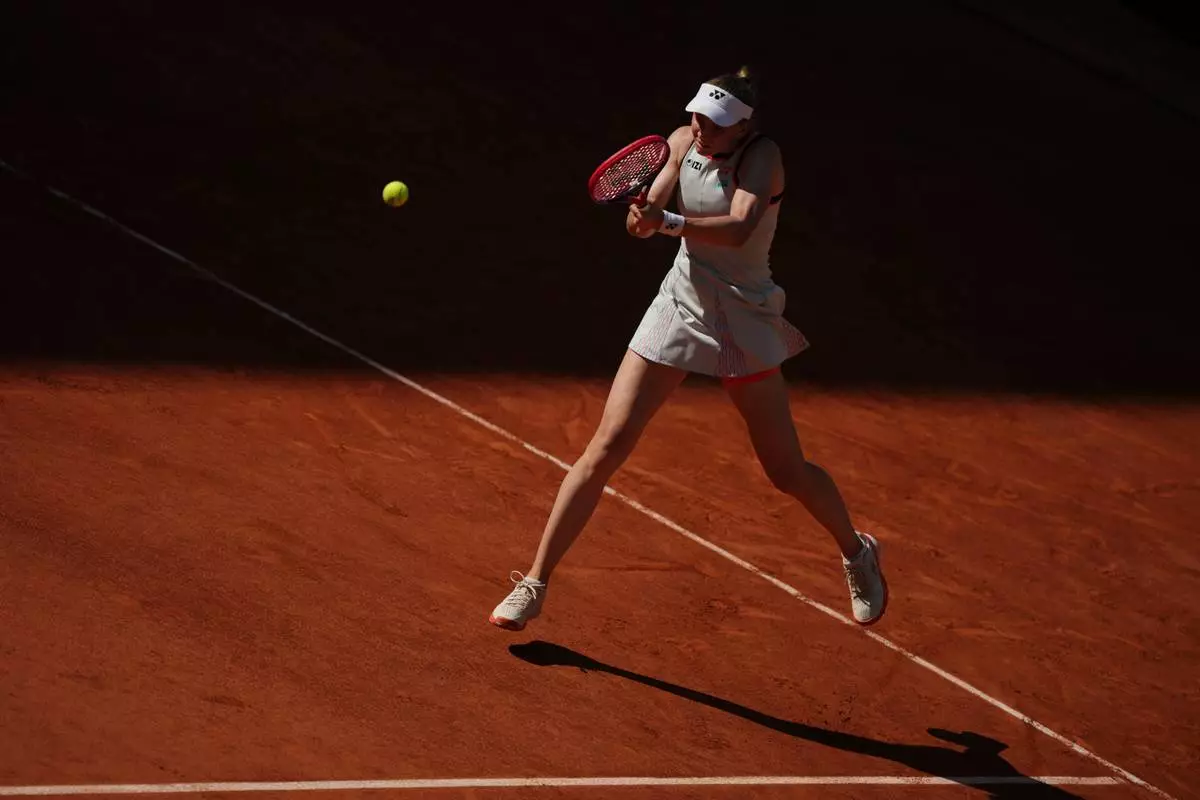
Elena Rybakina of Kazakhstan returns to Yuliia Starodubtseva of Ukraine during their second round women's singles tennis match at the French Open tennis tournament in Paris, Wednesday, May 27, 2026. (AP Photo/Aurelien Morissard)
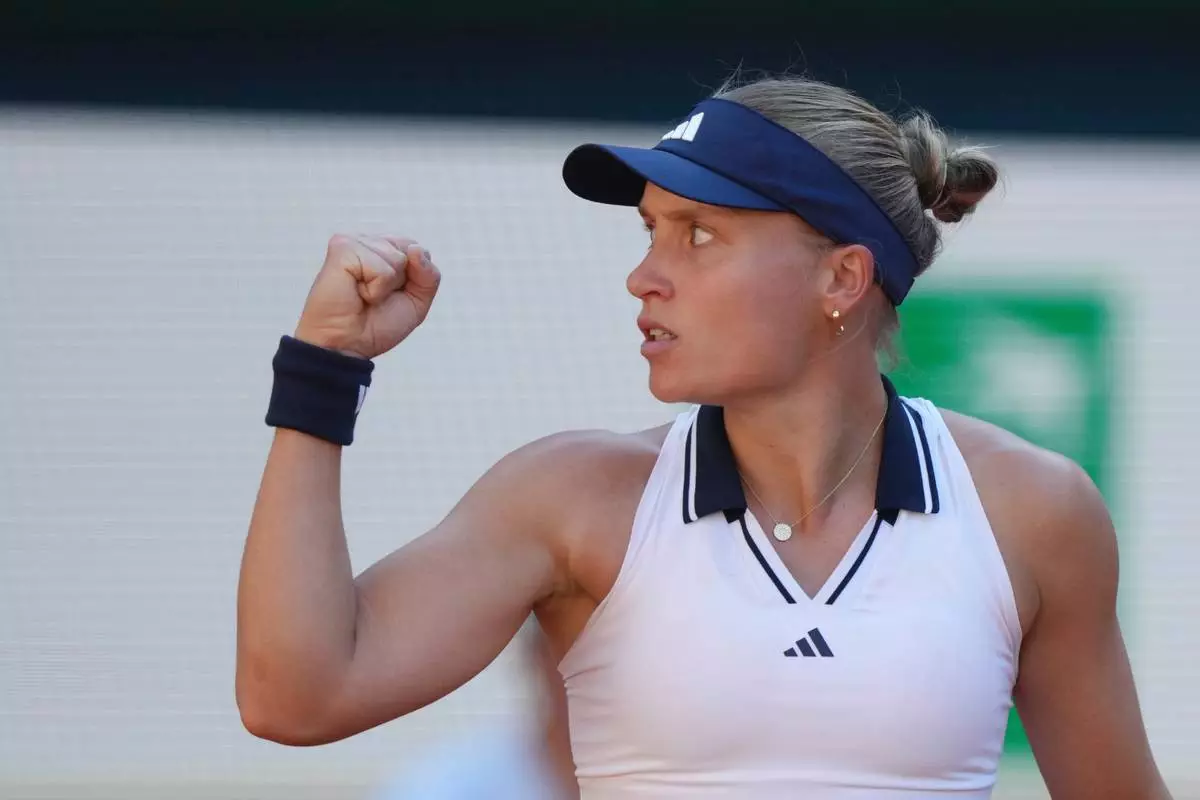
Yuliia Starodubtseva of Ukraine reacts as she plays against Elena Rybakina of Kazakhstan during their second round women's singles tennis match at the French Open tennis tournament in Paris, Wednesday, May 27, 2026. (AP Photo/Aurelien Morissard)
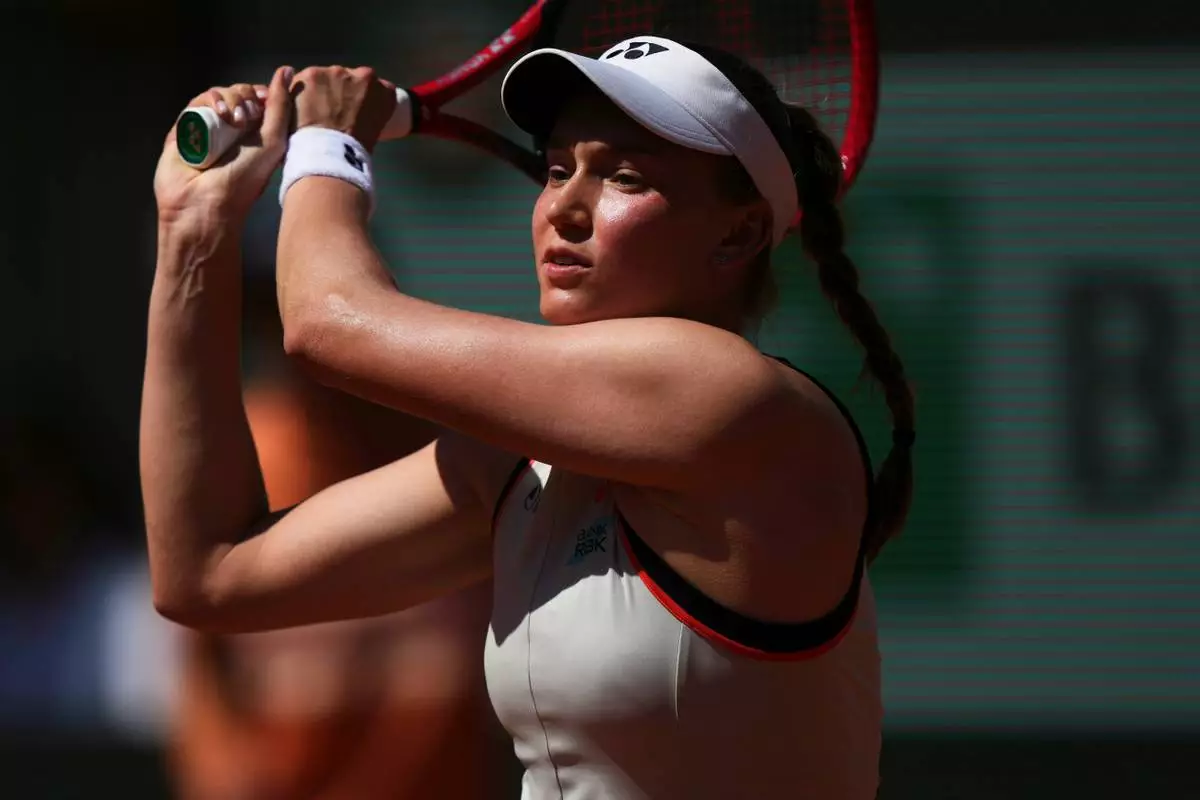
Elena Rybakina of Kazakhstan returns to Yuliia Starodubtseva of Ukraine during their second round women's singles tennis match at the French Open tennis tournament in Paris, Wednesday, May 27, 2026. (AP Photo/Aurelien Morissard)
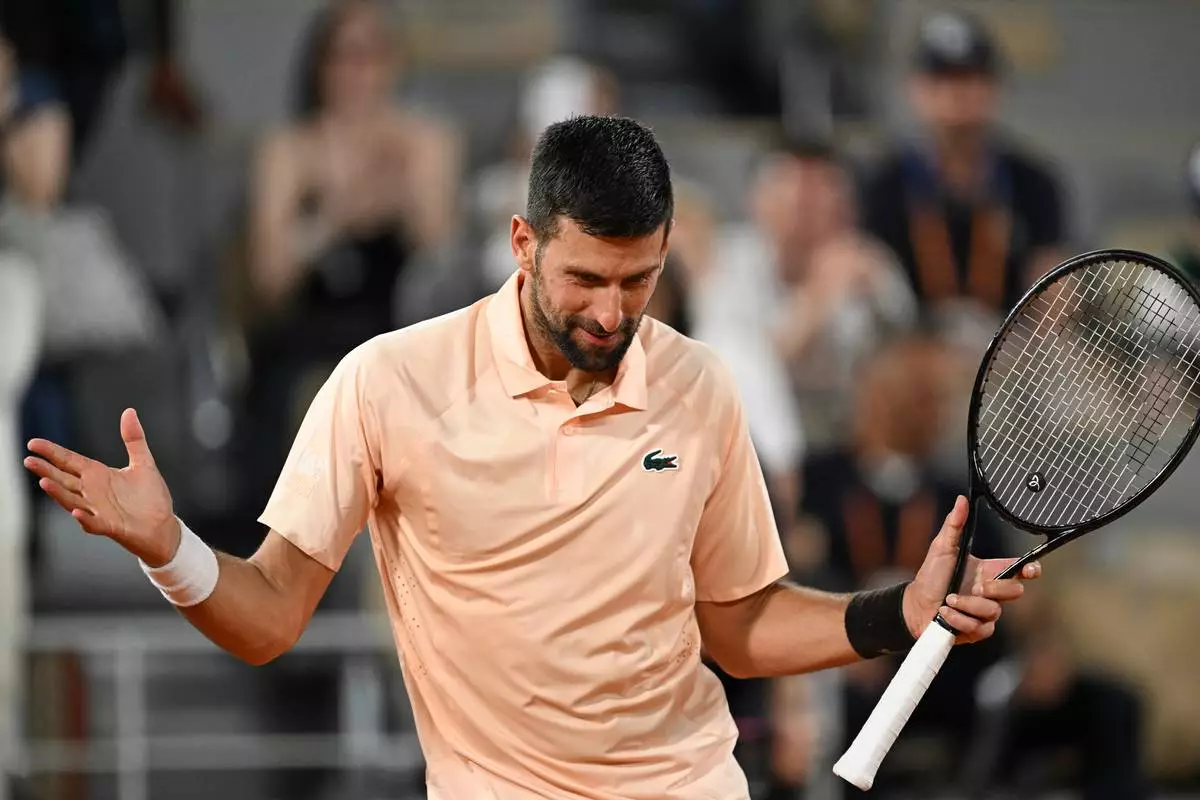
Novak Djokovic of Serbia celebrates after winning the first round men's singles tennis match against against Giovanni Mpetshi Perricard of France at the French Open tennis tournament in Paris, Sunday, May 24, 2026. (AP Photo/Emma Da Silva)
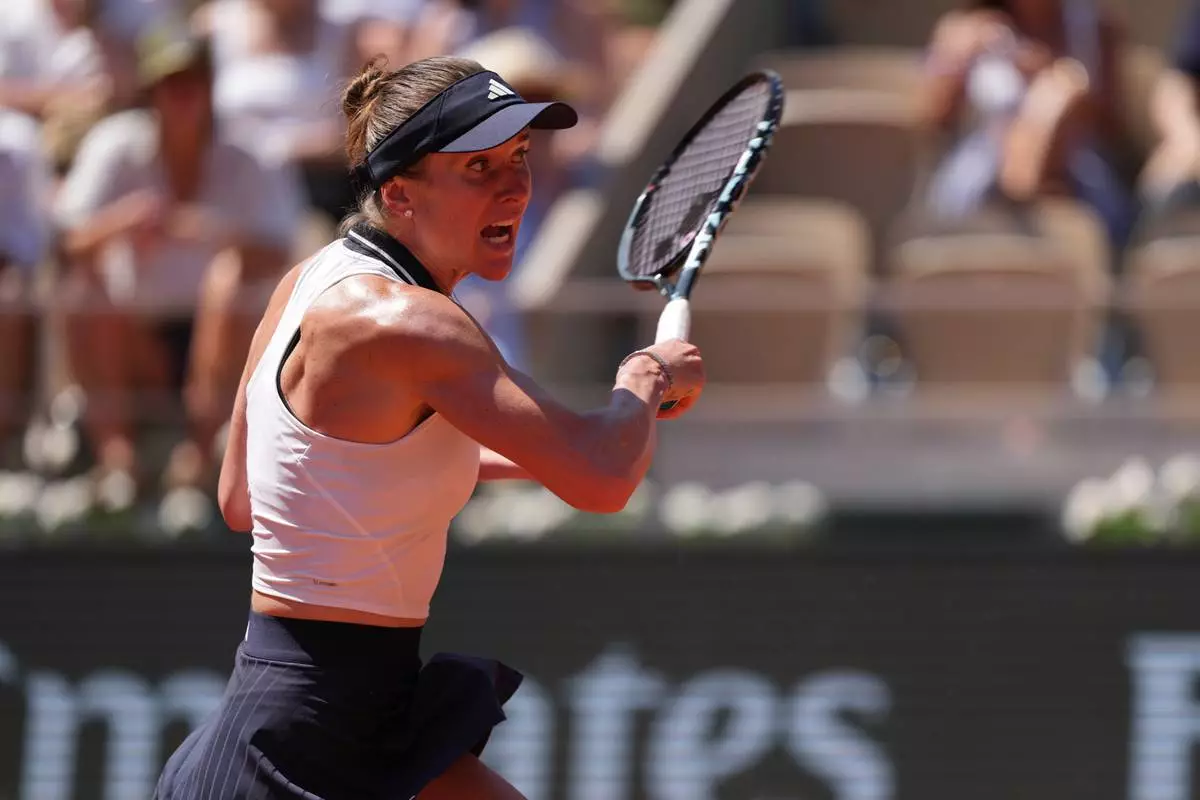
Elina Svitolina of Ukraine returns to Kaitlin Quevedo of Spain during their second round women's singles tennis match at the French Open tennis tournament in Paris, Wednesday, May 27, 2026. (AP Photo/Thibault Camus)
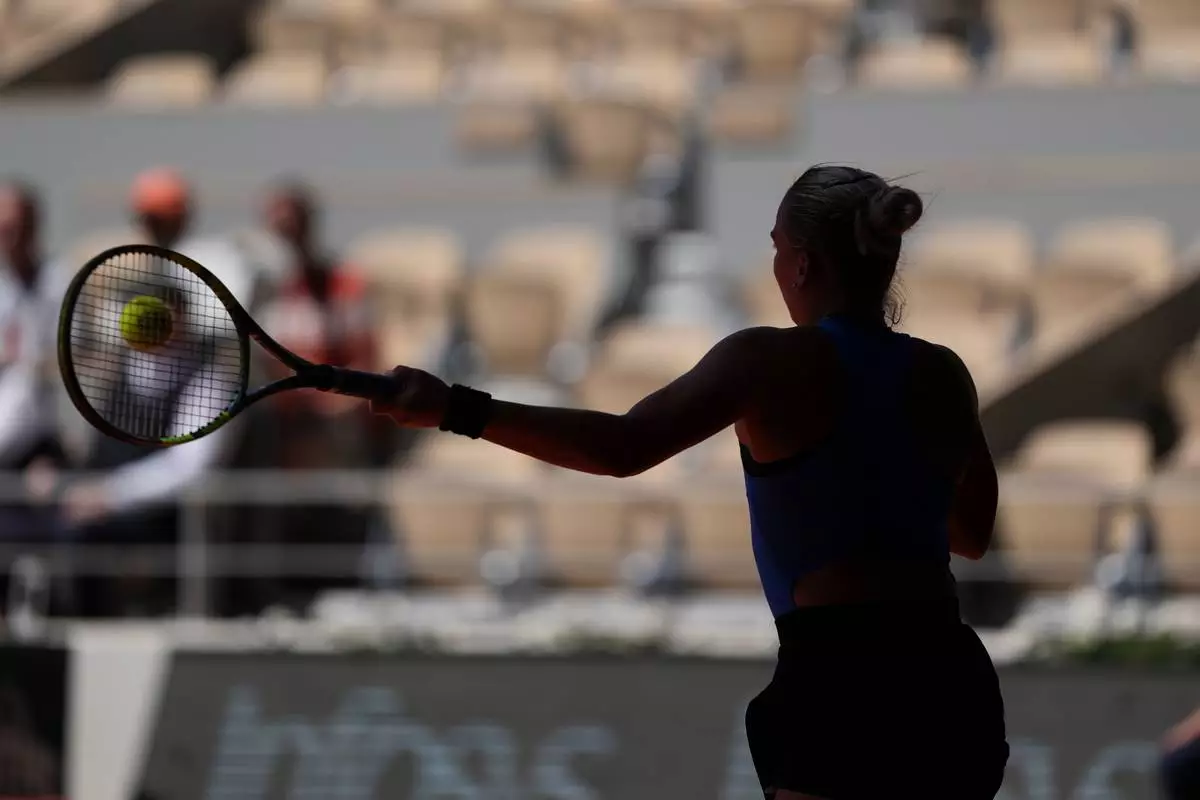
Sara Bejlek of the Czech Republic returns to Iga Swiatek of Poland during their second round women's singles tennis match at the French Open tennis tournament in Paris, Wednesday, May 27, 2026. (AP Photo/Thibault Camus)
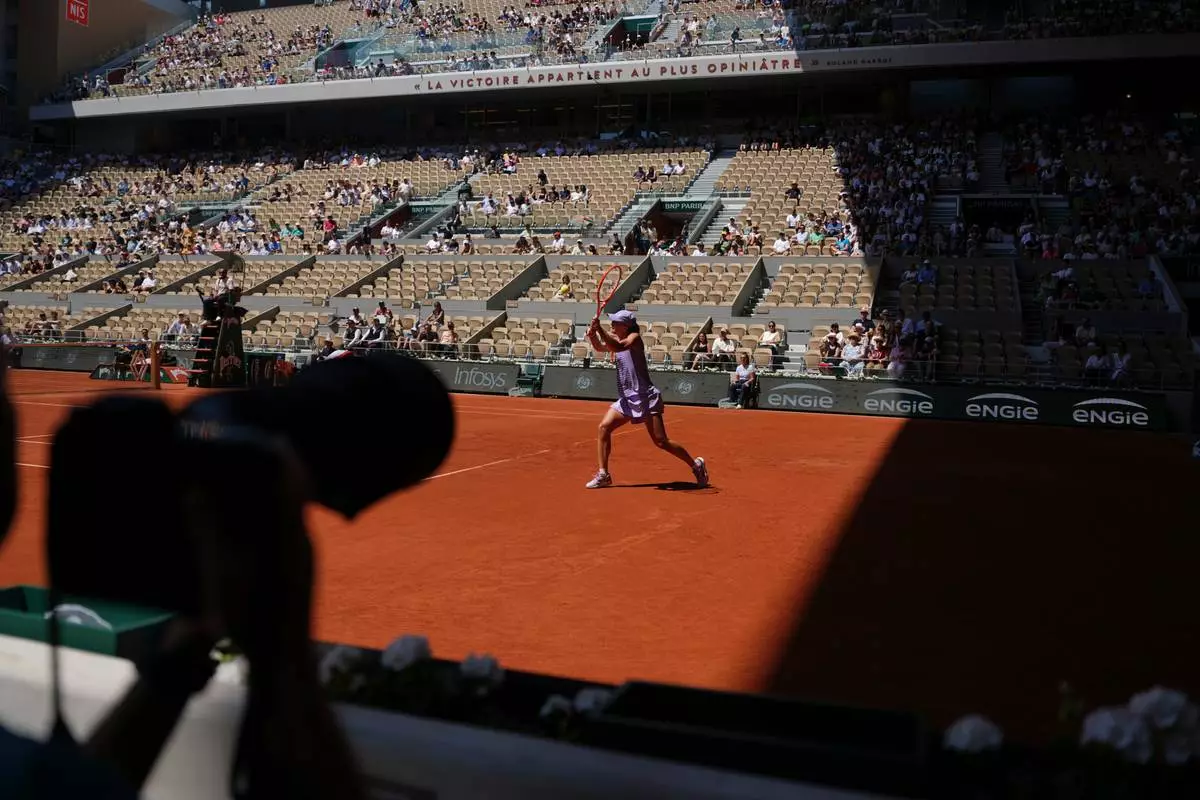
Iga Swiatek of Poland returns to Sara Bejlek of the Czech Republic during their second round women's singles tennis match at the French Open tennis tournament in Paris, Wednesday, May 27, 2026. (AP Photo/Thibault Camus)
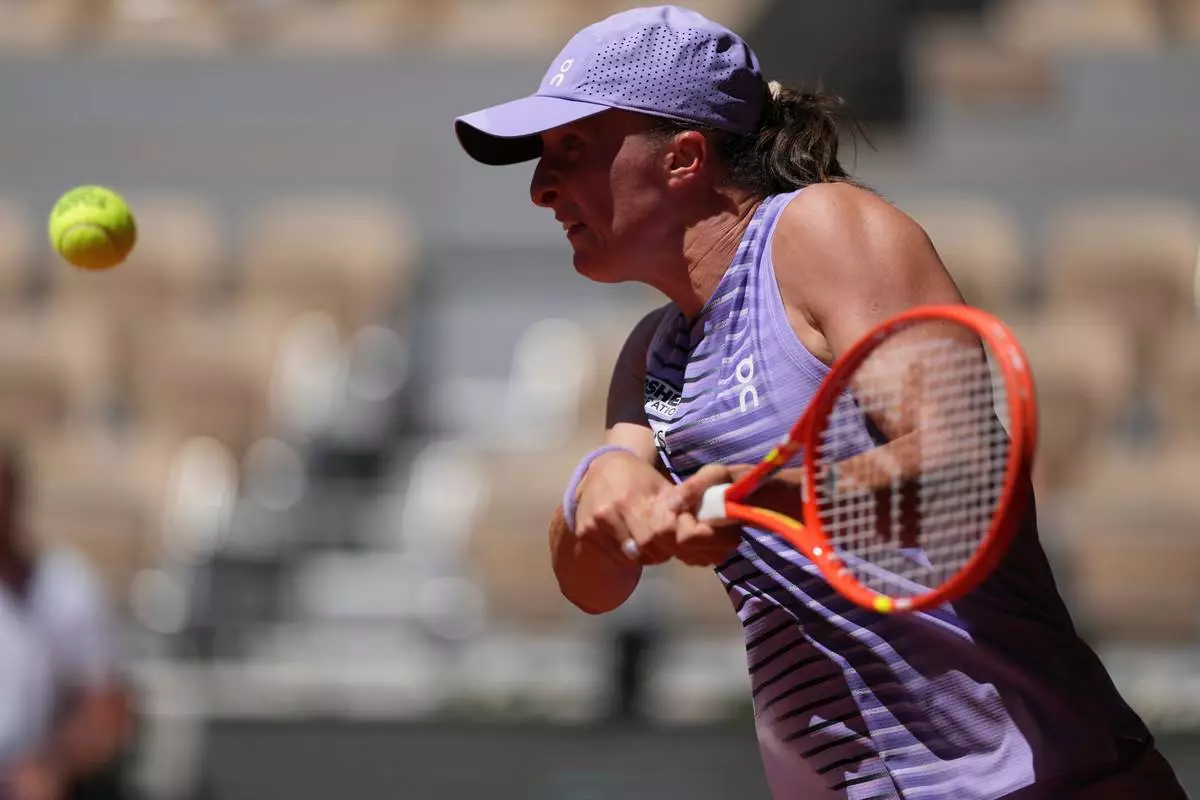
Iga Swiatek of Poland returns to Sara Bejlek of the Czech Republic during their second round women's singles tennis match at the French Open tennis tournament in Paris, Wednesday, May 27, 2026. (AP Photo/Thibault Camus)