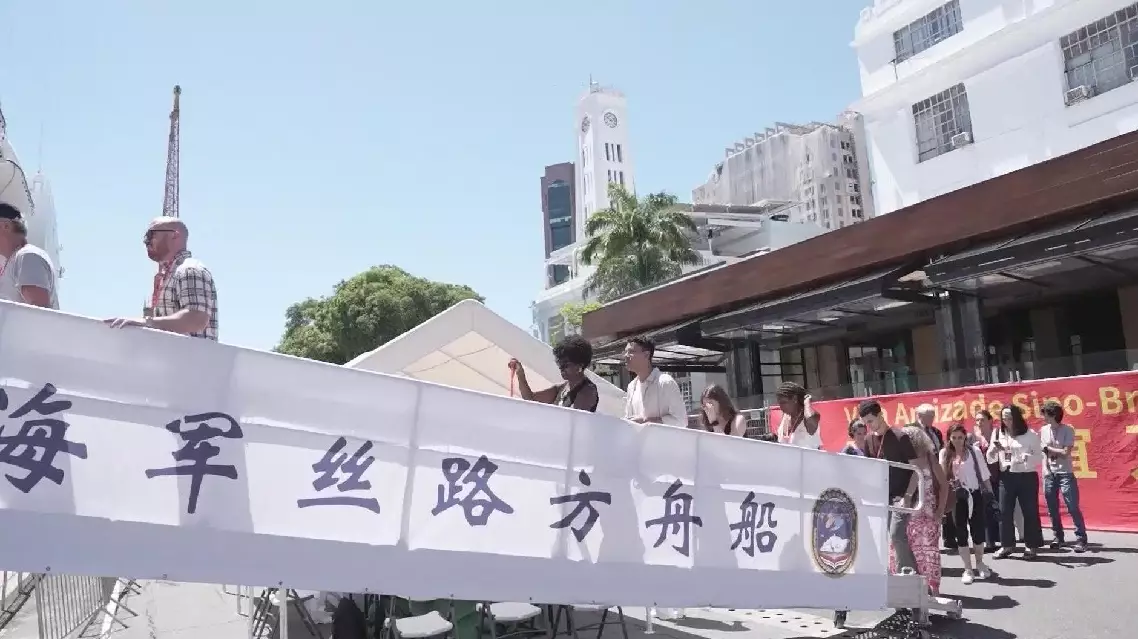
Brazilian residents and military officers have embarked on eye-opening tours of the Chinese People's Liberation Army (PLA) Navy's hospital ship, the Silk Road Ark, where they witnessed the advanced medical equipment and unique traditional Chinese medicine (TCM) treatments available on board.
The hospital ship arrived in Rio de Janeiro, Brazil last Thursday, beginning a seven-day friendly visit along with medical exchange activities.
This is one of the stops for the hospital ship during its 220-day "Harmony Mission 2025" mission, and the first visit by a Chinese naval hospital ship to Brazil.
The ship features 14 clinical departments and 7 auxiliary diagnostic units, capable of performing over 60 types of medical procedures spanning general surgery, orthopedics, obstetrics and gynecology, ophthalmology, and more. An onboard helicopter enhances its emergency medical rescue capabilities.
During the opening period, local residents, overseas Chinese, and representatives of employees of Chinese-funded institutions boarded the Silk Road Ark and visited the ship's medical equipment and learned about the operational procedures of the floating hospital, including the reception, triage, and treatment of wounded personnel.
"My first impression about this Silk Road Ark: amazing boat with great technologies, both traditional and modern. So, I think we have a lot to learn from the Chinese experience, and these strengthen our ties with China. Our Brazil-China friendship keeps getting stronger and stronger, and this also solidifies friendship between China and Latin America," said Brazilian resident Hebeta.
The Brazilian Navy also sent a team of experts to learn about the operational procedures of the ship's various testing equipment and exchange views on issues such as the maintenance of medical equipment in the maritime environment and the efficiency of testing during treatment.
Expert practitioners of TCM on board the ship also demonstrated acupuncture, massage, cupping, and scraping techniques to the visitors, explaining the principles of diagnosis and treatment using case studies, offering visitors an intuitive understanding of TCM culture.
"What I found especially striking was the contrast between modern medicine, what we would consider as modern medicine, and the more traditional Chinese medicine. So, we really feel like we are almost exploring a museum as well as a hospital at the same time," said Chloe, another resident of the country.
Since its arrival, the hospital ship has received more than 1,000 visitors from all walks of life in Brazil, becoming an important window for the Brazilian people to understand China's development and construction achievements and experience the charm of Chinese culture.
Traditional treatments, advanced equipment on China's navy hospital ship wow Brazilian visitors
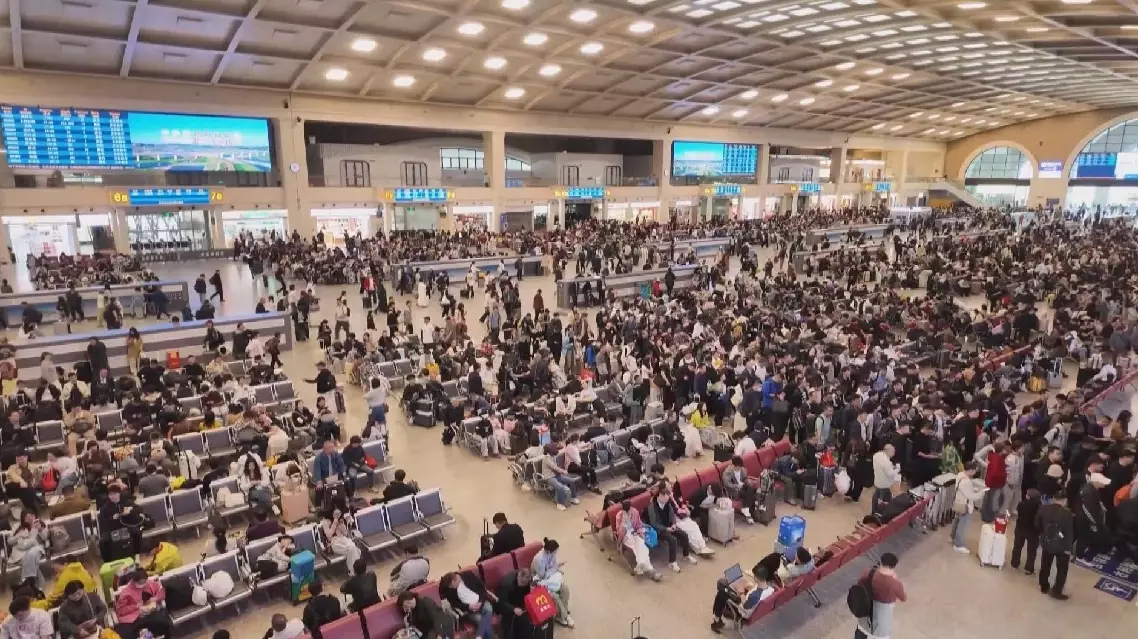
A new round of trade-in subsidy program is energizing China's consumer market these days, with provinces across the country seeing a surge in demand for cars, home appliances and digital devices.
In north China's Shanxi Province, the new trade-in subsidy program, which started on January 9, has further helped boost sales in home appliances and digital devices which are covered by the new round of subsidies.
To enjoy the subsidies, six types of home appliances, including refrigerators and washing machines, must meet national Level 1 energy-efficiency or water-efficiency standards. Digital and smart products include four types, such as mobile phones and tablets, with a sales price cap of 6,000 yuan (about 800 U.S. dollars) per item.
In both categories, subsidies are set at 15 percent of the final transaction price. For home appliances, the maximum subsidy is 1,500 yuan per item. For digital products, the cap is 500 yuan per item. Each consumer can receive a subsidy for one unit in each category.
Neighboring Shanxi, Hebei Province kicked off the year of 2026 with the new round of trade-in subsidy program starting on January 1.
The subsidies cover automobiles, home appliances, and digital products. Individual consumers who purchase designated Level 1 energy-efficiency appliances or eligible digital products priced at no more than 6,000 yuan can receive subsidies equal to 15 percent of the transaction price. The maximum subsidy is 1,500 yuan per appliance and 500 yuan per digital or smart device, with each person limited to one subsidized item in each category.
Data showed that from Jan 1 to 9, Hebei's home appliance trade-in program alone disbursed more than 130 million yuan in subsidies, driving sales of over 920 million yuan.
In east China's Jiangsu Province, the new trade-in subsidy program, taking effect for two weeks, has brought the province a boom in trade-in.
At a local 4S store in Jiangsu's Suqian City, showroom traffic has spiked as salespeople walked customers through the new benefits from the trade-in subsidy program.
"Under the scrappage-and-replacement scheme, customers who buy a new energy vehicle (NEV) can receive a subsidy worth 12 percent of the vehicle price, capped at 20,000 yuan (about 2,860 U.S. dollars). For combustion-engine cars, the subsidy is 10 percent, with an upper limit of 15,000 yuan. For trade-ins, NEVs are able to receive a subsidy worth 8 percent of the vehicle price, up to 15,000 yuan, while combustion-engine cars will receive a 6-percent subsidy, with a cap of 13,000 yuan," said Sun Yue, a saleswoman at the store.
In the home appliance sector, Jiangsu's policy this year stipulates that only products that meet China's Level 1 energy-efficiency standard are eligible for subsidies. The scheme covers six major categories, including refrigerators and washing machines.
Consumers who purchase qualifying appliances can receive a subsidy equal to 15 percent of the final retail price, up to a maximum of 1,500 yuan per item. Each person is limited to one subsidized unit per product category.
Four types of digital and smart products, such as mobile phones and tablets, are eligible for a 15-percent subsidy capped at 500 yuan per unit, with a retail price no more than 6,000 yuan.
"With the national subsidy policy back in place this year, I went to the store to check what discounts I could get. It knocked 500 yuan off the price. [The discounted price is] very reasonable," said Wang Kang, a resident of Jiangsu's Xuzhou Province.
To enhance the shopping experience for consumers, many retailers are pairing subsidies with "one-stop" services that combine the delivery of new products with on-site collection of old ones.
"After consumers place an order for new home appliances, our staff will schedule a time to pick up the old units. Recycling the old appliance can also further offset the purchase price of the new one," said Yang Jie, a sales supervisor at a major home appliance company.
China's new trade-in program sparks consumption boom