BERN, Switzerland (AP) — Snowboarder Ueli Kestenholz, who won a bronze medal in the sport’s first Olympic race, died after being trapped in an avalanche, the Swiss ski federation said Tuesday. He was 50.
Kestenholz was third in snowboard giant slalom at the 1998 Nagano Olympics — a debut event that became a story of the games when Canadian gold medalist Ross Rebagliati fought to keep his title after a positive test for cannabis.
The Swiss racer competed at two more Winter Games, was twice snowboardcross champion at the X-Games and continued a professional career in extreme sports.
Kestenholz was snowboarding with a friend who was skiing Sunday in the Lötschental valley of Valais canton (state). The avalanche started at an altitude of 2,400 meters (7,900 feet) for unknown reasons, Valais police said in a statement.
Kestenholz was trapped by snow and helped by his friend before being airlifted by helicopter to the hospital, first to Visp then to Sion which is close to Crans-Montana.
Swiss daily Berner Zeitung first reported Tuesday the victim was Kestenholz.
Recent posts on his Instagram account included film of Kestenholz paragliding and landing on frozen lakes near St. Moritz.
"To enjoy those rare moments when nature‘s wonders align you need to be ready to drop everything and go!" he wrote.
AP Winter Olympics at https://apnews.com/hub/milan-cortina-2026-winter-olympics

FILE - Snowboard bronze winner in Nagano, Ueli Kestenholz, presents his medal on Monday, Feb. 16, 1998 in front of the town hall in his hometown of Thun. (Edi Engeler/Keystone via AP, file)

FILE - Gold medalist Ross Rebagliati of Canada, center, silver medalist Thomas Prugger of Italy, left, and Ueli Kestenholz of Switzerland celebrate after the Men's Giant Slalom snowboarding competition Sunday, Feb. 8, 1998 in Yamanouchi, Japan. (AP Photo/Robert F. Bukaty, file)
NEW DELHI (AP) — India raised fuel prices by 3 rupees ($0.03) per liter Friday as the government moved to offset losses due to higher global oil prices.
In New Delhi, gasoline prices rose to 97.77 rupees ($1.17) a liter, while diesel climbed to 90.67 rupees ($1.09) a liter.
India imports about 90% of its oil and has been hit hard by rising energy prices and supply disruptions linked to the Iran war and the closure of the Strait of Hormuz. It had until now avoided raising retail fuel prices despite sharp increases in energy costs, making it one of the last major economies to pass higher crude prices on to consumers.
The price increases came days after Prime Minister Narendra Modi urged Indians to adopt voluntary austerity measures.
Modi on Sunday called on people to work from home where possible, limit foreign travel and reduce purchases of gold. He described fuel conservation and saving foreign exchange as an act of “patriotism,” and encouraged greater use of public transportation, carpooling and lower fertilizer consumption.
Opposition leaders said Modi’s appeal came only after a key round of state elections had concluded, noting that fuel prices were kept unchanged during the campaign.
Manoj Kumar, a 48-year-old taxi driver in New Delhi, said the rise in fuel prices was adding to the strain on working-class people.
“For common people like us, even one rupee has great value. People work so hard from morning till evening just to make ends meet. The government is not seeing this," he said.
Earlier this week, India also raised import duties on gold and silver to 15% in an effort to curb demand for imports that drain foreign exchange reserves.
The Indian rupee has fallen to record lows in recent weeks as higher oil prices increased pressure on imports and foreign exchange reserves.
Meanwhile, India’s capital has become the first state to roll out austerity measures.
Authorities in New Delhi on Thursday announced fuel-saving measures, including mandatory work-from-home days for some government employees. Delhi Chief Minister Rekha Gupta said the 90-day campaign aims to reduce official fuel use and encourage people in the capital to rely more on public transportation instead of private vehicles.
Under the plan, employees whose work can be done remotely will work from home two days a week, while private companies are being encouraged to adopt similar measures voluntarily.
India has also accelerated ethanol blending in gasoline as part of its push to cut crude oil imports.
Most fuel stations across the country now sell gasoline blended with 20% ethanol, and the government has proposed expanding the use of fuels containing 85% — or even 100% — ethanol in compatible vehicles.
Energy experts said blending biofuel can help shield from global energy shocks but can lead to further stressing already depleting groundwater resources, encroach on land meant for food crops and impact older vehicles’ engines.
AP journalists Sibi Arasu in Bengaluru, India and Shonal Ganguly in New Delhi contributed to this report.
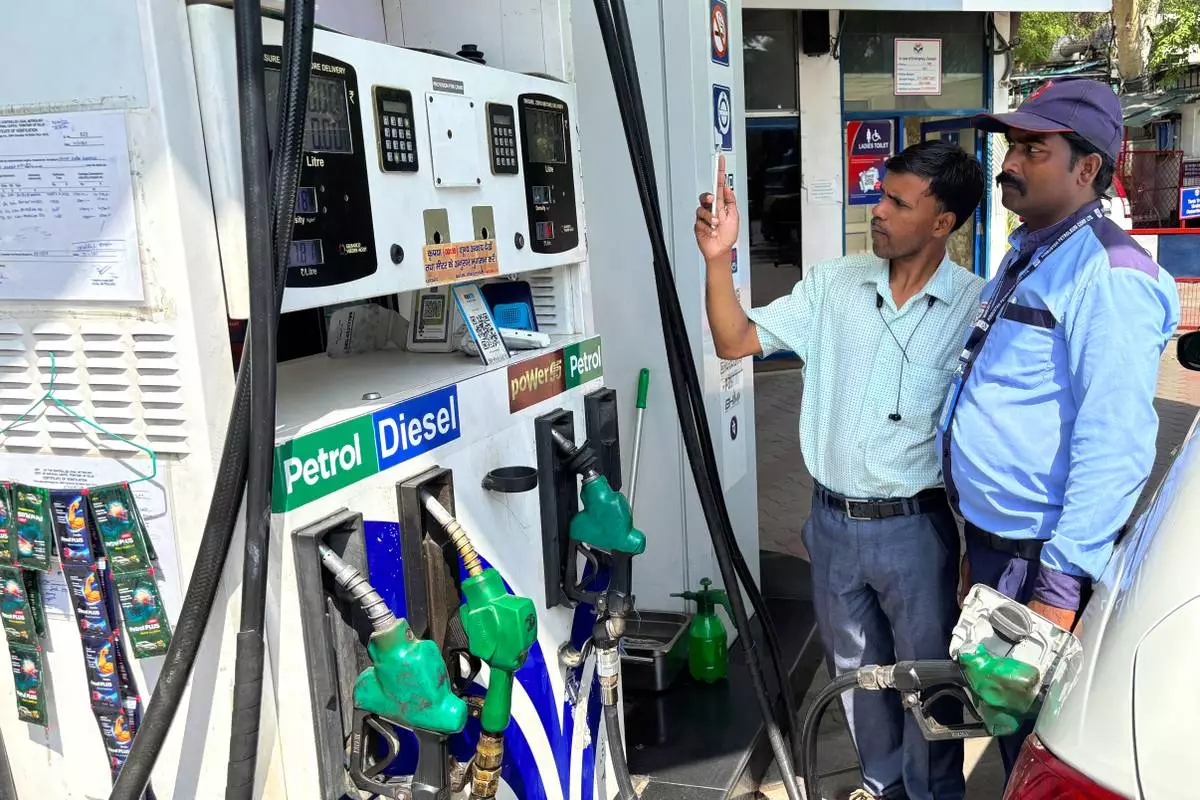
A commuter monitors the meter as an attendant refuels his vehicle at a filling station in New Delhi, India, Friday, May 15, 2026. (AP Photo/Shonal Ganguly)
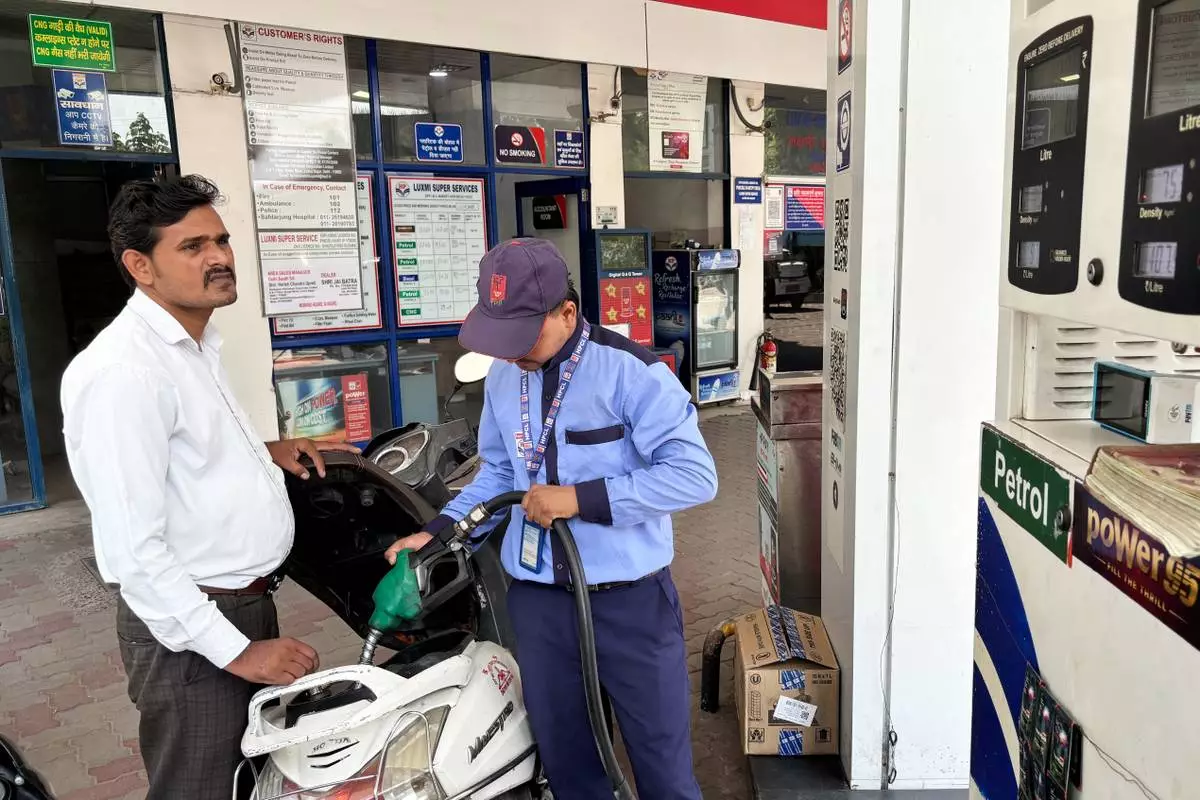
A commuter monitors the meter as an attendant refuels his scooter at a filling station in New Delhi, India, Friday, May 15, 2026. (AP Photo/Shonal Ganguly)