Serbia is grappling with a prolonged wave of heavy snowfall, with accumulations exceeding 40 centimeters in some areas and persistent low temperatures causing considerable inconvenience to daily life and transportation.
According to the Republic Hydrometeorological Service of Serbia, this round of rain and snow has been prolonged and characterized by a sharp drop in temperature, with snowfall significantly higher than the same period last year.
Serbia's western and northern regions were worst hit, with snow accumulation topping 40 centimeters in Vojvodina, the country's northern province. Serbian authorities have deployed all available machinery to work around the clock to ensure road accessibility.
Snow and ice have been cleared from the main roads of Belgrade, the Serbian capital, but some side roads, auxiliary roads, and sidewalks remain covered in ice and snow, posing challenges for drivers and pedestrians.
"Overall, public transportation and logistics are facing some difficulties. I haven't seen such heavy snow in over ten years," said a Belgrade resident.
"I walk very carefully, worried about a fall. The road here hasn't been cleared yet. Compared to before, I go out less. I only go out to buy groceries. I'm taking online classes at university now," another resident said.
Meteorologist Goran Mihajlovic said that Serbia experienced heavy snowfall and low temperatures in 2016, but in recent years there has been relatively less snowfall in winter, and the lowest temperature has never been below minus 10 degrees Celsius. The recent minimum temperature has plunged to minus 17 degrees Celsius.
"This weather, not only snowfall but also freezing rain mixed with snow and low temperatures, undoubtedly caused significant problems for transportation. The heavy snow loads and overburdened power transmission lines also led to problems with power supply. This was particularly true in western and southern Serbia," he said.
The Hydrometeorological Service launches weather balloons three times a day to closely monitor weather changes and issue timely warnings to minimize losses and impacts from the extreme weather.
According to forecasts, Serbia's weather conditions will improve this week, with temperatures gradually climbing, but some areas will still experience rain, snow, and frost.
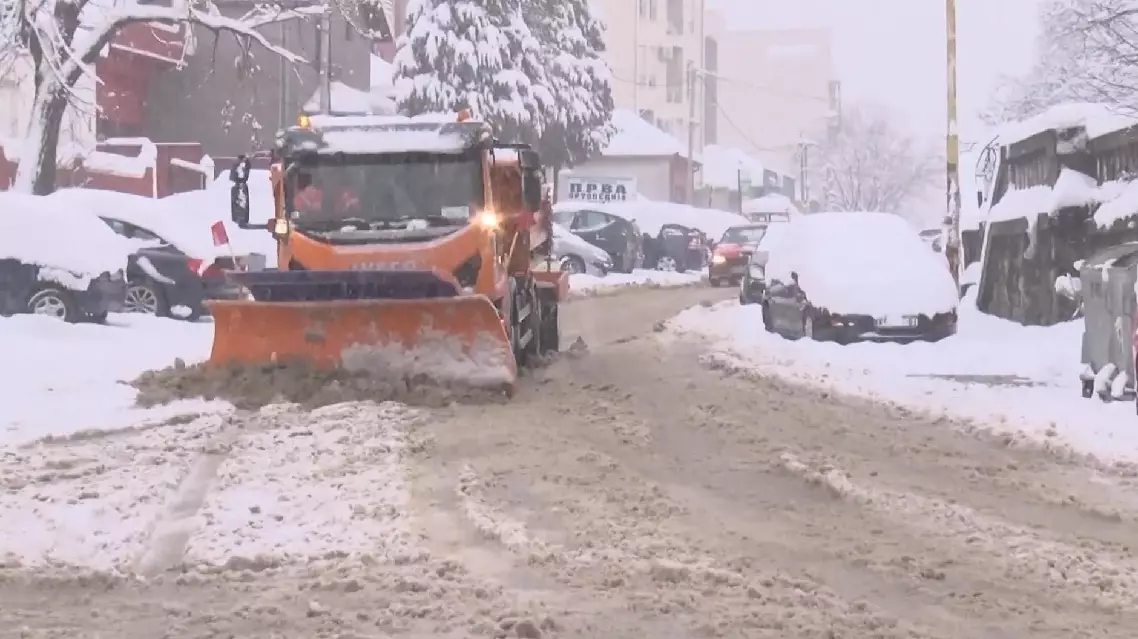
Heavy snowfall blankets Serbia, disrupting power supply, transportation
Some Iranians in Türkiye are crossing back over the border, driven by worry and desperation, as a nationwide communications blackout in Iran has left them cut off from their loved ones.
Protests have erupted in many Iranian cities since Dec. 28. They initially began with Tehran bazaar merchants demonstrating against the sharp devaluation of the national currency rial, and soaring inflation, before spreading to other cities. The unrest has led to casualties among both security forces and civilians.
At the Turkish-Iranian border, many are returning with no certainty about what awaits them, filled instead with questions and growing fear for those on the other side of the border.
"I went to Van yesterday for internet. I urgently needed to use the internet. I got it done. Now I'm heading straight back. There are protests everywhere. We can't get any news. We can't communicate with our families. And it's not just me, there are many Iranians outside the country who can't reach their families," said Feriste, an Iranian citizen.
With communications blacked out across Iran, those outside the country feel powerless to check on the situation back home. For some, this silence has prompted them to return across the border, even as tensions continue to rise.
"We can't get any news. There is no internet. Everything is shut down. I want to search. I want to find out. I want to see my brother. I'm going to see my family," said Husnu, an Iranian citizen.
"I work in Türkiye, and I have no news from Iran at all. I'm going back because I'm worried about my family. It's been days since I last heard from them, and because I'm worried, I'm returning to Iran now. Of course, we are concerned about our safety. We don't know what awaits us there," said another Iranian.
With protests escalating and government blackouts still in place, many Iranians are caught between staying in safety abroad and risking everything to reconnect with their families.
"We had to come to Türkiye because we couldn't reach our families. Schools were closed already. All official institutions were shut down. We have no information about other cities either, because there is no communication network there. There is no television, no internet. We can't even check Twitter," said Nazlican, another Iranian citizen.
Iranians in Türkiye return home, fearing for their families amid unrest in Iran