WASHINGTON (AP) — The plane used by the U.S. military to strike a boat accused of smuggling drugs off the coast of Venezuela last fall was painted to look like a civilian aircraft, a move that appears to be at odds with the Pentagon's manual on the laws of war.
The plane, part of a secret U.S. fleet used in surveillance operations, also was carrying munitions in the fuselage, rather than beneath the aircraft, raising questions about the extent to which the operation was disguised in ways that run contrary to military protocol.
Details of the plane’s appearance, first reported Monday by The New York Times, were confirmed by two people familiar with the situation who spoke on condition of anonymity to discuss the sensitive matter.
Pentagon press secretary Kingsley Wilson said in a statement that “the U.S. military utilizes a wide array of standard and nonstandard aircraft depending on mission requirements.”
The new details come after the Trump administration's pressure campaign on Venezuela — which began with it massing military resources in Latin America and attacking a series of alleged drug-smuggling boats, killing at least 115 people — culminated this month in a stunning raid that captured Venezuelan President Nicolás Maduro. He and his wife were spirited to the United States to face federal drug trafficking charges.
Alarmed by the actions, the U.S. Senate is preparing to vote this week on a war powers resolution that would prohibit further military action in Venezuela without authorization from lawmakers.
President Donald Trump was been so incensed over the Senate's potential slapback on his war powers authority that he has been aggressively calling several Republican senators who joined the Democrats in voting to advance the resolution last week. It’s headed for a final vote as soon as Wednesday.
“He was very, very fired up,” said Senate Majority Leader John Thune, who did not vote for the resolution. He described Trump as “animated” on the subject when they spoke before last week’s vote.
In justifying the boat strikes since September, the Trump administration has argued that the U.S. is in an “armed conflict” with drug cartels in the region and that those operating the boats are unlawful combatants.
However, U.S. military guidelines on the laws of war prohibit troops from pretending to be civilians while engaging in combat. The practice is legally known as “perfidy.”
The Defense Department manual, which runs over 1,000 pages, specifically notes that “feigning civilian status and then attacking” is an example of the practice. An Air Force manual says the practice was prohibited because it means the enemy “neglects to take precautions which are otherwise necessary.”
The Navy’s manual explains that “attacking enemy forces while posing as a civilian puts all civilians at hazard,” and sailors must use offensive force “within the bounds of military honor, particularly without resort to perfidy.”
Wilson said each aircraft goes through a "rigorous procurement process to ensure compliance with domestic law, department policies and regulations, and applicable international standards, including the law of armed conflict.”
The plane that was painted as a civilian aircraft was used in a Sept. 2 strike, the first in what would become a monthslong campaign of U.S. deadly military strikes on suspected drug boats with political and policy ramifications for the Trump administration.
Defense Secretary Pete Hegseth and other top officials have been called on by Congress to answer questions and concerns about the actions — particularly the first one because it involved a follow-up strike that killed two survivors holding onto the wreckage of the vessel hit in the initial attack.
Legal experts have said the follow-on strike may have been unlawful because striking shipwrecked sailors is considered out of line with laws of war. Some lawmakers have called for the Pentagon to publicly release the unedited video of the operation, which Hegseth has said he will not do.
In a Dec. 1 meeting of Trump's Cabinet, Hegseth said he “watched that first strike live” but that he left before the follow-up strike.
Senators on Tuesday were able to review, in a classified setting, the White House’s still undisclosed legal opinion for having used the military to oust Maduro. It was described as a lengthy document outlining the Trump administration's rationale.
Exiting the classified facility at the Capitol, Sen. Rand Paul of Kentucky, a Republican who has long opposed U.S. military campaigns abroad, said none of the legal rationale should be kept secret.
“Legal arguments and constitutional arguments should all be public, and it’s a terrible thing that any of this is being kept secret because the arguments aren’t very good,” Paul said.
Sen. Peter Welch, D-Vt., said he is not confident in the legality of the Venezuelan operation and in particular Trump’s plans to “run” the South American country. Secretary of State Marco Rubio has said the control will come from enforcing a quarantine on sanctioned oil tankers tied to Venezuela as the U.S. asserts power over the country's oil.
“There’s an ongoing question whether the use of military can be for bringing a person to justice,” Welch said, calling Maduro "a really bad guy.”
The legal rationale addressed the military action "but not the current reality that the president is saying we’ll be there for years and that we’re running Venezuela,” Welch said.
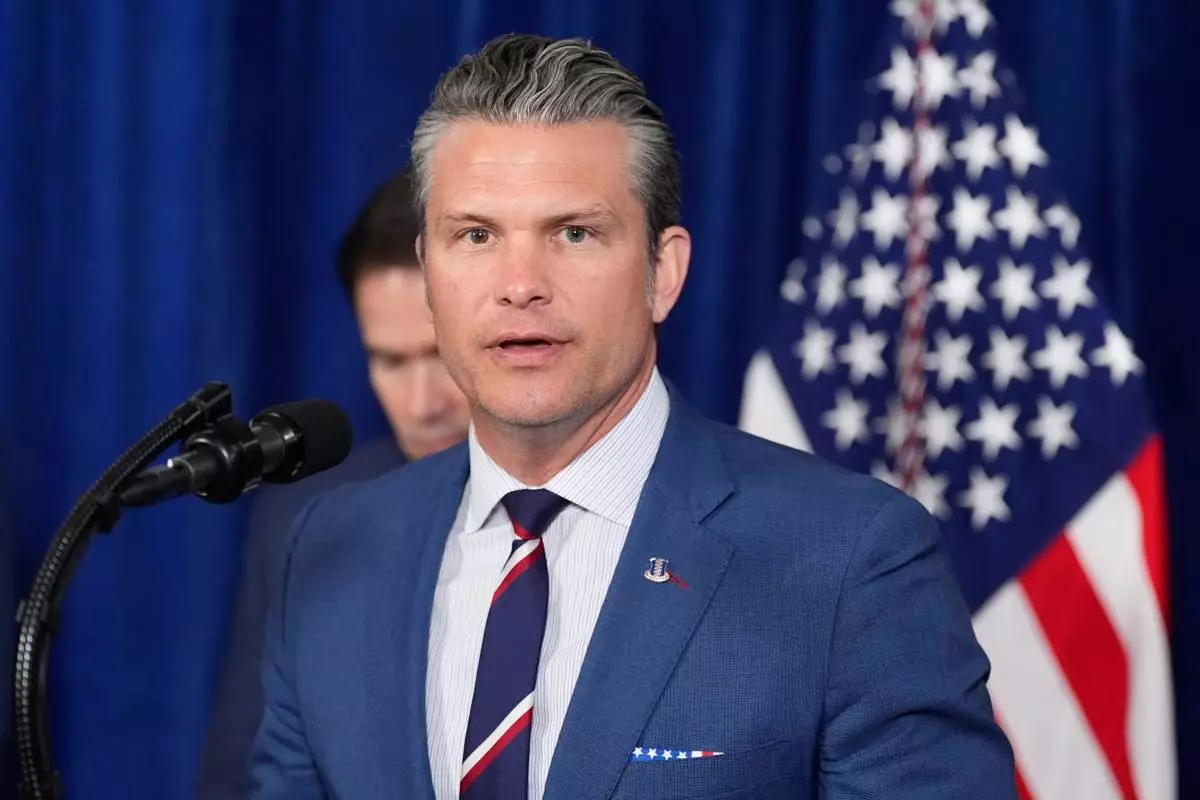
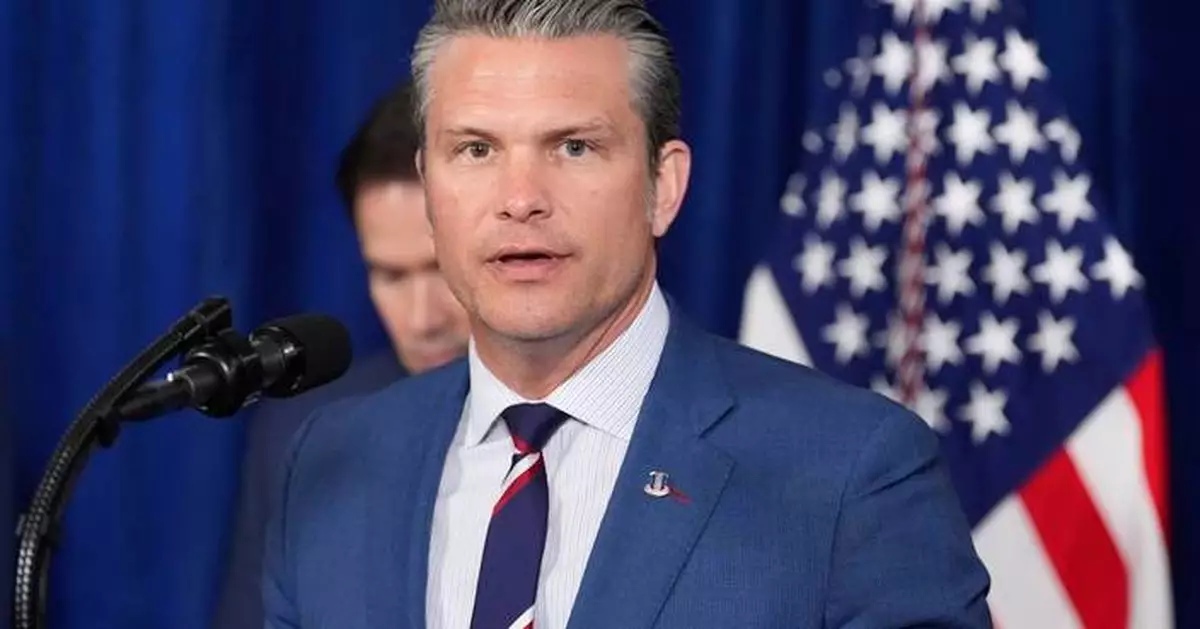
Defense Secretary Pete Hegseth speaks at Mar-a-Lago, Saturday, Jan. 3, 2026, in Palm Beach, Fla. (AP Photo/Alex Brandon)
MINNEAPOLIS (AP) — Federal officers dropped tear gas and sprayed eye irritant at activists Tuesday during another day of confrontations in Minneapolis while students miles away walked out of a suburban school to protest the Trump administration's bold immigration sweeps.
The government's immigration crackdown is next headed to a federal court where Minnesota and two mayors are asking a judge to immediately suspend the operation. No hearing has been set on the request.
Gas clouds filled a Minneapolis street near where Renee Good was fatally shot in the head by an immigration agent last week. A man scrubbed his eyes with snow and screamed for help while agents in an unmarked Jeep sprayed an orange irritant and drove away.
It's common for people to boo, taunt and blow orange whistles when they spot heavily armed agents passing through in unmarked vehicles or walking the streets, all part of a grassroots effort to warn the neighborhood and remind the government that they’re watching.
“Who doesn't have a whistle?” a man with a bag of them yelled.
Brita Anderson, who lives nearby and came to support neighborhood friends, said she was “incensed” to see agents in tactical gear and gas masks, and wondered about their purpose.
“It felt like the only reason they’d come here is to harass people,” Anderson said.
Separately, a judge heard arguments and said she would rule by Thursday or Friday on a request to restrict the use of force, such as chemical irritants, on people who are observing and recording agents' activities. Government attorneys argued that officers are acting within their authority and must protect themselves.
In Brooklyn Park, Minnesota, students protesting the immigration enforcement operation walked out of school, as students in other communities have done this week.
With the Department of Homeland Security pledging to send more than 2,000 immigration officers into Minnesota, the state, joined by Minneapolis and St. Paul, sued President Donald Trump's administration Monday to halt or limit the surge.
The lawsuit says the Department of Homeland Security is violating the First Amendment and other constitutional protections by focusing on a progressive state that favors Democrats and welcomes immigrants.
“This is, in essence, a federal invasion of the Twin Cities in Minnesota, and it must stop,” state Attorney General Keith Ellison said.
Minneapolis Mayor Jacob Frey said: “What we are seeing is thousands — plural — thousands of federal agents coming into our city. And, yeah, they’re having a tremendous impact on day-to-day life.”
Dozens of protests or vigils have taken place across the U.S. to honor Good since the 37-year-old mother of three was killed.
Homeland Security says it has made more than 2,000 arrests in the state since early December and is vowing to not back down. Spokesperson Tricia McLaughlin, responding to the lawsuit, accused Minnesota officials of ignoring public safety.
“President Trump’s job is to protect the American people and enforce the law — no matter who your mayor, governor, or state attorney general is," McLaughlin said.
The Trump administration has repeatedly defended the immigration agent who shot Good, saying he acted in self-defense. But that explanation has been widely panned by Frey, Minnesota Gov. Tim Walz and others based on videos of the confrontation.
Two Democratic lawmakers from Massachusetts announced Tuesday they are sponsoring a bill to make it easier for people to sue and overcome immunity protections for federal officers who are accused of violating civil rights. The bill stands little chance of passage in the Republican-controlled Congress.
In Wisconsin, Lt. Gov. Sara Rodriguez is proposing that the state ban civil immigration enforcement around courthouses, hospitals, health clinics, schools, churches and other places. She is hoping to succeed Gov. Tony Evers, a fellow Democrat, who is not running for a third term.
“We can take a look at that, but I think banning things absolutely will ramp up the actions of our folks in Washington, D.C.,” Evers said, referring to the Trump administration. “They don’t tend to approach those things appropriately.”
Associated Press reporters Ed White in Detroit; Steve Karnowski in Minneapolis; and Scott Bauer in Madison, Wisconsin, contributed.
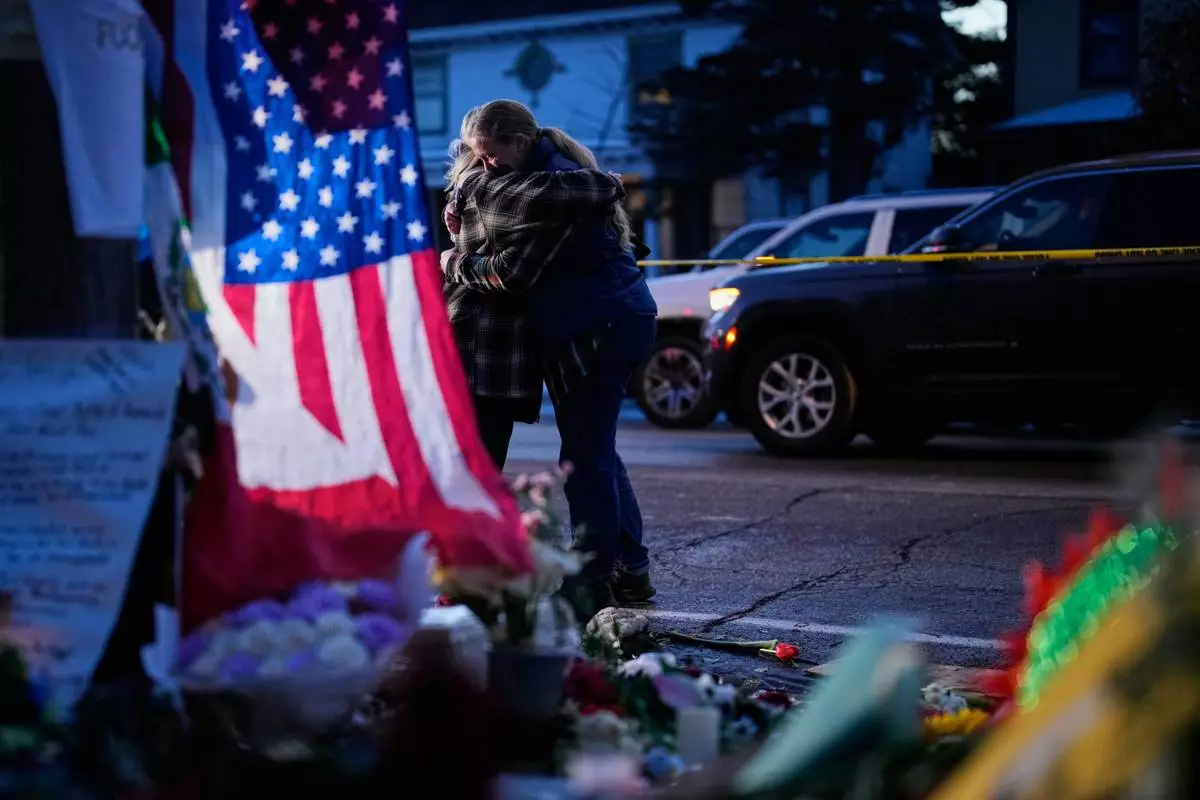
Monica Travis shares an embrace while visiting a makeshift memorial for Renee Good, who was fatally shot by an ICE officer last week, Monday, Jan. 12, 2026, in Minneapolis. (AP Photo/John Locher)
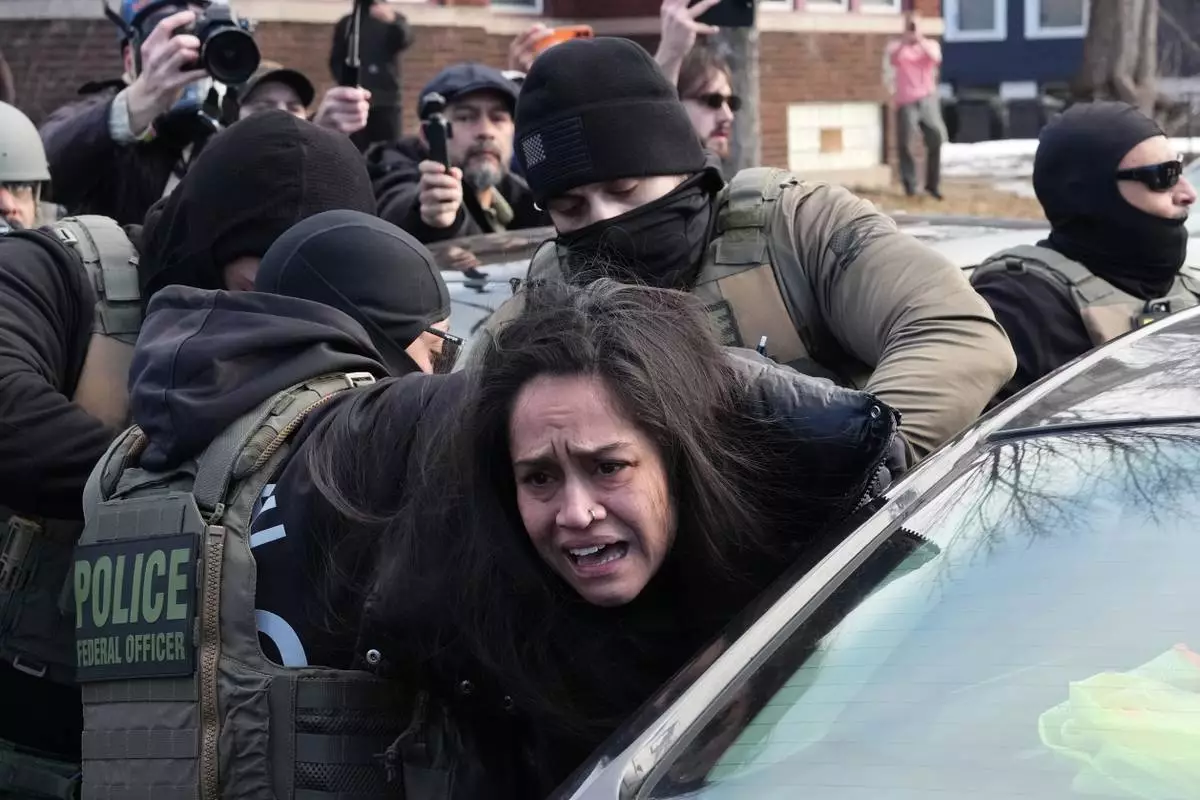
A protester is detained by Federal agents near the scene where Renee Good was fatally shot by an ICE officer last week, Tuesday, Jan. 13, 2026, in Minneapolis.(AP Photo/Adam Gray)
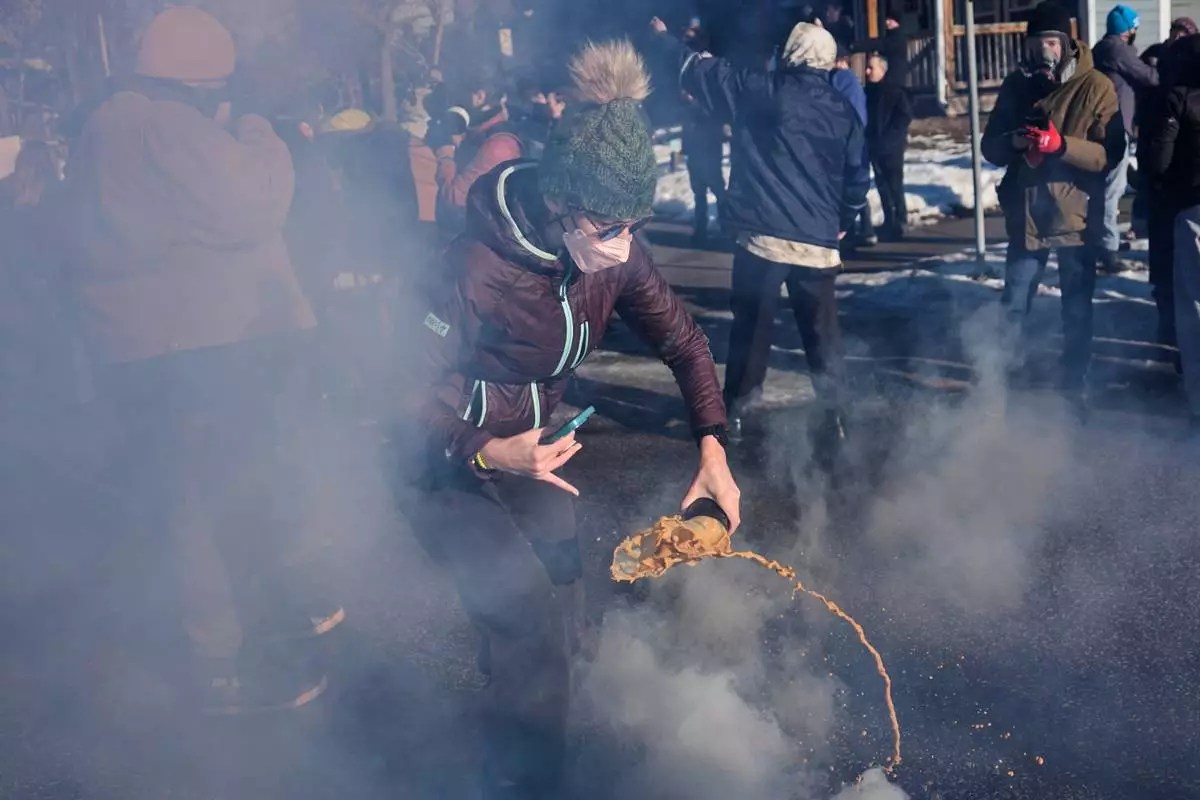
A protester grabs a tear gas grenade deployed by federal immigration officers near the scene where Renee Good was fatally shot by an ICE officer last week, Tuesday, Jan. 13, 2026, in Minneapolis. (AP Photo/John Locher)
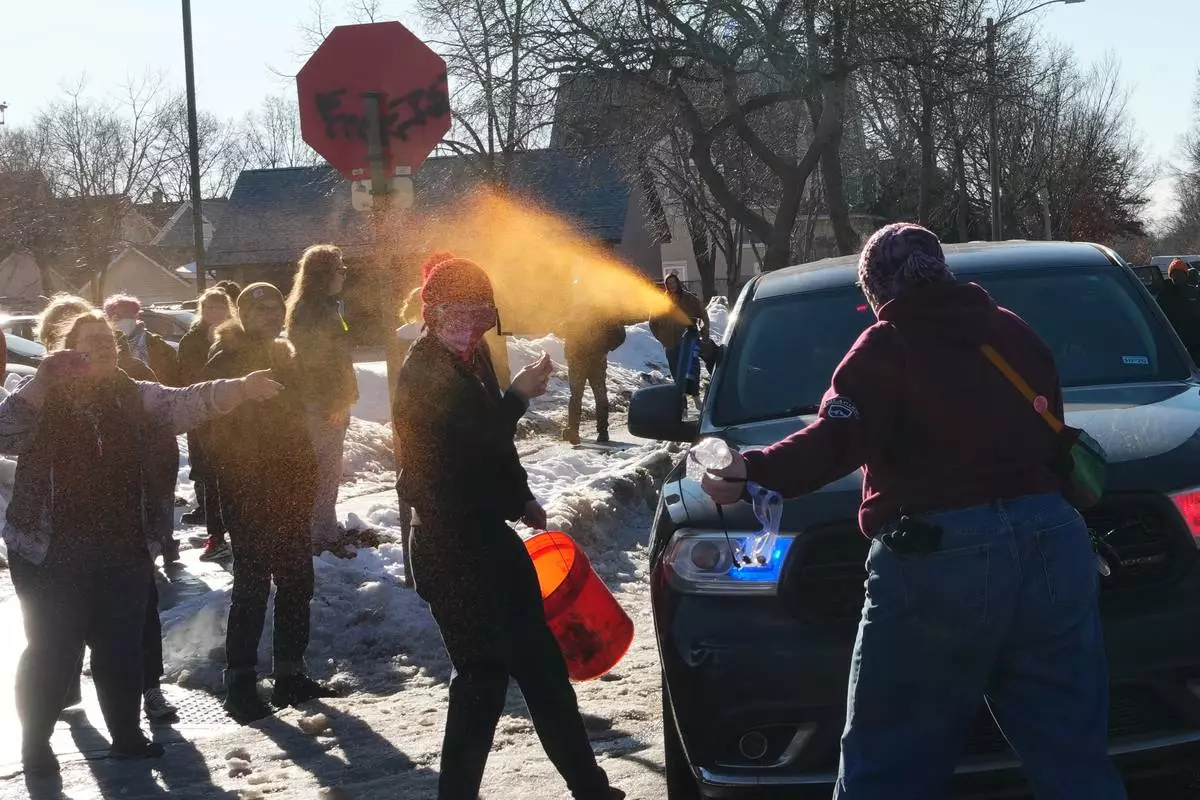
A protester is sprayed with pepper spray by a Federal agent Tuesday, Jan. 13, 2026, in Minneapolis.(AP Photo/Adam Gray)
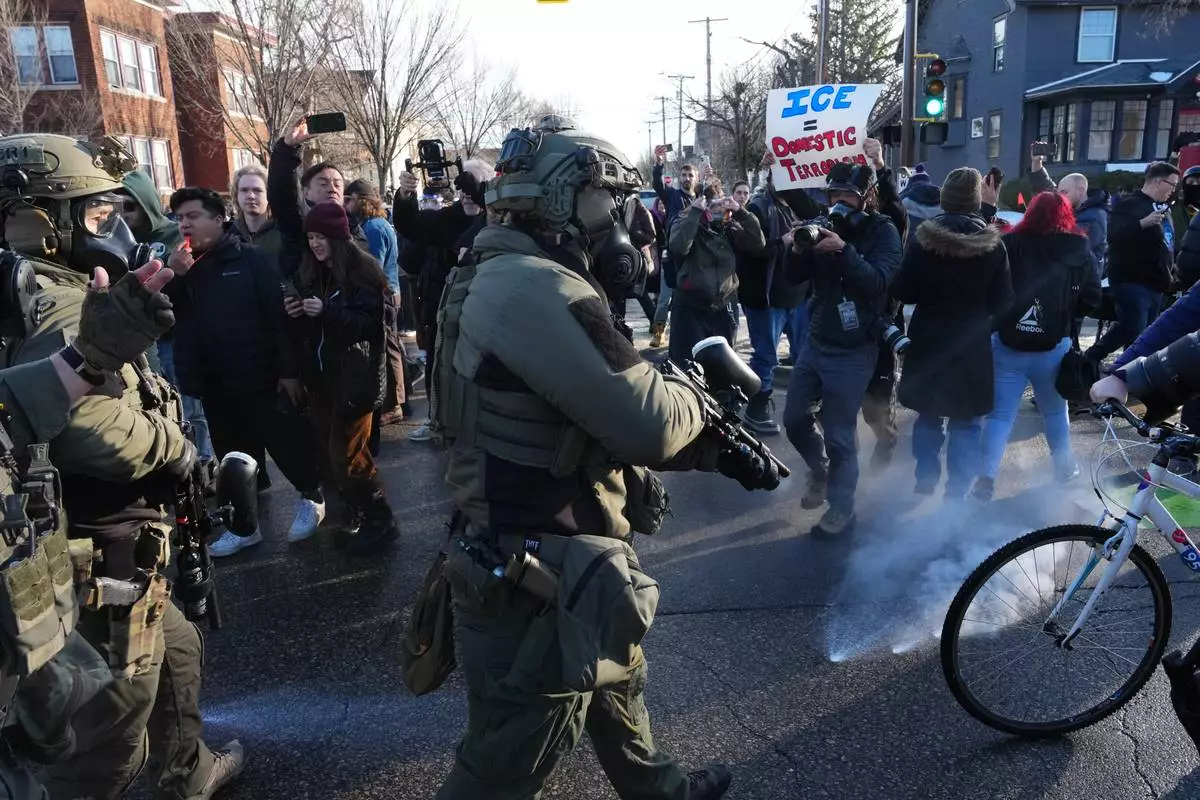
Tear gas is deployed amid protesters near the scene where Renee Good was fatally shot by an ICE officer last week, Tuesday, Jan. 13, 2026, in Minneapolis.(AP Photo/Adam Gray)
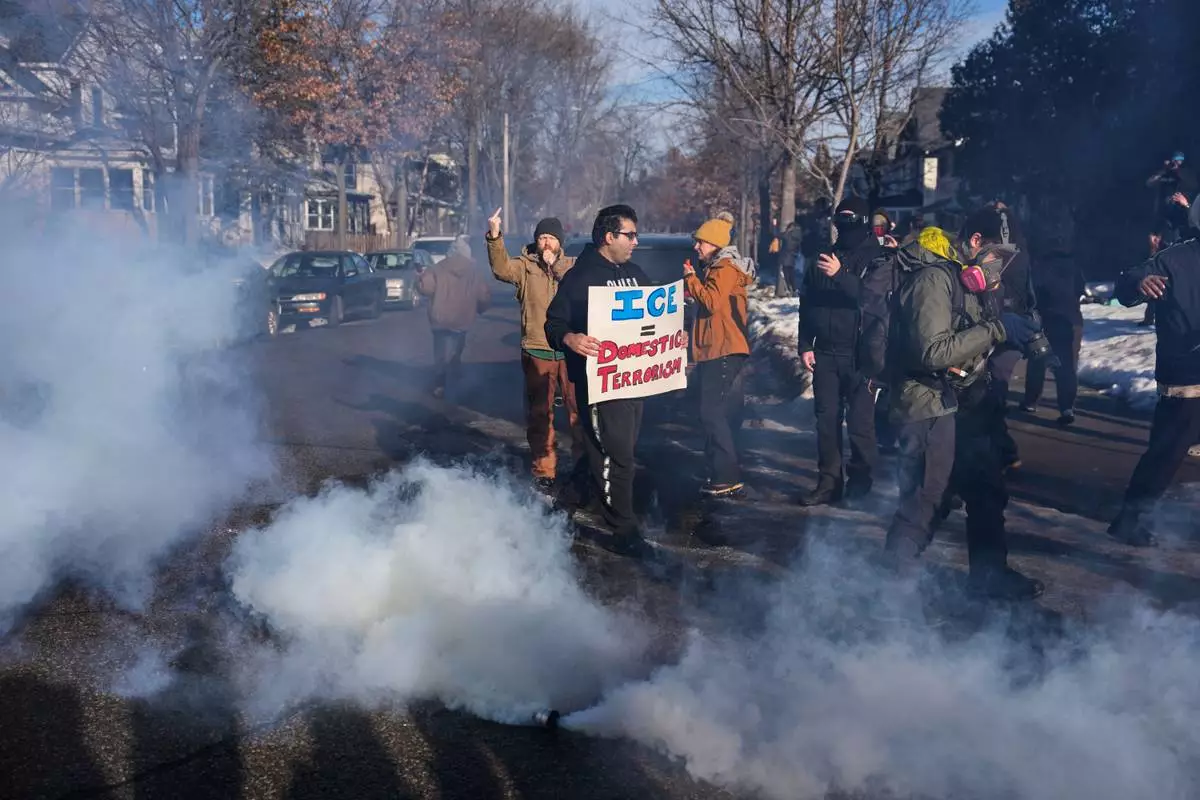
EDS NOTE: OBSCENITY - Tear gas is deployed amid protesters near the scene where Renee Good was fatally shot by an ICE officer last week, Tuesday, Jan. 13, 2026, in Minneapolis. (AP Photo/John Locher)
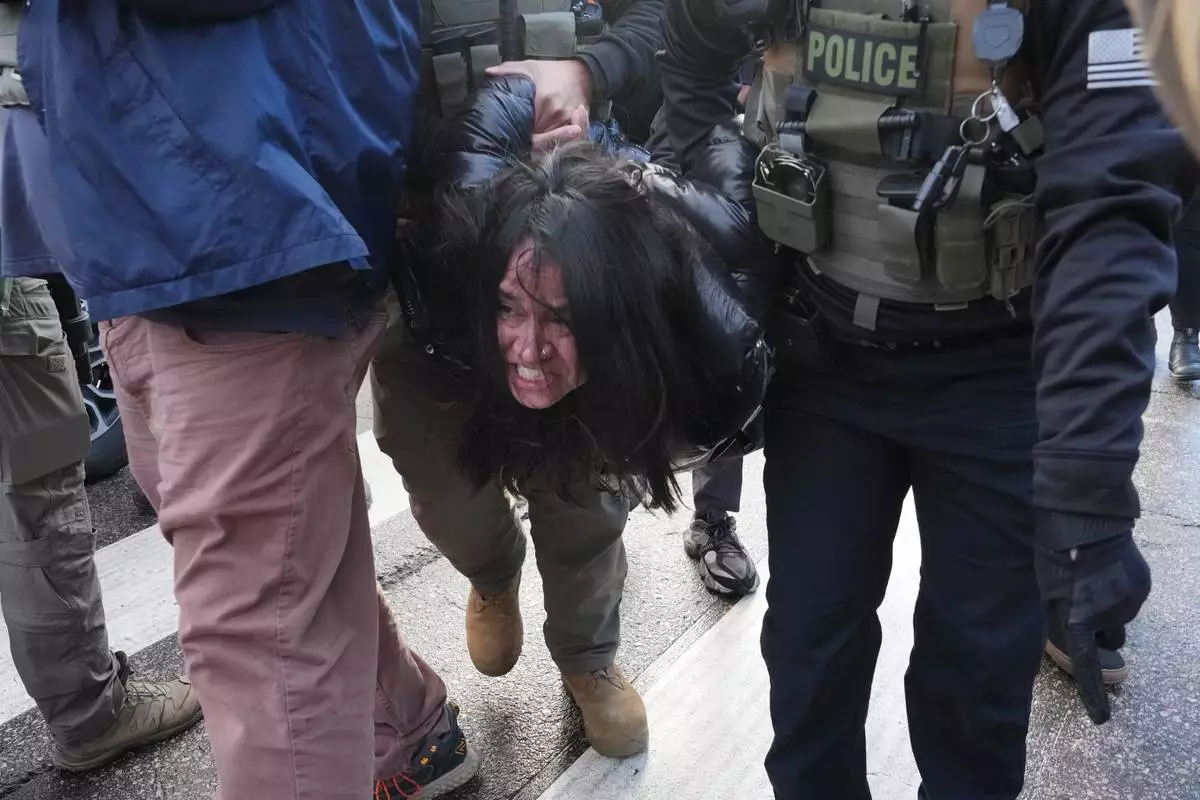
A protester is detained by Federal agents near the scene where Renee Good was fatally shot by an ICE officer last week, Tuesday, Jan. 13, 2026, in Minneapolis.(AP Photo/Adam Gray)(AP Photo/Adam Gray)
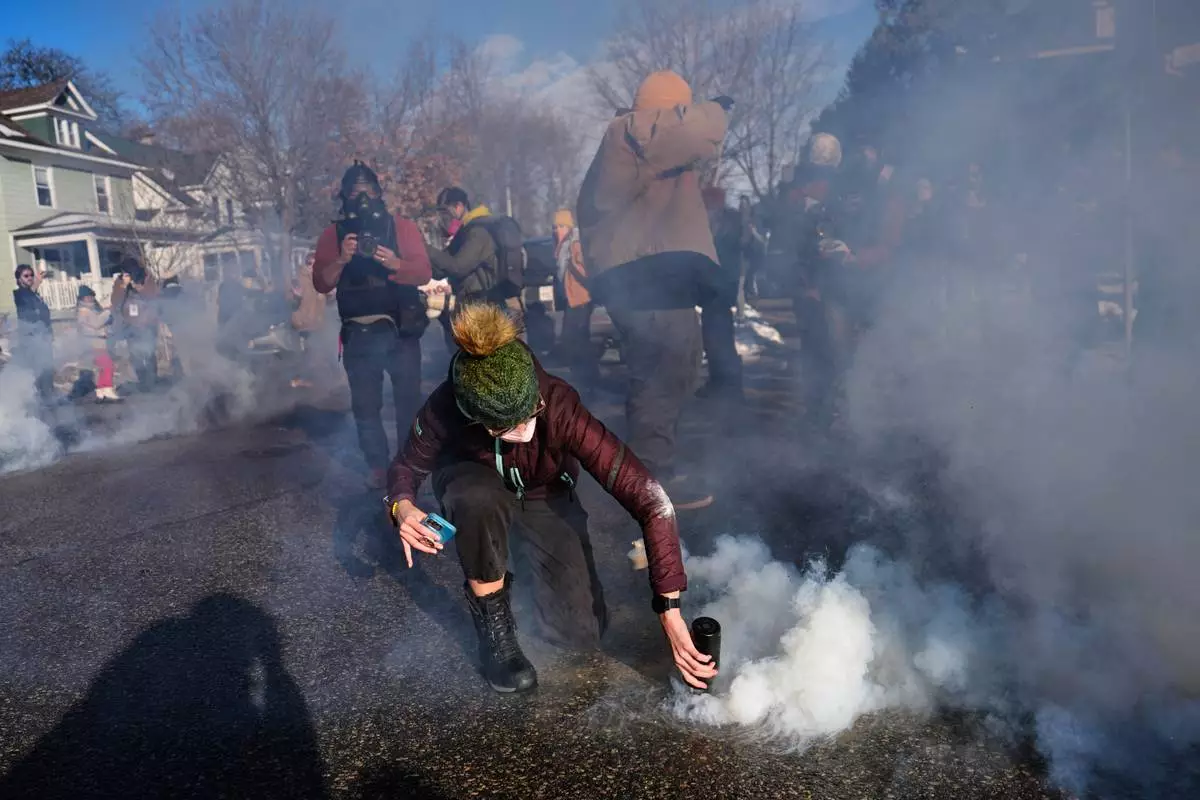
A protester grabs a tear gas grenade deployed by federal immigration officers near the scene where Renee Good was fatally shot by an ICE officer last week, Tuesday, Jan. 13, 2026, in Minneapolis. (AP Photo/John Locher)
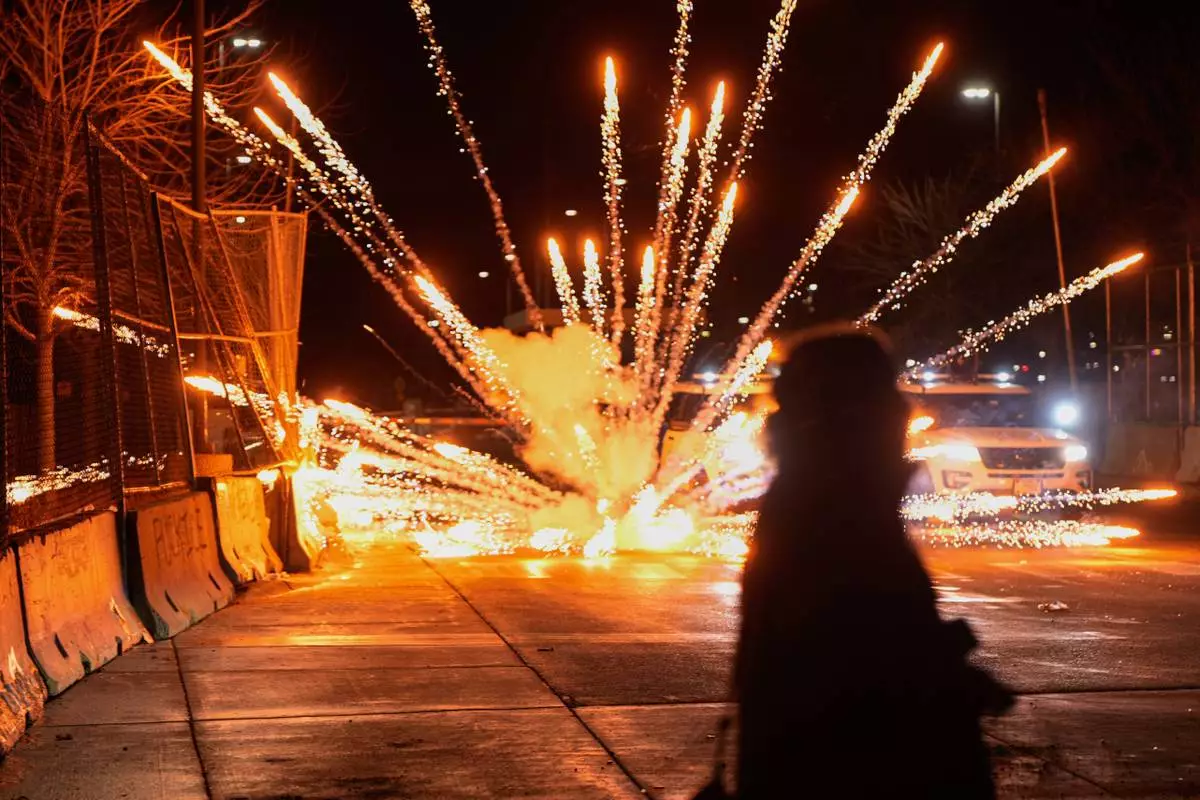
Fireworks are set off by protesters outside the Bishop Henry Whipple Federal Building, Monday, Jan. 12, 2026, in Minneapolis. (AP Photo/Jen Golbeck)
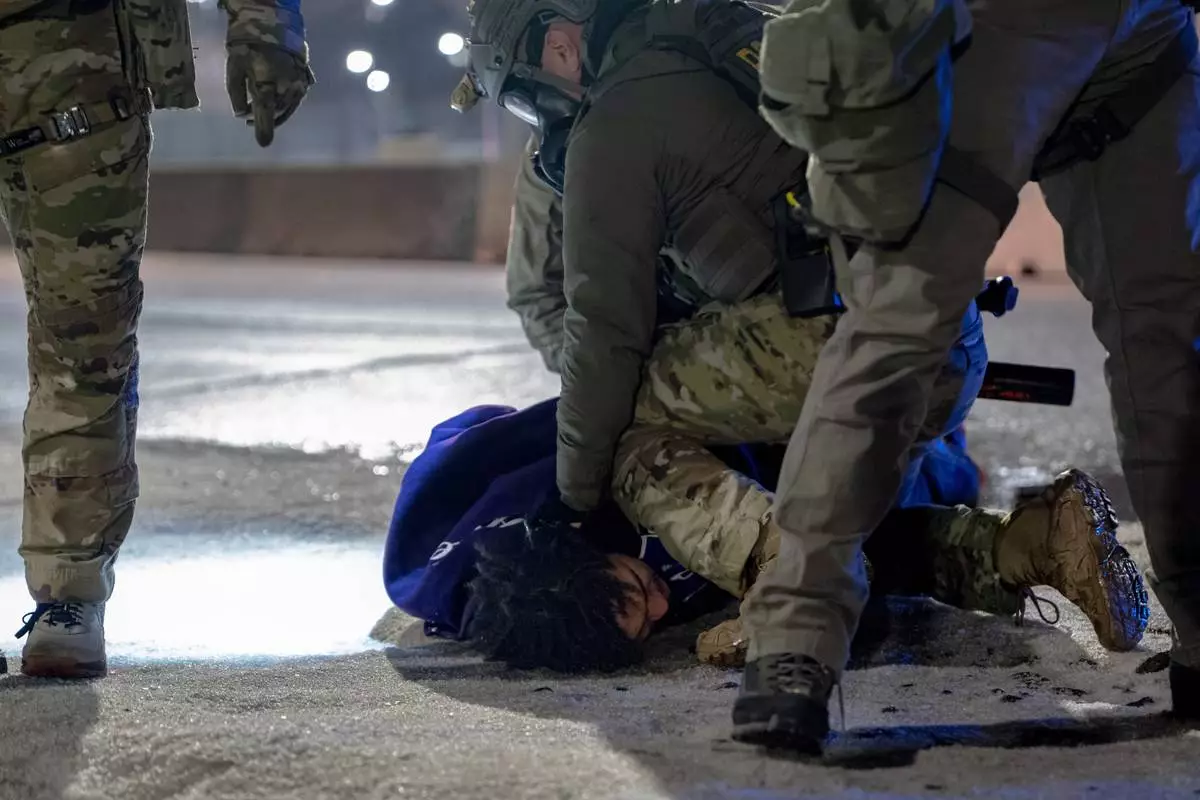
Federal immigration officers detain a demonstrator outside Bishop Whipple Federal Building after tear gas was deployed Monday, Jan. 12, 2026, in Minneapolis. (AP Photo/Jen Golbeck)
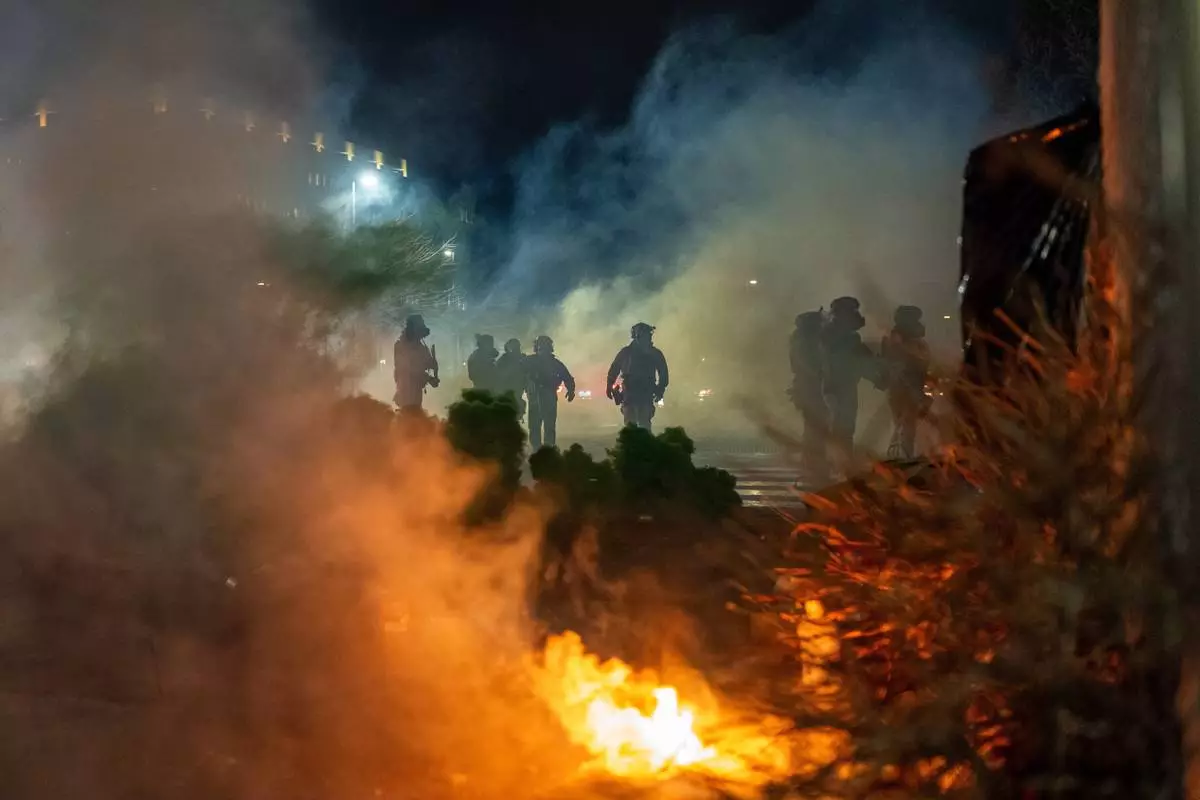
Federal immigration officers are seen outside Bishop Whipple Federal Building after tear gas was deployed Monday, Jan. 12, 2026, in Minneapolis. (AP Photo/Jen Golbeck)
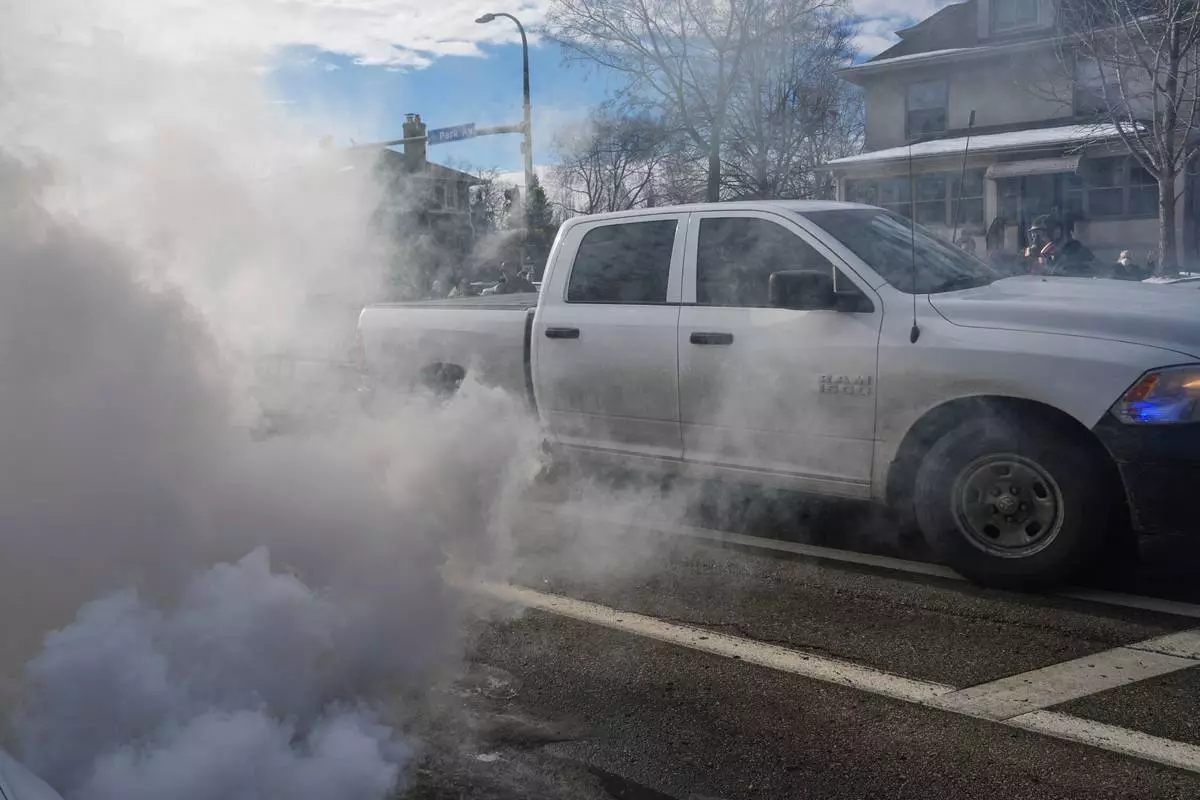
Federal agents drive through smoke from tear gas dispersed during a protest, Monday, Jan. 12, 2026 in Minneapolis (AP Photo/Adam Gray)

A protester's face is doused in water after he was pepper sprayed outside of the Bishop Whipple Federal Building, Monday, Jan. 12, 2026, in Minneapolis. (AP Photo/Jen Golbeck)
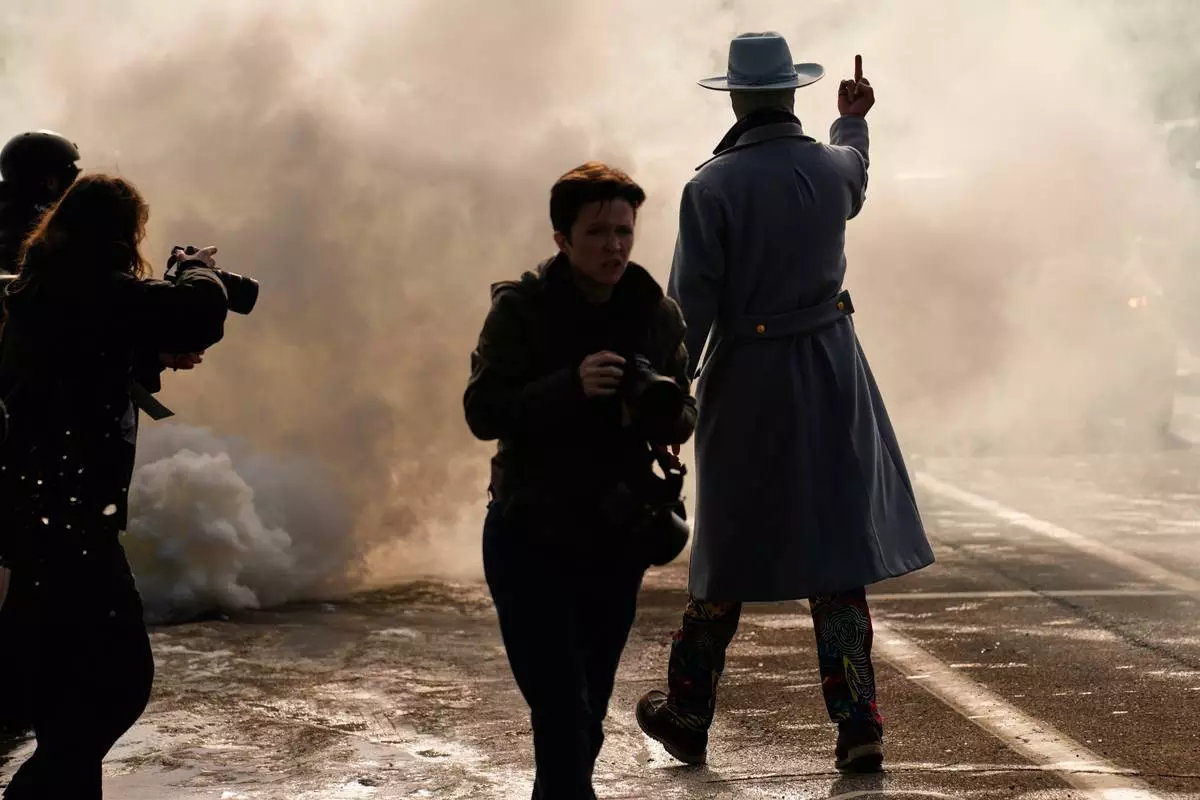
EDS NOTE: OBSCENITY - A man gestures as he walks toward a cloud of tear gas that was deployed by federal immigration officers Monday, Jan. 12, 2026, in Minneapolis. (AP Photo/John Locher)
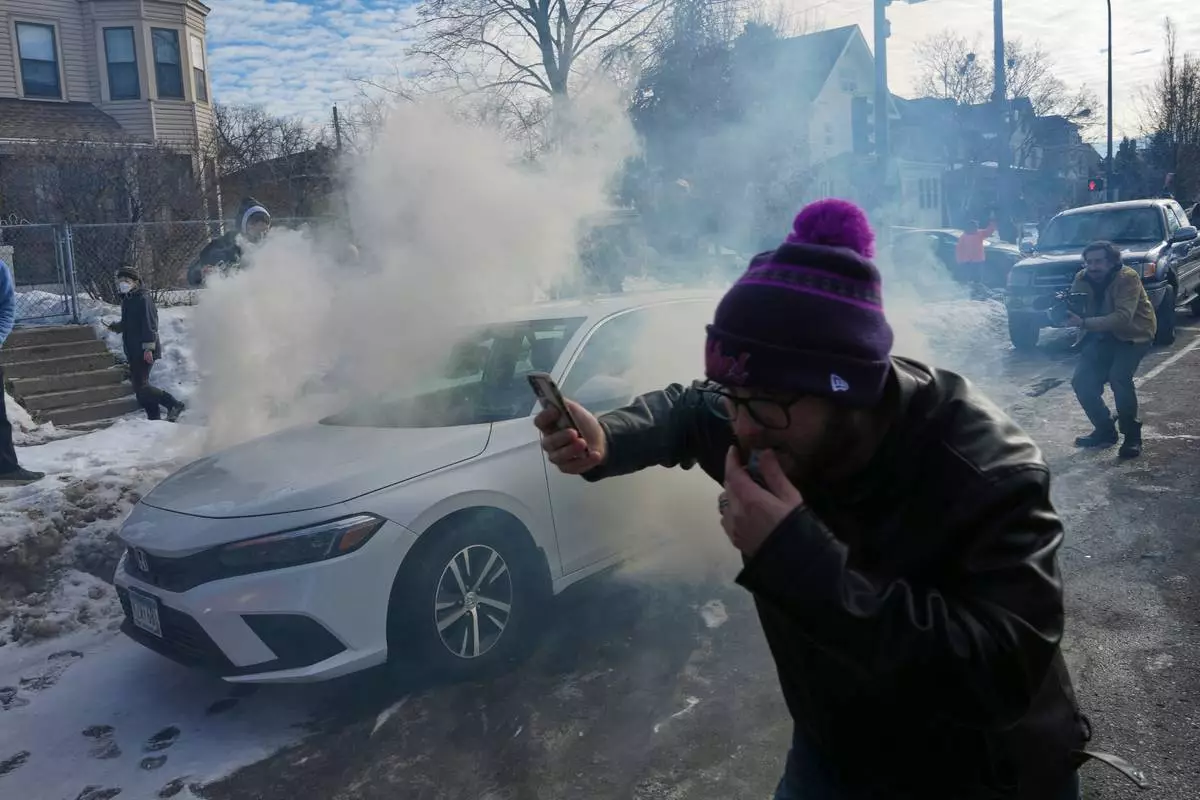
Protesters try to avoid tear gas dispersed by federal agents, Monday, Jan. 12, 2026 in Minneapolis (AP Photo/Adam Gray)
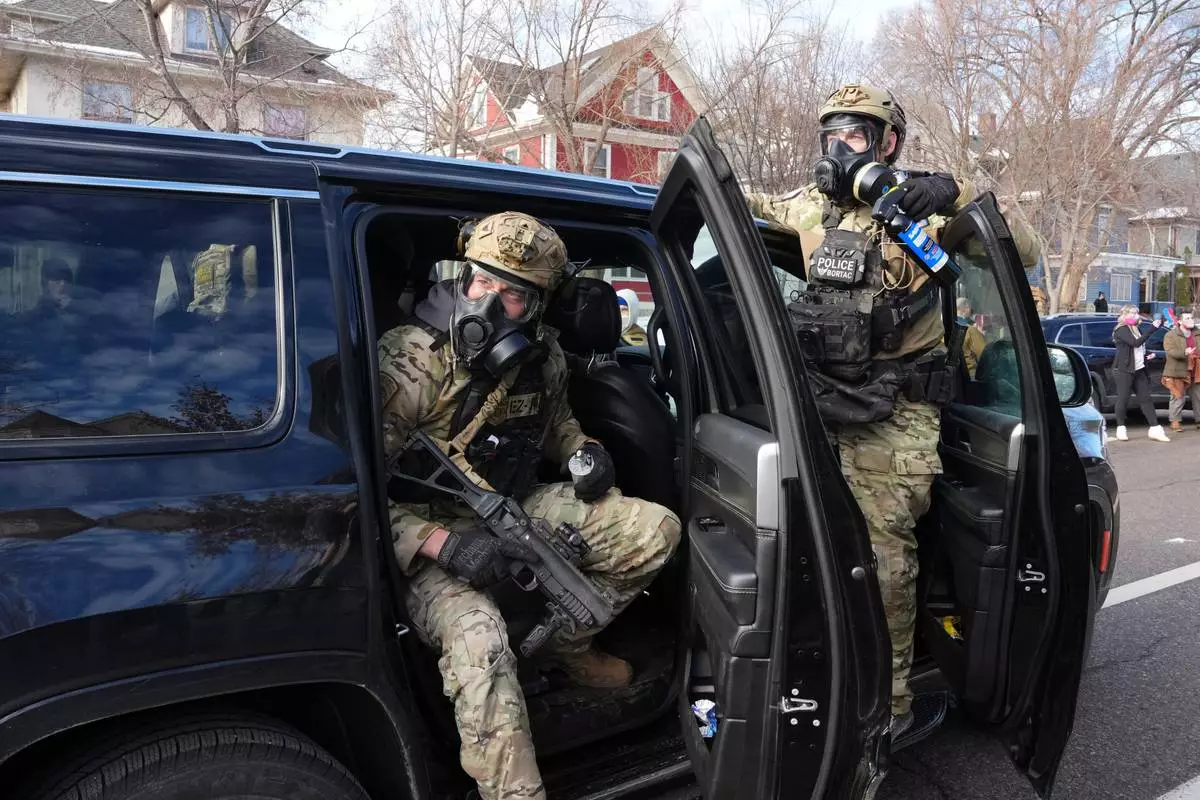
Federal agents get ready to disperse tear gas into a crowd at a protest, Monday, Jan. 12, 2026 in Minneapolis (AP Photo/Adam Gray)