ATLANTA (AP) — Georgia lawmakers on Tuesday gave final passage to a bill that aims to void a city of Savannah ordinance that imposes fines and possible jail time for leaving guns in unlocked cars.
The state Senate gave final approval to the measure, which says cities and counties can't regulate how guns are stored. It also lets gun owners sue local governments who impose any such rules in violation of state law, collecting at least $25,000 in damages if they win.
Senate Bill 204 now goes to Gov. Brian Kemp's desk for his signature or veto.
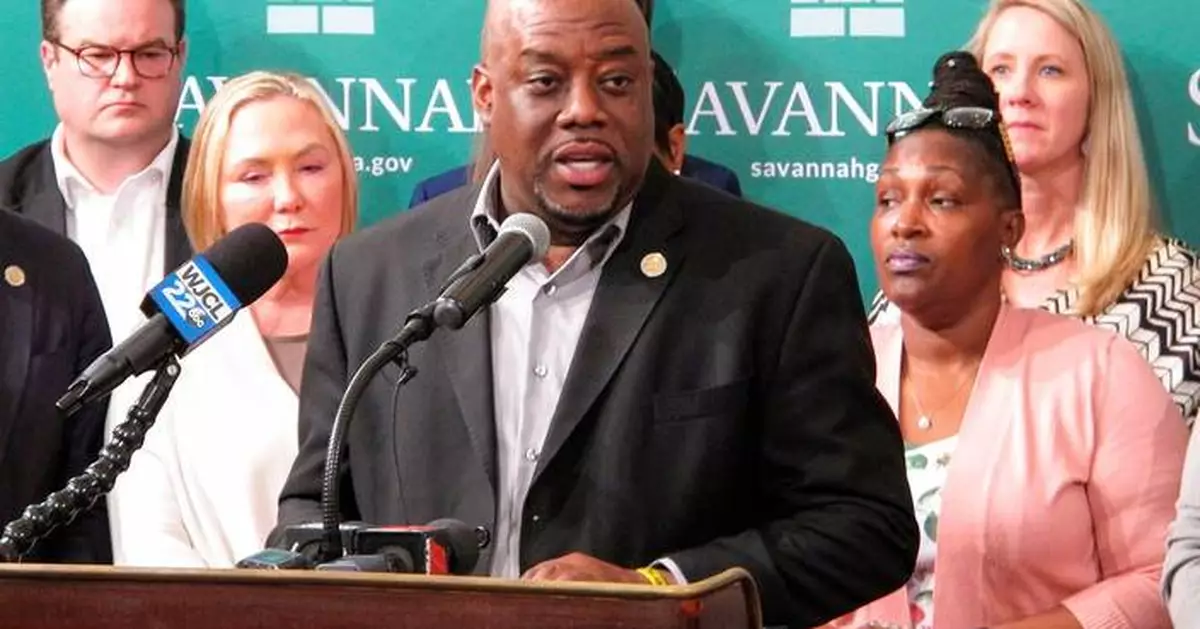
Mayor Van Johnson and Savannah’s city council voted unanimously in 2024 to outlaw keeping firearms in unlocked vehicles, with maximum penalties of a $1,000 fine and 30 days in jail. They said the law would make it harder for criminals to steal guns in a state where lawmakers have widely abolished restrictions on owning and carrying firearms.
But the rules have left gun rights advocates fuming, saying that the city is in effect punishing gun owners who had their guns stolen.
“Ultimately what Savannah was doing was regulating citizens' right to have a gun in their car,” former state Sen. Colton Moore, a Republican from Trenton, told The Associated Press. “Their car was getting broken into, and they were going from a victim of a crime now to being a criminal. And that’s what we don’t want to happen going forward.”
Moore resigned from the Senate Tuesday after the bill passed because he filed to run for the congressional seat left vacant by U.S. Rep. Marjorie Taylor Greene’s resignation.
Johnson said Tuesday that if Kemp signs the bill into law, the city will stop issuing citations.
“Obviously we’re going to comply with the law,” Johnson said in a phone interview with the AP. “So should the governor sign it, we won’t enforce that ordinance anymore. But there might be other ordinances that come forth.”
He declined to say what other type of gun safety measure city officials might consider.
Johnson, a Democrat and former police officer, has touted the gun ordinance as a way to make gun owners act responsibly without infringing on their rights to own or carry firearms. He said Tuesday that the number of gun thefts from unlocked vehicles reported to Savannah police had dropped 30% since the ordinance took effect.
“It’s a sad thing that the General Assembly says over 200 guns stolen from unlocked vehicles is OK,” the mayor said.
Georgia law already prohibits city and county governments from regulating firearm “possession, ownership, transport, carrying, transfer, sale, purchase (or) licensing.”
Savannah city officials have insisted since the gun ordinance took effect that they were regulating storage of firearms, something the state law didn’t explicitly forbid. State lawmakers changed that by adding the word “storage” to the existing law.
Gun control advocates said lawmakers were wrong to preempt Savannah's ordinance.
“Time and time again, young people in this state are told that our safety isn’t a priority. But this bill takes it a step further by actually punishing the cities that are stepping up to protect us when our state lawmakers won’t,” Nolan Tanner said in a statement. He is a volunteer with the chapter of Students Demand Action at Jenkins High School in Savannah.
In November, a Chatham County Recorder’s Court judge threw out the case of a man cited for violating the Savannah gun ordinance, ruling that it violates state law and the U.S. Constitution.
However, that ruling only applied to the case of the defendant who challenged the gun ordinance as part of his criminal defense. Johnson said at the time the city would keep enforcing it.
Johnson also said he is not worried about the additional legal liability and potential fines spelled out in the bill.
"I don’t believe it could be retroactive,” he said.
Bynum reported from Savannah, Georgia.
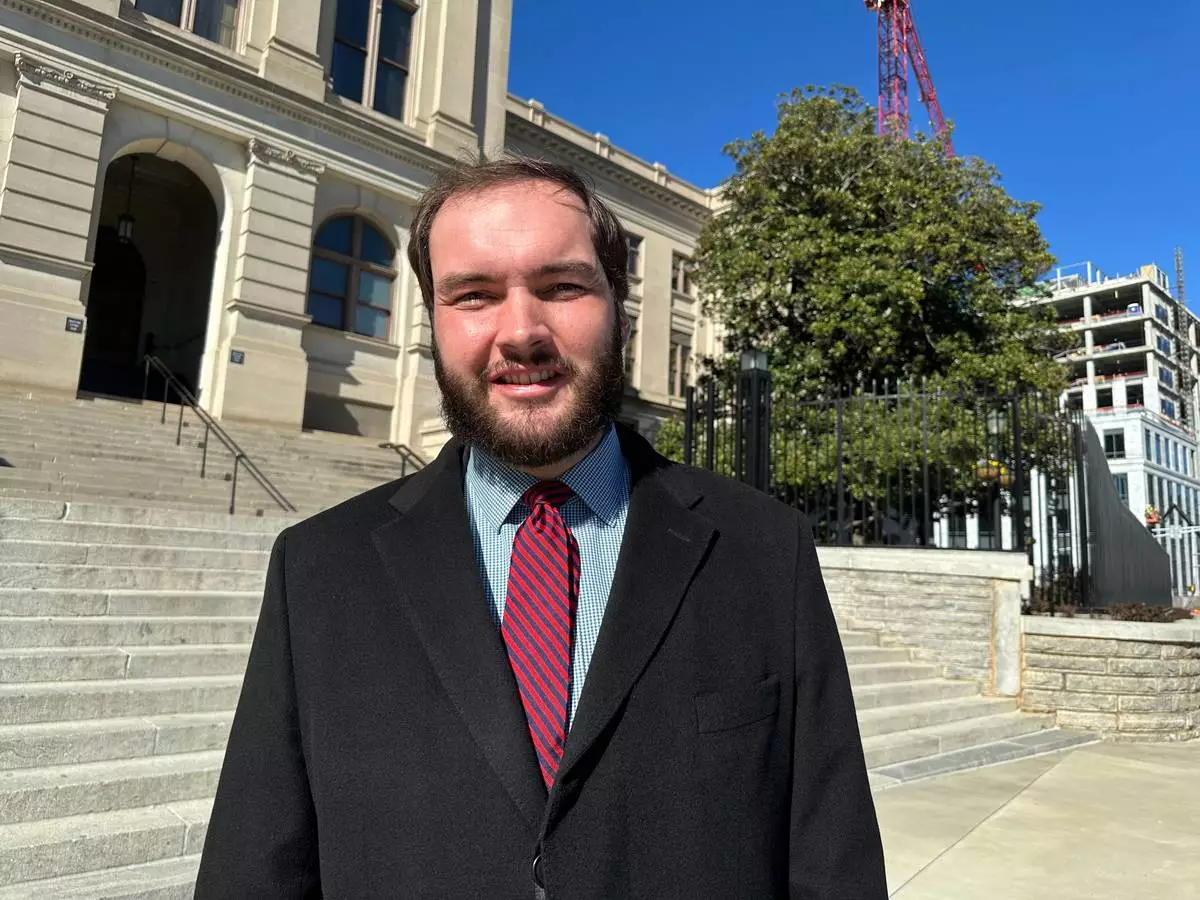
Republican Colton Moore, who resigned from the state Senate to run for Congress, poses for a photo outside the Georgia Capitol, Tuesday, Jan. 13, 2026, in Atlanta. (AP Photo/Jeff Amy)
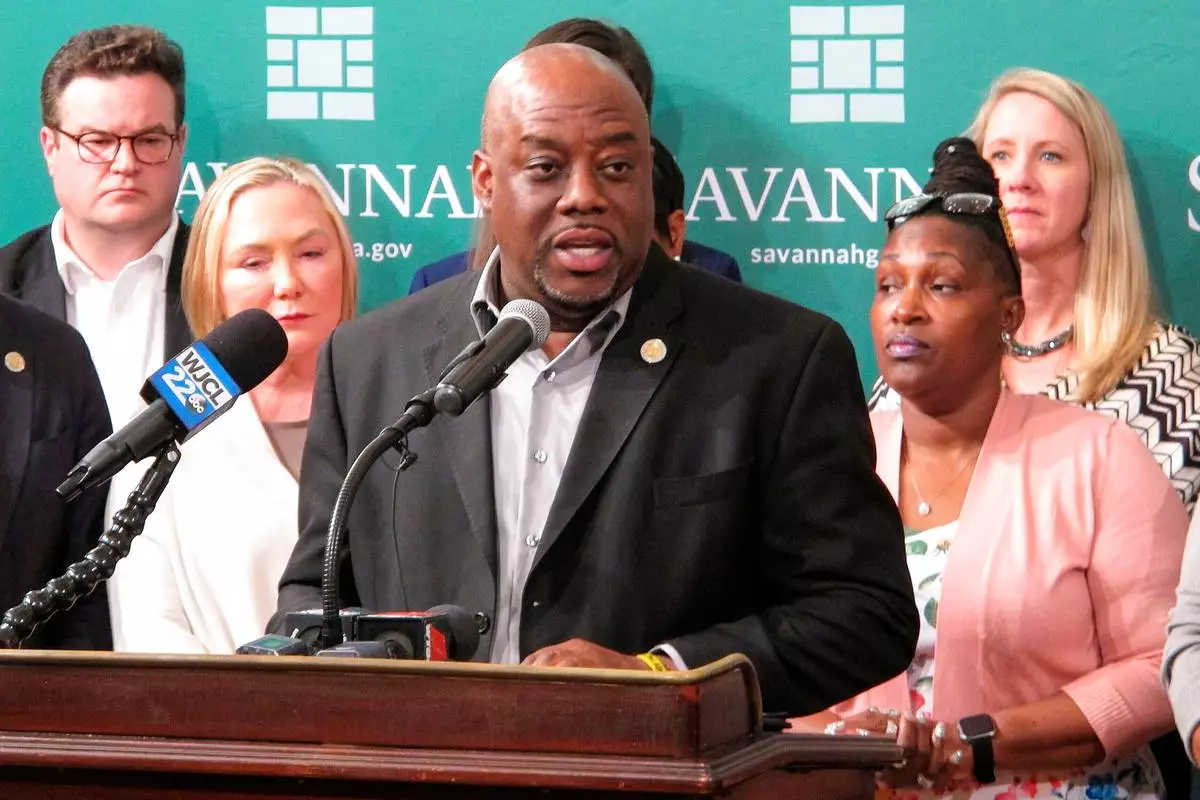
FILE - Mayor Van Johnson speaks at a news conference, March 11, 2020, in Savannah, Ga. (AP Photo/Russ Bynum, File)
NEW YORK (AP) — Oil prices have soared in the week since the U.S. and Israel launched their war against Iran, but President Donald Trump on Saturday downplayed the idea of turning to America’s Strategic Petroleum Reserve to ease the pressure.
Trump was asked by reporters on Air Force One about whether he would consider tapping the reserve. As the war continues to escalate across the Middle East, including in areas critical to the production and movement of oil and gas, that's strained the energy sector globally. In the U.S., consumers are already facing higher gas prices, a key cost of living.
“We’ve got a lot of oil. Our country has a tremendous amount,” Trump said. “There’s a lot of oil out there. That’ll get healed very quickly.”
Trump's Republican Party is under pressure over the issue of affordability ahead of November midterm elections. Tapping the reserve is among the few things a president can do on his own to try to make an impact on oil prices.
Here is a look at what would be involved:
The Strategic Petroleum Reserve is a collection of underground salt caverns in Texas and Louisiana that can hold more than 700 million barrels of oil, although it is not currently full. The reserve held more than 415 million barrels as of the end of last month, up from about 395 million barrels at this time in 2025, according to the U.S. Energy Department.
The reserve was created after the 1970s Arab oil embargo to give the United States a supply that could be used in an emergency. The amount of oil inside peaked more than a decade and a half ago, Energy Department data shows, when the reserve held more than 726.6 million barrels at one point.
Today, the U.S. exports more petroleum than it imports. But the reserve remains and has been tapped for various reasons over time, from offsetting the impact of hurricanes and ship-channel closings to raising money for deficit reduction.
Former presidents have turned to the reserve amid supply disruptions spanning from geopolitical conflicts, adding more supply onto the market in the hope of pushing prices lower. President Joe Biden drew significantly from the reserve in 2022 following Russia’s invasion of Ukraine, dropping the stockpile to its lowest level since the 1980s. Back in 1991, President George H.W. Bush also authorized withdrawing nearly 34 million barrels during the Gulf War, although only 17 million barrels were used. And in 2011, President Barack Obama approved the release of 30 million barrels to offset the disruption of supply from Libya.
As the Iran war continues to escalate, oil prices have spiked rapidly, reaching their highest level since 2023. The price for a barrel of Brent crude, the international standard, jumped 8.5% to $92.69 on Friday — up from nearly $70 a barrel just late last week. Meanwhile, benchmark U.S. crude climbed 12.2%, to $90.90 a barrel on Friday.
The Trump administration took one step last week to respond to the higher prices: the Treasury Department said India can buy crude oil and petroleum products from Russia until April 4, calling the sanctions waiver a “stop-gap measure" to “alleviate pressure” on the market.
But asked whether he would take other steps, such as tapping the SPR, Trump downplayed the need to use the supplies — noting the U.S. has “a tremendous amount” of oil — and instead focused on criticizing Biden, his predecessor, for drawing down the reserves.
Trump said he would begin filling up the SPR again at the “appropriate time, which is basically a gut instinct.”
Many factors go into prices at the pump.
In the U.S., the average price for gasoline has already climbed nationally — sitting at about $3.41 per gallon on Saturday, up about 43 cents a week ago, per motor club AAA. But refineries buy crude oil in advance, so it's possible that the pain of higher prices could increase if the war drags on. And even if more oil were withdrawn from the Strategic Petroleum Reserve, refineries could still be working with more expensive supply for a bit.
As always, some states also have pricier averages than others, due to factors ranging from nearby refinery supply to local fuel requirements and differing tax rates. On Saturday, California had the highest average of nearly $5.08 per gallon, while Kansas had the lowest of about $2.90 a gallon.
Gas prices are regressive — meaning lower-income people are more likely to spend a higher percentage of their money on fuel than affluent Americans. So increases hurt the most price-sensitive consumers.
Oil is lighter than water — that’s why disasters like those caused by the Exxon Valdez tanker and the Deepwater Horizon drilling rig create slicks on the surface. To remove oil from the reserves, water is pumped into the salt caverns, making the crude float to the surface, where it is captured and sent through pipelines to refineries.
AP writer Seung Min Kim contributed to this report from Washington.
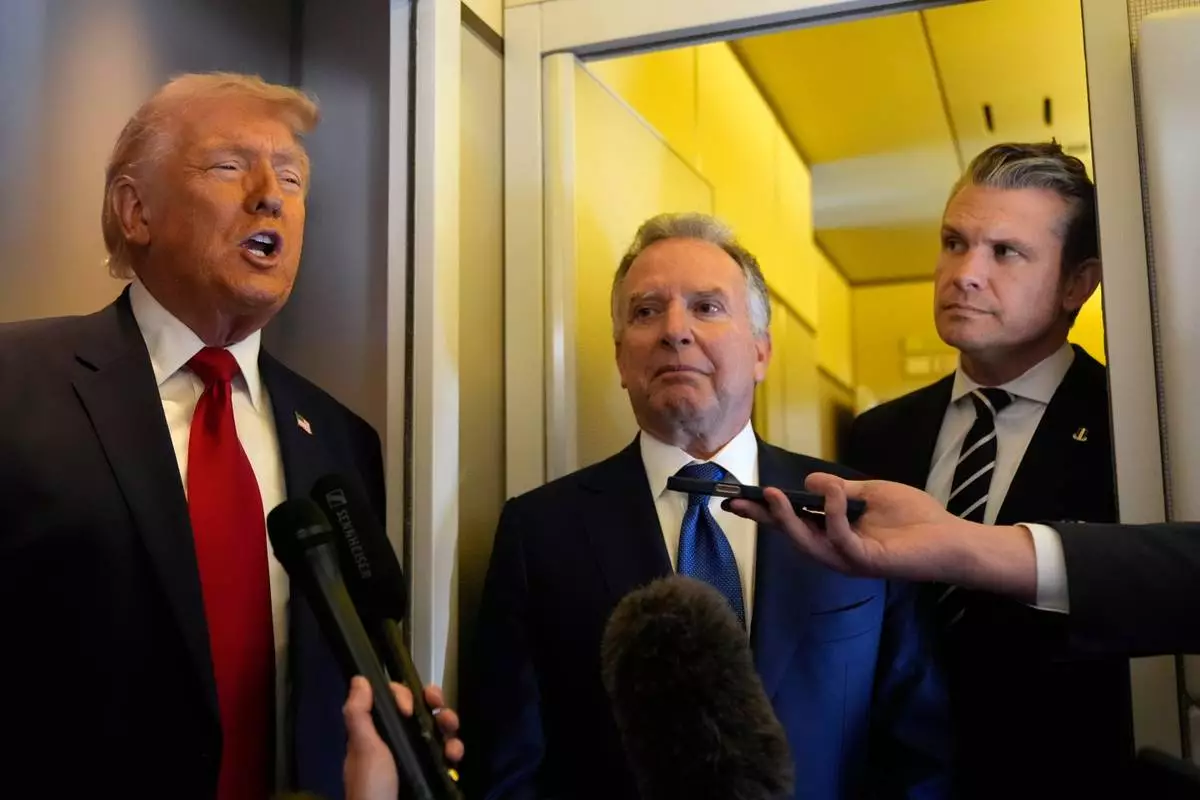
President Donald Trump speaks to reporters as White House Special Envoy to the Middle East Steve Witkoff, center, and Defense Secretary Pete Hegseth listen while traveling aboard Air Force One en route from Dover Air Force Base, Del., to Miami, Saturday, March 7, 2026. (AP Photo/Mark Schiefelbein)
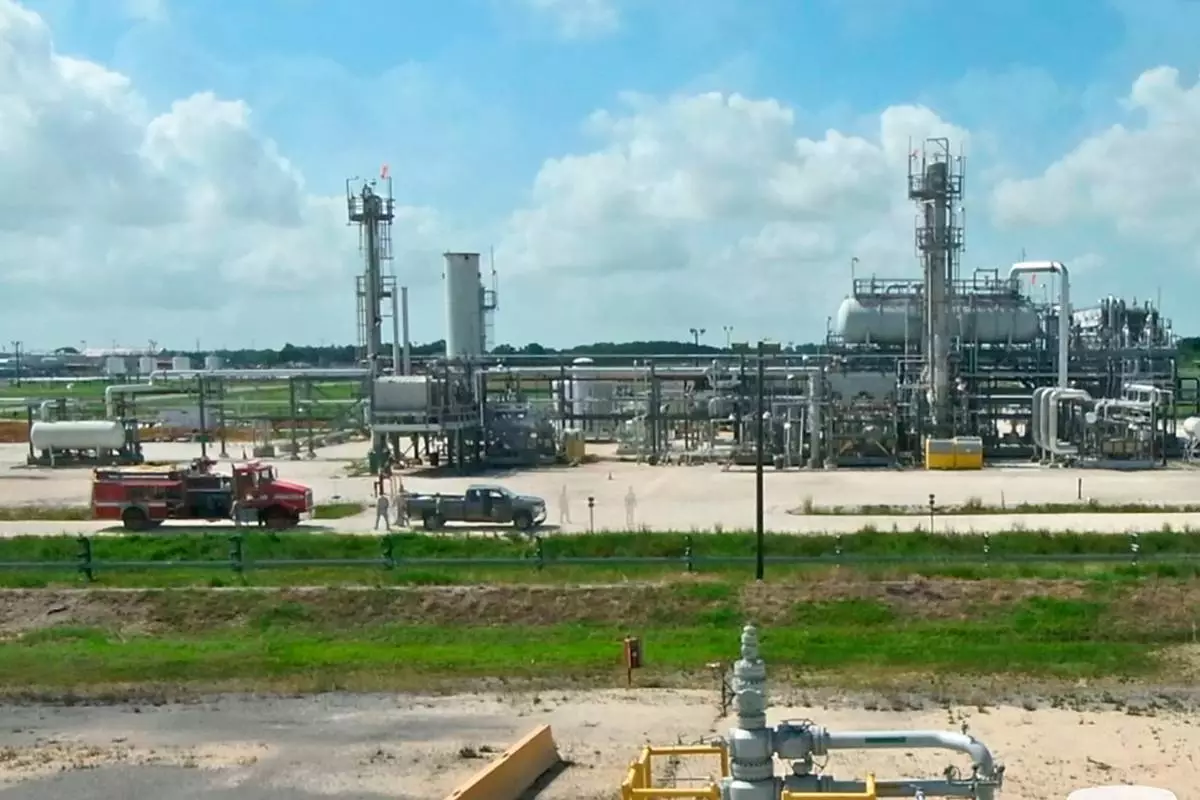
FILE - This photo provided by the U.S. Department of Energy shows a section of the Strategic Petroleum Reserve facility in West Hackberry, La. (U.S. Department of Energy via AP, File)
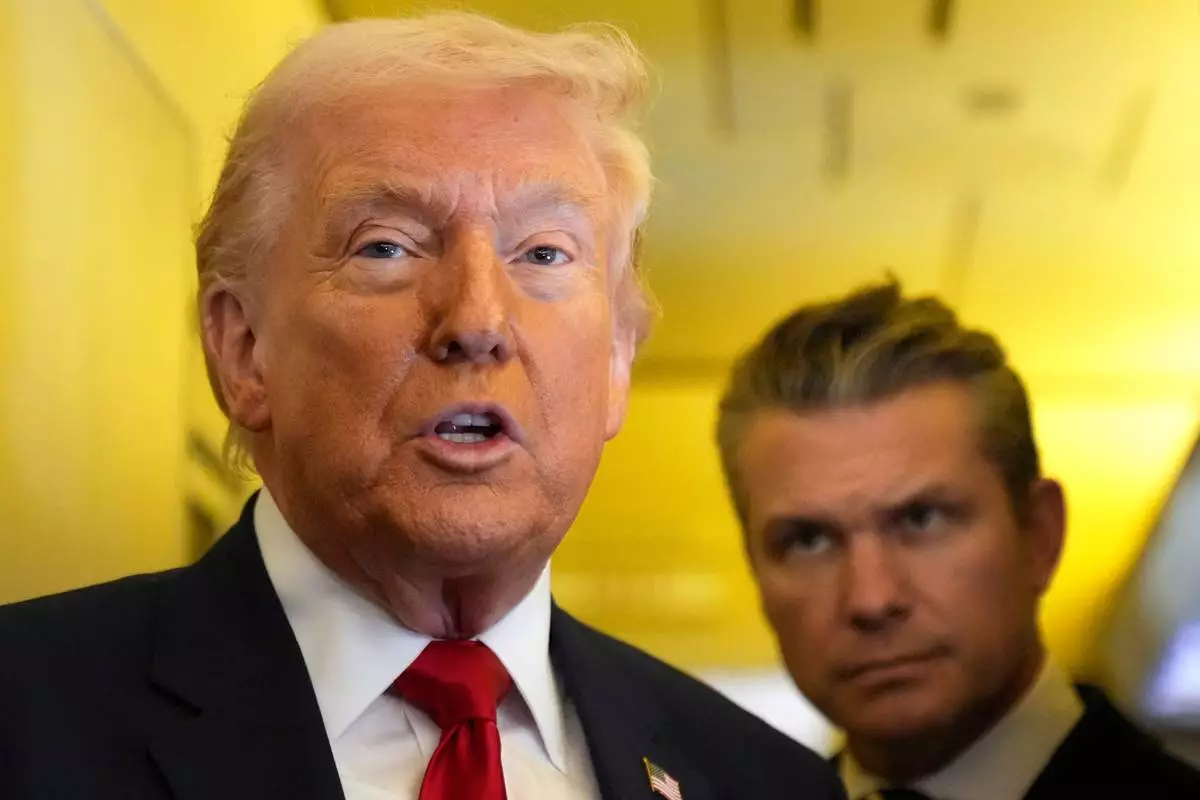
President Donald Trump speaks to reporters as Defense Secretary Pete Hegseth listens while traveling aboard Air Force One en route from Dover Air Force Base, Del., to Miami, Saturday, March 7, 2026. (AP Photo/Mark Schiefelbein)