Farmers in a rural town in eastern Austria are looking to cultivate Mediterranean-style staples as the impact of climate change sees winter weather in their region warm up.
Young entrepreneurs William Markl and Jonathan Beck are among those seeking to turn their local town of Gols in the eastern state of Burgenland into their own version of Tuscany, an Italian region producing some of the finest olive oils in the world for centuries.
This once far-fetched idea is now becoming increasingly feasible given the dramatic climate shifts which are taking place. Since the turn of the 20th century, temperatures in Austria have risen by three degrees Celsius, more than twice the global average.
Previously, olive trees would not survive Austrian winters of the past, but they are now thriving thanks to the milder climate, with some olive groves expanding across several hectares in the area.
"The last 10-15 years, climate change in this region has been so strong that nowadays our winters are so mild that olives just grow here," said Markl.
Over the last three years, Markl and Beck have planted some 400 olive trees and are expecting to steadily increase production.
"If we reach a point where we maybe harvest around 2,000 kilos we will be thinking about producing oil," said Beck.
Beyond olives, some Austrian farmers have also started cultivating rice while winegrowers are testing new heat-resistant grapes. This comes as traditional crops are challenged by increasing periods of heat and drought in the summer months.
Markl, who is half-Chinese, has also started to grow the famously spicy Sichuan peppers and Chinese dates alongside his olive trees, in response to consumers seeking out more exotic foods.
He expects the entire local region to undergo a major transformation in the coming years.
"It's fun to like drive around the region and then you see another new olive grove from somebody else. Like maybe in a few years, 10-20 years, we're going to look like Italy here," Markl said.
While the duo are looking to tap into the potential now afforded by the changing local environment, several farmers worry that Austrian summers are now becoming too dry, even for olive trees.
New irrigation canals which are set to withdraw water from the mighty Danube River could help ease the situation, as the agriculture community looks to stay on top of the ever-evolving climate situation.
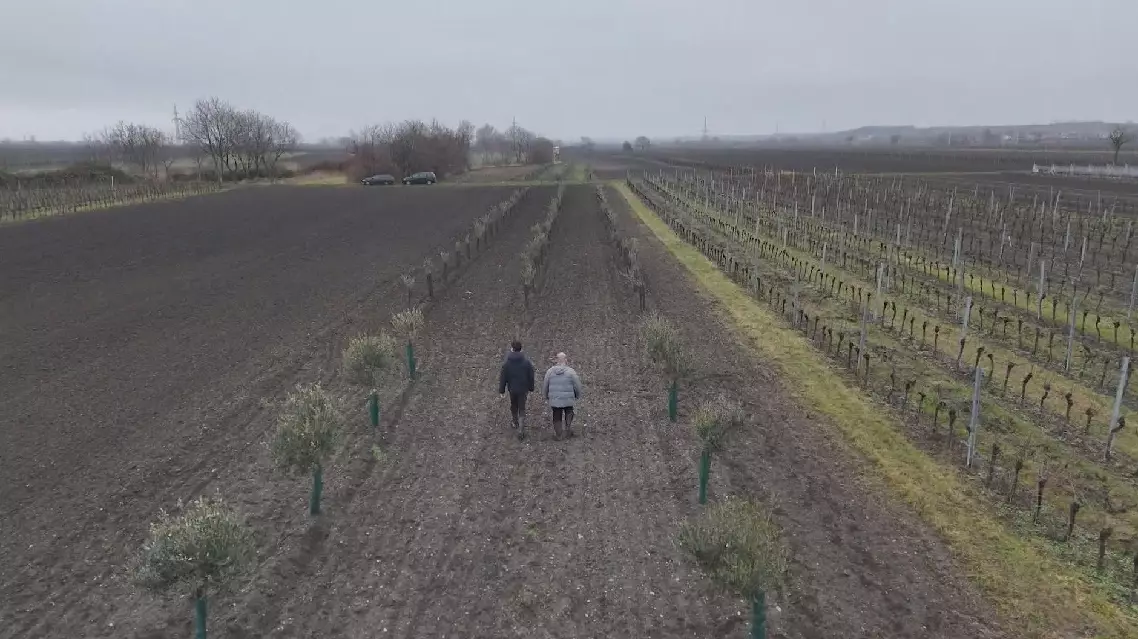
Austrian farmers take advantage of warmer winters to grow olives