Skip to Content Facebook Feature Image

Proposed billionaires' tax in California rattles Silicon Valley, entangles Gov. Newsom

News

Proposed billionaires' tax in California rattles Silicon Valley, entangles Gov. Newsom
News

News

Proposed billionaires' tax in California rattles Silicon Valley, entangles Gov. Newsom

2026-01-14 13:11 Last Updated At:18:56

LOS ANGELES (AP) — A proposed billionaires' tax in California has ignited a political uproar in Silicon Valley, with tech titans threatening to leave the state while Democratic Gov. Gavin Newsom maneuvers to defeat a levy that he fears will lead to an exodus of wealth.

A technology mecca, California has more billionaires than any other state — a few hundred, by some estimates. Nearly half its personal income tax revenue, a financial backbone in the nearly $350 billion budget, comes from the top 1% of earners.

A large health care union is attempting to place a proposal before voters in November that would impose a one-time 5% tax on the assets of billionaires — including stocks, art, businesses, collectibles and intellectual property — to backfill federal funding cuts to health services for lower-income people that were signed by President Donald Trump last year.

In a state with a vast gap between rich and poor, the plan has resulted in a tangle of competing interests at a time when both Democrats and Republicans are struggling to respond to economic anxiety driven by rising costs ahead of this year's midterm elections.

An online war of words has tech leaders pondering a hollowing out of Silicon Valley, and millions of dollars are flowing to political committees engaged in the fight. That includes $3 million from billionaire Peter Thiel, a founder of PayPal, to a committee tied to a business group opposing the tax.

However it's not clear if the proposal will make the ballot, with more than 870,000 petition signatures required for it to qualify.

Although the tax would affect only a minuscule slice of California's roughly 39 million residents, it would siphon money from an immense pool of wealth. If would apply retroactively to billionaires living in the state as of Jan. 1.

At least 25 billionaires listed among Forbes magazine’s 2025 rankings of the world’s 500 wealthiest people either lived in California or had some significant ties to the state, based on a review by The Associated Press. But determining whether they were full-time residents or just frequent visitors could turn into a matter of dispute, since many of them own property elsewhere.

“You are really playing with fire with this one,” said Aaron Levie, CEO of the publicly traded Silicon Valley company Box. He fears that the proposed tax would drive entrepreneurs to look elsewhere to run their companies and launch startups.

Even liberal-leaning tech pioneers would “find it absurd just on pure economic and structural grounds, even if they might agree that the cause itself is very worthy,” said Levie, who is not a billionaire.

Newsom has long opposed state-level wealth taxes, believing such levies would be disadvantageous for the world’s fourth-largest economy. At a time when California is strapped for cash and he is considering a 2028 presidential run, he is trying to block the proposal before it reaches the ballot.

Analysts say an exodus of billionaires could mean a loss of hundreds of millions of tax dollars.

“It’s one of the reasons why Newsom’s path to the Democratic nomination is not going to be an easy one,” Claremont McKenna College political scientist Jack Pitney said. “He’s already facing a (budget) deficit the size of which is uncertain ... and in the years to come, a billionaires tax that could backfire badly.”

The proposal has created a deep rift between Newsom and prominent members of his party's progressive wing, including Vermont Sen. Bernie Sanders, who endorsed it and said it should be a template for other states.

“Our nation will not thrive when so few have so much while so many have so little,” Sanders said on the social platform X.

Another supporter, and a potential 2028 Newsom rival, is Democratic Rep. Ro Khanna, who mocked billionaires for threatening to flee over a tax intended to provide health care for lower-income people.

The measure's lead proponent, the Service Employees International Union, sees the threat of an exodus as exaggerated.

The tax is a “workable response to a crisis created by Congress,” Suzanne Jimenez, chief of staff of SEIU-United Healthcare Workers West, said in a statement. She added that it would “keep emergency rooms open, hospitals staffed and health care systems functioning.”

The California Business Roundtable, meanwhile, is leading an effort to defeat the measure, saying it would “undermine our economy, decimate the state budget, drive investment out of the state and ultimately make everyday life more expensive for working families.”

Fleeing California because of its high cost of living and reputation for stringent regulations started to gather momentum well before the proposed wealth tax began circulating last year.

Elon Musk, the world’s wealthiest man with a $724 billion fortune, bought a home in Texas and moved his electric automaker Tesla to Austin several years ago.

The financial threat posed by the proposed tax apparently is pushing even more of Silicon Valley’s renowned pioneers to curtail their exposure to California and its liberal policies, including Google co-founders Larry Page and Sergey Brin, who moved to the state during the mid-1990s for graduate study at Stanford University.

Page and Brin stepped away from their executive roles years ago but remain the largest shareholders in Google parent company Alphabet, with stakes that account for most of their combined fortunes of $530 billion, according to Forbes.

But both men have begun moving more of their assets to Florida, according to multiple reports. Google, which has been based in Mountain View for the past quarter century, did not respond to an AP inquiry about their recent moves.

Liedtke reported from San Ramon, California. Associated Press writer Sophie Austin in Sacramento, California, contributed.
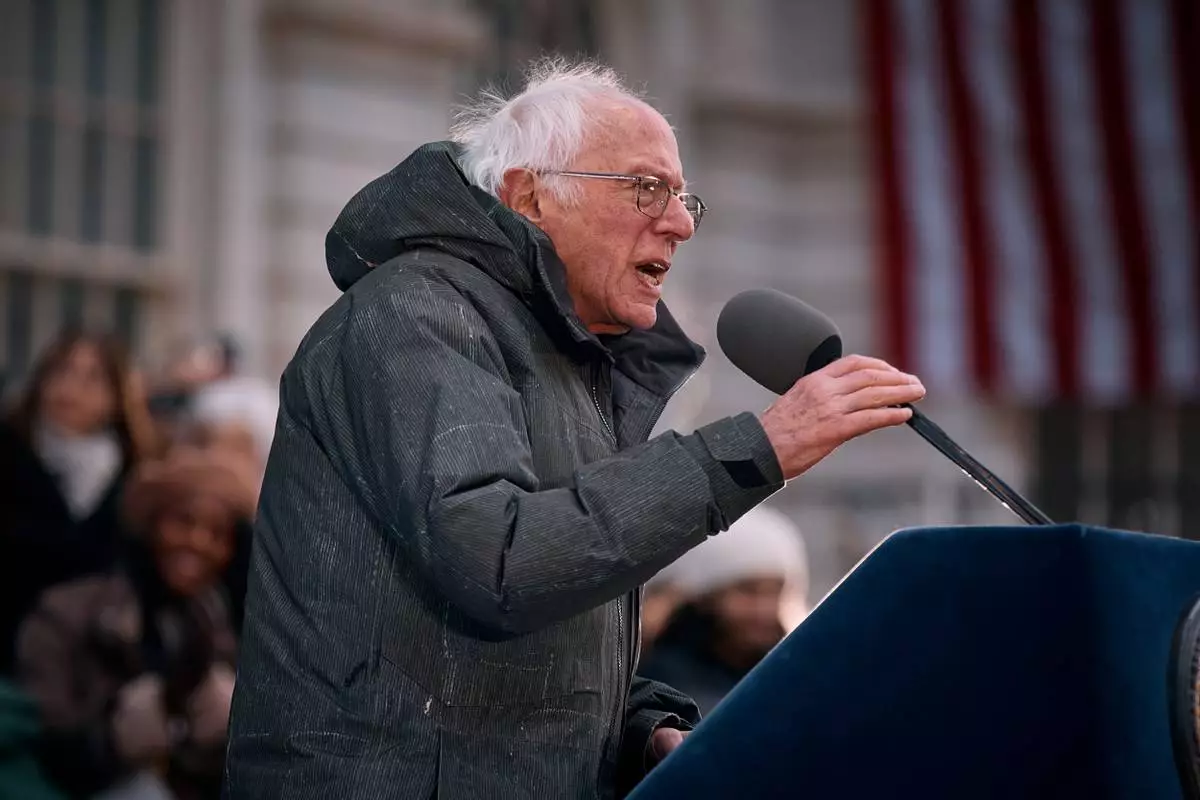
U.S. Sen. Bernie Sanders, I-Vt., speaks during Mayor Zohran Mamdani's inauguration ceremony, Thursday, Jan. 1, 2026, in New York. (AP Photo/Andres Kudacki)
U.S. Sen. Bernie Sanders, I-Vt., speaks during Mayor Zohran Mamdani's inauguration ceremony, Thursday, Jan. 1, 2026, in New York. (AP Photo/Andres Kudacki)

FILE - A woman walks by a giant screen with a logo at an event at the Paris Google Lab on the sidelines of the AI Action Summit in Paris, on Feb. 9, 2025. (AP Photo/Thibault Camus,File)
FILE - A woman walks by a giant screen with a logo at an event at the Paris Google Lab on the sidelines of the AI Action Summit in Paris, on Feb. 9, 2025. (AP Photo/Thibault Camus,File)

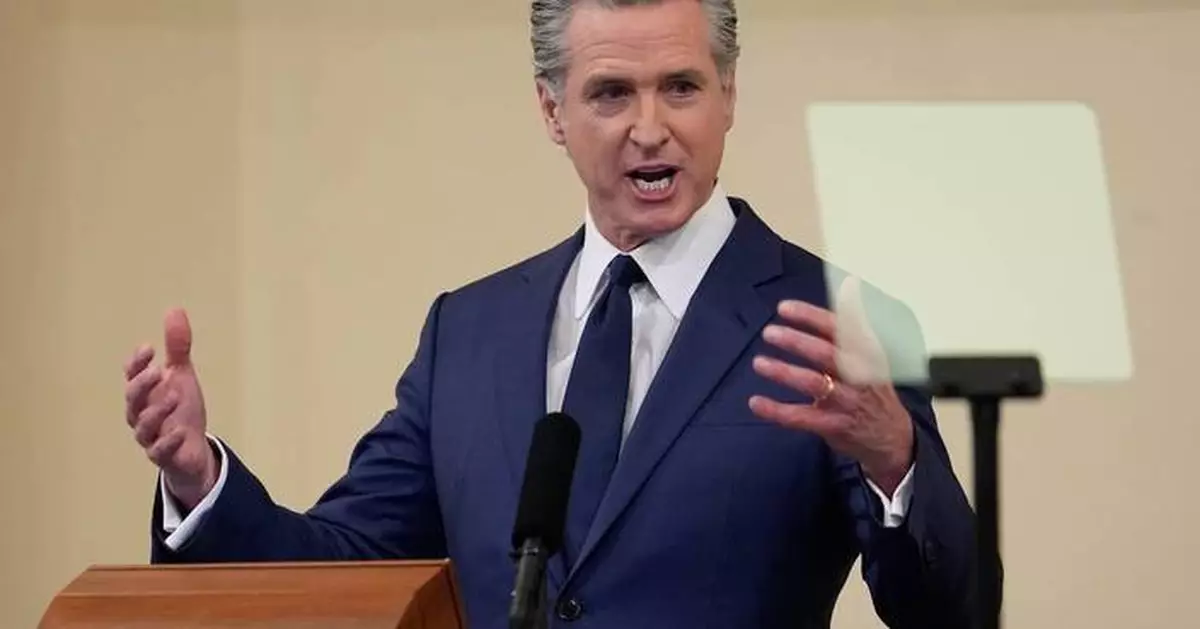
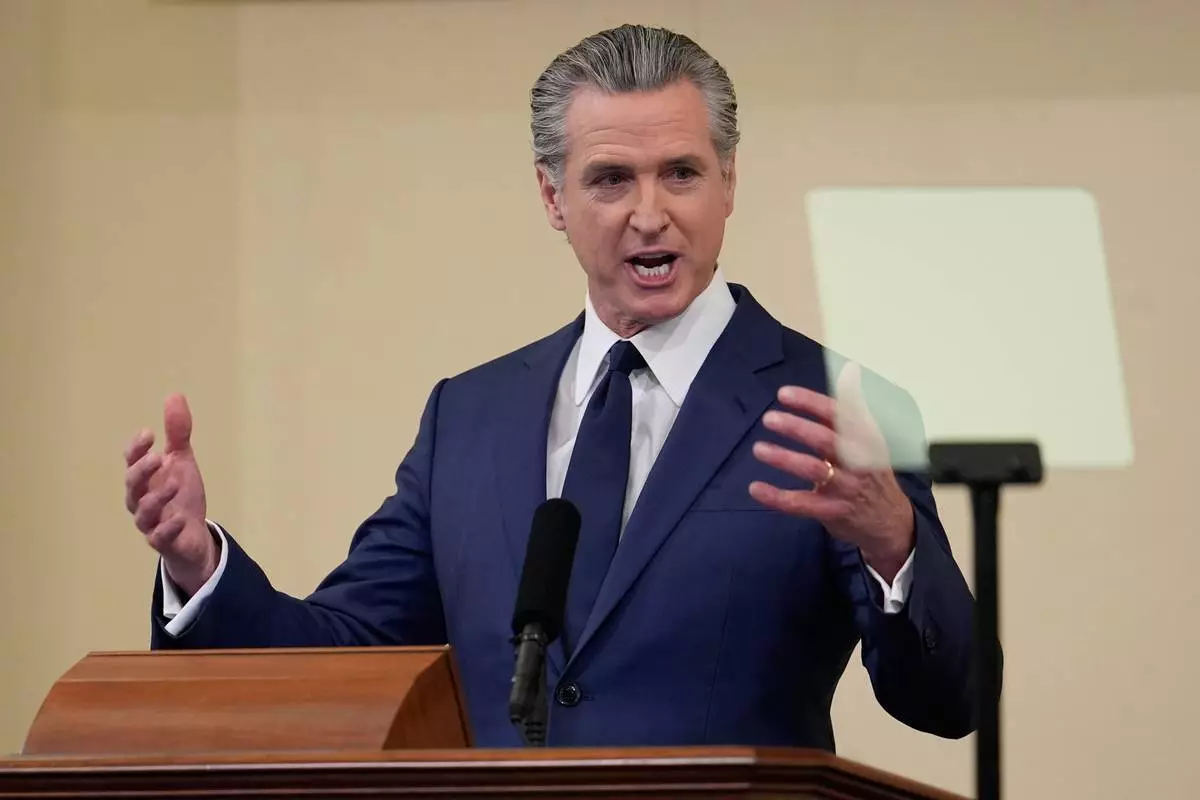
California Gov. Gavin Newsom speaks during his State of the State address Thursday, Jan. 8, 2026, in Sacramento, Calif. (AP Photo/Godofredo A. Vásquez)


California Gov. Gavin Newsom speaks during his State of the State address Thursday, Jan. 8, 2026, in Sacramento, Calif. (AP Photo/Godofredo A. Vásquez)

WASHINGTON (AP) — Senate Republicans voted to dismiss a war powers resolution Wednesday that would have limited President Donald Trump’s ability to conduct further attacks on Venezuela after two GOP senators reversed course on supporting the legislation.

Trump put intense pressure on five Republican senators who joined with Democrats to advance the resolution last week and ultimately prevailed in heading off passage of the legislation. Two of the Republicans — Sens. Josh Hawley of Missouri and Todd Young of Indiana — flipped under the pressure.

Vice President JD Vance had to break the 50-50 deadlock in the Senate on a Republican motion to dismiss the bill.

The outcome of the high-profile vote demonstrated how Trump still has command over much of the Republican conference, yet the razor-thin vote tally also showed the growing concern on Capitol Hill over the president’s aggressive foreign policy ambitions.

Democrats forced the debate after U.S. troops captured Venezuelan leader Nicolás Maduro in a surprise nighttime raid earlier this month

“Here we have one of the most successful attacks ever and they find a way to be against it. It’s pretty amazing. And it’s a shame,” Trump said at a speech in Michigan Tuesday. He also hurled insults at several of the Republicans who advanced the legislation, calling Sen. Rand Paul of Kentucky a “stone cold loser” and Sens. Lisa Murkowski of Alaska and Susan Collins of Maine “disasters.” Those three Republicans stuck to their support for the legislation.

Trump’s latest comments followed earlier phone calls with the senators, which they described as terse. The president’s fury underscored how the war powers vote had taken on new political significance as Trump also threatens military action to accomplish his goal of possessing Greenland.

The legislation, even if it had cleared the Senate, had virtually no chance of becoming law because it would eventually need to be signed by Trump himself. But it represented both a test of GOP loyalty to the president and a marker for how much leeway the Republican-controlled Senate is willing to give Trump to use the military abroad. Republican angst over his recent foreign policy moves — especially threats of using military force to seize Greenland from a NATO ally — is still running high in Congress.

Hawley, who helped advance the war powers resolution last week, said Trump’s message during a phone call was that the legislation “really ties my hands.” The senator said he had a follow-up phone call with Secretary of State Marco Rubio Monday and was told “point blank, we’re not going to do ground troops.”

The senator added that he also received assurances that the Trump administration will follow constitutional requirements if it becomes necessary to deploy troops again to the South American country.

“We’re getting along very well with Venezuela,” Trump told reporters at a ceremony for the signing of an unrelated bill Wednesday.

As senators went to the floor for the vote Wednesday evening, Young also told reporters he was no longer in support. He said that he had extensive conversations with Rubio and received assurances that the secretary of state will appear at a public hearing before the Senate Foreign Relations Committee.

Young also shared a letter from Rubio that stated the president will “seek congressional authorization in advance (circumstances permitting)” if he engaged in “major military operations” in Venezuela.

The senators also said his efforts were also instrumental in pushing the administration to release Wednesday a 22-page Justice Department memo laying out the legal justification for the snatch-and-grab operation against Maduro.

That memo, which was heavily redacted, indicates that the administration, for now, has no plans to ramp up military operations in Venezuela.

“We were assured that there is no contingency plan to engage in any substantial and sustained operation that would amount to a constitutional war,” according to the memo signed by Assistant Attorney General Elliot Gaiser.

Trump has used a series of legal arguments for his campaign against Maduro.

As he built up a naval force in the Caribbean and destroyed vessels that were allegedly carrying drugs from Venezuela, the Trump administration tapped wartime powers under the global war on terror by designating drug cartels as terrorist organizations.

The administration has claimed the capture of Maduro himself was actually a law enforcement operation, essentially to extradite the Venezuelan president to stand trial for charges in the U.S. that were filed in 2020.

Paul criticized the administration for first describing its military build-up in Caribbean as a counternarcotics operation but now floating Venezuela’s vast oil reserves as a reason for maintaining pressure.

"The bait and switch has already happened,” he said.

Lawmakers, including a significant number of Republicans, have been alarmed by Trump’s recent foreign policy talk. In recent weeks, he has pledged that the U.S. will “run” Venezuela for years to come, threatened military action to take possession of Greenland and told Iranians protesting their government that “ help is on its way.”

Senior Republicans have tried to massage the relationship between Trump and Denmark, a NATO ally that holds Greenland as a semi-autonomous territory. But Danish officials emerged from a meeting with Vance and Rubio Wednesday saying a “fundamental disagreement” over Greenland remains.

"What happened tonight is a roadmap to another endless war," Senate Democratic leader Chuck Schumer said at a news conference following the vote.

More than half of U.S. adults believe President Donald Trump has “gone too far” in using the U.S. military to intervene in other countries, according to a new AP-NORC poll.

House Democrats have also filed a similar war powers resolution and can force a vote on it as soon as next week.

Last week's procedural vote on the war powers resolution was supposed to set up hours of debate and a vote on final passage. But Republican leaders began searching for a way to defuse the conflict between their members and Trump as well as move on quickly to other business.

Once Hawley and Young changed their support for the bill, Republicans were able to successfully challenge whether it was appropriate when the Trump administration has said U.S. troops are not currently deployed in Venezuela.

“We’re not currently conducting military operations there,” said Senate Majority Leader John Thune in a floor speech. “But Democrats are taking up this bill because their anti-Trump hysteria knows no bounds.”

Democratic Sen. Tim Kaine, who has brought a series of war powers resolutions this year, accused Republicans of burying a debate about the merits of an ongoing campaign of attacks and threats against Venezuela.

"If this cause and if this legal basis were so righteous, the administration and its supporters would not be afraid to have this debate before the public and the United States Senate," he said in a floor speech.

Associated Press writers Josh Goodman, Lisa Mascaro, Mary Clare Jalonick and Joey Cappelletti in Washington and Bill Barrow in Atlanta contributed to this report.

President Donald Trump speaks during a meeting with oil executives in the East Room of the White House, Friday, Jan. 9, 2026, in Washington. (AP Photo/Evan Vucci)

President Donald Trump speaks during a meeting with oil executives in the East Room of the White House, Friday, Jan. 9, 2026, in Washington. (AP Photo/Evan Vucci)

Sen. Josh Hawley, R-Mo., talks with reporters outside the Senate chamber during a vote at the Capitol, Tuesday, Jan. 6, 2026, in Washington. (AP Photo/Rod Lamkey, Jr.)

Sen. Josh Hawley, R-Mo., talks with reporters outside the Senate chamber during a vote at the Capitol, Tuesday, Jan. 6, 2026, in Washington. (AP Photo/Rod Lamkey, Jr.)

Sen. Rand Paul, R-Ky., speaks with reporters at the Senate Subway on Capitol Hill, Thursday, Jan. 8, 2026, in Washington. (AP Photo/Mariam Zuhaib)

Sen. Rand Paul, R-Ky., speaks with reporters at the Senate Subway on Capitol Hill, Thursday, Jan. 8, 2026, in Washington. (AP Photo/Mariam Zuhaib)

Senate Majority Leader John Thune, R-S.D., speaks during a news conference at the Capitol, Tuesday, Jan. 13, 2026, in Washington. (AP Photo/Rod Lamkey, Jr.)

Senate Majority Leader John Thune, R-S.D., speaks during a news conference at the Capitol, Tuesday, Jan. 13, 2026, in Washington. (AP Photo/Rod Lamkey, Jr.)

Recommended Articles