LONDON--(BUSINESS WIRE)--Jan 14, 2026--
Barrows Connected Store, a global leader in connected retail experiences, today announced the appointment of James Hay as Global Chief Executive Officer, effective January 1, 2026.
This press release features multimedia. View the full release here: https://www.businesswire.com/news/home/20260114778548/en/
In his new role, Hay will lead the global Barrows Connected Store business, encompassing teams in the UK, the United States, and South Africa, advancing the company’s vision for intelligent, connected store environments that transform in-store experiences for retailers, brands, and shoppers.
“James is a natural leader and one of the most trusted operators in our business,” said Brent Taylor, Executive Chairman of Barrows Connected Store. “He has been instrumental in shaping Barrows Connected Store from its early days into the global platform it is today. His deep understanding of retailers, brands, and shoppers combined with his ability to lead with clarity, empathy, and conviction, makes him uniquely suited to lead our next phase of growth. I could not be more excited to see James step into the role of Global CEO.”
Hay brings extensive leadership experience within Barrows, having led the UK and European business for several years as Managing Director before most recently serving as Global Managing Director of Barrows Connected Store. He also brings deep expertise in consumer packaged goods, having held senior brand and product management roles at L’Oréal and Mars. Hay played a pivotal role in the launch and growth of Barrows Connected Store, earning strong respect and support across the organisation and industry.
Barrows Connected Store partners with some of the world’s largest retailers, including Tesco and Kroger, to transform physical stores into intelligent media networks—enabling brands to activate highly impactful, easy-to-deploy digital campaigns at the point of purchase, where nearly 85% of global retail sales still occur.
“This next phase of our journey is exceptionally exciting as we scale formative media solutions alongside technology that is redefining how in-store media works—operationally, commercially, and creatively,” said Hay.
Hay is known for his thoughtful, shopper-led approach to in-store retail media, designing tailored strategies for each retail environment to ensure merchandising, media, and creative work seamlessly together. He is also recognized for fostering a service-oriented culture grounded in listening, empathy, and foresight—delivering world-class customer experiences while driving sustainable growth for clients and partners.
Under Hay’s leadership, Barrows Connected Store looks to strengthen its position at the forefront of retail media and connected commerce by accelerating growth in retail’s digital transformation and driving meaningful change.
About Barrows Connected Store
Barrows Connected Store is a global leader in connected retail technology, helping retailers and brands create smarter, more engaging in-store experiences. By developing intelligent environments, Barrows transforms physical stores into high-performance media channels.
Using the ConnectOS platform, retailers and brands can activate, manage and measure campaigns in real time to deliver meaningful shopper experiences that influence behaviour where it matters most, through dynamic, locally relevant digital content in-store.
With a focus on shopper needs, commercial outcomes and ESG goals, Barrows empowers partners to elevate in-store experiences for sustainable growth and the future of connected commerce.
Learn more at www.barrowscs.com — Moving» Retail » Forward

James Hay, Global Chief Executive Officer, Barrows Connected Store
VIENNA (AP) — Bulgarian singer Dara won the 70th Eurovision Song Contest on Saturday with her infectious party anthem “Bangaranga,” giving the southeast European country its first-ever victory in the competition.
Israeli competitor Noam Bettan came second after a contest in Vienna clouded by protests and a boycott over the country’s participation.
Dara beat 24 other competitors during Saturday’s grand final of the sequin-drenched pop music competition. The song’s infectious beats and tightly choreographed dance routine proved a hit with both national juries in participating countries and viewers around the world, whose votes together decide the winner.
“This is unbelievable,” Dara said at a post-show news conference early Sunday. “I don't even know what's going on."
She thanked “everyone who felt the bangaranga and felt connected to the force.”
The 27-year-old performer is an established name in her homeland, but had not been among the favorites to win. Still, “Bangaranga” is the sort of pop banger that Eurovision does so well, with its irresistible exhortation: “Surrender to the blinding lights. No one’s gonna sleep tonight. Welcome to the riot.”
Dara has spoken about battling with anxiety, and described bangaranga as an inner force that allows people to “drop this mask of chasing perfection.” She has said the song draws on Bulgaria's kukeri, elaborately costumed men who perform ritual dances to ward off evil spirits.
Romania’s Alexandra Căpitănescu came third in the contest with the rock song “Choke Me.” Australian star Delta Goodrem was fourth with the slick midtempo ballad “Eclipse,” and Italian crooner Sal Da Vinci came fifth with “Per Sempre Si,” or “Forever Yes.”
The Finnish duo of pop star Pete Parkkonen and classical violinist Linda Lampenius, who were strong favorite on betting markets, ended up in sixth place.
Eurovision historian Dean Vuletic said the contest often produces surprises.
“Eurovision has never really been a contest for big stars,” Vuletic said. “People like to see the underdog on stage. They like to the artist-in-the-making on stage or an artist from a smaller, poorer country on stage.”
Acts from 25 countries, whittled down from an initial 35, took the stage at the Wiener Stadthalle arena in Vienna to battle for the continent’s pop crown. A fiery Finnish violinist, a Moldovan folk rapper and a Serbian metal band were among the contenders in a campy, colorful contest that has been likened to the World Cup with songs instead of soccer.
And like global sports, it often becomes entangled in politics. The contest has been clouded for a third year by calls for Israel to be excluded over its conflicts in Gaza and elsewhere, with five longtime participants — Spain, the Netherlands, Ireland, Iceland and Slovenia — boycotting in protest.
The political tensions have clouded a contest that over the decades has given the world the perfect pop of ABBA’s “Waterloo” and the ageless “Nel blu, dipinto di blu” — better known as “Volare” — along with a host of Euro-pop party anthems.
The contestants had just 3 minutes to win over viewers. Jets of flame, glitter guns and wind machines worked overtime in a show that celebrated Europe’s eclectic musical tastes.
Serbian metal band Kravina offered hard rock angst, there was brooding choral rock from Albania’s Alis, and Cypriot contestant Antigoni had the crowd on its feet with dance floor filer “Jalla.”
Female solo artists dominated: There was an empowering power ballad from Germany’s Sarah Engels, gospel-tinged R&B from Poland’s Alicja, ethereal beauty from Ukraine’s Leléka, techno-pop from Sweden’s Felicia and opera-pop from France's Monroe.
Male soloists were well represented too, by the likes of Aidan from Malta, Denmark’s Søren Torpegaard Lund, rock-edged singer Jonas Lovv from Norway and Austria's techno-pop performer Cosmo.
Party rap with a political edge was in the house thanks to Satoshi’s ebullient “Viva, Moldova” and Greek artist Akylas’ playful “Ferto.”
British act Look Mum No Computer came last with the jokey novelty song “Eins, Zwei, Drei,” winning just a single point. Bulgaria gained 516 points in the contest’s convoluted voting system, and Israel received 343.
Tension over Israel's participation in Eurovision looks unlikely to subside.
This is the second year in a row that Israel has come second, largely because of a huge vote from the public. Eurovision organizers tightened voting rules this year after allegations the country had mounted an intense lobbying campaign to get votes for its competitor.
Bettan was loudly cheered, though there was a smattering of boos as he performed “Michelle,” a rock ballad in Hebrew, French and English. Earlier in the week, four people were ejected for trying to disrupt his semifinal performance.
Hundreds of protesters against Israel's inclusion marched near the contest arena before Saturday's final, some holding placards saying “Block Eurovision.” Pro-Palestinian groups also staged an outdoor concert on Friday under the banner “No stage for genocide.”
“Inviting Israel on such a beautiful stage as the Eurovision Song Contest stage is an affront to all the people who believe in humanity, who believe in love and togetherness,” said Congolese-Austrian artist Patrick Bongola, one of the organizers.
Despite blow to Eurovision's finances and viewership from the boycott, the contest is eyeing expansion, with a spinoff Eurovision Song Contest Asia due to take place in Bangkok in November.
Vuletic said political controversy is nothing new. The first Eurovision boycott was in 1969 — by Austria, which refused to send a delegation to Spain under dictator Francisco Franco.
“We’ve seen very politicized editions of the contest in the recent past,” Vuletic said. “All of them were very much mired in political controversy, yet Eurovision continues."
Associated Press writers Hilary Fox and Philipp Jenne in Vienna and Maria Sherman in New York contributed to this report.
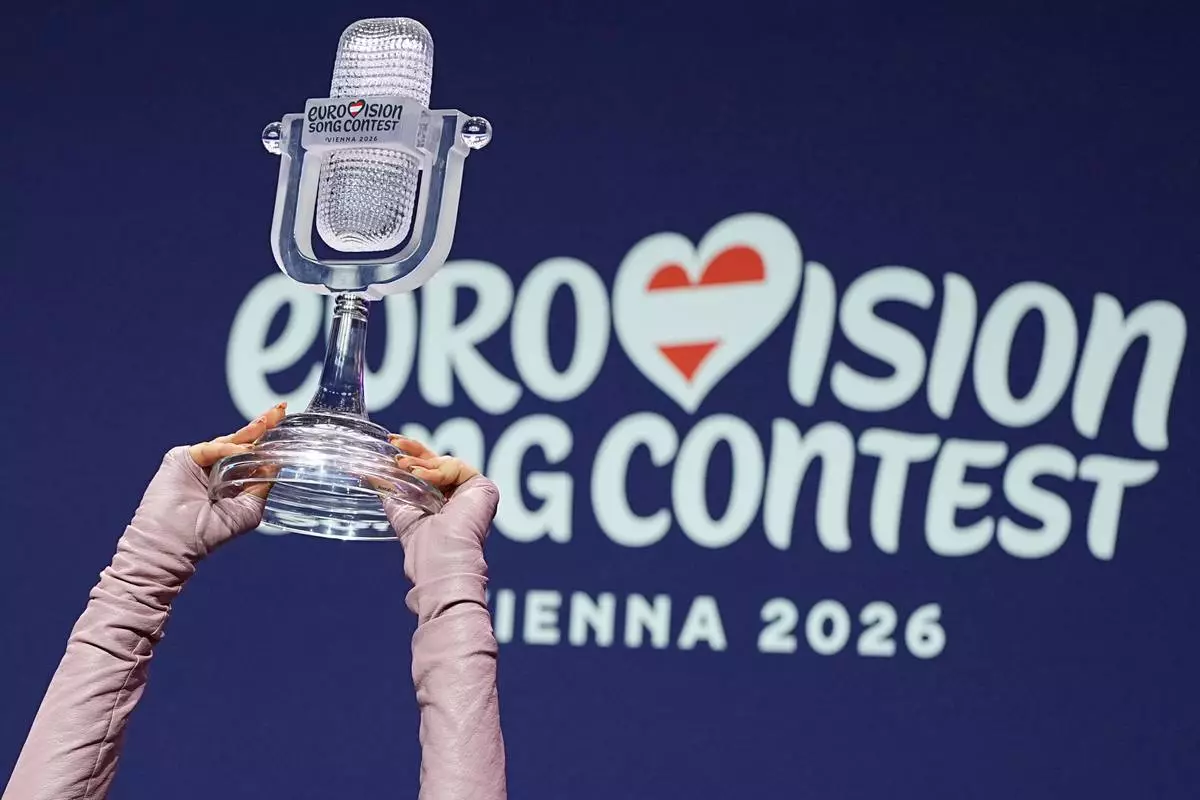
Dara from Bulgaria attends a press conference with the trophy after winning the Grand Final of the 70th Eurovision Song Contest in Vienna, Austria, Sunday, May 17, 2026, she won with the song "Bangaranga".(AP Photo/Martin Meissner)
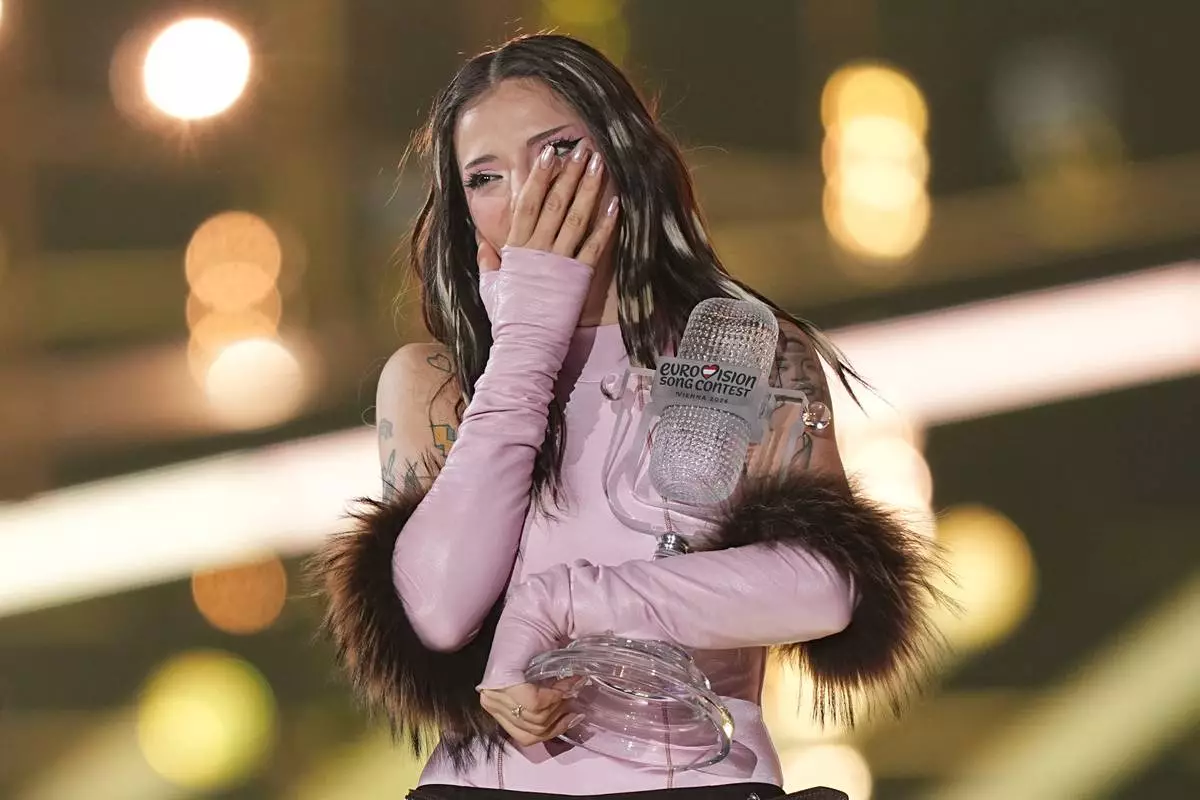
Dara from Bulgaria reacts as she holds the trophy after winning the Grand Final of the 70th Eurovision Song Contest in Vienna, Austria, Sunday, May 17, 2026. (AP Photo/Martin Meissner)
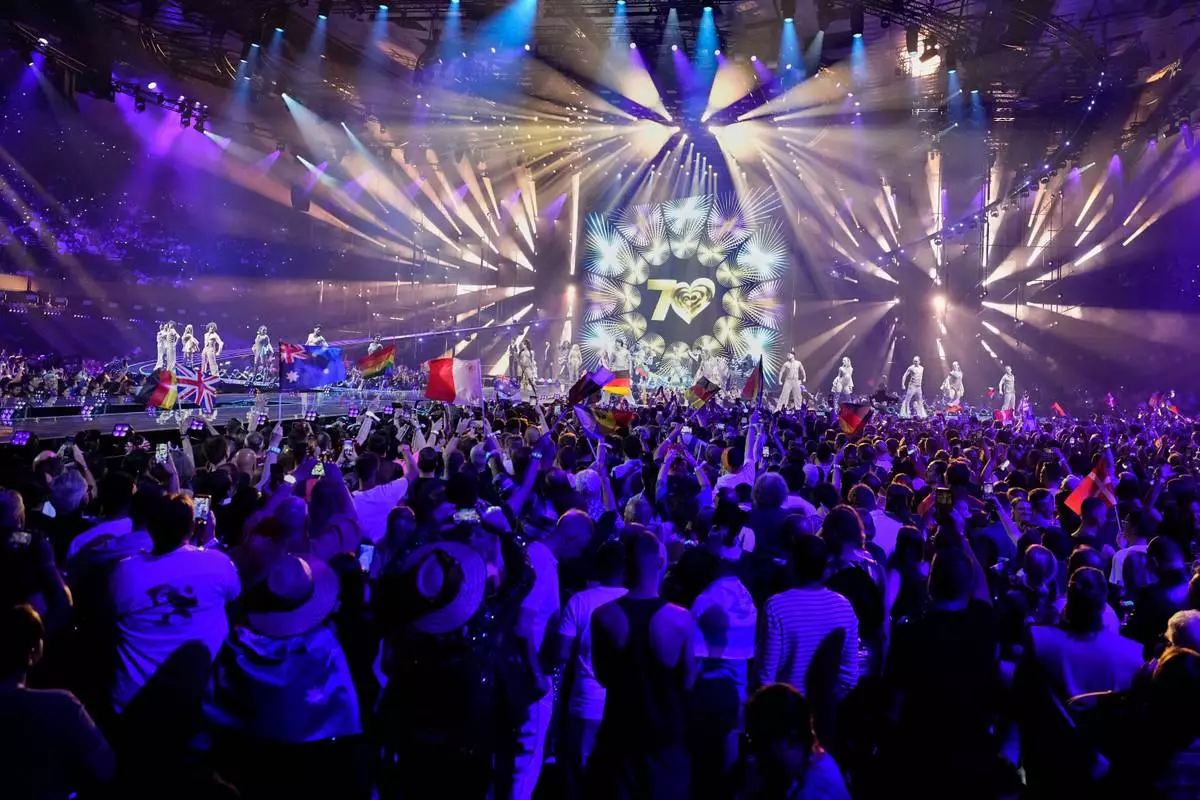
Performers on stage as voting results are collected during the Grand Final of the 70th Eurovision Song Contest in Vienna, Austria, Saturday, May 16, 2026. (AP Photo/Martin Meissner)
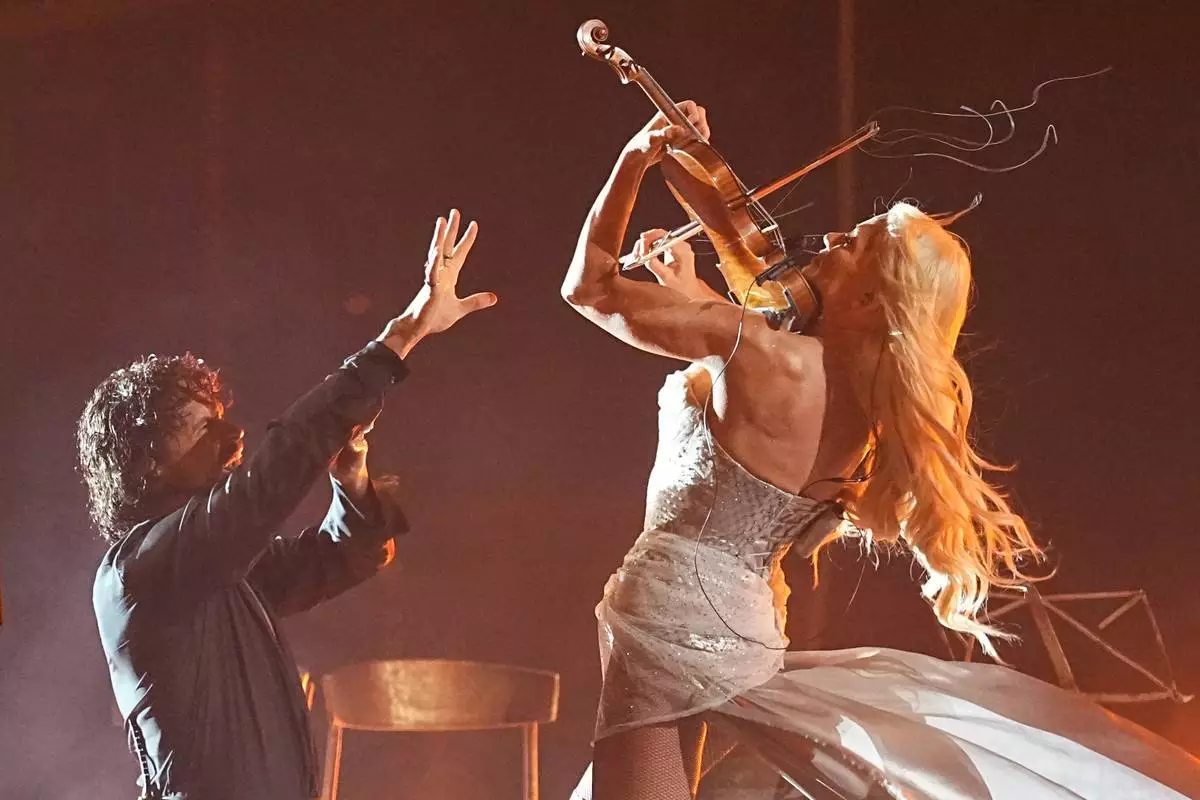
Linda Lampenius and Pete Parkkonen from Finland perform the song "Liekinheitin" during the Grand Final of the 70th Eurovision Song Contest in Vienna, Austria, Saturday, May 16, 2026. (AP Photo/Martin Meissner)
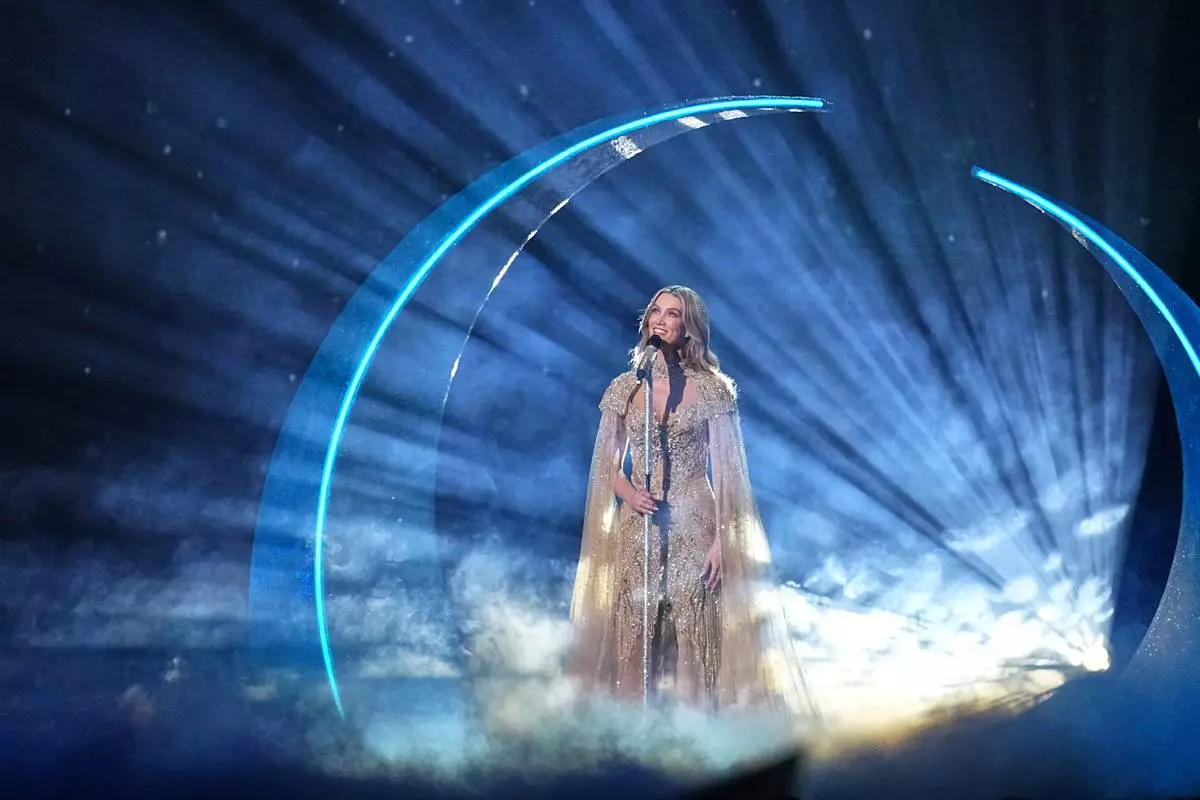
Delta Goodrem from Australia performs the song "Eclipse" during the Grand Final of the 70th Eurovision Song Contest in Vienna, Austria, Saturday, May 16, 2026. (AP Photo/Martin Meissner)
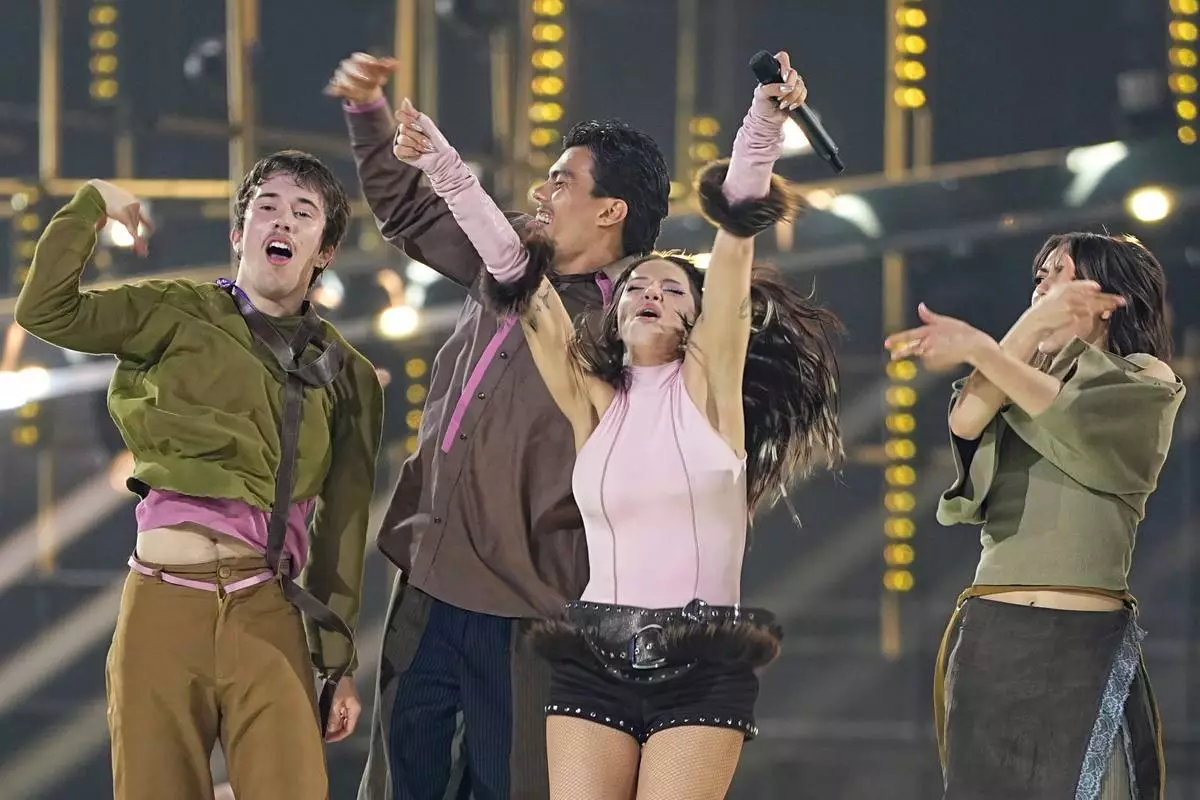
Dara from Bulgaria performs the song "Bangaranga" and celebrate onstage after winning the Grand Final of the 70th Eurovision Song Contest in Vienna, Austria, Sunday, May 17, 2026. (AP Photo/Martin Meissner)
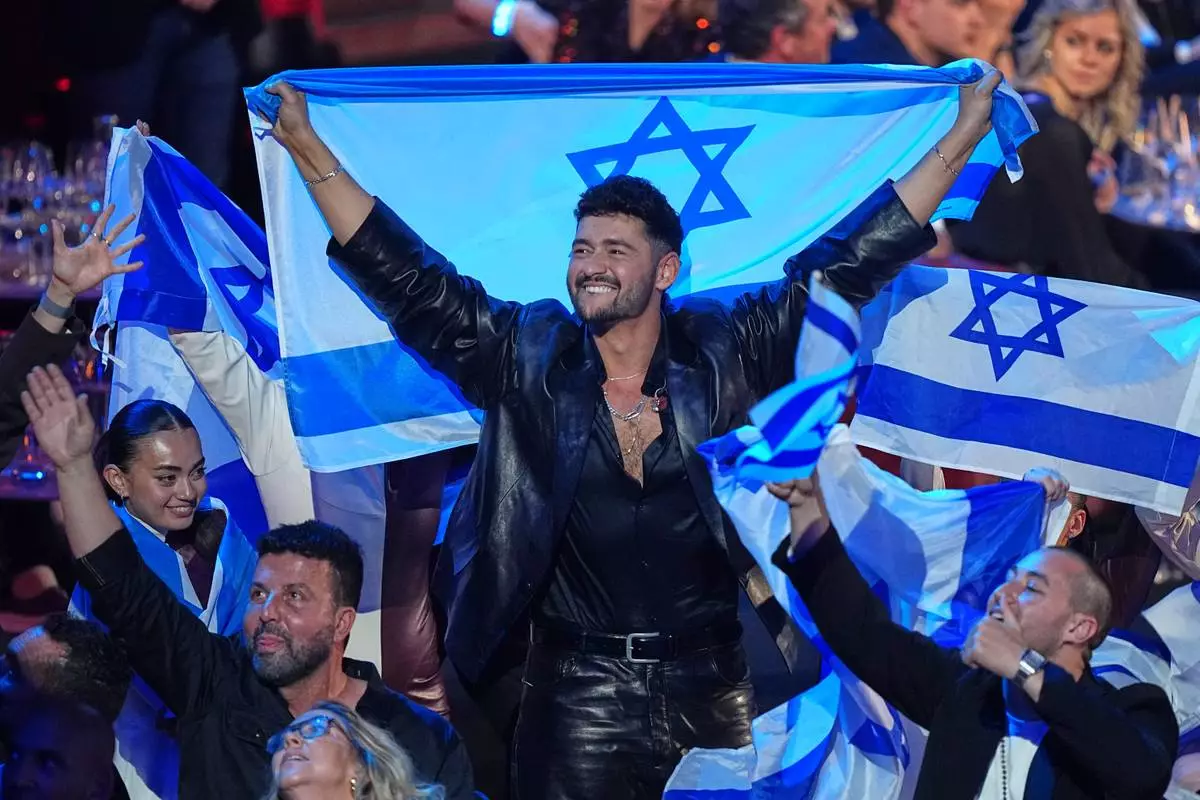
Noam Bettan from Israel, center, reacts as the points are awarded during the Grand Final of the 70th Eurovision Song Contest in Vienna, Austria, Sunday, May 17, 2026. (AP Photo/Martin Meissner)

Dara from Bulgaria holds up the trophy after winning the Grand Final of the 70th Eurovision Song Contest in Vienna, Austria, Sunday, May 17, 2026. (AP Photo/Martin Meissner)
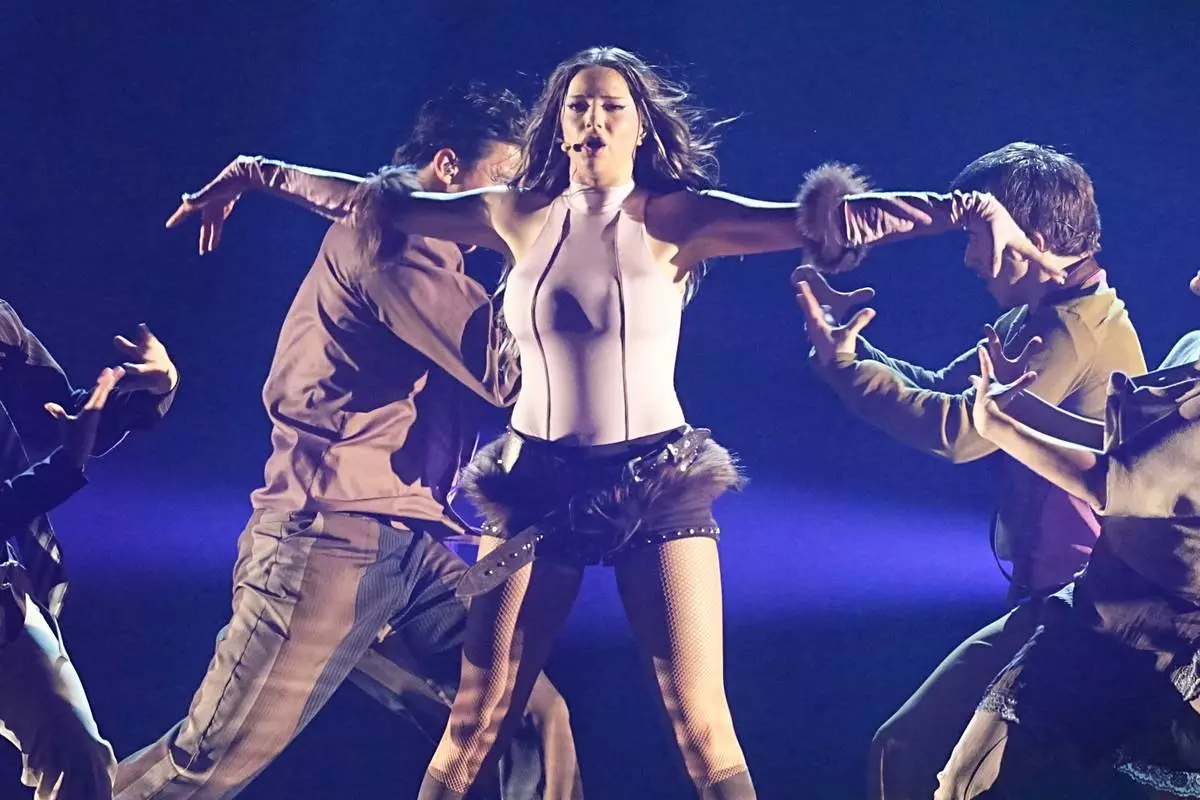
Dara from Bulgaria performs the song "Bangaranga" during the Grand Final of the 70th Eurovision Song Contest in Vienna, Austria, Saturday, May 16, 2026. (AP Photo/Martin Meissner)
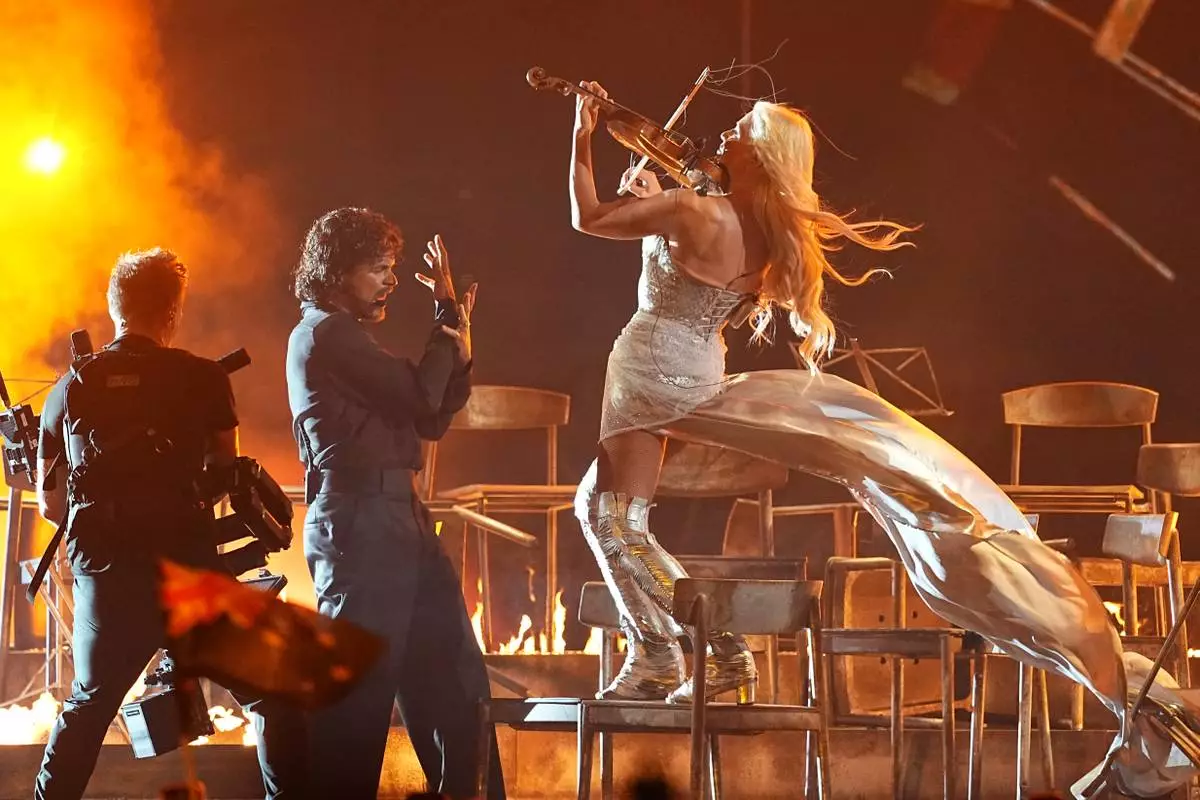
Linda Lampenius and Pete Parkkonen from Finland perform the song "Liekinheitin" during the Grand Final of the 70th Eurovision Song Contest in Vienna, Austria, Saturday, May 16, 2026. (AP Photo/Martin Meissner)
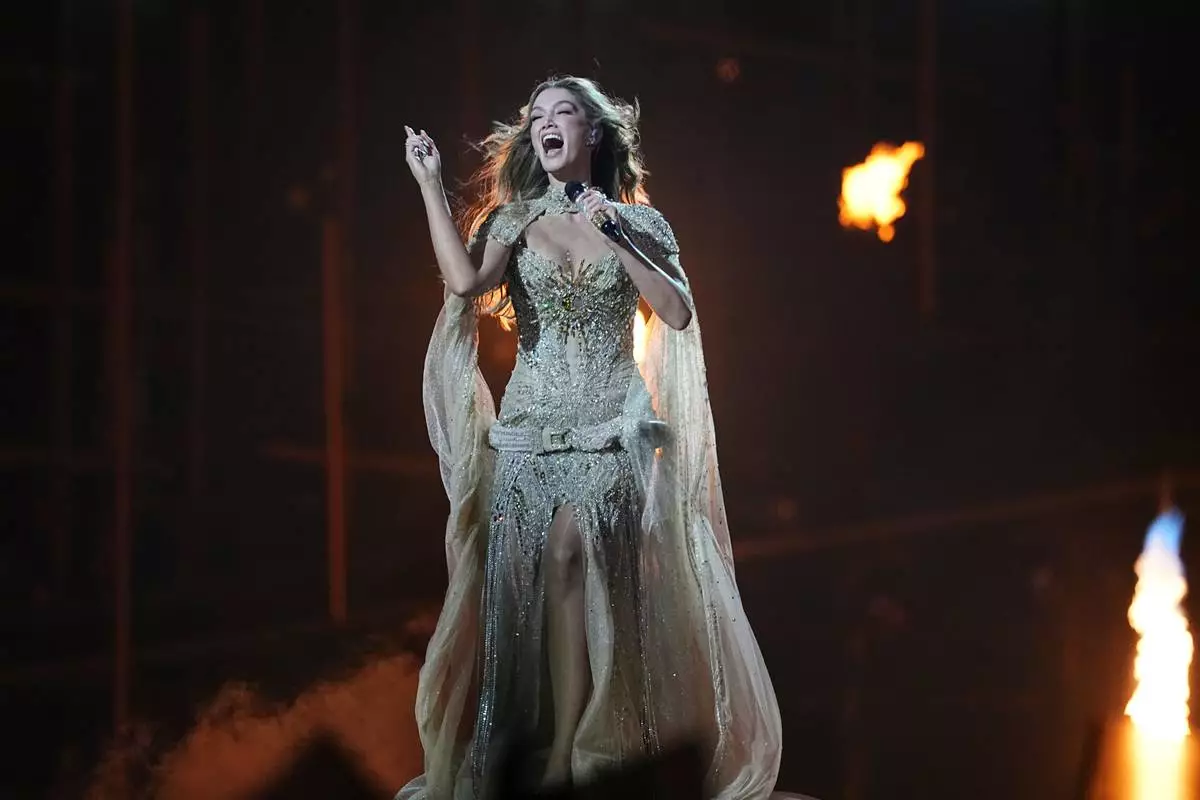
Delta Goodrem from Australia performs the song "Eclipse" during the Grand Final of the 70th Eurovision Song Contest in Vienna, Austria, Saturday, May 16, 2026. (AP Photo/Martin Meissner)
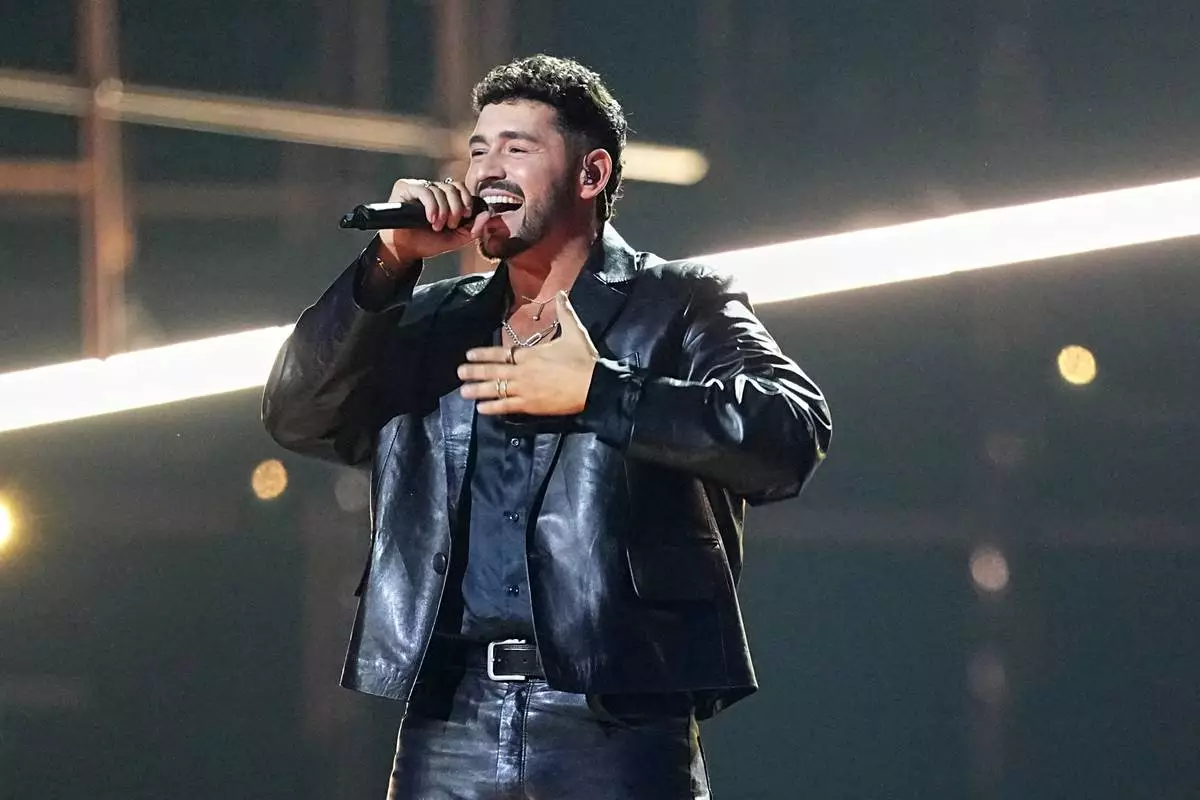
Noam Bettan from Israel performs the song "Michelle" during the Grand Final of the 70th Eurovision Song Contest in Vienna, Austria, Saturday, May 16, 2026. (AP Photo/Martin Meissner)
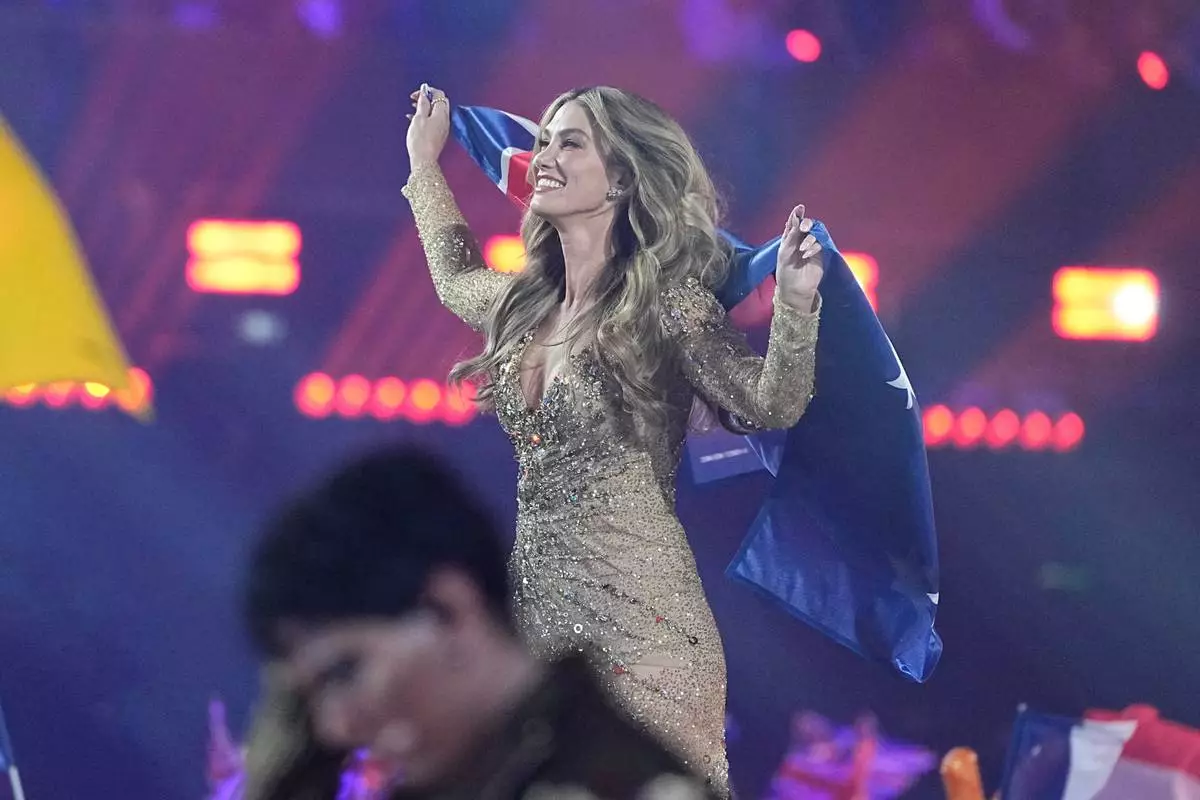
Delta Goodrem from Australia who will perform the song "Eclipse" walks onstage with her counties flag during the Grand Final of the 70th Eurovision Song Contest in Vienna, Austria, Saturday, May 16, 2026. (AP Photo/Martin Meissner)
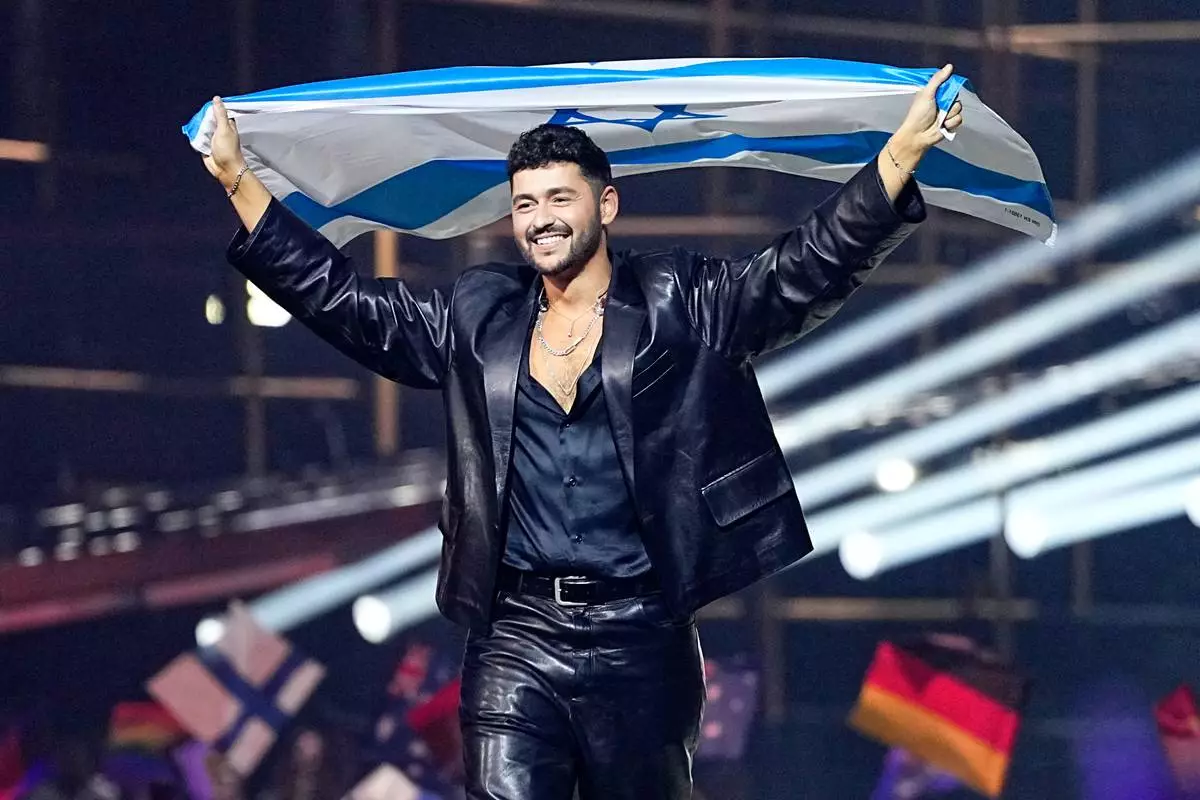
Noam Bettan from Israel walks onto the stage carrying his countries flag ahead of the Grand Final of the 70th Eurovision Song Contest in Vienna, Austria, Saturday, May 16, 2026. (AP Photo/Martin Meissner)
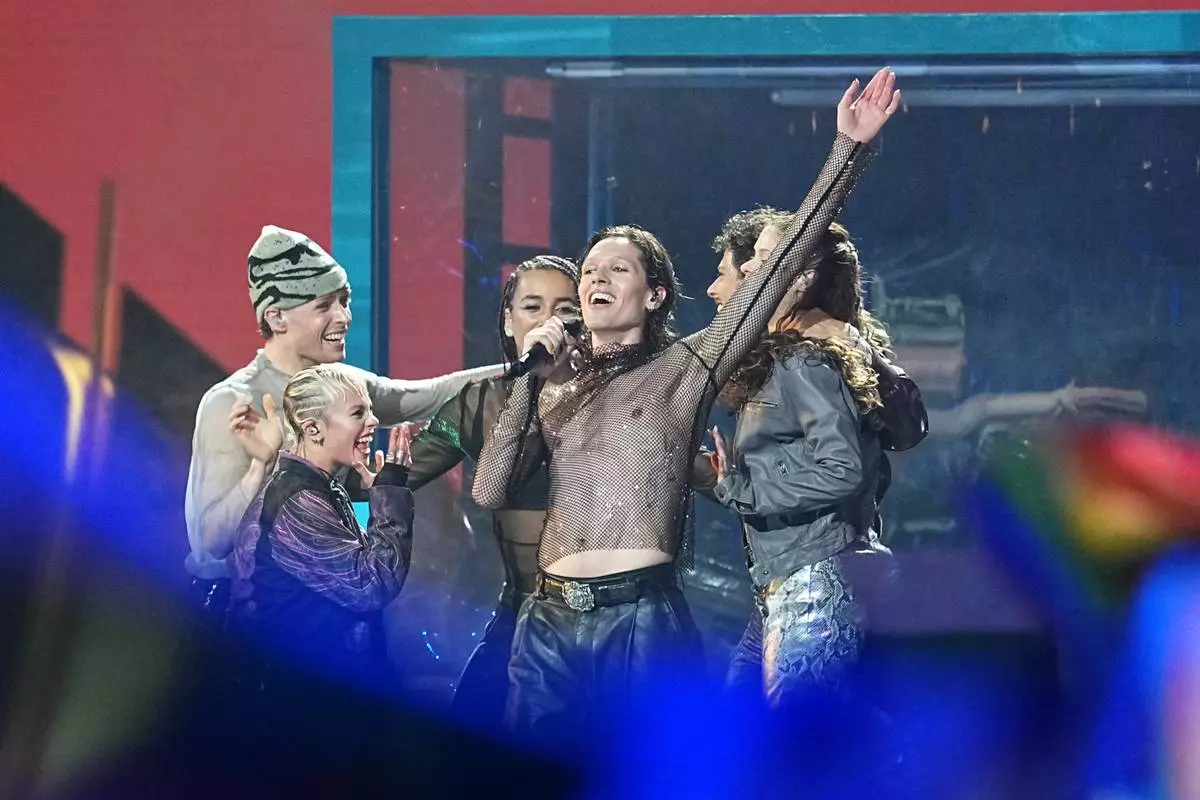
Soren Torpegaard Lund from Denmark performs the song "For Vi Gar Hjem" during the Grand Final of the 70th Eurovision Song Contest in Vienna, Austria, Saturday, May 16, 2026. (AP Photo/Martin Meissner)
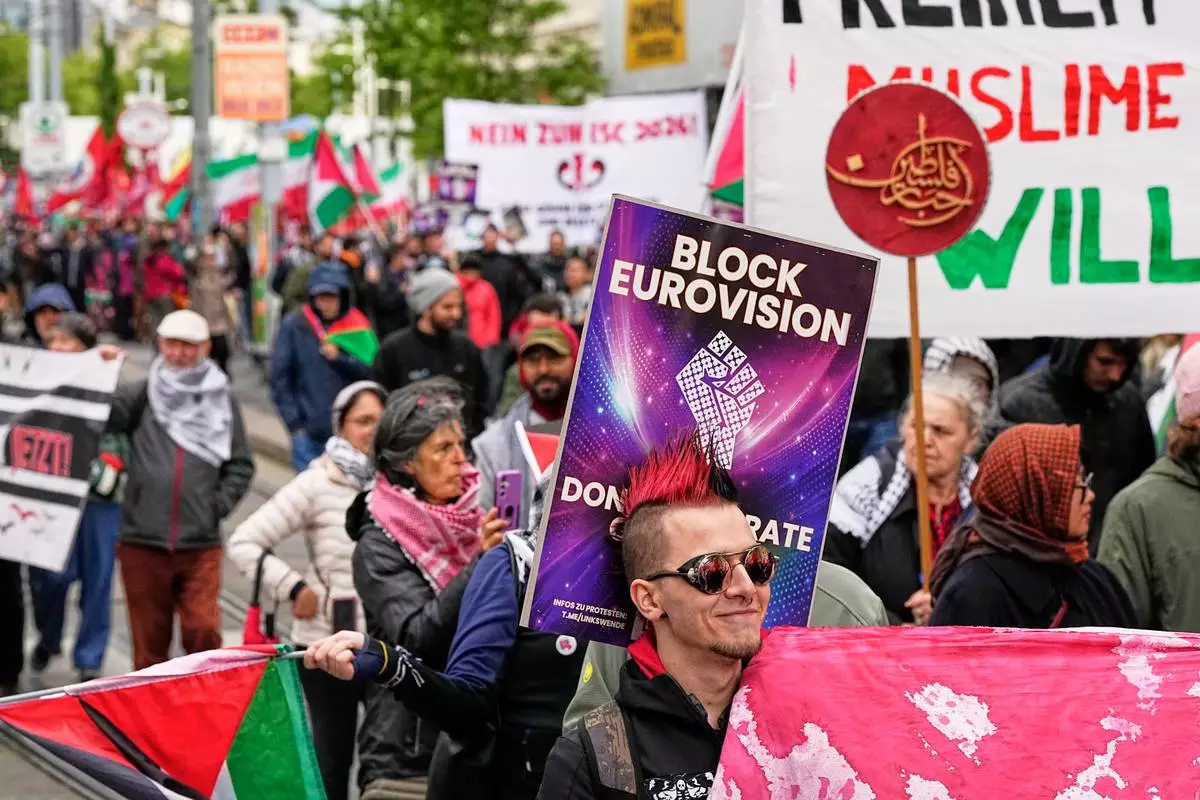
Demonstrators protest against Israel ahead of the Grand Final of the 70th Eurovision Song Contest in Vienna, Austria, Saturday, May 16, 2026. (AP Photo/Martin Meissner)
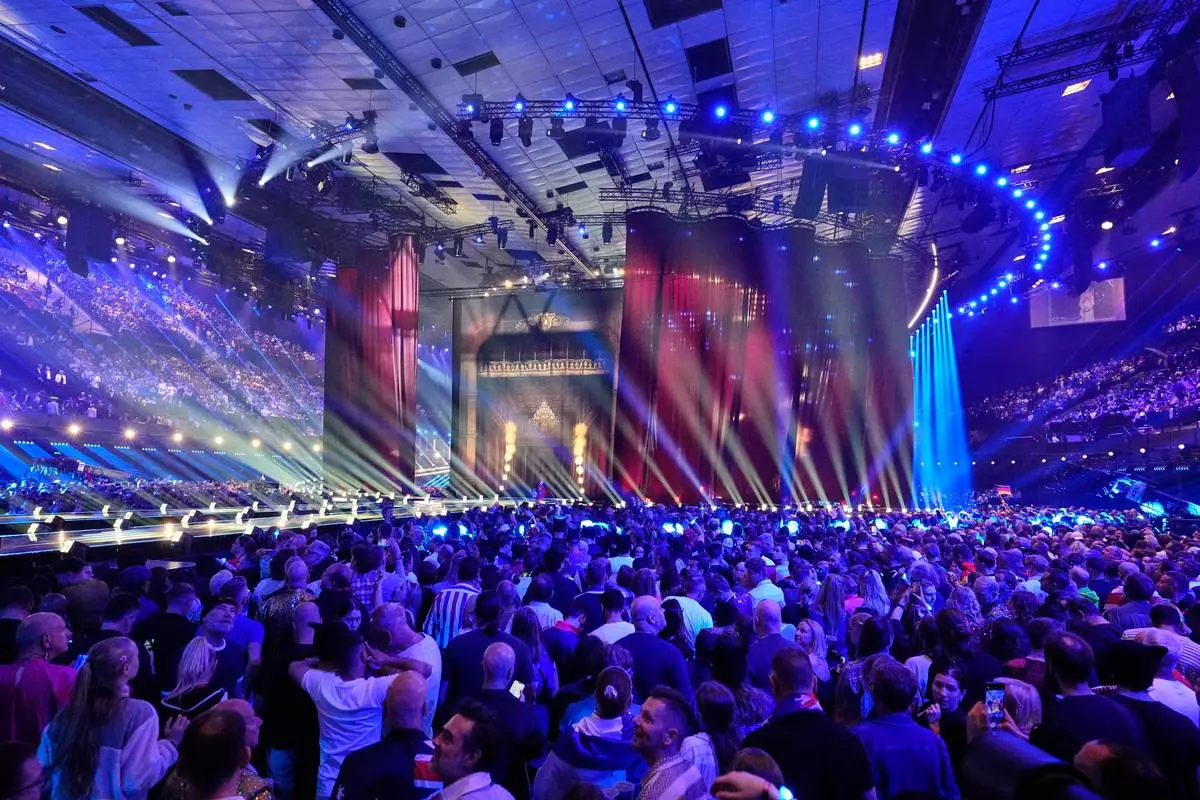
Spectators wait for the start of the Grand Final of the 70th Eurovision Song Contest in Vienna, Austria, Saturday, May 16, 2026. (AP Photo/Martin Meissner)
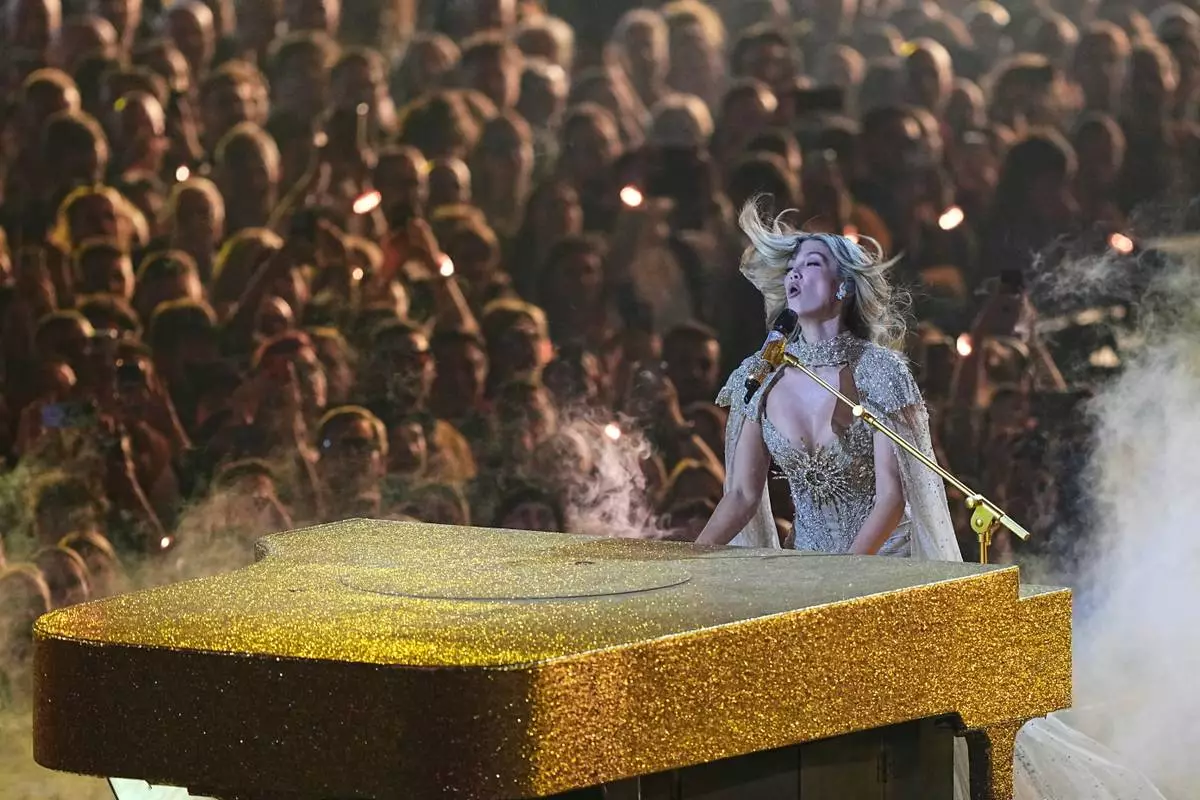
Delta Goodrem from Australia performs the song "Eclipse" during the dress rehearsal for the Grand Final of the 70th Eurovision Song Contest in Vienna, Austria, Friday, May 15, 2026. (AP Photo/Martin Meissner)
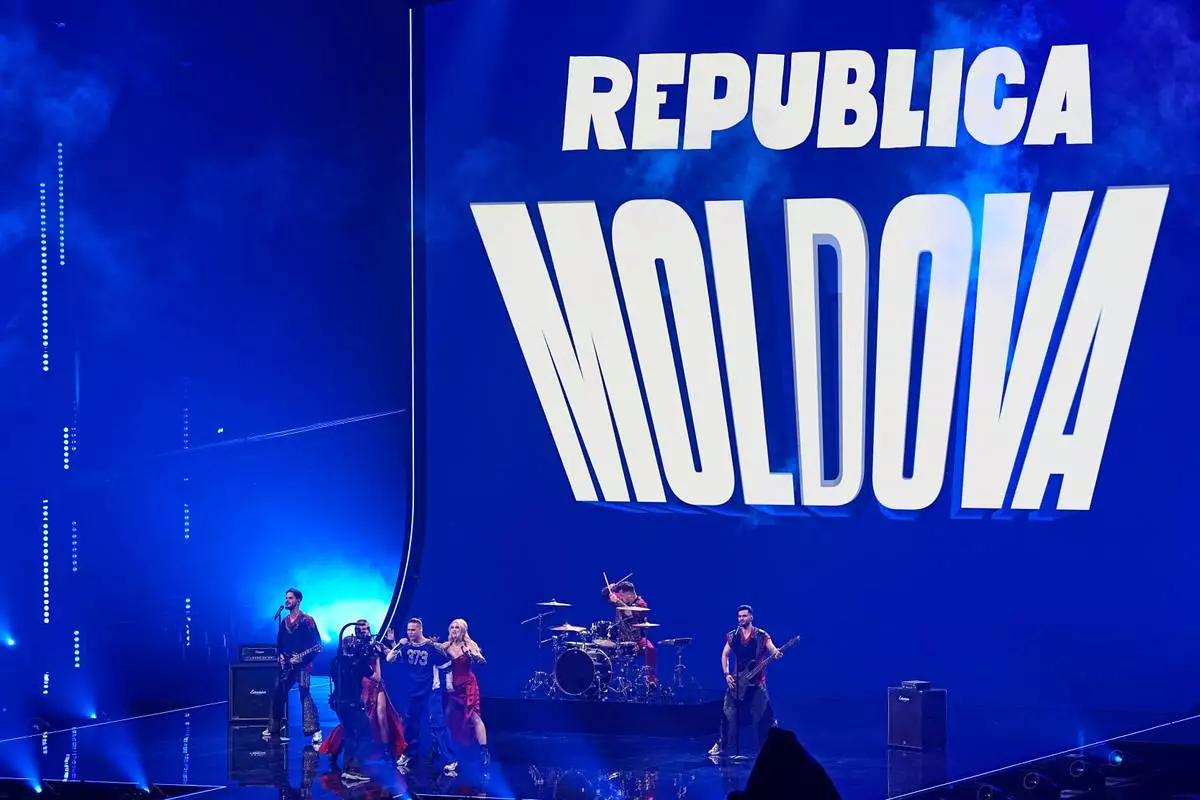
Satoshi from Moldova performs the song "Viva, Moldova!" during the dress rehearsal for the Grand Final of the 70th Eurovision Song Contest in Vienna, Austria, Friday, May 15, 2026. (AP Photo/Martin Meissner)
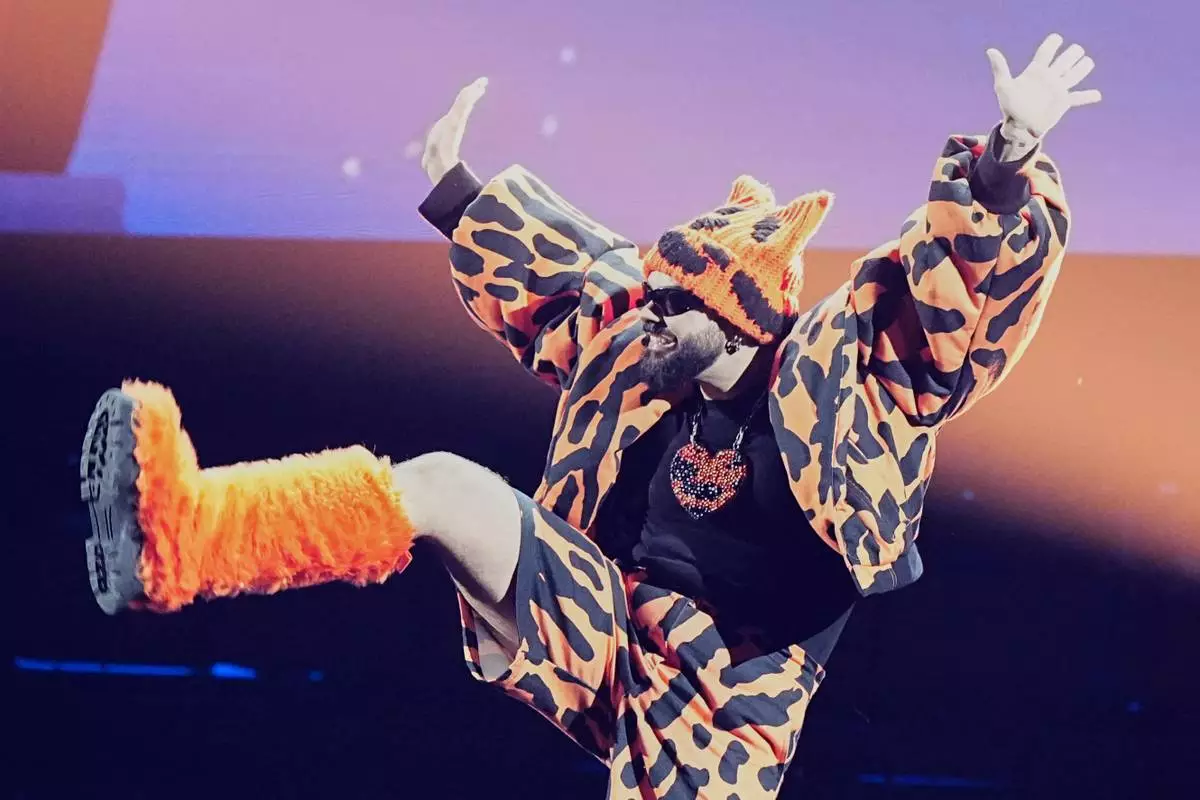
Akylas from Greece performs the song "Ferto" during the dress rehearsal for the Grand Final of the 70th Eurovision Song Contest in Vienna, Austria, Friday, May 15, 2026. (AP Photo/Martin Meissner)
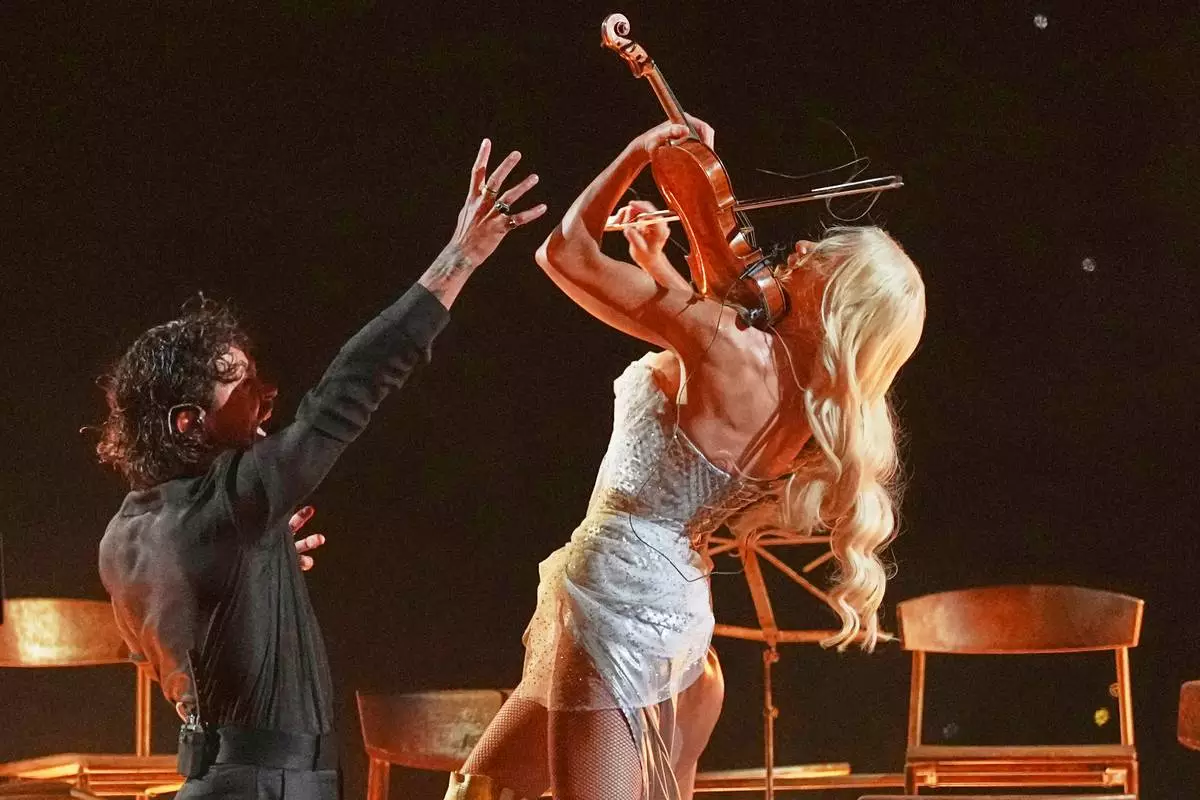
Linda Lampenius and Pete Parkkonen from Finland perform the song "Liekinheitin" during the first semifinal of the 70th Eurovision Song Contest in Vienna, Austria, Tuesday, May 12, 2026. (AP Photo/Martin Meissner)
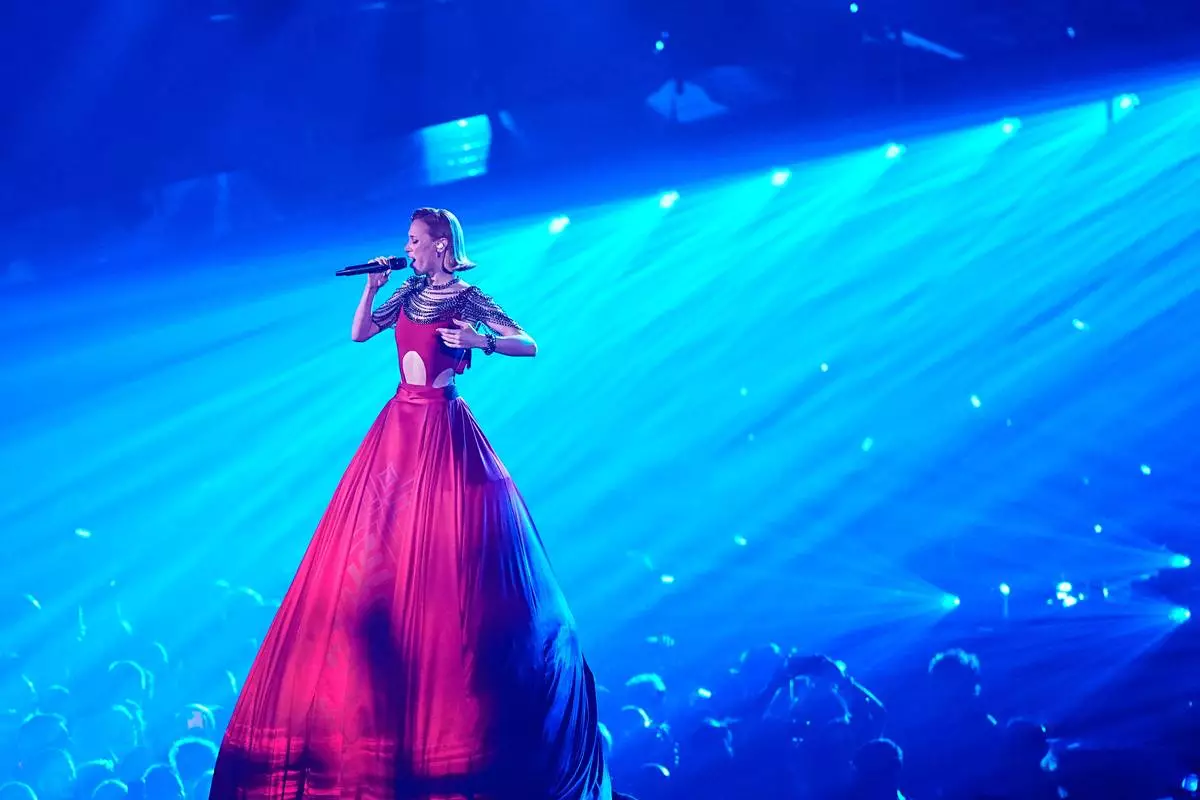
Aliona Moon sings "Viva Moldova" during her featured performance with Satoshi from Moldova during the dress rehearsal for the Grand Final of the 70th Eurovision Song Contest in Vienna, Austria, Friday, May 15, 2026. CORRECTS PERFORMERS NAME TO ALIONA MOON FROM SATOSHI. (AP Photo/Martin Meissner)