Skip to Content Facebook Feature Image

Alpaca Raises $150 Million at a $1.15B Valuation to Build the Global Standard for Brokerage Infrastructure

Business

Alpaca Raises $150 Million at a $1.15B Valuation to Build the Global Standard for Brokerage Infrastructure
Business

Business

Alpaca Raises $150 Million at a $1.15B Valuation to Build the Global Standard for Brokerage Infrastructure

2026-01-14 20:00 Last Updated At:01-15 17:06

SAN MATEO, Calif.--(BUSINESS WIRE)--Jan 14, 2026--

Alpaca, a global leader in brokerage infrastructure whose APIs empower partners like Kraken, SBI Securities, and Dime!, today announced it has raised a $150 million Series D led by Drive Capital that values the company at $1.15 billion. Drive Capital’s Co-Founder and Partner, Chris Olsen, will join Alpaca’s Board of Directors as part of the investment. The company also secured a $40 million line of credit, further strengthening its balance sheet as it continues to expand globally.

This press release features multimedia. View the full release here: https://www.businesswire.com/news/home/20260114169086/en/

“Our mission is to open financial services to everyone on the planet,” said Yoshi Yokokawa, Co-Founder and CEO of Alpaca. “We’re proud to contribute to Saudi Vision 2030 by building the global standard for brokerage infrastructure, including infrastructure that enables Shariah-compliant investing, empowering partners to build financial services that align with Islamic law. This raise gives us the fuel we need to continue delivering infrastructure that serves our global enterprise partners and active traders.”

Alpaca’s scalable APIs and self-clearing custody enable global access to stocks, ETFs, options, crypto and fixed income products. Today, Alpaca has partnered with over 300 organizations in more than 40 countries — supporting millions of brokerage accounts at leading financial institutions and fintechs. Late last year, Alpaca revealed that it had powered 94% of all tokenized U.S. equities and ETFs in its tokenization report, underscoring its central role in the convergence of fiat and on-chain rails. That momentum has translated into strong business performance, with the company more than doubling its year-over-year revenue.

In addition to Drive Capital, participants in the round included Citadel Securities; Opera Tech Ventures (VC arm of BNP Paribas); MUFG Innovation Partners; Flat Capital (with Sebastian Siemiatkowski, CEO of Klarna, as controlling UBO and Chairman); DRW Venture Capital; Kraken; Altered Capital, a leading Australasian venture capital and private equity manager; X&KSK, the firm launched by Japanese soccer legend and technology investor, Keisuke Honda; Bank Muscat in the Middle East; and the global investment fund of Endeavor, Endeavor Catalyst. Returning investors include Portage, Horizons Ventures, Social Leverage, Unbound, Diagram, and Derayah Financial, whose continued participation signals long-term conviction in Alpaca’s trajectory. The round also includes angel investor participation from Revolut’s CTO, Vlad Yatsenko.

“Some of the most transformative companies in technology are the ones behind the scenes powering entire industries,” said Olsen, Co-Founder and Partner of Drive Capital. “Just as Stripe and Plaid rewired payments and financial data pipes, Alpaca is redefining how global investing infrastructure works. They’re building the foundational layer that modern financial institutions will depend on for the next decade.”

Alpaca intends to deploy the proceeds to further strengthen its global investment infrastructure in support of sophisticated financial institutions and institutional trading clients worldwide. In parallel with expanding and enhancing its existing asset offerings, the company is establishing local market presence and securing regulatory licenses in key jurisdictions, advancing institutional-grade trading capabilities, bridging traditional and on-chain financial ecosystems, and reinforcing cybersecurity and platform resilience. These initiatives underscore Alpaca’s commitment to maintaining its leadership role in the ongoing modernization of global capital markets.

"Alpaca's infrastructure has been a core pillar to Sarwa's expansion since 2021. Our partnership allowed us to connect global markets and MENA investors. By integrating with their APIs, we've become a comprehensive investment powerhouse. Stocks, ETFs, crypto, bonds, and so much more. We became Alpaca's first partner to offer options trading globally," says Mark Chahwan, Co-Founder and Group CEO at Sarwa. "Our mission is to democratize investing for our community. We're proud to grow with a partner who shares our obsession with transparency and innovation."

2025 was a breakout year for Alpaca. The company dramatically expanded its product suite with multi-leg options, fully paid securities lending, fixed-income, and 24/5 U.S. stock trading. Alpaca introduced High-Yield Cash through an interest-bearing sweep program, and announced its Instant Tokenization Network at TOKEN2049 Singapore with launch partners including xStocks, Dinari, Ondo Finance, and The Solana Foundation. The company expanded its regulatory and clearing footprint by securing OCC and FICC memberships. Alpaca also became a Nasdaq Exchange Member and added support for embeddable Shariah-compliant investing solutions across savings accounts, options, and instant funding.

About Alpaca

Alpaca is a US-headquartered, self-clearing broker-dealer and a global leader in brokerage infrastructure APIs providing access to stocks, ETFs, options, fixed income, and crypto. Alpaca delivers embeddable finance solutions for tokenization, fully paid securities lending, high-yield cash, 24/5 trading, Shariah-compliant investing and more. Today, Alpaca powers over 9 million brokerage accounts across hundreds of fintechs and institutions in 40+ countries with over $321M in funding. For more information, visit: alpaca.markets

AlpacaDB, Inc., the parent company of Alpaca Securities LLC and Alpaca Crypto LLC, provides services and technology, including the brokerage infrastructure API supporting Alpaca’s financial services.

Securities brokerage services are provided by Alpaca Securities LLC, memberFINRA/SIPC, a wholly owned subsidiary of AlpacaDB, Inc.

Cryptocurrency services are provided by Alpaca Crypto LLC, a FinCEN-registered MSB (NMLS #2160858) and subsidiary of AlpacaDB, Inc.

Alpaca's Instant Tokenization Network is owned and developed by AlpacaDB, Inc. and Alpaca Crypto LLC. Neither entity is the issuer of, or involved in, the tokenization of any assets.

Alpaca does not make any representation that its products or services are Shariah-compliant.

This is not an offer, solicitation of an offer, or advice to buy or sell securities or cryptocurrencies or open a brokerage account or cryptocurrency account in any jurisdiction where Alpaca Securities or Alpaca Crypto, respectively, are not registered or licensed, as applicable.

All investments involve risk; for more information, please see ourDisclosure Library.
Alpaca Raises $150 Million at a $1.15B Valuation to Build the Global Standard for Brokerage Infrastructure
Alpaca Raises $150 Million at a $1.15B Valuation to Build the Global Standard for Brokerage Infrastructure
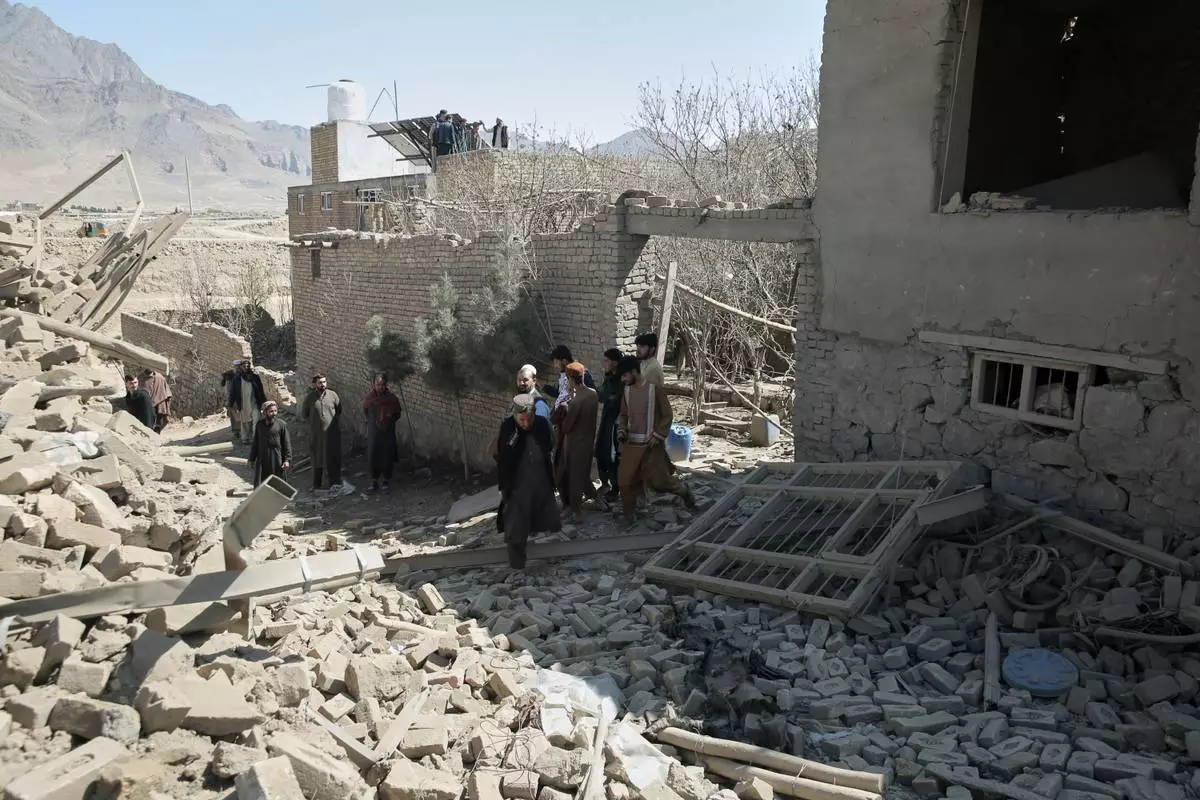
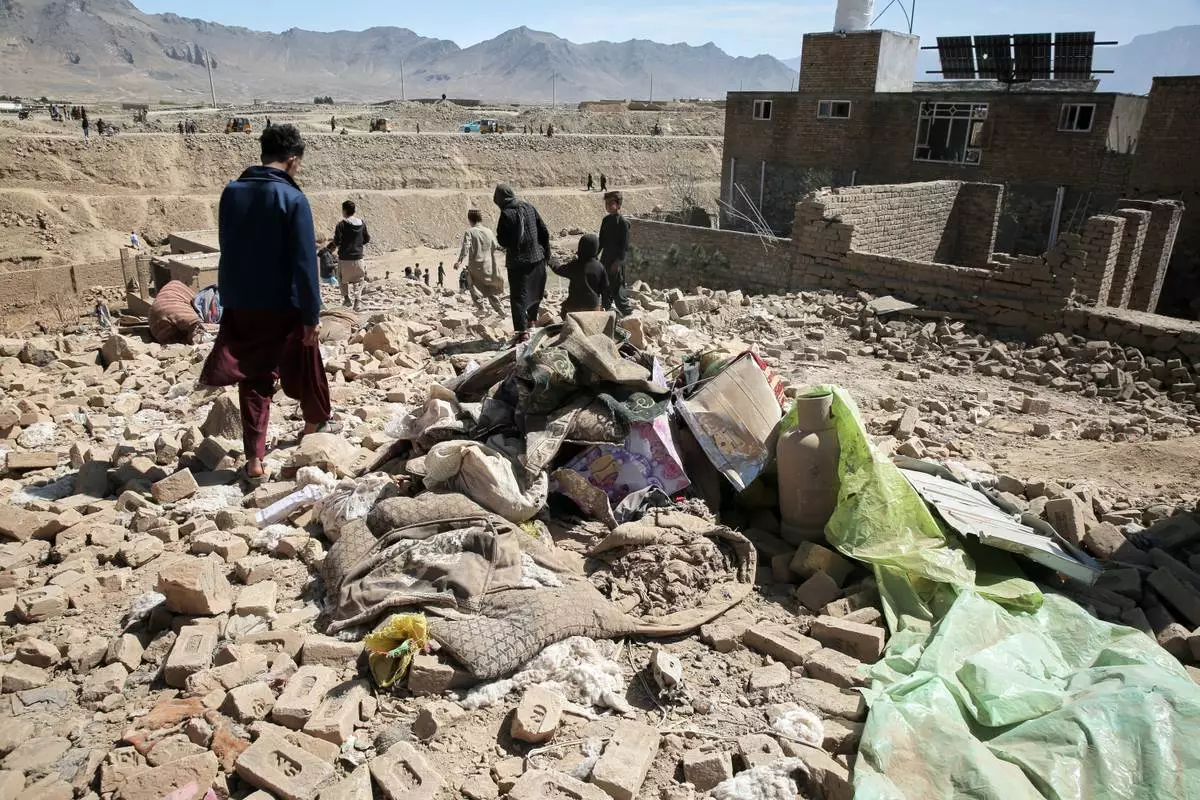
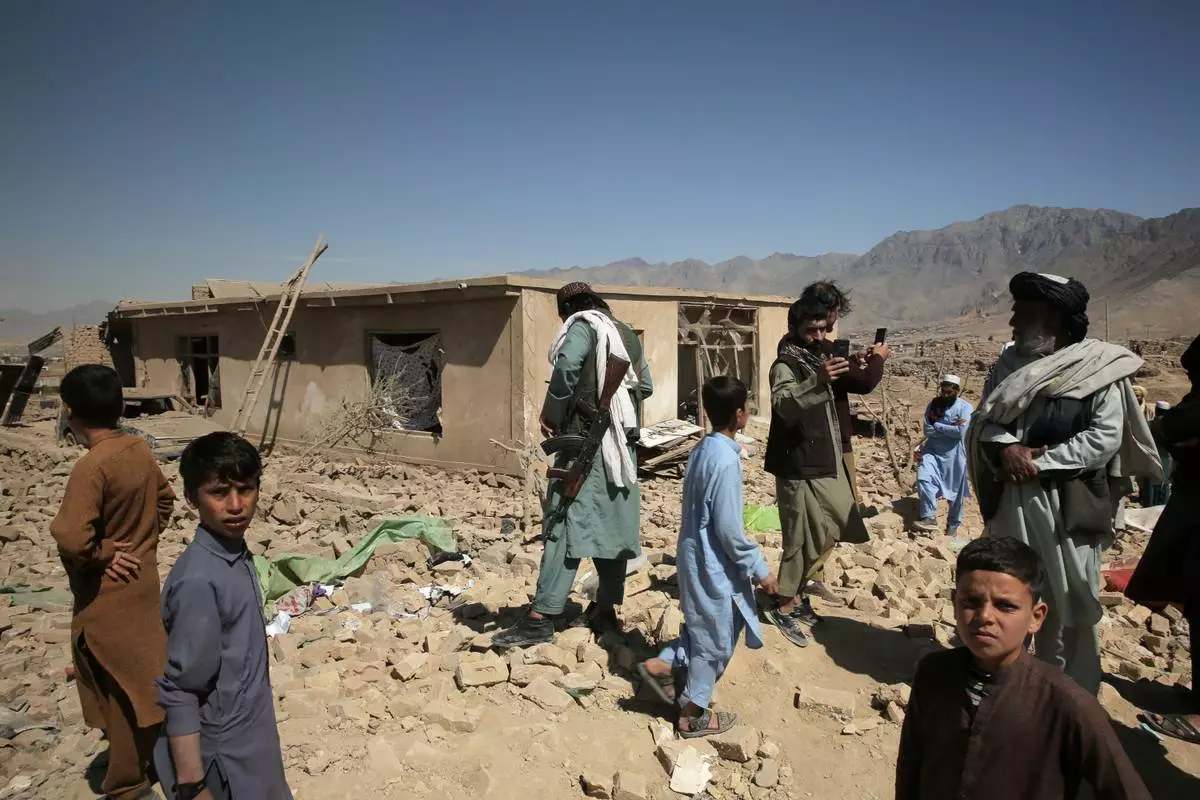
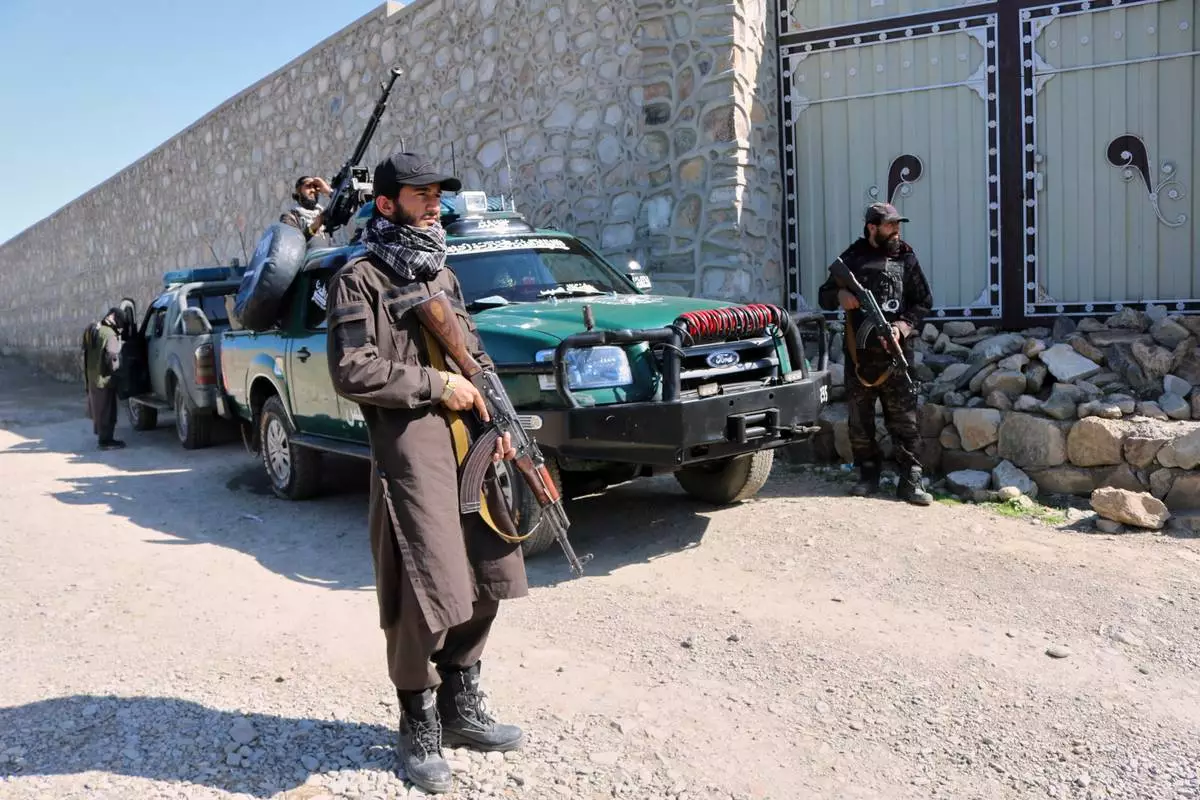
KABUL, Afghanistan (AP) — Afghanistan’s Taliban government accused Pakistan’s military Friday of targeting homes in overnight airstrikes in Kabul and other areas of the country, saying at least six civilians were killed and more than a dozen injured, as fighting between the neighbors entered its third week.

Afghan government spokesman Zabihullah Mujahid said on X that Pakistani aircraft also struck fuel depots belonging to the private airline Kam Air near the airport in Kandahar in southern Afghanistan. “This company supplies fuel to civilian airlines as well as to United Nations aircraft,” he said.

Meanwhile, Pakistan’s state-run television reported that the country’s armed forces carried out “successful airstrikes inside Afghanistan” as part of the ongoing operation, targeting what it said were four alleged militant hideouts and their support infrastructure in Afghanistan.

The developments come amid a dramatic increase in tensions between the two countries which Pakistan has referred to as “open war. ” They are adding to concerns about the stability in the region as the U.S.-Israeli war against Iran continues with no end in sight, generating great uncertainty.

The dispute is rooted in Pakistan's belief that Afghanistan’s Taliban government is harboring militant groups that stage attacks against it and also of allying with its archrival India. The Taliban deny harboring the militant groups.

Pakistan and Afghanistan have been targeting each other’s military installations since late February, when Kabul said it struck Pakistani posts in response to Pakistani attacks along the border. Pakistan’s military has said its operations targeted the Pakistani Taliban and their support networks along the border.

Both sides have claimed to inflict heavy losses in what has become their deadliest fighting in years.

In Kabul, the Defense Ministry said Afghanistan’s air force responded to Pakistan's attacks by targeting Pakistani military installations in the Kohat district, causing heavy losses.

Pakistan’s Ministry of Information rejected the Afghan Defense Ministry’s claims as baseless. In a statement, it said the Pakistani Taliban attempted to deploy three rudimentary drones in Kohat, but Pakistani forces shot them down. Two civilians were injured by falling debris, it said.

In his posts on X, The Afghan government spokesman, Mujahid, alleged that Pakistani strikes hit multiple civilian sites and uninhabited locations in Afghanistan’s Paktia and Paktika provinces, as well as other areas. He said the attacks “will not go unanswered.”

Kabul police spokesman Khalid Zadran said at least four civilians, including children, were killed in the city and 15 others were injured.

Additionally, Afghanistan’s Department of Information and Culture in Nangarhar province said a Pakistani mortar shell killed a woman and a child there.

The total number of casualties around Afghanistan was unclear.

The latest Pakistani strikes came a day after China’s special envoy, Yue Xiaoyong, arrived in Islamabad and met with his Pakistani counterpart, Mohammad Sadiq, following a visit to Kabul.

Sadiq, Pakistan’s special envoy for Afghanistan, said he and Yue “discussed threats posed by terrorist groups" and agreed on the need for collective efforts to ensure lasting peace and stability.

Repeated calls from the international community for restraint have had little effect. Pakistan has previously said its strikes along the border and inside Afghanistan are aimed solely at Khawarij, a phrase Islamabad uses for the outlawed Pakistani Taliban, also known as Tehrik-e-Taliban Pakistan, or TTP.

On Friday, a roadside bomb targeting a police vehicle killed six officers in Lakki Marwat, a district in northwest Pakistan, police official Sajjad Khan said. No one claimed responsibility but suspicion is likely to fall on TTP which often claim such attacks.

Since the Afghan Taliban returned to power in 2021, the TTP has intensified attacks inside Pakistan and along the border. Islamabad says its military operations will continue until Kabul takes verifiable steps to curb the TTP and other militants operating from its territory.

A Qatari-mediated ceasefire ended the intense fighting in October, but several rounds of peace talks in Turkey in November failed to produce a lasting agreement.

Ahmed reported from Islamabad. Associated Press writers Riaz Khan and Rasool Dawar in Peshawar, Pakistan, contributed to this story.

Taliban police guard the area where a strike hit a house in the Momand Dara district of Nangarhar province, Afghanistan, near the border with Pakistan, Friday, March 13, 2026. (AP Photo/Hedayat Shah)

Taliban police guard the area where a strike hit a house in the Momand Dara district of Nangarhar province, Afghanistan, near the border with Pakistan, Friday, March 13, 2026. (AP Photo/Hedayat Shah)

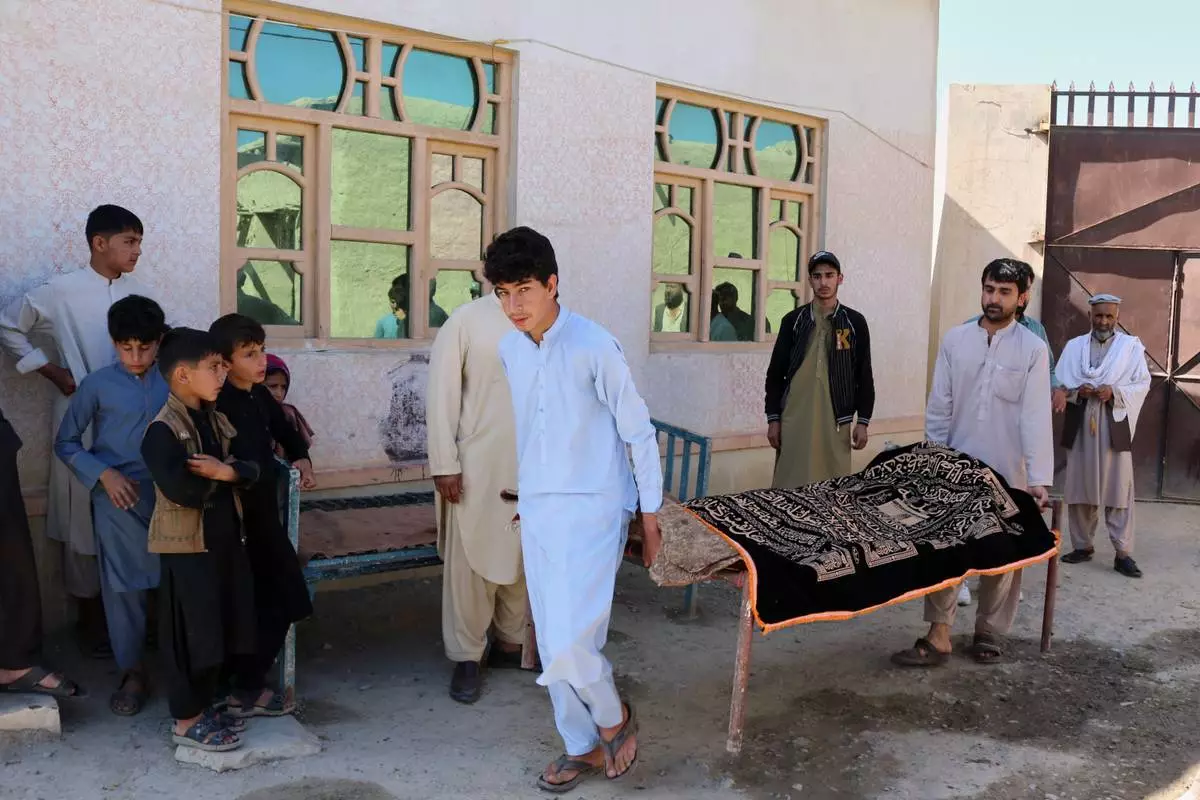
The body of a person killed in a strike that hit a house is carried on a bed frame in the Momand Dara district of Nangarhar province, Afghanistan, near the border with Pakistan, Friday, March 13, 2026. (AP Photo/Hedayat Shah)

The body of a person killed in a strike that hit a house is carried on a bed frame in the Momand Dara district of Nangarhar province, Afghanistan, near the border with Pakistan, Friday, March 13, 2026. (AP Photo/Hedayat Shah)

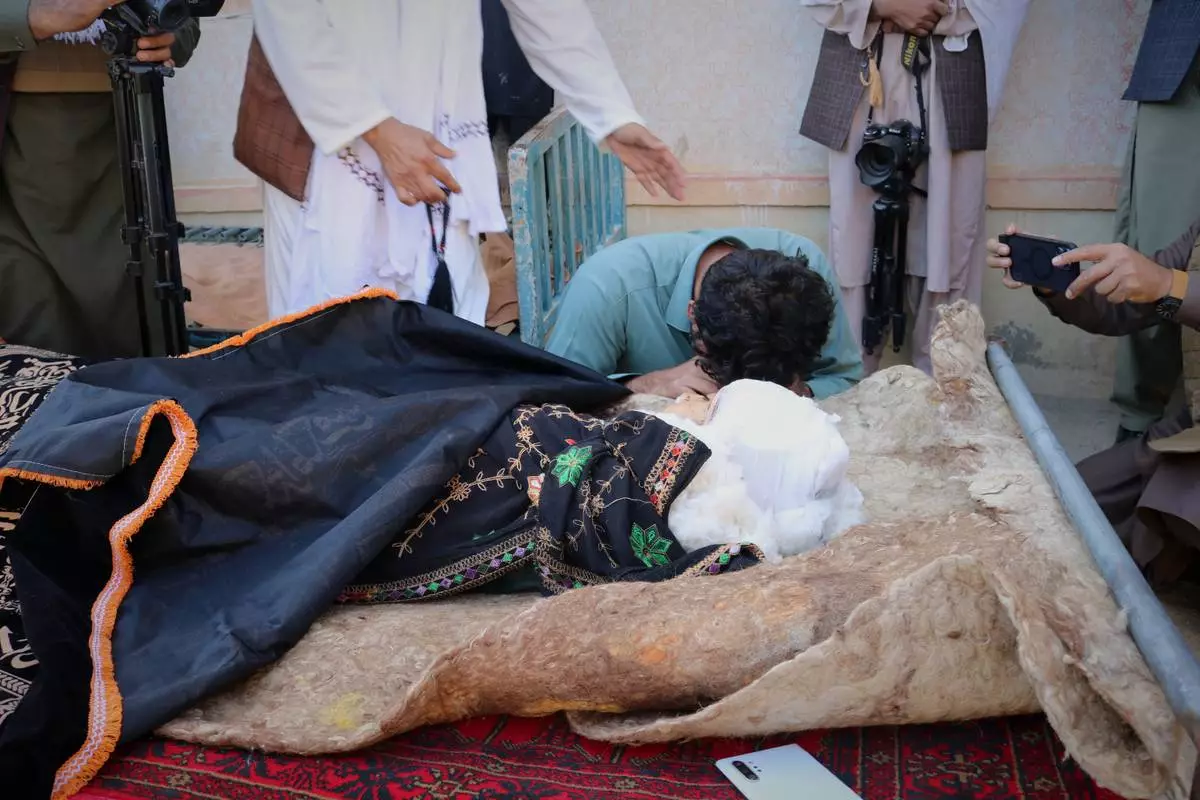
A man mourns next to the body of a child killed in a strike that hit a house in the Momand Dara district of Nangarhar province, Afghanistan, near the border with Pakistan, Friday, March 13, 2026. (AP Photo/Hedayat Shah)

A man mourns next to the body of a child killed in a strike that hit a house in the Momand Dara district of Nangarhar province, Afghanistan, near the border with Pakistan, Friday, March 13, 2026. (AP Photo/Hedayat Shah)

Residents inspect the site of a strike in Kabul, Afghanistan, Friday, March 13, 2026. (AP Photo/Barackatullah Popal)

Residents inspect the site of a strike in Kabul, Afghanistan, Friday, March 13, 2026. (AP Photo/Barackatullah Popal)

Residents inspect the site of a strike in Kabul, Afghanistan, Friday, March 13, 2026. (AP Photo/Barackatullah Popal)

Residents inspect the site of a strike in Kabul, Afghanistan, Friday, March 13, 2026. (AP Photo/Barackatullah Popal)

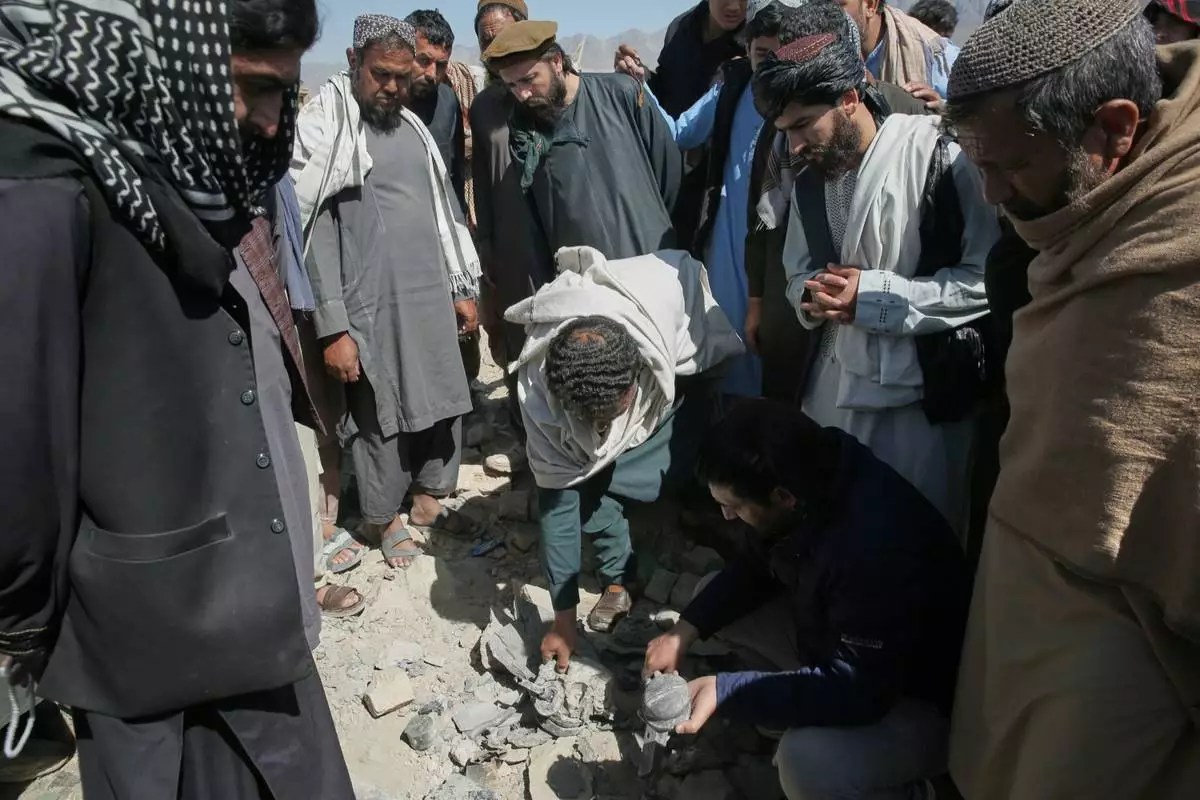
Residents and Taliban police gather the remains of a projectile at the site of a strike in Kabul, Afghanistan, Friday, March 13, 2026. (AP Photo/Barackatullah Popal)

Residents and Taliban police gather the remains of a projectile at the site of a strike in Kabul, Afghanistan, Friday, March 13, 2026. (AP Photo/Barackatullah Popal)

Residents inspect the site of a strike in Kabul, Afghanistan, Friday, March 13, 2026. (AP Photo/Barackatullah Popal)

Residents inspect the site of a strike in Kabul, Afghanistan, Friday, March 13, 2026. (AP Photo/Barackatullah Popal)

Recommended Articles