Cognizant's study shows AI is accelerating faster than projected, with 93% of jobs potentially affected today
Findings also point to the limits of AI's impact, with skilling and human judgment playing a critical role in how organizations capture AI's full value
TEANECK, N.J., Jan. 15, 2026 /PRNewswire/ -- Cognizant today announced the release of "New Work, New World 2026," providing fresh analysis on how artificial intelligence (AI) will impact work and jobs. Building on the original report's release in 2024, the new research reveals AI is changing the workforce faster than previously reported: it's now capable of handling $4.5 trillion in U.S. work tasks and impacting potentially 93% of jobs today. However, the report also underscores that AI is not a blanket solution for advancing labor productivity: human involvement and adaptable operations continue to be vital to capturing the full value potential of AI.
Cognizant's analysis for New Work, New World 2026 is based on a reassessment of 18,000 tasks and 1,000 jobs in the O*NET labor database, with a focus on how jobs and tasks could be assisted or automated by AI. Specifically, the new study points to an accelerated pace of change in "exposure scores"—the degree to which a job can be assisted or automated by AI—and highlights how those evolving changes can influence labor and enterprise success.
"We're seeing significant capital flow into AI, and the rapid adoption of these technologies is reshaping the workplace," says Ravi Kumar S, CEO of Cognizant. "Our research shows that enterprises could unleash $4.5 trillion in labor productivity today. However, turning that investment into meaningful results takes more than raw technology power. Businesses must also integrate contextual intelligence, build flexible systems that can absorb new AI capabilities, and prioritize human learning and development alongside technological advancements. Companies that focus on these essentials will unlock the true value of AI."
Kumar continues: "Human skilling becomes the bridge through which today's AI spending translates into tomorrow's tangible results. AI's promise is realized when we empower our workforce with digital fluency, adaptability and continuous learning, while ensuring AI solutions are deeply contextualized to unique business challenges. As a result, new job roles will emerge to harness this opportunity."
Cognizant's "New Work, New World 2026" report reaffirms that human knowledge and judgment remain essential to harnessing AI's full potential. It emphasizes that much of AI's value potential remains untapped without the power of human intelligence and involvement. There is still much work left to be done by human hands across job tasks that AI may never assist with, let alone automate. The potential of AI resides in skilling workers and freeing them up for higher order thinking—creative agility, fresh thinking and novel ideas that can transform business operations.
Other key highlights from the report's findings include:
- AI is changing theworkforce far more quickly than projected: The report finds the average exposure score across jobs is 39% today, which is 30% higher than what the original forecast was for 2032. This means more tasks can be assisted or automated by AI, sooner than originally predicted. These exposure scores are also now increasing by 9% annually, compared with 2% in the original research. Some notable changes in exposure scores across jobs include legal (from 9% to 63%), education (from 11% to 49%), healthcare practitioners (from 10% to 39%) and C-suite roles, including CEO (from 25% to 60%).
- Knowledge work is not disappearing, nor is manual work completely insulated: The impact of AI is evolving across sectors. Roles in computer and mathematics, once seen as highly exposed to AI, no longer top the report's exposure scores – indicating rapid advancements in AI may have reached their limits in some knowledge work areas. Meanwhile, the research reveals AI could significantly impact manual labor jobs at a faster rate than previously understood. For example, the exposure score for transportation rose from 6% to 25%, and in construction it rose from 4% to 12%.
- All told, AI can perform $4.5T in labor productivity today across a wide variety of roles: Through increased automation, AI has the potential to deliver significant value to businesses and the economy today. According to the new report, fewer tasks are left untouched by automation. The percentage of tasks that are non-automatable by AI has plummeted, from 57% on average across tasks in 2023 to 32% today.
- Simultaneously, realizing full AI value from labor is not a one-size-fits-all strategy: The report revealed AI is unable to automate upwards of 40% of management, business/ financial operations and administrative tasks, signaling a critical reality: AI alone can't fully replace humans, and human expertise and collaboration remain indispensable. To tap into the $4.5T in labor productivity, businesses must create flexible operating models that can adapt to new and evolving AI capabilities. They must also treat workforce learning as a rapid response mechanism so employees can continuously keep pace with change and effectively leverage AI to deliver meaningful growth.
To read the full report, visit the website here.
About Cognizant:
Cognizant (Nasdaq: CTSH) engineers modern businesses. We help our clients modernize technology, reimagine processes and transform experiences so they can stay ahead in our fast-changing world. Together, we're improving everyday life. See how at www.cognizant.com or @cognizant.
Cognizant remains committed to empowering the next generation of talent through its Synapse program, which aims to reach two million individuals globally by 2030, creating new pathways to opportunity and preparing the workforce for the jobs of the future. To learn more about Cognizant's Synapse skilling initiative, visit the website here.
Forward-Looking Statements
This press release includes statements that may constitute forward-looking statements made pursuant to the safe harbor provisions of the Private Securities Litigation Reform Act of 1995, the accuracy of which are necessarily subject to risks, uncertainties and assumptions as to future events that may not prove to be accurate. These statements include, but are not limited to, express or implied forward-looking statements relating to the adoption of AI and the labor value of such adoption, the effects and speed of impact of AI on the workforce and the economy and the effectiveness of businesses' efforts to capture the full potential of AI through skilling and human involvement. These statements are neither promises nor guarantees but are the findings of the studies discussed above and remain subject to a variety of risks and uncertainties, many of which are beyond our control, which could cause actual results to differ materially from those contemplated in these forward-looking statements. Existing and prospective investors are cautioned not to place undue reliance on these forward-looking statements, which speak only as of the date hereof. Factors that could cause outcomes to differ materially from those expressed or implied include general economic conditions, the impact of technological development and competition, the competitive and rapidly changing nature of the markets we compete in, the competitive marketplace for talent and its impact on employee recruitment and retention, and the other factors discussed in our most recent Annual Report on Form 10-K and other filings with the Securities and Exchange Commission. Cognizant undertakes no obligation to update or revise any forward-looking statements, whether as a result of new information, future events, or otherwise, except as may be required under applicable securities law.
For more information, contact:
US
Gabby Gugliocciello
Email gabrielle.gugliocciello@cognizant.com
Europe / APAC
Sarah Douglas
Email sarah.douglas@cognizant.com
India
Vipin Nair
Email Vipin.nair@cognizant.com
** The press release content is from PR Newswire. Bastille Post is not involved in its creation. **

AI Can Unlock $4.5 Trillion in U.S. Labor Productivity Today, Reveals Cognizant's Latest "New Work, New World 2026" Report

AI Can Unlock $4.5 Trillion in U.S. Labor Productivity Today, Reveals Cognizant's Latest "New Work, New World 2026" Report
|
SINGAPORE, April 3, 2026 /PRNewswire/ -- The Sustainable Tourism Impact Fund, a partnership between Agoda, World Wide Fund for Nature (WWF) Singapore, and the UnTours Foundation, has announced its second round of investments alongside early impact results from the Fund's inaugural cohort.
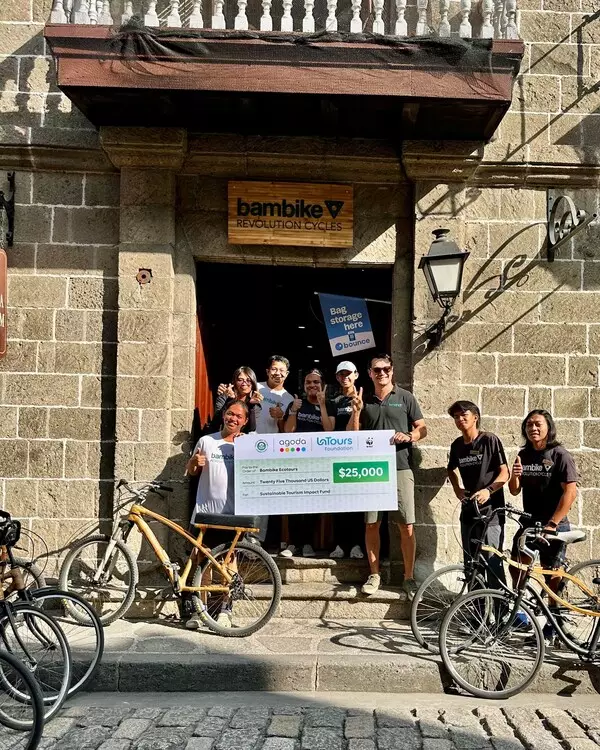
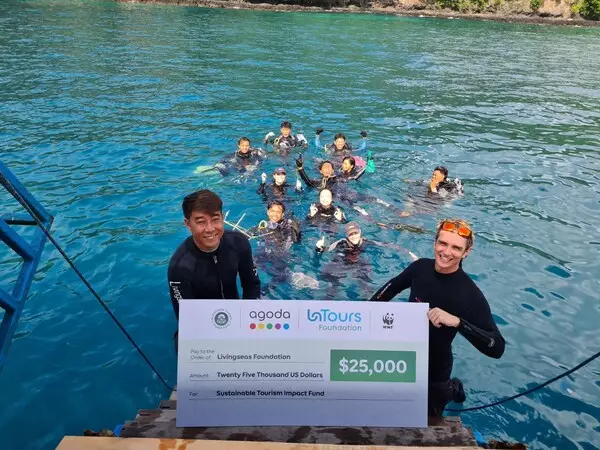
Designed to provide affordable, flexible financing to small and medium-sized tourism enterprises, the Fund supports businesses that integrate environmental restoration, climate resilience, and inclusive economic development into their core operations. Indonesia-based Livingseas Asia and Bambike Ecotours in the Philippines are the beneficiaries of the new investments. Each new investee receives USD 25,000 in loan capital to expand impact-driven initiatives across the region.
In Indonesia, Livingseas Asia combines dive tourism with coral reef restoration in Padangbai, Bali. Its nonprofit arm, the Livingseas Foundation, has restored more than 7,300 square meters of degraded reef, deploying artificial reef structures and planting over 320,000 coral fragments, with measurable biodiversity recovery. The Fund's investment will support the construction of modular housing for staff and trainees near the restoration site. This will expand Livingseas Asia's hosting capacity and strengthen the Foundation's ability to deliver marine education, conservation training, and reef restoration activities.
Bambike Ecotours in the Philippines connects bamboo agroforestry, fair trade bicycle manufacturing in rural communities, and regenerative tourism experiences. The loan will support the development of Ligtasin Cove in Batangas, a bamboo-built tourism destination that will include coastal ecotours and a bamboo nursery for reforestation and erosion control. The initiative aims to create local jobs while expanding lower-carbon tourism experiences that connect travelers with community-led environmental restoration.
"At Agoda, we believe the future of travel depends on the resilience of the destinations we serve," said Timothy Hughes, Vice President of Corporate Development at Agoda. "These investments support local pioneers integrating environmental restoration and community well-being into their operations, demonstrating the potential of impact-driven travel."
Six months after the Fund's initial investments, early results across Thailand, Indonesia, and the Philippines demonstrate encouraging environmental and community impact.
Across Southeast Asia, three organizations advanced community-led tourism in meaningful ways. In Thailand, Local Alike expanded its Travel With Care initiative to 10 destinations, launching 16 regenerative tourism activities and securing partnerships with national parks and tourism authorities to develop a white paper on regenerative tourism. In the Philippines, Ecohotels grew its Bahay Farms initiative by onboarding 22 farmers, planting 500 mango trees, increasing plant-based menu offerings from 35% to 50%, and launching its Green Warriors workforce program, with 5 of 15 trainees already placed in hospitality roles. In Indonesia, Sejiva introduced heritage walking tours and coral restoration experiences across West Java and Jakarta, while scaling its #travelpositive campaign to reach broader audiences.
"We are incredibly encouraged by the impact created so far by our inaugural cohort," said Sarah Payne, Senior Director of Impact at the UnTours Foundation. "These businesses are expanding regenerative tourism models, strengthening local livelihoods, and embedding measurable environmental outcomes into their growth. Their progress shows how flexible financing can translate into tangible impact on the ground."
The Fund is part of Agoda's broader sustainability strategy and builds on its partnership with WWF-Singapore through Agoda's Eco Deals program. Through Eco Deals, Agoda works with hotel partners across Asia to offer travelers discounted stays while directing a portion of proceeds to WWF's conservation initiatives. Those funds also support the Sustainable Tourism Impact Fund, extending conservation impact to small tourism enterprises, strengthening ecosystem health and community resilience at the destination level.
Tourism enterprises across the region advancing conservation, climate resilience, sustainable mobility, and community-led economic development are encouraged to apply for the next round of funding at: https://untoursfoundation.org/sustainable-tourism-impact-fund.
SINGAPORE, April 3, 2026 /PRNewswire/ -- The Sustainable Tourism Impact Fund, a partnership between Agoda, World Wide Fund for Nature (WWF) Singapore, and the UnTours Foundation, has announced its second round of investments alongside early impact results from the Fund's inaugural cohort.
Designed to provide affordable, flexible financing to small and medium-sized tourism enterprises, the Fund supports businesses that integrate environmental restoration, climate resilience, and inclusive economic development into their core operations. Indonesia-based Livingseas Asia and Bambike Ecotours in the Philippines are the beneficiaries of the new investments. Each new investee receives USD 25,000 in loan capital to expand impact-driven initiatives across the region.
In Indonesia, Livingseas Asia combines dive tourism with coral reef restoration in Padangbai, Bali. Its nonprofit arm, the Livingseas Foundation, has restored more than 7,300 square meters of degraded reef, deploying artificial reef structures and planting over 320,000 coral fragments, with measurable biodiversity recovery. The Fund's investment will support the construction of modular housing for staff and trainees near the restoration site. This will expand Livingseas Asia's hosting capacity and strengthen the Foundation's ability to deliver marine education, conservation training, and reef restoration activities.
Bambike Ecotours in the Philippines connects bamboo agroforestry, fair trade bicycle manufacturing in rural communities, and regenerative tourism experiences. The loan will support the development of Ligtasin Cove in Batangas, a bamboo-built tourism destination that will include coastal ecotours and a bamboo nursery for reforestation and erosion control. The initiative aims to create local jobs while expanding lower-carbon tourism experiences that connect travelers with community-led environmental restoration.
"At Agoda, we believe the future of travel depends on the resilience of the destinations we serve," said Timothy Hughes, Vice President of Corporate Development at Agoda. "These investments support local pioneers integrating environmental restoration and community well-being into their operations, demonstrating the potential of impact-driven travel."
Six months after the Fund's initial investments, early results across Thailand, Indonesia, and the Philippines demonstrate encouraging environmental and community impact.
Across Southeast Asia, three organizations advanced community-led tourism in meaningful ways. In Thailand, Local Alike expanded its Travel With Care initiative to 10 destinations, launching 16 regenerative tourism activities and securing partnerships with national parks and tourism authorities to develop a white paper on regenerative tourism. In the Philippines, Ecohotels grew its Bahay Farms initiative by onboarding 22 farmers, planting 500 mango trees, increasing plant-based menu offerings from 35% to 50%, and launching its Green Warriors workforce program, with 5 of 15 trainees already placed in hospitality roles. In Indonesia, Sejiva introduced heritage walking tours and coral restoration experiences across West Java and Jakarta, while scaling its #travelpositive campaign to reach broader audiences.
"We are incredibly encouraged by the impact created so far by our inaugural cohort," said Sarah Payne, Senior Director of Impact at the UnTours Foundation. "These businesses are expanding regenerative tourism models, strengthening local livelihoods, and embedding measurable environmental outcomes into their growth. Their progress shows how flexible financing can translate into tangible impact on the ground."
The Fund is part of Agoda's broader sustainability strategy and builds on its partnership with WWF-Singapore through Agoda's Eco Deals program. Through Eco Deals, Agoda works with hotel partners across Asia to offer travelers discounted stays while directing a portion of proceeds to WWF's conservation initiatives. Those funds also support the Sustainable Tourism Impact Fund, extending conservation impact to small tourism enterprises, strengthening ecosystem health and community resilience at the destination level.
Tourism enterprises across the region advancing conservation, climate resilience, sustainable mobility, and community-led economic development are encouraged to apply for the next round of funding at: https://untoursfoundation.org/sustainable-tourism-impact-fund.
** This press release is distributed by PR Newswire through automated distribution system, for which the client assumes full responsibility. **

Sustainable Tourism Impact Fund Expands Investments Across Southeast Asia
Sustainable Tourism Impact Fund Expands Investments Across Southeast Asia
Sustainable Tourism Impact Fund Expands Investments Across Southeast Asia