Skip to Content Facebook Feature Image

U.S. carrier strike group moving to Middle East

HotTV

HotTV

HotTV

U.S. carrier strike group moving to Middle East

2026-01-15 11:35 Last Updated At:01-16 11:36

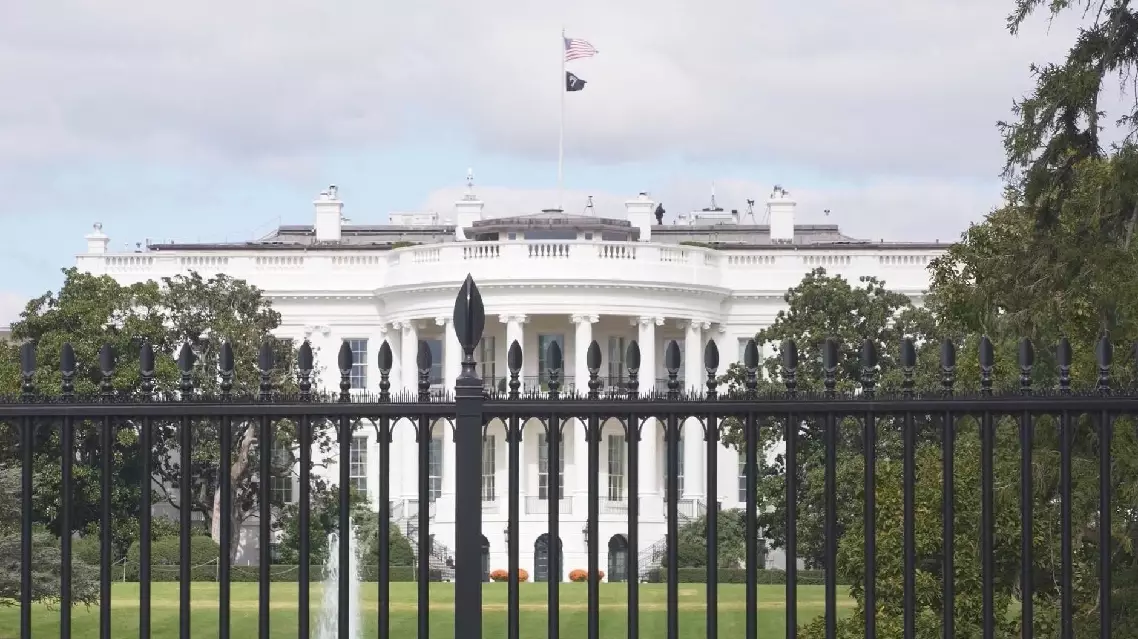
Heightened tensions in the Middle East are prompting U.S. military movements and diplomatic precautions, as regional powers brace for potential escalation involving Iran.

A U.S. carrier strike group is moving from the South China Sea to the Middle East, with its arrival expected in about one week, multiple sources reported on Wednesday.

"The U.S. is moving a carrier strike group from the South China Sea to the CENTCOM area of responsibility," Kellie Meyer, a NewsNation reporter, posted on X.

On the same day, the U.S. Embassy in Qatar confirmed normal operations and staffing but urged its personnel to exercise increased caution. The embassy has also advised limiting non-essential travel to Al Udeid Air Base, a major U.S. military installation in Qatar.

Earlier, Qatar's International Media Office (IMO) acknowledged that some U.S. personnel would depart Al Udeid Air Base, saying the measure was taken in response to "current regional tensions."

Al Udeid Air Base, the largest U.S. military base in the Middle East, located roughly 35 kilometers southwest of Doha and around 200 kilometers from the Iranian border, houses about 10,000 U.S. personnel and features a 4,500-meter runway capable of hosting strategic bombers and large transport aircraft.

Qatar reaffirmed its commitment to national security, stressing that any future developments would be shared through official channels.

On June 23, 2025, Iran fired two volleys totaling 19 missiles at Al Udeid in retaliation for a U.S. strike on its nuclear facilities. Meanwhile, Israel Defense Forces (IDF) spokesman Effie Defrin stated Wednesday evening that the Israeli military is closely monitoring the evolving situation. In a statement posted on social media, Defrin confirmed that senior military officials have been conducting continuous threat assessments and have ordered heightened readiness across all defense systems.

He emphasized that Israel's defense posture remains unchanged and urged the public to rely solely on official military updates, cautioning against the spread of unverified information that could cause unnecessary concern.

Tensions have also impacted global travel. German airline group Lufthansa announced Wednesday it will temporarily reroute all flights under its brand, including Austrian Airlines, Swiss International Air Lines, and Brussels Airlines, to avoid Iranian and Iraqi airspace. From January 15 to 19, all flights to Tel Aviv, Israel, and Amman, Jordan, will be confined to daytime hours, with crews avoiding overnight stays in the region.

Governments are also reacting. The UK Foreign Office confirmed Wednesday the temporary closure of its embassy in Tehran, Iran, citing a shift to remote operations. On the same day, Spain's foreign ministry issued a notice advising all Spanish citizens currently in Iran to leave the country as soon as possible.

In Yemen, Mohammed al-Farah, a member of the political bureau of the Houthi Movement, said on Wednesday the group has been placed on high alert in response to the uncertainty surrounding Iran. He also said that if Iran is attacked, the situation could escalate further, potentially leading to a cutoff in oil supplies to Western countries, with the United States and its allies bearing the consequences.
U.S. carrier strike group moving to Middle East
U.S. carrier strike group moving to Middle East
U.S. carrier strike group moving to Middle East
U.S. carrier strike group moving to Middle East
U.S. carrier strike group moving to Middle East
U.S. carrier strike group moving to Middle East
Chinese Foreign Minister Wang Yi said on Thursday that UN Security Council actions must not provide legal cover for unauthorized military operations, nor should they heighten tensions or escalate conflict.

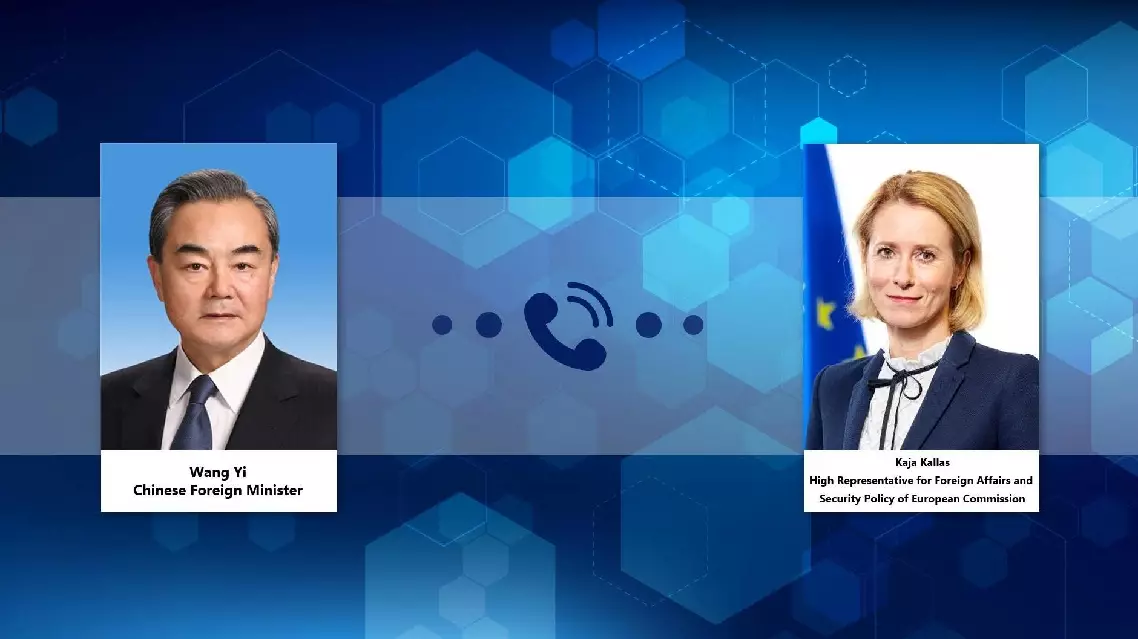
Wang, also a member of the Political Bureau of the Communist Party of China Central Committee, made the remarks in a phone conversation with Kaja Kallas, the High Representative for Foreign Affairs and Security Policy of the European Commission.

Kallas shared her views on the situation in the Middle East and commended China's active diplomatic mediation efforts to ease the situation, including the latest five-point joint initiative issued by China and Pakistan for restoring peace and stability in the Gulf and the Middle East.

The European side has not been involved in this war but has suffered from its spillover effects, she said, expressing hope for swiftly de-escalating the war and resuming dialogue and negotiations.

The European side supports UN humanitarian operations, the protection of civilians and non-military targets, and will make every effort to ensure the opening of navigation through the Strait of Hormuz, she said.

Wang said that amid the current international turmoil, it is the shared responsibility of China and Europe to step up communication and exchanges, and to uphold the UN-centered international system and the international order based on international law.

Wang elaborated on China's principled position on the Middle East situation, noting that the five-point initiative proposed by China and Pakistan reflects a broad international consensus, whose core elements include a cessation of hostilities, the start of peace talks as soon as possible, ensuring the security of non-military targets and security of shipping lanes, and safeguarding the primacy of the UN Charter.

A ceasefire and an end to hostilities are the strong call of the international community, and also the fundamental solution to ensuring safe navigation through the Strait of Hormuz, Wang said, adding that all parties should build greater consensus and create the necessary conditions to that end.

The UN Security Council actions should focus on cooling down the situation and de-escalating tensions, Wang said, adding that China stands ready to maintain communication and cooperation with the European side to promote an early end to hostilities and restore regional peace.

The two sides also exchanged views on China-EU relations. Wang said that China's development represents opportunities for Europe, and that the challenges Europe faces do not originate from China. Protectionism does not enhance competitiveness, and decoupling from China means decoupling from opportunities, Wang said, expressing hope that the European side will develop a comprehensive and objective perception of China and maintain the correct direction of China-EU relations.

Kallas said that the European side views China as an important cooperation partner, does not seek decoupling from China, and looks forward to maintaining dialogue and communication between the two sides.

Chinese FM says UN Security Council actions should not legitimize unauthorized military operations

Chinese FM says UN Security Council actions should not legitimize unauthorized military operations

Recommended Articles