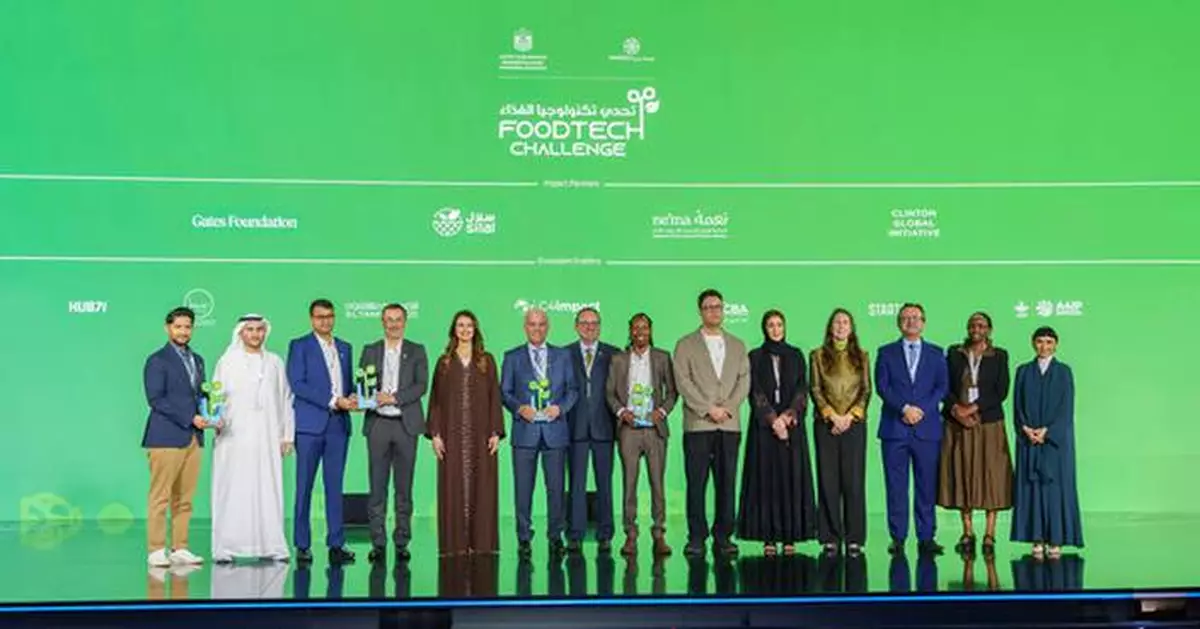
- Global agri-food innovation competition names four winning startups during Abu Dhabi Sustainability Week.
- HyveGeo, Permia Sensing, Flybox, and Akorn Technology to share USD 2 million to pilot and scale solutions in the UAE and the Global South.
ABU DHABI, UAE, Jan. 15, 2026 /PRNewswire/ -- The third edition of the UAE FoodTech Challenge, a global competition that identifies and scales the world's most promising agri-tech innovations, concluded at Abu Dhabi Sustainability Week with the announcement of four winning startups:
Category: Climate-Smart Food Production
- Permia Sensing uses AI, bioacoustic sensors and drone imaging to monitor tree health. Already covering over 15,000 hectares of palm plantations in Sri Lanka, the technology offers early detection of stress factors, such as dehydration and pest infestations, enabling farmers to boost yields and reduce waste. They now plan to work with local partners to finesse and localize their solution for the UAE and scale its application across the Middle East.
- HyveGeo turns agricultural waste into a carbon-rich biochar, then enriches it with microbes to create a high-performance soil enhancer. This circular, nature-based approach is already being used by farmers and landscape managers across the UAE, transforming arid, desert soil into fertile, arable land. As winners, they plan to expand their research and launch pilots in markets across the Global South.
ABU DHABI, UAE, Jan. 15, 2026 /PRNewswire/ -- The third edition of the UAE FoodTech Challenge, a global competition that identifies and scales the world's most promising agri-tech innovations, concluded at Abu Dhabi Sustainability Week with the announcement of four winning startups:
Category: Climate-Smart Food Production
Category: Food Loss & Waste Reduction
- Akorn Technology produces a natural, edible coating for fruit and vegetables, including a vegetable protein to slow ripening, a wax to reduce moisture loss, and a vegetable oil to maintain color. Their solution is already being used in Egypt and Ghana to extend the shelf life of produce and cut post-harvest losses, and will now be optimized for use in the UAE and arid environments across the region.
- Flybox uses black soldier fly larvae to convert agricultural byproducts into high-quality protein and fertilizer, while reducing waste sent to landfill. Housed in shipping containers, their off-grid, low-cost solution is currently being used in Uganda, Kenya and Nigeria, and will now launch in the UAE, with plans for working with local waste management partners to deploy at scale.
From an initial pool of 1,215 submissions from 113 countries, ten finalists advanced to the final stage of the competition, presenting their solutions in live pitches to an international judging panel comprising senior leaders and experts in food systems, sustainability, investment, and international development. Following evaluation, the four winning startups were announced during an awards ceremony on the Abu Dhabi Sustainability Week main stage.
Rima Al Mokarrab, Chair of Tamkeen and Co-Chair of the FoodTech Challenge, remarked:
"Building resilient and secure food systems is central to the UAE's long-term vision for a prosperous future. The latest winners of the UAE FoodTech Challenge now join a growing community of past awardees, who have since raised over USD 48 million in follow-on funding and launched more than 50 pilot projects across the UAE and other markets. As they begin this next phase of their journey, support from our network of partners and UAE's world-class innovation ecosystem will serve as a launchpad for their solutions, enabling them to contribute to more resilient and sustainable food systems in the UAE, the global south, and worldwide."
The four teams will share a USD 2 million prize and will be invited to scale their solutions in the UAE, where they will receive tailored in-kind support, including pilot opportunities, access to research facilities, market-entry guidance, mentorship, and investor introductions through an extensive network of local and international partners. From this base, the winners will work to deploy and scale their solutions across key markets in the Global South, supporting more resilient and sustainable food systems.
Fatema Almulla, Senior Specialist Development, International Affairs Office at the UAE Presidential Court, said:
"The UAE plays a leading role in international development, with agricultural innovation central to its global engagement. Through the UAE FoodTech Challenge, winning startups are embedded within a proven development ecosystem; where advanced technologies, policy leadership, and global expertise come together to accelerate solutions from pilot to scale. This is how innovation is translated into measurable impact, from the UAE to climate-vulnerable regions worldwide."
This year's FoodTech Challenge is organized by the International Affairs Office at the UAE Presidential Court and Tamkeen, in partnership with the Gates Foundation, ne'ma (The National Food Loss and Waste Initiative), and Silal. The finalist cohort represents a diverse range of approaches to food system innovation, including advanced technologies for post-harvest preservation, waste-to-value conversion, precision agriculture, and resource-efficient food production.
Shelly Sundberg, Deputy Director of Adaptive and Equitable Food Systems at the Gates Foundation, said:
"The UAE FoodTech Challenge plays an important role in advancing practical, scalable, and accessible solutions that can strengthen food security across underserved and climate-vulnerable populations. At the Gates Foundation, we are proud to support initiatives that translate innovation into real-world impact, helping food systems reduce loss, improve sustainability, and expand access to safe, affordable and nutritious food. These are essential to building more resilient food systems in the face of climate and economic pressures."
Khuloud Nowais, Chief Sustainability Officer at Emirates Foundation and Secretary General of the ne'ma Steering Committee, said:
"Seeing the caliber of this year's winners and the diversity of their solutions has been truly inspiring. As a judge, it has been encouraging to witness the growing sophistication of solutions that address food loss and waste challenges. At ne'ma, we are proud to support initiatives that turn ideas into actionable, lasting impact for food systems."
The UAE FoodTech Challenge identifies and accelerates agri-food technology solutions that boost food production and reduce food loss and waste in arid and increasingly climate-stressed environments. Attracting technology-driven innovations that can be refined in the UAE and scaled internationally, the competition directly supports the UAE's long-term food security ambitions and contributes to global food system resilience.
To learn more about the FoodTech Challenge, visit: www.foodtechchallenge.com
See YouTube videos of the winners here:
** The press release content is from PR Newswire. Bastille Post is not involved in its creation. **
The UAE FoodTech Challenge 2026 Winners to Join National Agri-Tech Ecosystem and Support Global Food Security
|
SINGAPORE, April 3, 2026 /PRNewswire/ -- The Sustainable Tourism Impact Fund, a partnership between Agoda, World Wide Fund for Nature (WWF) Singapore, and the UnTours Foundation, has announced its second round of investments alongside early impact results from the Fund's inaugural cohort.
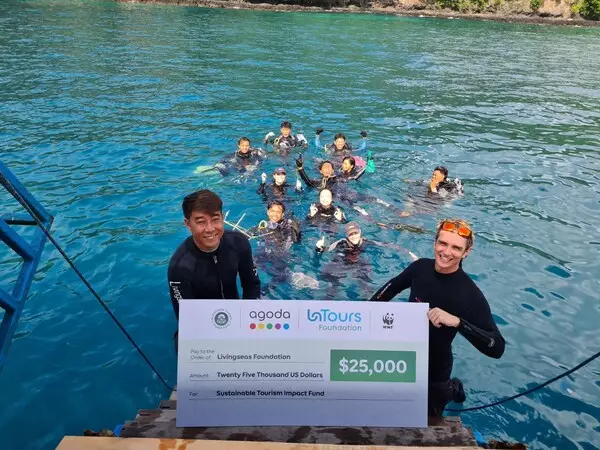
Designed to provide affordable, flexible financing to small and medium-sized tourism enterprises, the Fund supports businesses that integrate environmental restoration, climate resilience, and inclusive economic development into their core operations. Indonesia-based Livingseas Asia and Bambike Ecotours in the Philippines are the beneficiaries of the new investments. Each new investee receives USD 25,000 in loan capital to expand impact-driven initiatives across the region.
In Indonesia, Livingseas Asia combines dive tourism with coral reef restoration in Padangbai, Bali. Its nonprofit arm, the Livingseas Foundation, has restored more than 7,300 square meters of degraded reef, deploying artificial reef structures and planting over 320,000 coral fragments, with measurable biodiversity recovery. The Fund's investment will support the construction of modular housing for staff and trainees near the restoration site. This will expand Livingseas Asia's hosting capacity and strengthen the Foundation's ability to deliver marine education, conservation training, and reef restoration activities.
Bambike Ecotours in the Philippines connects bamboo agroforestry, fair trade bicycle manufacturing in rural communities, and regenerative tourism experiences. The loan will support the development of Ligtasin Cove in Batangas, a bamboo-built tourism destination that will include coastal ecotours and a bamboo nursery for reforestation and erosion control. The initiative aims to create local jobs while expanding lower-carbon tourism experiences that connect travelers with community-led environmental restoration.
"At Agoda, we believe the future of travel depends on the resilience of the destinations we serve," said Timothy Hughes, Vice President of Corporate Development at Agoda. "These investments support local pioneers integrating environmental restoration and community well-being into their operations, demonstrating the potential of impact-driven travel."
Six months after the Fund's initial investments, early results across Thailand, Indonesia, and the Philippines demonstrate encouraging environmental and community impact.
Across Southeast Asia, three organizations advanced community-led tourism in meaningful ways. In Thailand, Local Alike expanded its Travel With Care initiative to 10 destinations, launching 16 regenerative tourism activities and securing partnerships with national parks and tourism authorities to develop a white paper on regenerative tourism. In the Philippines, Ecohotels grew its Bahay Farms initiative by onboarding 22 farmers, planting 500 mango trees, increasing plant-based menu offerings from 35% to 50%, and launching its Green Warriors workforce program, with 5 of 15 trainees already placed in hospitality roles. In Indonesia, Sejiva introduced heritage walking tours and coral restoration experiences across West Java and Jakarta, while scaling its #travelpositive campaign to reach broader audiences.
"We are incredibly encouraged by the impact created so far by our inaugural cohort," said Sarah Payne, Senior Director of Impact at the UnTours Foundation. "These businesses are expanding regenerative tourism models, strengthening local livelihoods, and embedding measurable environmental outcomes into their growth. Their progress shows how flexible financing can translate into tangible impact on the ground."
The Fund is part of Agoda's broader sustainability strategy and builds on its partnership with WWF-Singapore through Agoda's Eco Deals program. Through Eco Deals, Agoda works with hotel partners across Asia to offer travelers discounted stays while directing a portion of proceeds to WWF's conservation initiatives. Those funds also support the Sustainable Tourism Impact Fund, extending conservation impact to small tourism enterprises, strengthening ecosystem health and community resilience at the destination level.
Tourism enterprises across the region advancing conservation, climate resilience, sustainable mobility, and community-led economic development are encouraged to apply for the next round of funding at: https://untoursfoundation.org/sustainable-tourism-impact-fund.
SINGAPORE, April 3, 2026 /PRNewswire/ -- The Sustainable Tourism Impact Fund, a partnership between Agoda, World Wide Fund for Nature (WWF) Singapore, and the UnTours Foundation, has announced its second round of investments alongside early impact results from the Fund's inaugural cohort.
Designed to provide affordable, flexible financing to small and medium-sized tourism enterprises, the Fund supports businesses that integrate environmental restoration, climate resilience, and inclusive economic development into their core operations. Indonesia-based Livingseas Asia and Bambike Ecotours in the Philippines are the beneficiaries of the new investments. Each new investee receives USD 25,000 in loan capital to expand impact-driven initiatives across the region.
In Indonesia, Livingseas Asia combines dive tourism with coral reef restoration in Padangbai, Bali. Its nonprofit arm, the Livingseas Foundation, has restored more than 7,300 square meters of degraded reef, deploying artificial reef structures and planting over 320,000 coral fragments, with measurable biodiversity recovery. The Fund's investment will support the construction of modular housing for staff and trainees near the restoration site. This will expand Livingseas Asia's hosting capacity and strengthen the Foundation's ability to deliver marine education, conservation training, and reef restoration activities.
Bambike Ecotours in the Philippines connects bamboo agroforestry, fair trade bicycle manufacturing in rural communities, and regenerative tourism experiences. The loan will support the development of Ligtasin Cove in Batangas, a bamboo-built tourism destination that will include coastal ecotours and a bamboo nursery for reforestation and erosion control. The initiative aims to create local jobs while expanding lower-carbon tourism experiences that connect travelers with community-led environmental restoration.
"At Agoda, we believe the future of travel depends on the resilience of the destinations we serve," said Timothy Hughes, Vice President of Corporate Development at Agoda. "These investments support local pioneers integrating environmental restoration and community well-being into their operations, demonstrating the potential of impact-driven travel."
Six months after the Fund's initial investments, early results across Thailand, Indonesia, and the Philippines demonstrate encouraging environmental and community impact.
Across Southeast Asia, three organizations advanced community-led tourism in meaningful ways. In Thailand, Local Alike expanded its Travel With Care initiative to 10 destinations, launching 16 regenerative tourism activities and securing partnerships with national parks and tourism authorities to develop a white paper on regenerative tourism. In the Philippines, Ecohotels grew its Bahay Farms initiative by onboarding 22 farmers, planting 500 mango trees, increasing plant-based menu offerings from 35% to 50%, and launching its Green Warriors workforce program, with 5 of 15 trainees already placed in hospitality roles. In Indonesia, Sejiva introduced heritage walking tours and coral restoration experiences across West Java and Jakarta, while scaling its #travelpositive campaign to reach broader audiences.
"We are incredibly encouraged by the impact created so far by our inaugural cohort," said Sarah Payne, Senior Director of Impact at the UnTours Foundation. "These businesses are expanding regenerative tourism models, strengthening local livelihoods, and embedding measurable environmental outcomes into their growth. Their progress shows how flexible financing can translate into tangible impact on the ground."
The Fund is part of Agoda's broader sustainability strategy and builds on its partnership with WWF-Singapore through Agoda's Eco Deals program. Through Eco Deals, Agoda works with hotel partners across Asia to offer travelers discounted stays while directing a portion of proceeds to WWF's conservation initiatives. Those funds also support the Sustainable Tourism Impact Fund, extending conservation impact to small tourism enterprises, strengthening ecosystem health and community resilience at the destination level.
Tourism enterprises across the region advancing conservation, climate resilience, sustainable mobility, and community-led economic development are encouraged to apply for the next round of funding at: https://untoursfoundation.org/sustainable-tourism-impact-fund.
** This press release is distributed by PR Newswire through automated distribution system, for which the client assumes full responsibility. **

Sustainable Tourism Impact Fund Expands Investments Across Southeast Asia
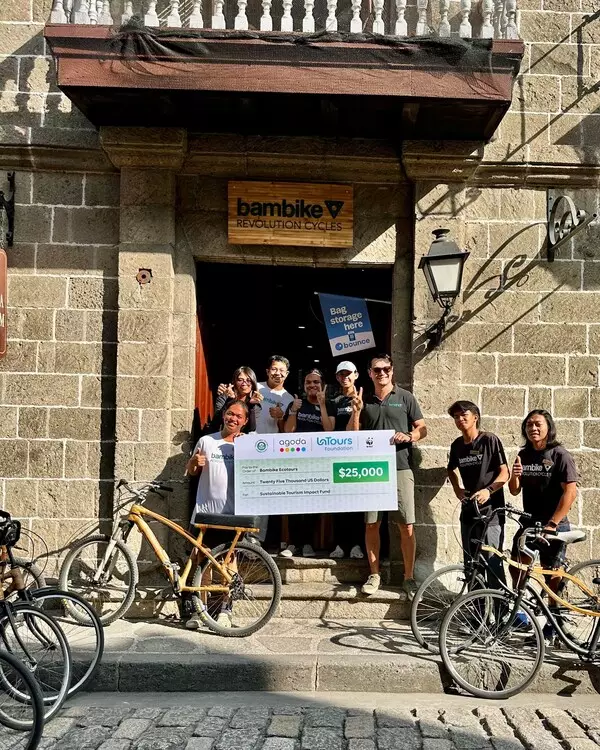
Sustainable Tourism Impact Fund Expands Investments Across Southeast Asia
Sustainable Tourism Impact Fund Expands Investments Across Southeast Asia