RAVENSBURG, Germany--(BUSINESS WIRE)--Jan 15, 2026--
Vetter, a globally operating Contract Development and Manufacturing Organization (CDMO), has completed several important steps in the ongoing development and upcoming launch of V-OVS ®next.
This press release features multimedia. View the full release here: https://www.businesswire.com/news/home/20260115544951/en/
Developed from extensive market feedback, this new closure system will feature several important updates: intuitive handling, innovative functionality and a premium design, that fits a wide range of syringe formats. Together these advances will further enhance the protection and usability V-OVS ®next offers for applications across a broad range of markets such as ophthalmology, aesthetic injectables, diluents, and biologics. Unveiled at PharmaPack 2025 and met with significant industry interest, the closure has since taken multiple key steps toward commercial readiness in 2027.
After a robust, multi-cycle development process, Vetter has finalized the design of V-OVS ®next and initiated industrialization. As part of that process, Vetter will provide its primary syringe glass suppliers with NFHU materials for further implementation and testing across a range of syringe formats.
“With the first biopharma customers already giving positive feedback, we’re excited to see market uptake by some glass suppliers,” says Lars Hahn, Senior Vice President Global Sales Organization at Vetter. “We’ve already had successful conversations with multiple value chain partners and received consistently encouraging responses that reinforce our confidence in this launch.”
Vetter has completed two more important verification steps of its own: After successfully completing a first Human Factors study earlier in 2025, a second Human Factors study and a key Functional Study have both delivered positive results for V-OVS ®next.
While the earlier evaluation focused on product and user-related feedback, the second Human Factors study additionally included a use related risk analysis to confirm that V-OVS ®next enables safe and effective handling. After evaluating the closure system’s usability and comparing it with the original V-OVS ® closure, study participants confirmed: V-OVS ®next is a user-friendly design that offers an enhanced user experience with a differentiating look and feel.
In addition, Vetter evaluated the structural performance of V-OVS ®next during manufacturing and handling. First tests demonstrated that V-OVS ®next further improves upon the performance of the existing V-OVS ®, supports intuitive handling, and reduces the likelihood of misuse.
“Our goal was to combine safety, usability, and design in a way that truly benefits the user of the system,” says Dr. Claus Feussner, Senior Vice President Development Service at Vetter. “The positive results from both usability and performance evaluations confirm that V-OVS ®next delivers on these objectives.”
With these milestones achieved, Vetter will continue to advance V-OVS ®next down its pathway toward launch. Industrialization is on track and commercialization is scheduled for 2027. Post-launch, Vetter will continue to offer both V-OVS ® and V-OVS ®next, expanding its portfolio of solutions for customers’ syringe-based products. Furthermore, V-OVS ® and V-OVS ®next share the same contact materials and a range of industry standard tip cap rubber formulations, making it easy to upgrade to the new system as a lifecycle measure for existing drugs or a differentiating factor for new drugs.
Find the Vetter press kit and more background information here.
About Vetter
Vetter is a leading Contract Development and Manufacturing Organization (CDMO) with headquarters in Ravensburg, Germany, and production facilities in Germany, Austria, and the US. As a global player, the independent pharmaceutical service provider is also present in the Asia-Pacific markets of Japan, China, South Korea and Singapore with sales locations. Around the world, small and large renowned pharma and biotech companies rely on the decades of experience, high quality, modern technologies, reliability, and commitment of its more than 7,300 employees. In close partnership with its customers, the Vetter team supplies patients all over the world with medicines, many of which are vital. The CDMO provides support from drug product development through clinical and commercial filling to a wide range of assembly and packaging services for vials, syringes, and cartridges. With innovative solutions, Vetter develops prefilled drug-delivery systems together with its customers to continuously improve patient safety, comfort, and compliance. The company is an industry pioneer in sustainability and a socially and ethically responsible corporate citizen. The CDMO is a member of the UN Global Compact and Science Based Target initiative (SBTi) and received platinum status in the renowned EcoVadis ranking. Multiple awards such as the CDMO Leadership Awards, Frost & Sullivan Customer Value Leadership Award and the recognition as Best Managed Company emphasize Vetter’s commitment to sustainable business. Founded in Ravensburg in 1950, the company remains family-owned to this day. For more information, visit www.vetter-pharma.com and follow Vetter on LinkedIn.
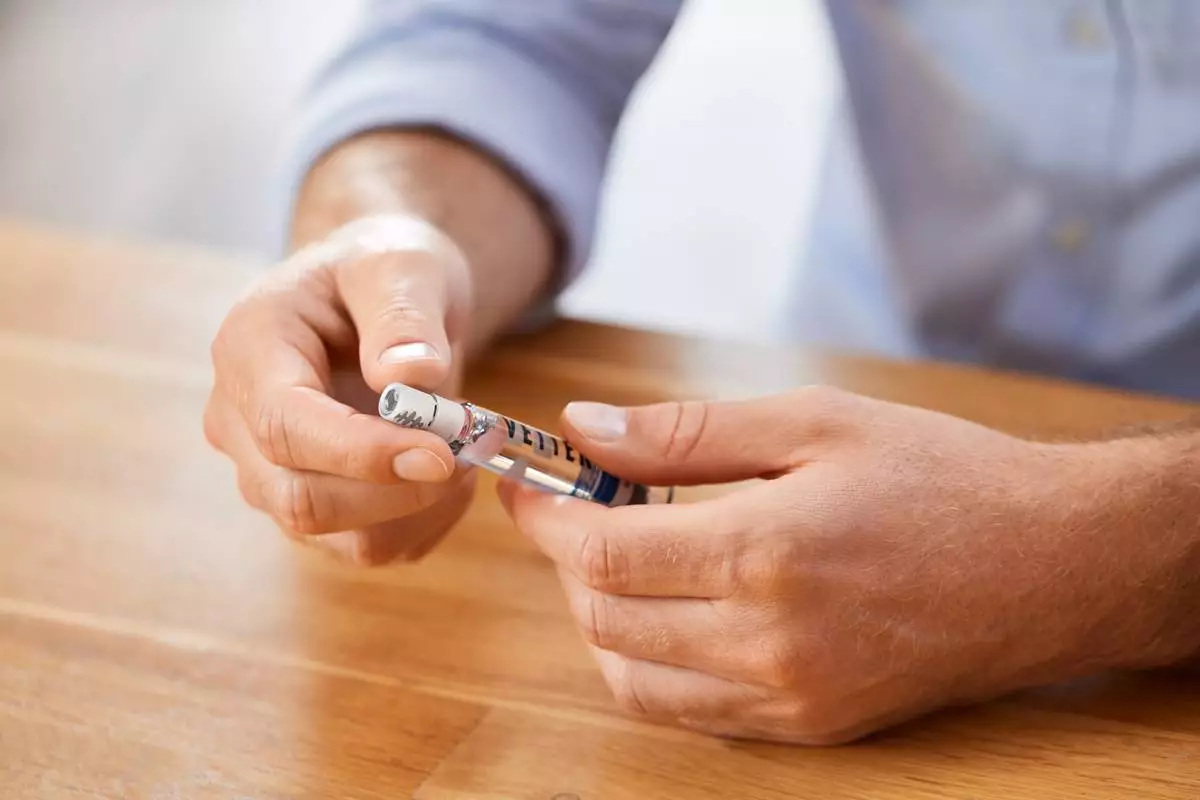
V-OVS® next mounted on a syringe