A new era in international soccer begins Sunday when Vanuatu United meets Bula FC of Fiji in Auckland, New Zealand, in the first game of the Oceania Football Confederation Pro League.
Eight teams from seven countries in the region — the others are New Zealand, Tahiti, Papua New Guinea, the Solomon Islands, and Australia — will play at least 17 games over the next three months.
Organizers say the new league is a much-needed step for the region, where individual countries are too small to support top-level domestic competitions.
“The OFC was the only confederation to not have a professional league in any of its member associations, something of a restriction in player advancement opportunities,” Stuart Larman, the league’s project manager, told The Associated Press.
“Players from the OFC will now have a significant increase in highly competitive matches per year,” Larman added. “This will be the start point where the best players in the region will become familiar with a professional football environment as they progress in their careers.”
The league will be split into two phases. In the first, each team faces the other seven twice over five rounds. The first is hosted in New Zealand and then matches move to Papua New Guinea, Australia, the Solomon Islands and Fiji.
After 14 games, the eight teams will split into two groups which will be played in New Zealand. The top three from the upper group and a playoff winner will advance to the semifinals which will also be held in New Zealand.
The league will also determine which team represents Oceania at the next FIFA Club World Cup in 2029 and which will bring substantial financial rewards.
Auckland City represented Oceania in last year’s Club World Cup and was paid an entry fee of $3.58 million by FIFA with the chance to earn more from results bonuses.
Auckland caused a major stir in the tournament when the New Zealand side of mostly amateur players drew with high-profile Argentine club Boca Juniors.
Playing regular soccer will also help raise standards around Oceania and provide more professional pathways for young players.
“Technically, the boys (in New Zealand) are very gifted,” said Rob Sherman, head coach of South Island United, an Auckland-based OFC Pro League team. “There’s definitely a mass of talent in the region. Hopefully playing at a different standard than domestically will accelerate and expose that talent.”
There is much to be done off the field, too. Small populations mean limited broadcasting and sponsorship revenue but pooling those resources could make a difference. If so, more clubs from other islands could join.
“Over time it would be a major step to see the league expand from the existing eight clubs,” Larman said. “That will require a lot of things to fall into place at the existing clubs, as well as those hoping to join. As we move forward, we will be working hard with the clubs to ensure they build on the foundations they have to ensure they are well structured off the pitch, which will be reflected on the pitch as well.”
The OFC Pro League could serve as an example for others. A new Baltic League involving Latvia, Lithuania, and Estonia is being discussed to help teams grow and compete in wider European competitions. Similar discussions have taken place among Southeast Asian nations.
“In countries where it is hard to sustain a professional football league, the cross-border option should always be one to explore,” Larman said. “The commercial and sporting benefits will help bridge the gap that exists with leading leagues in any region.”
AP soccer: https://apnews.com/hub/soccer

FILE - Auckland City's Christian Gray, center left, celebrates after scoring his side's opening goal during the Club World Cup Group C soccer match between Auckland City and Boca Juniors in Nashville, Tenn., June 24, 2025. (AP Photo/George Walker IV, File)
KYIV, Ukraine (AP) — Russian forces relentlessly battered Kyiv and cities in the region around the Ukrainian capital for a fifth straight day Monday, leaving some supermarket shelves bare after repeated strikes on warehouses as Ukraine reels from attacks with jet-powered drones.
Russia has intensified its aerial attacks in recent months, more than four years after it invaded its neighbor. Almost constant air raid alerts in the Kyiv region in recent days have severely disrupted daily routines. Two major attacks in July killed almost 50 civilians, and a strike on Saturday killed at least 38 people.
Classes were due to resume at Ukrainian schools on Tuesday, but it was unclear whether parents would send their children. Schools have air raid shelters, and classes can also be held online.
“Right now, Russia’s tactic is to wear down Ukraine and Ukrainians — first and foremost, our people,” Ukrainian President Volodymyr Zelenskyy said on social media late Sunday.
Ukraine has also tried to make Russian civilians feel the burden of war by hammering major online retailers and oil facilities. The attacks have brought shortages for ordinary Russians, though its strikes have not been as deadly for civilians.
A pall of black smoke drifted over Kyiv on Monday morning. In Brovary and Boryspil, cities in the Kyiv region, the aerial attacks struck several warehouses and four people were wounded, said Tymur Tkachenko, head of the regional military administration.
Zelenskyy conceded on social media that Ukraine is struggling to counter fast-flying jet-propelled drones that Russia is increasingly deploying.
Between Thursday and Sunday, Russia fired almost 1,500 drones at Ukraine, and around 800 of them were jet-powered, Zelenskyy said.
Combat aircraft are currently trying to stop the jet-powered versions while Ukraine looks to develop more effective technology.
“Four companies have developed the relevant interceptor drones, and one company has the most successful technology,” Zelenskyy said. He didn't elaborate.
Repeated Russian strikes on food distribution centers and retail hubs have disrupted Ukrainian logistics, leaving some supermarket shelves bare and fueling public concern about shortages.
Those fears prompted Zelenskyy adviser Serhii Beskrestnov to say on social media Monday that Ukraine will not go hungry.
He urged the public not to give in to rumors, disinformation or panic, saying producers and retailers are currently restructuring supply chains.
He added that European countries would be ready to fill any food supply shortfall, if necessary.
At the same time, Russia has kept up its attacks on Ukraine’s power grid, seeking to leave civilians cold and without running water in the approaching winter.
Russian forces launched what officials said was a massive overnight drone attack on Ukraine’s northern Chernihiv region, which borders Russia, where an energy facility was damaged, according to Viacheslav Chaus, head of the regional military administration. He did not provide details of the damage.
The Russian Defense Ministry said Sunday it is preparing “massive strikes” on Ukraine’s energy infrastructure.
Russia overnight shot down 239 Ukrainian drones over 14 Russian regions, occupied Crimea and the waters of the Black Sea, the Defense Ministry in Moscow said Monday.
A Ukrainian missile attack Sunday evening on the Russian border city of Belgorod killed three people, acting regional Gov. Alexander Shuvayev said.
Hatton reported from Lisbon, Portugal. Elise Morton in London contributed to this story.
Follow the AP’s coverage of the war in Ukraine at https://apnews.com/hub/russia-ukraine
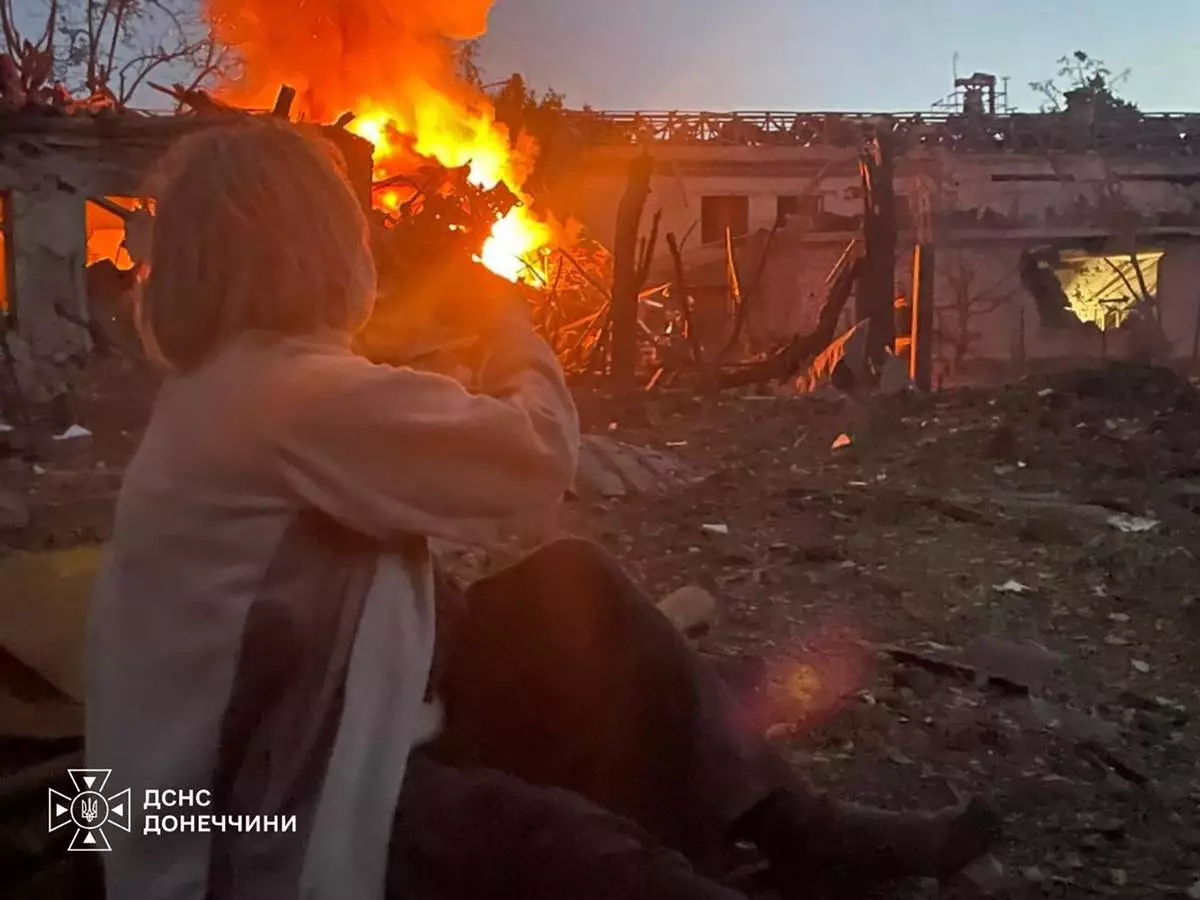
In this photo provided by the Ukrainian Emergency Service, a woman looks at a residential building damaged by a Russian air strike in Sloviansk, Donetsk region, Ukraine, Monday, Aug. 31, 2026. (Ukrainian Emergency Service via AP)
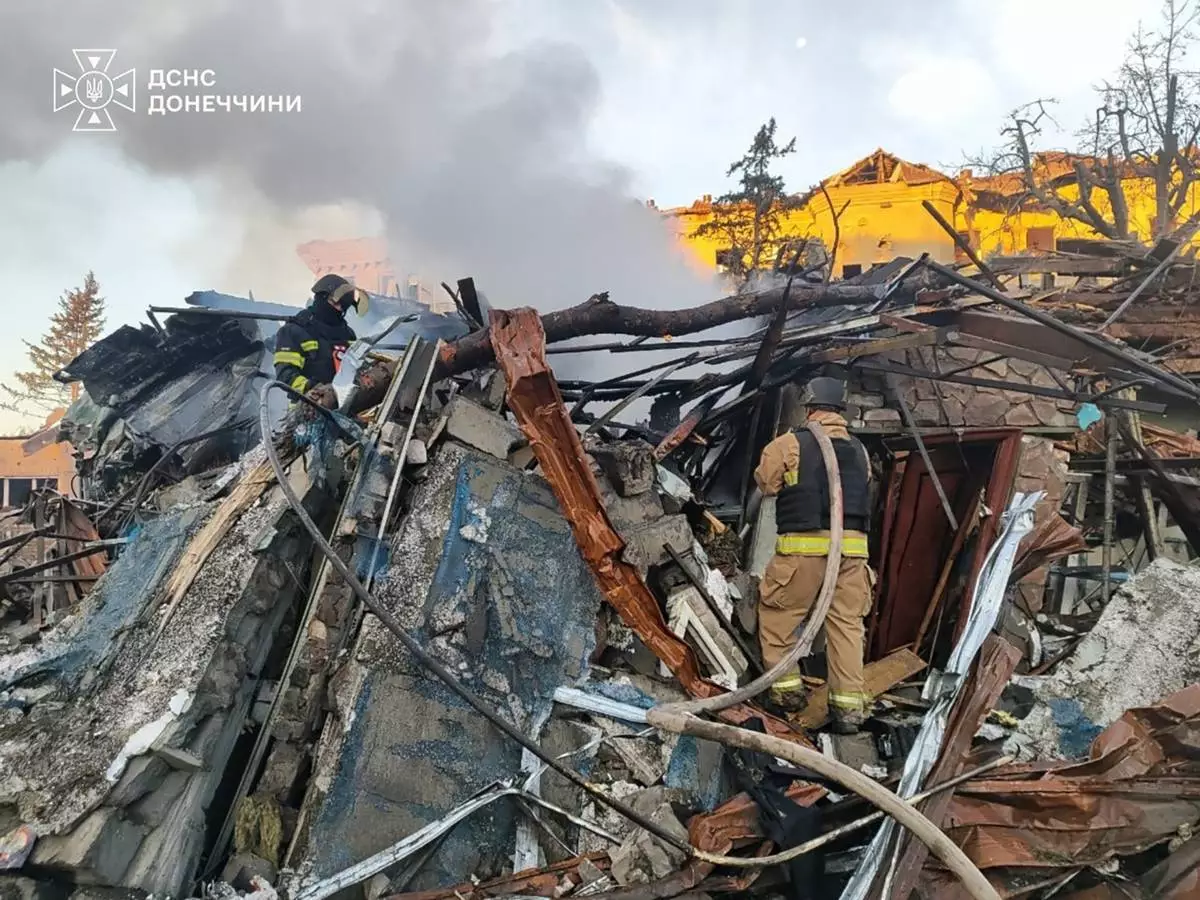
In this photo provided by the Ukrainian Emergency Service, emergency services personnel work to extinguish a fire following a Russian guided bomb strike in the city center of Sloviansk, Donetsk region, Ukraine, Monday, Aug. 31, 2026. (Ukrainian Emergency Service via AP)
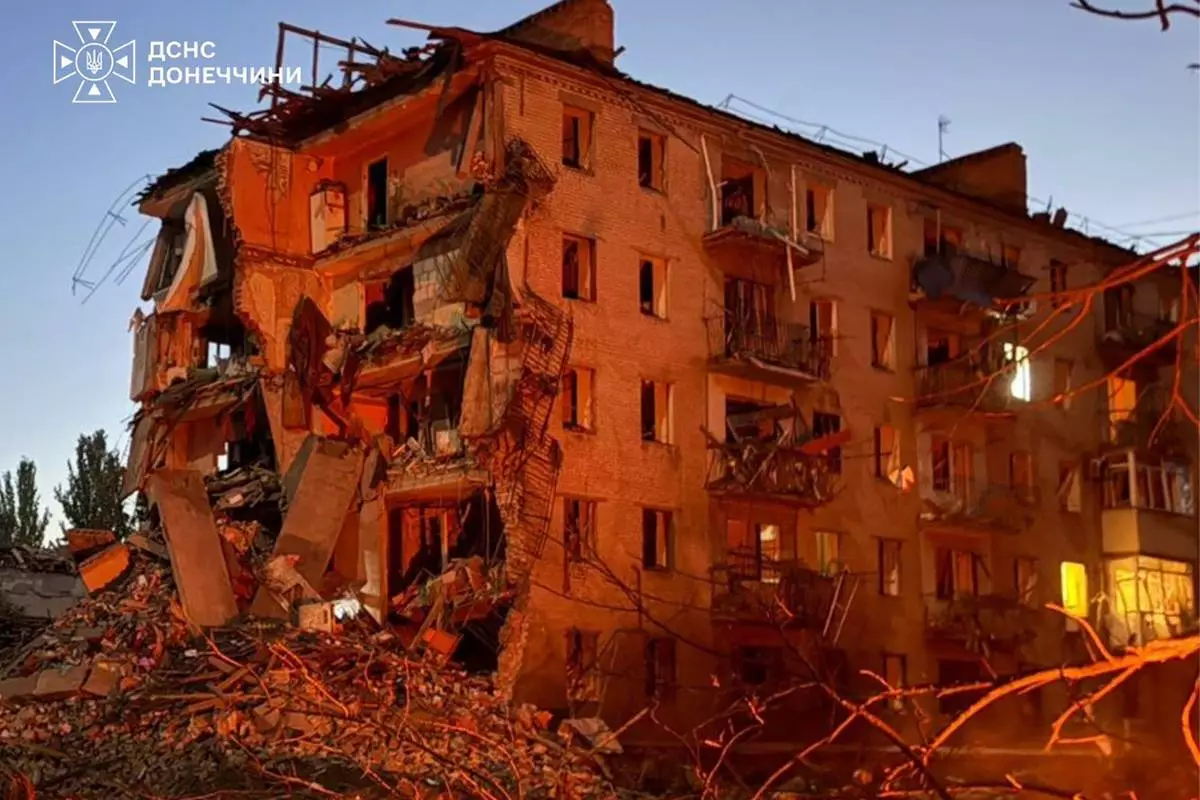
This photo provided by the Ukrainian Emergency Service shows a site of a residential building damaged by a Russian guided bomb in the city center of Sloviansk, Donetsk region, Ukraine, Monday, Aug. 31, 2026. (Ukrainian Emergency Service via AP)