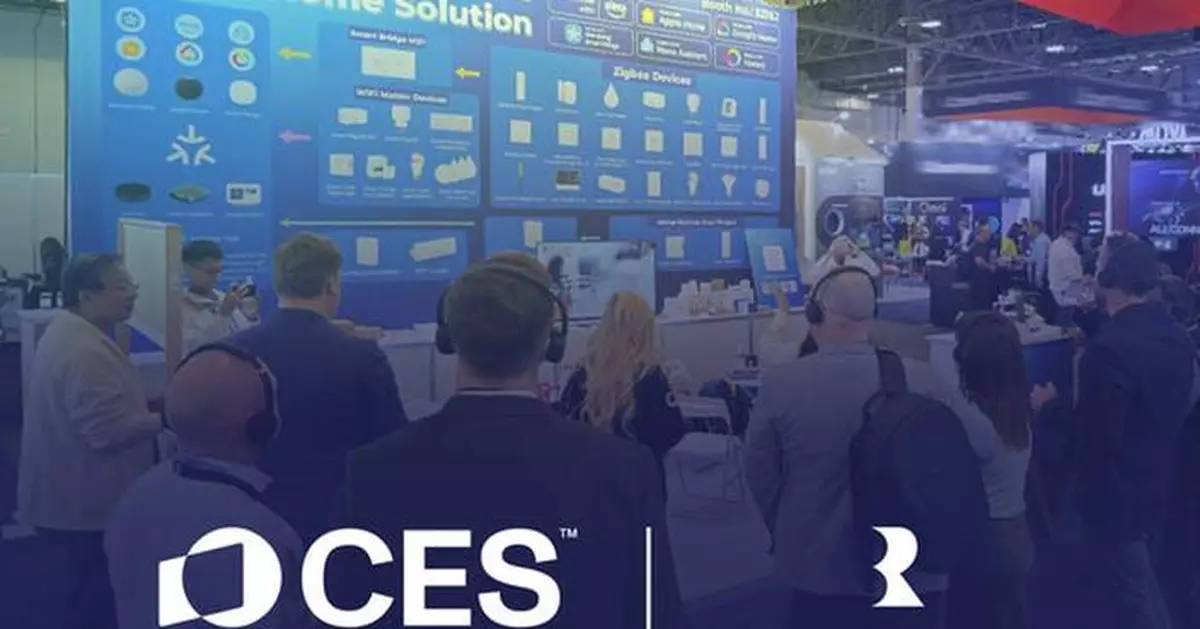
SAN JOSE, Calif., Jan. 16, 2026 /PRNewswire/ -- CES is always about what's new. But for THIRDREALITY, CES 2026 became something more meaningful: a moment to listen, reflect, and see how technology built around real-life needs is already shaping everyday homes.
Throughout the week, our booth welcomed partners, integrators, creators, and long-time users from around the world. They didn't just ask about product specifications—they shared stories. And those stories reminded us why we build.
When Smart Technology Fits Real Homes
One of the most frequently discussed products at our booth was the Smart Garage Door Opener, built on Matter over Wi-Fi and designed to work with existing garage remotes.
A visitor told us how seamlessly it fit into their daily routine:
"I didn't have to replace anything or change my setup. I just added the device, and now I can check and control my garage door remotely with total confidence. It's simple, and it just works."
Another conversation stayed with us even longer. A long-time customer described how our Smart Switch helped transform their 1970s home into a modern smart living space—without rewiring or major renovation.
"My house was never designed for smart devices," they said. "But your switch made it possible. It gave my old home a second life."
For us, these moments captured the heart of what THIRDREALITY stands for:
Smart technology should adapt to real homes, real people, and real constraints.
Product Focus: Plant Care, Presence Sensing, and Smart Blinds
While THIRDREALITY presented a broad range of smart home devices at CES 2026, several product areas in particular generated consistent attention at the booth.
The Smart Soil Moisture Sensor Gen 2 was presented as part of a broader plant care solution, working alongside the company's smart watering system. Visitors asked about updates based on user feedback, including improvements aimed at measurement consistency and long-term durability. In addition to indoor plants and balcony gardens, many attendees also discussed outdoor use cases such as small yards and garden beds. Questions frequently focused on wireless coverage in outdoor environments, with interest in how THIRDREALITY's own Zigbee repeater can be used to extend network range and support reliable data transmission for soil monitoring and automated watering in these settings.
Presence sensing was another frequently discussed topic, particularly across two radar-based products using 60GHz and 24GHz technologies. The 60GHz radar presence sensor is powered via USB-C for always-on applications, while the 24GHz version operates on three AA batteries to support flexible, wire-free placement. Both sensors offer adjustable sensitivity, allowing detection ranges to be tuned for different room sizes and use cases. Attendees asked about applications in bedrooms, kitchen, and workspaces, where precise presence detection can enable more responsive and context-aware automation than traditional motion sensors.
The company's Smart Blind Gen2 also drew strong interest. Many visitors commented on the design of the battery module positioned at the bottom, which simplifies access for charging. The blind uses a Type-C rechargeable battery and supports custom sizing, with widths up to 80 inches and heights up to 74 inches. Discussions at the booth focused on ease of installation, maintenance convenience, and how the design fits into everyday living spaces.
As we move into 2026
THIRDREALITY will continue developing across both Zigbee and Matter platforms, with a strong focus on Matter over Thread—bringing faster response, lower power consumption, and more resilient mesh networking to future devices.
To every customer who shared their story, every partner who stopped by, and every friend we reconnected with: thank you. Your feedback, trust, and support continue to shape what we build.
CES 2026 reminded us that innovation is not just about what's next—it's about what already matters to people today. We'll see you again next year, right here in Las Vegas.
About THIRDREALITY
Third Reality is a smart home technology company, dedicated to developing high-quality, user-friendly, and secure smart home products. Through continuous innovation and a deep understanding of market needs, the company strives to provide an improved smart home experience for users worldwide.
Related Links:
Twitter | Instagram | Facebook | YouTube | TikTok
** The press release content is from PR Newswire. Bastille Post is not involved in its creation. **

THIRDREALITY CES 2026 Recap: Real Stories, Real Homes, and What Comes Next
|
SINGAPORE, April 3, 2026 /PRNewswire/ -- The Sustainable Tourism Impact Fund, a partnership between Agoda, World Wide Fund for Nature (WWF) Singapore, and the UnTours Foundation, has announced its second round of investments alongside early impact results from the Fund's inaugural cohort.
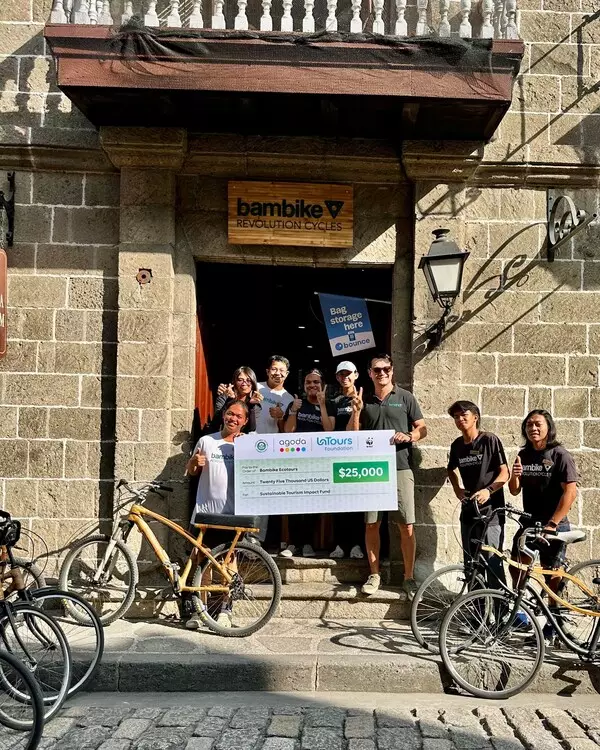
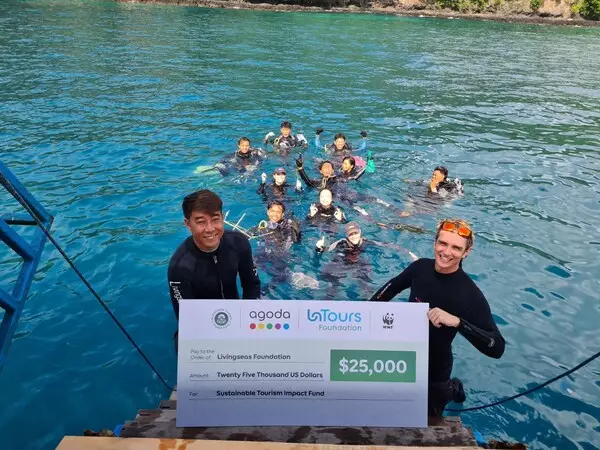
Designed to provide affordable, flexible financing to small and medium-sized tourism enterprises, the Fund supports businesses that integrate environmental restoration, climate resilience, and inclusive economic development into their core operations. Indonesia-based Livingseas Asia and Bambike Ecotours in the Philippines are the beneficiaries of the new investments. Each new investee receives USD 25,000 in loan capital to expand impact-driven initiatives across the region.
In Indonesia, Livingseas Asia combines dive tourism with coral reef restoration in Padangbai, Bali. Its nonprofit arm, the Livingseas Foundation, has restored more than 7,300 square meters of degraded reef, deploying artificial reef structures and planting over 320,000 coral fragments, with measurable biodiversity recovery. The Fund's investment will support the construction of modular housing for staff and trainees near the restoration site. This will expand Livingseas Asia's hosting capacity and strengthen the Foundation's ability to deliver marine education, conservation training, and reef restoration activities.
Bambike Ecotours in the Philippines connects bamboo agroforestry, fair trade bicycle manufacturing in rural communities, and regenerative tourism experiences. The loan will support the development of Ligtasin Cove in Batangas, a bamboo-built tourism destination that will include coastal ecotours and a bamboo nursery for reforestation and erosion control. The initiative aims to create local jobs while expanding lower-carbon tourism experiences that connect travelers with community-led environmental restoration.
"At Agoda, we believe the future of travel depends on the resilience of the destinations we serve," said Timothy Hughes, Vice President of Corporate Development at Agoda. "These investments support local pioneers integrating environmental restoration and community well-being into their operations, demonstrating the potential of impact-driven travel."
Six months after the Fund's initial investments, early results across Thailand, Indonesia, and the Philippines demonstrate encouraging environmental and community impact.
Across Southeast Asia, three organizations advanced community-led tourism in meaningful ways. In Thailand, Local Alike expanded its Travel With Care initiative to 10 destinations, launching 16 regenerative tourism activities and securing partnerships with national parks and tourism authorities to develop a white paper on regenerative tourism. In the Philippines, Ecohotels grew its Bahay Farms initiative by onboarding 22 farmers, planting 500 mango trees, increasing plant-based menu offerings from 35% to 50%, and launching its Green Warriors workforce program, with 5 of 15 trainees already placed in hospitality roles. In Indonesia, Sejiva introduced heritage walking tours and coral restoration experiences across West Java and Jakarta, while scaling its #travelpositive campaign to reach broader audiences.
"We are incredibly encouraged by the impact created so far by our inaugural cohort," said Sarah Payne, Senior Director of Impact at the UnTours Foundation. "These businesses are expanding regenerative tourism models, strengthening local livelihoods, and embedding measurable environmental outcomes into their growth. Their progress shows how flexible financing can translate into tangible impact on the ground."
The Fund is part of Agoda's broader sustainability strategy and builds on its partnership with WWF-Singapore through Agoda's Eco Deals program. Through Eco Deals, Agoda works with hotel partners across Asia to offer travelers discounted stays while directing a portion of proceeds to WWF's conservation initiatives. Those funds also support the Sustainable Tourism Impact Fund, extending conservation impact to small tourism enterprises, strengthening ecosystem health and community resilience at the destination level.
Tourism enterprises across the region advancing conservation, climate resilience, sustainable mobility, and community-led economic development are encouraged to apply for the next round of funding at: https://untoursfoundation.org/sustainable-tourism-impact-fund.
SINGAPORE, April 3, 2026 /PRNewswire/ -- The Sustainable Tourism Impact Fund, a partnership between Agoda, World Wide Fund for Nature (WWF) Singapore, and the UnTours Foundation, has announced its second round of investments alongside early impact results from the Fund's inaugural cohort.
Designed to provide affordable, flexible financing to small and medium-sized tourism enterprises, the Fund supports businesses that integrate environmental restoration, climate resilience, and inclusive economic development into their core operations. Indonesia-based Livingseas Asia and Bambike Ecotours in the Philippines are the beneficiaries of the new investments. Each new investee receives USD 25,000 in loan capital to expand impact-driven initiatives across the region.
In Indonesia, Livingseas Asia combines dive tourism with coral reef restoration in Padangbai, Bali. Its nonprofit arm, the Livingseas Foundation, has restored more than 7,300 square meters of degraded reef, deploying artificial reef structures and planting over 320,000 coral fragments, with measurable biodiversity recovery. The Fund's investment will support the construction of modular housing for staff and trainees near the restoration site. This will expand Livingseas Asia's hosting capacity and strengthen the Foundation's ability to deliver marine education, conservation training, and reef restoration activities.
Bambike Ecotours in the Philippines connects bamboo agroforestry, fair trade bicycle manufacturing in rural communities, and regenerative tourism experiences. The loan will support the development of Ligtasin Cove in Batangas, a bamboo-built tourism destination that will include coastal ecotours and a bamboo nursery for reforestation and erosion control. The initiative aims to create local jobs while expanding lower-carbon tourism experiences that connect travelers with community-led environmental restoration.
"At Agoda, we believe the future of travel depends on the resilience of the destinations we serve," said Timothy Hughes, Vice President of Corporate Development at Agoda. "These investments support local pioneers integrating environmental restoration and community well-being into their operations, demonstrating the potential of impact-driven travel."
Six months after the Fund's initial investments, early results across Thailand, Indonesia, and the Philippines demonstrate encouraging environmental and community impact.
Across Southeast Asia, three organizations advanced community-led tourism in meaningful ways. In Thailand, Local Alike expanded its Travel With Care initiative to 10 destinations, launching 16 regenerative tourism activities and securing partnerships with national parks and tourism authorities to develop a white paper on regenerative tourism. In the Philippines, Ecohotels grew its Bahay Farms initiative by onboarding 22 farmers, planting 500 mango trees, increasing plant-based menu offerings from 35% to 50%, and launching its Green Warriors workforce program, with 5 of 15 trainees already placed in hospitality roles. In Indonesia, Sejiva introduced heritage walking tours and coral restoration experiences across West Java and Jakarta, while scaling its #travelpositive campaign to reach broader audiences.
"We are incredibly encouraged by the impact created so far by our inaugural cohort," said Sarah Payne, Senior Director of Impact at the UnTours Foundation. "These businesses are expanding regenerative tourism models, strengthening local livelihoods, and embedding measurable environmental outcomes into their growth. Their progress shows how flexible financing can translate into tangible impact on the ground."
The Fund is part of Agoda's broader sustainability strategy and builds on its partnership with WWF-Singapore through Agoda's Eco Deals program. Through Eco Deals, Agoda works with hotel partners across Asia to offer travelers discounted stays while directing a portion of proceeds to WWF's conservation initiatives. Those funds also support the Sustainable Tourism Impact Fund, extending conservation impact to small tourism enterprises, strengthening ecosystem health and community resilience at the destination level.
Tourism enterprises across the region advancing conservation, climate resilience, sustainable mobility, and community-led economic development are encouraged to apply for the next round of funding at: https://untoursfoundation.org/sustainable-tourism-impact-fund.
** This press release is distributed by PR Newswire through automated distribution system, for which the client assumes full responsibility. **

Sustainable Tourism Impact Fund Expands Investments Across Southeast Asia
Sustainable Tourism Impact Fund Expands Investments Across Southeast Asia
Sustainable Tourism Impact Fund Expands Investments Across Southeast Asia