A growing number of Chinese energy companies are increasing their presence in the Persian Gulf as they get deeply involved in the region's energy transition.
As a highlight of China-Gulf cooperation, green energy projects carried out by Chinese companies in Gulf states gained spotlight at the 18th World Future Energy Summit, which took place from Wednesday to Thursday in Abu Dhabi, the United Arab Emirates (UAE).
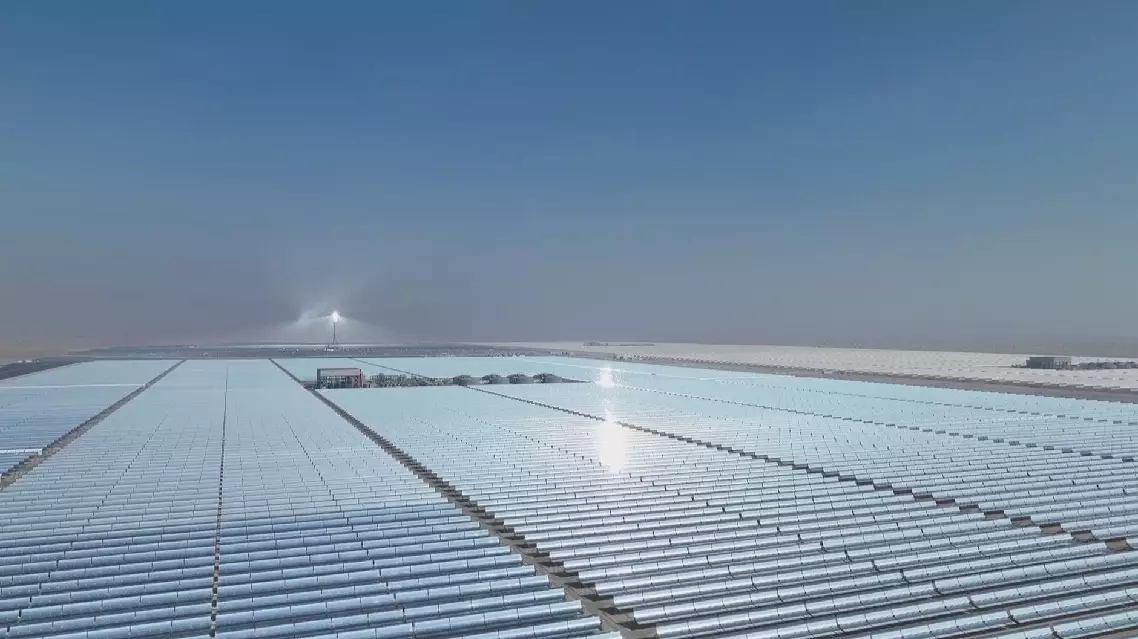
A shining example is the Mohammed bin Rashid Al Maktoum Solar Park in Dubai. As one of the largest single-site solar parks in the world, the solar thermal plant is a key project to help Dubai achieve its carbon reduction goals and significantly increase the share of clean energy in the city's power mix.
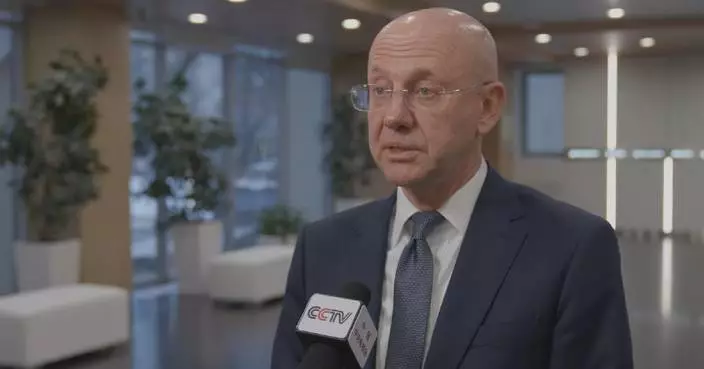
"Upon completion in 2030, it will exceed 8,000 megawatts, and it will reduce 8.5 million tons of carbon emmissions on an annual basis. And it will raise Dubai's clean energy capacity up to 36 percent," said Ali Hayat, a senior engineer of the project.
In recent years, more and more Chinese energy product suppliers have transitioned to a new role as investors by building plants and regional offices in the Gulf region to deepen their participation in local energy transition.
"China has been absurdly in the lead in both ways -- in providing technologies that make the cost of solar panel to be affordable around the world, and also in an amazing increase of the share of renewable energy in the energy system," said Francesco La Camera, director-general of the International Renewable Energy Agency.
Chinese companies seek greater role in Gulf states' energy transition
Vibrant folk events showcasing a fusion of traditional culture and modern creativity unfolded across China on Tuesday, the Lantern Festival, offering both locals and tourists a cultural feast as they celebrated the joyous occasion for reunion.
Various festive events, including intangible cultural heritage street performances, were held on Tuesday in the Xiong'an New Area, north China's Hebei Province. At the event site in Rongcheng County, 20 fascinating folk shows such as flying-fork stunts and lion dances offered people a deep immersion into traditional Chinese culture.
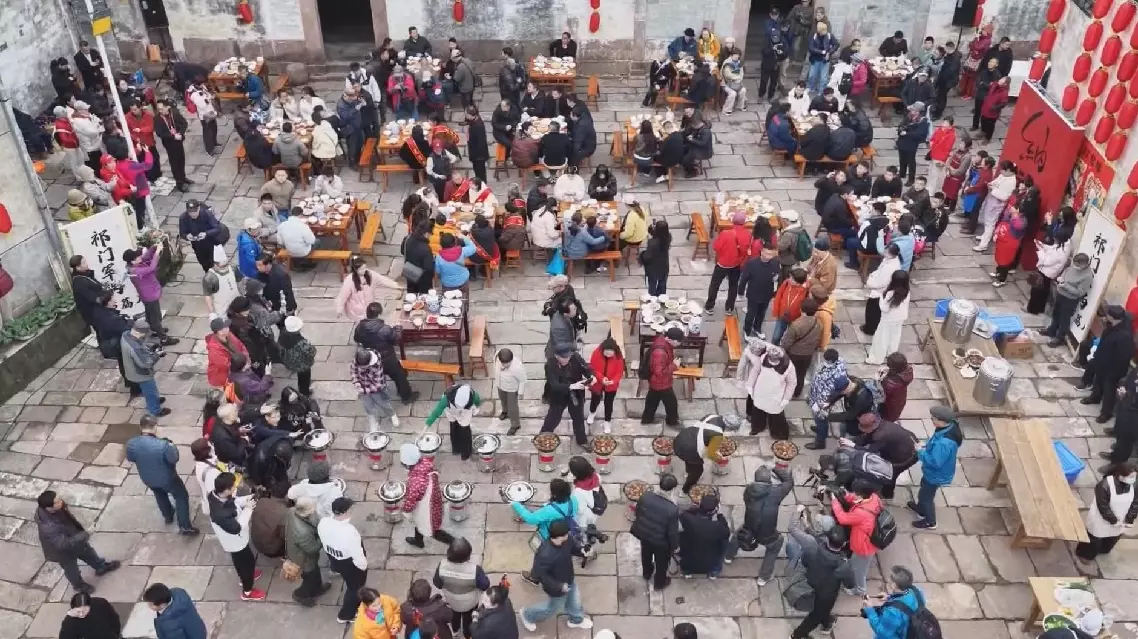
On the day of the festival, a tantalizing aroma wafted through an ancient street in Qimen County, east China's Anhui Province. Locals and visitors were treated to a renowned local dish, with its layers of ingredients symbolizing reunion and prosperity.
"I'm truly happy to take part in this event and taste the local delicacy during the Lantern Festival," said Shen Yufei, a visitor.
As night fell, a spectacular lantern parade was held in Hejin City, north China's Shanxi Province. Performers carrying lotus, fish, and dragon lanterns paraded through the streets in a formation symbolizing "fish and dragons dancing together", conveying people's wishes for favorable weather and for good fortune and happiness.
Alongside the parade, 1,000 drones soared into the sky, forming patterns and words including "Carp Leaping Over the Dragon Gate" -- a traditional Chinese idiom symbolizing a transformative leap to success -- and "Happy Hejin".
"We can not only watch masters demonstrating skills passed down for generations, but also enjoy new ideas full of the spirit of the new era. It's really splendid," said Pei Zhuoran, a visitor.
The folk art of the bench dragon came to life in a community in Hangzhou City, east China's Zhejiang Province. Under the guidance of instructors, residents painted, pasted, and pieced together the dragon-shaped lanterns.
Across various regions of China, it is a longstanding tradition to adorn numerous connected benches with colorful dragon-shaped lanterns and hold them in festival parade and dance, symbolizing wishes for a prosperous and abundant year ahead.
"I just learned how to do it, and now I'm able to make it myself. It's our Chinese tradition that has profound meanings," said Qu Lei, a resident.
On Tuesday, people in a township of Kunming City, southwest China's Yunnan Province, gathered to celebrate the festival with a centuries-old wrestling tradition of the Yi ethnic group. The competitors' thrilling bouts drew waves of cheers and applause from the crowd.
Every year on the Lantern Festival, the Yi community in the township holds wrestling matches to pray for favorable weather and a bountiful harvest.
"It's my first time watching a wrestling of the Yi people. It's simply breathtaking," said Zhang Hao, a visitor.
"Our wrestling is not just about strength; it is a continuation of our rituals and culture. It helps more friends coming from afar understand the culture and charm of our Yi people," said Ni Yuan, a competitor.
In addition to the wrestling matches, there were also traditional ethnic singing and dancing, providing visitors with an immersive experience of the vibrant local culture.
Folk events light up China on Lantern Festival