WASHINGTON (AP) — President Donald Trump issued a flurry of pardons in recent days, including for the father of a large donor to his super PAC, a former governor of Puerto Rico and a woman whose sentence he commuted during his first term but who ended up back in prison for a different scheme.
Trump commuted the sentence of Adriana Camberos just before his first stint in the White House ended in 2021. That followed her being convicted as part of an effort to divert 5-Hour Energy drink bottles acquired for resale in Mexico and instead keep them in the U.S. Prosecutors said she and several co-conspirators attached counterfeit labels and filled the bottles with a phony liquid before selling them.
In 2024, she and her brother, Andres, were convicted in a separate case, this one involving lying to manufacturers to sell wholesale groceries and additional items at big discounts after pledging that they were meant for sale in Mexico or to prisoners or rehabilitation facilities. The siblings sold the products at higher prices to U.S. distributors, prosecutors said.
The Camberoses were among 13 pardons Trump issued Thursday, along with eight commutations. An additional pardon was announced Friday for Terren Peizer, a resident of Puerto Rico and California who headed the Miami-based health care company Ontrak.
Peizer had been convicted and sentenced to 42 months in prison, and fined $5.25 million, for engaging in an insider trading scheme to avoid losses exceeding $12.5 million, according to the Justice Department.
The president has issued a number of clemencies during the first year of his second term, many targeted at criminal cases once touted by federal prosecutors. They’ve come amid a continuing Trump administration effort to erode public integrity guardrails — including the firing of the Justice Department’s pardon attorney.
Also pardoned this week was former Puerto Rico Gov. Wanda Vázquez, who had pleaded guilty last August to a campaign finance violation in a federal case that authorities say also involved a former FBI agent and a Venezuelan banker. Her sentencing had been set for later this month.
Federal prosecutors had been seeking one year behind bars, something Vázquez’s attorneys opposed as they accused prosecutors of violating a guilty plea deal reached last year that saw previous charges including bribery and fraud dropped.
They had noted that Vázquez had agreed to plead guilty to accepting a promise of a campaign contribution that was never received.
Also involved in the case was banker Julio Herrera Velutini, whose daughter, Isabela Herrera, donated $2.5 million to Trump's MAGA Inc. super PAC in 2024, and gave the group an additional $1 million last summer. The case's third defendant was former FBI agent Mark Rossini, who was also pardoned by the president.
The recent wave of clemencies joins previous Trump pardons of Democratic former Illinois Gov. Rod Blagojevich and Republican ex-Connecticut Gov. John Rowland, whose promising political career was upended by a corruption scandal and two federal prison stints.
Trump also pardoned former U.S. Rep. Michael Grimm, a New York Republican who resigned from Congress after a tax fraud conviction and made headlines for threatening to throw a reporter off a Capitol balcony over a question he didn’t like. Reality TV stars Todd and Julie Chrisley, who had been convicted of cheating banks and evading taxes, also got Trump pardons.
The president also pardoned Texas Democratic Rep. Henry Cuellar in a bribery and conspiracy case. He later expressed regret and frustration for having done so, however, when Cuellar announced he was seeking reelection without switching parties to become a Republican.
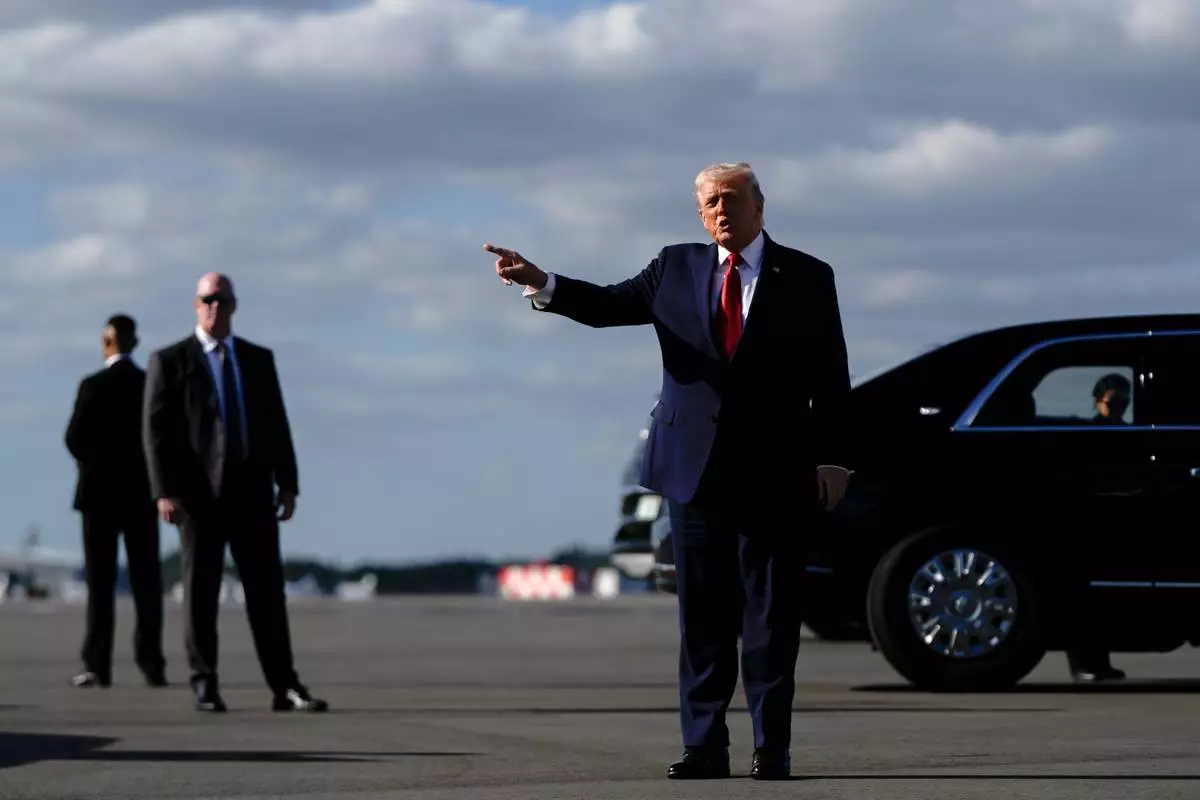
President Donald Trump points after arriving at Palm Beach International Airport on Air Force One, Friday, Jan. 16, 2026, in West Palm Beach, Fla. (AP Photo/Julia Demaree Nikhinson)
MEMPHIS, Tenn. (AP) — For 21 years, Steve Fowler and Sam Wilson have performed together in a band on Memphis’ renowned Beale Street. And for the past decade, the men have been neighbors on a quiet, leafy avenue.
But as of Thursday, they will no longer cast the same ballot despite living across the street from each other.
That’s because Tennessee’s Republican-controlled legislature redrew the congressional district of Memphis, which has long enjoyed its own Democratic-leaning U.S. House seat. Now, the city is split into three Republican-leaning districts, its majority-Black population sliced up and bound to mostly white, rural and conservative communities along lines that branch away from Fowler and Wilson’s East Memphis neighborhood.
A line runs down the middle of the street, placing Fowler in the 8th Congressional District, which runs hundreds of miles to central Tennessee across a dozen counties. Wilson is zoned for the 9th District, which extends across most of the state’s southern border before curving up to encompass the largely white and affluent Nashville suburbs.
“I think it’s horrible,” said Fowler, who is white. “This isn’t just going to be bad for Black folks in Memphis, but poor whites in these new districts also aren’t going to get services. How are any of these congressmen going to serve all these different counties?”
The redraw was sparked by a ruling from the conservative majority of the U.S. Supreme Court that may be a death knell for congressional representation of majority-Black Southern communities such as Memphis.
For 60 years, a provision of the landmark Voting Rights Act required mapmakers to prove they were not discriminating against racial minorities in how they drew districts, often leading to political boundaries that allowed some minority communities to vote for their preferred representative rather than having their vote diluted by white majorities surrounding them.
The rule had the greatest effect in Southern states, where neighboring Black and white communities remain highly polarized in partisan politics.
On April 29, the justices severely weakened that requirement, ruling that the way courts had handled it improperly injected racial matters into redistricting in violation of the U.S. Constitution. Republicans across the South immediately leaped at the chance to redraw their maps before the November elections to eliminate as many Democratic-held, majority-minority congressional seats as possible.
Tennessee’s legislature was the first in a GOP-controlled state to finalize a new map. But it is one of several Southern states — Alabama, Florida, Louisiana, Mississippi and South Carolina among them — engaged in a broader partisan redistricting competition sweeping the country.
Republicans have long complained that the Voting Rights Act prevented them from doing to Democratic, majority-Black districts what Democrats in states they control do to conservative-leaning, white and rural areas — scatter their voters for partisan gain. That is what Tennessee Republicans did in their initial congressional map in 2021 to the state’s other large reservoir of Democrats in Nashville, where they did not have to step gingerly because that city is majority white.
“Tennessee is a conservative state and our congressional delegation should reflect that,” said Republican state Sen. John Stevens, who shepherded the bill for a new map that made all nine congressional districts solidly Republican.
Wilson, the Memphis musician who is Black, was less distraught by the carving up of his neighborhood for partisan purposes. He saw the move as just another trial facing the city after a surge of federal agents sent by President Donald Trump to combat crime and amid narratives about Memphis' safety from neighboring suburbs and Republican state lawmakers.
“It’s a hustling community. We’re going to make ends meet for our families,” Wilson said. “The legacy of Memphis is music and our civil rights history,” he said, adding the two were intertwined. “Hard times mean you’re going to try and find your gift. That’s what we do here; music in Memphis is a way of life.”
The Memphis district predates the Voting Rights Act. For at least a century, well before Congress acted to protect minority voting rights, Tennessee has believed it made sense for its metropolis on the Mississippi River to have its own U.S. House district. But since that law was passed in 1965, anyone who tried to split up the district for partisan gain could be sued and have the maps thrown out. Now, legal experts say that is not much of a risk.
Nonetheless, Democrats and civil rights groups are suing to block the map. The symbolism is especially sharp as the city is home to the National Civil Rights Museum, built around the motel where the Rev. Martin Luther King Jr. was assassinated in 1968. When the legislature passed the new maps, Democrats and protesters shouted “hands off Memphis!” and waved signs accusing Republicans of bringing back Jim Crow.
“Memphis is not just any city; it holds a central place in the national story of our quest for racial justice in this country and how, over time, we have increasingly achieved civil, voting, and economic rights for all Americans,” said Eric Holder, a former U.S. attorney general who chairs the National Democratic Redistricting Committee. “Black citizens protested, marched and died there for the right to vote.”
Memphis has faced dual stories in recent years. Billions of dollars in private investment and federal dollars have flooded into the area in recent years, but many local businesses still express concerns about a lagging regional economy.
Residents who spoke with The Associated Press expressed concerns about safety and public services but bristled at stereotypes about rampant crime. The twin stories are often on display in the river city, where pothole-filled streets run from empty storefronts to ornate mansion-filled neighborhoods and leafy college campuses only blocks away.
The city has long had a contentious relationship with the rest of the state, which voted for Trump in 2024 by a roughly 2-1 margin.
The conservative legislature in Nashville has clashed repeatedly with Memphis and accused its leaders of broad mismanagement. The legislature passed a law blocking many police overhaul efforts in Memphis that were put in place after the death of Tyre Nichols, an unarmed Black man, at the hands of city officers in 2023. It passed another measure seizing control of Memphis’ airport board and those of other cities across the state, and gave the state attorney general, also a Republican, the power to remove Memphis' elected district attorney.
“The state legislature is trying to take it over,” said U.S. Rep. Steve Cohen, the white Democrat who still represents the city in Congress until the new lines kick in after the midterms. “And that’s absurd. It was all partially because it’s a majority Black city.”
Thomas Goodman, a politics and law professor at Rhodes College in Memphis, notes that the new congressional districts may lead to greater friction over who receives attention — and funding — from lawmakers. Memphis residents will soon share districts with Republican towns with starkly different economies, geographies and demographics. Whoever holds those congressional seats will have an incentive to pay attention to those voters and not to Memphis’ population.
“It would not only deprive Black Tennesseans of proper representation,” Goodman said. “These changes also break up the city of Memphis as an entity into multiple districts, thereby removing a dedicated agent in government who knows the people, who understands their concerns and can speak for them and deliver on behalf of their interests and desires.”
Chris Wiley’s house sits in what was, before this week, a quiet street in Midtown Memphis dotted with duplexes, tidy lawns and sports fields. Now his neighborhood is carved apart at the intersection of three congressional districts. That is not surprising, he said, because “Tennessee is all about the dollar” rather than residents.
“Memphis is majority Black, so if you mess with that, what’s the point of even voting in Tennessee?” said Wiley, a 29-year-old sports stadium worker who is Black. “Whatever the congressional numbers, whatever that is, we don’t count on the scale as high, anyway.”
Associated Press writer Nicholas Riccardi in Denver and AP videojournalist Sophie Bates contributed to this report.
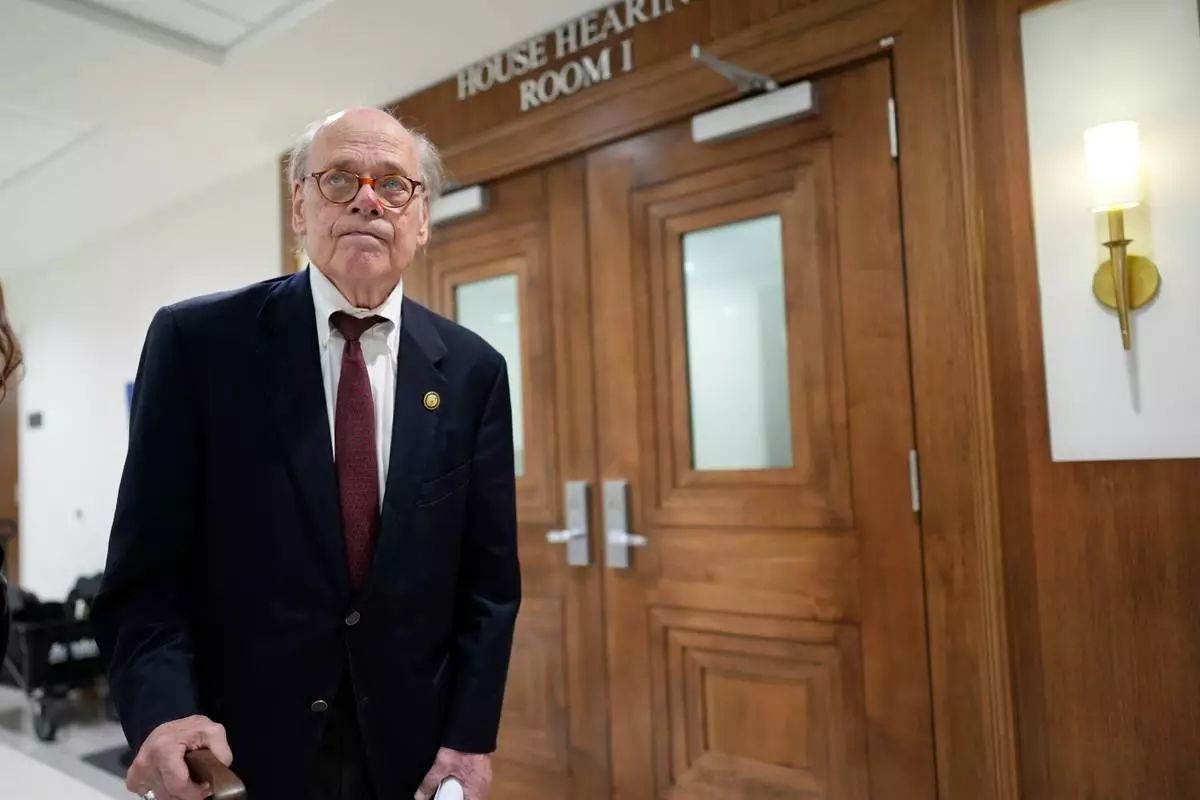
Rep. Steve Cohen, D-Tenn., of Memphis stands outside a House hearing room during a special session of the state legislature to redraw U.S. Congressional voting maps Wednesday, May 6, 2026, in Nashville, Tenn. (AP Photo/George Walker IV)
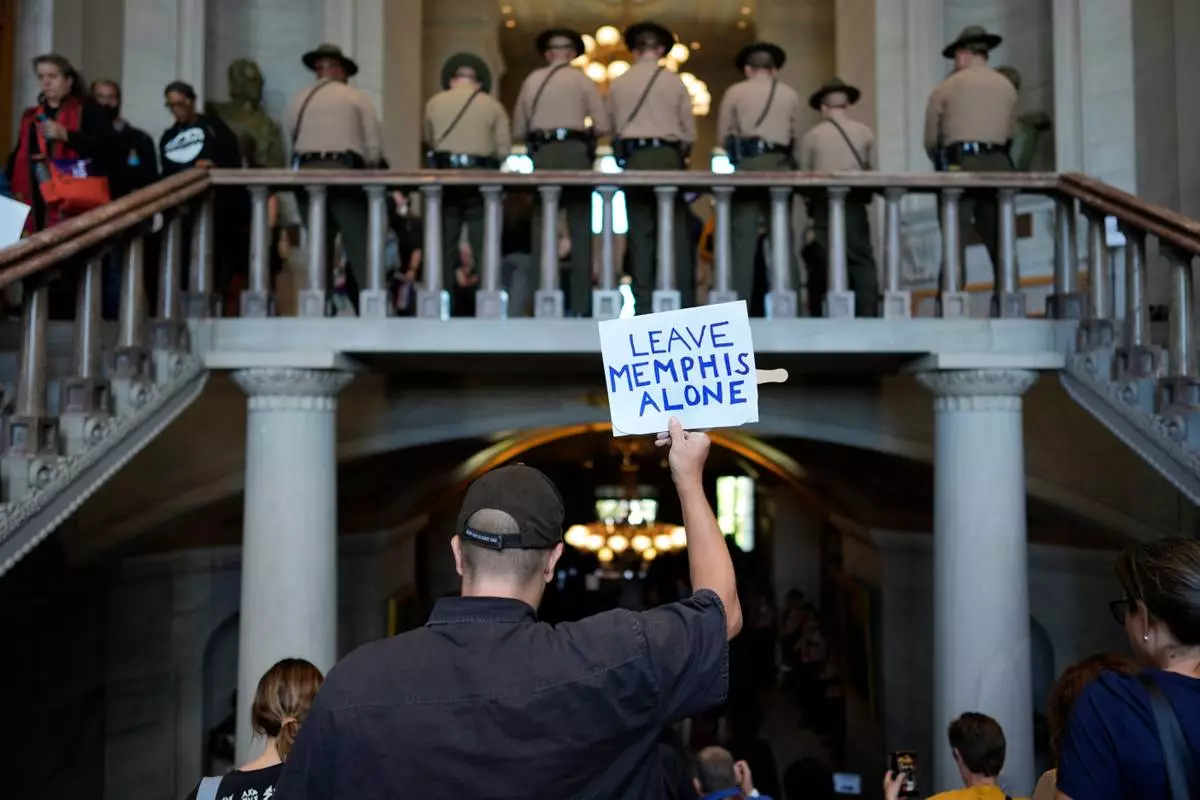
A person leaves the state Capitol after a special session of the state legislature to redraw U.S. Congressional voting maps Thursday, May 7, 2026, in Nashville, Tenn. (AP Photo/George Walker IV)
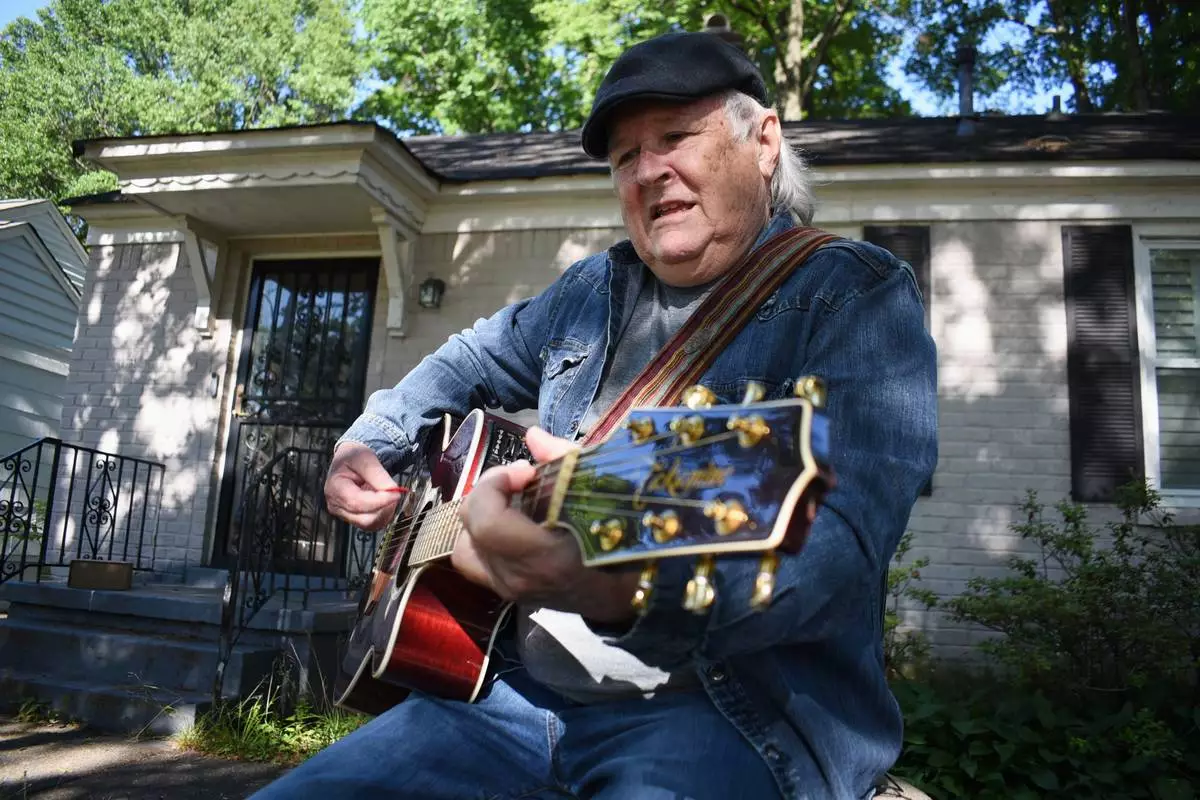
Steve Fowler, a Beale Street musician whose street was bisected by Tennessee's new congressional districts, strums the guitar in his front yard on Thursday, May 7, 2026, in Memphis, Tenn. (AP Photo/Sophie Bates)
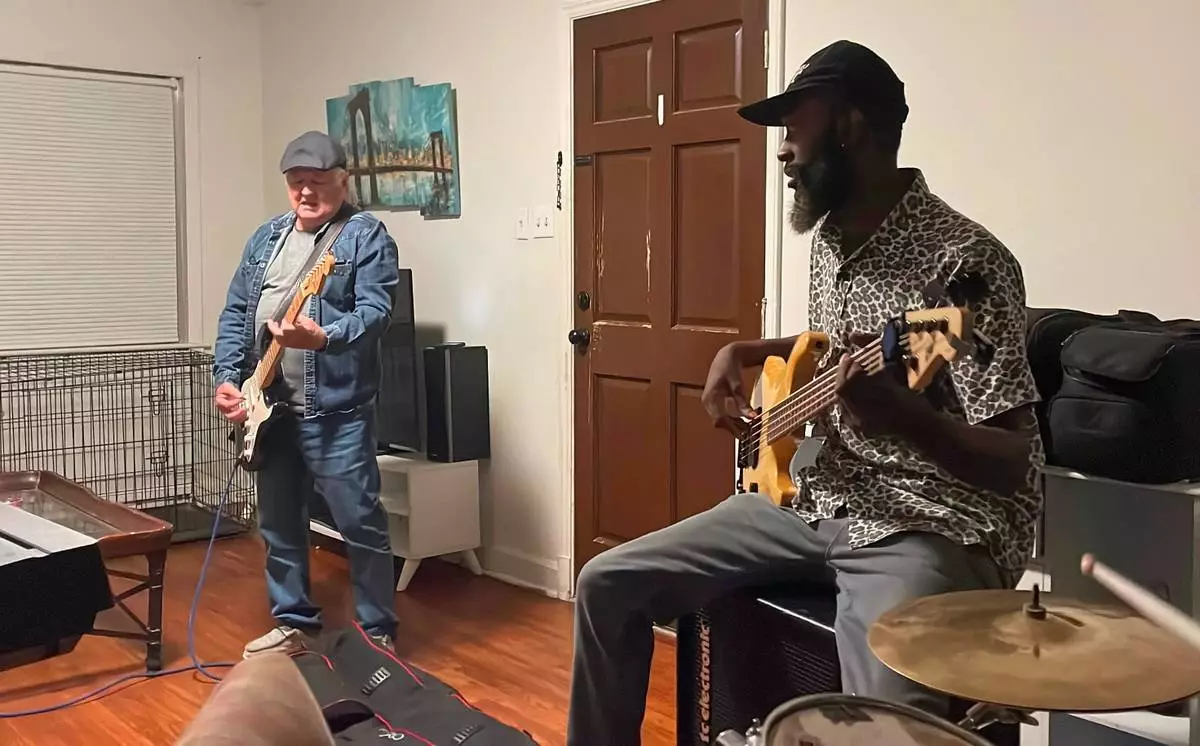
Steve Fowler, left, and Sam Wilson, right, rehearse with their band on Thursday, May 7, 2026, in Memphis, Tenn. (AP Photo/Sophie Bates)
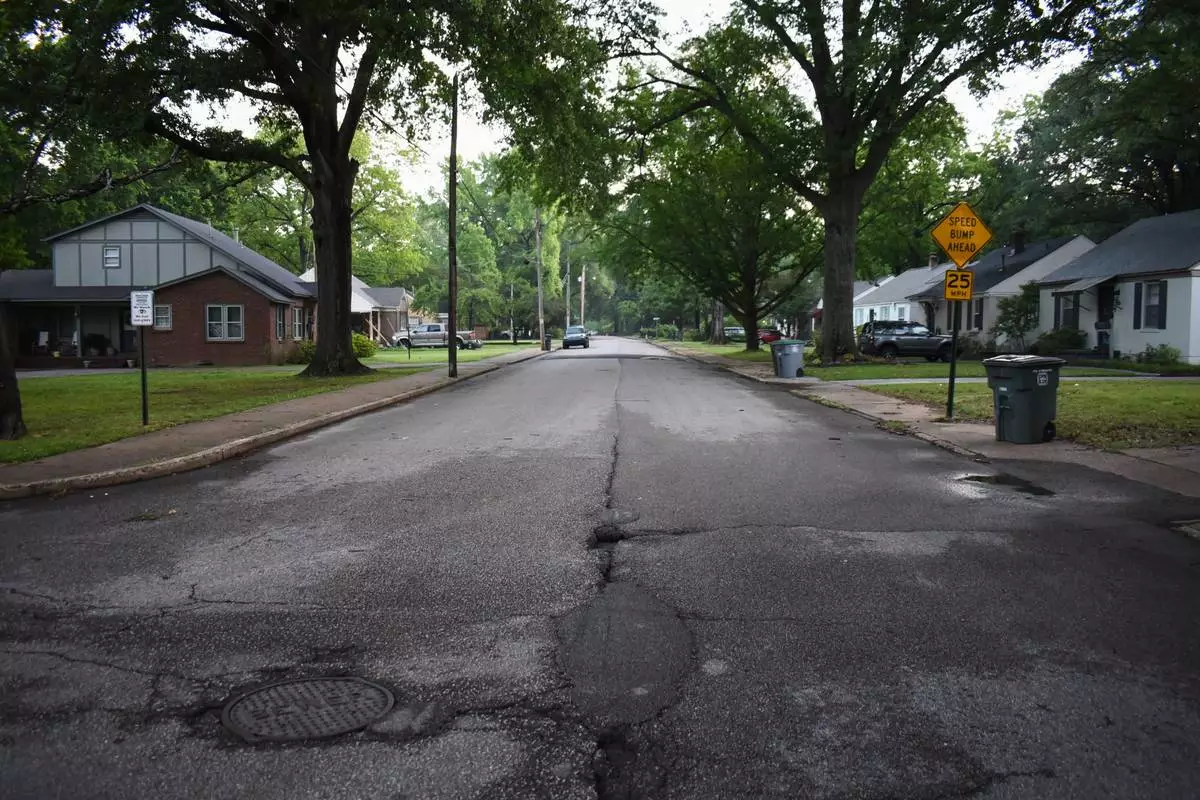
A portion of Shotwell Street in Memphis, Tenn., that is now a dividing line between two newly-redrawn congressional districts, is seen Thursday, May 7, 2026, in Memphis, Tenn. (AP Photo/Sophie Bates)