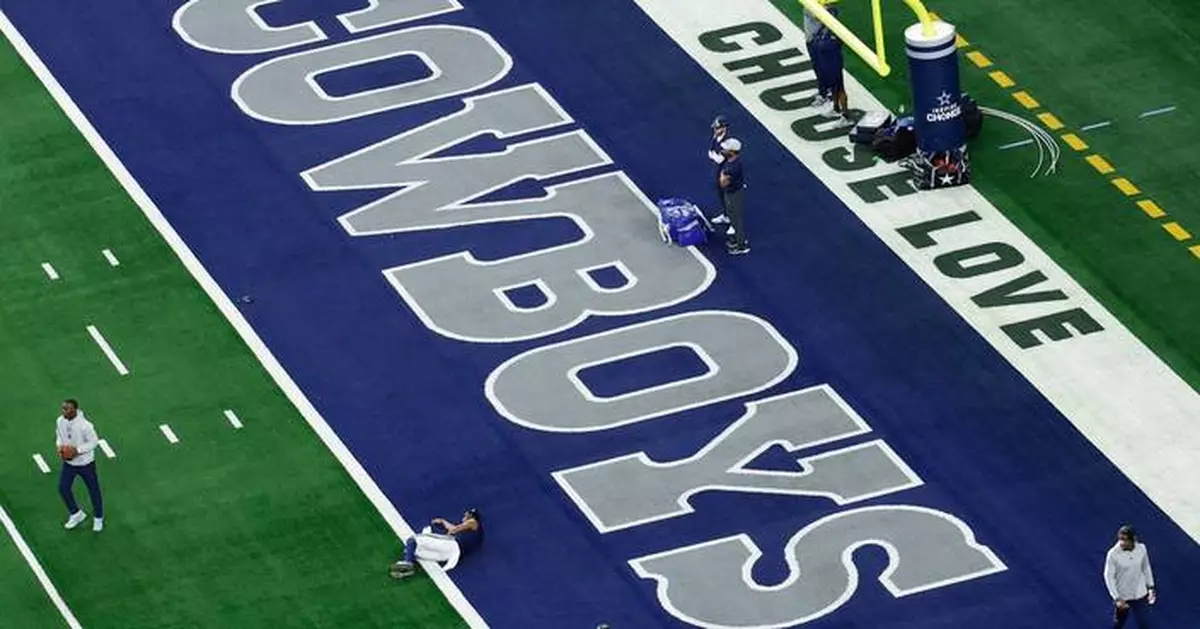
NEW YORK (AP) — The NFL will honor the Rev. Martin Luther King Jr. by displaying “Choose Love” in the end zones and on helmet decals for all divisional round playoff games this weekend.
“Choose Love” and “It Takes All of Us” will appear on opposite end zones at the Super Bowl next month. Host teams will select the end zone stencils for the conference championship games.
“Dr. King’s message continues to guide how we show up in meaningful moments across the league,” said Anna Isaacson, SVP of social responsibility for the NFL. "'Choose Love’ has become an important and widely embraced message for our teams because it reflects the values Dr. King championed — dignity, empathy, and a commitment to our shared humanity. Bringing it forward in the Divisional Round and again at Super Bowl LX reflects that continued relevance.”
“Choose Love” was first introduced in 2022 when the Bills adopted it as a unifying message for their community after a shooting in Buffalo. NFL teams have widely embraced the stencil, and it was featured at the Super Bowl last year following an attack in New Orleans.
The NFL has used on-field social justice messaging for the past six seasons. Teams featured an end zone message of their choice at each home game throughout the season, selecting from four options: “End Racism,” “Stop Hate,” “Choose Love” or “Inspire Change.” “It Takes All of Us” was stenciled in the opposite end zone for all games.
AP NFL: https://apnews.com/hub/nfl

FILE - The word's "Choose Love" are displayed in the end zone at AT&T Stadium before a NFL football game between the Washington Commanders and the Dallas Cowboys on Sunday, Jan. 5, 2025, in Arlington, Texas. (AP Photo/Matt Patterson, File)
CAPE CANAVERAL, Fla. (AP) — NASA’s giant new moon rocket headed to the launch pad Saturday in preparation for astronauts’ first lunar fly-around in more than half a century.
The out-and-back trip could blast off as early as February.
The 322-foot (98-meter) rocket began its 1 mph (1.6 kph) creep from Kennedy Space Center’s Vehicle Assembly Building at daybreak. The four-mile (six-kilometer) trek could take until nightfall.
Thousands of space center workers and their families gathered in the predawn chill to witness the long-awaited event, delayed for years. They huddled together ahead of the Space Launch System rocket’s exit from the building, built in the 1960s to accommodate the Saturn V rockets that sent 24 astronauts to the moon during the Apollo program. The cheering crowd was led by NASA’s new administrator Jared Isaacman and all four astronauts assigned to the mission.
“What a great day to be here,” said Reid Wiseman, the crew commander. “It is awe-inspiring.”
Weighing in at 11 million pounds (5 million kilograms), the Space Launch System rocket and Orion crew capsule on top made the move aboard a massive transporter that was used during the Apollo and shuttle eras. It was upgraded for the SLS rocket’s extra heft.
The first and only other SLS launch — which sent an empty Orion capsule into orbit around the moon — took place back in November 2022.
“This one feels a lot different, putting crew on the rocket and taking the crew around the moon,” NASA’s John Honeycutt said on the eve of the rocket’s rollout.
Heat shield damage and other capsule problems during the initial test flight required extensive analyses and tests, pushing back this first crew moonshot until now. The astronauts won’t orbit the moon or even land on it. That giant leap will take come on the third flight in the Artemis lineup a few years from now.
Wiseman, pilot Victor Glover and Christina Koch — longtime NASA astronauts with spaceflight experience — will be joined on the 10-day mission by Canadian astronaut Jeremy Hansen, a former fighter pilot awaiting his first rocket ride.
They will be the first people to fly to the moon since Apollo 17’s Gene Cernan and Harrison Schmitt closed out the triumphant lunar-landing program in 1972. Twelve astronauts strolled the lunar surface, beginning with Neil Armstrong and Buzz Aldrin in 1969. Only four moonwalkers are still alive; Aldrin, the oldest, turns 96 on Tuesday.
“They are so fired up that we are headed back to the moon,” Wiseman said. “They just want to see humans as far away from Earth as possible discovering the unknown.”
NASA is waiting to conduct a fueling test of the SLS rocket on the pad in early February before confirming a launch date.
“We've, I think, zero intention of communicating an actual launch date" until completing the fueling demo, Isaacman told reporters.
The space agency has only five days to launch in the first half of February before bumping into March.
The Associated Press Health and Science Department receives support from the Howard Hughes Medical Institute’s Department of Science Education and the Robert Wood Johnson Foundation. The AP is solely responsible for all content.
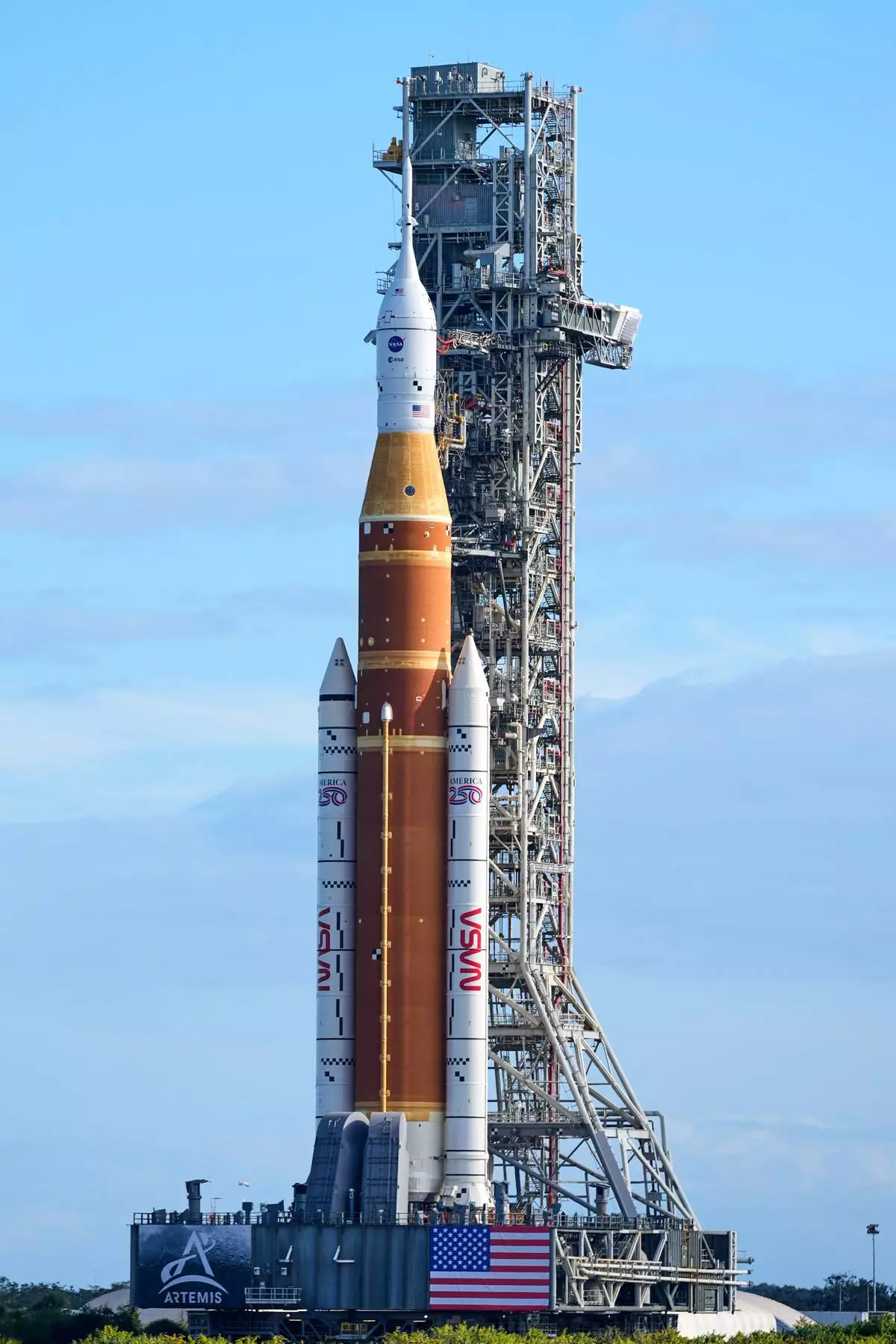
NASA's new moon rocket, Artemis II, makes its way from the Vehicle Assembly Building to pad 39B at the Kennedy Space Center, Saturday, Jan. 17, 2026, in Cape Canaveral, Fla. (AP Photo/John Raoux)
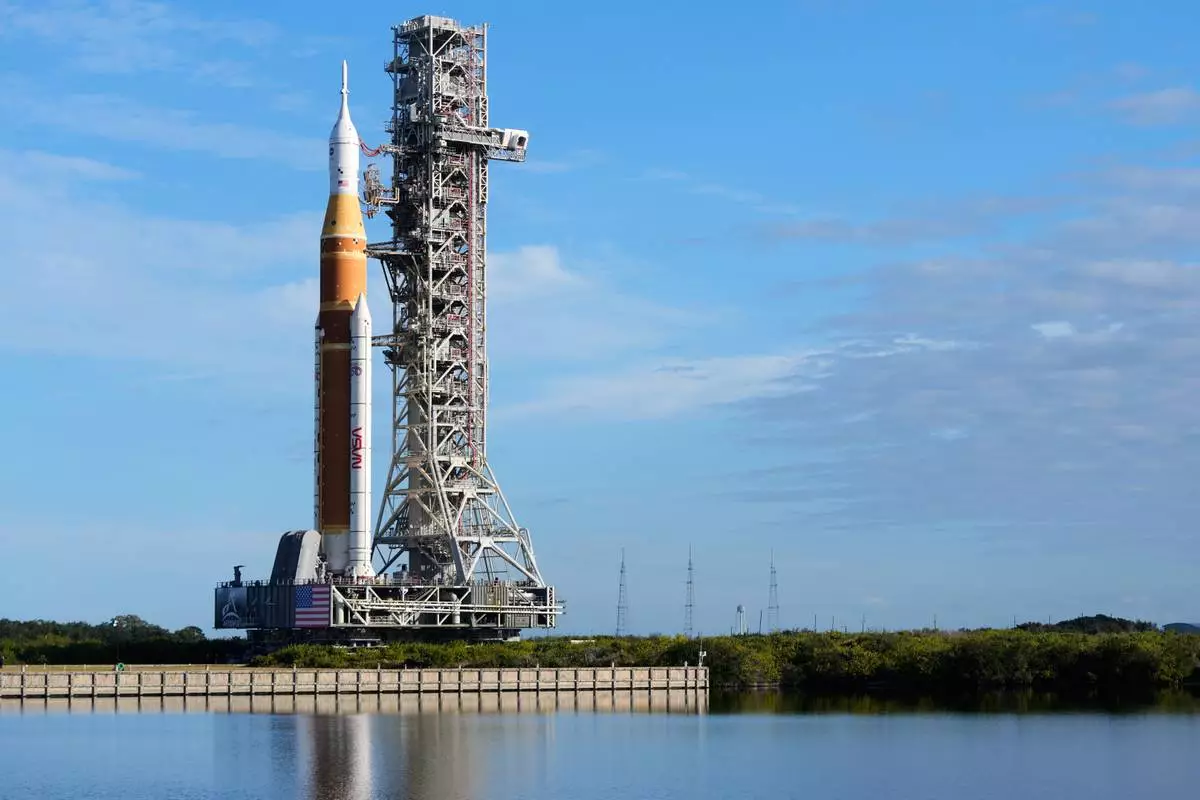
NASA's new moon rocket, Artemis II, makes its way from the Vehicle Assembly Building to pad 39B at the Kennedy Space Center, Saturday, Jan. 17, 2026, in Cape Canaveral, Fla. (AP Photo/John Raoux)
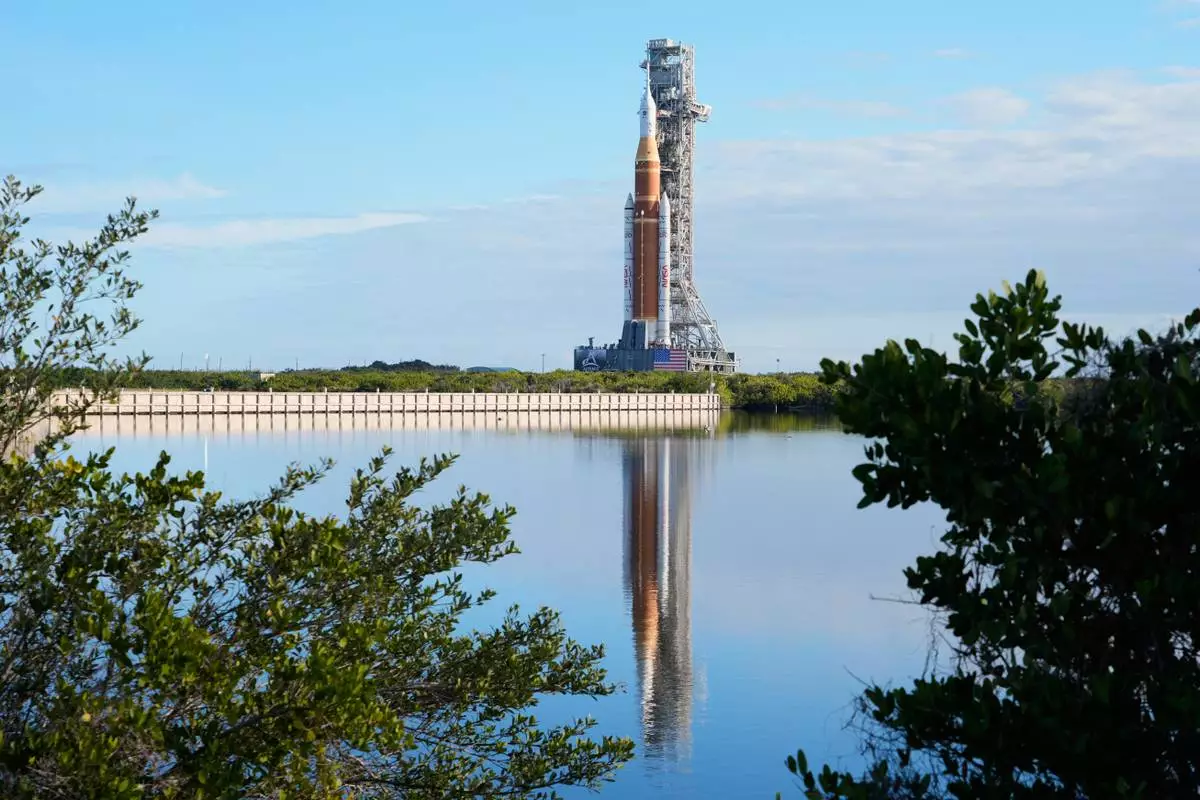
NASA's new moon rocket, Artemis II, makes its way from the Vehicle Assembly Building to pad 39B at the Kennedy Space Center, Saturday, Jan. 17, 2026, in Cape Canaveral, Fla. (AP Photo/John Raoux)
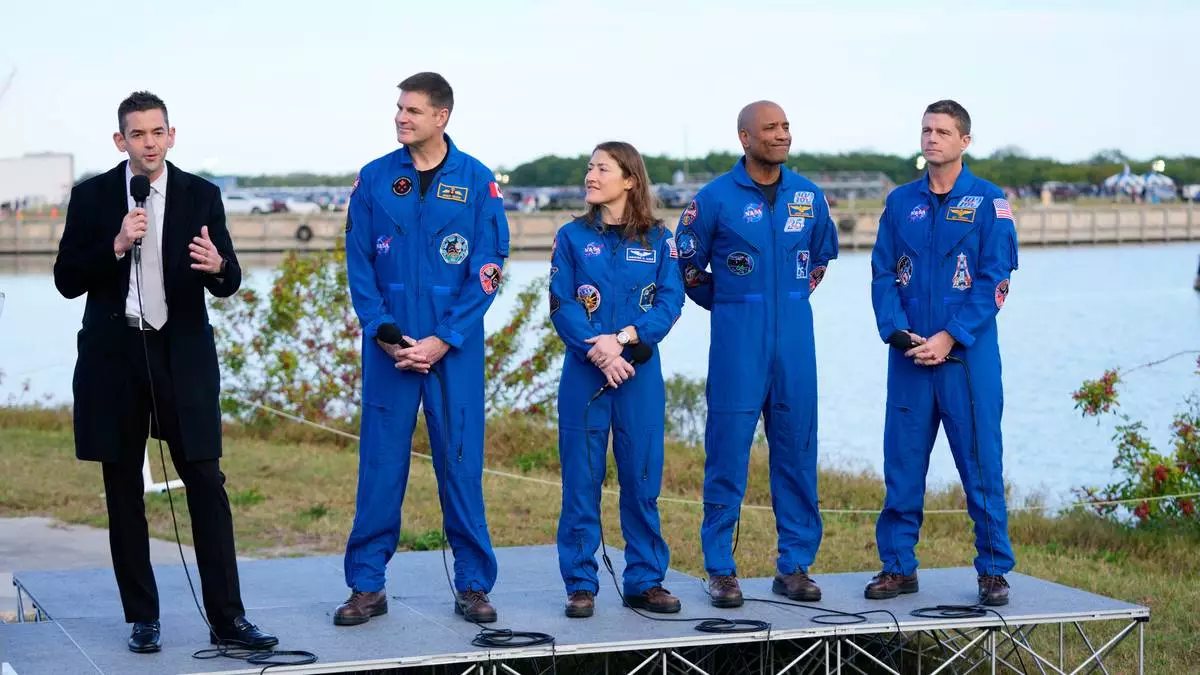
NASA's new moon rocket, Artemis II, makes its way from the Vehicle Assembly Building to pad 39B at the Kennedy Space Center, Saturday, Jan. 17, 2026, in Cape Canaveral, Fla. (AP Photo/John Raoux)
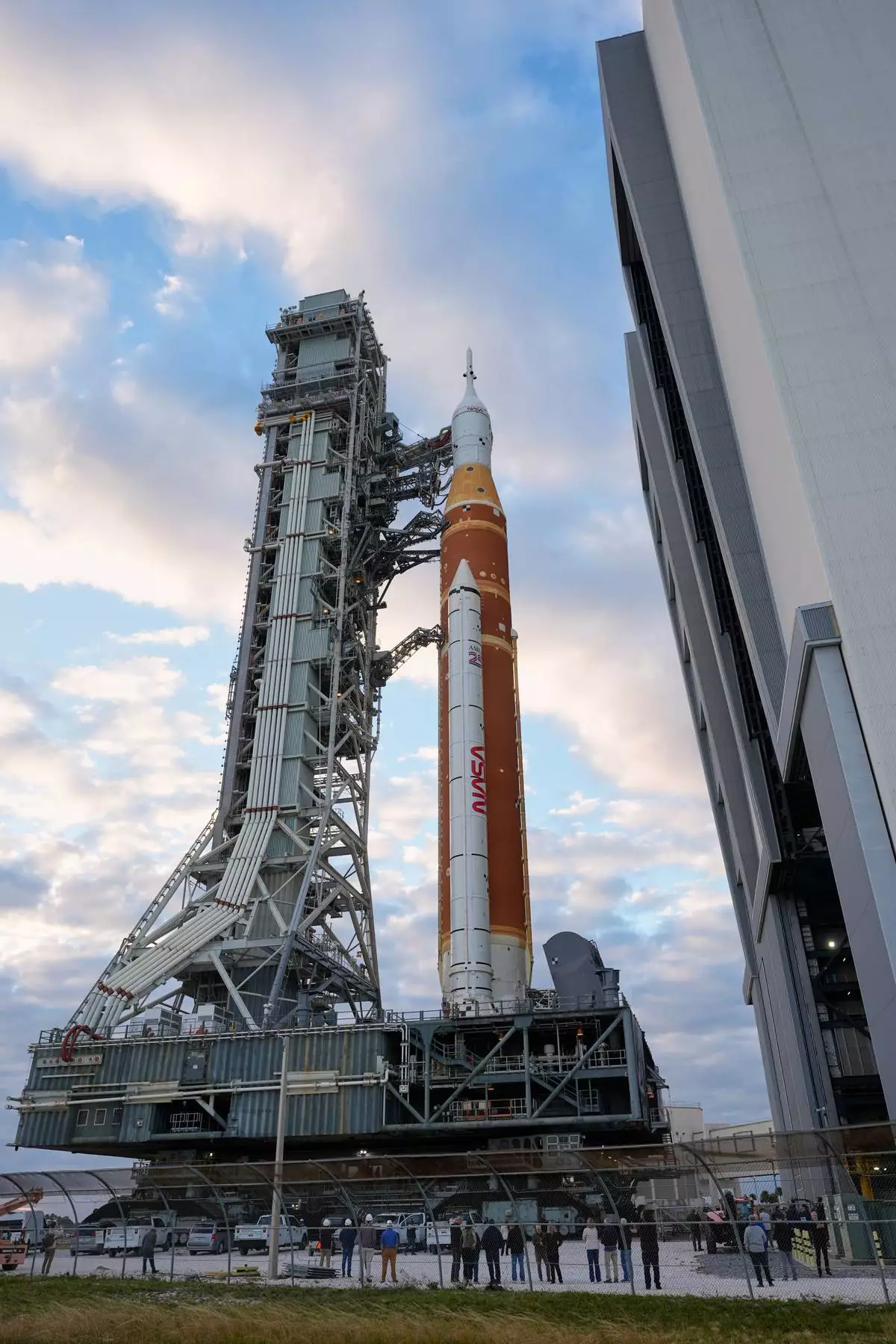
The Artemis II rocket makes its way from the Vehicle Assembly Building to pad 39B at the Kennedy Space Center, Saturday, Jan. 17, 2026, in Cape Canaveral, Fla. (AP Photo/John Raoux)
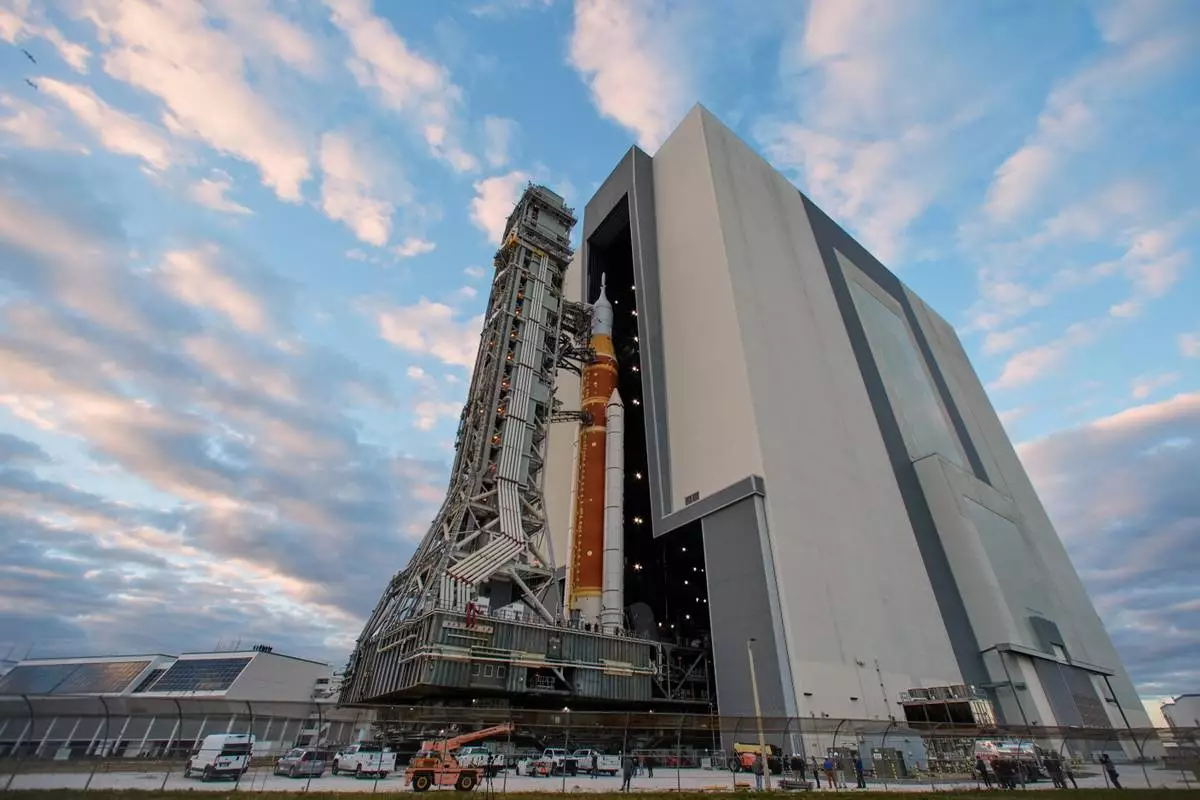
The Artemis II rocket makes its way from the Vehicle Assembly Building to pad 39B at the Kennedy Space Center, Saturday, Jan. 17, 2026, in Cape Canaveral, Fla. (AP Photo/John Raoux)
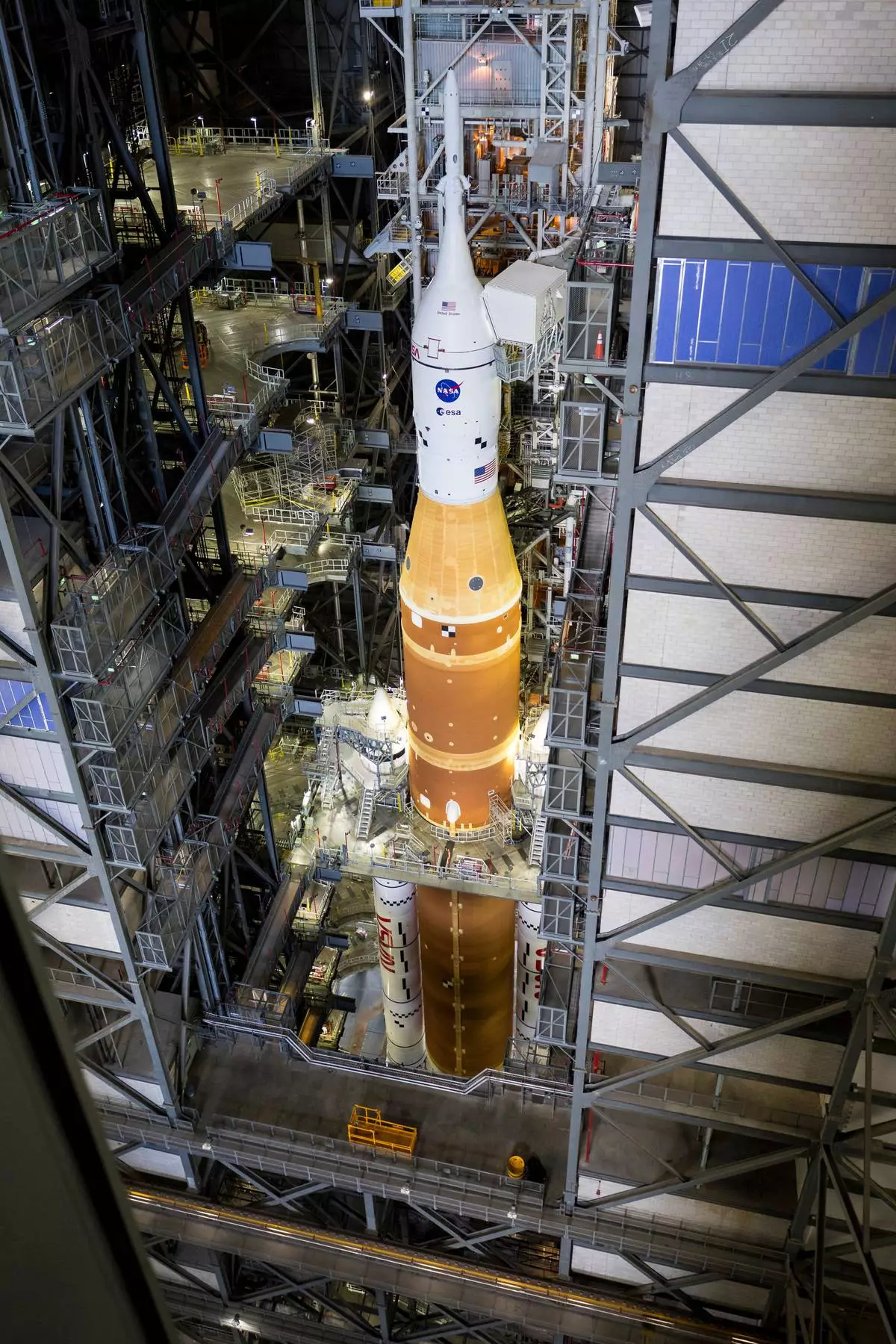
In this photo provided by NASA, the Artemis II SLS (Space Launch System) rocket and Orion spacecraft, secured to the mobile launcher, is seen inside the Vehicle Assembly building as preparations continue for roll out to Launch Pad 39B, Thursday, Jan. 15, 2026, at the Kennedy Space Center in Florida. (Aubrey Gemignani/NASA via AP)
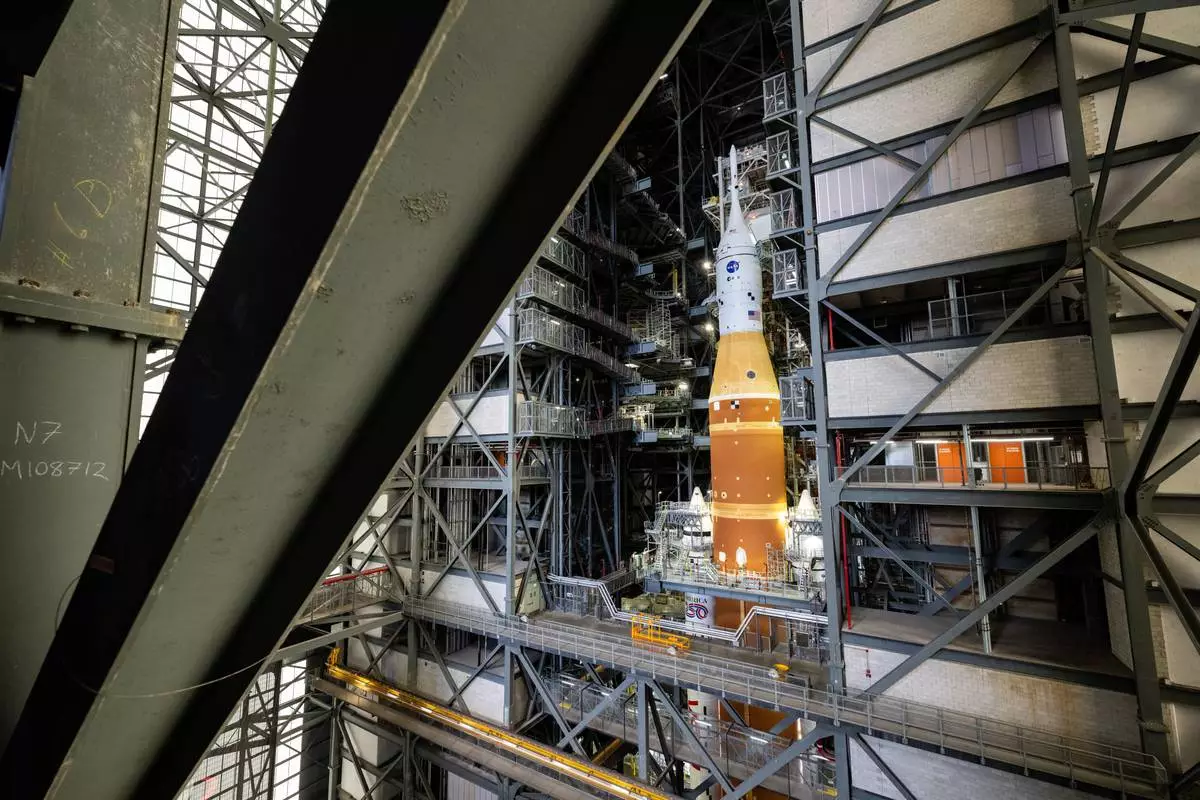
NASA's Artemis II SLS (Space Launch System) rocket and Orion spacecraft, secured to the mobile launcher, is seen inside the Vehicle Assembly building as preparations continue for roll out to Launch Pad 39B, Thursday, Jan. 15, 2026, at NASA's Kennedy Space Center in Florida. (Keegan Barber/NASA via AP)