Excessive speeding was so common on parallel one-way streets passing a massive electronics plant that Indianapolis residents used to refer to the pair as a “racetrack” akin to the city's famous Motor Speedway a few miles west.
Originally two-way thoroughfares, Michigan and New York streets switched to opposite one-way routes in the 1970s to help thousands of RCA workers swiftly travel to and from their shifts building televisions or pressing vinyl records. But after the RCA plant closed in 1995, the suddenly barren roads grew even more enticing for lead-footed drivers — until last year, when city officials finally converted them back to two-way streets.
“The opening and conversion of those streets has just been transformative for how people think about that corridor,” said James Taylor, who runs a nearby community center.
Embracing the oft-repeated slogan that “paint is cheap,” transportation planners across the U.S. — particularly in midsize cities — have been turning their unidirectional streets back to multidirectional ones. They view the step as one of the easiest ways to improve safety and make downtowns more alluring to shoppers, restaurant patrons and would-be residents.
Dave Amos, an assistant professor of city and regional planning at California Polytechnic State University, said almost no major streets in the U.S. originated as one-way routes. Two-way streets were the standard, before mass migration to the suburbs prioritized faster commutes over downtown walkability.
“One-way streets are designed for moving cars quickly and efficiently,” Amos said. “So when you have that as your goal, pedestrians and cyclists almost by design are secondary, which makes them more vulnerable.”
But the propensity to speed isn’t the only reason one-way streets are viewed as less safe.
Wade Walker, an engineer with Kittelson & Associates who has worked on street conversion projects in Lakeland, Florida; Lynchburg, Virginia; and Chattanooga, Tennessee, said there is a misperception that one-way streets are safer because people on foot only have to look one direction to see the incoming traffic. The confusion arises when one-way streets combine with two-way streets to form a city grid, he said.
Pedestrians crossing a signalized intersection of two-way streets can expect to encounter vehicles in a certain sequence: those turning left on green, traveling straight, and turning right on red. But when one-way streets are included, there are 16 potential sequences depending on the type and direction of the roads that intersect, Walker said.
“It’s not the number of conflicts, it’s the way those conflicts occur,” he said.
Louisville, Kentucky, about two hours south of Indianapolis, has been restoring one-way streets to their original two-way footprints. The state is leading an ongoing project to reconvert a stretch along Main Street that passes such landmarks as the Louisville Slugger Museum, the KFC Yum! Center arena, and a minor-league baseball stadium.
One of the city's biggest redesigns is happening this year in the predominantly Black western part of the city, where many roads changed to one-way routes in the 1970s to feed a new interstate bridge over the Ohio River. However, it decimated neighborhoods and cut off the once-thriving community from downtown.
“All those mom-and-pop shops and local businesses over time kind of faded because that connectivity got taken away,” said Michael King, the city's assistant director of transportation planning. “It just feels more like, ‘This is a road to get me through here pretty quickly.’”
Within three years after some of Chattanooga's two-way streets were transformed into unidirectional ones, business vacancies skyrocketed and the University of Tennessee at Chattanooga became “landlocked” to prevent students from having to cross a dangerous road, Walker said.
In 2022, almost two decades after the road was redesigned, he returned to find the college campus had expanded across it and business construction had surged.
When Lynchburg, Virginia launched a long-discussed plan to change its downtown Main Street back to two ways, Rodney Taylor voiced concerns that it would doom his restaurant by blocking delivery vehicles. After the city completed the section in 2021, he acknowledged the fears were unfounded.
“An important thing to do is to admit when you’re wrong,” he said. “And I was just flat-out wrong.”
Many residents also changed their tune in Austin, Texas, when the city began reconverting some of the one-way streets in its urban core, said Adam Greenfield, executive director with Safe Streets Austin.
“It just worked,” said Greenfield, who is now lobbying the city to do away with all its one-way streets. “That’s what you’ll find with these conversions — they’ll be done and then instantly people will be like, ‘Why didn’t we do this 20 years ago?’”
After Chicago went the opposite direction last year and suddenly changed some of its two-way streets to one-way in the busy West Loop restaurant district, a politician representing an adjacent area got numerous calls from confused constituents.
“Even if this was the right move to make these streets one-way, it certainly doesn’t make sense to not ask the opinion of the neighbors,” Alderman Bill Conway said.
Now that Indianapolis has finished the redesigns for Michigan and New York streets, there are 10 other conversions on tap next, said Mark St. John, chief engineer for the city’s Department of Public Works. The total cost for those projects is estimated at $60 million, with around $25 million of that from a 2023 federal grant.
James Taylor, who runs the community center near the old RCA plant, said it is too early to know the full impact. Some business owners, however, have signaled construction plans along the redesigned streets, which Taylor says still feel a little strange.
“I've been driving around that neighborhood for 30 years,” he said. “It's all kind of familiar, but you're coming at it from a whole different perspective.”
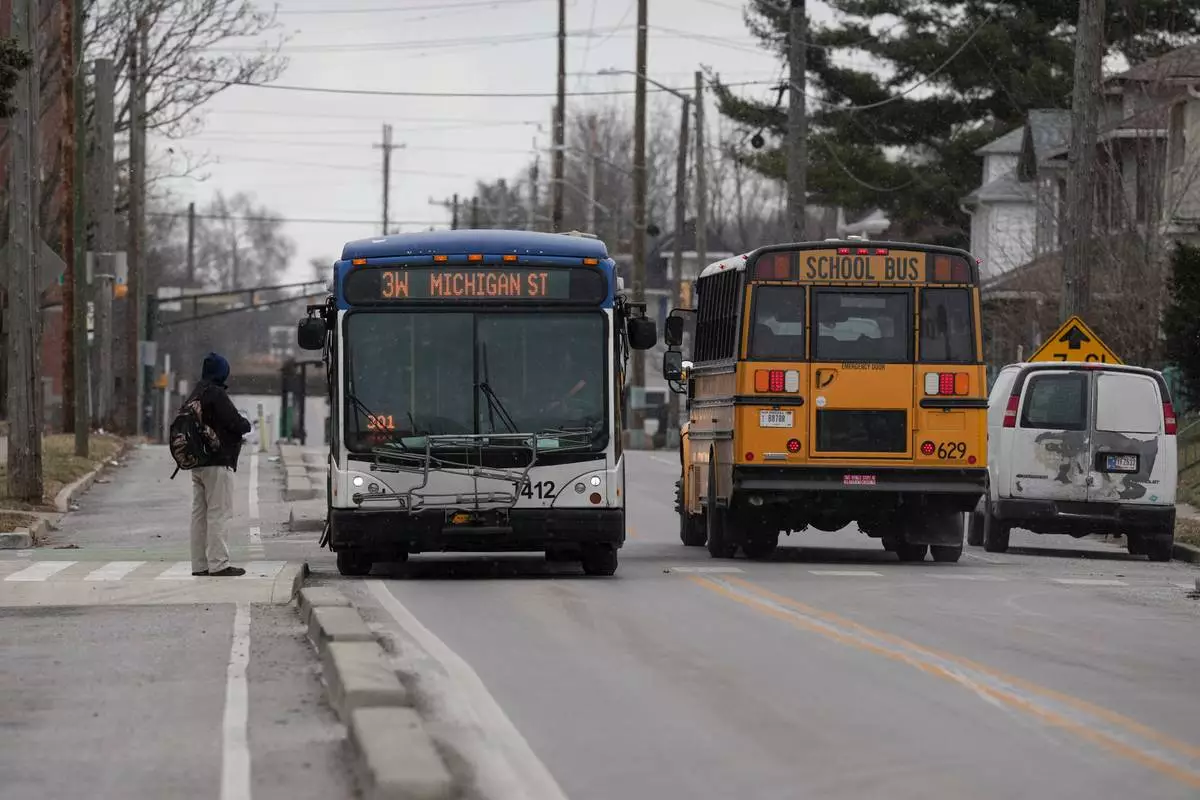
A passenger awaits the arrival of an IndyGo bus on the recently converted two-way portion of Michigan Street in Indianapolis, Thursday, Jan. 15, 2026. (AP Photo/Michael Conroy)
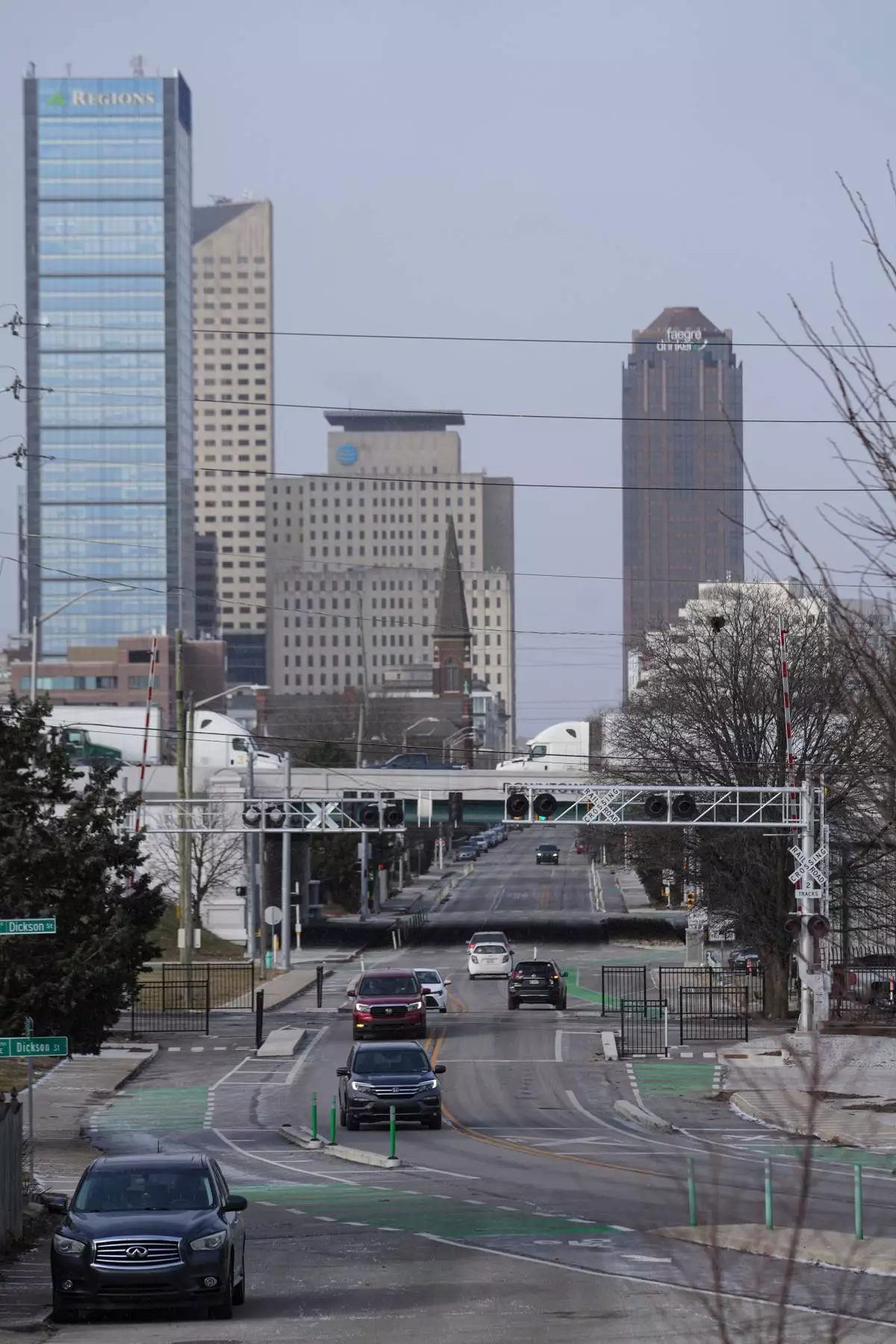
Cars make their way onto the recently converted two-way portion of Michigan Street in Indianapolis, Thursday, Jan. 15, 2026. (AP Photo/Michael Conroy)
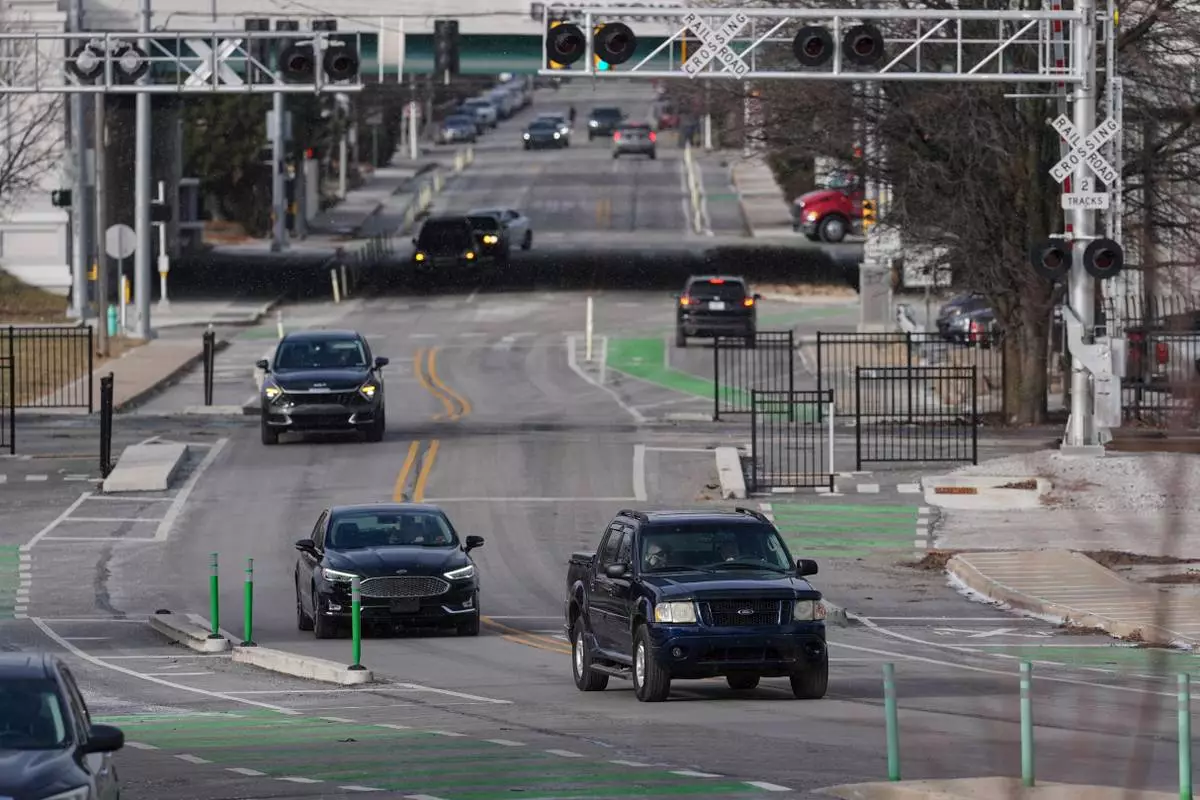
Cars make their way onto the recently converted two-way portion of Michigan Street in Indianapolis, Thursday, Jan. 15, 2026. (AP Photo/Michael Conroy)