Japanese rice farmers are facing intensified pressure from both persistent price hikes and policy U-turns, leaving them in a dilemma about future production.
The average price of rice in Japan has reached 4,267 yen (about 26.95 U.S. dollars) per 5 kilos, remaining at an elevated level, according to data released by the Ministry of Agriculture, Forestry and Fisheries on Friday.
Kazuo Ishizuka, a 91-year-old farmer in the main rice-producing region of Niigata, has been growing and selling rice for over 30 years.
He told China Central Television that increasing rice price has led to a clear decline in the number of his customers.
"If the price of rice goes up further, it will be difficult to sell. Sales have slowed down and people are buying less. We worry that if we set the price too high, we'll lose customers, so we hope the price will be maintained at a moderate level," Ishizuka said.
Japan has a 50-year-old policy of reducing rice production, which, along with an aging population, has forced some paddies to lie fallow.
In 2025, the Japanese government released a large amount of reserve rice to stabilize the price, then changed course to boost rice production. However, incumbent Prime Minister Sanae Takaichi reversed the policy once again after taking office in October 2025, and the long-standing policy of reducing rice production only halted for four months.
The repeated policy shifts have left farmers struggling to adapt.
"As rice farmers like us are getting older, the number of rice growers is gradually decreasing, and so is the output. If the policy of reducing production is overly implemented, it will be very troublesome. But if there is an excess of rice, this is the only way. In mountainous areas like ours, if the policy of reducing production is pushed, paddies will be abandoned, which is troubling. We hope government's policies will allow us to continue farming our existing fields. If the rice price drops too much, it won't even cover our costs. We elderly farmers just can't make it," Ishizuka said.
Tomoyuki Kobayashi, general manager of the NX Logistics Research Institute and Consulting, attributes the sustained rice price hikes to multiple factors, including supply-demand dynamics, circulation issues, policies, and the broader macroeconomic environment.
Given Japan's current economic situation, Kobayashi predicted that rice prices would remain high.
"The price of rice is indeed difficult to control. While reserve rice has been released to meet demand, the price still did not drop. This is because the reserve rice hasn't circulated adequately in the market, a situation that has persisted for some time. Government policy isn't explicitly aimed at significantly lowering prices nor deliberately pushing them higher. However, the domestic economy is entering a phase of moderate inflation. Given the situation, the overall price of rice may continue to rise," Kobayashi said.
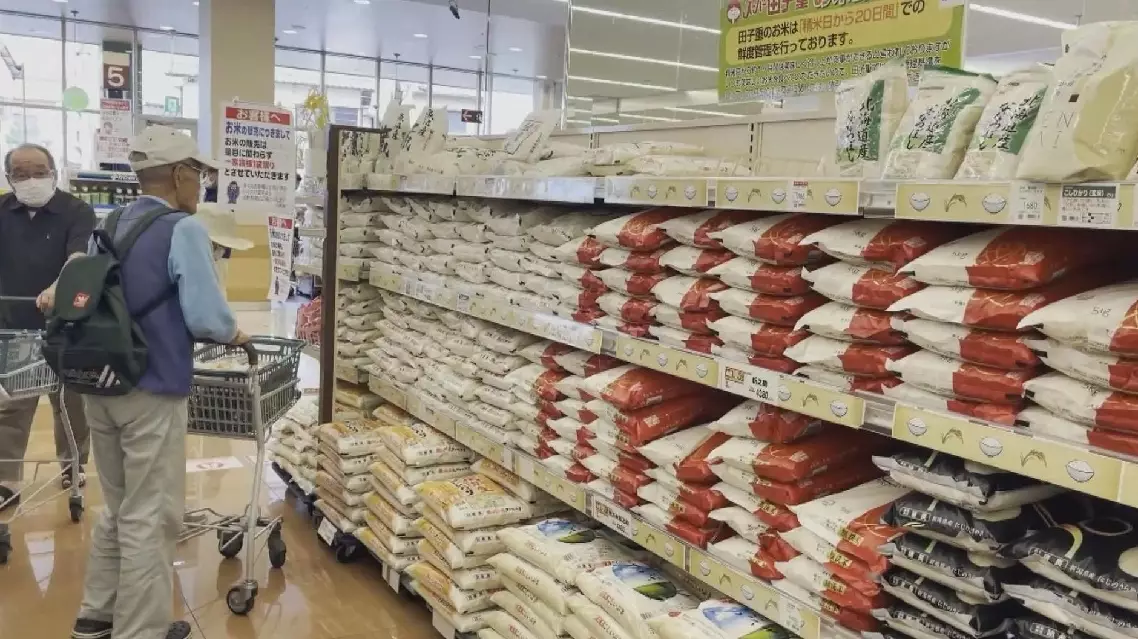
Soaring price, shifting policies deepen woes for Japanese rice farmers
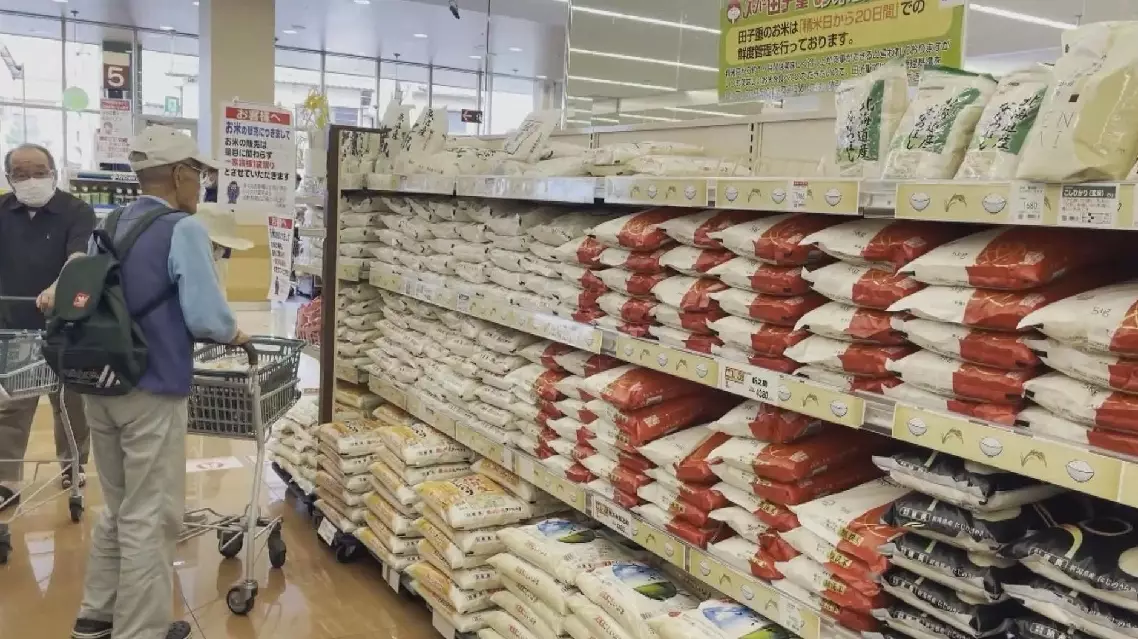
Soaring price, shifting policies deepen woes for Japanese rice farmers