DUBAI, United Arab Emirates (AP) — A U.S.-based activist agency said Sunday that it has verified at least 3,766 deaths during a wave of protests that swept Iran and led to a bloody crackdown, and fears the number could be significantly higher.
The Human Rights Activists News Agency posted the revised figure, increasing its previous toll of 3,308. The death toll exceeds that of any other round of protest or unrest in Iran in decades, and recalls the chaos surrounding the 1979 revolution.
The agency has been accurate throughout the years of demonstrations in Iran, relying on a network of activists inside the country that confirms all reported fatalities. The Associated Press has been unable to independently confirm the toll.
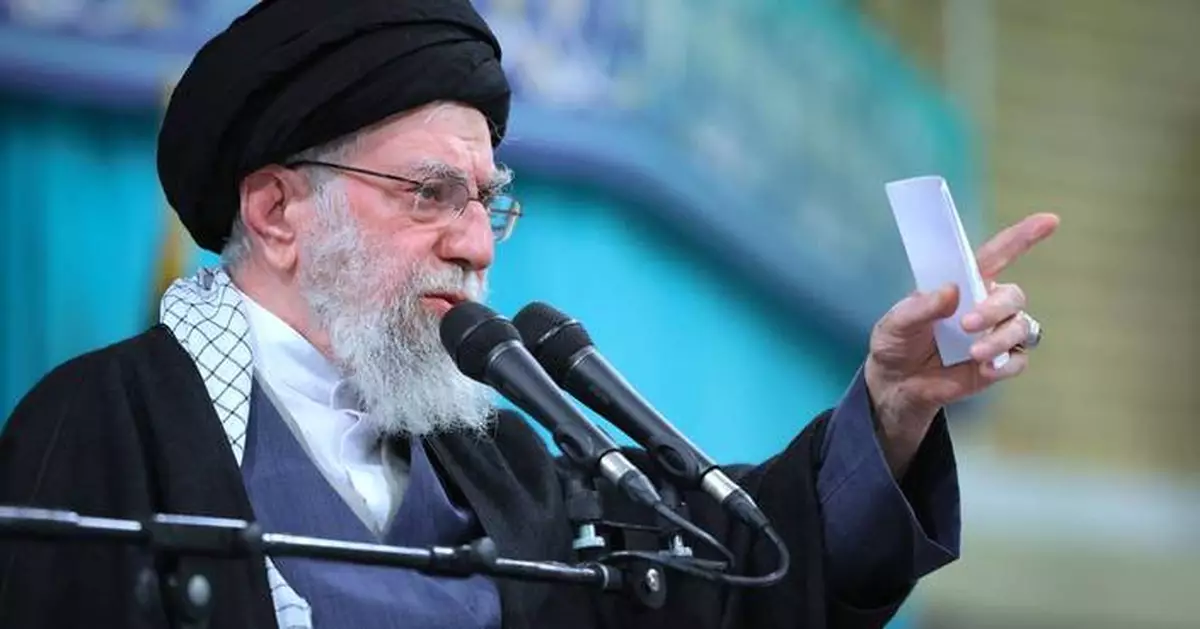
Iranian officials have not given a clear death toll, although on Saturday, the country’s Supreme Leader Ayatollah Ali Khamenei said the protests had left “several thousand” people dead — and blamed the United States for the deaths. It was the first indication from an Iranian leader of the extent of the casualties from the wave of protests that began Dec. 28 over Iran’s ailing economy. The Human Rights Activists News Agency says 24,348 protesters have been arrested in the crackdown.
Iranian officials have repeatedly accused the United States and Israel of fomenting unrest in the country.
Tension with the United States has been high, with U.S. President Donald Trump repeatedly threatening Tehran with military action if his administration found the Islamic Republic was using deadly force against anti-government protesters.
Iranian President Masoud Pezeshkian, in a post Sunday on X, blamed “longstanding enmity and inhumane sanctions” imposed by the U.S. and its allies for any hardships the Iranian people might be facing. “Any aggression against the Supreme Leader of our country is tantamount to all-out war against the Iranian nation,” he wrote.
During the protests, Trump had told demonstrators that “ help is on the way ” and that his administration would “act accordingly” if the killing of demonstrators continued or if Iranian authorities executed detained protesters.
But he later struck a conciliatory tone, saying that Iranian officials had “canceled the hanging of over 800 people” and that “I greatly respect the fact that they canceled.”
On Saturday, Khamenei branded Trump a “criminal” for supporting the rallies and blamed the U.S. for the casualties, describing the protesters as “foot soldiers” of the United States.
Trump, in an interview with Politico Saturday, called for an end to Khamenei’s nearly 40-year reign, calling him as “a sick man who should run his country properly and stop killing people.”
No protests have been reported for days in Iran, where the streets have returned to an uneasy calm. Instead, some Iranians chanted anti-Khamenei slogans from the windows of their homes on Saturday night, the chants reverberating around neighborhoods in Tehran, Shiraz and Isfahan, witnesses said.
Authorities have also blocked access to the internet since Jan. 8. On Saturday, very limited internet services functioned again briefly. Access to some online services such as Google began working again on Sunday, although users said they could access only domestic websites, and email services continued to be blocked.
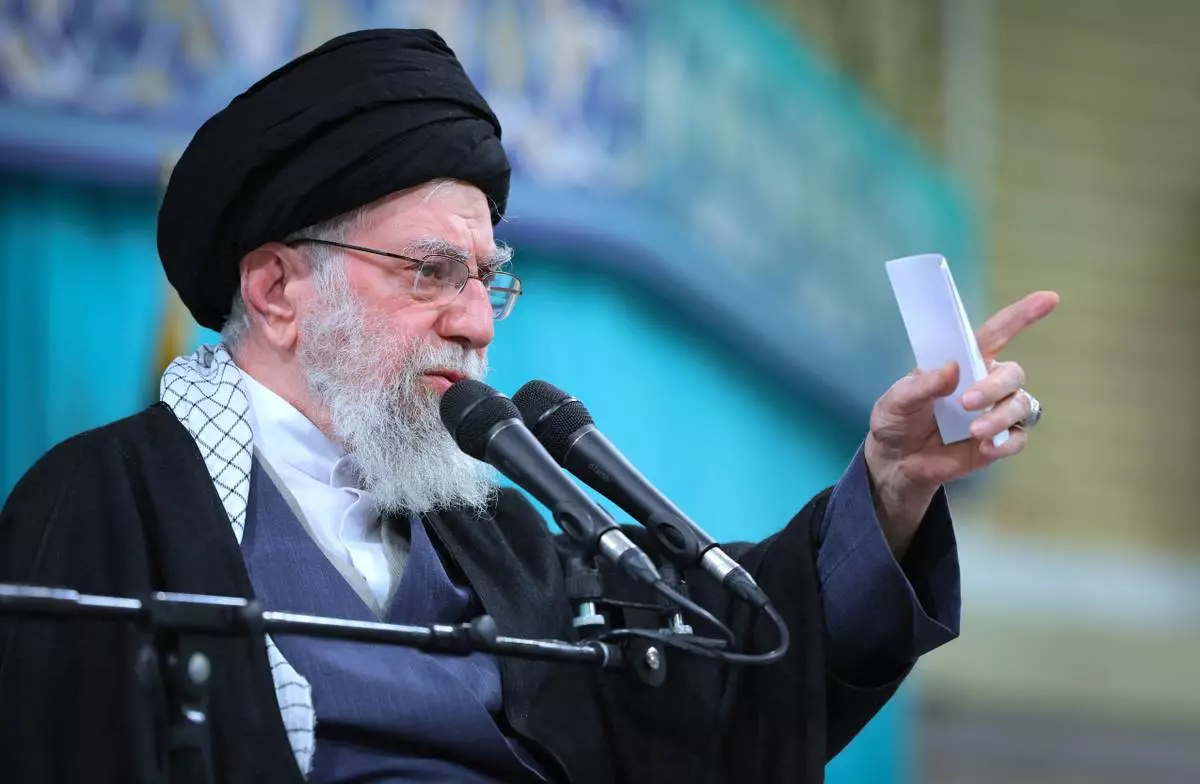
In this photo released by an official website of the office of the Iranian supreme leader, Supreme Leader Ayatollah Ali Khamenei speaks in a meeting, in Tehran, Iran, Saturday, Jan. 17, 2026. (Office of the Iranian Supreme Leader via AP)
RAQQA, Syria (AP) — The Syrian government Sunday announced a ceasefire with the Syrian Democratic Forces, taking almost full control of the country and dismantling the Kurdish-led forces that controlled the northeast for over a decade.
The agreement comes as tensions between government forces and the SDF boiled over earlier this month, eventually resulting in a major push towards the east. The SDF appeared to have largely retreated after initial clashes on a tense frontline area in eastern Aleppo province. Syria’s Defense Ministry said it has ordered the fighting to halt on the frontlines after the agreement was announced.
Syria’s new leaders since toppling Bashar Assad in December 2024 have struggled to assert their full authority over the war-torn country. An agreement was reached in March that would merge the SDF with Damascus, but it didn't hit the ground running as both sides accused each other of violating the deal.
THIS IS A BREAKING NEWS UPDATE. AP’s earlier story follows below.
RAQQA, Syria (AP) — Syrian government forces Sunday entered the city of Raqqa in its ongoing push in areas held by Kurdish-led forces in eastern Syria.
The military push into the city deep into eastern Syria came after tensions between Damascus and the U.S.-backed Kurdish-led Syrian Democratic Forces, or SDF, flared up earlier this month, leading to deadly clashes and the government taking control of three Aleppo neighborhoods from Kurdish fighters. The SDF is also losing ground in Deir el-Zour province.
The SDF didn't immediately comment on the Raqqa developments, but earlier said its forces prevented attacks by the Islamic State group in some neighborhoods in the city.
An Associated Press reporter in the area said that large military convoys swept into the city and were greeted by residents. It appeared that the SDF had withdrawn.
Earlier, the military seized Tabqa in the province of Raqqa, which is viewed as critical because of a dam that controls the southward flow of the Euphrates River, and is also home to an air base. The government took control of oil fields in the province.
U.S. envoy Tom Barrack met with Syrian President Ahmad al-Sharaa in Damascus. Washington's efforts to bring about calm between both sides, their key allies in Syria, have thus far been unsuccessful.
Since leading an insurgency to oust longtime President Bashar Assad in December 2024, al-Sharaa has struggled to assert full control across the country and appeal to minorities skeptical of Syria’s Islamist-led rule. The government and the SDF have traded accusations of violating an agreement in March that would reintegrate northeastern Syria and Kurdish-led forces with the government.
After the government's military push, Syrian official news agency SANA said Sunday that a statement would be made about integrating the SDF into Syrian state institutions, after reports surfaced of SDF leader Mazloum Abdi resuming talks with Damascus.
The SDF has controlled large swaths of northeastern Syria for years, including its oil fields, and has been Washington’s key ally in combating the extremist Islamic State group. Since Assad’s ouster, however, the United States has developed strong ties with Damascus and tried to ease tensions between the two sides.
An Associated Press reporter saw residents coming out of their homes to welcome the Syrian troops while waving the national flag. Another AP journalist saw Syrian government forces in control of oil fields in Raqqa province that had previously been under the control of the SDF.
The U.S. had urged calm after this month's Aleppo clashes left at least 23 dead and tens of thousands displaced. After the fighting halted, Abdi said Friday that the group would withdraw its forces from the area to the east of the Euphrates following al-Sharaa's announcement on measures adopted to strengthen Kurdish rights in Syria.
Last week, Syria’s Defense Ministry closed off a contested area in eastern Aleppo as a military zone, which includes part of a tense front line that divides the areas under government and SDF control.
It now appears that the SDF lost large segments of what was once under its control in northeast Syria, especially in Raqqa and Deir el-Zour provinces. Syrian government troops are also backed by local armed Arab tribes that currently oppose the SDF.
In the Deir el-Zour province, further east, asked residents to stay home after reports of clashes with the SDF. Pressure has apparently mounted in the strategic province
Relations between the SDF and Arab tribes in the eastern province near a strategic border crossing with Iraq have been strained. Deir el-Zour is also home to the Al-Omar oil and Conoco gas fields, near where U.S. troops are based in the area. There have been unconfirmed reports that local armed tribes opposed to the Kurdish-led administration have taken control of the fields.
Meanwhile, the Syrian government, in a statement, accused SDF forces of killing prisoners in Tabqa before withdrawing from the area. The SDF denied the allegations, saying they had transferred the detainees out of the prison, and accused government forces of firing at the facility. It shared a video showing armed men in civilian clothing in the prison seizing munitions left there, with the person filming yelling: “We liberated Tabqa prison!" No bodies were seen in the short video.
An AP journalist visited two prisons in Tabqa and found them empty of prisoners. There were no bodies inside. However, he saw three bodies of people in civilian clothes who appeared to have been killed at a school near one of the prisons.
The SDF took Tabqa from IS back in 2017 as part of its military campaign to take down the Islamic State group’s so-called caliphate, which at its peak stretched across large parts of Syria and Iraq. At the height of its control, IS declared Raqqa its capital.
Associated Press writer Kareem Chehayeb in Beirut contributed to this report.
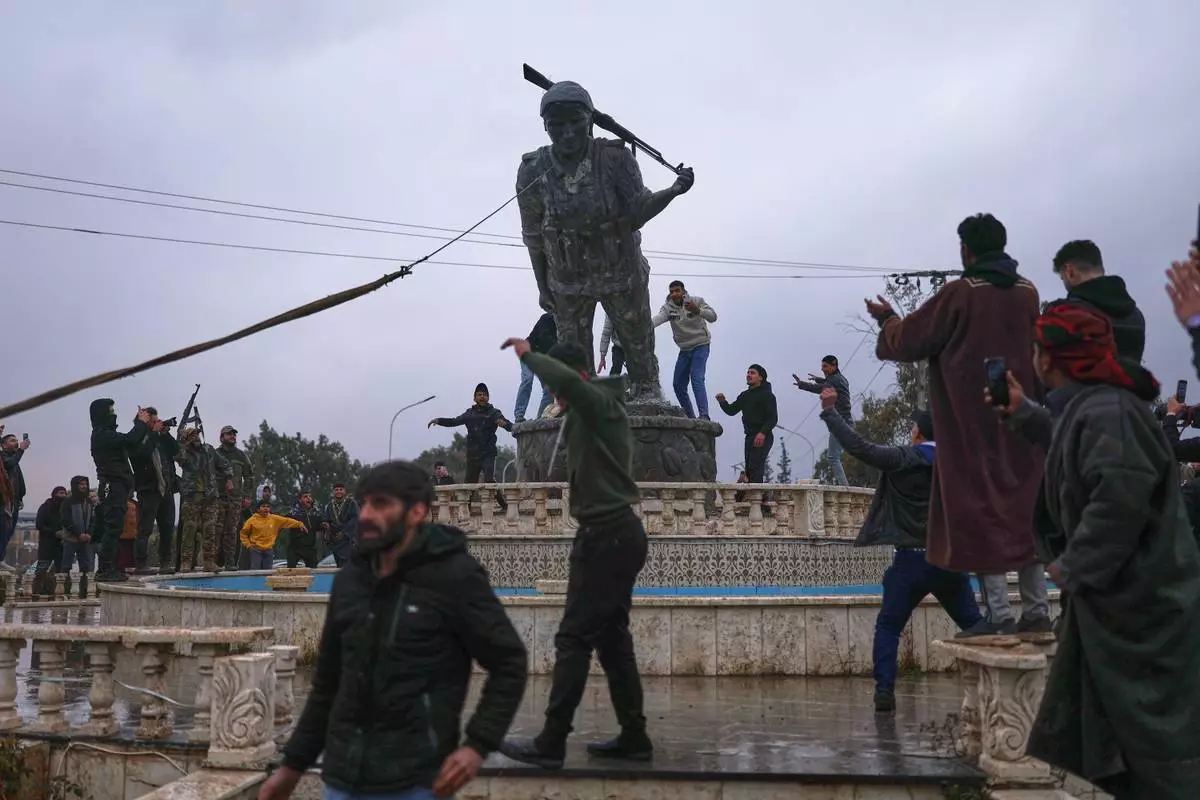
Residents topple a statue of a female Kurdish fighter after the takeover of the town by Syrian government forces from U.S.-backed Syrian Democratic Forces (SDF), in Tabqa, eastern Syria, Sunday, Jan. 18, 2026. (AP Photo/Ghaith Alsayed)
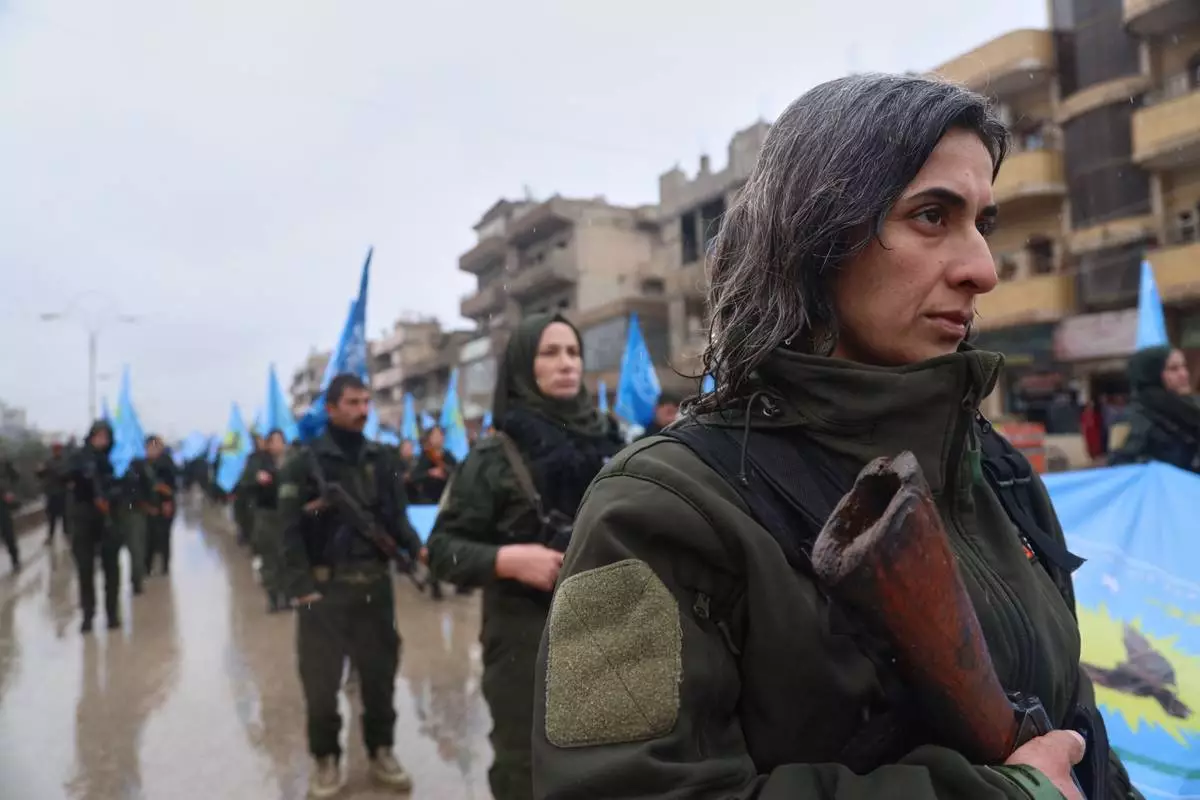
Female soldiers of the Kurdish-led, U.S.-backed Syrian Democratic Forces (SDF) march during a military parade in Qamishli, northeastern Syria, Sunday, Jan. 18, 2026. Syrian government forces have seized a strategic towns in eastern Syria, intensifying their push against Kurdish-led forces east of the Euphrates River.(AP Photo/Baderkhan Ahmad)
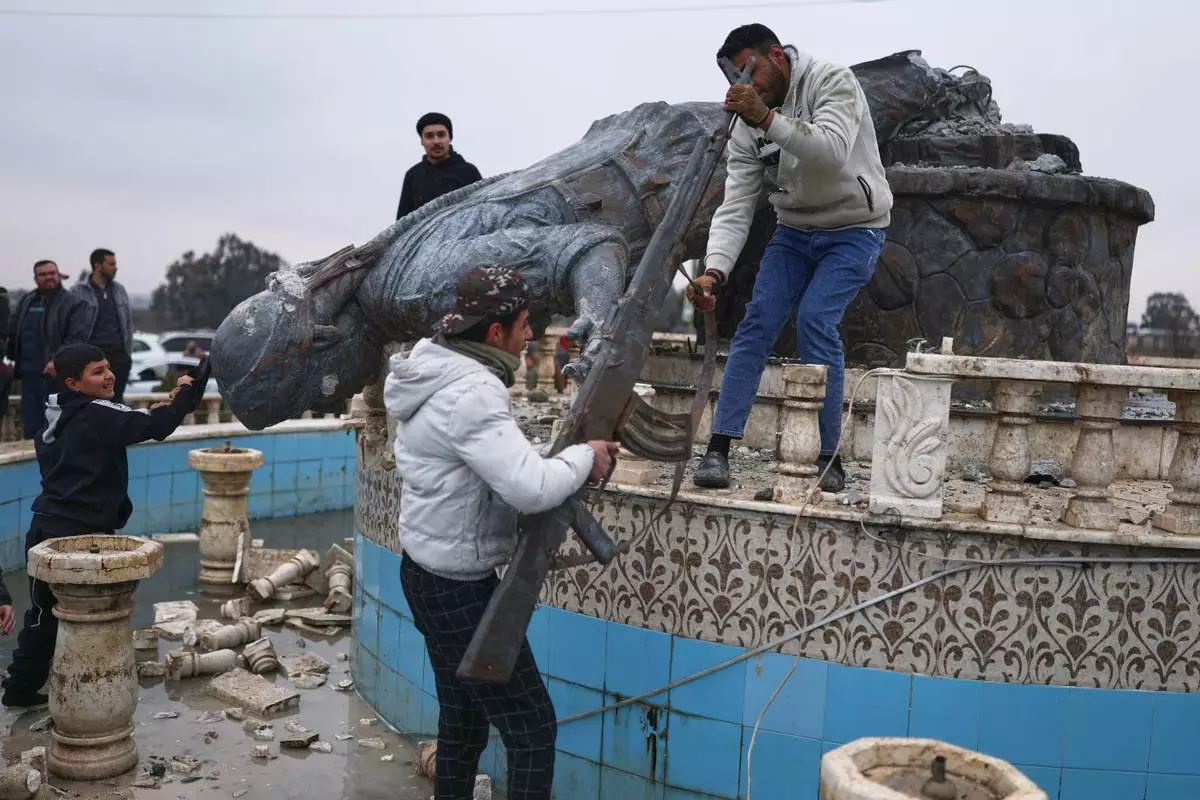
Residents topple a statue of a female Kurdish fighter after the takeover of the town by Syrian government forces from U.S.-backed Syrian Democratic Forces (SDF), in Tabqa, eastern Syria, Sunday, Jan. 18, 2026. (AP Photo/Ghaith Alsayed)
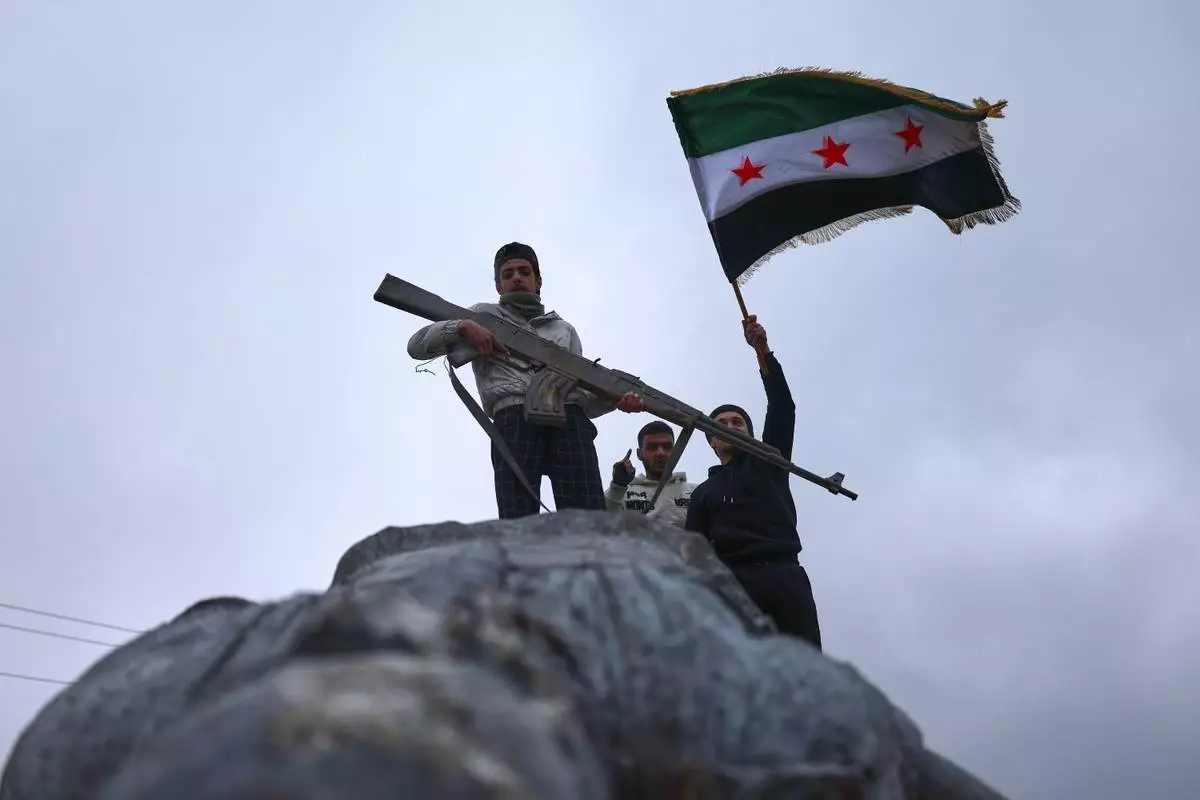
Residents wave a Syrian flag atop a toppled statue of a female Kurdish fighter, with one holding a statue's replica AK-47 that was part of the statue, after the takeover of the town by Syrian government forces from U.S.-backed Syrian Democratic Forces (SDF), in Tabqa, eastern Syria, Sunday, Jan. 18, 2026. (AP Photo/Ghaith Alsayed)
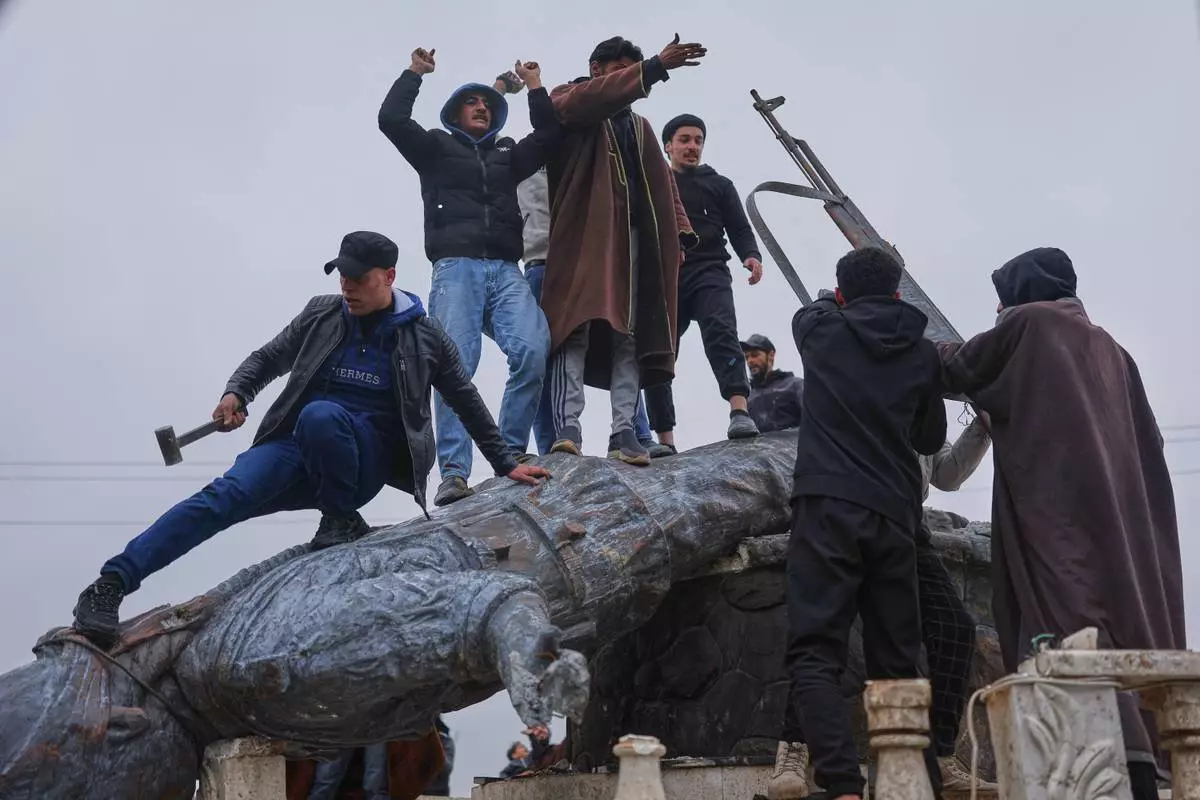
Residents topple a statue of a female Kurdish fighter after the takeover of the town by Syrian government forces from U.S.-backed Syrian Democratic Forces (SDF), in Tabqa, eastern Syria, Sunday, Jan. 18, 2026. (AP Photo/Ghaith Alsayed)
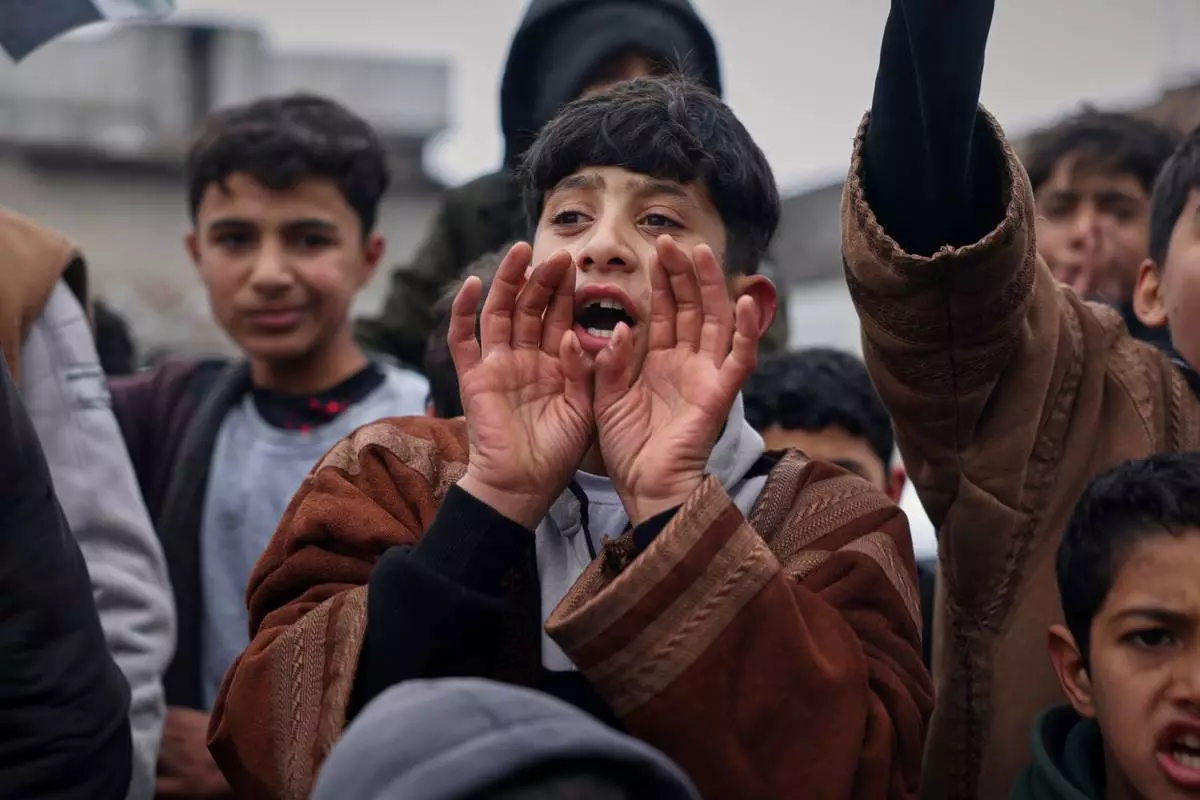
Local youth cheer as Syrian government troops take control of the town from the Kurdish-led, U.S.-backed Syrian Democratic Forces (SDF) in Tabqa, eastern Syria, Sunday, Jan. 18, 2026. (AP Photo/Ghaith Alsayed)
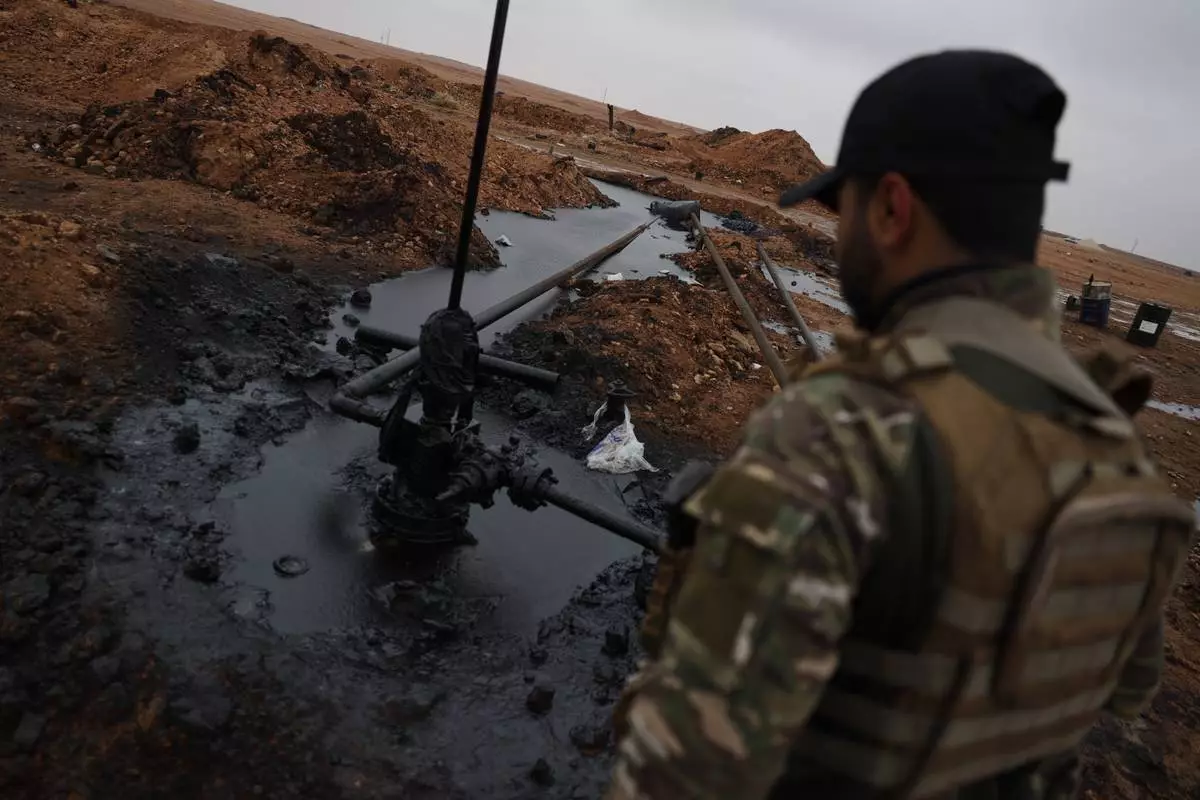
A Syrian government soldier walks at al-Thawra oil field after government troops took control of it from the U.S.-backed Syrian Democratic Forces (SDF) during an ongoing push against Kurdish-led forces, in Raqqa, northeastern Syria, Sunday, Jan. 18, 2026. (AP Photo/Omar Albam)
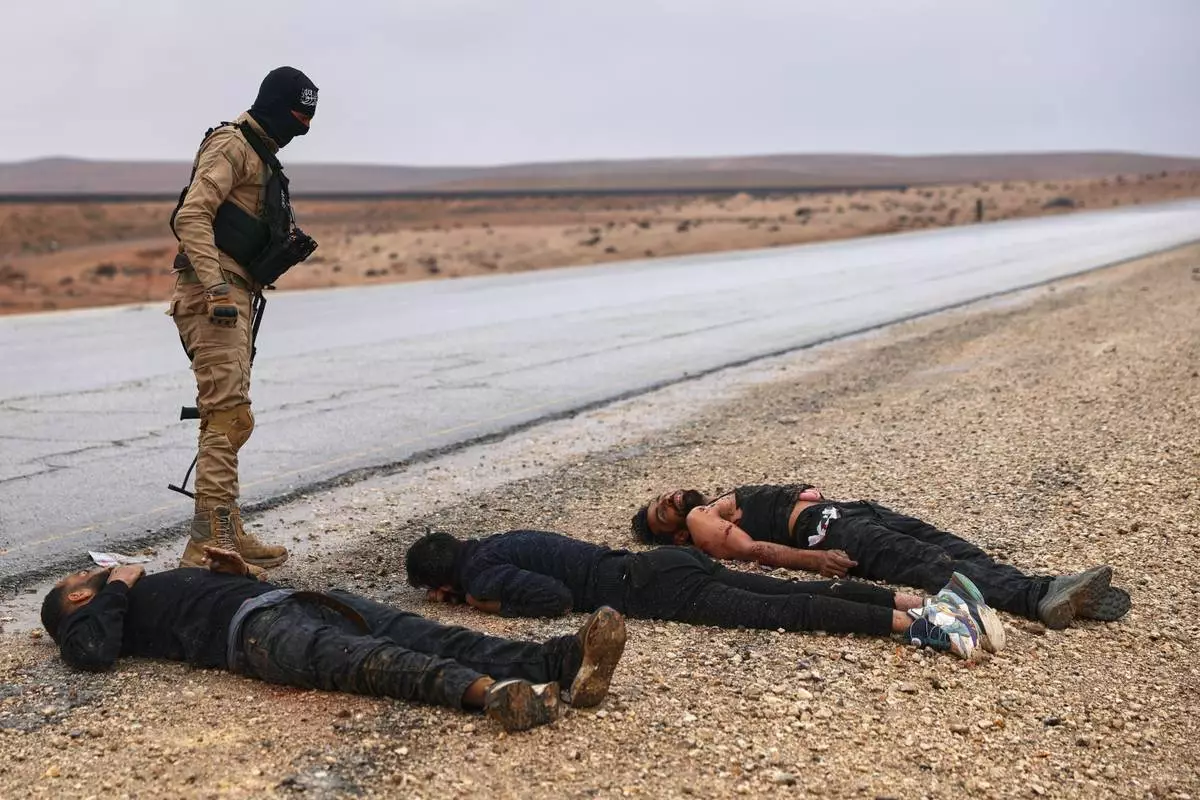
A Syrian government soldier stands next to the bodies of U.S.-backed Syrian Democratic Forces (SDF) fighters on a road leading to the strategic town of Taqba in eastern Syria, during an ongoing push against Kurdish-led forces, Sunday, Jan. 18, 2026. (AP Photo/Ghaith Alsayed)
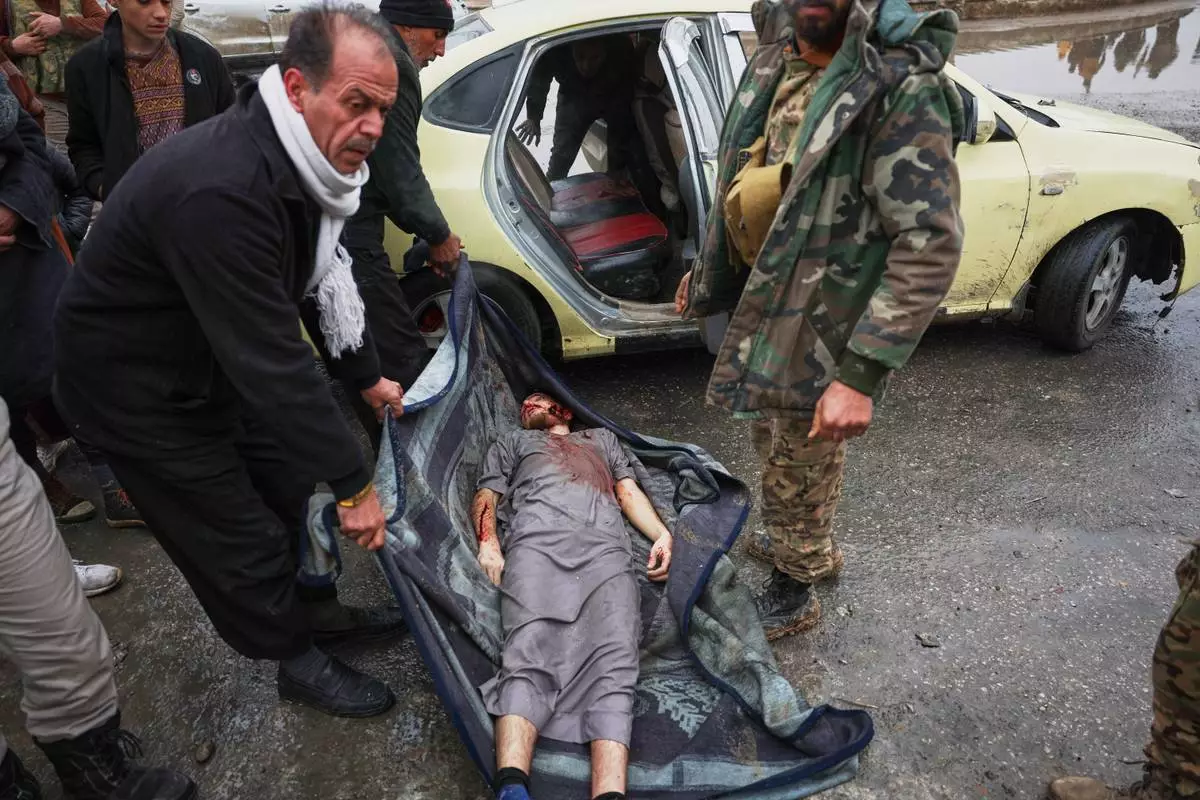
Syrian government soldiers and locals carry the body of a dead civilian found by relatives in the street after government forces seized the strategic town of Taqba in eastern Syria, as part of an ongoing push against Kurdish-led forces, Sunday, Jan. 18, 2026. (AP Photo/Ghaith Alsayed)
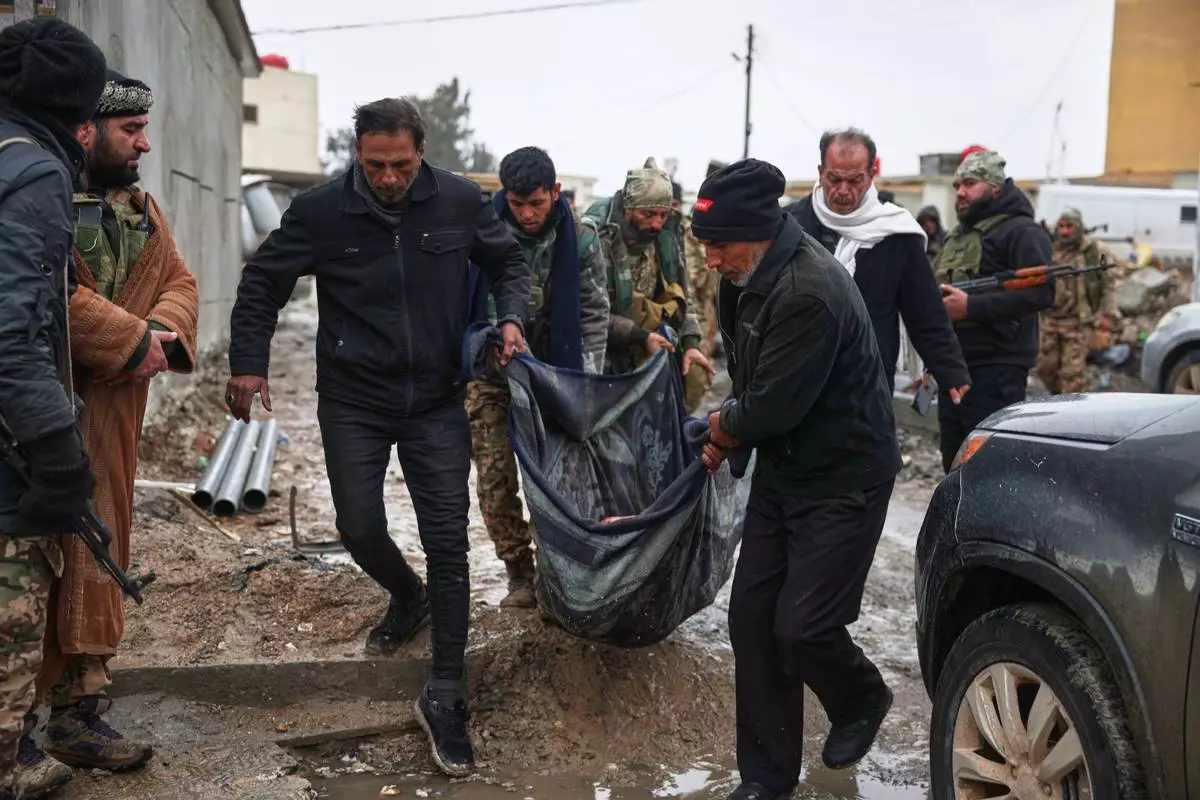
Syrian government soldiers and locals carry the body of a dead civilian found by relatives in the street after government forces seized the strategic town of Taqba in eastern Syria, as part of an ongoing push against Kurdish-led forces, Sunday, Jan. 18, 2026. (AP Photo/Ghaith Alsayed)
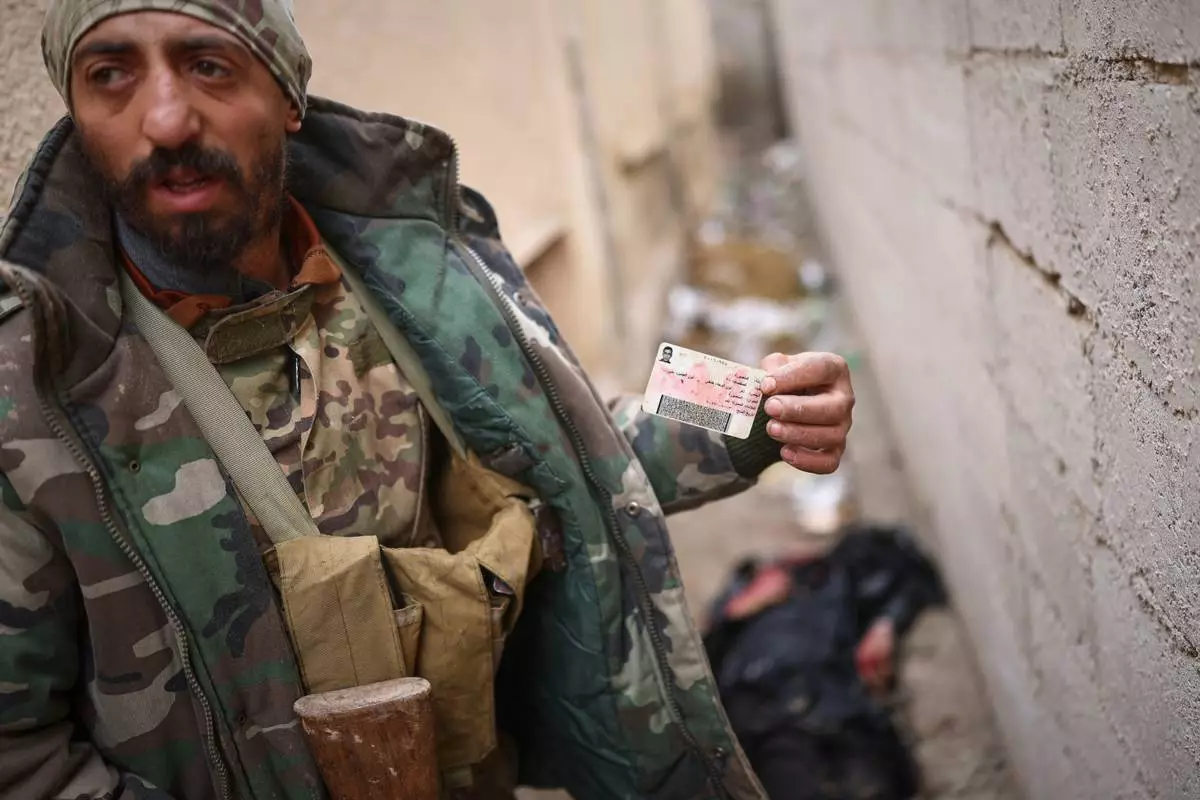
A Syrian government soldier displays the ID of a dead civilian found in the street after government forces seized the strategic town of Taqba in eastern Syria, as part of an ongoing push against Kurdish-led forces, Sunday, Jan. 18, 2026. (AP Photo/Ghaith Alsayed)
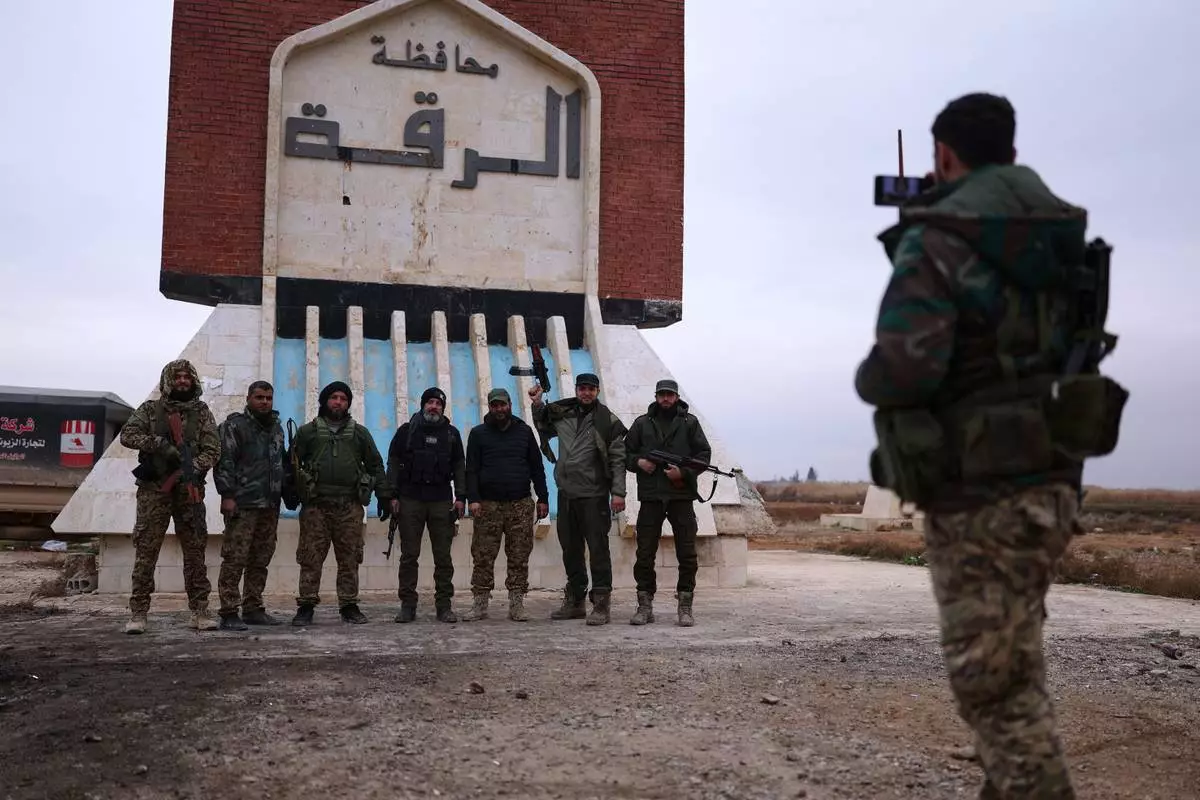
Syrian government soldiers pose for a photo taken by another soldier at the entrance to Raqqa, Syria, Saturday, Jan. 17, 2026. (AP Photo/Ghaith Alsayed)