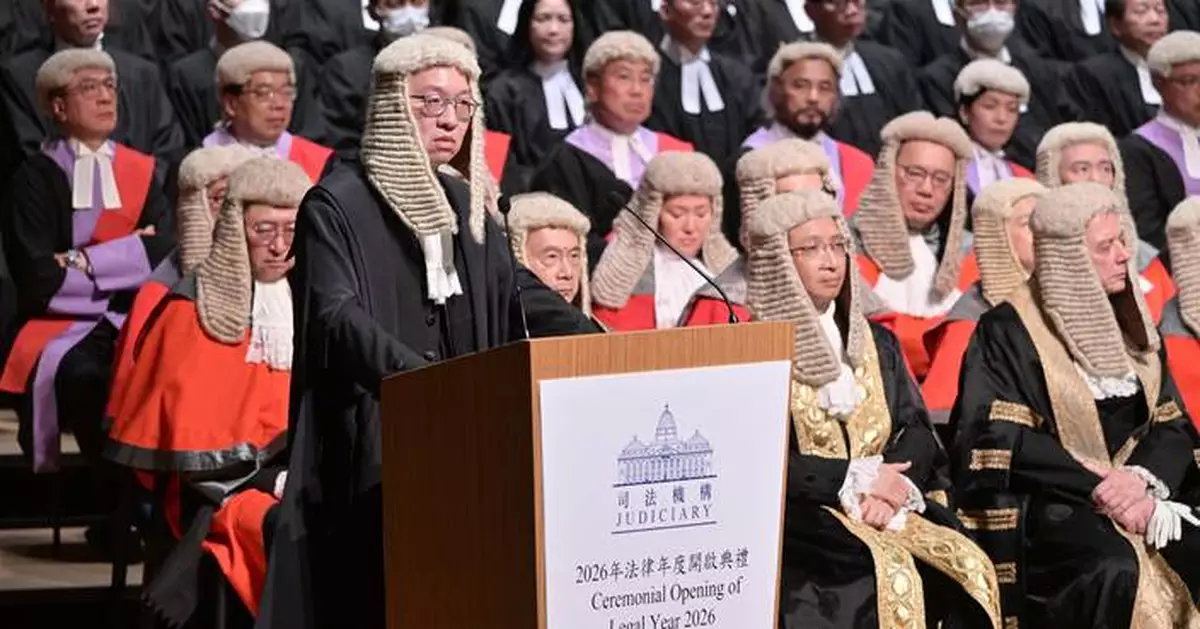
SJ's speech at Ceremonial Opening of Legal Year 2026
Following is the speech by the Secretary for Justice, Mr Paul Lam, SC, at the Ceremonial Opening of the Legal Year 2026 today (January 19):
Click to Gallery
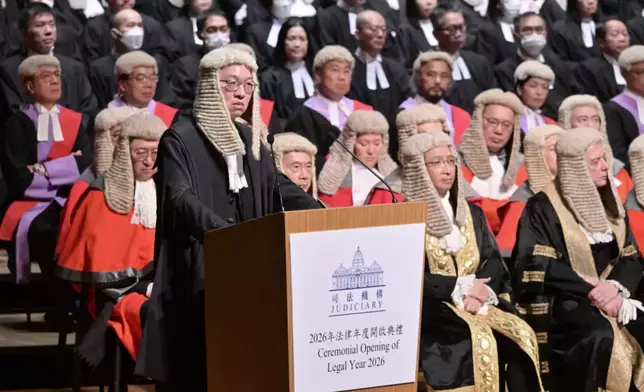
Mr Paul Lam, the Secretary for Justice, Photo source: HKSAR Government Press Releases
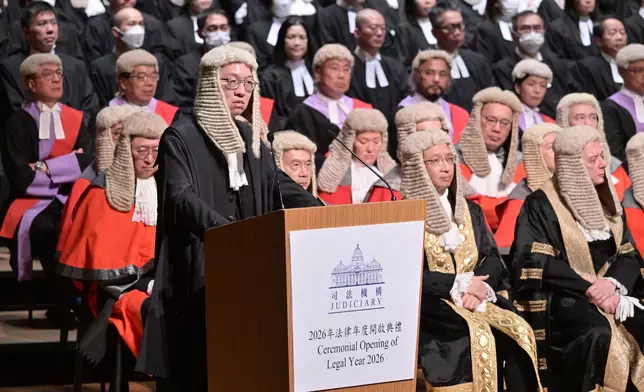
SJ's speech at Ceremonial Opening of Legal Year 2026 Source: HKSAR Government Press Releases

Source: AI-found images
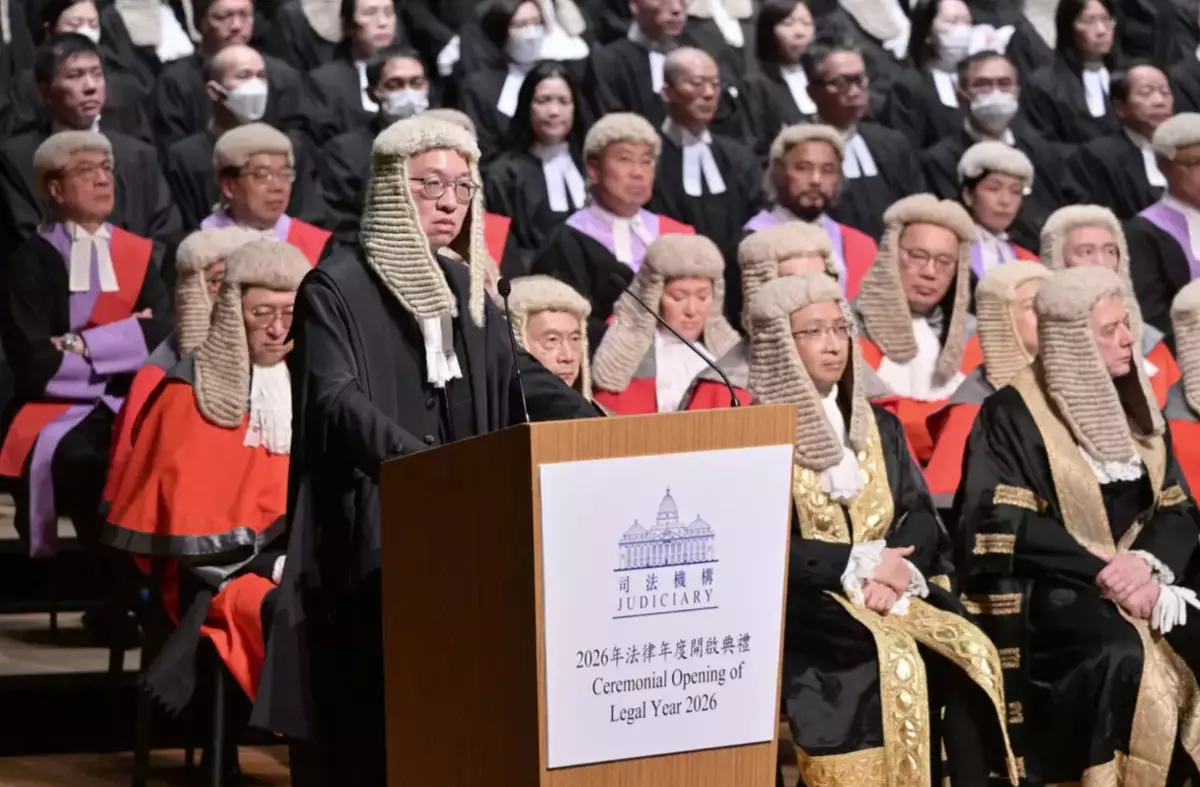
Mr Paul Lam, the Secretary for Justice, Photo source: HKSAR Government Press Releases
Chief Justice, members of the Judiciary, Chairman of the Bar Association, President of the Law Society, distinguished guests, ladies and gentlemen,
The Ceremonial Opening of the Legal Year is not merely a ceremony. It is a unique annual event for the Judiciary to speak out on important issues; and for representatives of the legal profession from both the public and private sectors to show our support to the Judiciary and pay tribute to judges and judicial officers for their contributions.
There is no question that, in the past year, as is always the case, our judges and judicial officers have performed their duties conscientiously and professionally. But most of their work would be of interest to the parties directly involved in court proceedings only, and would not receive any public attention. Court news reported in the mass and social media was focused on a small number of cases, in particular national security cases, which were considered to be of public interest. Comments and discussions on these cases are, generally, permissible because of the freedom of expression and freedom of the press. However, these freedoms do not include making unfounded accusations against the integrity of our Judiciary.
It is disappointing and frustrating, though not entirely surprising, that the Judiciary has been subject to such unfounded accusations due to judgments delivered in a number of highly charged national security cases last year and recently. Worse still, some of these accusations were misrepresented as facts and used as pretext to advocate imposing unlawful sanctions against judges involved in those cases, and to put illegitimate pressures on foreign non-permanent judges of the Court of Final Appeal to resign.
One of the duties of the Secretary of Justice is to act as the guardian of public interest and the due administration of justice. This is why I feel obliged to take this opportunity to refute these unfounded accusations. This is extremely important because, unless disabused, they may undermine people's trust and confidence in our judicial system and the rule of law in Hong Kong. Hong Kong's success as an international centre in finance, trading and other areas as well as people's general sense of security depend very much on their perception of, and trust and confidence in, our Judiciary.
Let me put things in context first. It is a fundamental principle of international law and international relations that every state has the inherent and inalienable right to defend its national sovereignty and territorial integrity; and to choose its political, economic, social and cultural systems, without interference in any form by another state. Very recent events in other parts of the world, and recent statements made by some foreign politicians concerning the territorial integrity of other countries (including ours), sound a warning bell that it will be naïve to assume that these principles will necessarily be followed. Concern over national security is anything but fanciful, and must be taken seriously.
Having said that, it is not and never the national policy of China to pursue absolute security. Under the relevant national law and the Safeguarding National Security Ordinance, national security is defined as a reference to the status in which the state's political regime, sovereignty, unity and territorial integrity, the welfare of the people, sustainable economic and social development, and other major interests of the state are relatively free from danger and internal or external threats, and the capacity to maintain a sustained status of security. I would like to emphasise the word "relatively" in the phrase "relatively free from danger and internal or external threats"; it does not say "absolutely free from danger and internal or external threats". Our country clearly recognises that it is essential to strike a balance between security and development. As explained in the White Paper titled "China's National Security in the New Era" released on May 12 last year, China strives to achieve a positive interaction between high-quality development and high-level security, and promote mutual reinforcement and co-ordinated enhancement between opening up and security. Not only that there is no conflict between safeguarding national security and promoting development of Hong Kong by ensuring that it remains an open, free and diversified international city, maintaining national security as defined under the law indeed provides the indispensable precondition for any development to take place in a safe, stable and peaceful environment.
Having regard to the significance of national security, Article 3 of the National Security Law (NSL) imposes a constitutional duty on the executive, legislature and judiciary of Hong Kong to effectively prevent, suppress and impose punishment for any act or activity endangering national security, and I quote "in accordance with this Law and other relevant laws". In the present context, it is pertinent to note the two following sets of legal provisions which prescribe the role of the Judiciary, and shed light on how it should discharge its constitutional duty in this respect. First, under Articles 2, 19 and detailed provisions in Section 4, Chapter 4 of the Basic Law, the Judiciary is vested with, and shall exercise, independent judicial power including that of final adjudication. Second, Articles 4 and 5 of the NSL provide respectively that human rights shall be respected and protected in safeguarding national security; and that the principle of the rule of law shall be adhered to including, for example, no one shall be convicted and punished for an act which does not constitute an offence under the law, a person is presumed innocent until convicted by a judicial body, the right to defend himself or herself and other rights in judicial proceedings that a criminal suspect, defendant, and other parties in judicial proceedings are entitled to under the law shall be protected.
Having regard to these two sets of legal provisions, in national security cases, as in any other type of case, the court's duty is to conduct the proceedings fairly and properly ensuring that human rights are respected and principles of the rule of law are followed, to construe and apply the relevant laws to the evidence, and then make its decision, all done independently.
In considering the validity of any criticism that has been made against the courts in those highly charged national security cases, the correct question to ask is whether there is any ground to support that the courts have failed to discharge their duties as I have just described. There are a number of factors which can assist us to answer this question.
First, it is important to observe what happened in the course of the judicial proceedings, which were all held openly. Have the judges ever, without any good and sufficient legal reason, stopped the defendants from giving evidence or making submissions, or cross-examining the prosecution's witnesses? Has any of the judges made any inappropriate remarks indicating that they had bias or prejudice against the defendants? Did anything otherwise happen which would suggest that the defendants had not been treated fairly? I am confident that any reasonable and objective person who has attended and observed those proceedings would answer all these questions in the negative. Some might opine that the proceedings have taken a long time. I would say the time was well spent and necessary to ensure that there was a fair trial to all parties concerned.
Second, it is essential to study the judgments in those cases, which is indeed what people have been asked to do repeatedly. The judgments are of utmost importance because they explained how and why the judges came to their conclusions, and in criminal cases, why they were satisfied that the defendant's guilt had been proved beyond reasonable doubt: to be more specific, how they construed the relevant laws, what evidence and submissions they had considered, accepted or rejected and why, and how they applied the relevant laws as they understood in the light of the evidence and submissions which they had accepted. A sufficiently reasoned judgment also serves another important purpose: that is to reassure people that the courts have not taken into account any irrelevant and improper considerations. Let me ask: in those national security cases, is there anything in the judgments which would suggest that the judges have taken into account any extraneous consideration or that somehow their independence has been compromised? I am again very confident that the answer must be a resounding no. Some people may wonder why the judgments are so long, running to hundreds of pages, and might even question whether they need to be so long entailing long judgment writing time. The length of a judgment is largely dictated by the amount of evidence and submissions heard, and the complexity of the issues involved. In cases which were known to be controversial, the judges would naturally take great care to ensure that the judgments were sufficiently reasoned for reasons that I have just explained.
Third, it is worthwhile to note that, in national security cases, the Government was not always the successful party. In a case involving many defendants, two defendants were acquitted after trial in May 2024, and the prosecution decided not to appeal against one of the acquittals. In March 2025, the Court of Final Appeal quashed the convictions of an offence under the Implementation Rules for the NSL. These incidents are unequivocal evidence that the Judiciary has been able to exercise, and has in fact exercised, independent judicial power in national security cases. As the unsuccessful party in those cases, the Government would naturally be disappointed. If there were reasonable grounds to appeal, we would invite the appellate court to reconsider the matter. If the judgment was final, the Government would review whether the outcome was caused by any deficiency or inadequacy in the relevant laws; and if so, would seek to amend the same. There is one critical point that I wish to add. On those occasions when the courts ruled against the Government, it would be unfair and incorrect to suspect, merely because of the outcome, that the courts might have failed to appreciate the importance of safeguarding national security and that they had not discharged their constitutional duty in this respect fully and properly.
Fourth, in response to intimidation made against judges, the Judiciary has reaffirmed in various statements in the past that all judges and judicial officers exercise judicial power independently, and will continue to abide by the Judicial Oath and firmly discharge their duty in the administration of justice without any interference. There is absolutely no reason whatsoever to doubt the veracity of these statements.
Enough is said about national security. It is important not to lose sight of the big picture that, every year, the Judiciary handles tens of thousands of civil and criminal cases of many different types, playing a key role in resolving disputes and maintaining the law and order of society. In some of these cases, particularly those decided by the Court of Final Appeal, the courts developed important common law jurisprudence which makes significant contributions to not only Hong Kong but also the common law world in general. An excellent example is that, just 10 days ago on January 9, the Court of Final Appeal in a scholarly and landmark judgment held that it is appropriate to recognize the tort of harassment as a development of the common law in Hong Kong; however, a company cannot sue for harassment because it is incapable of suffering emotional stress even though it may seek an injunction to restrain acts of harassment directed at its officers, agents and lawyers.
Apart from performing judicial duties, the Judiciary has made tremendous efforts and contributions to promote the rule of law, and enhance Hong Kong's status as an international legal service and dispute resolution centre in other ways. On behalf of the Department of Justice, I would like to express my gratitude to members of the Judiciary for taking part in the work of the Law Reform Commission, the Working Group on Mediation Regulatory System and the Working Group on Arbitration Law Reform, as well as various capacity building programmes organised by the Hong Kong International Legal Talents Training Academy.
The rule of law based on our common law system is one of the most, if not the most, distinctive and crucial advantage of Hong Kong under the principle of "one country, two systems". Members of the Judiciary, the Department of Justice, the Bar Association and the Law Society play different roles in our legal system. We may not, and need not, agree on each and every issue. In judicial proceedings involving the Government, the Government sometimes succeeds, sometimes fails. All that said, our solidarity, courage and determination to maintain and enhance the rule of law in Hong Kong is unquestionable.
Lastly, we are still in January, and the Chinese New Year of the Horse will arrive in less than a month's time. May I conclude by wishing you all a very happy and healthy new year! Thank you!
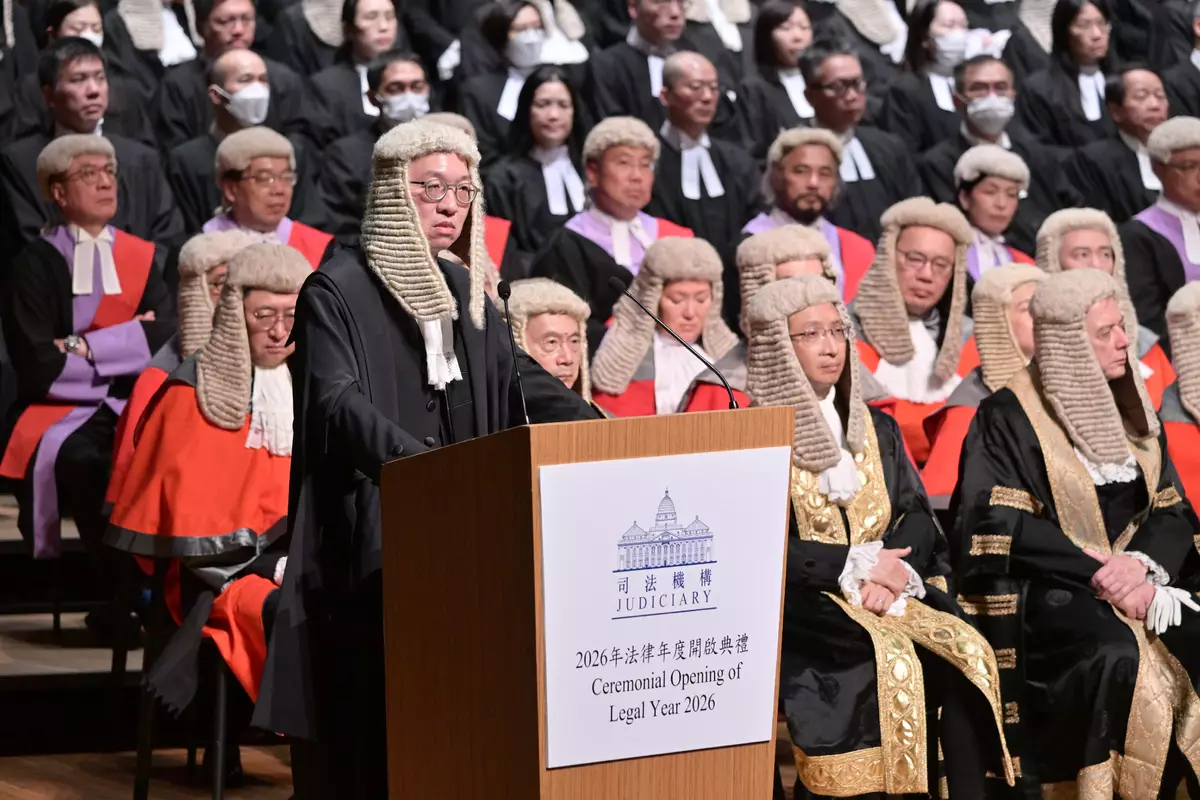
SJ's speech at Ceremonial Opening of Legal Year 2026 Source: HKSAR Government Press Releases
Source: AI-found images