Skip to Content Facebook Feature Image

Trump's Board of Peace has several invited leaders trying to figure out how it'll work

News

Trump's Board of Peace has several invited leaders trying to figure out how it'll work
News

News

Trump's Board of Peace has several invited leaders trying to figure out how it'll work

2026-01-20 20:59 Last Updated At:21:00

Israel has been asked to join U.S. President Donald Trump’s new Board of Peace that will supervise the next phase of the Gaza peace plan, an Israeli official said Monday, while France is holding off accepting for now.

It’s not known whether Israeli Prime Minister Benjamin Netanyahu has accepted the offer, said the Israeli official who spoke on condition of anonymity because they were discussing a behind-the-scenes diplomatic matter.

More Images
President Donald Trump speaks to reporters before boarding Air Force One at Palm Beach International Airport, Monday, Jan. 19, 2026, in West Palm Beach, Fla. (AP Photo/Julia Demaree Nikhinson)

President Donald Trump speaks to reporters before boarding Air Force One at Palm Beach International Airport, Monday, Jan. 19, 2026, in West Palm Beach, Fla. (AP Photo/Julia Demaree Nikhinson)

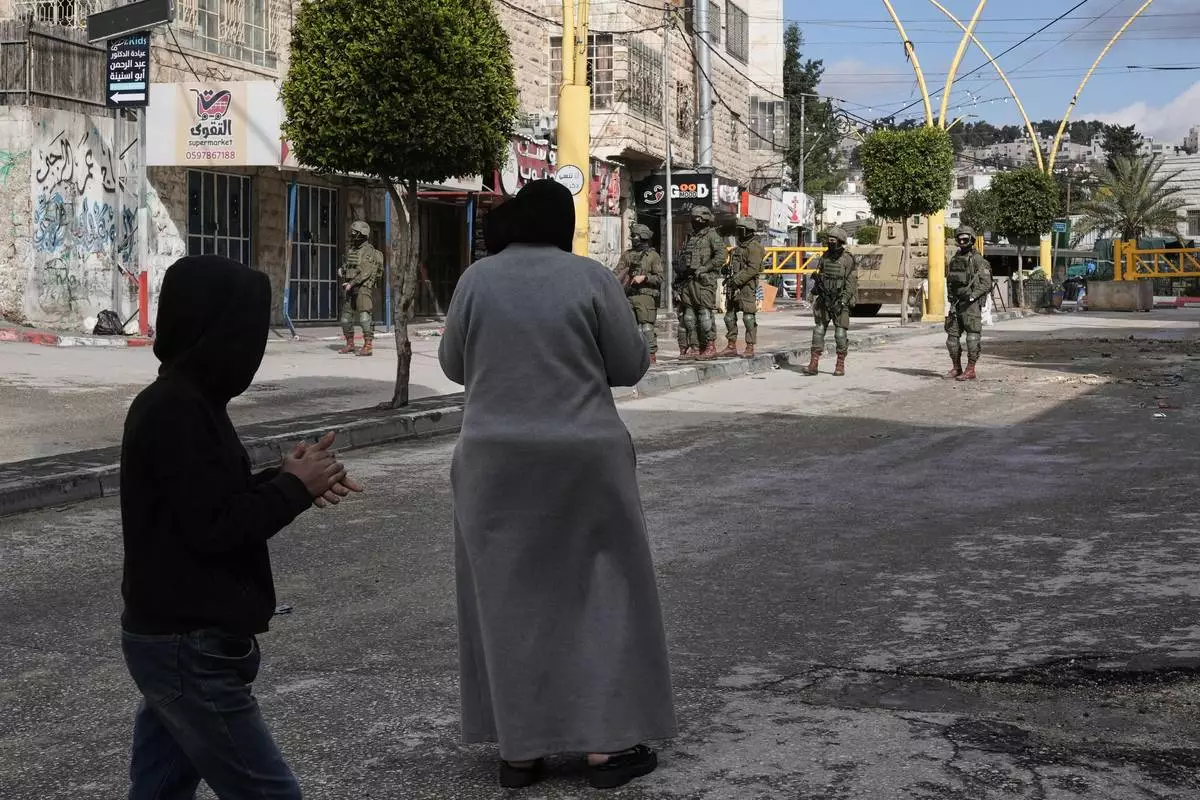
Palestinians speak with an Israeli soldier during an army raid in the West Bank city of Hebron Monday, Jan. 19, 2026. (AP Photo/Mahmoud Illean)
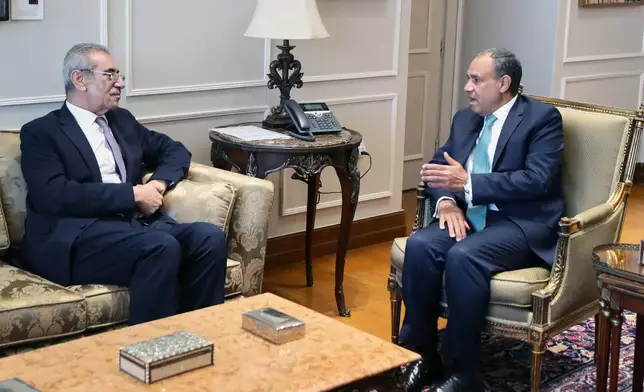
Palestinians speak with an Israeli soldier during an army raid in the West Bank city of Hebron Monday, Jan. 19, 2026. (AP Photo/Mahmoud Illean)

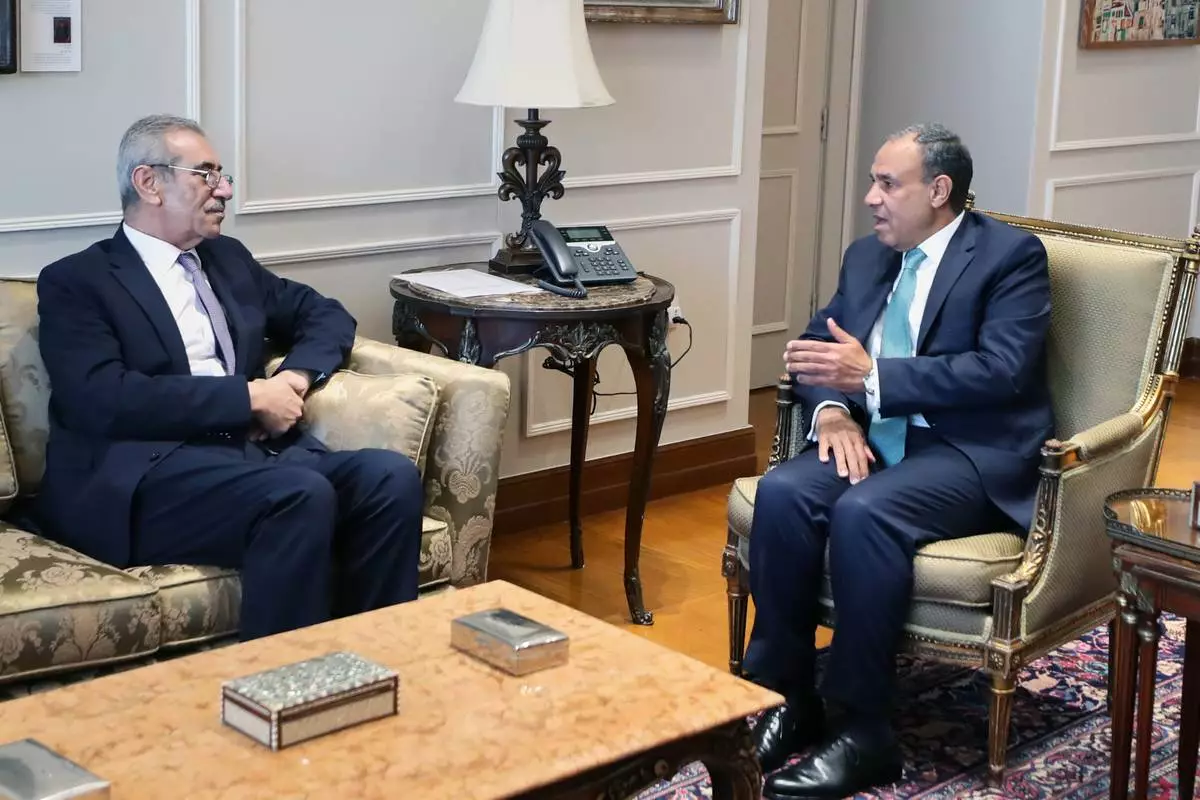
Ali Shaath, head of Palestinian National committee for administering the Gaza Strip, left, meets with Egyptian Foreign Minister Badr Abdelatty, at the foreign ministry headquarters in Egypt's New Administrative Capital, Monday, Jan. 19, 2026. (AP Photo/Khaled Elfiqi)
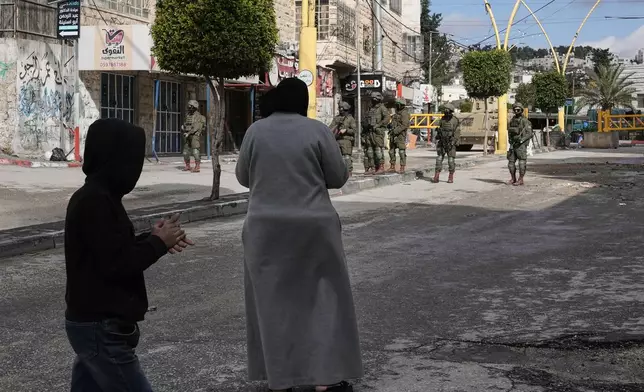
Ali Shaath, head of Palestinian National committee for administering the Gaza Strip, left, meets with Egyptian Foreign Minister Badr Abdelatty, at the foreign ministry headquarters in Egypt's New Administrative Capital, Monday, Jan. 19, 2026. (AP Photo/Khaled Elfiqi)

Israeli soldiers take up positions during an army raid in the West Bank city of Hebron Monday, Jan. 19, 2026. (AP Photo/Mahmoud Illean)
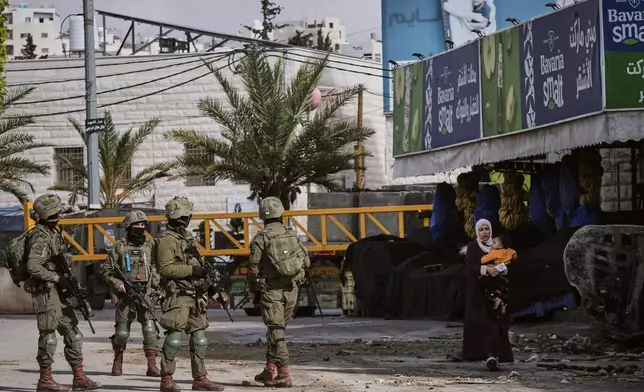
Israeli soldiers take up positions during an army raid in the West Bank city of Hebron Monday, Jan. 19, 2026. (AP Photo/Mahmoud Illean)
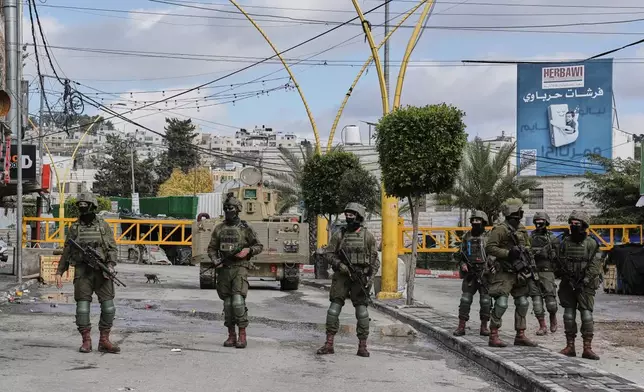
Israeli soldiers take up positions during an army raid in the West Bank city of Hebron Monday, Jan. 19, 2026. (AP Photo/Mahmoud Illean)

Israeli soldiers take up positions during an army raid in the West Bank city of Hebron Monday, Jan. 19, 2026. (AP Photo/Mahmoud Illean)

Israeli soldiers take up positions during an army raid in the West Bank city of Hebron Monday, Jan. 19, 2026. (AP Photo/Mahmoud Illean)

Israeli soldiers take up positions during an army raid in the West Bank city of Hebron Monday, Jan. 19, 2026. (AP Photo/Mahmoud Illean)

Russia, Belarus, Slovenia, Thailand and the European Union’s executive arm also were among the latest to receive invitations.

It’s unclear how many leaders have been asked to join the board, and the large number of invitations being sent out, including to countries that don’t get along, has raised questions about the board’s mandate and decision-making processes. Also unknown is Israel’s potential role on a board in charge of implementing the ceasefire agreement that directly involves them.

A Trump reference in the invitation letters saying that the body would “embark on a bold new approach to resolving global conflict” suggested it could act as a rival to the U.N. Security Council, the most powerful body of the global organization created in the wake of World War II.

France, though, does not plan to join the Board of Peace “at this stage” despite receiving an invitation, a French official close to President Emmanuel Macron said Monday. The issue is raising questions, particularly with regard to respect for the principles and structure of the United Nations, said the official, speaking anonymously in line with the French presidency’s customary practices.

Told late Monday that Macron was unlikely to join, Trump said, “Well, nobody wants him because he's going to be out of office very soon.”

“I'll put a 200% tariff on his wines and champagnes and he'll join,” Trump told reporters in Florida before a flight back to Washington. “But he doesn't have to join.”

Morocco’s King Mohammed VI accepted a spot Monday, becoming the first Arab leader and at least the fifth world leader to join. Vietnam, Kazakhstan, Hungary and Argentina also have signed on.

Russian President Vladimir Putin received the invitation, and the Kremlin is now “studying the details” and will seek clarity of “all the nuances” in contacts with the U.S., said Kremlin spokesman Dmitry Peskov. Trump confirmed Monday night that Putin had been invited.

Belarus President Alexander Lukashenko is ready to take part, according to the country’s Foreign Ministry. The Thai Foreign Ministry said it was invited and reviewing the details.

European Commission spokesperson Olof Gill said that Ursula von der Leyen, the president of the commission, would be speaking to other EU leaders about Gaza. Gill didn't say whether its invitation had been accepted, but that the commission wants "to contribute to a comprehensive plan to end the Gaza conflict.”

Israeli far-right Finance Minister Bezalel Smotrich on Monday dismissed the Board of Peace as a raw deal for Israel and called for its dissolution.

“It is time to explain to the president that his plan is bad for the State of Israel and to cancel it," Smotrich said. "Gaza is ours, its future will affect our future more than anyone else’s. We will take responsibility for what happens there, impose military administration, and complete the mission.”

Smotrich, a hard-liner who opposed the Gaza ceasefire, even suggested that Israel renew a full-scale offensive on the territory to destroy Hamas if it doesn't abide by a “short ultimatum for real disarmament and exile.”

Netanyahu said later on Monday that while there are differences with the U.S. about the composition of the advisory committee accompanying the next phase in Gaza, it would not harm his relationship with Trump.

“There will not be Turkish soldiers and Qatari soldiers in the (Gaza) Strip,” he said.

Netanyahu's office earlier said the formation of an executive board that will work to carry out the vision of the Board of Peace wasn’t coordinated with the Israeli government and “is contrary to its policy” without clarifying its objections. Turkey, a key regional rival, is among those invited to join the committee.

The U.S. is expected to announce its official list of members in the coming days, likely during the World Economic Forum meeting in Davos, Switzerland.

Board members will oversee an executive committee that will be in charge of implementing the tough second phase of the Gaza peace plan that includes the deployment of an international security force, disarmament of Hamas and reconstruction of the war-devastated territory.

A $1 billion contribution secures permanent membership on the board, with the money going to rebuild Gaza, according to a U.S. official who spoke on condition of anonymity about the charter as he wasn’t permitted to speak publicly about details of the board, which hasn't been made public. A three-year appointment has no contribution requirement.

According to the World Bank’s Gaza and West Bank Interim Rapid Damage and Needs Assessment (IRDNA) report released last year, it’ll take $53 billion to rebuild the strip.

British Prime Minister Keir Starmer said Monday the United Kingdom is talking to allies about the Board of Peace.

Egypt’s top diplomat on Monday met with the leader of the newly appointed committee of Palestinian technocrats who will be running Gaza’s day-to-day affairs during the second phase.

Foreign Minister Bader Abdelatty met with Ali Shaath, a Palestinian engineer and former official with the Western-backed Palestinian Authority, who was named last week as chief commissioner of the National Committee for the Administration of Gaza.

Abdelatty expressed the Egyptian government’s “complete support” of the committee and affirmed its role in running Gaza’s daily affairs until the Palestinian Authority takes over the territory, said a statement from the Egyptian ministry.

The U.N. World Food Program on Monday said it has “significantly expanded” its operations across Gaza 100 days into the ceasefire, reaching more than a million people each month with hot meals and food parcels. But it warned the situation remains “extremely fragile.”

It noted that malnutrition has been prevented for 200,000 pregnant and breastfeeding women, as well as children under 5.

The most recent Integrated Food Security Phase Classification (IPC) analysis, which assessed the situation in October and November, indicated that 77% the population was facing crisis-level food insecurity.

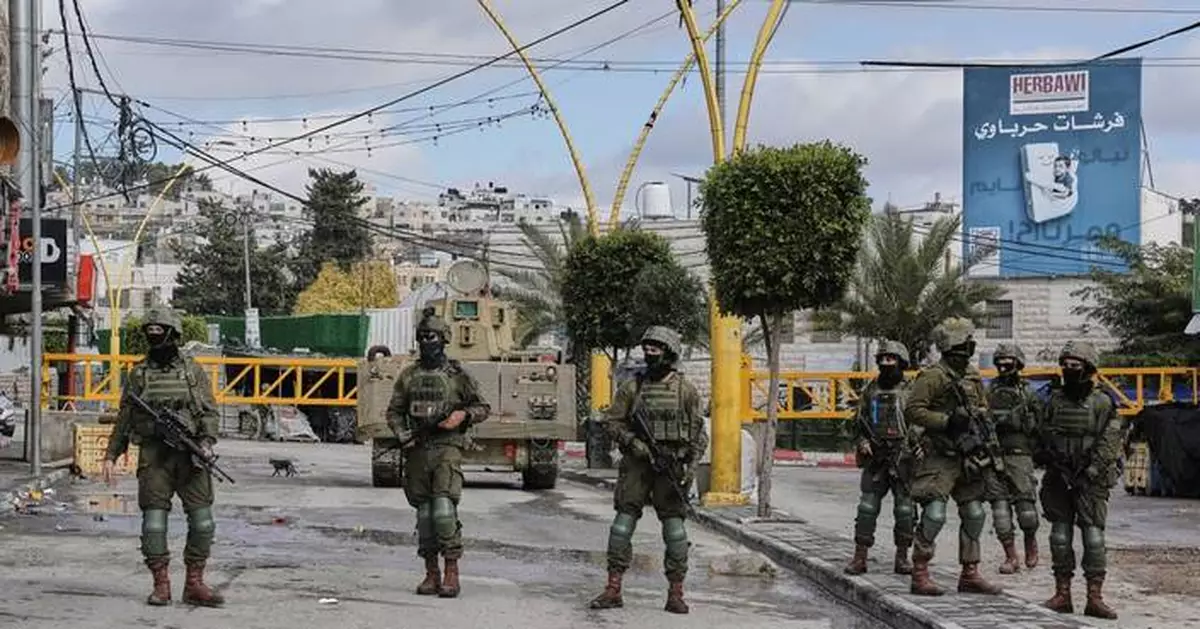
Israeli military and security forces launched what they called a large-scale counterterrorism operation in the West Bank city of Hebron to dismantle “terrorist infrastructure, eliminating illegal weapons possession and strengthening security."

The Israeli military said Monday the operation is expected to continue for several days. Israeli armored vehicles and soldiers patrolled city streets and put up barriers where operations were being conducted.

Hebron Mayor Khaled Dudin said Israeli forces targeted the area that's home to 80,000 people because it obstructs the construction of additional Israeli settlements.

Israeli forces on Monday killed three Palestinians, including a teenager, in southern Gaza, hospital authorities said.

Two men crossed into Israeli-controlled areas east of Khan Younis before being shot dead, while 17-year-old Hussein Tawfiq Abu Sabalah was shot and killed in the Muwasi area of Rafah, according to the Nasser hospital. It wasn’t immediately clear whether the teen had crossed into or came close to the Israeli-controlled area.

More than 460 people were killed by Israeli fire and their bodies brought to hospitals since the ceasefire went into effect just over three months ago, according to the Gaza Health Ministry.

The ministry, which is part of the Hamas-led government, maintains detailed casualty records that are seen as generally reliable by U.N. agencies and independent experts.

This story was first published on Jan. 19, 2026. It was updated on Jan. 20, 2026, to make clear that the IPC figure cited was released in December but assessed the situation in October and November.

Associated Press writers Josef Federman and Sam Metz in Jerusalem, Jill Lawless in London, Sylvie Corbet in Paris, Vladimir Isachenkov in Moscow and Grant Peck in Bangkok, Thailand contributed to this report.

Find more of AP’s coverage at https://apnews.com/hub/israel-hamas-war

President Donald Trump speaks to reporters before boarding Air Force One at Palm Beach International Airport, Monday, Jan. 19, 2026, in West Palm Beach, Fla. (AP Photo/Julia Demaree Nikhinson)

President Donald Trump speaks to reporters before boarding Air Force One at Palm Beach International Airport, Monday, Jan. 19, 2026, in West Palm Beach, Fla. (AP Photo/Julia Demaree Nikhinson)

Palestinians speak with an Israeli soldier during an army raid in the West Bank city of Hebron Monday, Jan. 19, 2026. (AP Photo/Mahmoud Illean)
Palestinians speak with an Israeli soldier during an army raid in the West Bank city of Hebron Monday, Jan. 19, 2026. (AP Photo/Mahmoud Illean)

Ali Shaath, head of Palestinian National committee for administering the Gaza Strip, left, meets with Egyptian Foreign Minister Badr Abdelatty, at the foreign ministry headquarters in Egypt's New Administrative Capital, Monday, Jan. 19, 2026. (AP Photo/Khaled Elfiqi)
Ali Shaath, head of Palestinian National committee for administering the Gaza Strip, left, meets with Egyptian Foreign Minister Badr Abdelatty, at the foreign ministry headquarters in Egypt's New Administrative Capital, Monday, Jan. 19, 2026. (AP Photo/Khaled Elfiqi)

Israeli soldiers take up positions during an army raid in the West Bank city of Hebron Monday, Jan. 19, 2026. (AP Photo/Mahmoud Illean)
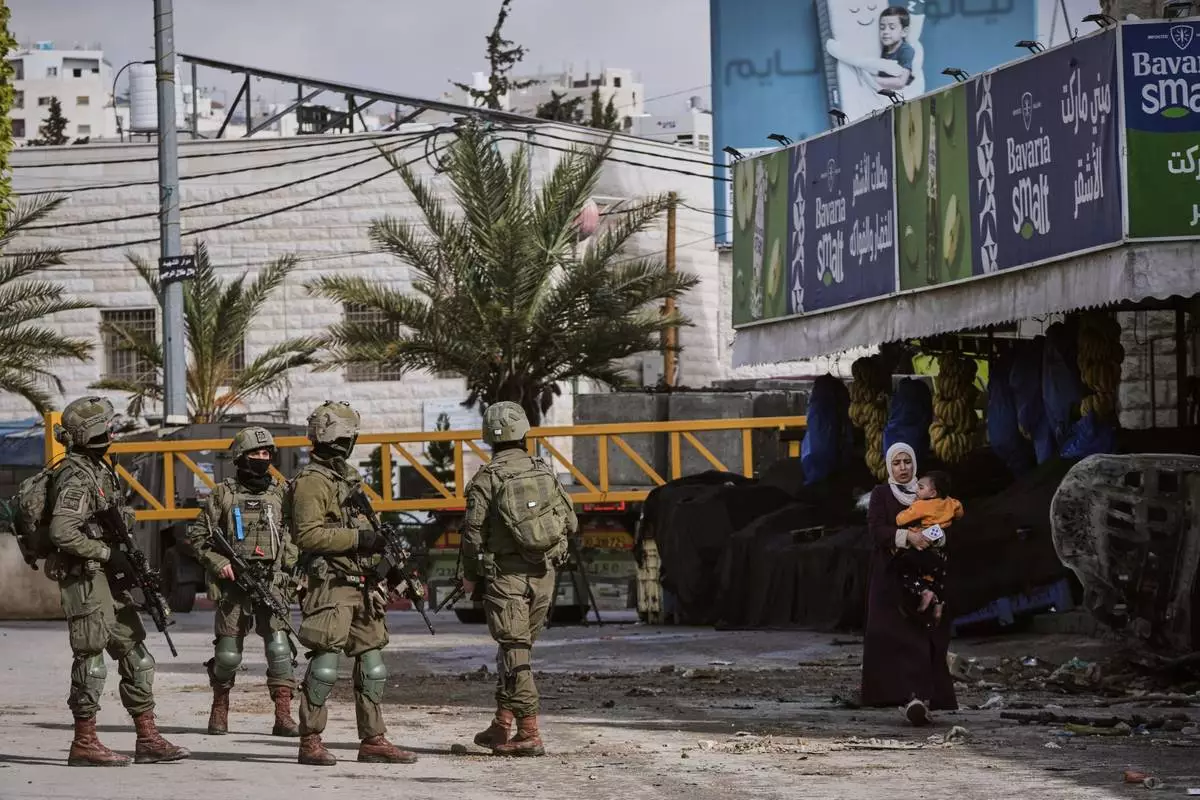
Israeli soldiers take up positions during an army raid in the West Bank city of Hebron Monday, Jan. 19, 2026. (AP Photo/Mahmoud Illean)
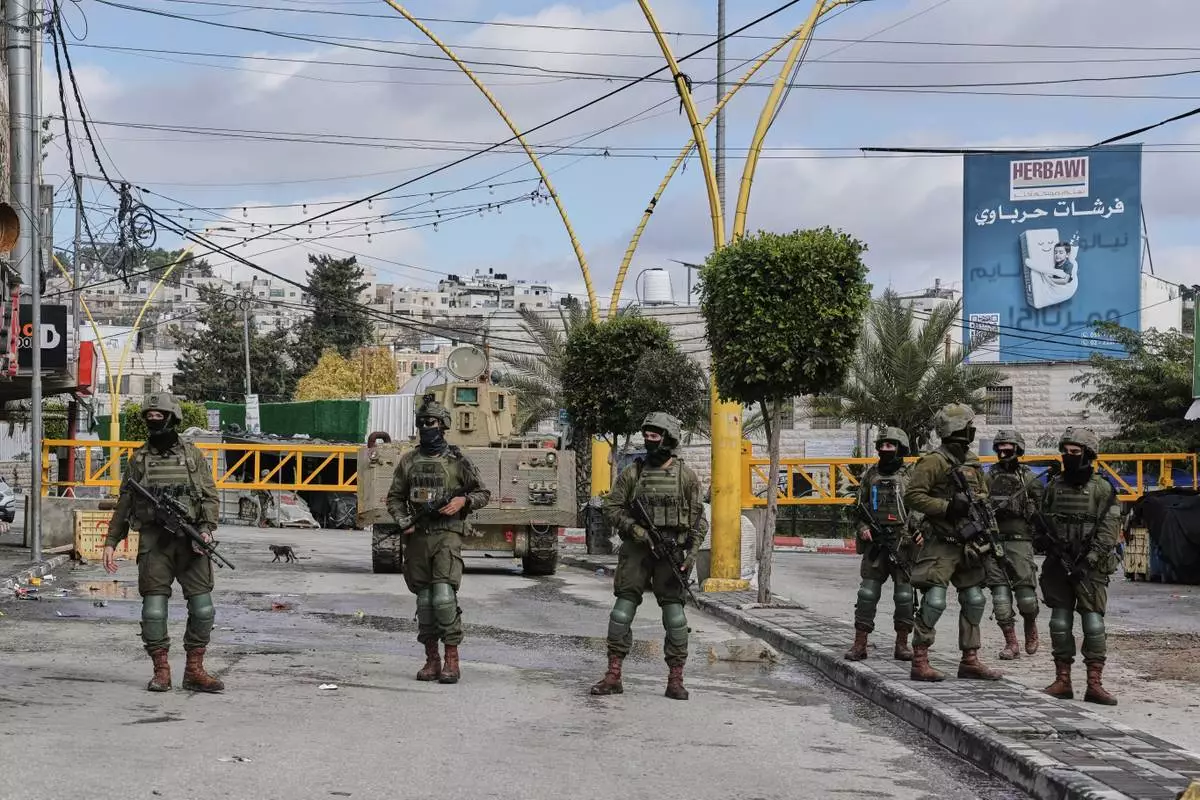
Israeli soldiers take up positions during an army raid in the West Bank city of Hebron Monday, Jan. 19, 2026. (AP Photo/Mahmoud Illean)

Israeli soldiers take up positions during an army raid in the West Bank city of Hebron Monday, Jan. 19, 2026. (AP Photo/Mahmoud Illean)
Israeli soldiers take up positions during an army raid in the West Bank city of Hebron Monday, Jan. 19, 2026. (AP Photo/Mahmoud Illean)
Israeli soldiers take up positions during an army raid in the West Bank city of Hebron Monday, Jan. 19, 2026. (AP Photo/Mahmoud Illean)
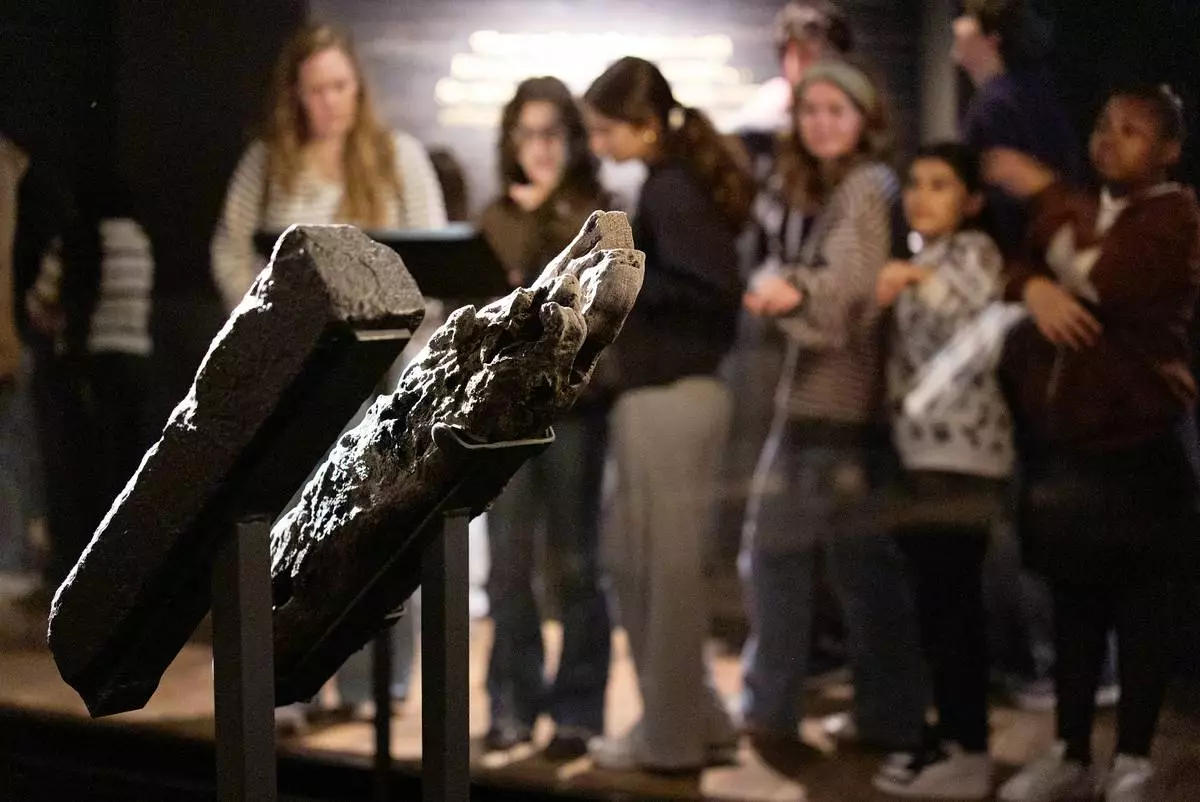
WASHINGTON (AP) — A Smithsonian museum exhibit about the maritime journey that millions of Africans were forced to take across the Atlantic to slavery in the Americas will change later this month, when a remnant from one of the first sunken slave ships ever recovered is taken off display in Washington.

The National Museum of African American History and Culture says a timber piece of the slave ship, the São José-Paquete de Africa, on display in its “Slavery and Freedom” exhibit, will soon be prepared for a trip back to its home museum in South Africa.

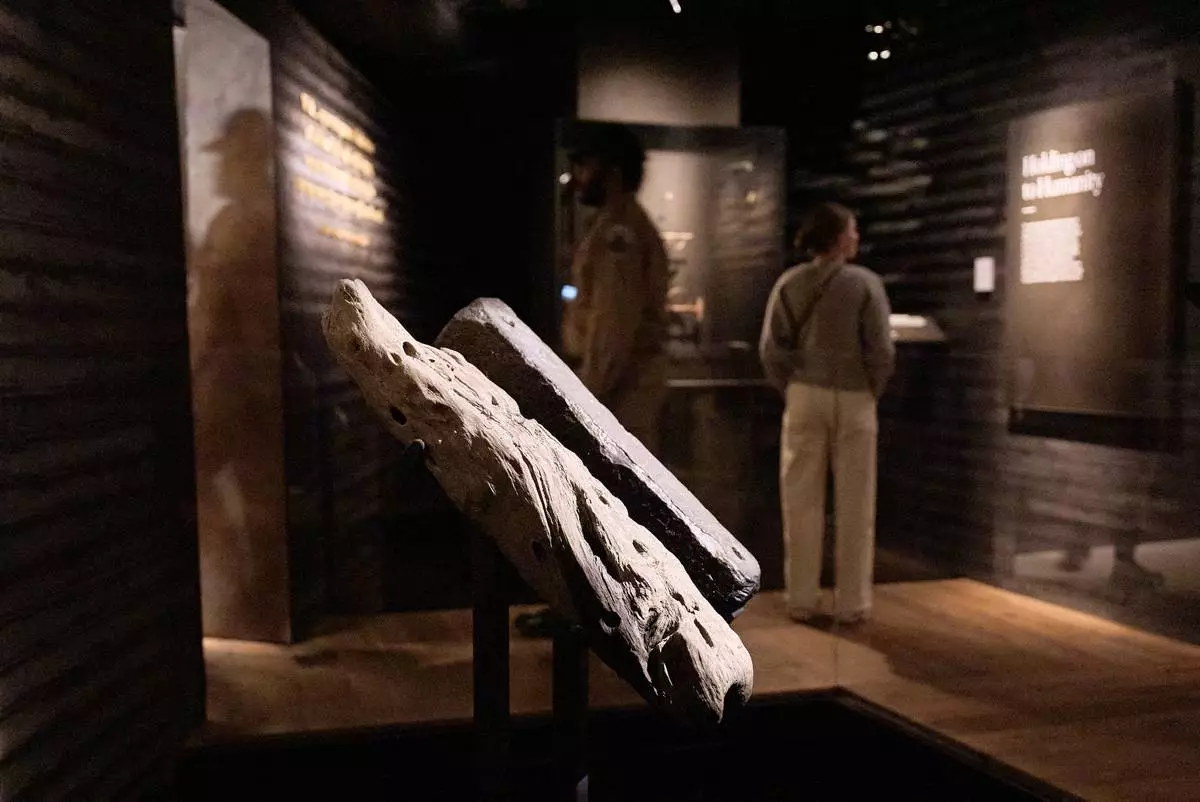
The 33-pound (15-kilogram) timber piece has been prominently displayed — seemingly suspended over a dark void, a ballast at its side — as part of a loan agreement to the museum since it opened in 2016. The agreement, examined by The Associated Press, was initially five years and then was extended another five in 2021, ending July 1.

The ship remnant will be among several items sent back to the Iziko Museums of South Africa later this year. Because of its delicate nature, a special crate has to be built for its transport.

Other items from the ship, including the ballasts that served as counterweights for the human cargo, are remaining on display and will be returned to South Africa in two years. A manifesto of the cargo on the ship will replace the timber piece.

The last day for museum visitors to see the timber piece on display is March 22.

The São José, a Portuguese vessel bound for Brazil with more than 400 captives from Mozambique, struck a rock and sank in December 1794 off the coast of Cape Town, South Africa. Half of the people aboard perished. Survivors were resold into slavery in the Western Cape, according to the Smithsonian.

Recovered in 2015, the ship was identified and studied through the Slave Wrecks Project, an international network of institutions that confirmed it was associated with the trans-Atlantic slave trade. The ship is among the first known wreckage of such a ship that was recovered, in which enslaved Africans died.

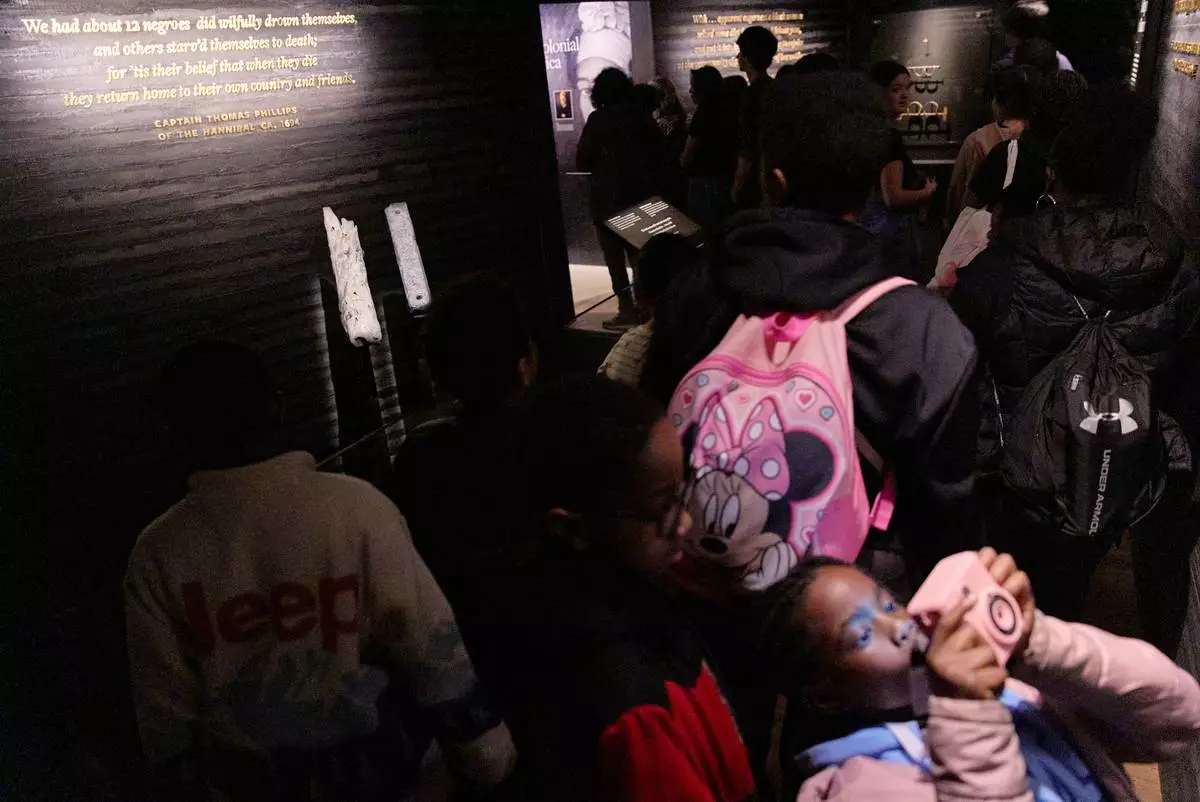
The São José piece is in the lowest public level of the museum and is part of the larger “Slavery and Freedom” exhibit, which focuses on the slave trade, including the ships and conditions of transport, as well as artifacts, such as shackles.

The exhibit addresses the Middle Passage, an especially fraught part of the Atlantic Ocean crossing where many of the captives died. While there is no exact count, the number of people who perished during the journey is in the millions, according to Paul Gardullo, the assistant director of history at the National Museum of African American History and Culture.

The alteration of the slavery exhibit comes at a time when any changes related to history and the American story at federal parks, museums or other public spaces are being scrutinized. President Donald Trump's administration has focused on putting the U.S. in a good light as the country prepares to celebrate the 250th anniversary of the signing of the Declaration of Independence.

The displays, exhibits and programming of several Smithsonian museums are under review as part of an executive order signed in March 2025 by the Republican president, titled “Restoring Truth and Sanity to American History.” The National Museum of African American History and Culture is one of the institutions named in the order.

Michelle Commander, the museum's deputy director, told the AP the exhibit change is entirely related to the loan agreement but understood the timing might raise questions.

“That’s why we’re being transparent in this moment, because we are aware that there are those kinds of questions,” Commander said. “But, as we’ve said, this is really about the conservation needs of that item.”

As part of the loan, Gardullo said, the South African government has a robust cultural patrimony law that dictates how its artifacts and historical materials are treated and how long they can be loaned out.

“The wooden materials are more fragile, and they need a little more close care,” he said.

Recent visitors to the National Museum of African American History and Culture spoke of the power of the display with the slave ship timber, unaware that it would be altered shortly.

Lines wait to enter the darkened gallery, entitled the Middle Passage, where there is a solemnity as people study the dark space where the timber sits next to a ship's ballast. The tangible nature of the exhibit takes it out of textbooks and into reality, said Krystina Hernandez, who was there chaperoning her 7-year-old son’s schoolmates.

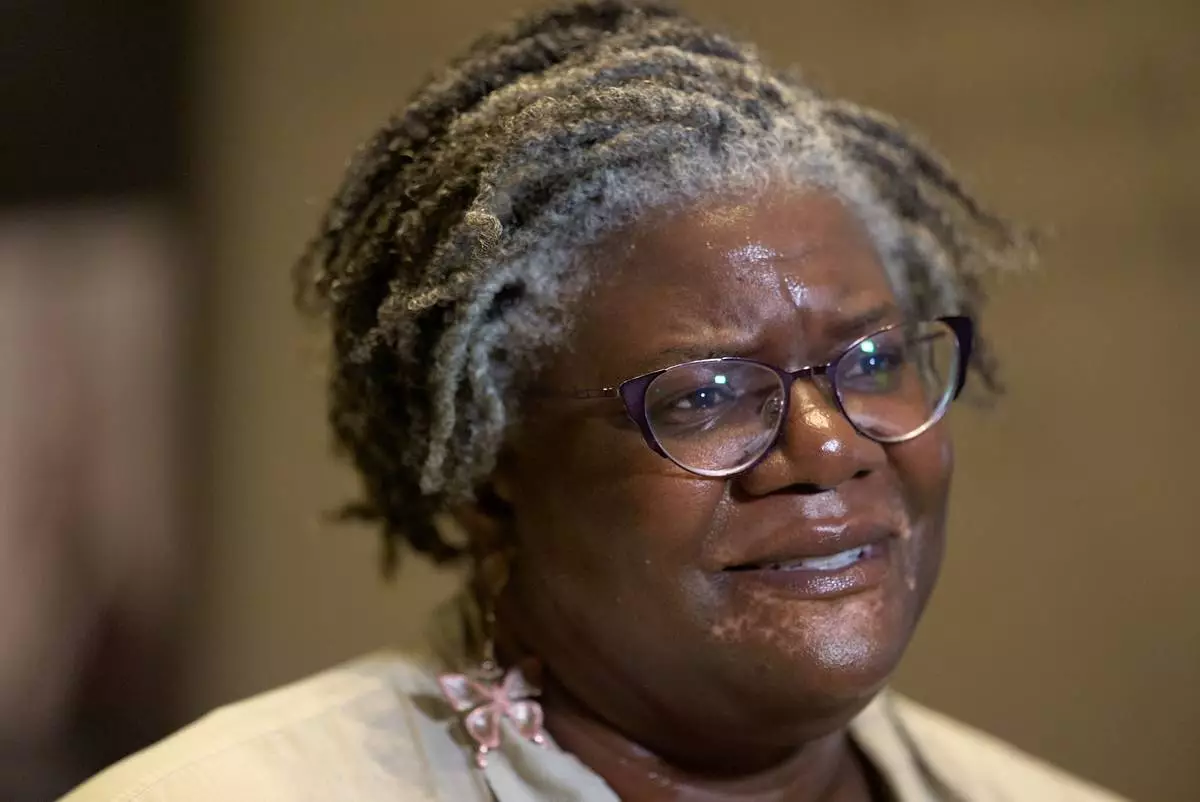
Anehtra Reynolds, from northern Virginia, was emotional as she exited the area. She said the presentation, including the artifacts and the darkness of the gallery, gave her a “piece of what they felt in terms of their misery.”

“I think there was a sign in there that mentioned there were some slaves who starved themselves to death in hopes that they would, when they died, they would be returned to their land,” Reynolds said.

Jim Carnes, who was in Washington visiting family from Birmingham, Alabama, said he was familiar with much of the information because he has worked in civil rights education in Birmingham and Montgomery, two places central to the nation's civil rights history.

“The artifacts are extraordinarily powerful,” he said, adding that he's left feeling sadness and anger, not just at the conditions of the enslaved people but at the current push by the federal government to “deny this ever happened.”

Jorge Carvajal, who is originally from Colombia but lives with his wife in south Florida, said seeing the exhibit silenced the stereotypes, especially that Black people are unreasonably angry.

“Empathy is what I’m trying to say. This will help people empathize a lot more. I mean, at least you would hope,” he said.

Commander said the staff at the museum will work to make sure that the exhibit continues to have the same impact with the remaining artifacts and displays.

“The story does not leave the museum because this timber is going to be returned to its owners,” she said.

School children visit the National Museum of African American History and Culture's Middle Passage exhibit, including a wooden timber, the artifact at back left, from the slave ship, the São José-Paquete de Africa, Friday, March 6, 2026, in Washington. (AP Photo/Jacquelyn Martin)

School children visit the National Museum of African American History and Culture's Middle Passage exhibit, including a wooden timber, the artifact at back left, from the slave ship, the São José-Paquete de Africa, Friday, March 6, 2026, in Washington. (AP Photo/Jacquelyn Martin)

Jim Cairnes of Birmingham, Ala., speaks to a reporter while visiting the National Museum of African American History and Culture, Friday, March 6, 2026, in Washington. (AP Photo/Jacquelyn Martin)

Jim Cairnes of Birmingham, Ala., speaks to a reporter while visiting the National Museum of African American History and Culture, Friday, March 6, 2026, in Washington. (AP Photo/Jacquelyn Martin)

Anehtra Richmond of Woodbridge, Va., speaks to a reporter while visiting the National Museum of African American History and Culture, Friday, March 6, 2026, in Washington. (AP Photo/Jacquelyn Martin)

Anehtra Richmond of Woodbridge, Va., speaks to a reporter while visiting the National Museum of African American History and Culture, Friday, March 6, 2026, in Washington. (AP Photo/Jacquelyn Martin)

People visit the National Museum of African American History and Culture's Middle Passage exhibit, including a wooden timber, the artifact at left, from the slave ship, the São José-Paquete de Africa, Friday, March 6, 2026, in Washington. (AP Photo/Jacquelyn Martin)

People visit the National Museum of African American History and Culture's Middle Passage exhibit, including a wooden timber, the artifact at left, from the slave ship, the São José-Paquete de Africa, Friday, March 6, 2026, in Washington. (AP Photo/Jacquelyn Martin)

School children visit the National Museum of African American History and Culture's Middle Passage exhibit, behind a wooden timber, the artifact at right, from the slave ship, the São José-Paquete de Africa, Friday, March 6, 2026, in Washington. (AP Photo/Jacquelyn Martin)

School children visit the National Museum of African American History and Culture's Middle Passage exhibit, behind a wooden timber, the artifact at right, from the slave ship, the São José-Paquete de Africa, Friday, March 6, 2026, in Washington. (AP Photo/Jacquelyn Martin)

Recommended Articles