Protein just got a big boost from U.S. health officials.
The latest federal dietary guidelines tell Americans to “prioritize protein foods at every meal” and advise increasing daily intake — up to double the amount of previous recommendations.
“We are ending the war on protein,” Health Secretary Robert F. Kennedy Jr. said in a White House post on social media.
The guidance — including a new food pyramid — emphasizes red meat, whole milk and other animal sources of protein, while downplaying plant-based offerings.
But top nutrition experts question the protein push, saying Americans already consume more protein than they need, and there’s no new evidence that people need to drastically ramp up consumption. For many people, eating much more protein could lead to more fat and more cases of diabetes, they say.
“If you’re actively building muscle with strength or resistance training, more protein can help,” said Dr. Dariush Mozaffarian, a Tufts University nutrition expert. “Otherwise, you’re getting enough.”
Others worry that the dietary advice will accelerate the trend of companies encouraging Americans to embrace extra protein in foods including bars, cereals and snacks – even water.
Sales of protein-enriched packaged food will increase at a time "when one of the main messages is ‘eat real food, eat whole foods,’” said Christopher Gardner, a nutrition expert at Stanford University. “I think they’re going to confuse the public in a big way.”
Here’s what you need to know about the new protein recommendations:
Protein is a macronutrient that is in every cell in the human body. It's vital for growth and repair of muscle, bone, skin, hair and other organs and tissues. It’s made of building blocks called amino acids, including some that the body doesn’t make and must come from food.
For decades, the U.S. dietary guidelines and other sources have recommended that people consume 0.8 grams of protein per kilogram of body weight each day, or about 54 grams daily for a 150-pound person.
The new recommendation advises people to consume 1.2 grams to 1.6 grams of protein per kilogram of body weight — up to double the previous advice. The guidance says adults should consume at least 100 grams of protein per day with half or more coming from animal sources.
The average adult man already consumes about 100 grams of protein a day, or twice the old recommendation.
The previous protein recommendations were calculated to prevent a nutrition deficiency, according to a scientific review published with the new dietary guidelines.
“It represents the lowest intake that maintains equilibrium in most healthy adults but does not reflect the intake required to maintain optimal muscle mass or metabolic function under all conditions,” the review said.
The new document relied on evidence from 30 studies that looked at the effects of higher protein diets on weight management and nutrient adequacy.
It concluded that protein intakes well above the previous guidance “are safe and compatible with good health.”
Nutrition experts noted that trials focusing on weight reduction aren’t typically used to make dietary recommendations for the general population. And, in a new article published in Journal of the American Medical Association, Mozaffarian said there is little evidence, outside of use for strength or resistance training, that “higher protein builds muscle or provides other health benefits.”
“In fact, excess dietary protein can be converted to fat by the liver,” Mozaffarian wrote. That can increase the risk of the development of dangerous fat in the abdomen that surrounds vital organs and boost the risk of diabetes, he added.
Other nutrition experts said the recommendation to eat more protein could be useful if it helps achieve another key goal of the new guidelines: encouraging people to eat more whole foods and fewer highly processed foods such as packaged snacks and cookies.
“The main problem with the food supply is the processed carbohydrates,” said Dr. David Ludwig, an endocrinologist and researcher at Boston Children’s Hospital.
But that will be a tall order for consumers faced with a slew of processed packaged foods — including toaster pastries, cereals and salty snacks — imbued with the halo of added protein.
“I think the American public’s gonna go buy more junk food,” Gardner said.
The Associated Press Health and Science Department receives support from the Howard Hughes Medical Institute’s Department of Science Education and the Robert Wood Johnson Foundation. The AP is solely responsible for all content.

FILE - New York strip steaks are on display at a Sam's Club, Wednesday, Sept. 24, 2025, in Bentonville, Ark. (AP Photo/Charlie Riedel, File)
WEST BLOOMFIELD, Mich. (AP) — An attacker armed with a rifle was fatally shot after ramming his vehicle into one of the nation’s largest Reform synagogues Thursday in what federal investigators said was an act of violence targeting the Jewish community.
Jennifer Runyan, the special agent in charge of the FBI’s Detroit field office, called the incident “deeply disturbing and tragic” and said the FBI is leading the investigation.
The agency considers the crime a “targeted act of violence against the Jewish community,” she said at a news conference Thursday. Investigators have not determined a motive yet.
“What drove this person into action has to be determined by the investigation,” said Oakland County Sheriff Mike Bouchard.
The vehicle caught fire after crashing into Temple Israel in West Bloomfield Township, just outside Detroit, and driving through a hallway as security opened fire, authorities said.
None of the synagogue’s staff, teachers or the 140 children at its early childhood center were injured, Bouchard said.
In the minutes after the attack, smoke billowed from the synagogue. One security officer was hit by the vehicle and knocked unconscious but did not suffer life-threatening injuries, the sheriff said. And 30 law enforcement officers were treated for smoke inhalation.
West Bloomfield Police Chief Dale Young said Temple security officers “engaged the individual and neutralized the threat.”
The suspect was found dead inside his vehicle, Bouchard said.
Cassi Cohen, director of strategic development at Temple Israel, was standing at the hallway where the crash happened. She said she heard a loud bang, grabbed a few staff members, ran into her office and locked the door.
“When I heard the crash, I knew it was bad,” Cohen said.
She said a classroom was near where the car rammed the synagogue and, in addition to the children, there were also more than 30 staff members.
“Thankfully, we have had many active shooter drills and our staff is prepared for these situations,” she said. “We do go into lockdown.”
Rabbi Arianna Gordon, from Temple Israel, thanked the security team, law enforcement and early childhood teachers for getting the children out safely and reunited with their parents, calling them the “true rock stars of the day.”
About a dozen parents sprinted to get their children soon after authorities cleared the building. Other families were reunited at a nearby Jewish Community Center.
Allison Jacobs, whose 18-month-old daughter is enrolled in Temple Israel’s day care, said she got a message from a teacher saying the children were OK even before she knew what happened.
“There are no words. I was in complete and utter shock,” she told the AP. “I was hoping that it was a false report.”
Jacobs, whose family is Jewish, said she tries not to think about all that’s going on in the world.
“You never think that this is actually going to happen to you,” she said. “But I know that it’s — it’s just terrible. This morning I was mourning the loss of the school that got hit in Iran.”
Synagogues around the world have been on edge and have been ramping up security since the U.S. and Israel launched a war with Iran with missile strikes on Feb. 28.
The FBI has warned that Iranian operatives may be planning drone attacks on targets in California. Two men brought explosives to a far-right protest outside the New York mayoral mansion on Saturday. Investigators allege they were inspired by the Islamic State extremist group.
And an assailant drove a car into people outside an Orthodox synagogue in Manchester, England, on Yom Kippur, the holiest day of the Jewish calendar. He stabbed two people to death before officers shot and killed him.
President Donald Trump said he had been fully briefed on the attack, calling it a “terrible thing.”
Steven Ingber, the CEO of the Jewish Federation of Detroit, lamented the fact that his organization had to train and prepare for an attack.
“I’d love to say that I’m shocked, that I’m surprised, but I’m not,” he said during a news conference Thursday.
He added: “This will not change us. This will not deter us and we will continue.”
Oakland County is Michigan’s second-largest county with roughly 1.3 million people. The majority of Detroit-area Jewish residents live there.
“This is heartbreaking,” Michigan Gov. Gretchen Whitmer said in a statement. “Michigan’s Jewish community should be able to live and practice their faith in peace.”
It was the second attack at a house of worship in Michigan within the past year. Last September, a former Marine fatally shot four people at a church north of Detroit and set it ablaze. The FBI later said he was motivated by “anti-religious beliefs” against The Church of Jesus Christ of Latter-day Saints.
Temple Israel has 12,000 members, according to its website, which says the synagogue is “passionate about helping Jewish communities across the globe” and that its mission is to “create a community building through the lens of Reform Judaism.”
The Jewish Federation of Detroit briefly advised all Jewish organizations in the area to lock down.
Rabbi Jeffrey Myers, a survivor of the 2018 Pittsburgh synagogue massacre, said in a statement that the Michigan attack demonstrates yet again the consequences of hatred.
“We lose our humanity when we seek violent means as a solution,” said Myers, rabbi of the Tree of Life Congregation, where 11 worshippers died in the deadliest antisemitic attack in U.S. history. “No one should dwell in fear because of who they are.”
This story has been corrected to show that the shooting at a church north of Detroit happened in September, not October.
Durkin Richer reported from Washington, D.C. Associated Press reporters Ed White in Detroit; Todd Richmond in Madison, Wisconsin; John Seewer in Toledo, Ohio; Eric Tucker in Washington, D.C., and Hallie Golden in Seattle contributed.

Oakland County Sheriff Michael Bouchard speaks to media as police respond to scene of a shooting at Temple Israel in West Bloomfield, Mich., on Thursday, March 12 2026. (Jacob Hamilton /Ann Arbor News via AP)
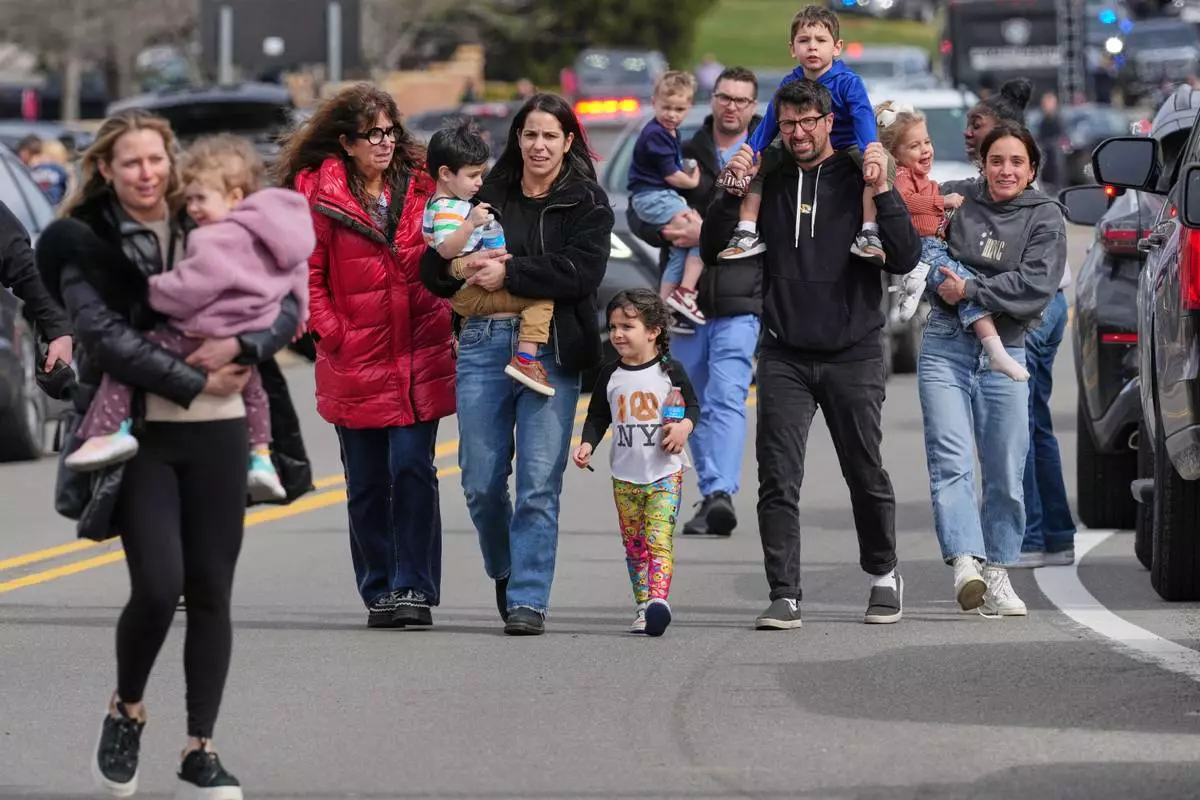
Law enforcement escort families with children away from the Temple Israel synagogue Thursday, March 12, 2026, in West Bloomfield Township, Mich. (AP Photo/Paul Sancya)

Police respond to scene of a shooting at Temple Israel in West Bloomfield, Mich., on Thursday, March 12 2026. (Jacob Hamilton/Ann Arbor News via AP)
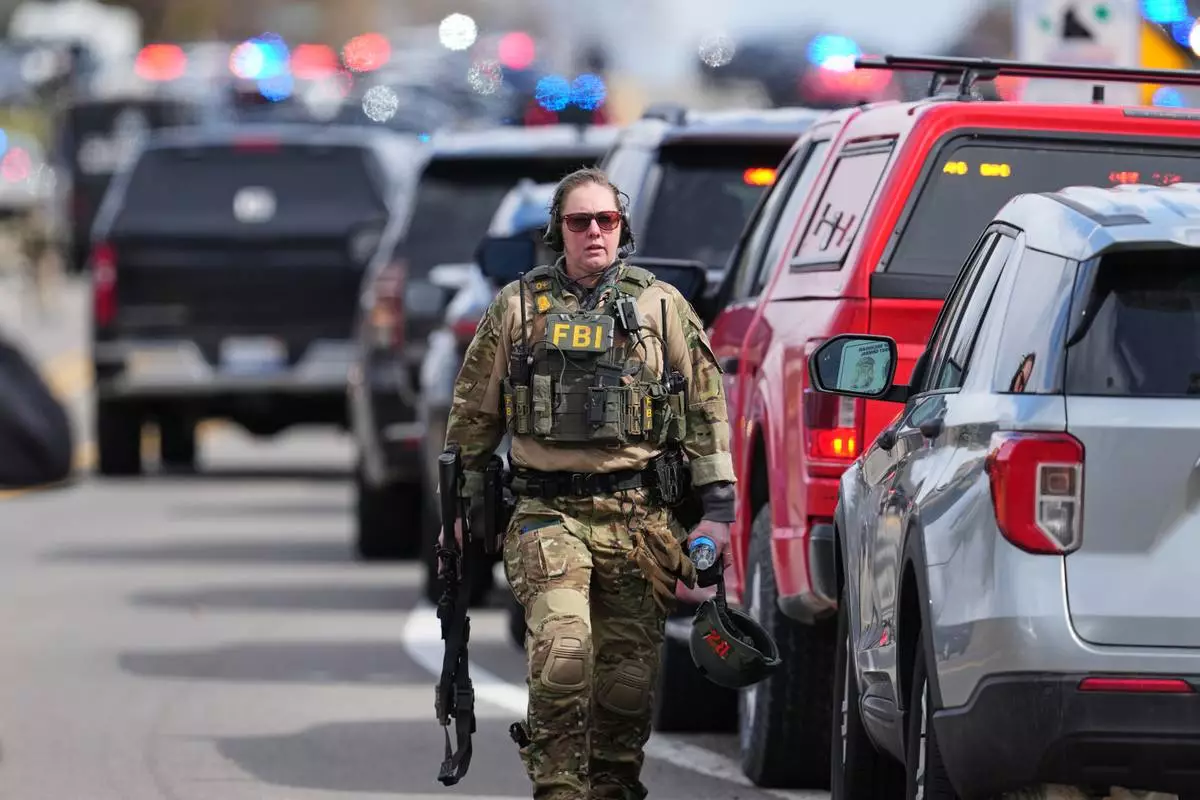
Law enforcement respond to a call at Temple Israel synagogue Thursday, March 12, 2026, in West Bloomfield Township, Mich. (AP Photo/Paul Sancya)
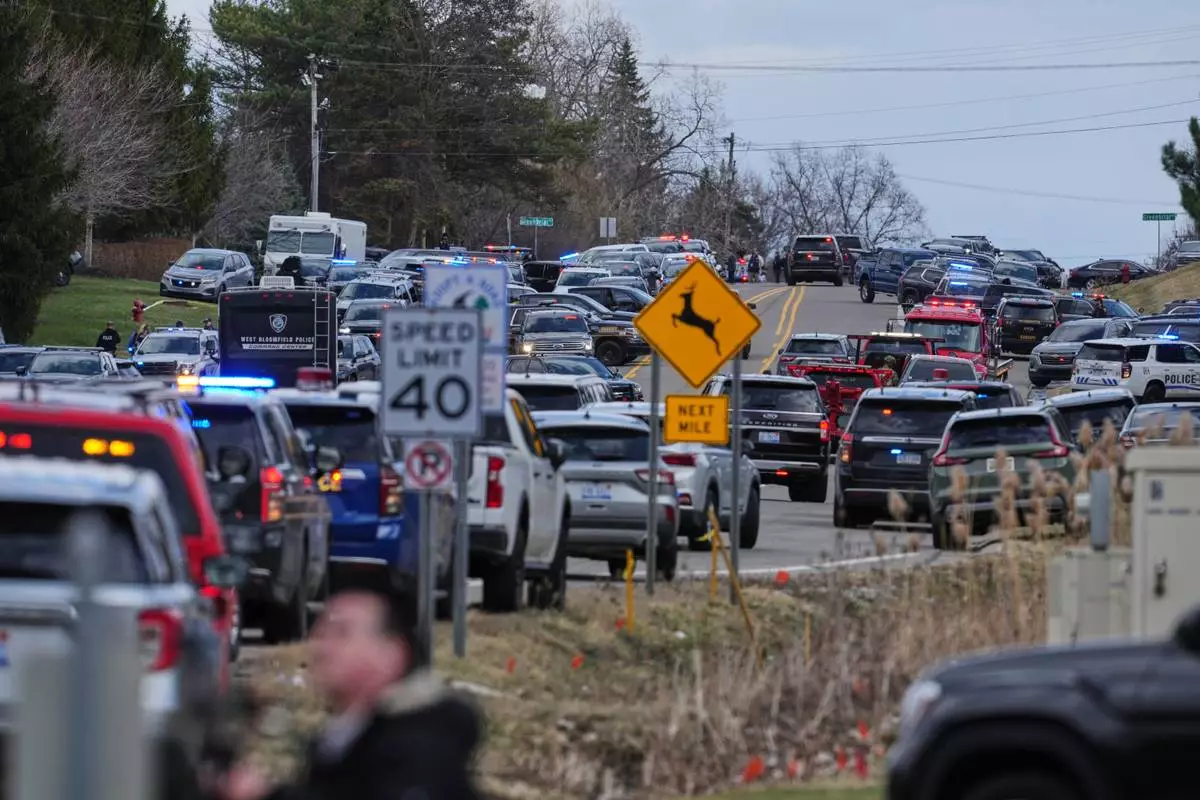
Law enforcement respond to a call at Temple Israel synagogue Thursday, March 12, 2026, in West Bloomfield Township, Mich. (AP Photo/Paul Sancya)
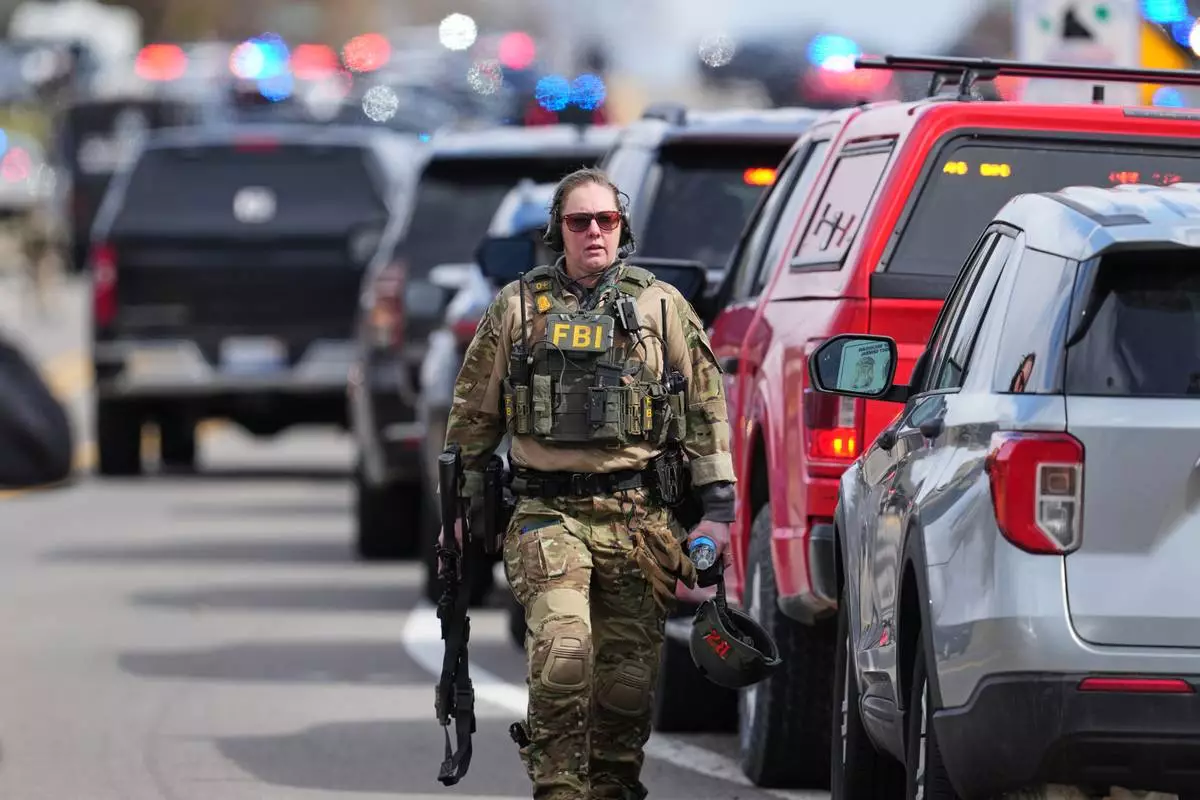
Law enforcement respond to a call at Temple Israel synagogue Thursday, March 12, 2026, in West Bloomfield Township, Mich. (AP Photo/Paul Sancya)
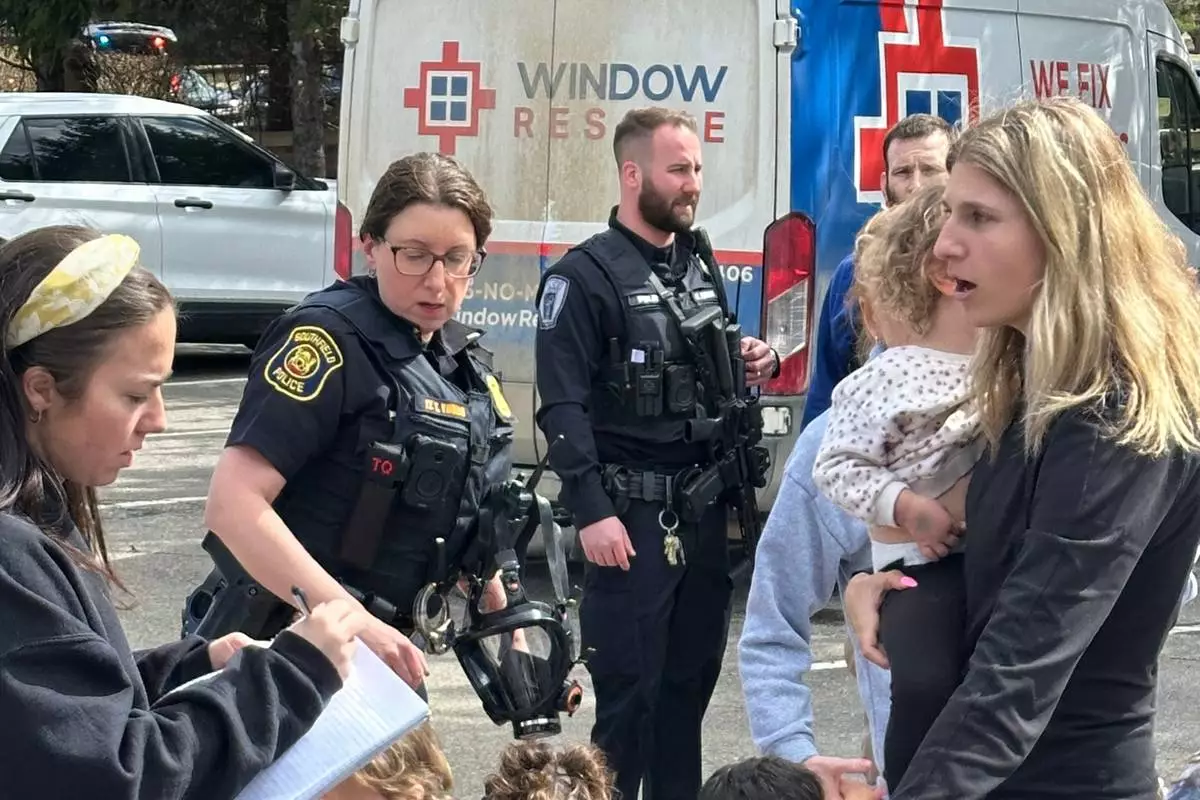
A woman gathers children as law enforcement respond to a call at Temple Israel synagogue on Thursday, March 12, 2026, in West Bloomfield Township, Mich. (AP Photo/Corey Williams)
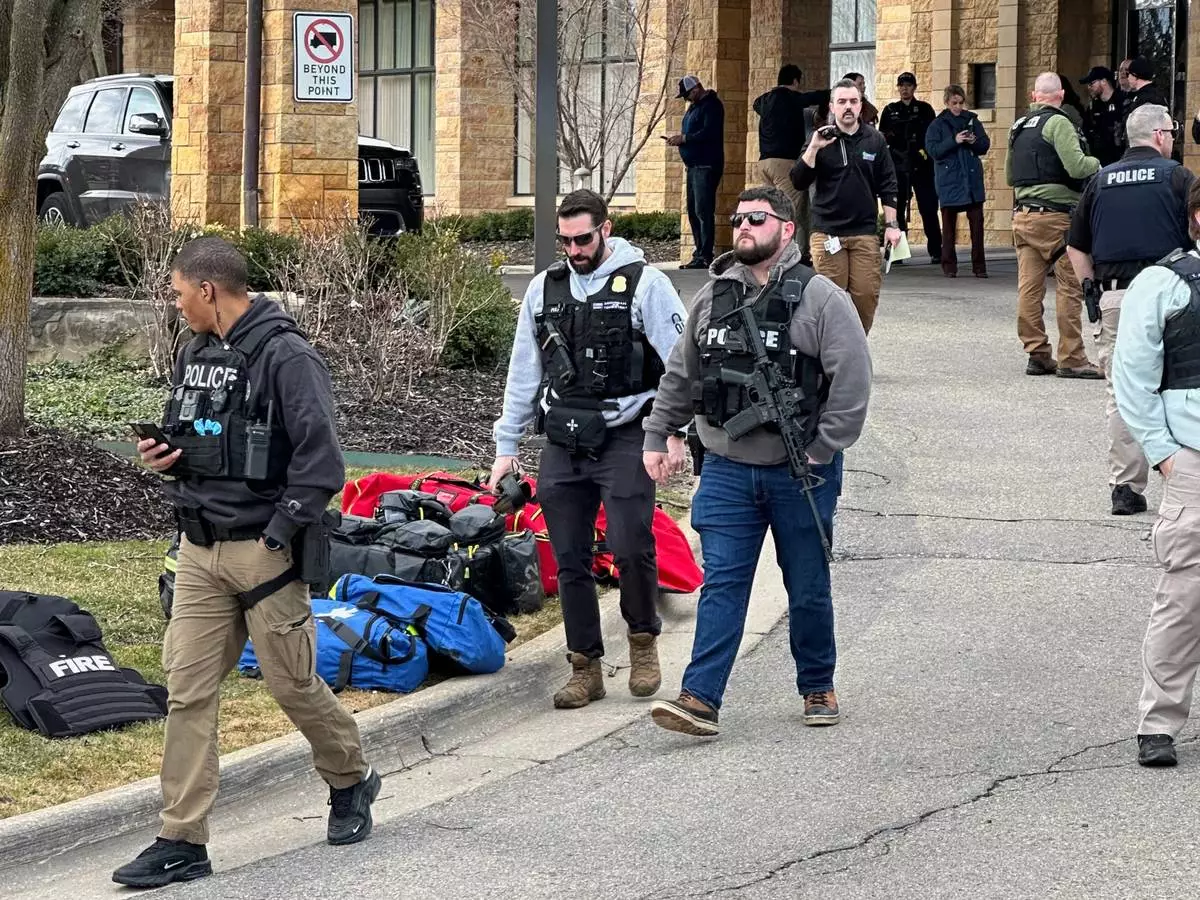
Law enforcement respond to a call at Temple Israel synagogue on Thursday, March 12, 2026, in West Bloomfield Township, Mich. (AP Photo/Corey Williams)
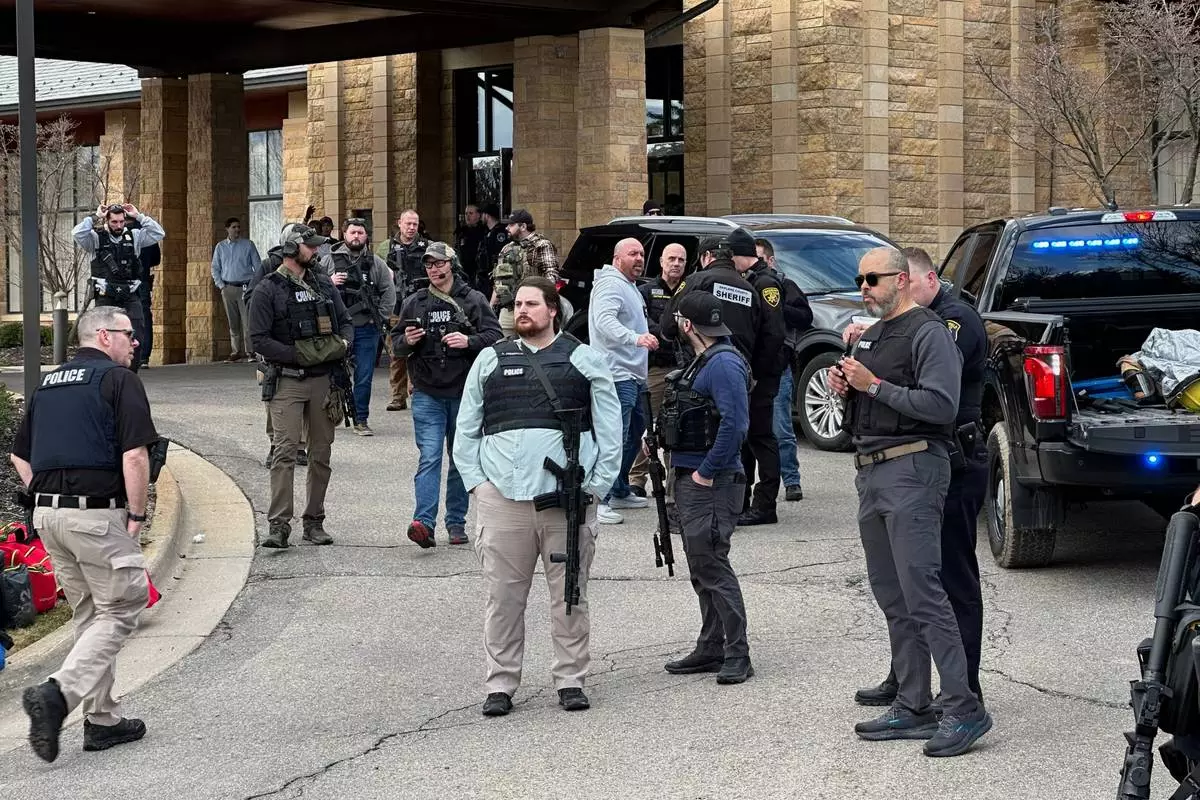
Law enforcement respond to a call at Temple Israel synagogue, Thursday, March 12, 2026 in West Bloomfield Township, Mich. (AP Photo/Corey Williams)
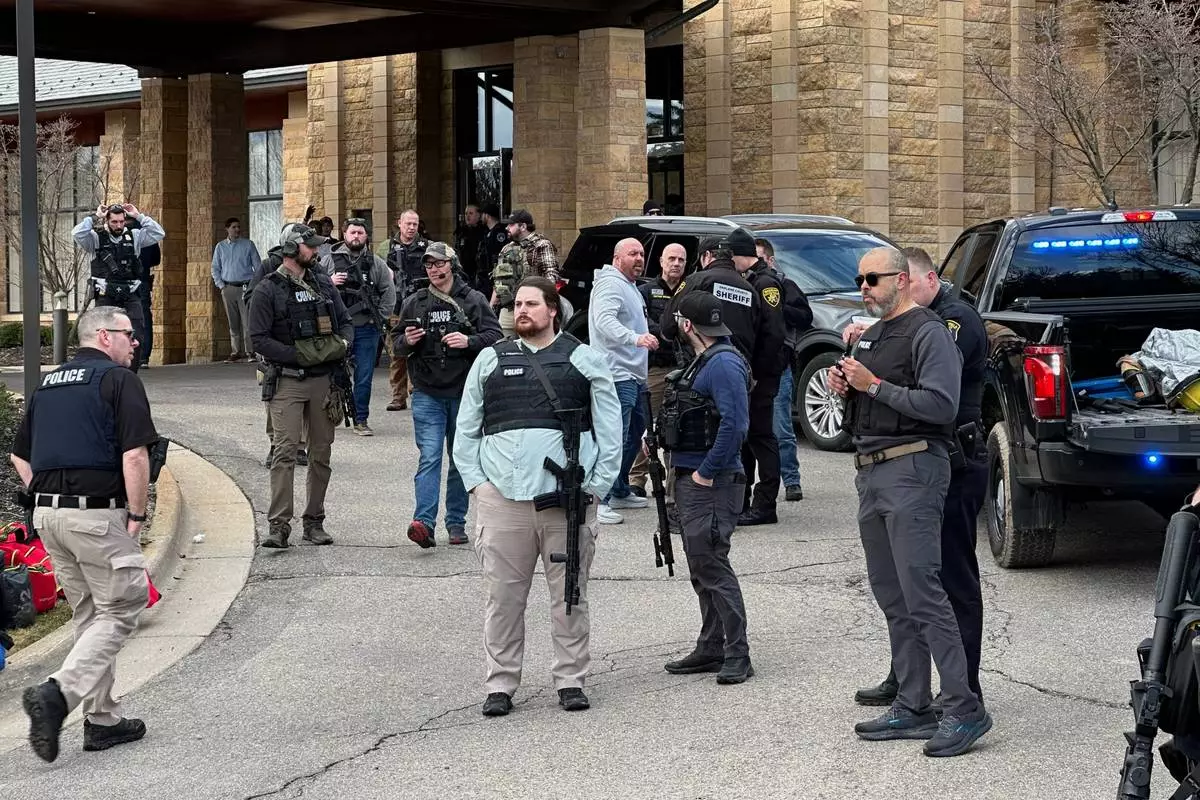
Law enforcement respond to a call at Temple Israel synagogue in West Bloomfield Township, Mich. (AP Photo/Corey Williams)
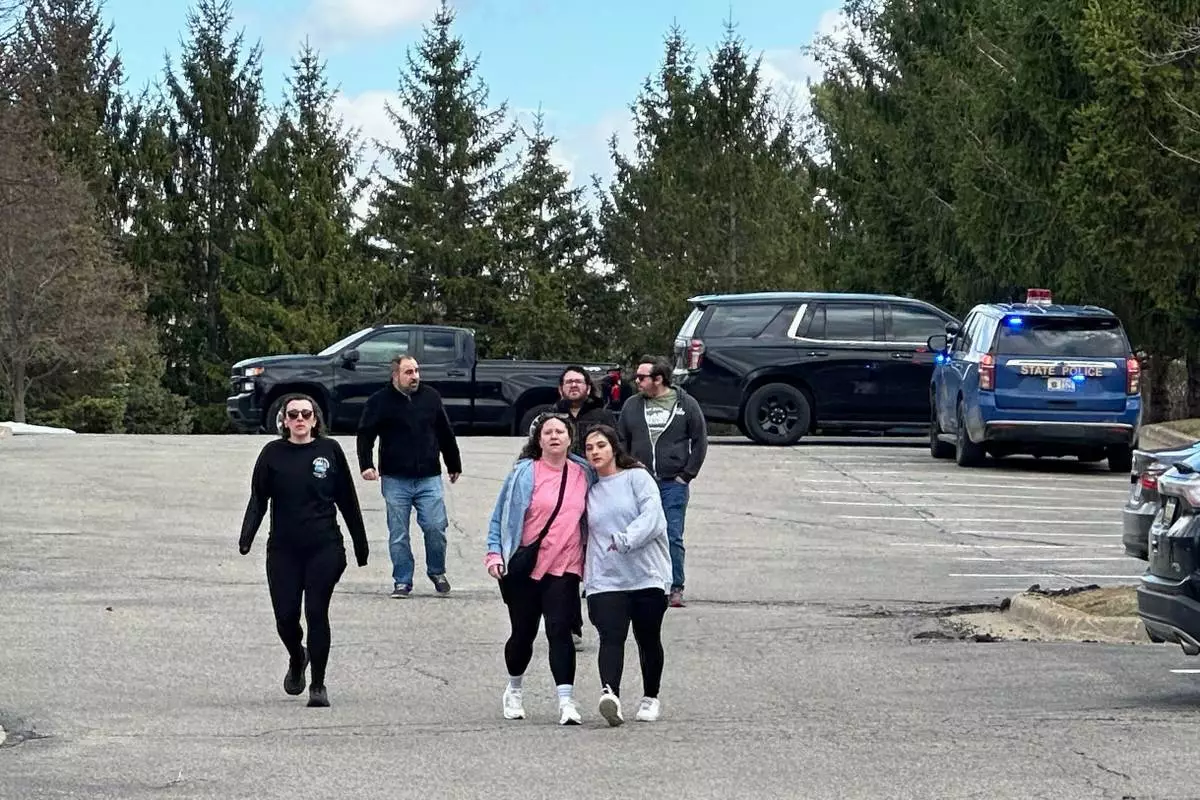
People gather near Temple Israel synagogue in West Bloomfield Township, Mich. (AP Photo/Corey Williams)