GOMA, Congo (AP) — Congolese soldiers and fighters from a pro-government militia have reentered the strategic eastern town of Uvira, the army and residents said Monday, a month after it was seized by the Rwanda-backed M23 rebels, as fighting in the region escalated despite a U.S.-mediated peace deal.
The Congolese army said in a statement it took control of the city on Sunday following the rebels announced withdrawal last month.
“The Armed Forces of the Democratic Republic of the Congo are continuing their deployment in Uvira and surrounding areas to consolidate their positions and secure people and their property,” Congolese army spokesperson Mak Hazukay said in the statement.
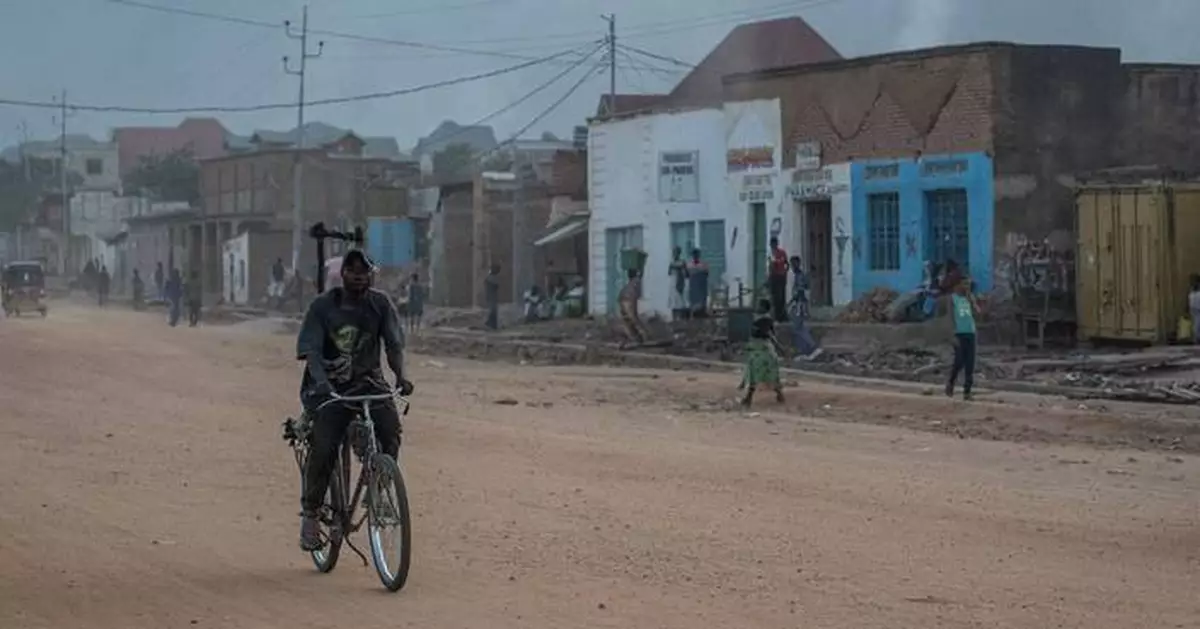
“Since yesterday, we have welcomed our soldiers back after more than a month away,” Alain Ramazani, a resident of Uvira, told The Associated Press over the phone. He added that the soldiers are in the city alongside fighters from the pro-government Wazalendo militia.
Congolese army jeeps were patrolling Uvira on Monday morning, but sporadic gunfire continued, with uncertainty over whether it involved Wazalendo fighters, soldiers or residents in the city flooded with weapons, said Ghislain Kabamba, director of the Observatory for Human Rights, Justice and Local Governance for Social Cohesion in Congo, who is based in Uvira.
M23 had taken control of the city last month following a rapid offensive. More than 1,500 people have been killed and about 300,000 displaced, the Congolese government's spokesperson Patrick Muyaya said Monday.
The rebel group later announced it would withdraw from the city, in what it said was a “unilateral trust-building measure” requested by the U.S. to facilitate the peace process.
The town was the Congo government’s last major foothold in South Kivu province after the provincial capital of Bukavu fell to the rebels in February. Its capture allowed the rebels to consolidate a broad corridor of influence across the east.
The rebel push into Uvira had also brought the conflict to the doorstep of neighboring Burundi, which has maintained troops in eastern Congo for years, heightening fears of a broader regional spillover.
The town’s seizure came days after Congolese President Félix Tshisekedi and Rwandan leader Paul Kagame met with U.S. President Donald Trump in Washington to reaffirm a U.S.-brokered peace deal.
Congo, the U.S. and U.N. experts accuse Rwanda of backing M23, which has grown from hundreds of members in 2021 to around 6,500 fighters, according to the U.N.
More than 100 armed groups are vying for a foothold in mineral-rich eastern Congo, near the border with Rwanda, most prominently M23. The conflict has created one of the world’s most significant humanitarian crises, with more than 7 million people displaced, according to the U.N. agency for refugees.
Despite the signing of a deal between the Congolese and Rwandan governments brokered by the U.S. and ongoing negotiations between rebels and Congo, fighting continues on several fronts in eastern Congo, continuing to claim numerous civilian and military casualties.
———
Kamale reported from Kinshasa, Congo.
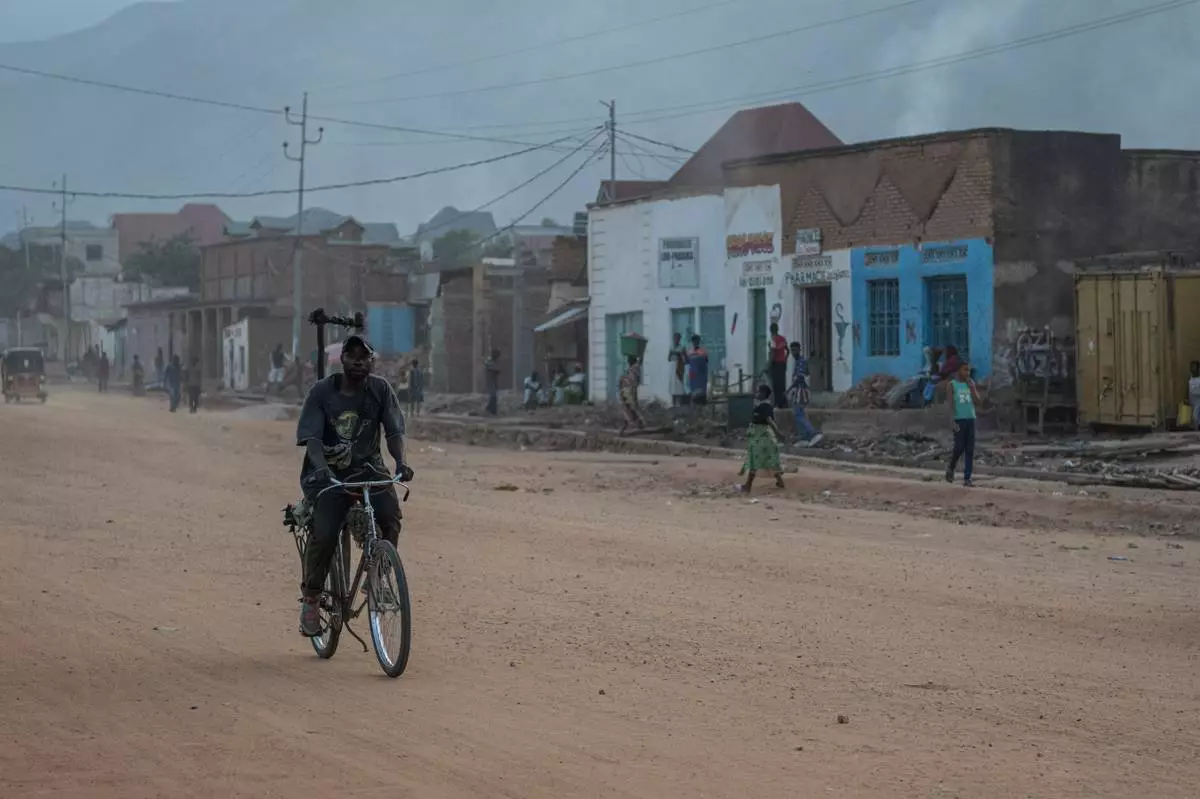
FILE - A man rides a bicycle on a street as people return to their homes in Uvira, Democratic Republic of Congo, Dec. 13, 2025. (AP Photo/Moses Sawasawa, File)
SEOUL, South Korea (AP) — North Korean leader Kim Jong Un has dismissed a vice premier over troubles in a factory modernization project, an apparent move to tighten discipline among officials and push them to deliver greater results ahead of a major political conference.
The upcoming ruling Workers’ Party congress, the first of its kind in five years, is one of North Korea's biggest propaganda spectacles and is intended to review past projects, establish new political and economic priorities and reshuffle officials.
The Korean Central News Agency reported Tuesday that Kim blamed Yang Sung Ho, a vice premier in charge of the machine-building industry, for causing “unnecessary man-made confusion" in works to modernize the Ryongsong Machine Complex in the northeast.
In a Monday speech marking the completion of the complex's first-stage modernization plan, Kim said the project suffered “not a small amount of economic loss” because of irresponsible and incompetent officials. Kim said he had already criticized Yang over related issues during a party meeting in December and watched him closely, but found that he felt no sense of responsibility at all, KCNA said.
“To speak figuratively in simpler words, he was like a goat yoked to pull an ox cart. We should see this as an incidental mistake in our practice of personnel appointment,” Kim said. “Could we expect a goat to pull a cart for an ox?”
Publicly scolding and firing officials is Kim's familiar management style. By doing so, Kim likely aimed to “create extreme tensions among senior officials” and pressure them to produce better results ahead of the party congress, said Kwak Gil Sup, the head of One Korea Center, a website specializing in North Korea affairs.
Moon Seong Mook, an expert with the Seoul-based Korea Research Institute for National Strategy, said the factory project's troubles were more likely caused by North Korea's fundamental, structural problems such as dedicating scarce resources to weapons programs, rather than by individual officials such as Yang.
“Kim Jong Un has gone all-in on nuclear and missile programs but he’s mismanaged the economy. He’s just passing the blame for his fault to a subordinate,” Moon said.
North Korea’s economy suffered major setbacks during the COVID-19 pandemic. South Korea’s central bank said North Korea’s economy grew 3.7 % in 2024, but many observers say the country would find it difficult to achieve major, rapid growth due to its excessive focus on weapons programs, its inefficient highly centralized economy and international sanctions.
Kwak said much of the benefits of North Korea's small economic growth have largely gone to its ruling elite and weapons development sector, not to general public, further deepening inequalities.
The party congress is likely to open later in January or February, according to South Korea’s spy service.
During the congress, Kim would likely strengthen a policy of cooperation with Russia, China and other allies to bring out gradual economic developments, Kwak said.
Outside experts are also closely looking at whether Kim would take steps to restart long-dormant diplomacy with the U.S. They say President Donald Trump's planned visit to Beijing in April could increase prospects for a resumption of talks between the U.S. and North Korea.
Moon said Kim would likely use the congress to formally declare his stated goal of simultaneously advancing nuclear and conventional weapons programs.
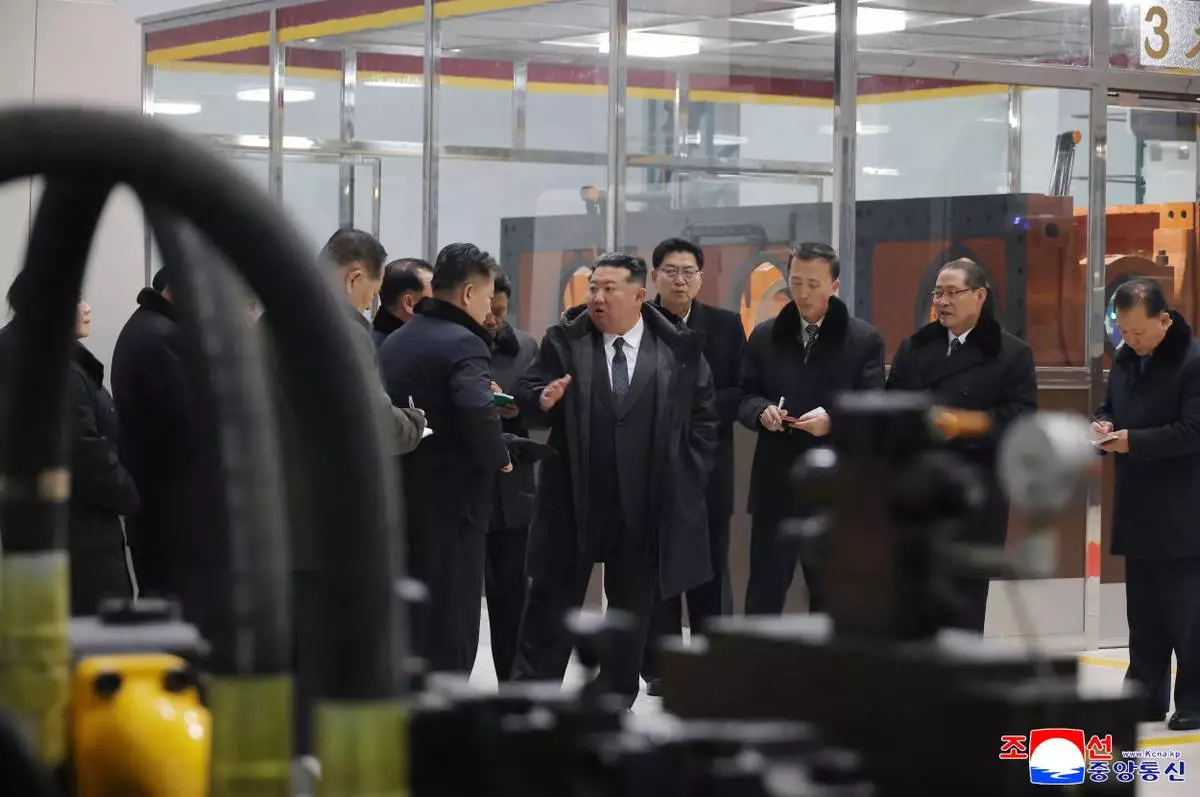
In this photo provided by the North Korean government, North Korean leader Kim Jong Un, center, visits the Ryongsong Machine Complex in North Korea Monday, Jan. 19, 2026. Independent journalists were not given access to cover the event depicted in this image distributed by the North Korean government. The content of this image is as provided and cannot be independently verified. Korean language watermark on image as provided by source reads: "KCNA" which is the abbreviation for Korean Central News Agency. (Korean Central News Agency/Korea News Service via AP)
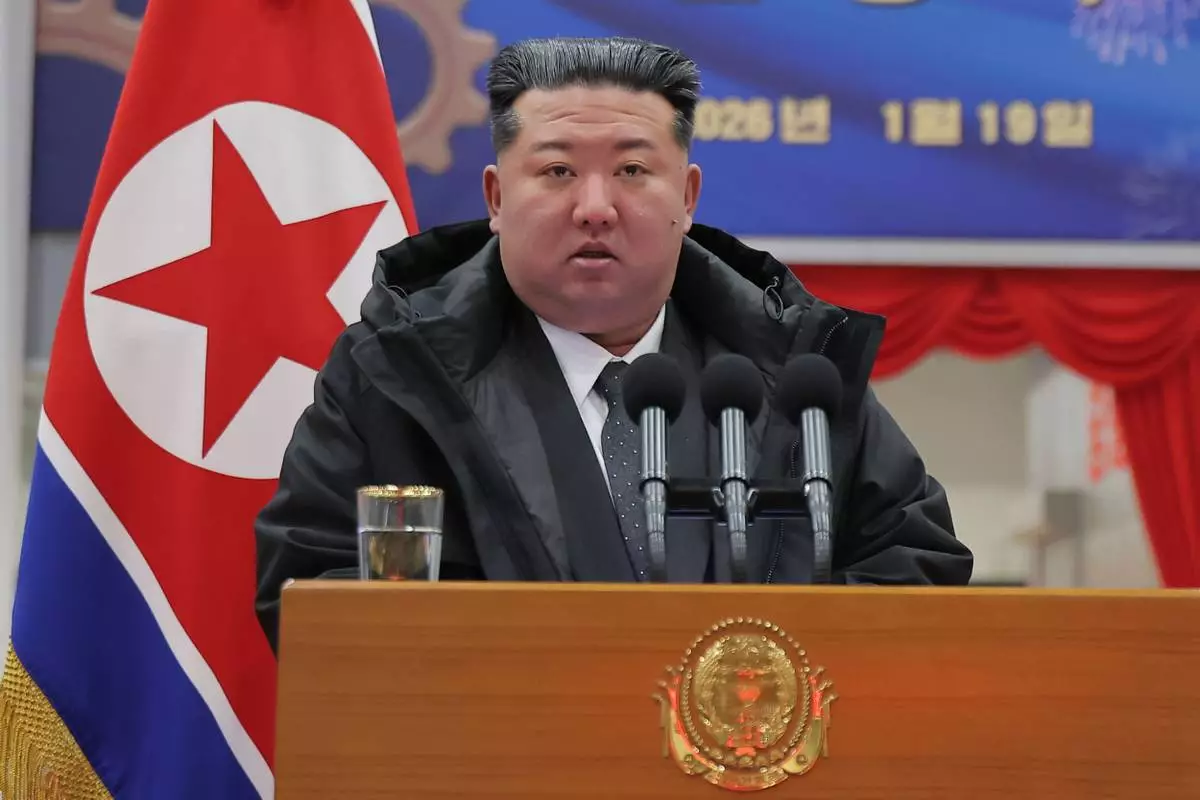
In this photo provided by the North Korean government, North Korean leader Kim Jong Un delivers a speech during a ceremony marking the completion of a first-stage modernization project at the Ryongsong Machine Complex in North Korea Monday, Jan. 19, 2026. Independent journalists were not given access to cover the event depicted in this image distributed by the North Korean government. The content of this image is as provided and cannot be independently verified. (Korean Central News Agency/Korea News Service via AP)