Government releases report of Task Force on Review of Government Procurement Regime and announces outcome of relevant disciplinary investigation
The Government released today (January 20) the report of the Task Force on Review of Government Procurement Regime (in Annex), as well as the disciplinary investigation regarding the incident in the procurement of bottled drinking water and relevant follow-up actions.
Report of Task Force
------------------------
The Task Force report summarised the recommendations from the Task Force chaired by the Secretary for Financial Services and the Treasury (SFST), Mr Christopher Hui, upon a thorough review of the government procurement regime, and having made reference to the management letter submitted by the Audit Commission on its review of the tender exercise for the procurement of bottled drinking water. The measures focused on four broad directions, namely institutional change, reshaping work culture, enhancement in cross-departmental information exchange, and application of technologies and artificial intelligence, with a view to holistically refining the tendering and procurement regime and procedures.
Following the six quick-win measures announced in October last year, the Task Force put forward various further enhancement measures. Starting from January 1 this year, a financial vetting requirement has been introduced to the tendering of goods contracts with a value exceeding $15 million, making it on par with the prevailing practice of conducting financial vetting for service contracts with a contract value exceeding $15 million. Having regard to the nature and scale of procurement as well as practical operational needs, procurement officers may also set the tenderer's experience as an "essential requirement" in a more flexible manner, in order to ensure that tenderers are capable of fulfilling contractual obligations. The Treasury has also promulgated internal guidelines to assist officers responsible for conducting financial vetting to identify possible red flags of fraud, so that they will be more vigilant and take timely follow-up actions.
Moreover, following the revisions to the Standard Terms and Conditions of Tenders and Contracts (STC) in October last year that specifically empower procurement officers to disqualify a tenderer if they consider the tenderer not capable of fulfilling the contract terms, and to terminate a contract immediately if they reasonably believe that a contractor has made a material misrepresentation during the contract period, the Government has further updated the STC to stipulate that the Government may terminate a contract immediately on public interest grounds.
To progress with the times and leverage technology, the Government Logistics Department (GLD) will adopt an AI tool to assist in information search on tenderers and contractors on a pilot basis in the first quarter of this year. Subject to the outcome of the trial, the AI tool will be extended to other procuring departments for adoption, so as to enhance the Government's overall operational efficiency in conducting due diligence checks.
Mr Hui said, "We have long been acting in the interest of the public and handling the incident regarding the procurement of bottled drinking water with openness and transparency. Our commitment to enhance the government procurement regime is ongoing and will never stop. We will continue to refine the Government's procurement work with a resolve to reform, so as to obtain goods and services at the best value for money and ensure prudent use of public money through effective procurement procedures that adapt to the needs of the modern business environment."
Outcome of disciplinary investigation and relevant follow-up actions
----------------------------------------------------------------------------
In late October last year, the SFST invited Ms Alice Lau, Administrative Officer Staff Grade A1, to conduct a disciplinary investigation into the incident with a view to ascertaining if any officers should be held accountable for the incident and, if so, the nature and level of their responsibility, such as whether any officers had contravened government or departmental rules and regulations in the process, or failed to act or perform up to the standards commensurate with their ranks and experience.
After reviewing relevant documents, the investigation team led by Ms Lau identified over 20 officers from the Financial Services and the Treasury Bureau, the GLD, and the Food and Environmental Hygiene Department and requested from them written statements. The investigation team also interviewed some of the officers concerned based on the contents of the statements.
Following an in-depth and comprehensive collection and analysis of facts, the investigation team found that three GLD officers failed to perform up to the standards commensurate with their ranks and experience in the procurement of bottled drinking water exercise. They demonstrated a lack of vigilance and judgement, thus failing to identify obvious irregularities and seize the opportunity to follow up as appropriate and report to their seniors in a timely manner. This resulted in the department missing the chance to detect the false documents and take appropriate actions earlier.
Based on the findings of the above investigation, there is prima facie evidence at this stage suggesting that two of the three GLD officers, including one directorate officer, had failed to appreciate the significance of obvious irregularities and report such irregularities to their seniors in a timely manner. The Government will initiate formal disciplinary proceedings against them and mete out punishment based on the findings of the disciplinary inquiry. Besides, the deficiencies in the work performance of the two officers will be reflected in their appraisals, and the Government will not grant an increment to the officers who have not reached the maximum salary point of their ranks.
For the remaining GLD officer, the Government will reflect the officer's inadequacy in vigilance, judgement, and analytical power in his/her appraisal report and will not grant an increment to him/her. Written advice will also be served, requiring the officer to demonstrate significant improvement in the above competencies in the future.
Having found that there were officers who failed to report the irregularities to their seniors, the investigation team did not find any act of negligence on the part of the former Director of Government Logistics in the incident. However, the fact that all of the three aforementioned GLD officers at different ranks did not perform up to the standards commensurate with their ranks and experience in the incident reflects some prevalence of such substandard performance in the GLD. The report of the Task Force also revealed that there was room for improvement in the GLD's procurement work, with the need to heighten officers' guard against government loss and to put in place a more proactive and prudent procurement process. In this regard, the SFST has written to the former Director of Government Logistics, pointing out that more should have been done during his tenure as the Head of Department to enhance staff's capabilities and develop their sensitivity and proactiveness.
The incident has drawn extensive attention from the public and brought serious disrepute to the Government. In this light, after consulting the Honours and Non-official Justices of the Peace Selection Committee, the Government has decided to reverse the previously announced decision to award the Silver Bauhinia Star to Mr Carlson Chan, and he has been informed.
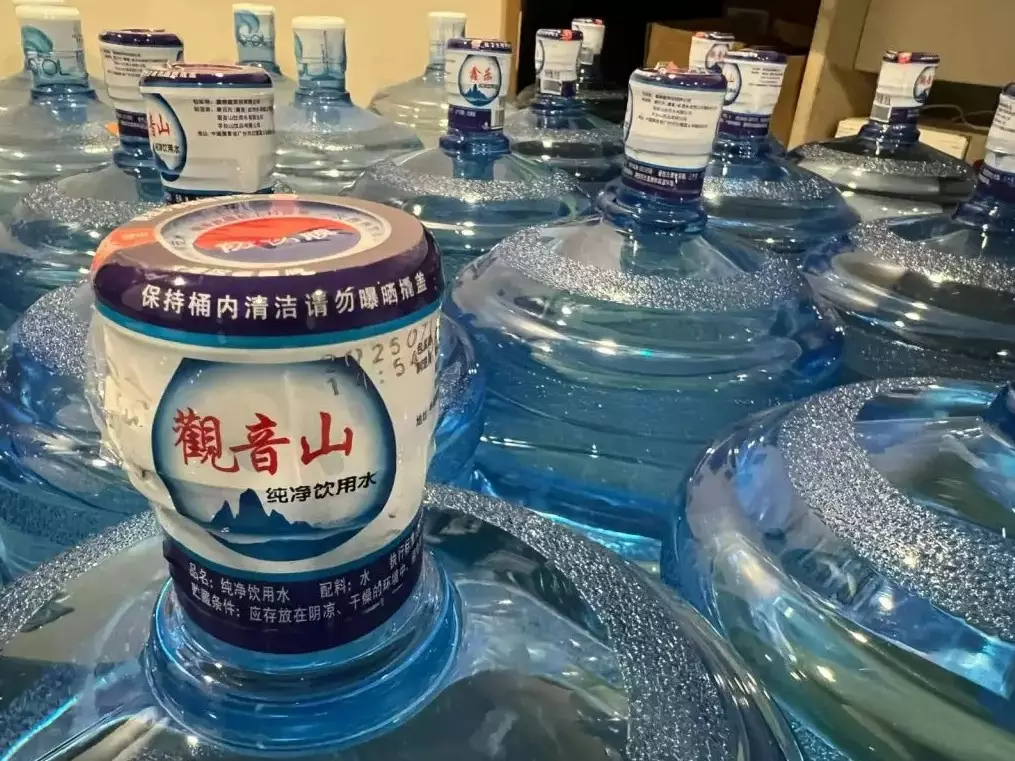
Photo source: Threads