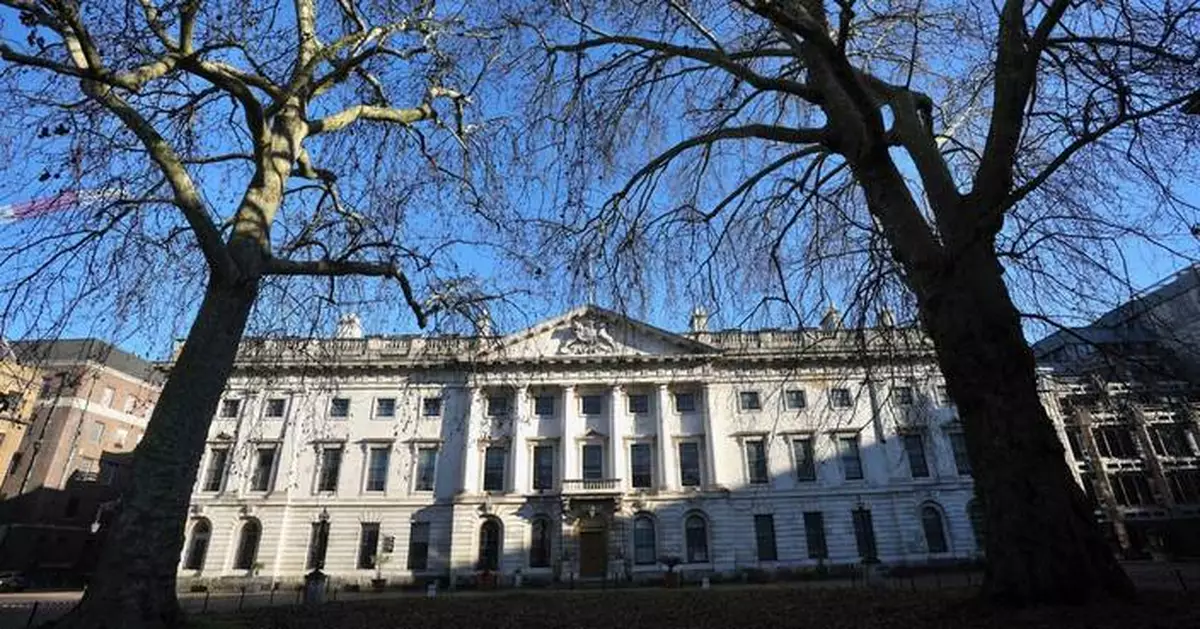
LONDON (AP) — Britain’s government on Tuesday approved a huge new Chinese Embassy in central London, despite strong criticism from lawmakers across the political spectrum that it could become a base for espionage and intimidation of opponents.
Local Government Secretary Steve Reed formally signed off on plans for the building near the Tower of London, after years of delays and legal challenges.
Click to Gallery
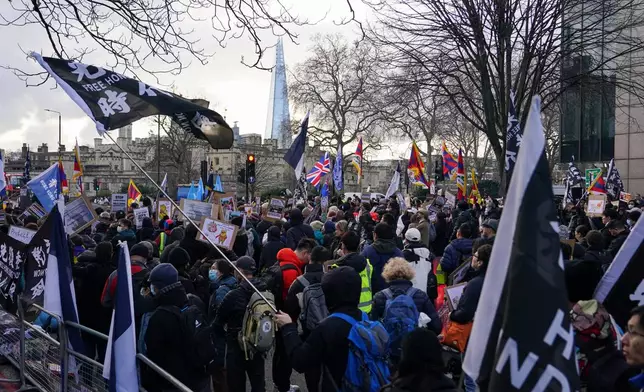
Demonstrators hold placards and flags as they attend a protest against the opening of the new Chinese embassy, in London, Saturday, Jan. 17, 2026. (AP Photo/Alberto Pezzali)
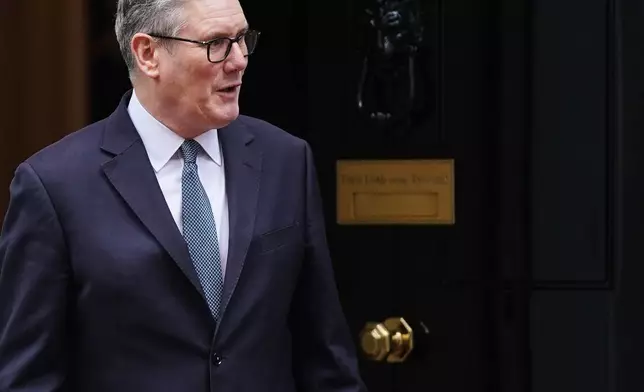
Britain's Prime Minister Keir Starmer leaves 10 Downing Street to welcome President Prabowo Subianto of Indonesia and after Britain's government has approved a massive new Chinese Embassy in central London in London, Tuesday, Jan. 20, 2026.(AP Photo/Alberto Pezzali)
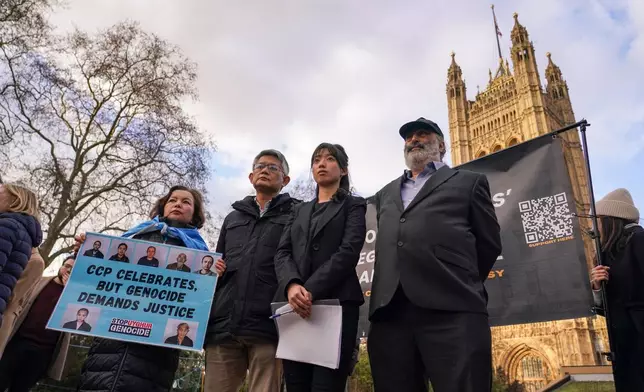
People gather in Westminster, holding a banner to protest against the new China's embassy, in London, Tuesday, Jan. 20, 2026.(AP Photo/Alberto Pezzali)
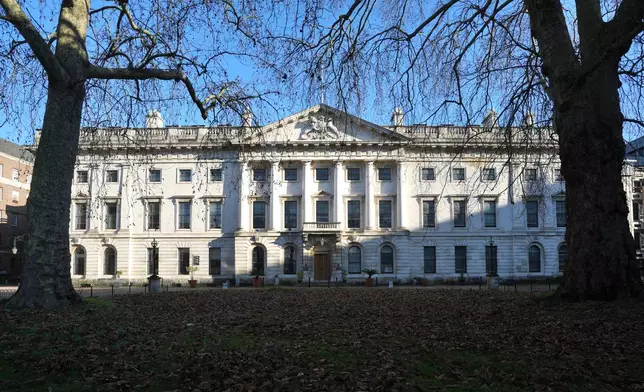
A general view of Royal Mint Court where is planning site for the new London Chinese embassy, near London's financial district, Wednesday, Jan. 14, 2026. (AP Photo/Kin Cheung)
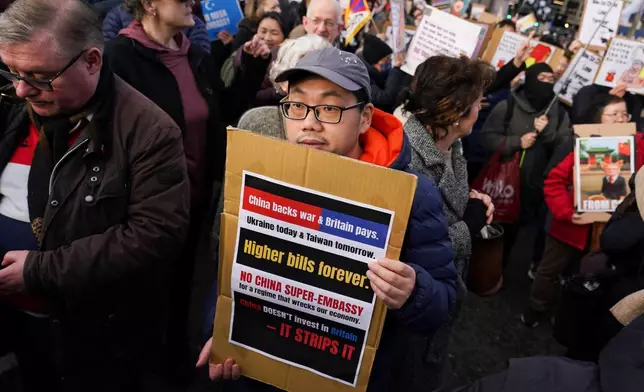
Demonstrators hold placards and flags as they attend a protest against the proposed Chinese embassy, in London, Saturday, Jan. 17, 2026. (AP Photo/Alberto Pezzali)
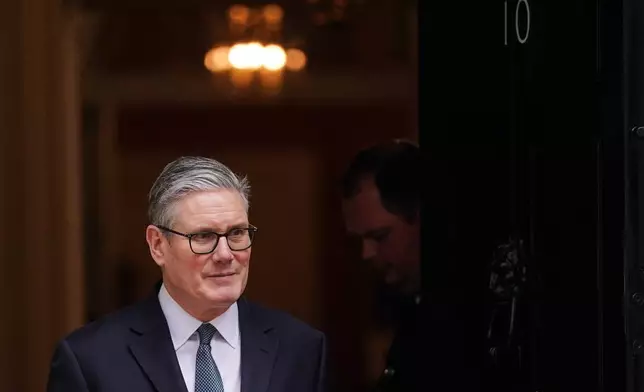
Britain's Prime Minister Keir Starmer leaves 10 Downing Street to welcome President Prabowo Subianto of Indonesia and after Britain's government has approved a massive new Chinese Embassy in central London in London, Tuesday, Jan. 20, 2026.(AP Photo/Alberto Pezzali)
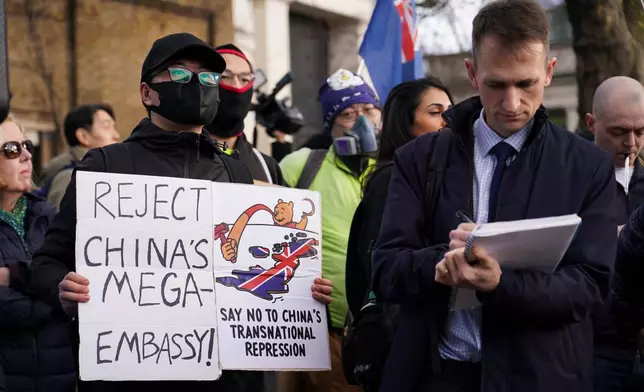
Demonstrators hold placards and flags as they attend a protest against the opening of the new Chinese embassy, in London, Saturday, Jan. 17, 2026. (AP Photo/Alberto Pezzali)
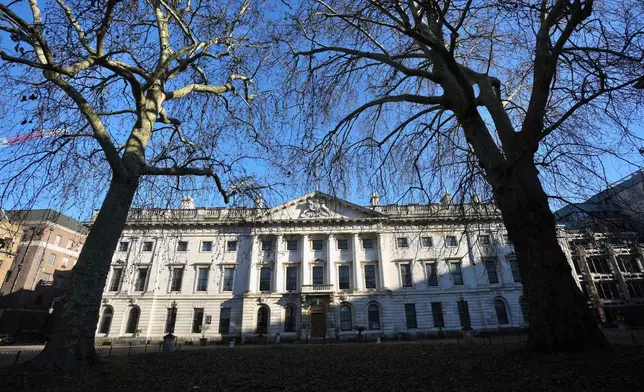
A general view of Royal Mint Court where is planning site for the new London Chinese embassy, near London's financial district, Wednesday, Jan. 14, 2026. (AP Photo/Kin Cheung)
Critics have long expressed concerns that the supersized embassy, set to be the biggest Chinese Embassy in Europe, will heighten risks of Chinese intelligence-gathering as well as amplify the threat of surveillance and intimidation of Chinese dissidents in exile.
The heads of two U.K. spy agencies said that while it's not realistic to eliminate all risk, appropriate “security mitigations” were in place.
Plans for the embassy have been plagued by objections and protests since 2018, when China’s government bought the site at Royal Mint Court, where Britain's money was once made, for 225 million pounds (around $300 million.)
Opponents say the huge site sits too close to underground fiber optic cables carrying sensitive financial information between London’s two main financial districts. British media have reported that the 20,000 square-meter (around 215,000 square-foot) complex would include 208 secret basement rooms close to the data cables.
Dissidents have been among those who have protested the plans, saying a mega embassy housing large numbers of officials would further China’s repression of activists abroad.
Kemi Badenoch, the leader of the opposition Conservative Party, joined hundreds of protesters who chanted “no China mega embassy” at the site Sunday.
Critics argue that approving the embassy was a mistake that went beyond security at the building — they say it sends a signal that Britain bows to pressure from Beijing to avoid economic repercussions.
“The government has capitulated to Chinese demands," Conservative security spokesman Chris Philp said.
Security Minister Dan Jarvis insisted: "We don’t trade off security for economic access.”
Helena Kennedy, a human rights lawyer and Labour Party member of the House of Lords, the upper house of the British Parliament, said that the decision was a dangerous step.
“We cannot reinforce the dangerous notion that Britain will continue to make concessions — such as granting a mega embassy — without reciprocity or regard for the rule of law,” she said.
Local residents said they were “determined to keep fighting today’s decision” and planned to challenge the approval in the courts.
Prime Minister Keir Starmer’s government has repeatedly postponed its decision in recent months after multiple cases of alleged Chinese spying and political interference underlined concerns about the proposed embassy.
In November, the domestic intelligence agency MI5 issued an alert to lawmakers warning that Chinese agents were making “targeted and widespread” efforts to recruit and cultivate them using LinkedIn or cover companies.
Beijing has strongly denied those claims, calling them “pure fabrication and malicious slander.”
The U.K. government also has faced questions about whether it interfered in the trial of two men accused of spying on Parliament for Beijing, and whose prosecution collapsed last year.
The heads of the domestic security service MI5 and the electronic intelligence agency GCHQ said in a letter to ministers that “as with any foreign embassy on U.K. soil, it is not realistic to expect to be able wholly to eliminate each and every potential risk.”
“However, the collective work across U.K. intelligence agencies and (government) departments to formulate a package of national security mitigations for the site has been, in our view, expert, professional and proportionate,” MI5 chief Ken McCallum and GCHQ director Anne Keast-Butler said.
They said there were “clear security advantages” to consolidating China’s current seven diplomatic premises in London onto one site.
The government said that “no bodies with responsibility for national security ... have raised concerns or objected to the proposal on the basis of the proximity of the cables or other underground infrastructure.”
Starmer has stressed that while protecting national security is nonnegotiable, Britain needs to keep up diplomatic dialogue and cooperation with the Asian superpower.
The approval is widely expected to pave the way for a long-anticipated trip by Starmer to China, and an expansion of the U.K. Embassy in Beijing. The closely watched visit would be the first made by a British prime minister since 2018.
China has complained about the seven-year delay in approving the project, saying the U.K. was “constantly complicating and politicizing the matter.”
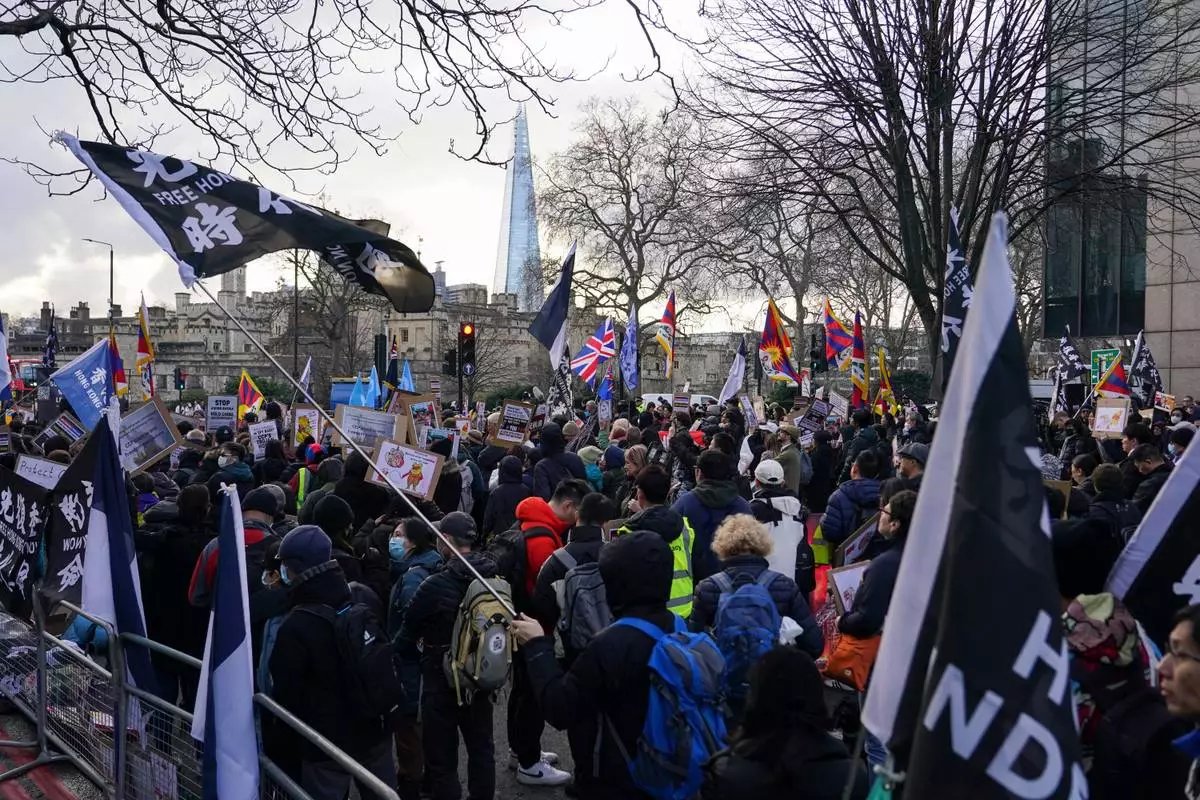
Demonstrators hold placards and flags as they attend a protest against the opening of the new Chinese embassy, in London, Saturday, Jan. 17, 2026. (AP Photo/Alberto Pezzali)
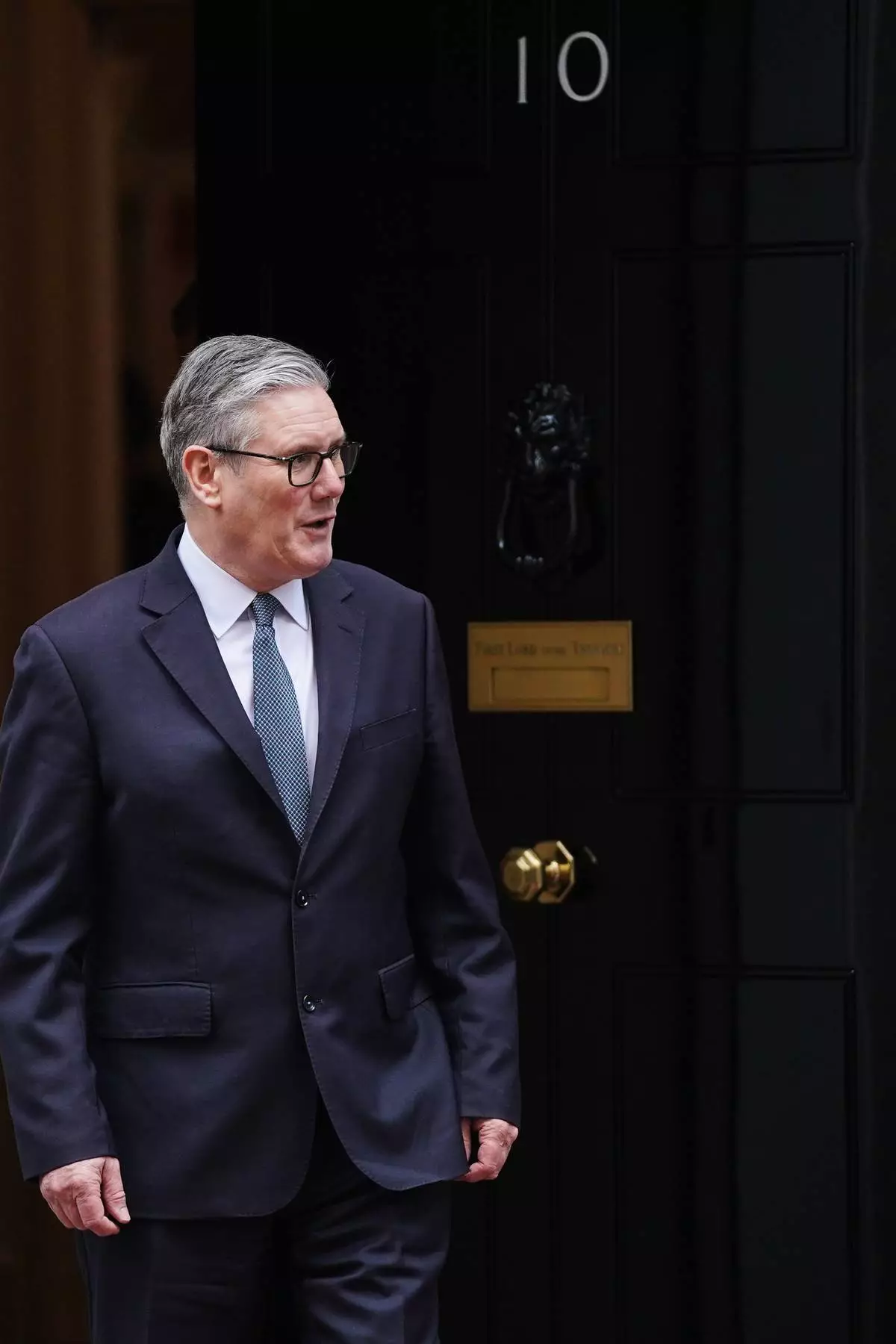
Britain's Prime Minister Keir Starmer leaves 10 Downing Street to welcome President Prabowo Subianto of Indonesia and after Britain's government has approved a massive new Chinese Embassy in central London in London, Tuesday, Jan. 20, 2026.(AP Photo/Alberto Pezzali)
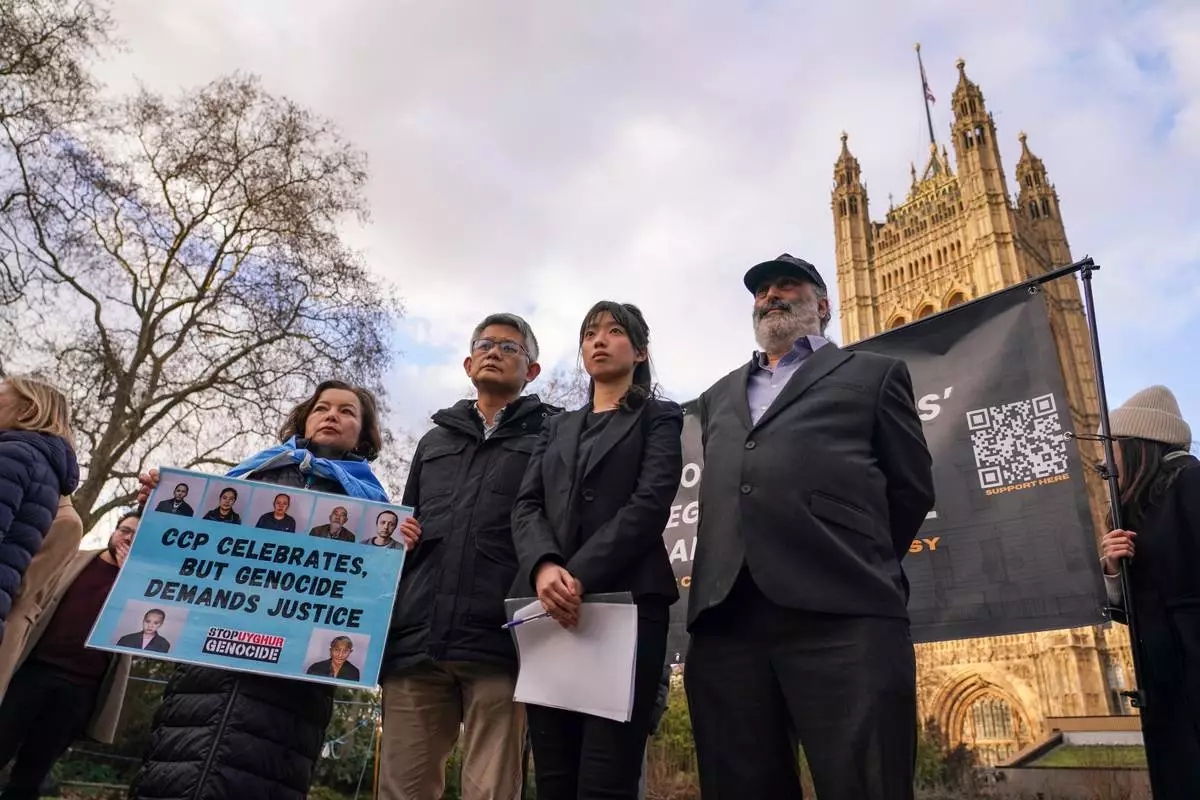
People gather in Westminster, holding a banner to protest against the new China's embassy, in London, Tuesday, Jan. 20, 2026.(AP Photo/Alberto Pezzali)
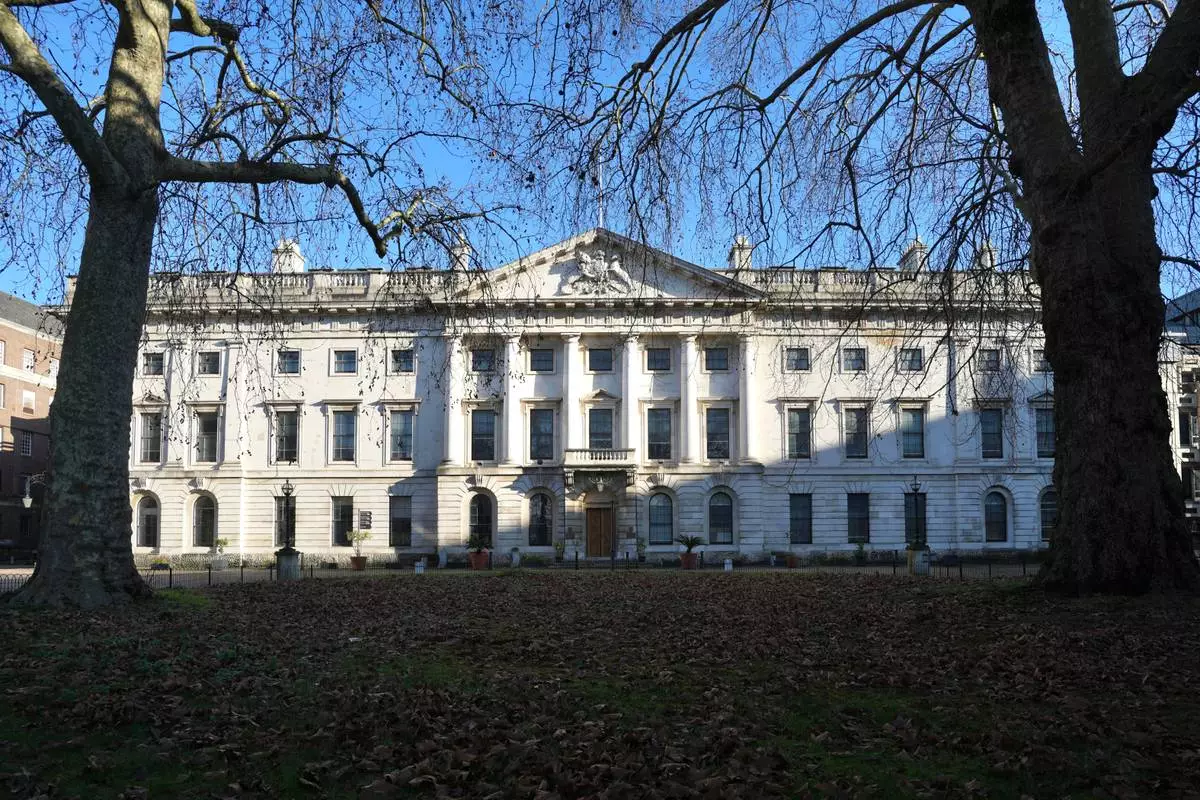
A general view of Royal Mint Court where is planning site for the new London Chinese embassy, near London's financial district, Wednesday, Jan. 14, 2026. (AP Photo/Kin Cheung)
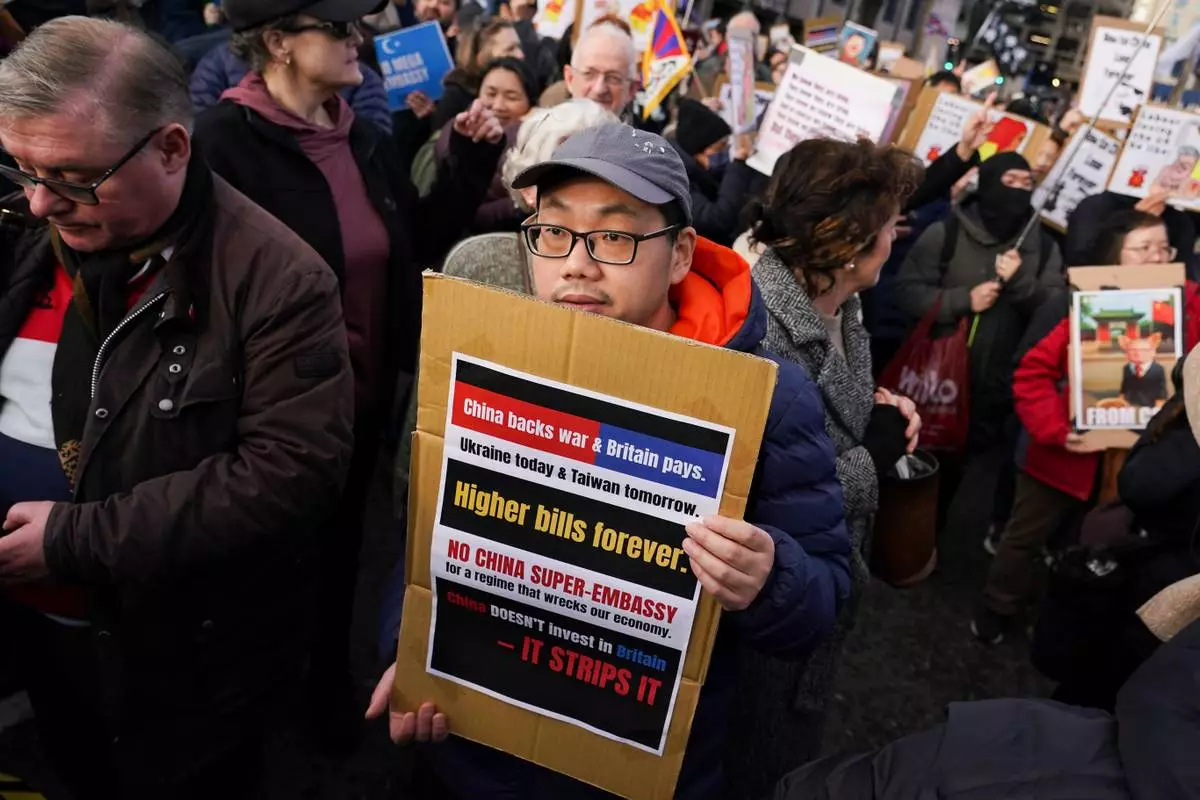
Demonstrators hold placards and flags as they attend a protest against the proposed Chinese embassy, in London, Saturday, Jan. 17, 2026. (AP Photo/Alberto Pezzali)
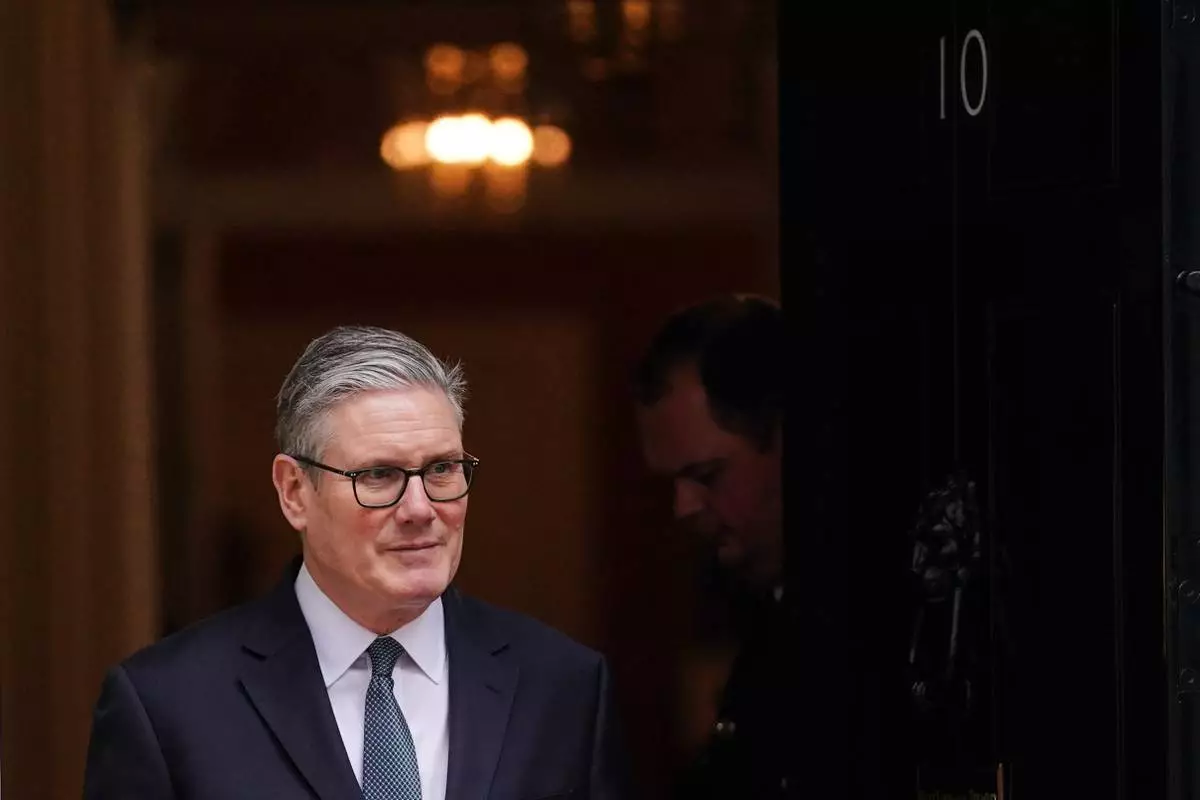
Britain's Prime Minister Keir Starmer leaves 10 Downing Street to welcome President Prabowo Subianto of Indonesia and after Britain's government has approved a massive new Chinese Embassy in central London in London, Tuesday, Jan. 20, 2026.(AP Photo/Alberto Pezzali)
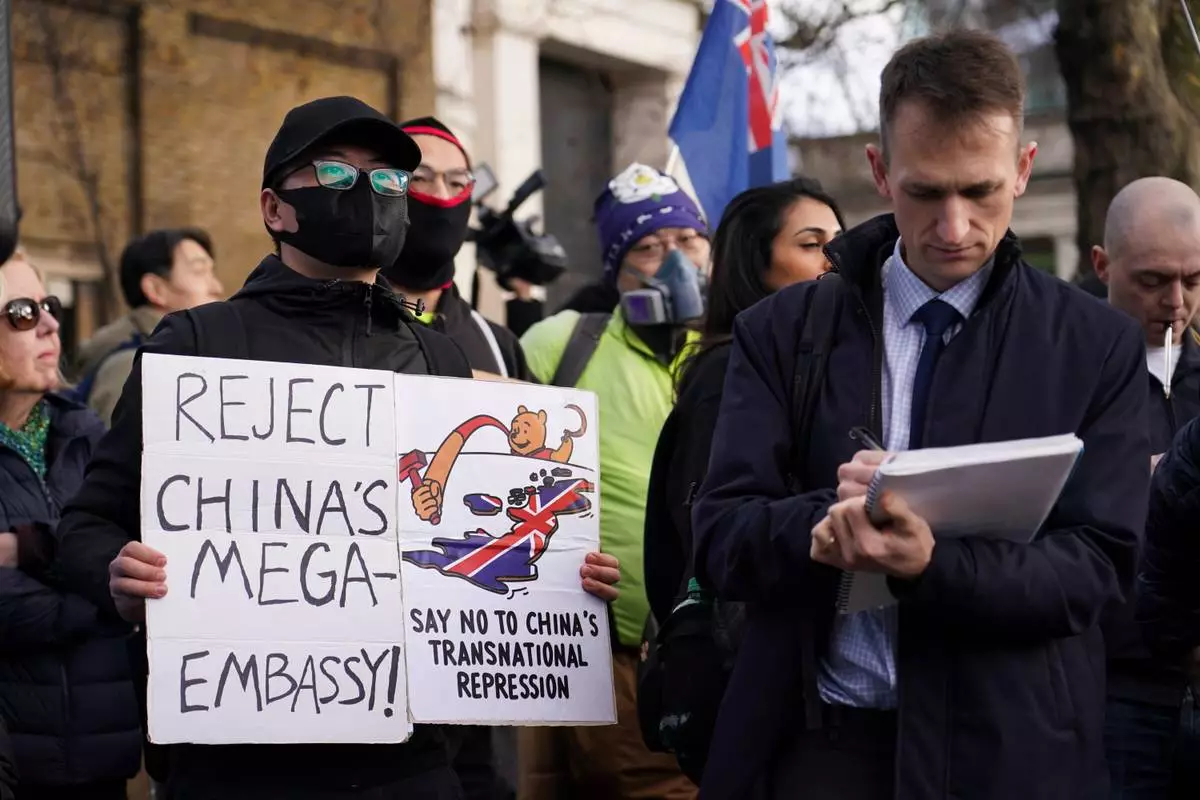
Demonstrators hold placards and flags as they attend a protest against the opening of the new Chinese embassy, in London, Saturday, Jan. 17, 2026. (AP Photo/Alberto Pezzali)
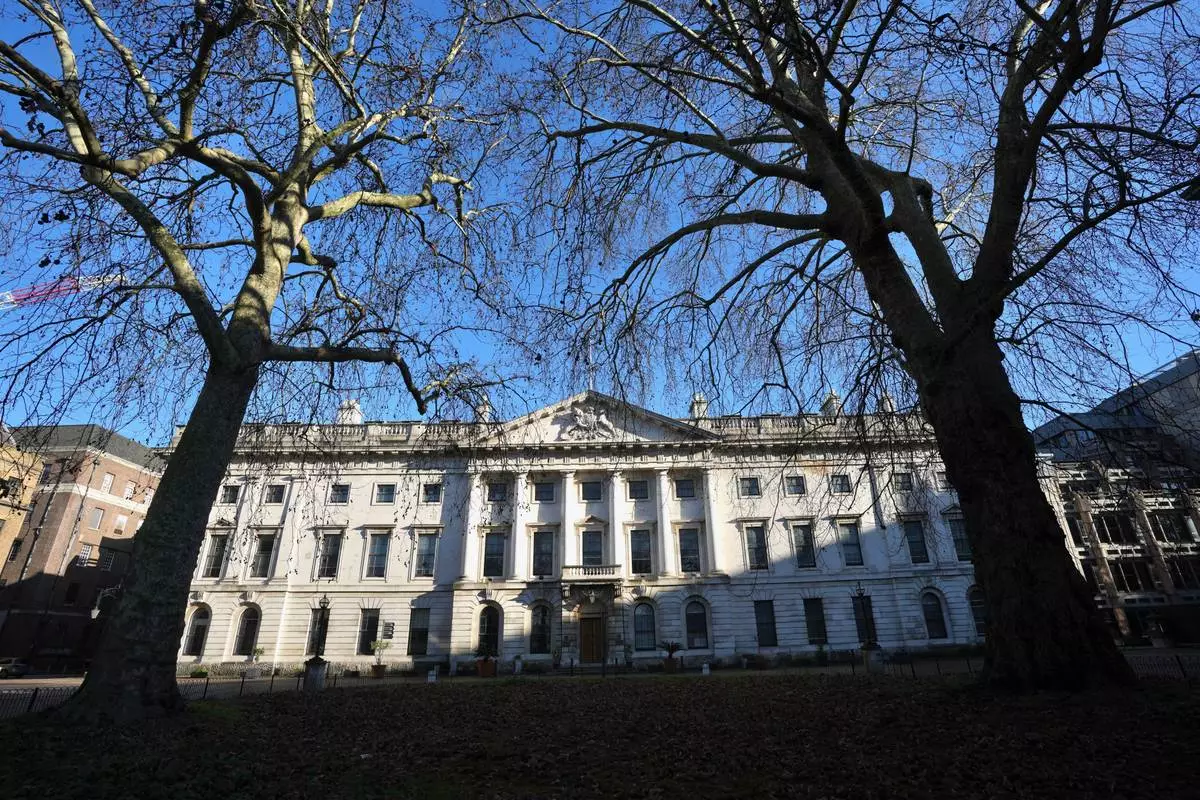
A general view of Royal Mint Court where is planning site for the new London Chinese embassy, near London's financial district, Wednesday, Jan. 14, 2026. (AP Photo/Kin Cheung)