Chinese President Xi Jinping on Tuesday called for solid efforts to secure a good start to the 15th Five-Year (2026-2030) Plan.
Xi, also general secretary of the Communist Party of China (CPC) Central Committee and chairman of the Central Military Commission (CMC), made the remarks at the opening of a study session at the Party School of the CPC Central Committee (National Academy of Governance) for principal officials at the provincial and ministerial level.
Formulating and implementing five-year plans is an important experience of the CPC in governing the country and a significant political advantage of the socialist system with Chinese characteristics, which is conducive to concentrating resources to accomplish major tasks, proactively addressing strategic issues, and maintaining the continuity of the socialist cause, Xi said.
He underlined the need to take all factors into account amid increasing uncertainties, and develop keen insights into the new changes in the international situation, new round of sci-tech revolution and industrial transformation.
Xi stressed building a modernized industrial system, urging all localities and industries to pursue smart, green, and integrated development. He highlighted the importance of developing advanced manufacturing and fostering new quality productive forces in line with local conditions. It is necessary to take domestic circulation as the mainstay, correctly handle the relationship between consumption and investment, and between demand and supply, so as to make domestic demand the main driving force of economic development, Xi said.
Xi urged efforts to improve people's livelihoods while developing the economy. He said efforts should be made to coordinate development and security, effectively prevent and resolve various risks, and earnestly safeguard national security and social stability.
He called for a tough stance against corruption so that officials do not have the audacity, opportunity, or desire to become corrupt.
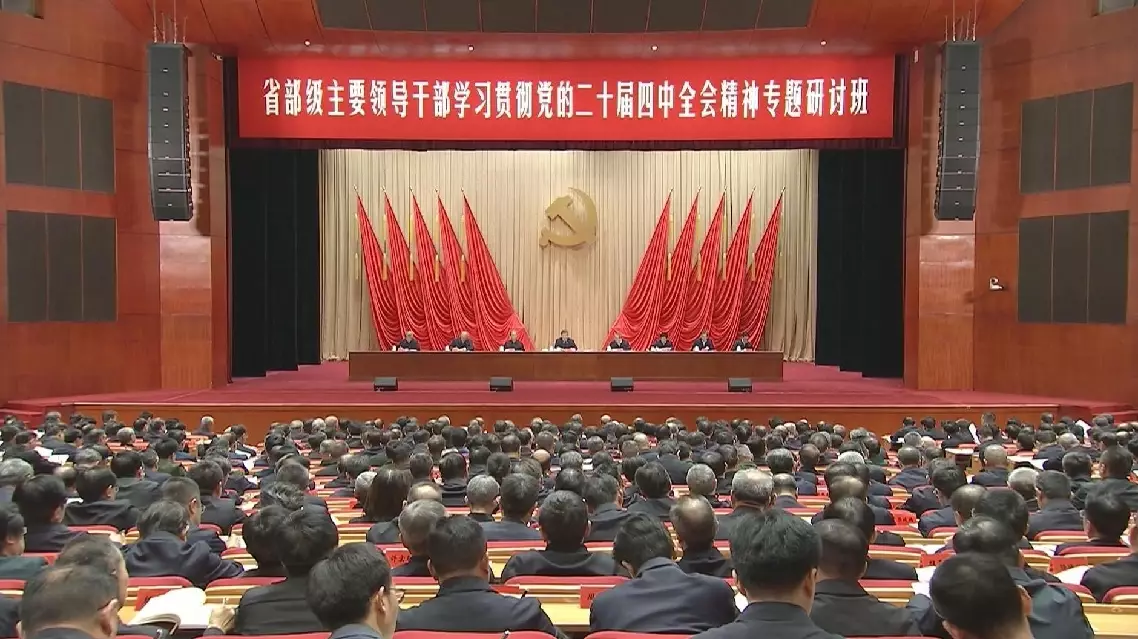
Xi stresses securing good start for new five-year plan
One month since the launch of special customs operations in south China's entire Hainan Free Trade Port (FTP), local customs have introduced smart regulatory models to streamline customs clearance procedures and attract more global businesses.
Customs officials from the Yangpu Port, a key regulatory area within the FTP covering the whole southern island, shared their efforts.
"The Yangpu Port has fully implemented contactless clearance and integrated document services across all terminals, significantly expediting procedures for vessels and crews. Overall customs processing time has been reduced by 30 percent. Low-risk vessels can begin operations immediately upon docking, with inspection for one vessel completed within 30 minutes. Bonded fuel refueling ships enjoy a 'refuel-and-go' policy, saving an average of six hours and around 60,000 yuan (about 8,610 U.S. dollars) per vessel, enabling efficient 'work-upon-arrival, depart-without-delay' operations. Officers provide 24-hours/seven on-site support, allowing crews to complete formalities right after disembarking. The port also promotes paperless online processing and offers prioritized clearance for bulk carriers, further cutting time and costs for businesses while advancing the use of smart border inspection technologies," said Xie Feng, director of the Border Inspection Department under the Yangpu Entry-Exit Border Inspection Station.
In addition, the Yangpu Customs has also introduced smart systems for higher efficiency, and reduced the number of declaration items to less than one-third.
"Our Smart Customs Supervision Platform officially commenced operations in March 2025. The platform enables a closed-loop customs supervision process, covering everything from cargo retrieval in terminal operating systems and loading onto vehicles to the verification of outbound shipment information. Following the implementation [launch] of the island-wide special customs operations in the Hainan Free Trade Port, we will also implement a direct release policy for imported zero-tariff goods and bonded goods that are not subject to inspection, quarantine, or licensing controls. The number of declaration items has been streamlined from 105 to 33, to help foreign trade enterprises lower costs and enhance efficiency," said Xu Yiheng, chief of the Third Comprehensive Business Section of the Comprehensive Business Department, the Yangpu Customs.
The measures, alongside governmental favorable policies, has yield solid results, with the Yangpu Port seeing a 35.6 percent year-on-year increase in the number of inbound and outbound vessels and a 28 percent rise in personnel flow between Dec 18, 2025 and Jan 17, 2026.
On a larger scale, the Haikou Customs in Hainan reported that in the past month, the value of zero-tariff goods imported through the "first line" reached 750 million yuan (about 107 million U.S. dollars), while processed and value-added goods sold domestically through the "second line" totaled about 85.9 million yuan.
The "first line" denotes Hainan's connection to overseas markets, while the "second line" represents the customs boundary between the tropical island province and China's mainland.
This two-tiered special customs system features "freer access at the first line", facilitating trade between Hainan and areas beyond China's customs borders, and "regulated access at the second line", which involves standard customs controls for the Chinese mainland.
The island also attracted over 5,000 new foreign trade enterprises to register in the month, bringing the total to more than 100,000.
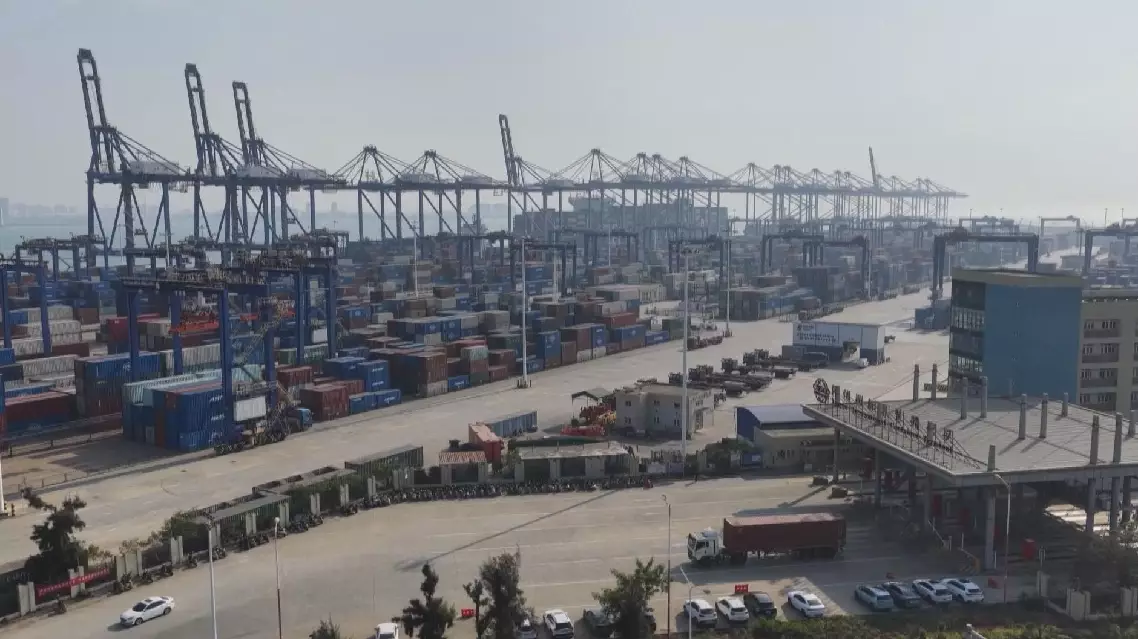
Streamlined customs clearance in south China's Hainan FTP lowers cost for global trade