PHILADELPHIA (AP) — Bo Bichette spurning the Phillies for the NL East rival New York Mets was akin to a gut punch for the NL East champions.
A two-time All-Star shortstop with the Toronto Blue Jays, Bichette agreed last week with the Mets to a $126 million, three-year contract that left the Phillies reeling. Philadelphia believed Bichette was on the brink of joining a potent lineup that already included Kyle Schwarber, Bryce Harper and Trea Turner.
“It's a gut punch,” Phillies president of baseball operations Dave Dombrowski said Tuesday. “You feel it. That day you are very upset, I guess is the way to say it. You have to pick yourself up and shake it off. You can't just wallow in what took place.”
The Phillies had a productive meeting with Bichette early last week and were expected to prepare a long-term deal only for the infielder to head instead to New York.
“I can't say that we ever thought it was done,” Dombrowski said. “There's a difference. We thought we were very close to having a deal done. We thought it was going to happen. But it wasn't done.”
Dombrowski said the Phillies and Bichette never signed a letter of agreement that would have locked the infielder into a deal, pending a successful physical.
“It wasn't that we weren't moving toward that direction,” Dombrowski said. “It isn't that we didn't think we were going to get there based up on our conversations. We did not get to that point. So, I can't say I ever thought we had it done. I did think we were going to get a deal done.”
Dombrowski declined to say whether the Phillies had an oral agreement with Bichette and his agency, Vayner Baseball.
“We were at the numbers they really asked us to match,” Dombrowski said. “We were still going through some nuances.”
Dombrowski said he had a hunch the World Series champion Los Angeles Dodgers signing Kyle Tucker to a $240 million, four-year contract changed the free-agent landscape.
The Mets jumped in with a short-term offer with opt outs that appealed more to Bichette. The infielder can opt out of the deal after the first or second season to become a free agent again. He would receive $47 million for one year and $89 million for two years.
New York's agreement does not contain any deferred money, and Bichette gets a full no-trade provision. His $42 million average annual value ties for the sixth-highest in baseball history.
The Phillies traditionally do not offer opt-outs in their contracts — Harper doesn't have one in his 13-year, $330 million deal, nor Turner in his 11-year, $300 million contract. Dombrowski said he's not a believer in the provision, either, and didn't necessarily think the organization would have to change its stance to entice future free agents to sign in Philadelphia.
“I have never felt myself, and still don't feel it's a wise move to make when you look at the risks attached to it,” Dombrowski said.
Dombrowski noted the obvious realities: A really good year means the player will opt out and likely sign elsewhere, and a bad or injury-plagued year means that team has an obligation for more seasons.
“It's a policy I've had for a long time, and I think I would say the majority of clubs have that policy,” he said.
Once Bichette's possible deal fell through, the Phillies rebounded by signing catcher J.T. Realmuto to a $45 million, three-year contract.
A three-time All-Star and two-time Gold Glove winner, Realmuto, of course, did not receive an opt-out and he made his decision a month after Schwarber also chose to remain with the Phillies, agreeing to a $150 million, five-year deal.
“People forget we re-signed Schwarbs,” Dombrowski said. “If we hadn't re-signed him, I don't know how I would be feeling about the wintertime.”
Philadelphia is bringing back most of the roster that won 96 games and the NL East title before it lost to the Dodgers in the NL Division Series.
Even with free-agent stars such as outfielder Cody Bellinger and left-handed starter Framber Valdez available, Dombrowski said the roster should be set.
“I think we're content where we are at this point,” Dombrowski said.
AP Baseball Writer Ronald Blum contributed to this report.
AP MLB: https://apnews.com/mlb

FILE - Philadelphia Phillies' J.T. Realmuto hits a double during the ninth inning in Game 2 of baseball's National League Division Series against the Los Angeles Dodgers, Monday, Oct. 6, 2025, in Philadelphia. (AP Photo/Matt Slocum, File)
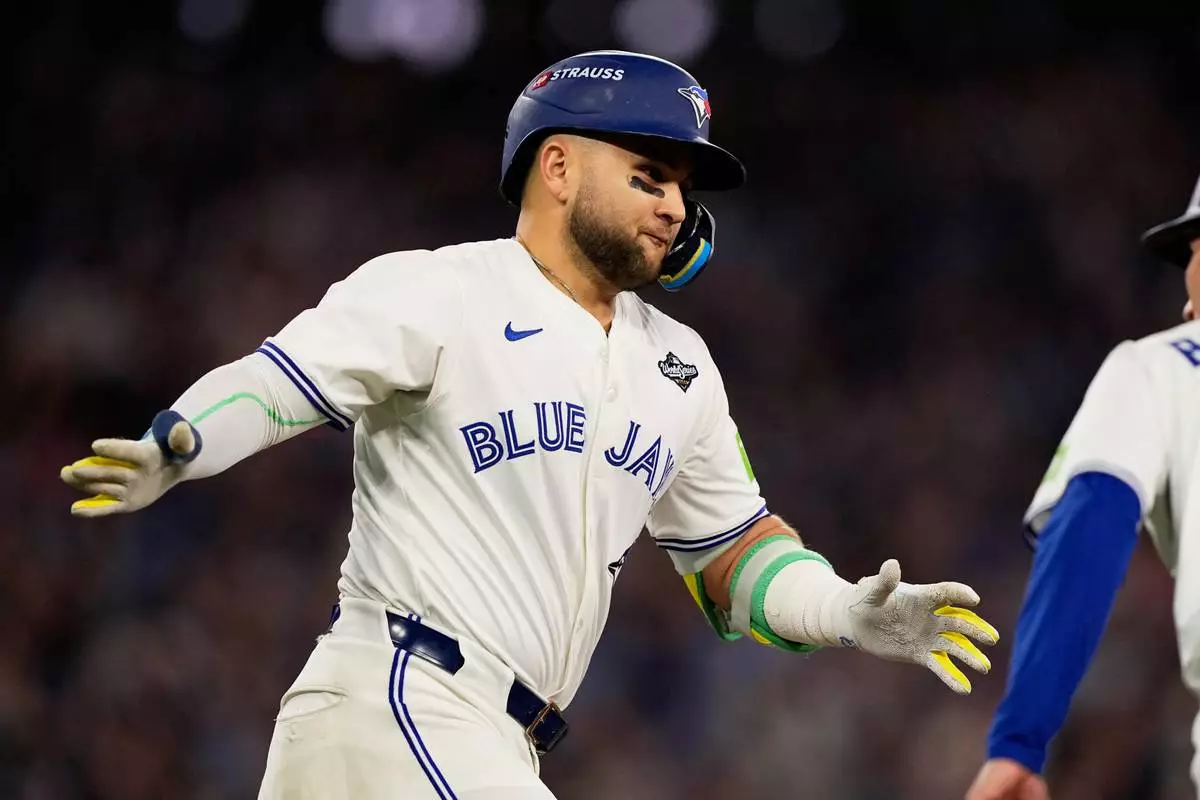
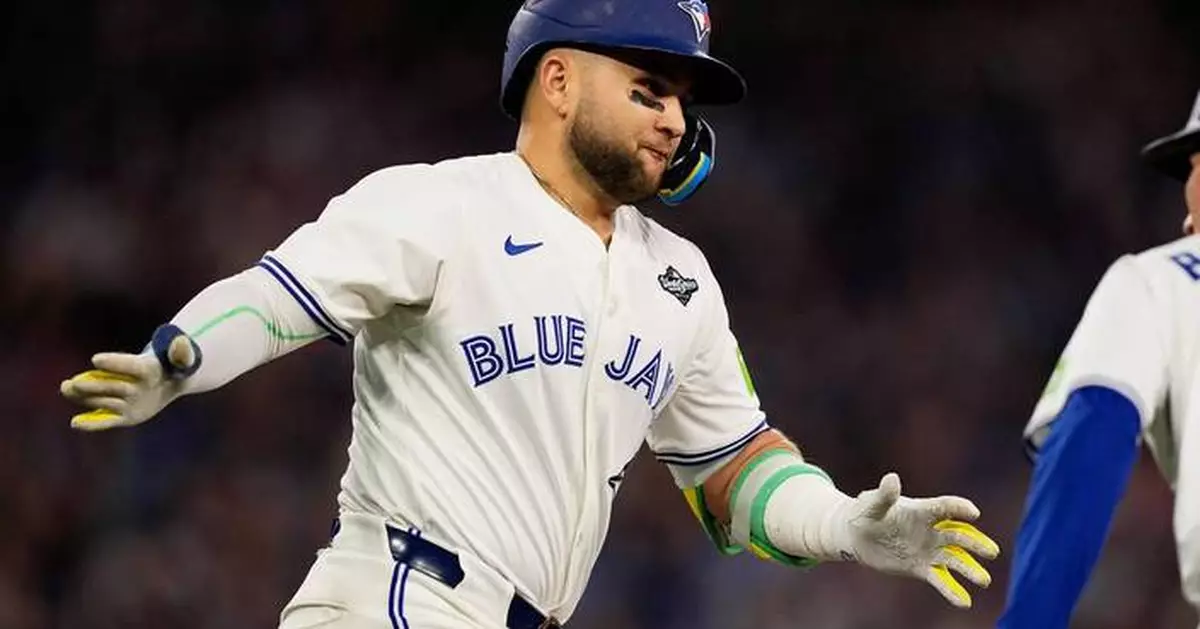
FILE - Toronto Blue Jays' Bo Bichette celebrates his three run home run against the Los Angeles Dodgers during the third inning in Game 7 of baseball's World Series, Saturday, Nov. 1, 2025, in Toronto. (AP Photo/Brynn Anderson, File)
DAVOS, Switzerland (AP) — President Donald Trump on Wednesday scrapped the tariffs that he threatened to impose on eight European nations to press for U.S. control over Greenland, pulling a dramatic reversal shortly after insisting he wanted to get the island "including right, title and ownership.”
In a post on his social media site, Trump said he had agreed with the head of NATO on a “framework of a future deal” on Arctic security, potentially defusing tension that had far-reaching geopolitical implications.
He said “additional discussions" on Greenland were being held concerning the Golden Dome missile defense program, a multilayered, $175 billion system that for the first time will put U.S. weapons in space.
Trump offered few details, saying they were still being worked out. But one idea NATO members have discussed as part of a compromise with Trump was that Denmark and the alliance would work with the U.S. to build more U.S. military bases on Greenland.
That's according to a European official familiar with the matter but not authorized to comment publicly. The official, who spoke on condition of anonymity, said it was not immediately clear if that idea was included in the framework Trump announced.
The president has threatened tariffs before only to back away. In April, after first saying he would slap massive import levies on nations from around the world, which prompted a sharp negative market reaction, Trump eased off.
But his change of heart this time came only after he used his speech at the World Economic Forum in the Swiss Alps to focus on Greenland and threatened to upend NATO, an alliance that has been among the globe's most unshakable since the early days of the Cold War.
In his address, Trump said he was asking for territory that was “cold and poorly located" and that the U.S. had effectively saved Europe during World War II while declaring of NATO: “It’s a very small ask compared to what we have given them for many, many decades.”
“We probably won’t get anything unless I decide to use excessive strength and force, where we would be frankly unstoppable. But I won’t do that, OK?” Trump said.
But Trump has also said repeatedly that, while the U.S. will defend NATO, he wasn't convinced the alliance will backup Washington, if needed, and suggested that was at least part of the reason for his aggressive stance toward Greenland. That prompted NATO Secretary General Mark Rutte, in a post-speech event with Trump, to say that the alliance would stand with the U.S. if it is attacked.
“You can be assured, absolutely,” Rutte said. A short time later came Trump's post canceling the tariffs.
Danish Foreign Minister Lars Løkke Rasmussen said he welcomed Trump ruling out taking “Greenland by force” and pausing ”the trade war with Europe.”
"Now, let’s sit down and find out how we can address the American security concerns in the Arctic while respecting the red lines of the Kingdom of Denmark,” he said in a statement.
Trump argues that the U.S. needs Greenland for national security and to counter threats from Russia and China in the Arctic region, despite America already having a large military base there. He threatened to impose steep U.S. import taxes on Denmark and seven other allies unless they negotiate a transfer of the semi-autonomous territory.
The tariffs were to have started at 10% next month and climb to 25% in June.
Trump often tries to increase pressure on the other side when he believes it can lead to a favorable agreement. His threats at Davos appeared on the verge of rupturing NATO, which was founded by leading European nations, the U.S. and Canada to counter the Soviet Union.
The alliance's other members were steadfast in saying Greenland is not for sale and cannot be wrested from Denmark, while angrily rejecting Trump's promised tariffs.
A Danish government official told The Associated Press after Trump's speech that Copenhagen was ready to discuss U.S. security concerns. But the official, who was not authorized to comment publicly and spoke on condition of anonymity, underscored the government’s position that “red lines”— namely Denmark’s sovereignty — must be respected.
It was not immediately clear how Trump's canceling of tariffs might change such calculations.
In the meantime, Greenland's government responded by telling its citizens to be prepared. It has published a handbook in English and Greenlandic on what to do in a crisis that urges residents to ensure they have sufficient food, water, fuel and supplies at home to survive for five days.
“We just went to the grocery store and bought the supplies,” said Tony Jakobsen in Greenland’s capital Nuuk said, showing off the contents of bags that included candles, snacks and toilet paper.
Jakobsen said he thought Trump’s rhetoric towards Greenland was “just threats... but it’s better to be ready than not ready.”
Before backing down, Trump had urged Denmark and the rest of NATO to stand aside, adding an ominous warning.
“We want a piece of ice for world protection, and they won’t give it,” Trump said. “You can say yes, and we will be very appreciative. Or you can say no, and we will remember.”
He also called for opening “immediate negotiations” for the U.S. to acquire Greenland. In subsequent comments to reporters, he declined to name a price that might be paid, saying only, “There’s a bigger price, and that’s the price of safety and security and national security and international security.”
His arrival in Davos was delayed after a minor electrical problem on Air Force One forced a return to Washington to switch aircraft. As Trump’s motorcade headed down a narrow road to the speech site, onlookers — including some skiers — lined the route, some making obscene gestures.
Financial markets that had fallen sharply on Trump’s threatened tariffs bounced back Wednesday. Also breathing a sigh of relief were a number of U.S. officials who had also been concerned that Trump’s hard-line stance and bellicose rhetoric toward Greenland, Denmark and other NATO allies could harm other foreign policy goals.
Trump's Davos speech was originally supposed to focus on how to lower U.S. housing prices — part of a larger effort to bring down the cost of living. Greenland instead carried the day, though Trump mistakenly referred to it as Iceland four times during his speech.
“This enormous unsecured island is actually part of North America,” Trump said. “That’s our territory.”
When he finally did mention housing, Trump suggested he did not support a measure to encourage affordability. He said bringing down rising home prices hurts property values and makes homeowners who once felt wealthy because of the equity in their houses feel poorer.
Before Trump announced that he was abandoning the tariffs and potentially easing international pressure, his speech left people in Nuuk preparing for the worst.
Resident Johnny Hedemann said it was “insulting” that Trump “talks about the Greenlandic people and the Greenlandic nation as just an ice cube.” He spoke while heading out to buy a camping stove and instant mashed potatoes.
“Living in this nature, you have to be prepared for almost anything. And now there’s another threat — and that’s Trump,” Hedemann said.
Weissert and Madhani reported from Washington. Associated Press writers Emma Burrows in Nuuk, Greenland, Jamey Keaten in Davos and Michelle L. Price in Washington contributed to this report.
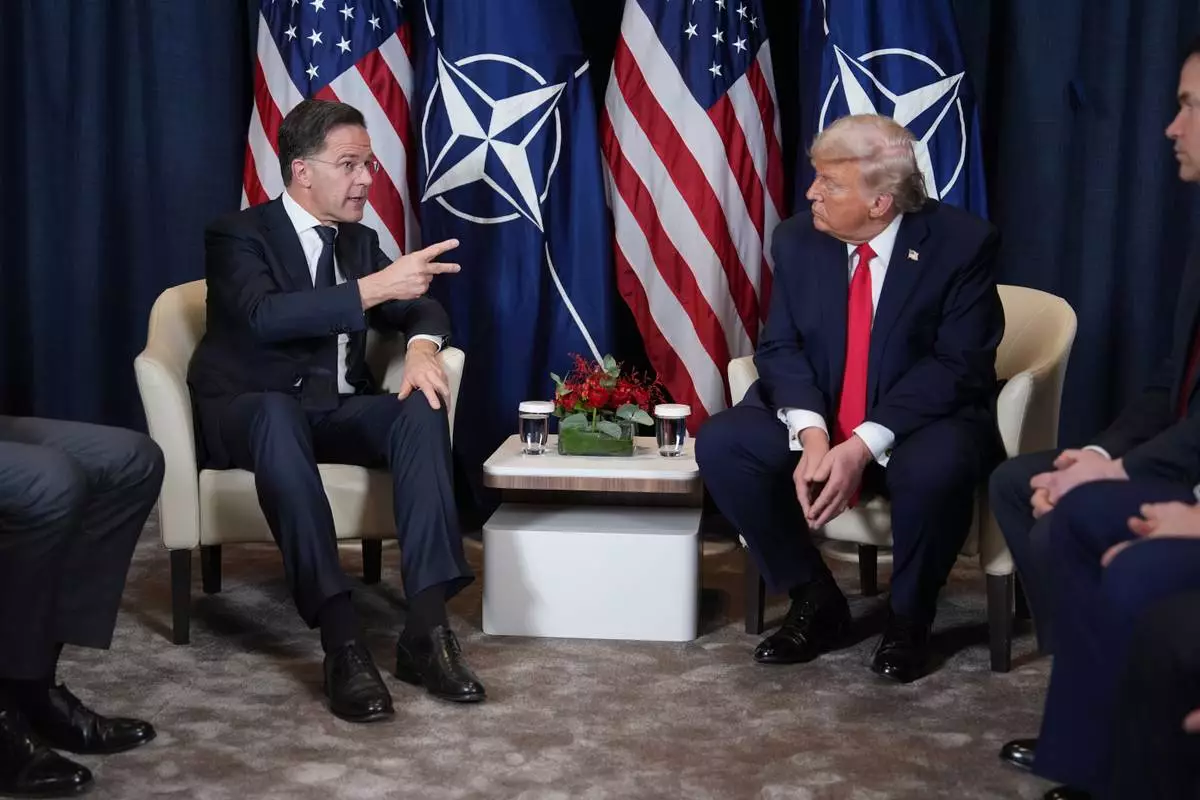
President Donald Trump, right, meets with NATO Secretary General Mark Rutte during a meeting on the sidelines of the Annual Meeting of the World Economic Forum in Davos, Switzerland, Wednesday, Jan. 21, 2026. (AP Photo/Evan Vucci)
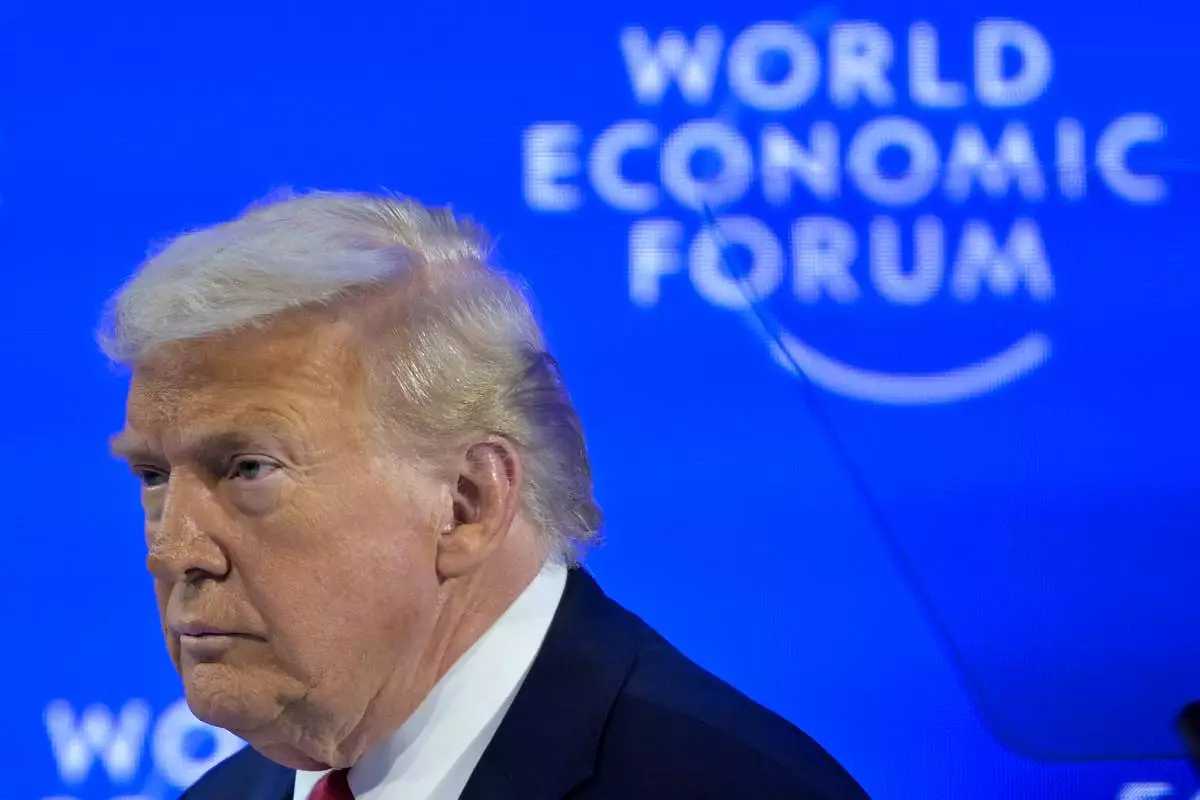
President Donald Trump enters the stage for his special address during the 56th annual meeting of the World Economic Forum, WEF, in Davos, Switzerland, Wednesday, Jan. 21, 2026. (Gian Ehrenzeller/Keystone via AP)
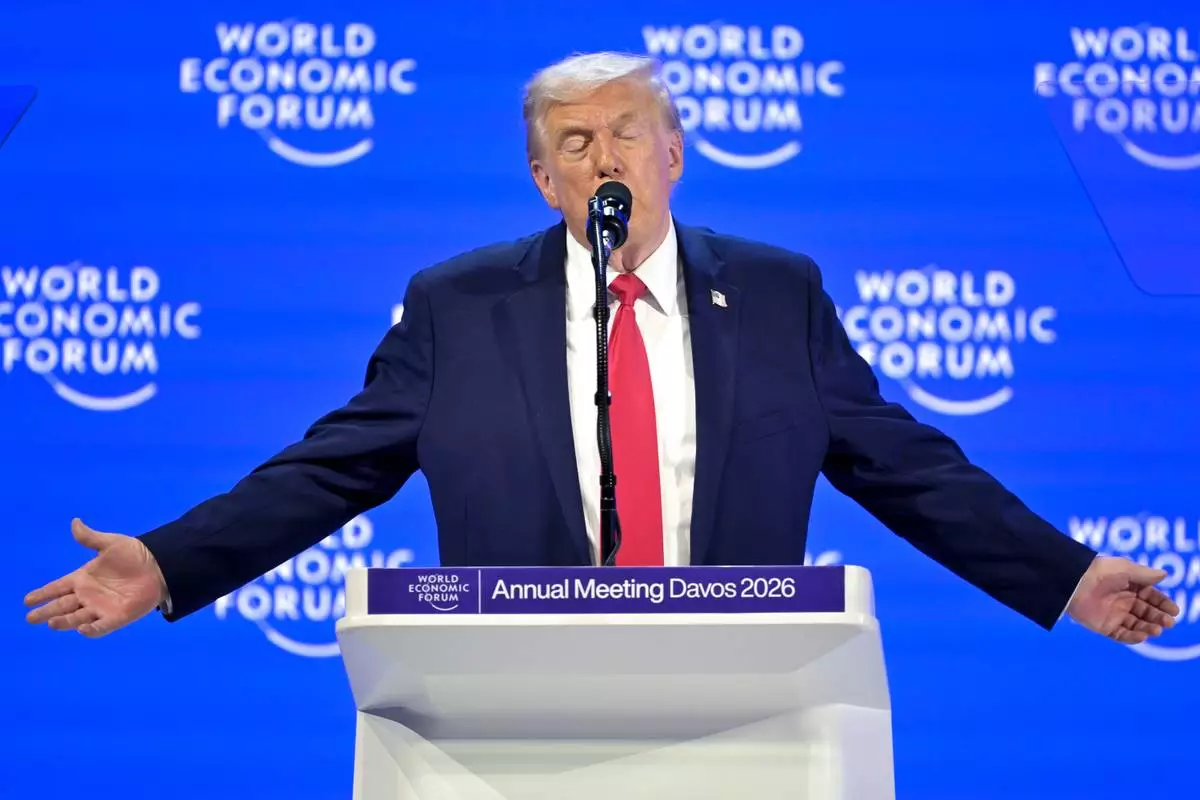
President Donald Trump speaks during the 56th annual meeting of the World Economic Forum, WEF, in Davos, Switzerland, Wednesday, Jan. 21, 2026. (Gian Ehrenzeller/Keystone via AP)
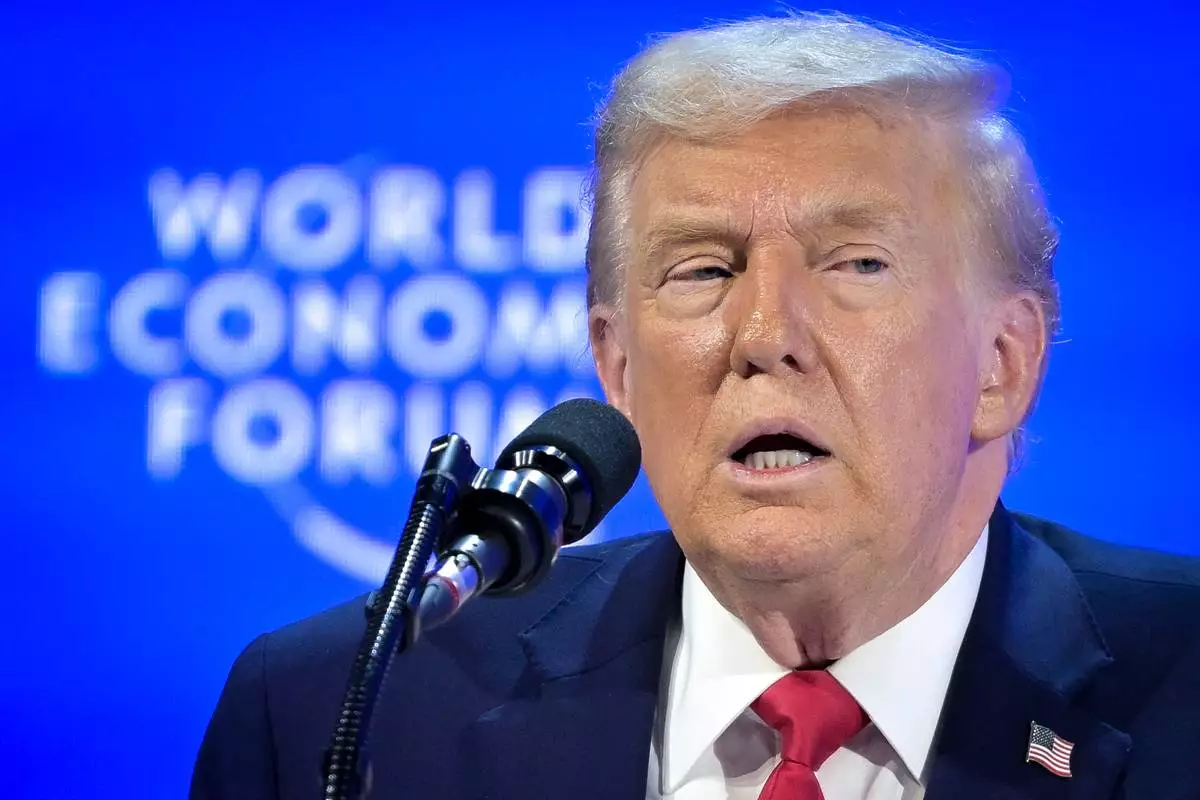
President Donald Trump speaks during the 56th annual meeting of the World Economic Forum, WEF, in Davos, Switzerland, Wednesday, Jan. 21, 2026. (Gian Ehrenzeller/Keystone via AP)
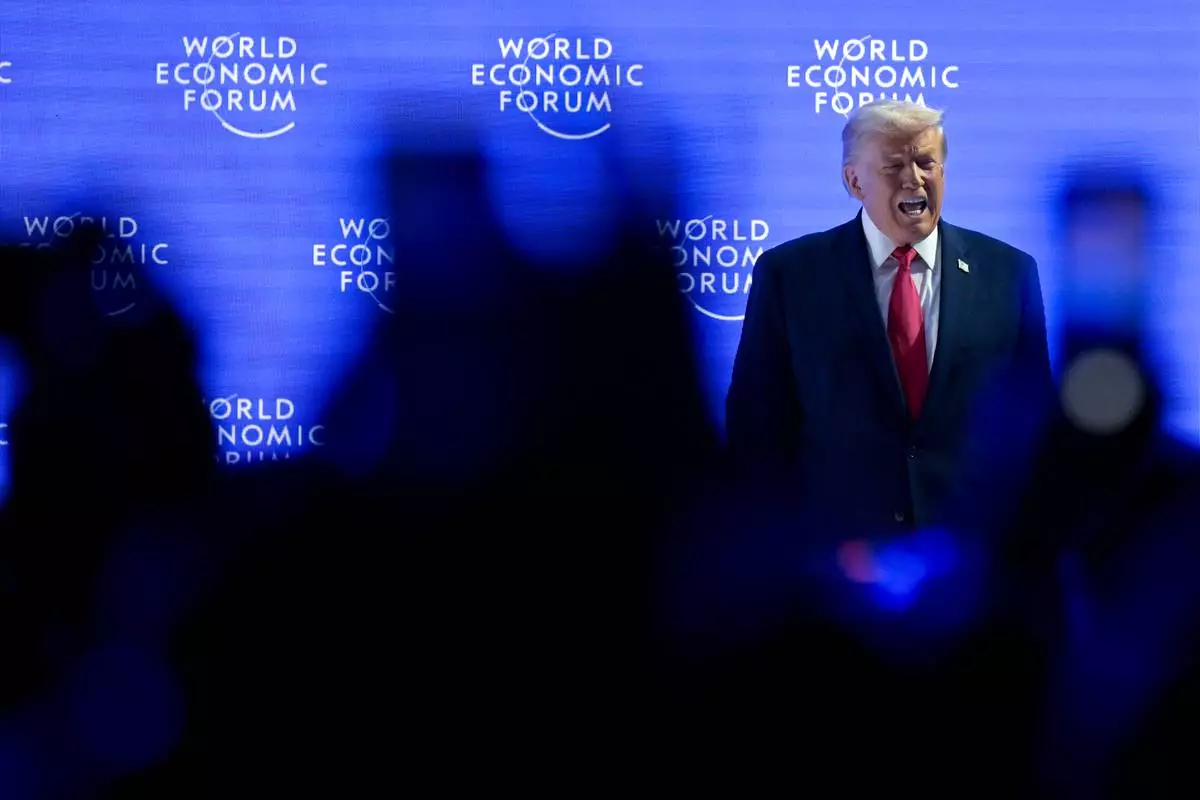
President Donald Trump walks on to the stage during the 56th annual meeting of the World Economic Forum, WEF, in Davos, Switzerland, Wednesday, Jan. 21, 2026. (Gian Ehrenzeller/Keystone via AP)
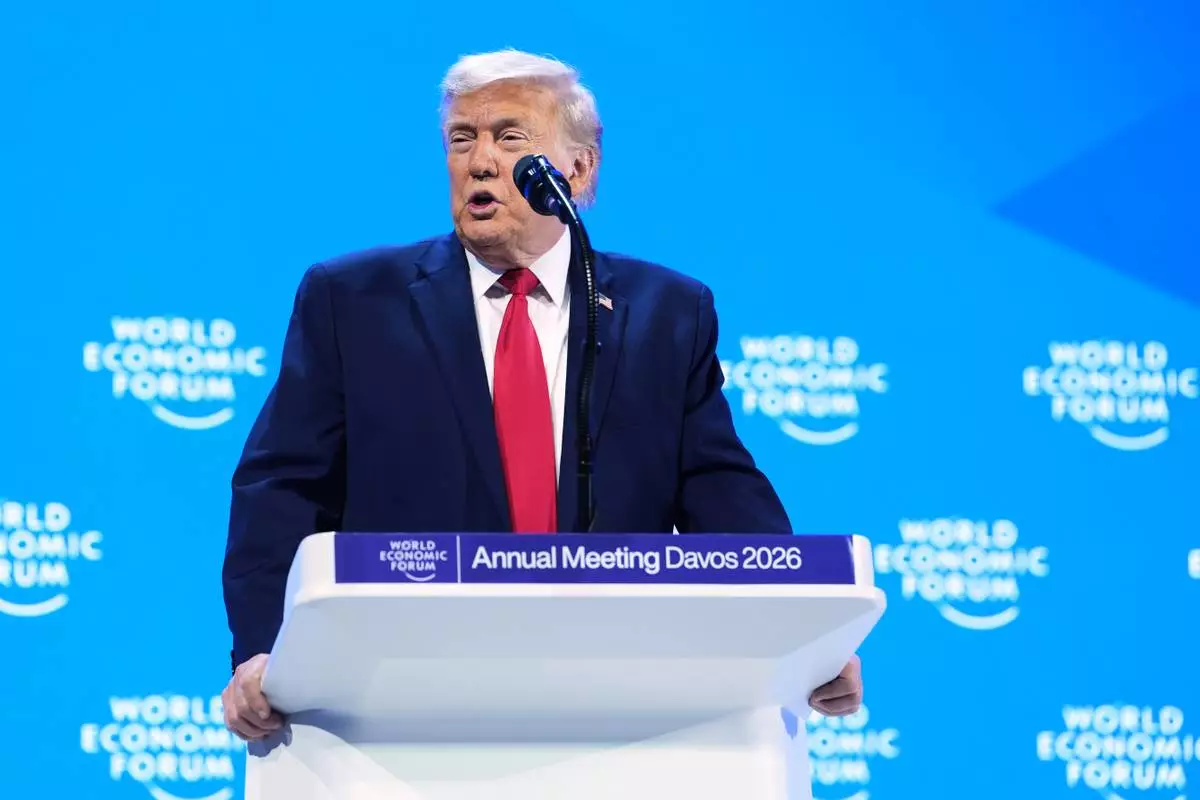
President Donald Trump addresses the audience during the Annual Meeting of the World Economic Forum in Davos, Switzerland, Wednesday, Jan. 21, 2026. (AP Photo/Evan Vucci)
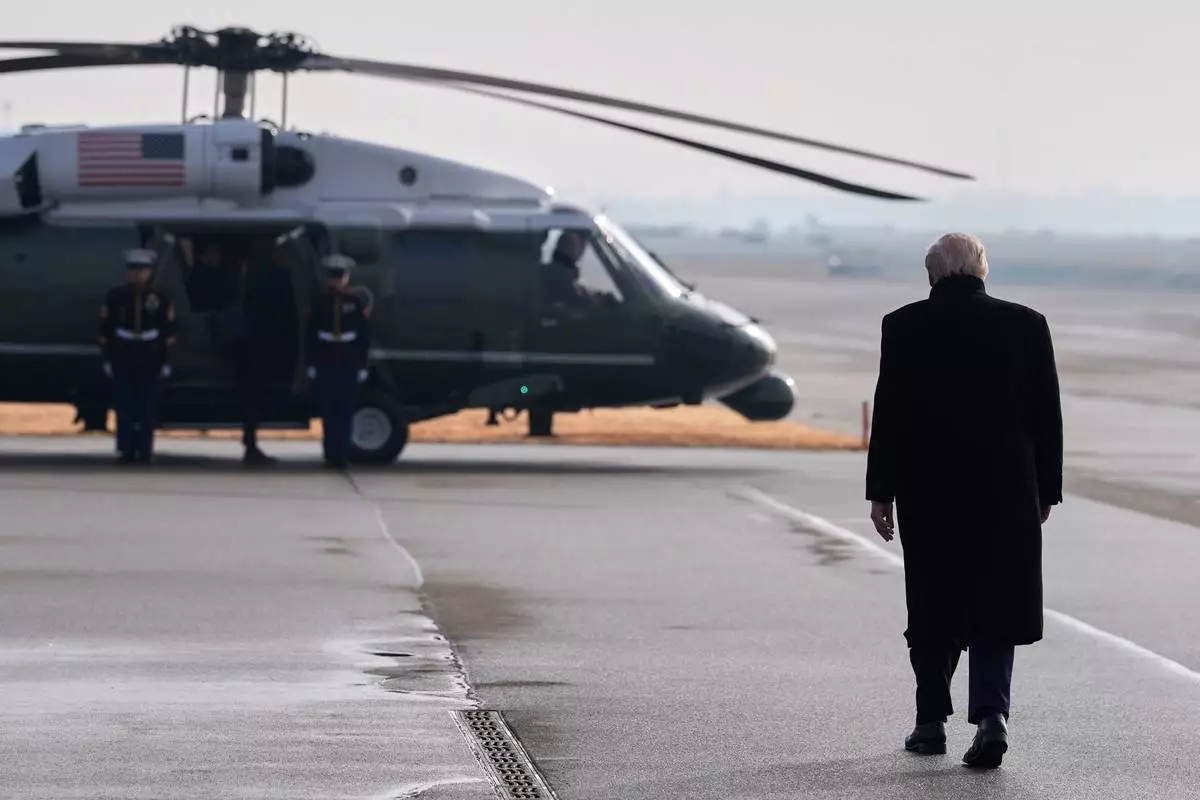
President Donald Trump walks toward Marine One to transfer to Davos after arriving at the airport in Zurich, Switzerland, Wednesday, Jan. 21, 2026. (AP Photo/Evan Vucci)
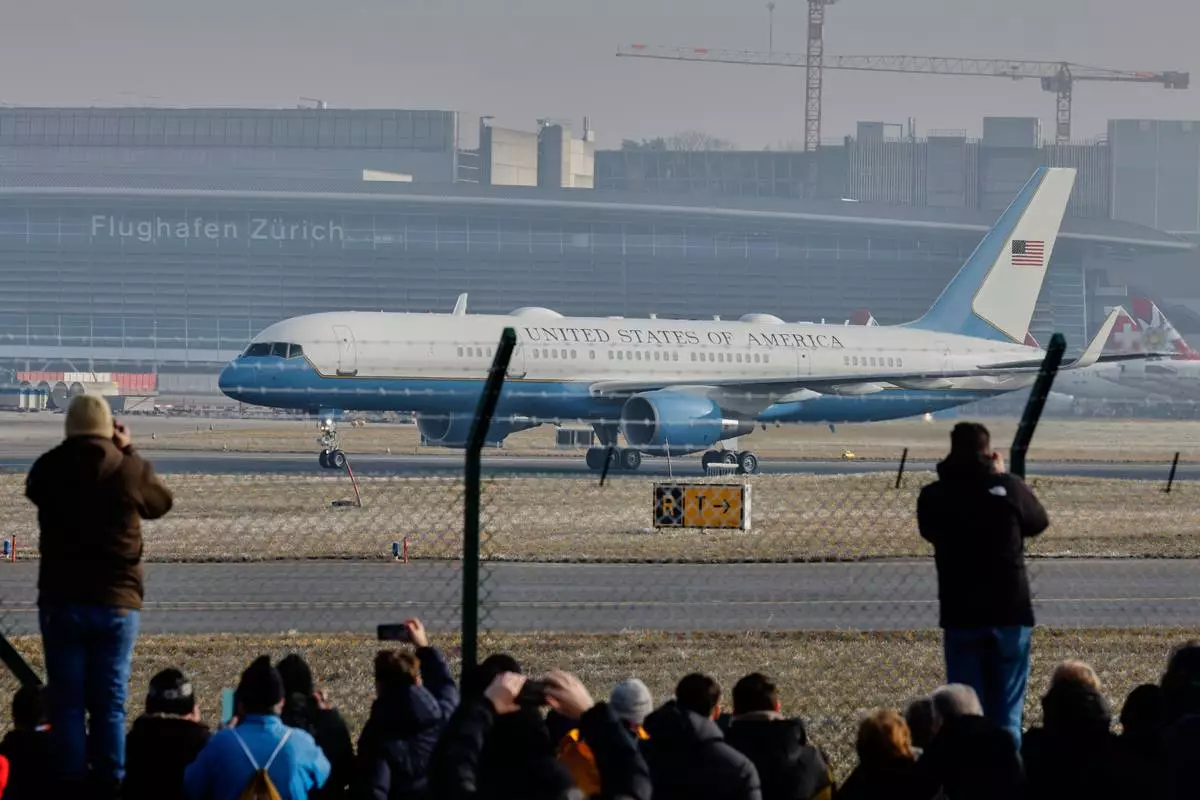
Air Force One lands at the airport in Zurich, Switzerland, Wednesday, Jan. 21, 2026. (AP Photo/Arnd Wiegmann)
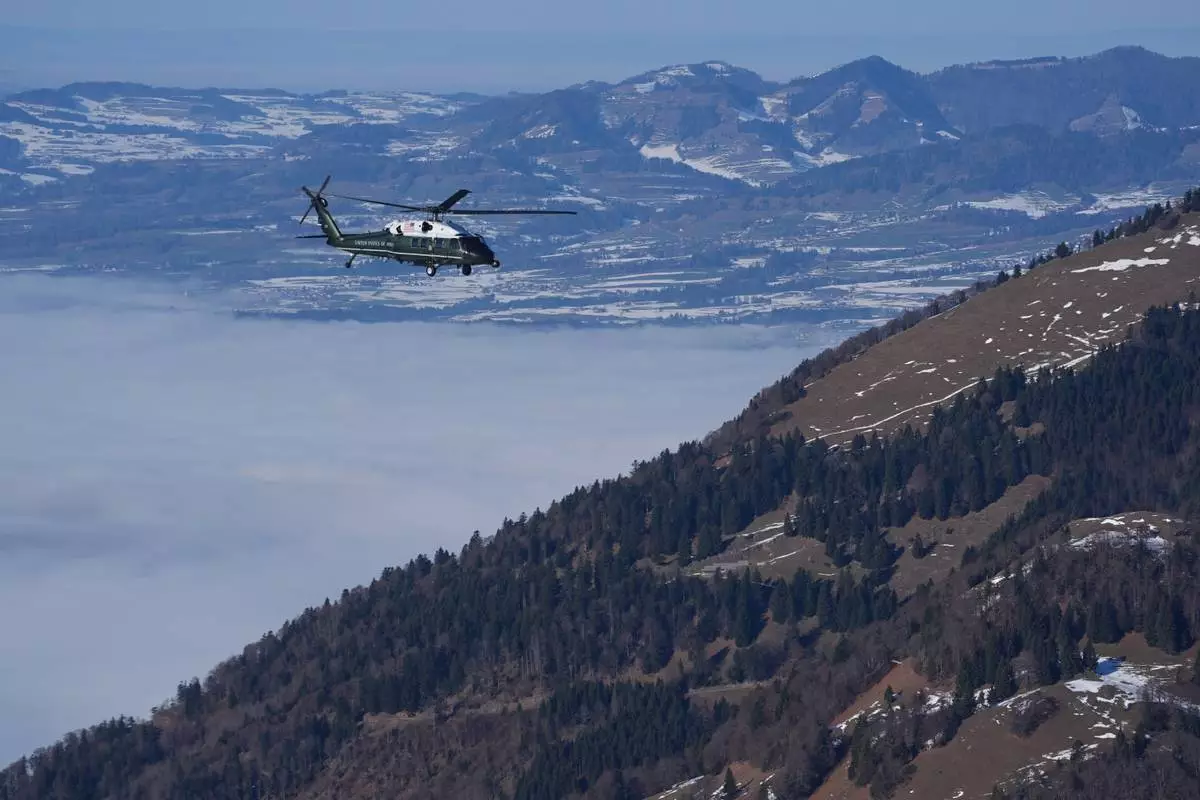
Marine One, carrying President Donald Trump, flies over snow covered mountains during his transfer to Davos after arriving at the airport in Zurich, Switzerland, Wednesday, Jan. 21, 2026. (AP Photo/Evan Vucci)
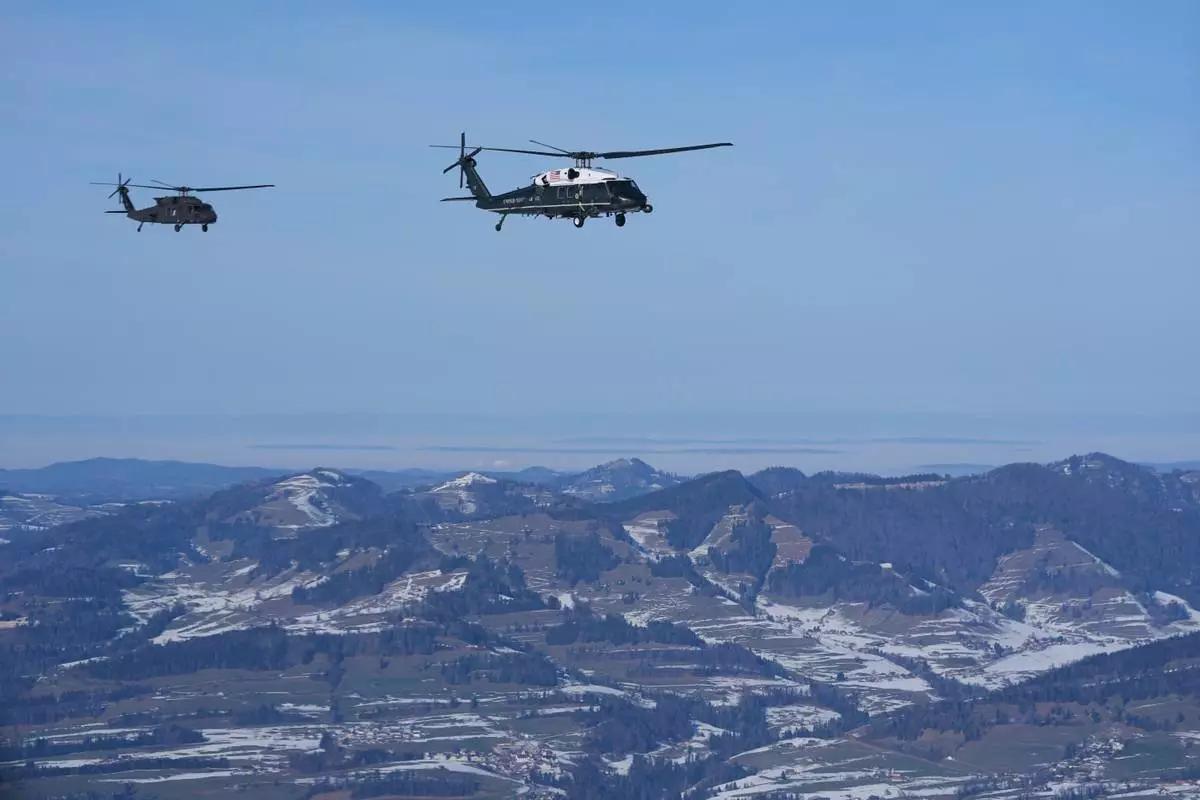
Marine One, carrying President Donald Trump, is escorted by military helicopter during his transfer to Davos after arriving at the airport in Zurich, Switzerland, Wednesday, Jan. 21, 2026. (AP Photo/Evan Vucci)
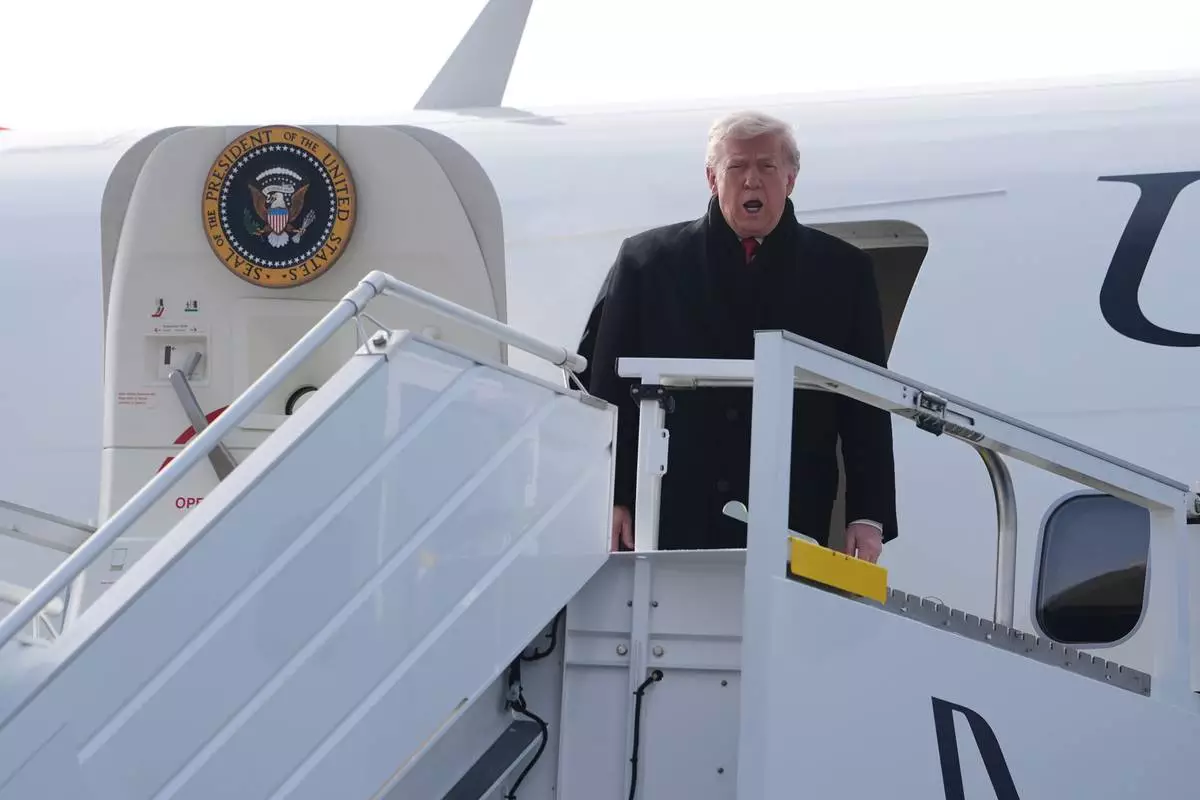
President Donald Trump steps off Air Force One after arriving at Zurich International Airport for the World Economic Forum, Wednesday, Jan. 21, 2026, in Zurich, Switzerland. (AP Photo/Evan Vucci)
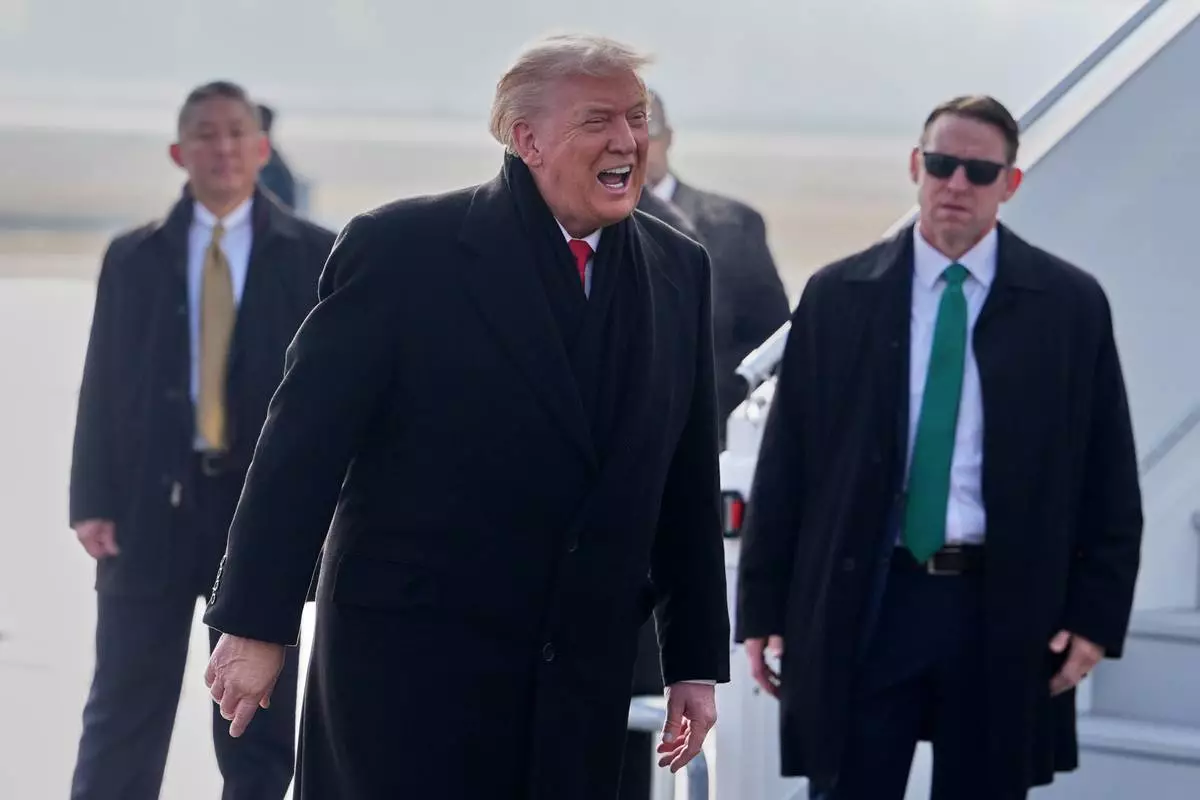
President Donald Trump, center, speaks as he steps off Air Force One after arriving at Zurich International Airport for the World Economic Forum, Wednesday, Jan. 21, 2026, in Zurich, Switzerland. (AP Photo/Evan Vucci)
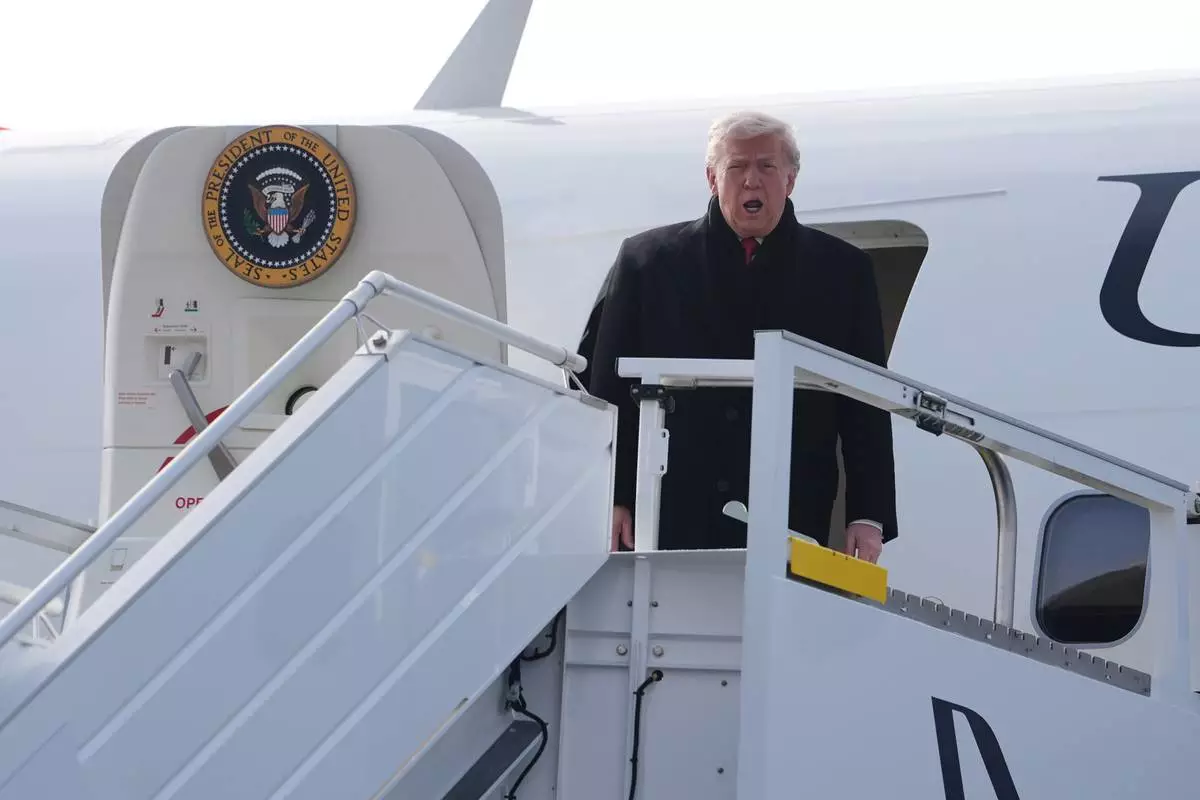
President Donald Trump steps off Air Force One after arriving at Zurich International Airport for the World Economic Forum, Wednesday, Jan. 21, 2026, in Zurich, Switzerland. (AP Photo/Evan Vucci)
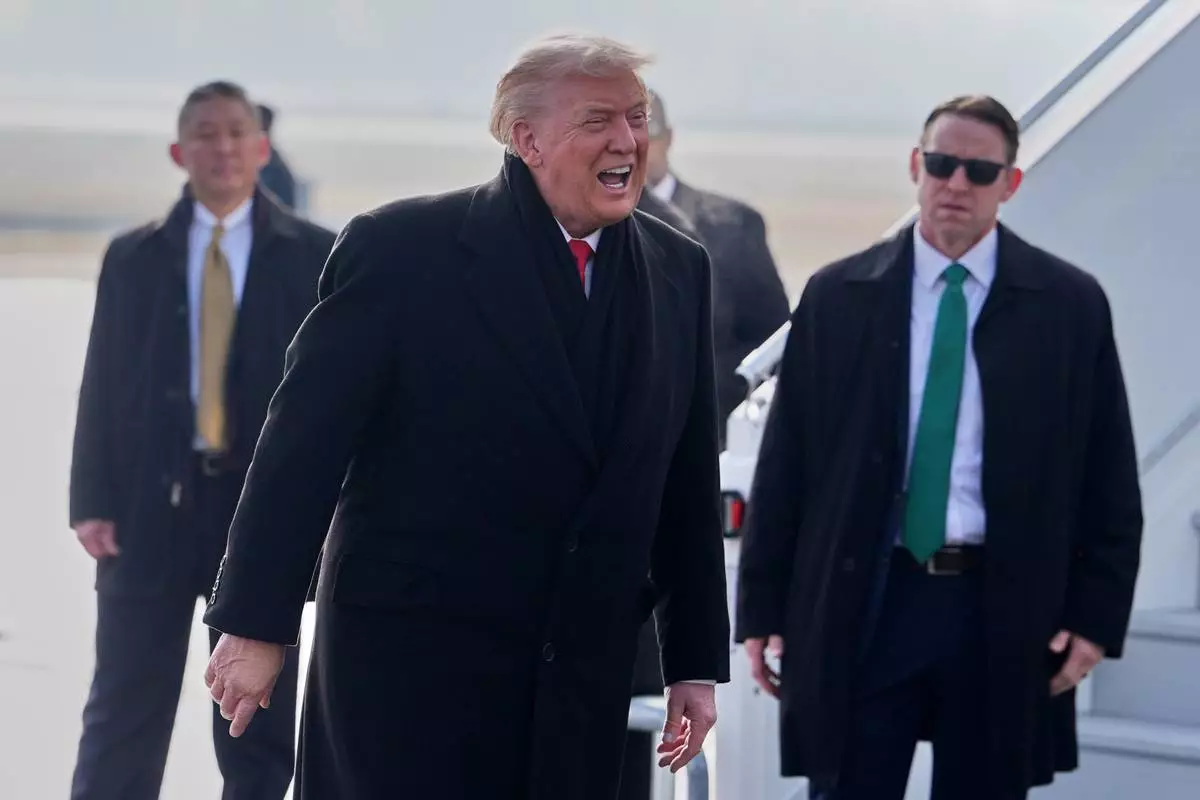
President Donald Trump, center, speaks as he steps off Air Force One after arriving at Zurich International Airport for the World Economic Forum, Wednesday, Jan. 21, 2026, in Zurich, Switzerland. (AP Photo/Evan Vucci)
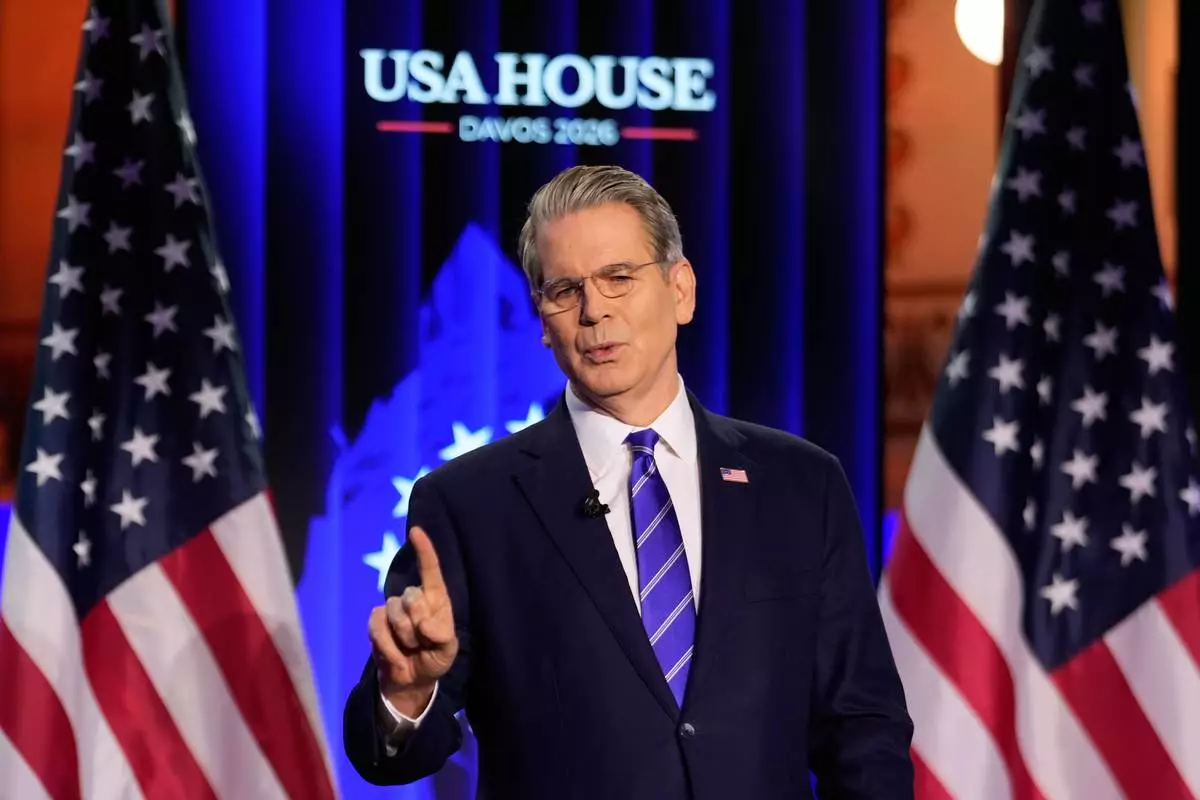
US Treasury Secretary Scott Bessent speaks at the USA house during the Annual Meeting of the World Economic Forum in Davos, Switzerland, Wednesday, Jan. 21, 2026. (AP Photo/Markus Schreiber)
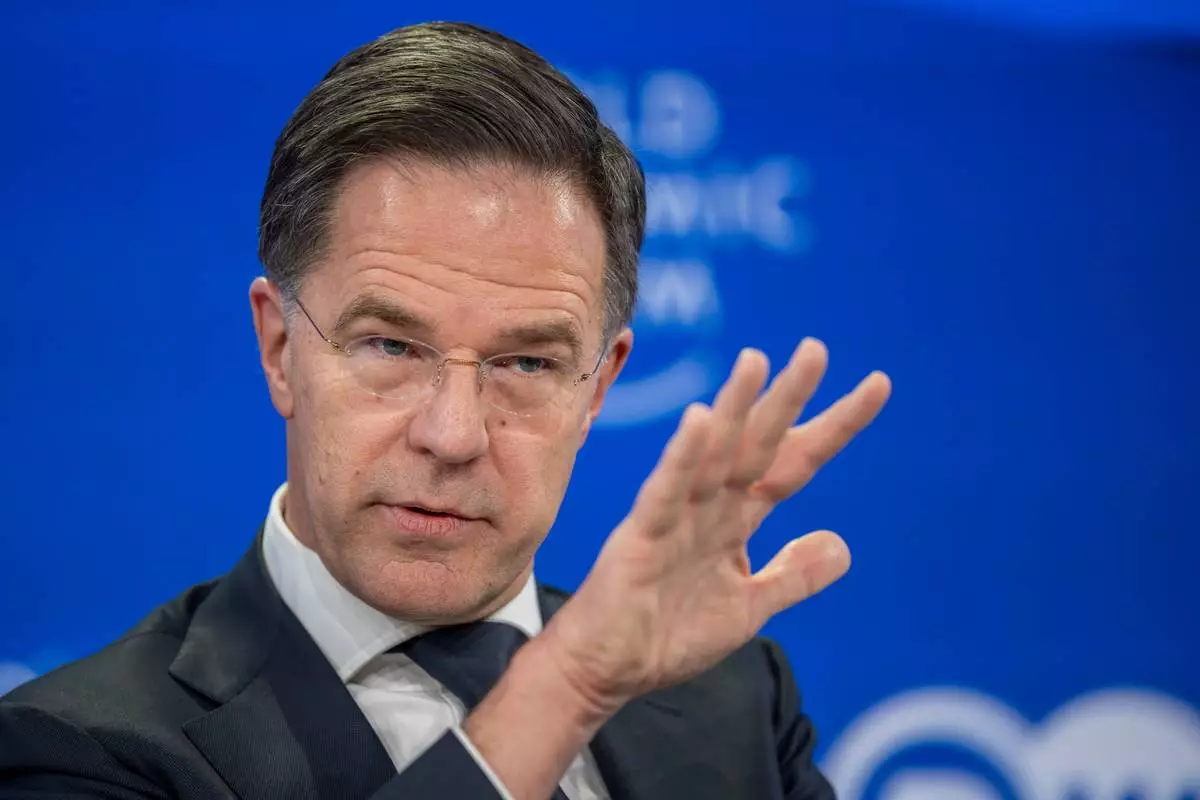
Mark Rutte, Secretary-General, North Atlantic Treaty Organization (NATO), speaks during a panel discussion during the 56th annual meeting of the World Economic Forum, in Davos, Switzerland, Wednesday, Jan. 21, 2026. (Gian Ehrenzeller/Keystone via AP)
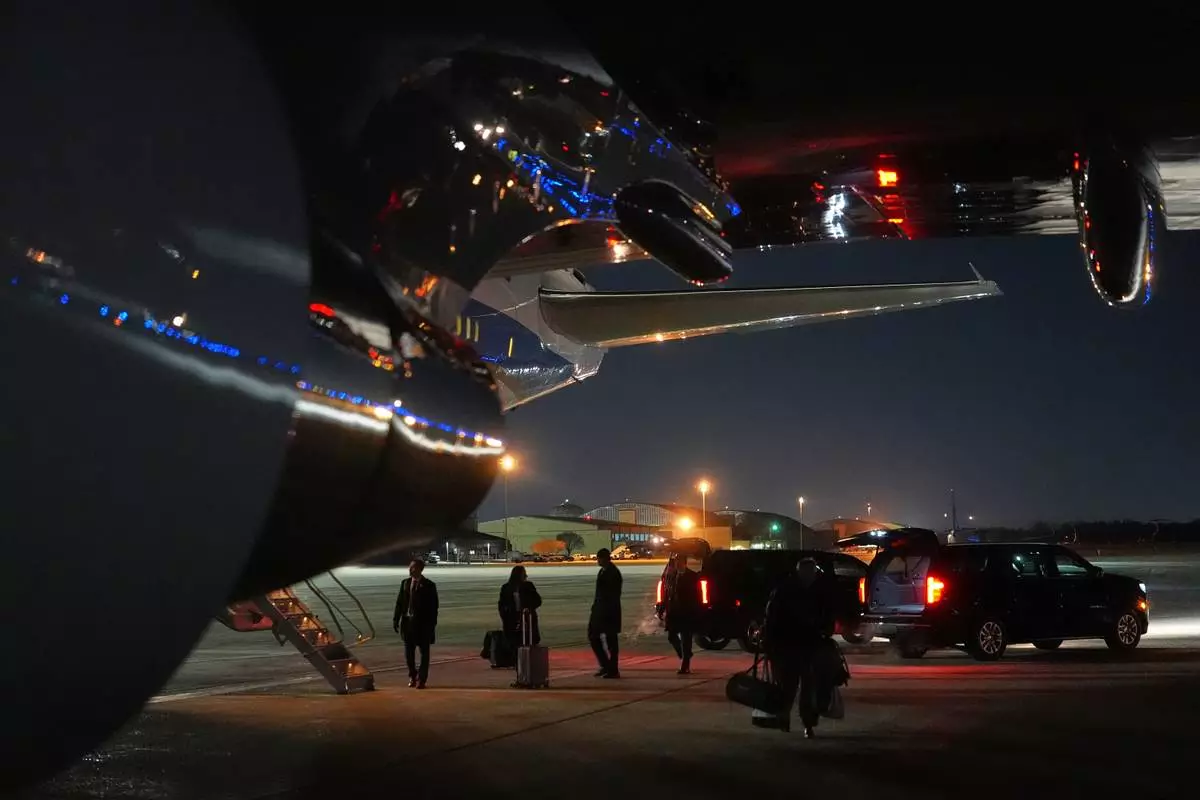
Things are unloaded from Air Force One after the plane, carrying President Donald Trump to the World Economic Form in Davos, experienced a minor electrical issue after departure, Tuesday, Jan. 20, 2026, and returned to Joint Base Andrews, Md. Trump will board a second plane to complete the trip. (AP Photo/Evan Vucci)
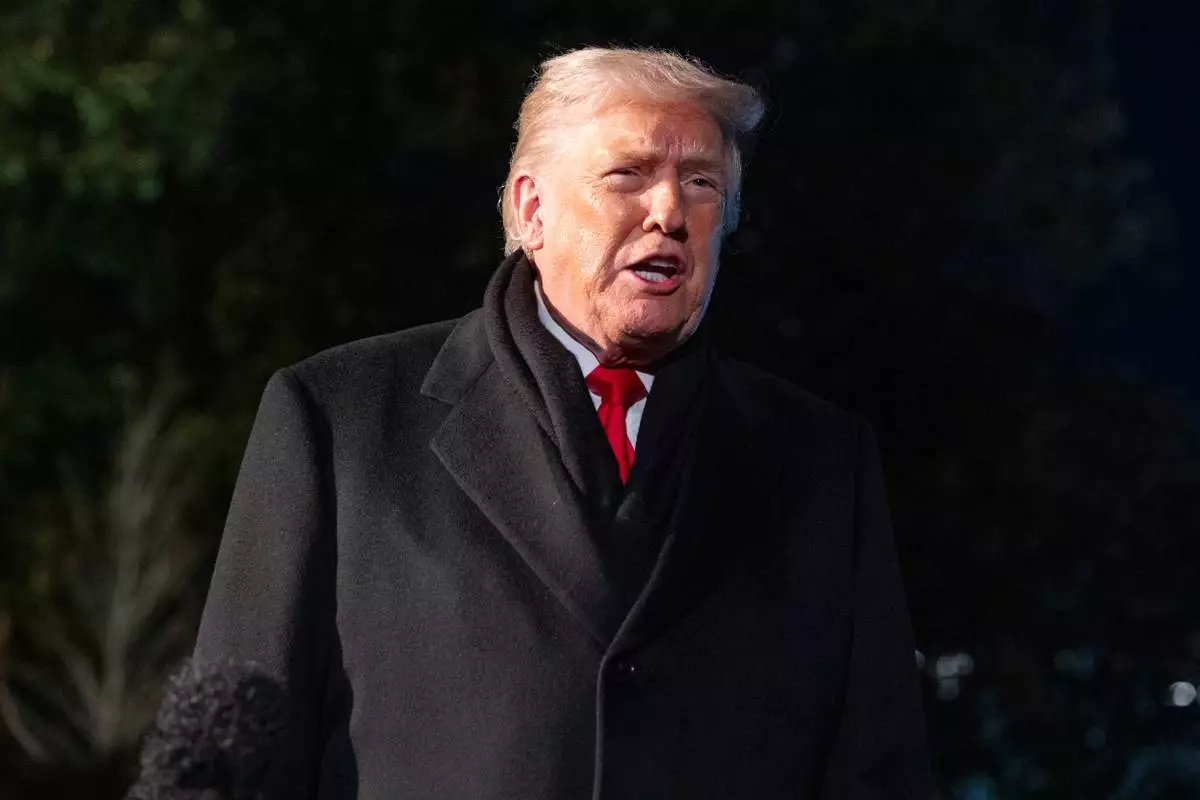
President Donald Trump speaks before departing on Marine One from the South Lawn of the White House, Tuesday, Jan. 20, 2026, in Washington. (AP Photo/Alex Brandon)