If you grow houseplants, you probably know that sinking feeling you get when you notice the almost imperceivable movement of a dot, fine webbing between a leaf and its stem, or a leaf that just looks off.
You thought (hoped!) the moment would never come, but the pests have moved in, and here we are.
The old adage about an ounce of prevention being worth a pound of cure also applies to houseplant infestations, and this all could have been avoided if you had taken precautions, starting at the nursery.
Before bringing home a plant, inspect it closely. Look at the soil, stem, leaves and, importantly, under the leaves, where some pests like to make their homes. Use your phone’s camera to zoom in on questionable specks. If all looks good, go ahead and buy the plant, but repot it once it crosses your threshold.
Remove the plant from its container and gently shake, then wipe as much of the soil from the roots as possible. This is important because even in the absence of visible pests, there could be eggs waiting to hatch in the soil.
Repot the plant using fresh, sterile potting mix in a clean container with a drainage hole at the bottom. If reusing the original pot, first wash it and disinfect it with a 90/10 water-to-bleach solution.
Plant the roots exactly as deep as they were in the original pot, and tamp the soil down firmly to eliminate air pockets. Then give the plant a moderate drink of water.
When the soil surface dries, sprinkle it with about ¼ inch of food-grade diatomaceous earth (DE). To ensure even distribution, consider using a powder duster, sometimes called a puffer.
Wear a mask; the dust isn’t toxic to people or pets, but it will irritate your lungs if inhaled. Insects that crawl across the dry powder, which is composed of tiny shard-like particles, become dehydrated and die.
Diatomaceous earth must be kept dry to maintain its effectiveness, so bottom-water plants by placing pots in a shallow container of water. Allow the soil and roots to soak up what they need for about 15 minutes, then discard any remaining water. Bottom watering also helps prevent fungal diseases and root rot, so it’s a good practice regardless of pest concerns.
DE should be reapplied occasionally because soil moisture will degrade it over time, even when watering from below.
If you have other houseplants, quarantine your newcomer in a separate room for three to four weeks. Inspect it every few days as you did at the nursery, as some pests may not show their faces for a while.
When you’re confident all is clear, go ahead and introduce your plants to the rest of the family.
Jessica Damiano writes weekly gardening columns for the AP and publishes the award-winning Weekly Dirt Newsletter. You can sign up here for weekly gardening tips and advice.
For more AP gardening stories, go to https://apnews.com/hub/gardening.

A string of dolphins plant is displayed in Old Westbury, N.Y. on Jan. 2, 2026. (Jessica Damiano via AP)
HOUSTON (AP) — Emerging from behind the moon, the Artemis II astronauts pointed their capsule toward home Monday night after beholding views of the lunar far side never before witnessed and setting a new distance record for humanity.
The seven-hour flyby was the highlight of NASA’s first return to the moon since the Apollo era with three Americans and one Canadian — a step toward landing boot prints near the moon’s south pole in just two years.
First came a prize — and bragging rights — for Artemis II.
Artemis II surpassed Apollo 13’s distance record of 248,655 miles (400,171 kilometers) set in April 1970, right before the fly-around and intense lunar observations got started. It ended up beating i
“It is blowing my mind what you can see with the naked eye from the moon right now. It is just unbelievable,” Canadian astronaut Jeremy Hansen radioed ahead of the flyby. He challenged “this generation and the next to make sure this record is not long-lived.”
Moments after breaking Apollo 13’s record, the astronauts asked permission to name two fresh lunar craters already observed. They proposed Integrity, their capsule’s name, and Carroll in honor of commander Reid Wiseman’s wife who died of cancer in 2020. Wiseman wept as Hansen put in the request to Mission Control, and all four astronauts embraced in tears.
“Such a majestic view out here,” Wiseman radioed once he regained his composure and started picture-taking. The astronauts called down that they managed to capture the moon and Earth in the same shot, and provided a running commentary to scientists back in Houston on what they were seeing.
Some peaks were so bright, pilot Victor Glover noted, that they looked as though they were covered in snow. Besides photographing the scenes with high-powered Nikon cameras, the astronauts also pulled out their iPhones for some impromptu shots.
Wiseman, Glover, Hansen and Christina Koch started the momentous day with the voice of Apollo 13 commander Jim Lovell, who recorded a wake-up message just two months before his death last August. “Welcome to my old neighborhood,” said Lovell, who also flew on Apollo 8, humanity’s first lunar visit. “It’s a historic day and I know how busy you’ll be, but don’t forget to enjoy the view.”
They took up with them the Apollo 8 silk patch that accompanied Lovell to the moon, and showed it off as the crucial flyby approached. “It’s just a real honor to have that on board with us,” said Wiseman. “Let’s go have a great day.”
Artemis II is using the same maneuver that Apollo 13 did after its “Houston, we’ve had a problem” oxygen tank explosion wiped out any hope of a moon landing.
Known as a free-return lunar trajectory, this no-stopping-to-land route takes advantage of Earth and the moon’s gravity, reducing the need for fuel. It’s a celestial figure-eight that put the astronauts on course for home, once they emerged from behind the moon Monday evening.
The Artemis II crew ducked behind the moon more than halfway through the lunar flyby. During the 40-minute communication blackout, they made their closest approach to the moon — 4,067 miles (6,545 kilometers) — and reached their maximum distance of 252,756 miles (406,771 kilometers) from Earth. At that point, they were homeward bound, taking four days to get back with a Pacific splashdown concluding their test flight on Friday.
Their estimated speed at closest approach to the moon: 3,139 mph (5,052 kph).
Wiseman and his crew spent years studying lunar geography to prepare for the big event, adding solar eclipses to their repertoire during the past few weeks.
Topping their science target list: Orientale Basin, a sprawling impact basin with three concentric rings, the outermost of which stretches nearly 600 miles (950 kilometers) across.
Other sightseeing goals: the Apollo 12 and 14 landing sites from 1969 and 1971, respectively, as well as fringes of the south polar region, the preferred locale for future touchdowns. Farther afield, Mercury, Venus, Mars and Saturn — not to mention Earth — were visible. A total solar eclipse graced the sky as they rounded the moon and aimed for home, their lunar observations and photography still ongoing.
Their moon mentor, NASA geologist Kelsey Young, expects thousands of pictures.
Artemis II is NASA’s first astronaut moonshot since Apollo 17 in 1972. It sets the stage for next year’s Artemis III, which will see another Orion crew practice docking with lunar landers in orbit around Earth. The culminating moon landing by two astronauts near the moon’s south pole will follow on Artemis IV in 2028.
While Artemis II may be taking Apollo 13’s path, it’s most reminiscent of Apollo 8 and humanity’s first lunar visitors who orbited the moon on Christmas Eve 1968 and read from the Book of Genesis.
Glover said flying to the moon during Christianity’s Holy Week brought home for him “the beauty of creation.” Earth is an oasis amid “a whole bunch of nothing, this thing we call the universe” where humanity exists as one, he observed over the weekend.
“This is an opportunity for us to remember where we are, who we are, and that we are the same thing and that we’ve got to get through this together,” Glover said, clasping hands with his crewmates.
The Associated Press Health and Science Department receives support from the Howard Hughes Medical Institute’s Department of Science Education and the Robert Wood Johnson Foundation. The AP is solely responsible for all content.
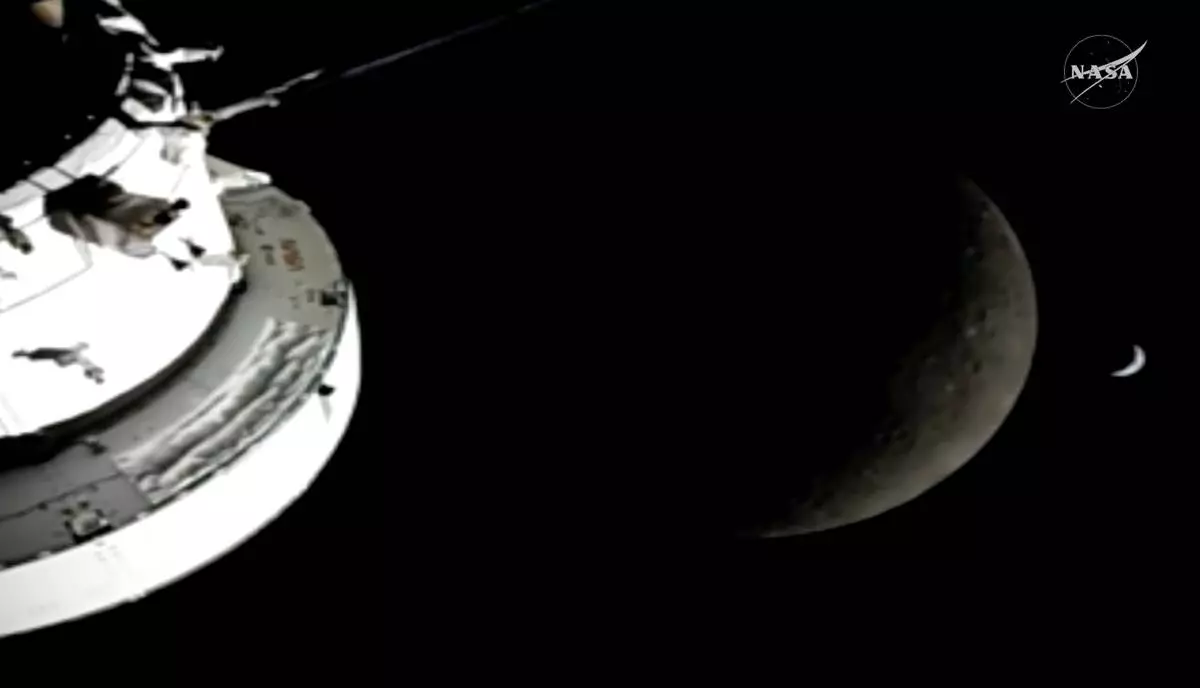
In this image from video provided by NASA, the Orion Spacecraft, the Earth and the Moon are seen from a camera as the Artemis II crew and spacecraft travel farther into Space, Monday, April 6, 2026. (NASA via AP)
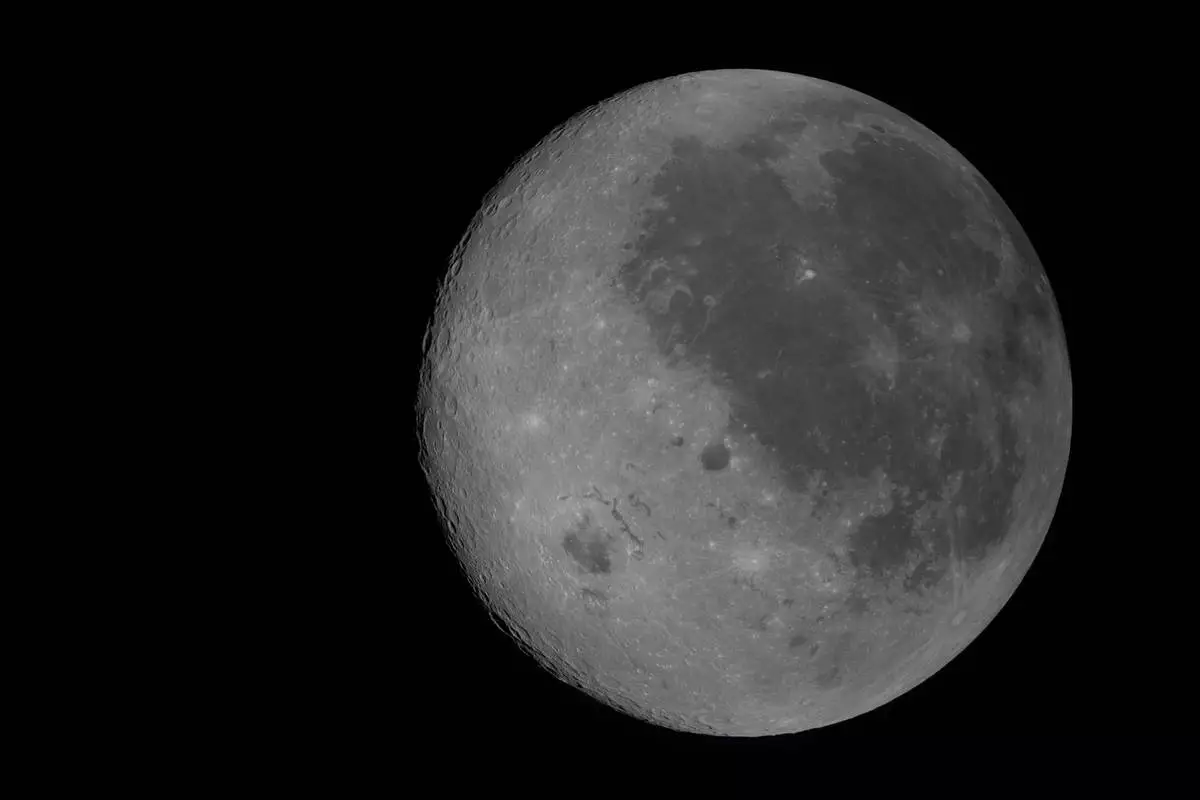
This image provided by NASA Monday, April 6, 2026, shows the Moon, the near side (the hemisphere we see from Earth) visible at the right side of the disk, identifiable by the dark splotches. At lower left is Orientale basin, a nearly 600-mile-wide crater that straddles the Moon’s near and far sides. Everything to the left of the crater is the far side. (NASA via AP)
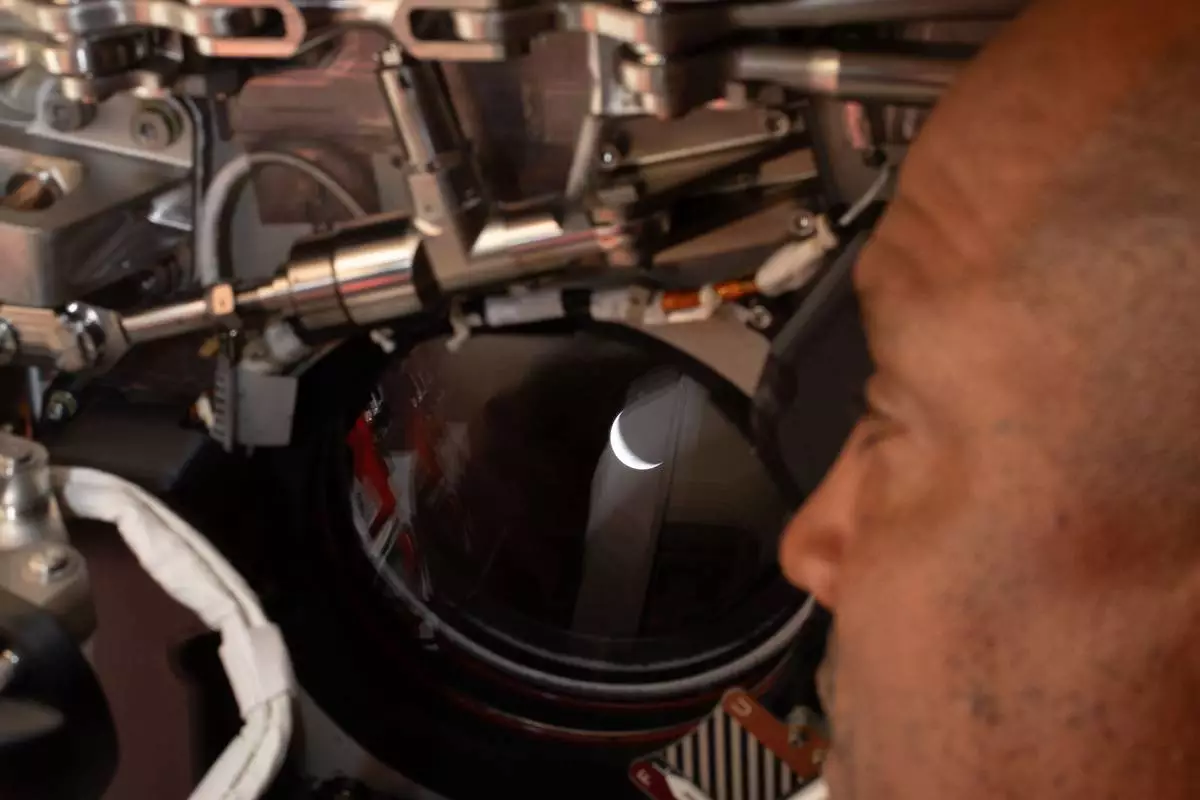
In this photo provided by NASA, Artemis II pilot and NASA astronaut Victor Glover peers out one of the Orion spacecraft's windows looking back at Earth ahead of the crew's lunar flyby, Monday, April 6, 2026.(NASA via AP)
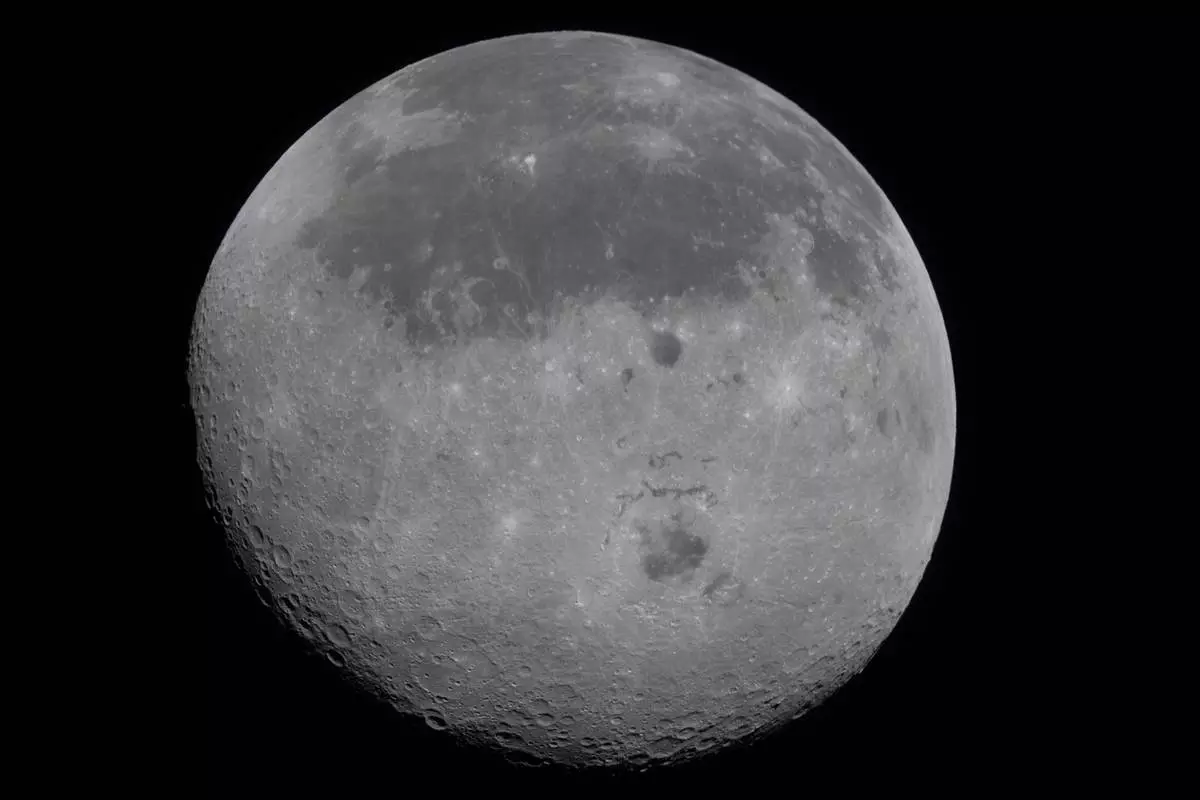
This image provided by NASA Monday, April 6, 2026, shows the Moon, the near side (the hemisphere we see from Earth) visible at the top half of the disk, identifiable by the dark splotches. At the lower center is Orientale basin, a nearly 600-mile-wide crater that straddles the Moon’s near and far sides. Everything below the crater is the far side. (NASA via AP)
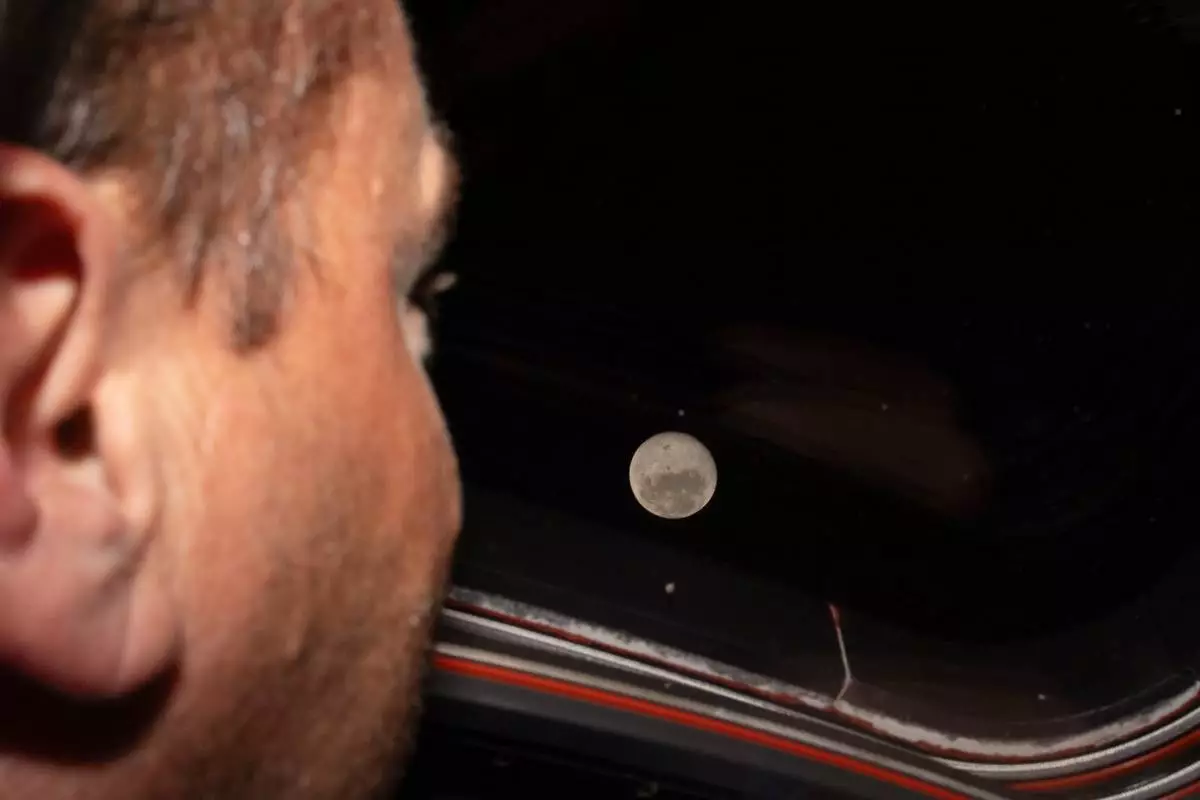
In this photo provided by NASA, Artemis II commander and NASA astronaut Reid Wiseman looks out one of the Orion spacecraft's main cabin windows at the Moon ahead of the crew's lunar flyby on April 6, 2026. (NASA via AP)
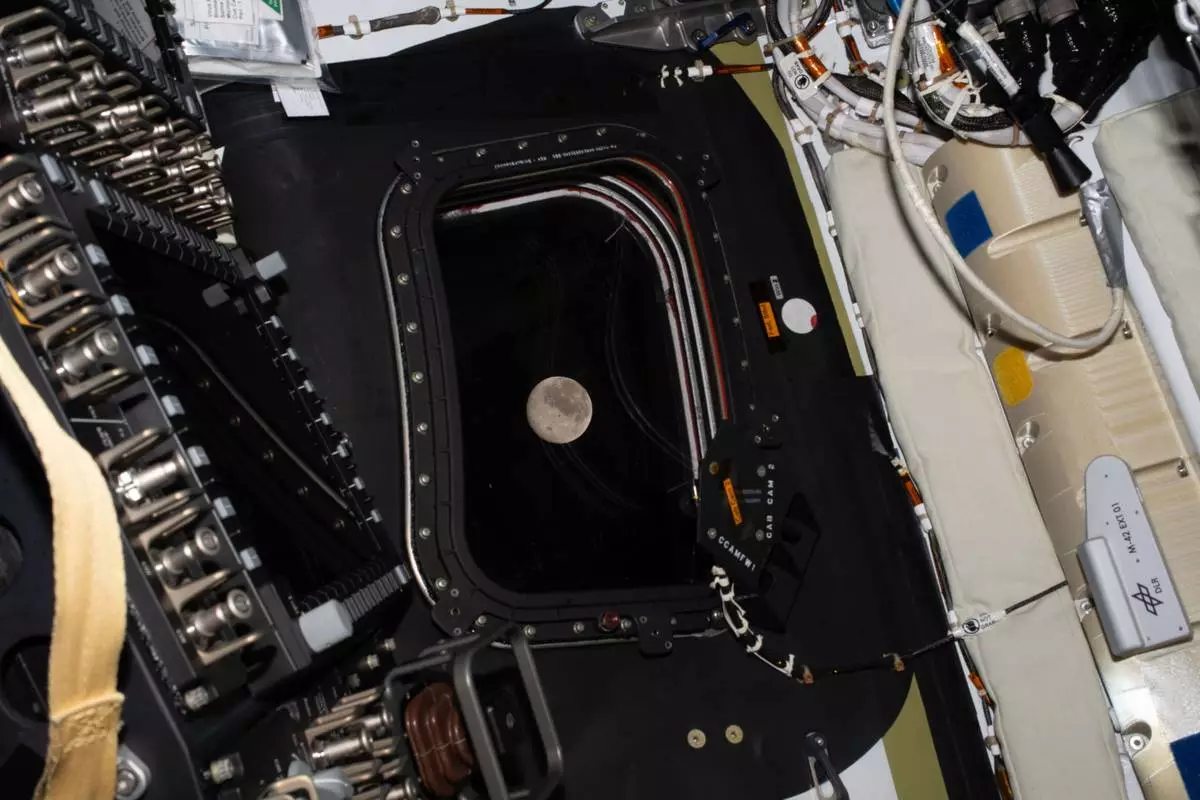
In this photo provided by NASA, the Moon is seen in the window of the Orion spacecraft, photo taken by The Artemis II crew, at the end of day 5 of journey to the Moon on Monday, April 6, 2026. (NASA via AP)
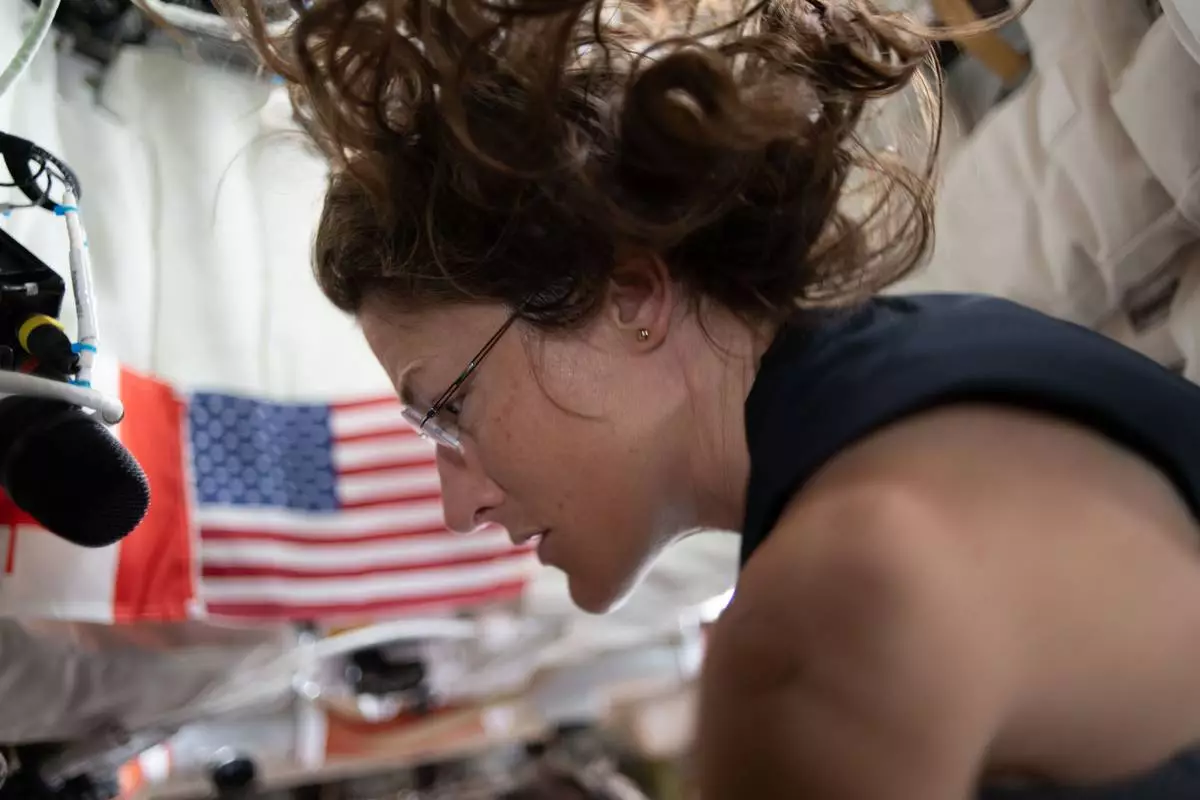
In this photo provided by NASA, astronaut Christina Koch is pictured on the fourth day of the mission, prepping for lunar flyby activities after completing aerobic exercise on the flywheel device, during the The Artemis II crew's journey to the Moon, Saturday, April 4, 2026. (NASA via AP)
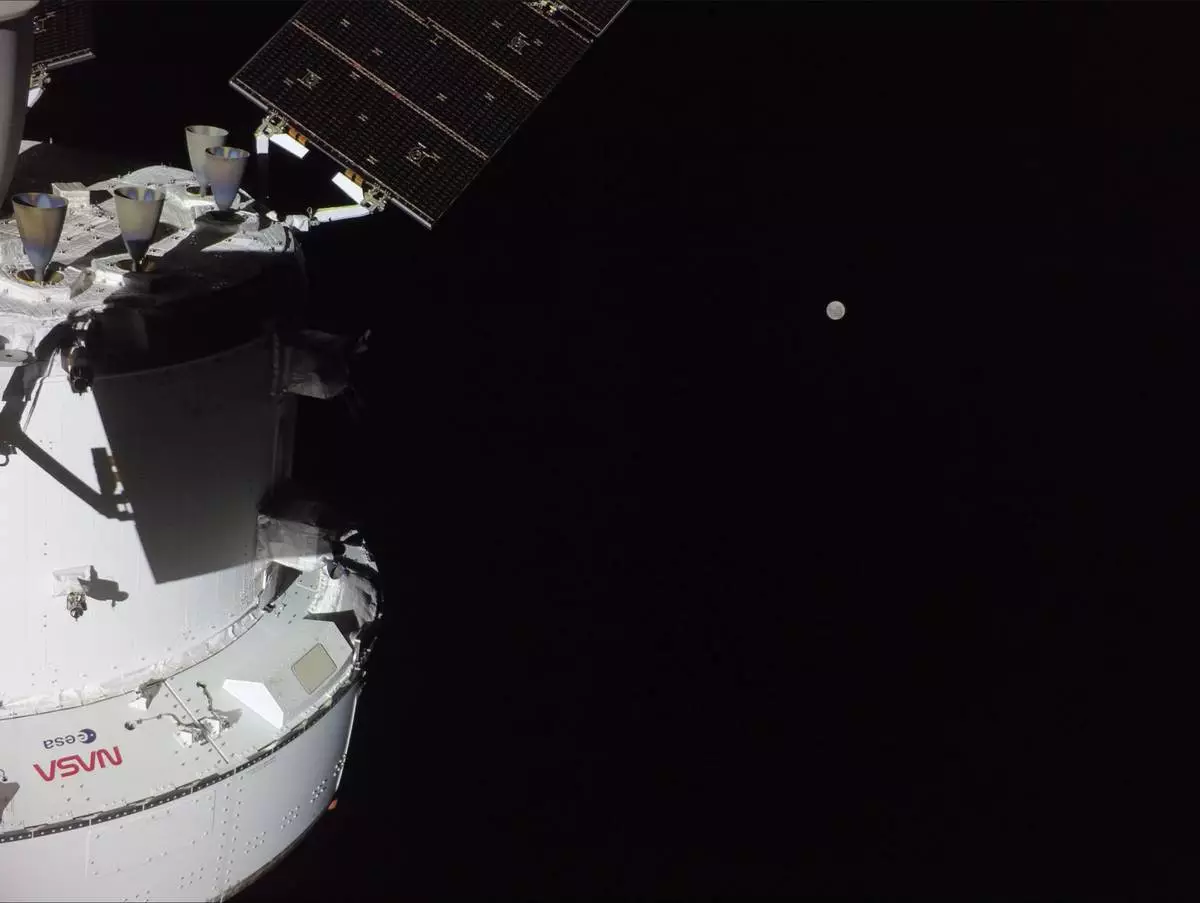
This image provided by NASA shows the Orion spacecraft with the Moon in the distance, as captured by a camera on the tip of one of its solar array wings, April 3, 2026. (NASA via AP)
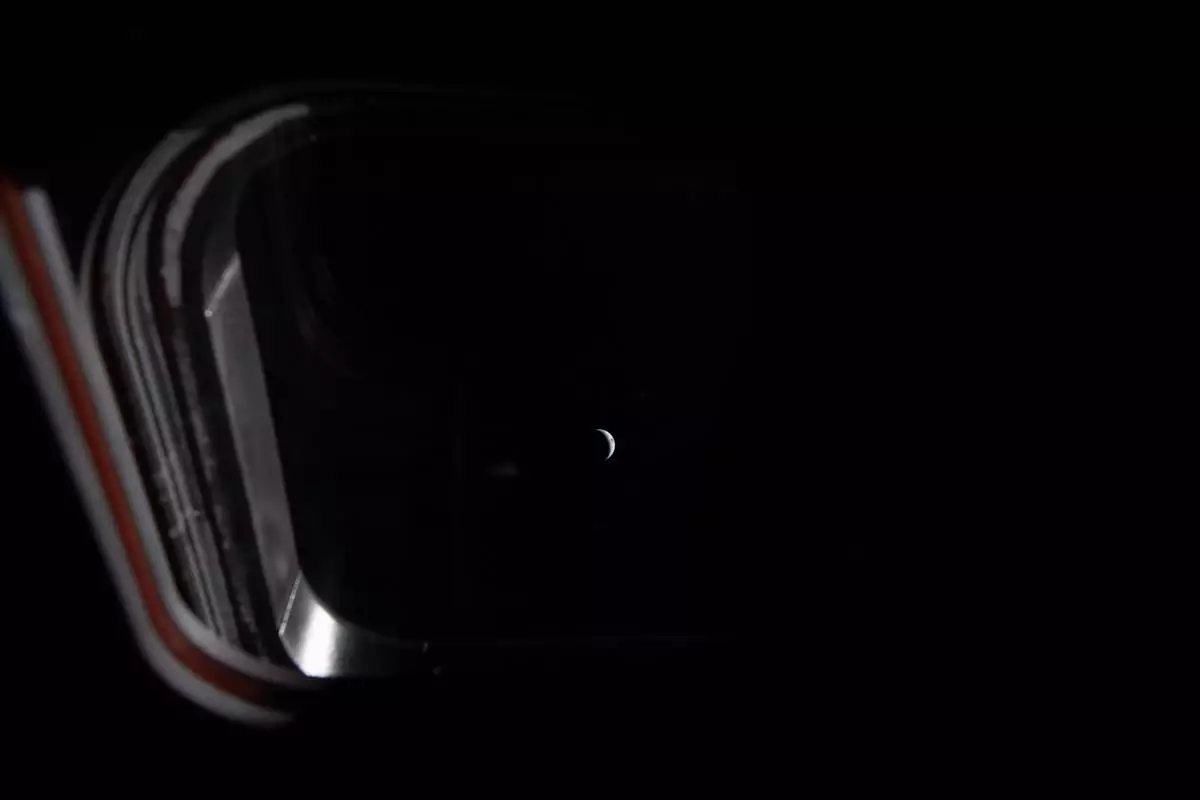
This photo provided by NASA shows the Earth seen from a window on the Orion spacecraft Integrity during the Artemis II mission, Sunday, April 5, 2026. (NASA via AP)
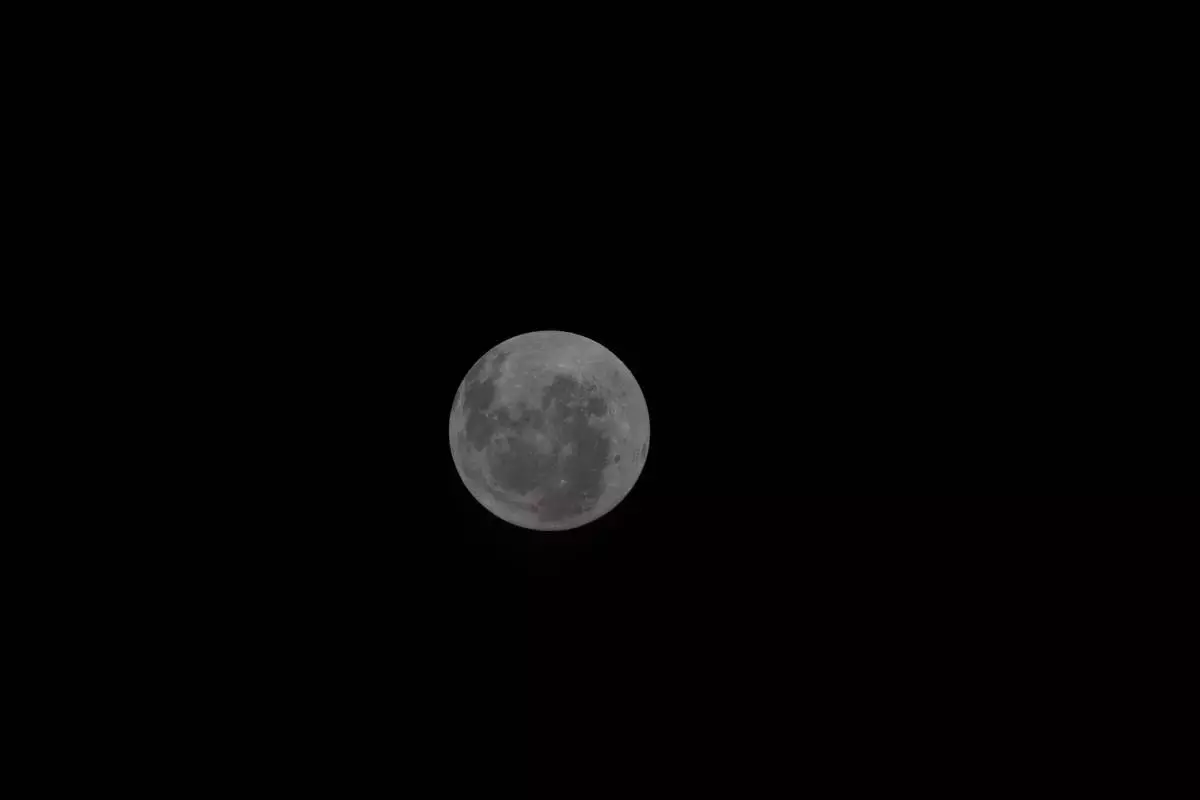
This image provided by NASA shows the moon from a photo taken by The Artemis II crew on day 4 of their journey to the Moon on Saturday, April 4, 2026. (NASA via AP)
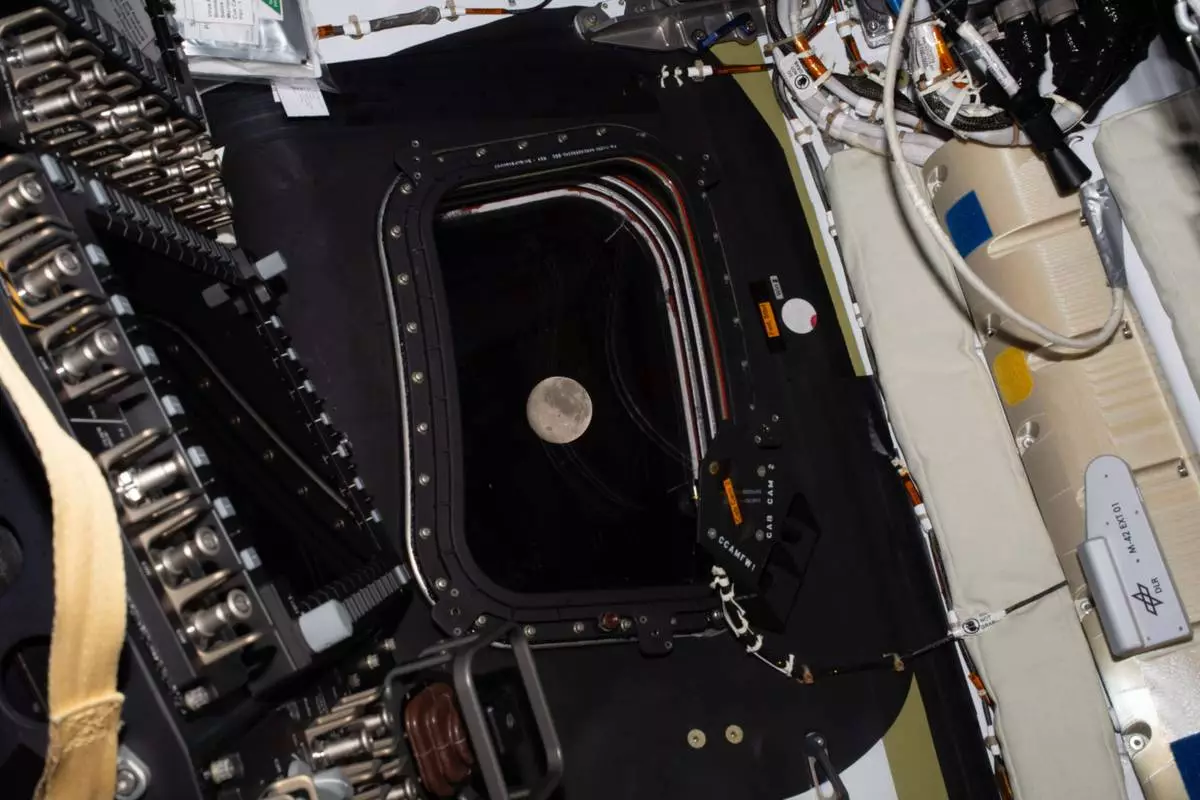
This image provided by NASA on Monday, April 6, 2026, shows a view of the moon taken by the Artemis II crew before going to sleep on flight day 5. (NASA via AP)