MEXICO CITY (AP) — Mexico's security minister said Tuesday that it had sent another 37 members of Mexican drug cartels to the United States, as the Trump administration ratchets up pressure on governments to crack down on criminal networks it says are smuggling drugs across the border.
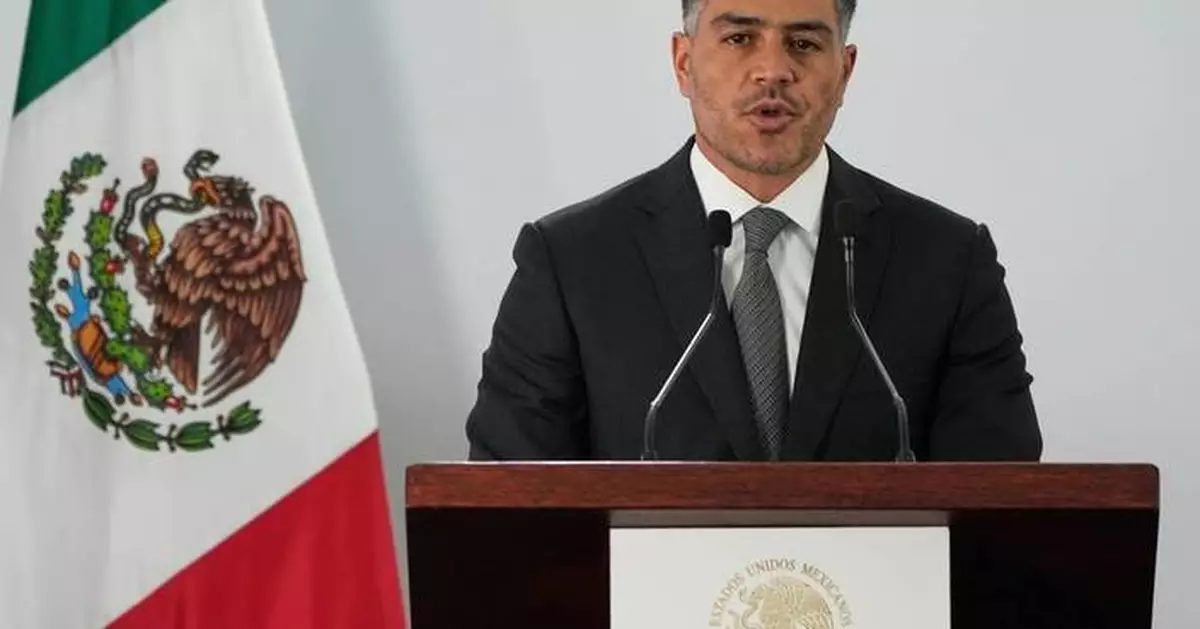
Mexican Security Minister Omar García Harfuch wrote in a social media post on X that the people transferred were “high impact criminals” that “represented a real threat to the country’s security.”
It is the third time in less than one year that Mexico has sent detained cartel members to the U.S. as the country attempts to offset mounting threats by U.S. President Donald Trump. García Harfuch said the government has sent 92 people in total.
Video shared by Mexican authorities shows a line of handcuffed prisoners surrounded by heavily armed and masked officers being loaded onto a military jet at an airport on the outskirts of Mexico City.
“As the pressure increases, as demands from the White House dial up, (Mexico’s government) needs to resort to extraordinary measures, such as these transfers,” said David Mora, a Mexico analyst at the International Crisis Group.
The U.S. State Department and Justice Department did not immediately respond to a request for comment.
Tuesday’s transfer included a handful of important figures from the Sinaloa Cartel, the Beltrán-Leyva cartel, Jalisco New Generation Cartel, the Northeast Cartel, a remnant of the infamous Zetas based in the Mexican border state of Tamaulipas, across from Texas. Mexican authorities said that all had pending U.S. cases.
Among those transferred was María Del Rosario Navarro Sánchez, the first Mexican citizen to face charges in the U.S. for providing support to a terrorist organization, after being accused of conspiring with a cartel.
Trump has publicly entertained the idea of military action on Mexican cartels, language that has only gotten more combative since a U.S. military operation in Venezuela deposed former President Nicolás Maduro earlier this month.
Turning his attention to Mexico shortly after the Venezuela attack, Trump said in an interview with Fox News: “We’ve knocked out 97% of the drugs coming in by water and we are going to start now hitting land, with regard to the cartels.”
Last week, Mexico President Claudia Sheinbaum spoke with Trump, telling him that U.S. intervention in Mexico was “not necessary,” but emphasizing that the two governments would continue to collaborate.
Last February, Mexico sent 29 cartel figures to the U.S., including drug lord Rafael Caro Quintero, who was behind the killing of a U.S. DEA agent in 1985. In August, a second round saw 26 Mexican cartel figures sent to the U.S. None had the profile of Caro Quintero, but spanning multiple cartels, the figures could help U.S. prosecutors build cases.
After the August transfer, García Harfuch said it was a public safety decision, because Mexico did not want them to continue operating their illicit businesses from inside Mexican prisons.
Another transfer of prisoners to the U.S. had been rumored for weeks. Mexico has sought to assure the Trump administration that it continues to be a willing partner in combating drug traffickers.
"For the Trump administration and the Trump base, what is going to matter in the end is some wins that Trump can actually bring back and say ‘Look this is what I’m getting out of Mexico,’” said Mora.
Associated Press reporter Fabiola Sanchéz contributed to this report from Mexico City.
Follow AP’s coverage of Latin America and the Caribbean at https://apnews.com/hub/latin-america
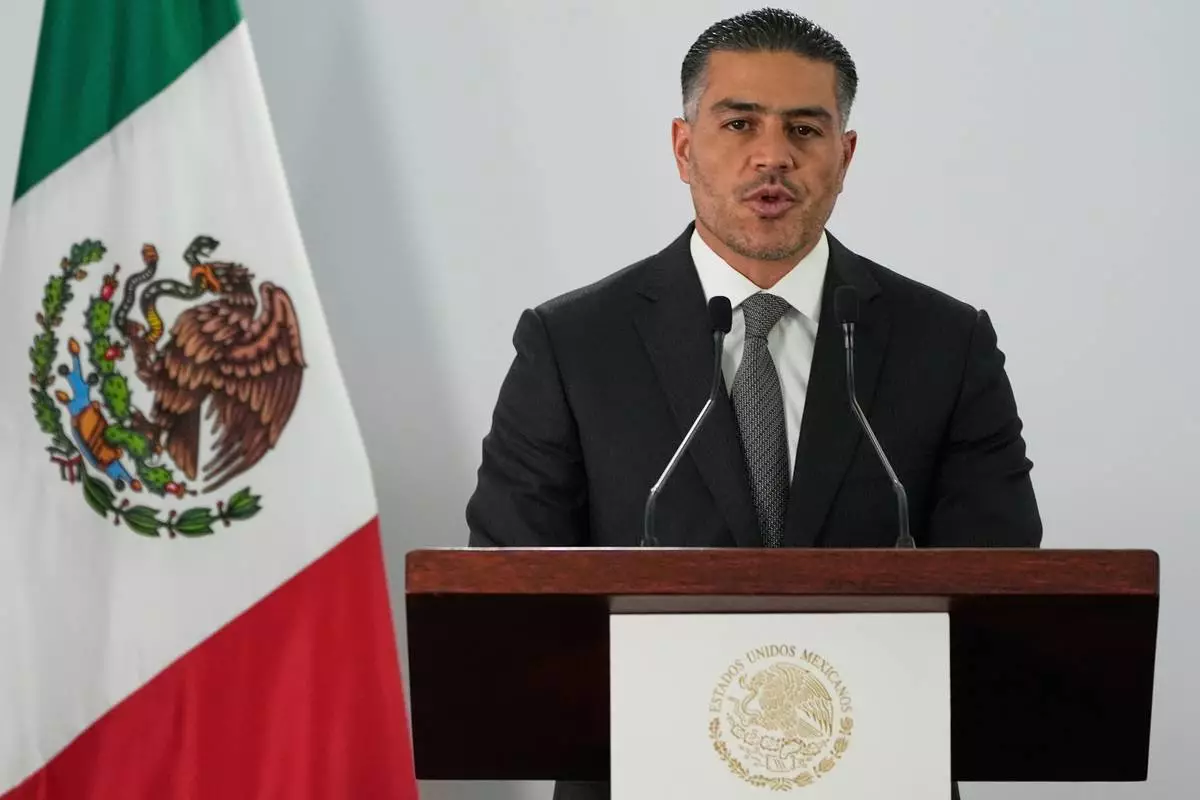
FILE - Mexican Security and Citizen Protection Minister Omar Garcia Harfuch attend a news conference in Mexico City, Aug. 13, 2025. (AP Photo/Fernando Llano, File)
INDIANAPOLIS (AP) — Tarris Reed Jr. sat at his locker Thursday, fielding questions about his run as the interior-scoring, rebound-snagging force in UConn's latest Final Four push.
Yet he wasn't the main attraction.
That's because across the room, an even bigger gaggle of reporters waited for freshman guard Braylon Mullins — the Indiana kid who hit an all-timer of a shot to send the Huskies back to the sport's biggest stage — to return for his own round of interviews.
“Guards are the ones that hit the big shots,” Reed said Thursday when asked about big men getting their due, adding with a grin: “We just do our job, we do the dirty work — and we're used to doing it our whole life so we have fun doing it.”
Maybe so, but there's no minimizing the impact of size this week in Indianapolis. Not with the Final Four boasting its biggest quartet of teams going back roughly two decades, starting with guys such as Reed, Michigan's Aday Mara, Arizona's Koa Peat and Illinois' 7-foot Ivisic twins as anchors to lineups with size radiating all the way out to the perimeter.
The average height of the Final Four teams is nearly 79.1 inches, or roughly 6 feet 6, according to KenPom’s analytics site. That edges last year’s average of nearly 78.3 inches for the biggest of any Final Four going back to the start of KenPom’s data in 2007.
Illinois (28-8) is Division I's tallest team with an average roster height of nearly 6-7 (80 inches), while Arizona (36-2) is seventh at nearly 6-6 (79 inches). Michigan (35-3) and UConn (33-5) are in the top 30 nationally with nearly identical averages slightly behind the Wildcats.
Consider it a sign of the premium each team put on building a roster to overwhelm teams inside, on the glass and with game-altering length spanning the gaps between.
That kind of size, strength and wingspan creates trouble cascading through the matchups. ACC Network analyst Luke Hancock said teams are also thriving by finding power forwards and centers capable of stepping outside to stretch defenses further and create space, eliminating the ability for a defense to simply collapse on a lone big man.
“Guards still win in March,” said Hancock, the most outstanding player of the 2013 Final Four in Louisville’s later-vacated title run. "But I think these guys have become almost like a necessary component. If you want to win championships, you need a big 4 and a monster 5.”
And it's manifesting in several ways as March Madness reaches its final act.
The Illini have had the best defensive tournament efficiency of the Final Four teams while dominating the glass to complete those stops. Their roster includes an influx of European talent, including Tomislav (7-1) and Zvonimir Ivisic (7-2), as well as 6-9 forward David Mirkovic from Montenegro.
The Illini also brings 6-9, 235-pound graduate Ben Humrichous off the bench, while the outlier in the big lineup is 6-2 senior guard Kylan Boswell as a strong backcourt defender.
The South Region champion has allowed .976 points per possession in the NCAA Tournament to lead the remaining four teams. Throw in the fact that Illinois is outrebounding opponents by 16.3 per game, and it's been a perfectly timed boost to an already elite offense with those forwards and centers capable of hitting from behind the arc, too.
"Playing in the summer, you could tell it’s a little bit harder to do some things just because you’ve got Z at the rim, who’s 7-foot-2 and a great shot blocker," 6-6 forward Jake Davis said. “You got Tommy down there. So anybody you’re going up against in practice is super tall. ... We’ve just got a bunch of length everywhere. And you could tell early on that we could cause problems for other teams.”
The Illini will be tested against Reed, a 6-foot-11, 265-pound senior whose scoring (21.8) and rebounding (13.5) averages in the tournament are the best of any player still standing.
That included opening the tournament with a video game-type stat line of 31 points and 27 rebounds against Furman, making him the first player with 30-plus points and 25-plus rebounds in an NCAA Tournament game since Houston’s Elvin Hayes did it twice in 1968.
He’s coming off a 26-point showing in the comeback from 19 down to stun Duke in the Elite Eight.
“He’s a monster,” said UConn senior Alex Karaban, who was part of the Huskies’ 2023 and 2024 title winners. “He’s been so dominant. He’s really playing like the most dominant player in college basketball right now.”
When it comes to the No. 1 seeds, the Wolverines have hummed with 90-plus points in four tournament wins. The Wildcats have been right behind in offensive efficiency despite being shooting fewer 3-pointers than just about every other Division I team all season.
Their meeting Saturday matches strengths.
Michigan has used the 7-3, 255-pound Mara to protect the paint, flanked by a pair of versatile 6-9 forwards in Associated Press first-team All-American Yaxel Lendeborg (240 pounds) and Morez Johnson Jr. (250).
“Our size definitely makes it tougher for smaller guards,” Lendeborg said. “Because we’re so versatile ... we can switch and guard point guards, make their life a little harder. And you know, we’re all strong bodies too. So we try to wear down teams.
“And then, toward the end of the game, that’s when we usually make our runs when we need it.”
Michigan will be tested against the Wildcats with 7-2 center Motiejus Krivas (10.4 points, 8.2 rebounds) and Peat, a 6-8, 235-pound freshman considered a strong NBA prospect.
“If you don't have the big to defend other bigs, you can't compete at this level in my opinion,” Hancock said.
“How do you make it so you're really tough to guard and you have an advantage? It’s the 4-men in this Final Four who are just so talented and the diversity of their skill sets — they can do so many things. That is the ultimate to me.”
AP March Madness bracket: https://apnews.com/hub/ncaa-mens-bracket and coverage: https://apnews.com/hub/march-madness
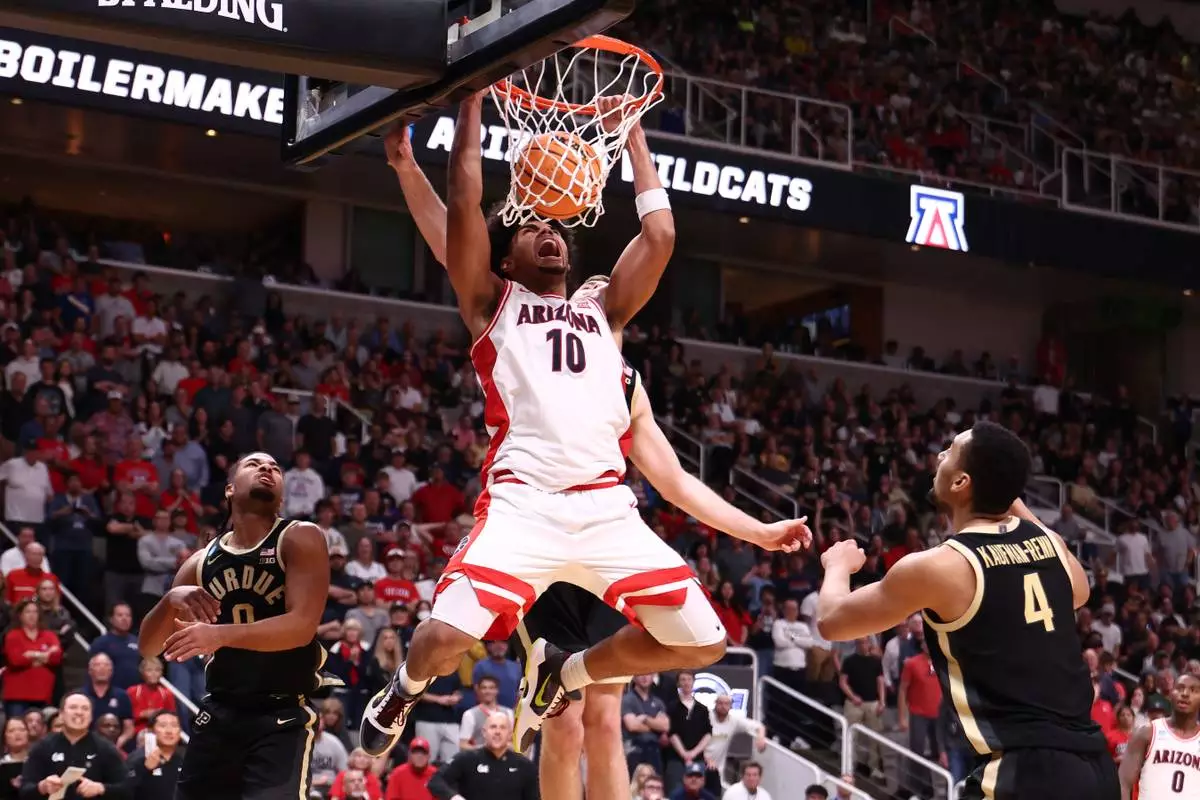
Arizona forward Koa Peat (10) dunks during the second half in the Elite Eight of the NCAA college basketball tournament against Purdue, Saturday, March 28, 2026, in San Jose, Calif. (AP Photo/Kelley L Cox)
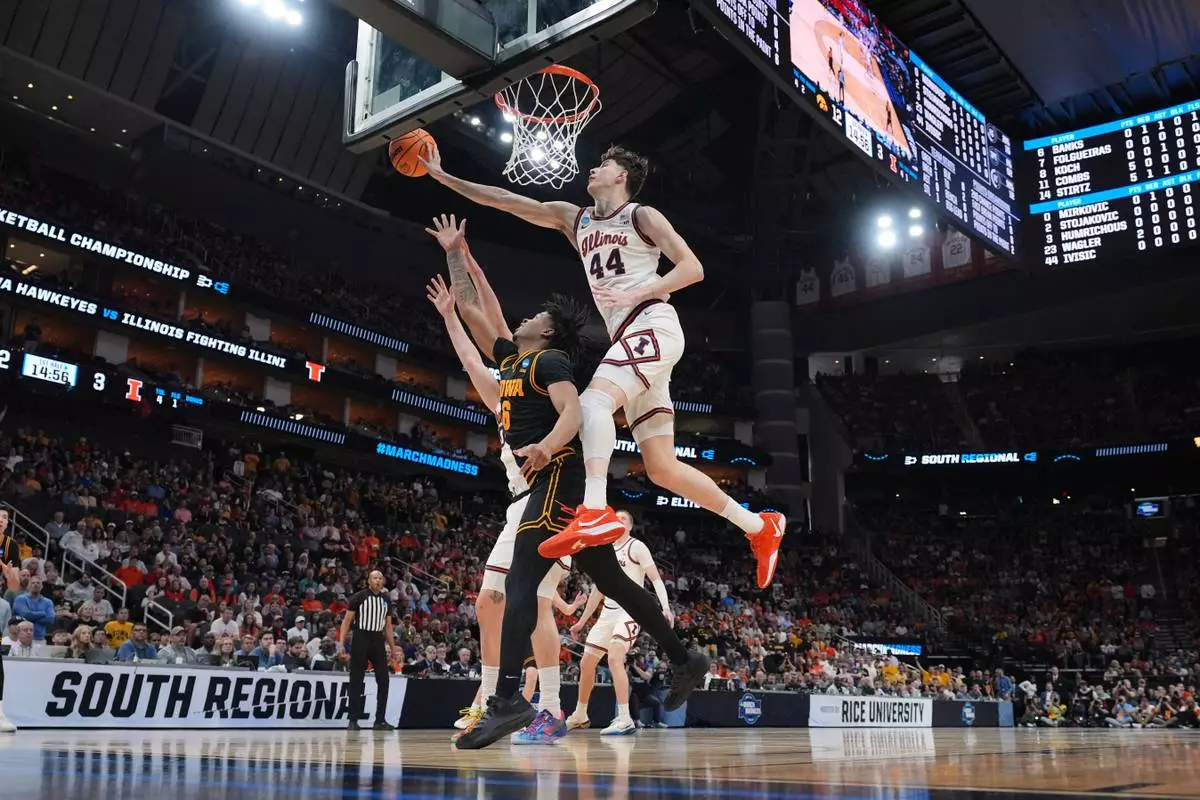
Iowa's Tavion Banks (6) has his shot blocked by Illinois' Zvonimir Ivisic (44) during the first half of an Elite Eight game in the NCAA college basketball tournament Saturday, March 28, 2026, in Houston. (AP Photo/Eric Gay)
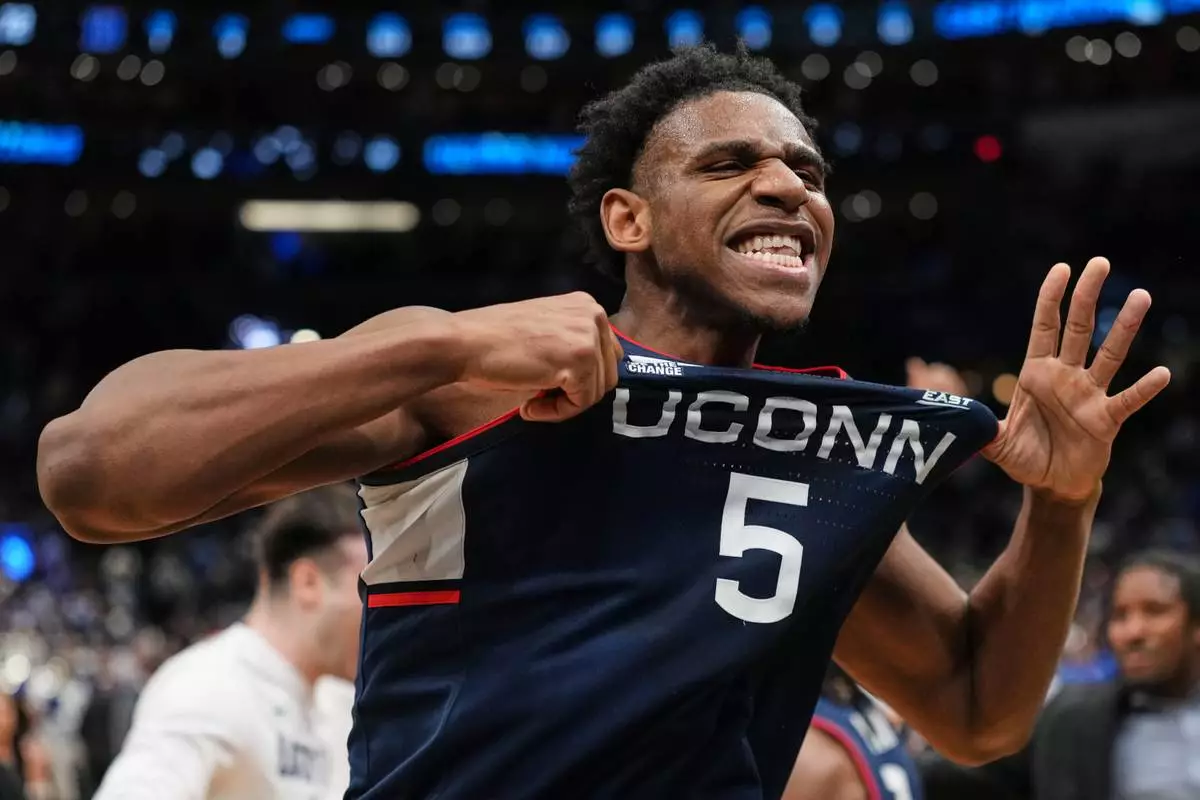
UConn forward Tarris Reed Jr. (5) reacts after the team's win against Duke in the Elite Eight of the NCAA college basketball tournament, Sunday, March 29, 2026, in Washington. (AP Photo/Abbie Parr)