JERUSALEM (AP) — The Board of Peace led by U.S. President Donald Trump was originally envisioned as a small group of world leaders overseeing the Gaza ceasefire plan. Since then, the Trump administration's ambitions have ballooned into a more sprawling concept, with Trump extending invitations to dozens of nations and hinting the board will soon broker global conflicts, like a pseudo-U.N. Security Council.
Trump is headed for the World Economic Forum meeting in Davos, Switzerland, where more details are expected to emerge. Ahead of Davos, Israeli Prime Minister Benjamin Netanyahu said on Wednesday that he had agreed to join the board, despite his previous criticism of the board's committee overseeing the Gaza ceasefire.
The board's charter has not yet been made public, but a draft version obtained by The Associated Press indicates that much of the power will be concentrated in Trump's hands. A $1 billion contribution secures permanent membership, the draft says.
Here’s what to know:
The Trump administration now seems to envision the Board of Peace with a far broader scope beyond Gaza.
In letters sent Friday to various world leaders inviting them to the board, Trump said it would “embark on a bold new approach to resolving global conflict," suggesting it could act as a rival to the U.N. Security Council, the most powerful body of the global organization created in the wake of World War II.
A draft charter for the board, obtained from a European diplomat and confirmed by a U.S. official as accurate as of Monday, uses expansive language to describe its ambitions.
It emphasizes “the need for a more nimble and effective international peace-building body” and says “durable peace” requires “the courage to depart from approaches and institutions that have too often failed.” It adds an aim to “secure peace in places where it has for too long proven elusive.”
Under the charter, the chairman — which Trump says will be him — has the power to invite member states, break any ties in a vote, decide how frequently it meets, and create or dissolve subsidiary entities.
The expenses of the Board of Peace will be funded by contributions from member states, which serve three-year terms. Members who pay “more than one billion United States dollars in cash” during their first year can have a permanent place on the board, the draft says.
The draft is under constant revision, is not finalized and may undergo significant changes, according to the U.S. official, who was not authorized to comment publicly and spoke on condition of anonymity.
Along with Israel, Azerbaijan, the United Arab Emirates, Morocco, Vietnam, Kazakhstan, Hungary, Argentina, Armenia and Belarus have agreed to take part.
Invitation letters from Trump also have been sent to Britain's Prime Minister Keir Starmer, Paraguay’s leader Santiago Peña, Canadian Prime Minister Mark Carney, Egyptian President Abdel-Fattah el-Sissi and Turkish President Recep Tayyip Erdogan.
Russia, Ukraine, China, Kosovo, India, Slovenia, Croatia, Thailand and the European Union’s executive arm have said they also received invitations.
Starmer's spokesman Tom Wells said the United Kingdom was considering the invitation and had concerns about Russia's potential involvement.
The Kremlin is now “studying the details” and will seek clarity of “all the nuances” in contacts with the United States, Kremlin spokesman Dmitry Peskov said.
Germany offered a guarded and noncommittal response, with Chancellor Friedrich Merz’s spokesperson Stefan Kornelius on Monday saying his country shares “the aim of serving peace in the world” but that the United Nations remains “the central multilateral framework for international crises and conflict management.”
It was not immediately clear how many or which other leaders would receive invitations.
Norway, Sweden and France will not be joining the board for now, they say.
“The American proposal raises a number of questions that requires further dialogue with the United States,” Norway's State Secretary, Kristoffer Thoner said. “Norway will therefore not join the proposed arrangements for the Board of Peace, and will therefore not attend a signing ceremony in Davos.”
Swedish Prime Minister Ulf Kristersson said on the sidelines of Davos that his country isn’t signing up for the Board of Peace as the text currently stands, Swedish news agency TT reported. Sweden hasn’t yet formally responded.
France — which is at odds with the Trump administration over its desire to take over Greenland, a self-governing territory overseen by NATO ally Denmark — apparently doesn't plan to join the board so far.
“Yes to implementing the peace plan presented by the president of the United States, which we wholeheartedly support, but no to creating an organization as it has been presented, which would replace the United Nations,” French Foreign Minister Jean-Noel Barrot said Tuesday.
Hearing late Monday that French President Emmanuel Macron was unlikely to join, Trump said, “Well, nobody wants him because he’s going to be out of office very soon.”
“I’ll put a 200% tariff on his wines and Champagnes and he’ll join,” Trump told reporters. “But he doesn’t have to join.”
The White House said an executive board will work to carry out the vision of the Board of Peace.
The executive board’s members include U.S. Secretary of State Marco Rubio, Trump envoy Steve Witkoff, Trump’s son-in-law Jared Kushner, former British Prime Minister Tony Blair, Apollo Global Management CEO Marc Rowan, World Bank President Ajay Banga, and Trump’s deputy national security adviser Robert Gabriel.
The White House also announced the members of another board, the Gaza Executive Board, which, according to the ceasefire deal, will be in charge of implementing the tough second phase of the agreement. That includes deploying an international security force, disarming the Palestinian militant Hamas group and rebuilding the war-devastated territory.
Nickolay Mladenov, a former Bulgarian politician and U.N. Mideast envoy, is to serve as the Gaza executive board’s representative overseeing day-to-day matters. Additional members include: Witkoff, Kushner, Blair, Rowan, Turkish Foreign Minister Hakan Fidan; Qatari diplomat Ali Al-Thawadi; Hassan Rashad, director of Egypt’s General Intelligence Agency; Emirati minister Reem Al-Hashimy; Israeli businessman Yakir Gabay; and Sigrid Kaag, the Netherlands’ former deputy prime minister and a Mideast expert.
The board also will supervise a newly appointed committee of Palestinian technocrats who will be running Gaza’s day-to-day affairs.
Associated Press writers Sam Mednick in Tel Aviv, Israel; Geir Moulson in Berlin, Matthew Lee in Washington and Catherine Gaschka in Paris contributed to this report.

President Donald Trump speaks during a press briefing at the White House in Washington, Tuesday, Jan. 20, 2026. (AP Photo/Mark Schiefelbein)

President Donald Trump speaks in the James Brady Press Briefing Room at the White House, Tuesday, Jan. 20, 2026, in Washington. (AP Photo/Alex Brandon)
NEW YORK (AP) — On a recent weeknight, three tenants of an aging Bronx building were trading apartment horror stories inside a packed ballroom lined with city bureaucrats.
The occasion was the third in a series of “rental rip-off hearings,” a new forum launched by New York Mayor Zohran Mamdani for disgruntled renters to air their complaints directly to housing officials — and in some cases, the mayor himself.
As she waited in line, Gulhayo Yuldosheva said she worried that noxious mold in her apartment had worsened her child’s asthma. Nearby, her downstairs neighbor, Marina Quiroz, was showing a video of rats scurrying through her kitchen to a representative of the city’s tenant protection office.
Ann Maitin, a longtime resident of the same building, had just met with the mayor.
“He let me go over my three minutes,” she said, holding up a spiral notebook’s worth of grievances.
Mamdani, a democratic socialist swept into office on a promise of zealous tenant advocacy, framed the event as a struggle session for renters, assuring the standing room only crowd that their stories would guide the city's efforts “to actually hold landlords accountable when they don’t follow the law."
To the residents of 705 Gerard Avenue, this raised a practical problem: No one seemed to know who actually owned their building.
“It feels like such a basic question,” said Maitin, a retired Verizon technician who recently organized the building’s tenant association. “You’d think we’d have the right to that information.”
Their situation is hardly unique. As corporate owners and investor groups have grown their share of the rental market in New York City, they are increasingly shielding their identities behind limited liability companies, or LLCs.
The practice, which has also been spreading nationally, is legal. But experts warn it could complicate Mamdani’s promised crackdown, making it harder for the city and tenants to track the chronically negligent owners whose buildings the mayor has vowed to target and even seize.
“There are these big slumlords that everyone knows are doing predatory investment, but pinning them down is going to be difficult, for the LLC reason,” said Oksana Mironova, a housing policy analyst at the Community Service Society. “That’s a problem for the administration, and it’s even worse for tenants.”
For Yuldosheva and her neighbors, finding their landlord is one of many problems afflicting their six-story building near Yankee Stadium.
Heat and hot water outages are regular enough that some tenants keep a thermometer on their fridge and the city’s complaint hotline on speed dial. Common areas are often filthy, and increasingly populated by drug users. Getting help with an urgent maintenance issue “feels like waiting for Christmas in July,” said Maitin.
During a monthslong elevator outage, a tenant who uses a wheelchair, Tommy Rodriguez, said he was forced to “slide down the steps, like a kid.” Calls to the building management about a repair timeline went unanswered, he said.
Growing up in the building in the 1980s, Rodriguez recalled the previous landlord as a friendly and responsive neighborhood presence.
“This felt like a home before,” Rodriguez said. “Now they treat us the same as the rats.”
A large rodent had recently chewed a hole through his couch cushion. He handled the extermination himself, with a two-by-four.
Recently, tenants received a clue about their landlord, following the partial collapse of another Bronx building. The man identified in news stories as the owner of that building, David Kleiner, shared a Brooklyn office with their building manager, Binyomin Herzl.
A handful of tenants visited each of the building’s 72 units, logging an array of decrepit conditions and unusual alterations.
“We didn’t want to become the next news story,” said Yuldosheva, pointing to a crack in the wall of a bedroom shared by her three children — a result, she feared, of the subway that rumbles just below her windows.
Lawsuits show that Herzl has been ordered to pay more than $100,000 for violations across at least six Bronx buildings, several of which were found by a judge to pose an imminent hazard.
Reached by phone, Herzl said he didn't own any of those properties, but simply acted as a middleman between tenants and the true owners, whom he declined to list. “There’s no one landlord,” he said. “It’s a group of investors.”
Kleiner, who was previously featured on the city’s “worst landlord” list, confirmed his partial ownership of 705 Gerard in a brief phone call, but declined further comment.
Herzl, meanwhile, attributed the tenants’ complaints to “normal wear and tear” of a nearly century old building. He said Mamdani should focus on improving the city’s public housing, rather than going after private landlords.
“Our buildings look like five star hotels against his,” he added.
When landlords refuse to address a serious violation, like heat or hot water outages, the city can step in and order repairs, then bill the owner directly.
In the last three years, inspectors have ordered emergency repairs at 38 buildings that list either Herzl or Kleiner as an owner, according to records provided by the city’s housing department. The men have been billed $446,521 for those repairs.
Mamdani has proposed using such fines as a vehicle to bring distressed rental properties under city stewardship, by aggressively pursuing liens on delinquent landlords and buying up their portfolios through foreclosure auctions.
Just as the city can shut down unsanitary restaurants, Mamdani has said, landlords that “repeatedly put New Yorkers at risk will not be allowed to operate in New York City — with no exceptions."
In reality, the process is resource-intensive and legally fraught. It is made more complex by the nest of LLCs often used by landlords to obfuscate the full scope of their portfolios, according to Cea Weaver, director of the Mayor’s Office to Protect Tenants.
“It’d be great to have a better sense of who owns the buildings that we are regulating and overseeing,” she said.
State legislation that would have made it easier to identify LLC owners was recently vetoed by New York Gov. Kathy Hochul amid pressure from landlords.
Kenny Burgos, the CEO of the New York Apartment Association, a landlord lobbying group, said Mamdani’s tenant proposals — including freezing the rent for regulated tenants — would force landlords to cut back on maintenance and services.
“That’s going to take away from the elevator budget, the boiler budget, the heating budget,” he said. “It’s a question of math: These buildings are crumbling because of policy, not because of bad landlords.”
He characterized the rental rip-off hearings as “show trials” that took a “tribal approach” to the city’s affordable housing crisis.
Despite the combative branding — “New Yorkers vs. Bad Landlords,” blares one promotion — the Bronx event mostly resembled a standard constituent service night: City officials fielded questions about local laws, helped residents with paperwork and connected them to service providers.
Maitin left feeling “glad to be heard by someone who can actually do something about the problem,” but felt it was too early to tell “if it’s all talk."
The next morning, she was surprised to find the building’s superintendent applying a fresh coat of paint to a staircase. Outside, workers were removing scaffolding that had been in front of the building for years.
“I think they caught wind of the rental rip-off,” Maitin said. “They’re scared.”
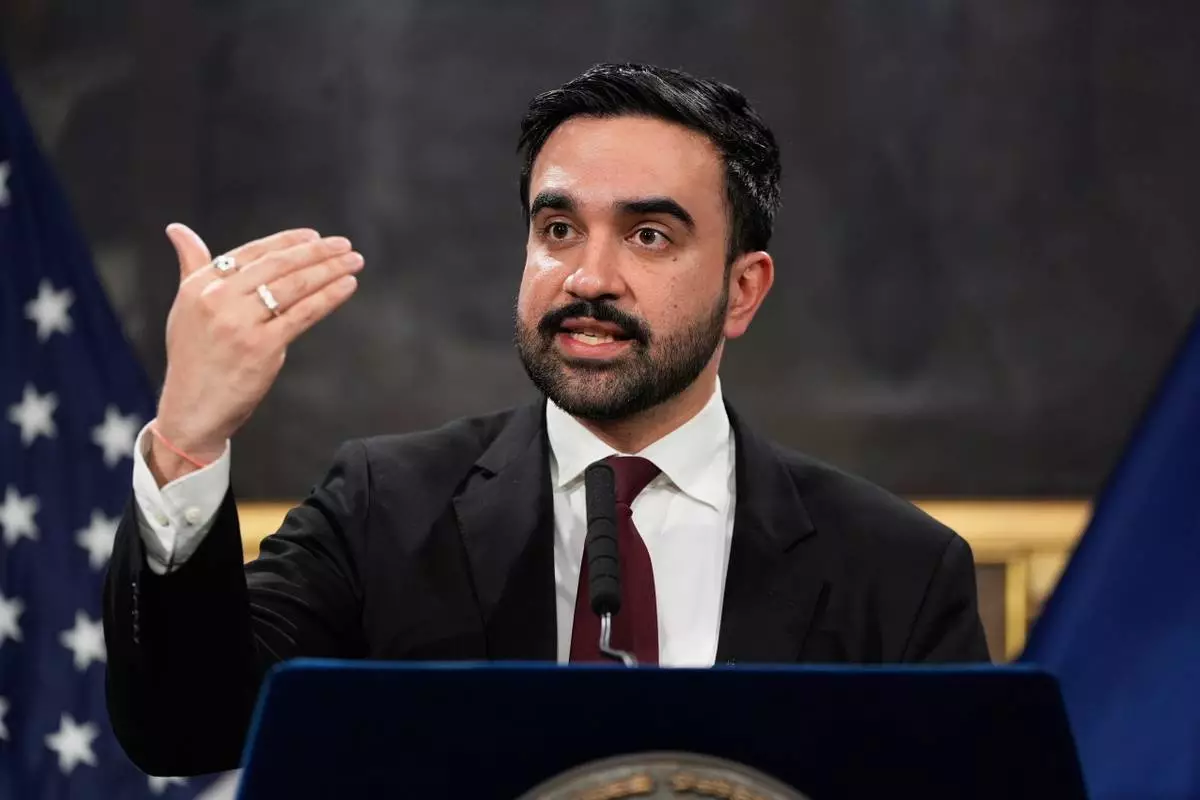
FILE - New York City Mayor Zohran Mamdani speaks to reporters during a news conference in New York, Tuesday, Feb. 17, 2026. (AP Photo/Seth Wenig, File)
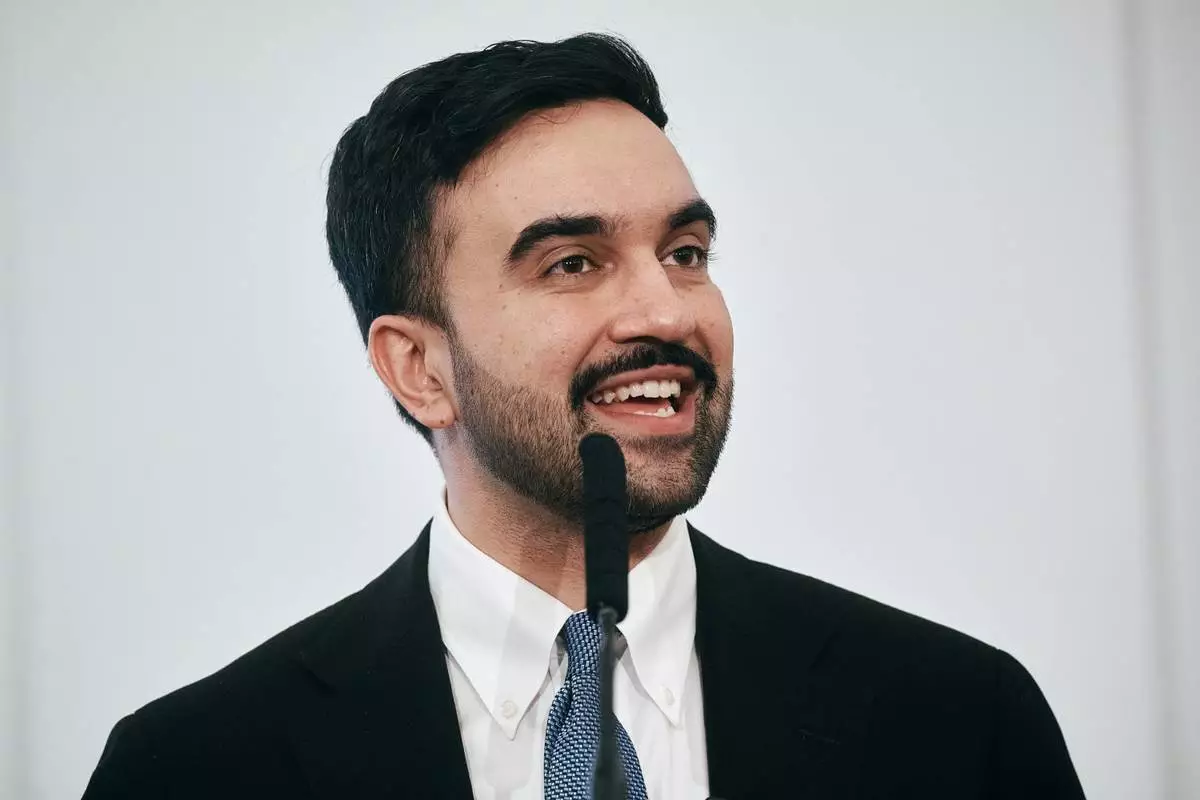
FILE - New York City Mayor Zohran Mamdani speaks during a Rental Ripoff Hearing at Fordham University on Wednesday, March 11, 2026, in New York. (AP Photo/Andres Kudacki, File)
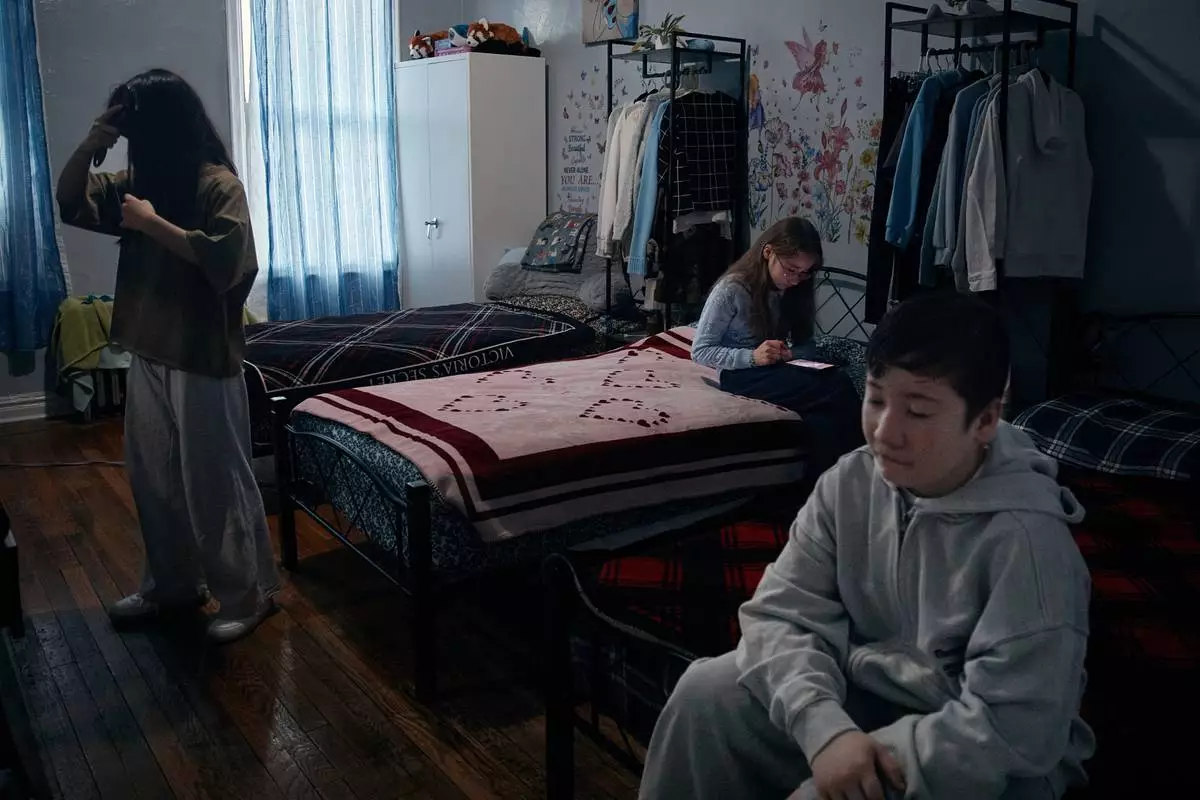
Gulhayo Yuldosheva's children get ready for school in an apartment building where tenants report maintenance issues and pest infestations, in the Bronx borough of New York, Tuesday, March 17, 2026. (AP Photo/Andres Kudacki)
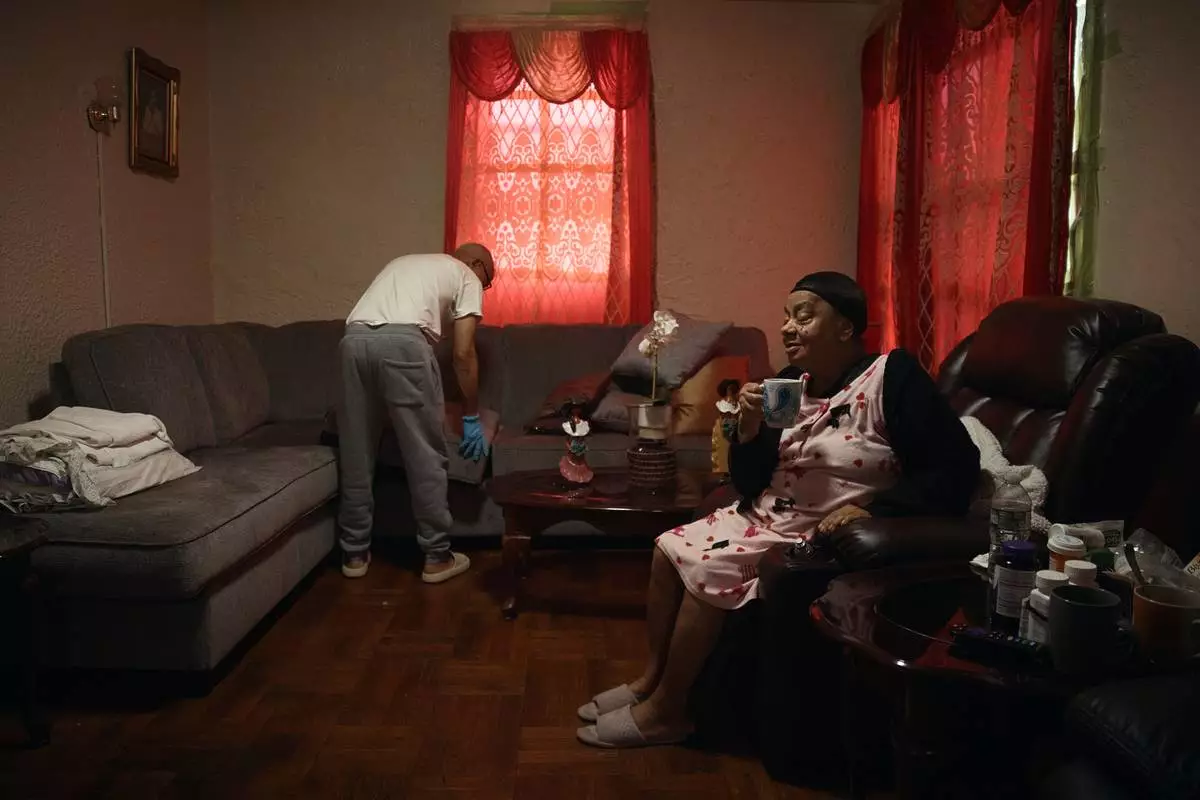
Francisco Medina, left, cleans his apartment next to his relative, Maria Frias, right, in an apartment building where tenants report maintenance issues and pest infestations, in the Bronx borough of New York, Tuesday, March 17, 2026. (AP Photo/Andres Kudacki)
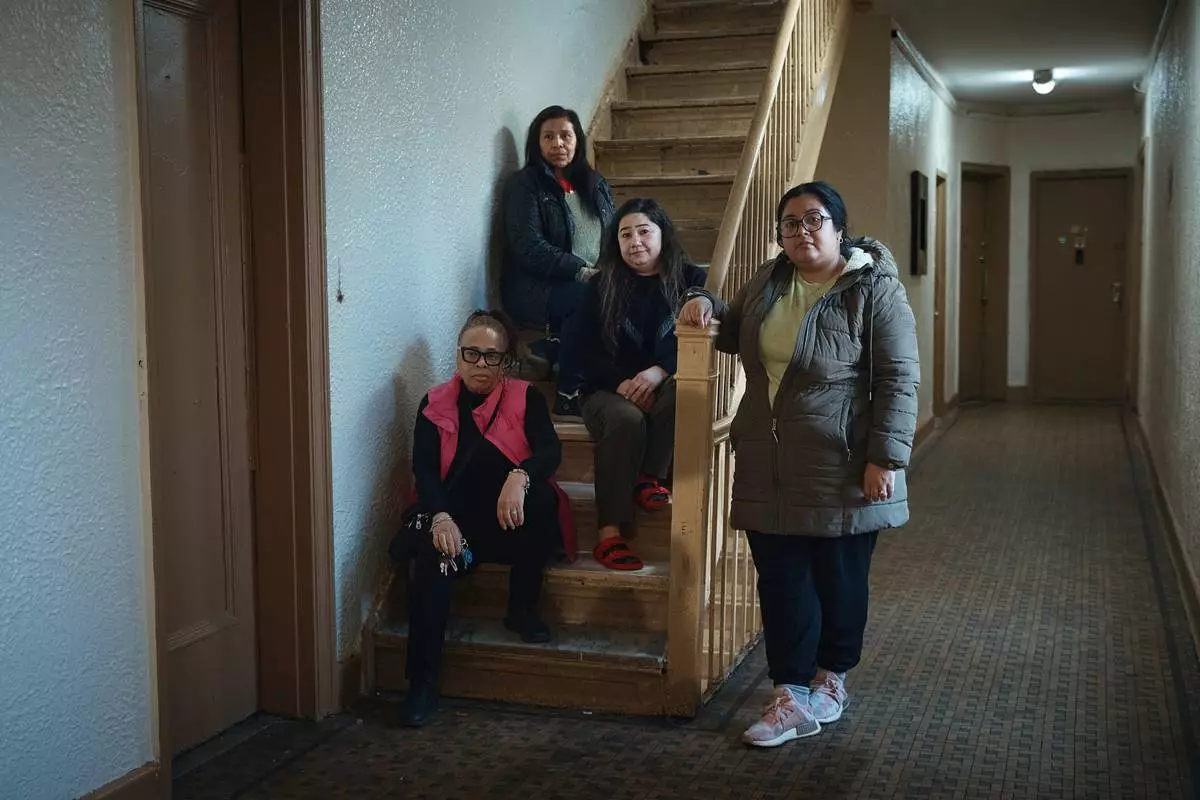
Gulhayo Yuldosheva, 33 , center right, Marina Quiroz, 65, top, pose for a portrait with other two residents in an apartment building where tenants report maintenance issues and pest infestations, in the Bronx borough of New York, Tuesday, March 17, 2026. (AP Photo/Andres Kudacki)

Tommy Rodriguez, right, talks to his relative, Francisco Medina, left, in an apartment building where tenants report maintenance issues and pest infestations, in the Bronx borough of New York, Tuesday, March 17, 2026. (AP Photo/Andres Kudacki)
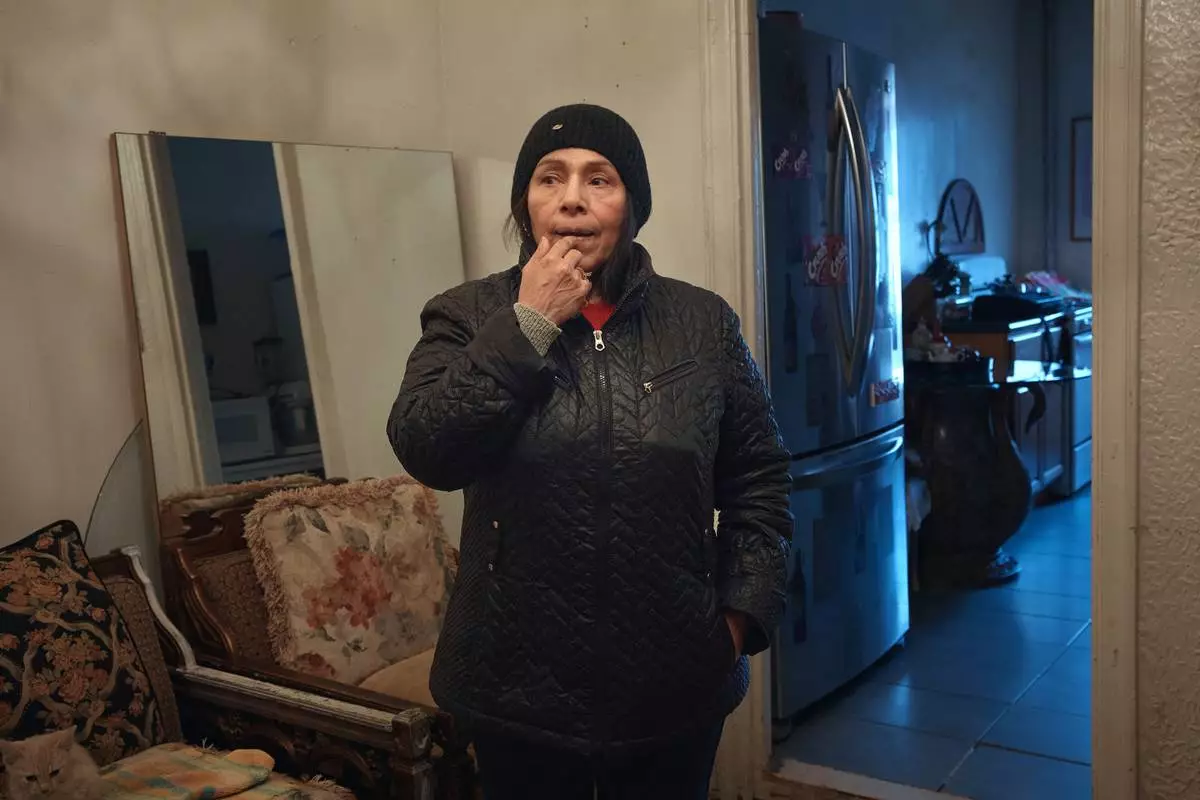
Marina Quiroz stands in her living room in a Bronx apartment building, where tenants report maintenance issues, pest infestations, Tuesday, March 17, 2026, in New York. (AP Photo/Andres Kudacki)