Skip to Content Facebook Feature Image

Doctors in Minnesota decry fear and chaos amid Trump administration's immigration crackdown

News

Doctors in Minnesota decry fear and chaos amid Trump administration's immigration crackdown
News

News

Doctors in Minnesota decry fear and chaos amid Trump administration's immigration crackdown

2026-01-21 08:34 Last Updated At:08:40

MINNEAPOLIS (AP) — There was the pregnant woman who missed her medical checkup, afraid to visit a clinic during the Trump administration’s sweeping Minnesotaimmigration crackdown. A nurse found her at home, already in labor and just about to give birth.

There was the patient with kidney cancer who vanished without his medicine in immigration detention facilities. It took legal intervention for his medicine to be sent to him, though doctors are unsure if he's been able to take it.

More Images
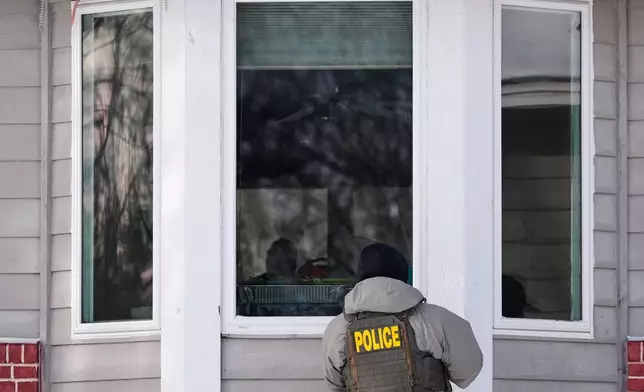
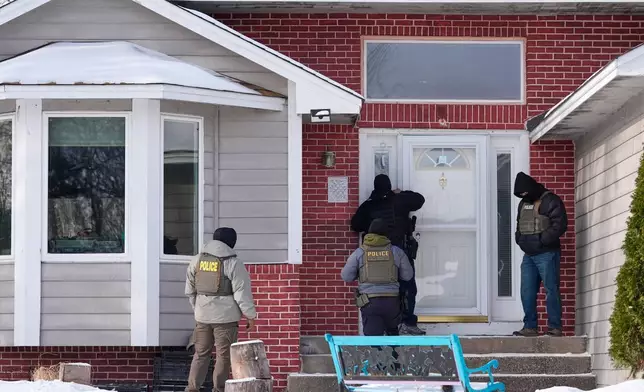
A federal immigration officer looks through a window of a home Tuesday, Jan. 20, 2026, in Maplewood, Minn. (AP Photo/Yuki Iwamura)
A federal immigration officer looks through a window of a home Tuesday, Jan. 20, 2026, in Maplewood, Minn. (AP Photo/Yuki Iwamura)

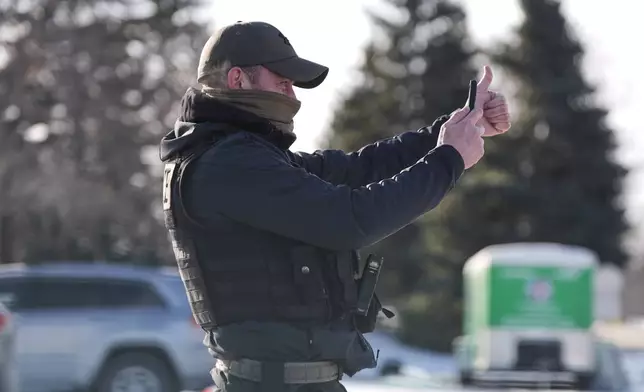
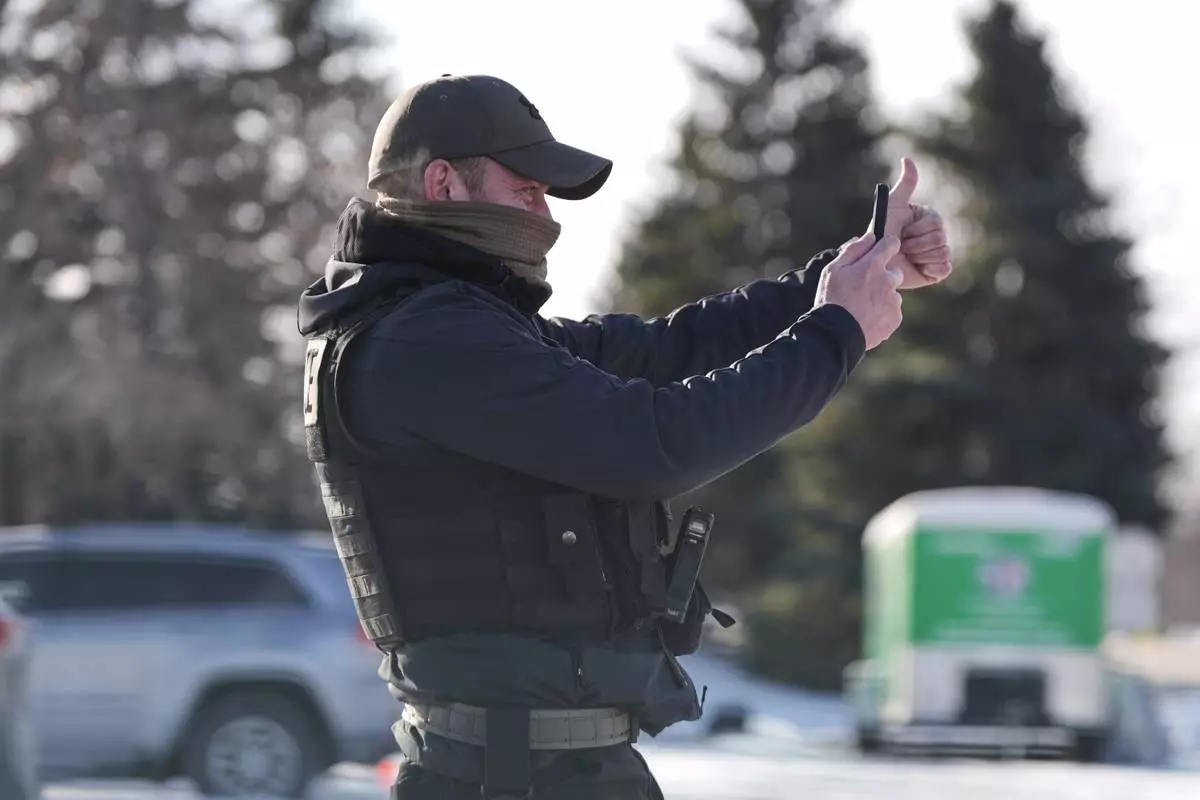
A federal immigration officer films cars around him as people honk and whistle Tuesday, Jan. 20, 2026, in Roseville, Minn. (AP Photo/Angelina Katsanis)

A federal immigration officer films cars around him as people honk and whistle Tuesday, Jan. 20, 2026, in Roseville, Minn. (AP Photo/Angelina Katsanis)

Cars are parked outside Hennepin County Medical Center on Tuesday, Jan. 20, 2026, in Minneapolis. (AP Photo/Sarah Raza)
Cars are parked outside Hennepin County Medical Center on Tuesday, Jan. 20, 2026, in Minneapolis. (AP Photo/Sarah Raza)

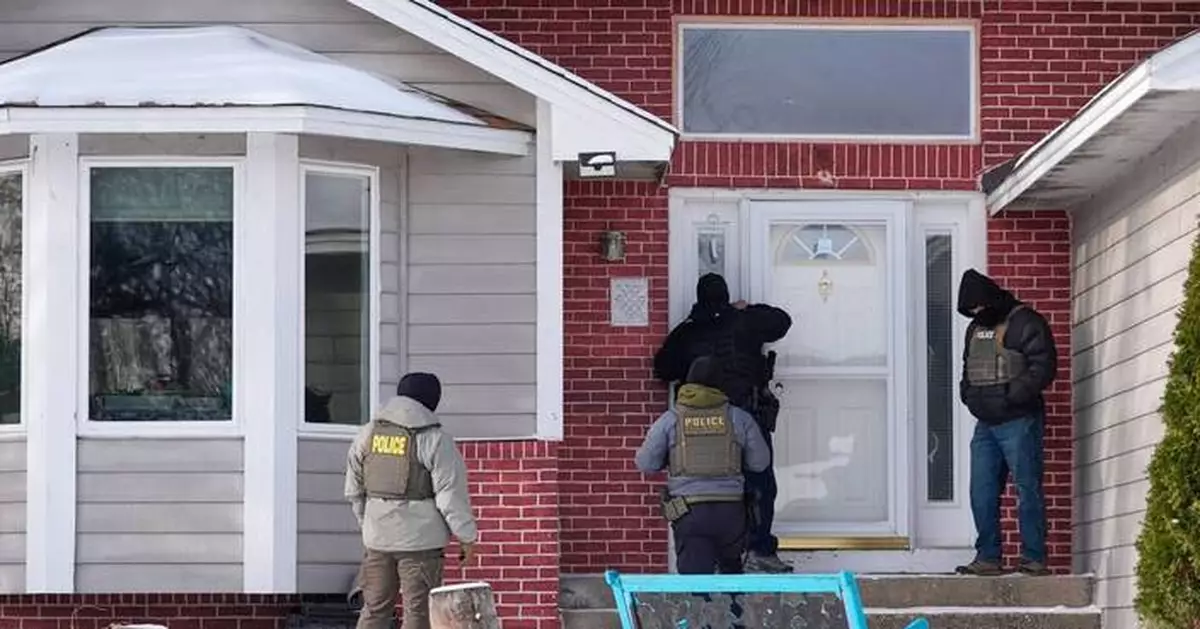
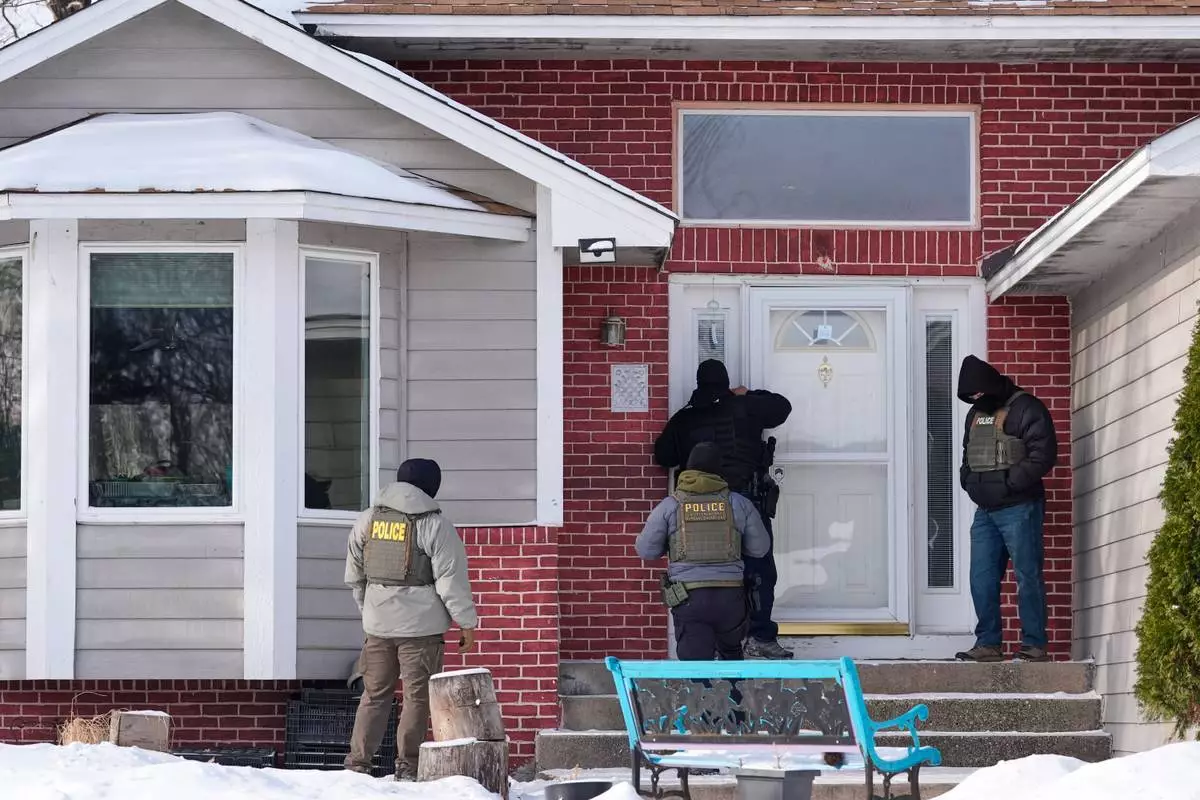
Federal immigration officers look through the window of a home Tuesday, Jan. 20, 2026, in Maplewood, Minn. (AP Photo/Yuki Iwamura)

Federal immigration officers look through the window of a home Tuesday, Jan. 20, 2026, in Maplewood, Minn. (AP Photo/Yuki Iwamura)

There was the diabetic afraid to pick up insulin, the patient with a treatable wound that festered and required a trip to the intensive care unit, and the hospital staffers — from Latin America, Somalia, Myanmar and elsewhere — too scared to come to work.

“Our places of healing are under siege,” Dr. Roli Dwivedi, past president of the Minnesota Academy of Family Physicians, said Tuesday at a state Capitol news conference in St. Paul, where doctor after doctor told of patients suffering amid the clampdown.

For years, hospitals, schools and churches had been off-limits for immigration enforcement.

But a year ago, the Trump administration announced that federal immigration agencies could now make arrests in those facilities, ending a policy that had been in effect since 2011.

“I have been a practicing physician for more than 19 years here in Minnesota, and I have never seen this level of chaos and fear,” including at the height of the COVID-19 crisis, Dwivedi said.

At Minneapolis' sprawling downtown Hennepin County Medical Center, doctors and nurses have moved communications about the crackdown to an encrypted group chat, where they have described run-ins with Immigration and Customs Enforcement officials, including a recent incident when an officer was accused of unnecessarily shackling a patient.

The medical center, a nationally known trauma hospital, has the busiest emergency room in the state and is an important safety net for patients who are uninsured, including people in the U.S. illegally.

“I can’t believe we’re having to resort to this,” said one nurse who was not authorized to speak to the media and did so on the condition of anonymity. Plainclothes ICE officers have become a fixture around the hospital, the nurse told The Associated Press, focusing on people of color and asking both patients and employees for paperwork as they leave.

“How is this all happening?” the nurse asked.

Tricia McLaughlin, a Department of Homeland Security spokeswoman, denied that federal officers are interfering with medical care.

ICE, McLaughlin said, “does not conduct enforcement at hospitals—period. We would only go into a hospital if there were an active danger to public safety” or to accompany detainees.

“If anyone is impeding Minnesotans from making appointments or picking up prescriptions, it's violent agitators who are blocking roadways, ramming vehicles, and vandalizing property,” she said in a statement.

The medical chaos isn't limited to Minnesota. Crackdowns are happening in many states -- especially Democratic-led ones -- to varying degrees.

Immigrants are “absolutely” avoiding medical care due to fear of being targeted, said Sandy Reding, a vice president of the National Nurses United union and president of the California Nurses Association, noting some hospitals in Southern California have seen a declining numbers of patients.

In Oregon, for example, a nurses union has raised concerns about ICE officers bringing detainees to a Portland hospital. In a letter to Legacy Emanuel Medical Center, the Oregon Nurses Association wrote that officers have pressured nurses and doctors to skip assessments, tests or monitoring to have them discharged more quickly.

“Nurses have reported instances where physicians have recommended continued hospitalization, but ICE insisted on removing the patient, effectively forcing discharge over clinical advice,” the union wrote. “In some cases, nurses report that detainee patients have had little or no opportunity to participate meaningfully in these decisions; the officers simply announce, ‘We’re going,’ and Legacy staff are left to accommodate.”

In an emailed statement, Legacy Health said it has reviewed its policies to “ensure we are providing the protection we can to impacted communities, while complying with both state and federal laws.” It added that it's "committed to providing medical care to everyone who needs it, including individuals who are in custody and regardless of immigration or citizenship status.”

The Minnesota crackdown, which began late last year, surged to unprecedented levels in January when the Department of Homeland Security said it would send 2,000 federal agents and officers to the Minneapolis area in what it called the largest-ever immigration enforcement operation.

More than 3,000 people in the country illegally have been arrested during what it dubbed Operation Metro Surge, the government said in a Monday court filing.

“Our patients are missing,” with pregnant women missing out on key prenatal care, said Dr. Erin Stevens, legislative chair for the Minnesota section of the American College of Obstetricians and Gynecologists. Requests for home births have also increased significantly, “even among patients who have never previously considered this or for whom, it is not a safe option,” Stevens said.

The surge in the deeply liberal Twin Cities has set off clashes between activists and immigration officers, pitted city and state officials against the federal government, and left a mother of three dead, shot by an ICE officer in what federal officials said was an act of self-defense but that local officials described as reckless and unnecessary.

The Trump administration and Minnesota officials have traded blame for the heightened tensions.

The latest flare-up came Sunday, when protesters disrupted a service at a St. Paul church because one of its pastors leads the local ICE field office. Some walked right up to the pulpit at the Cities Church, with others loudly chanting “ICE out.”

The U.S. Department of Justice said it has opened a civil rights investigation into the church protest.

Rush reported from Portland, Oregon. Jack Brook in Minneapolis and Jim Mustian in New York City contributed to this report.
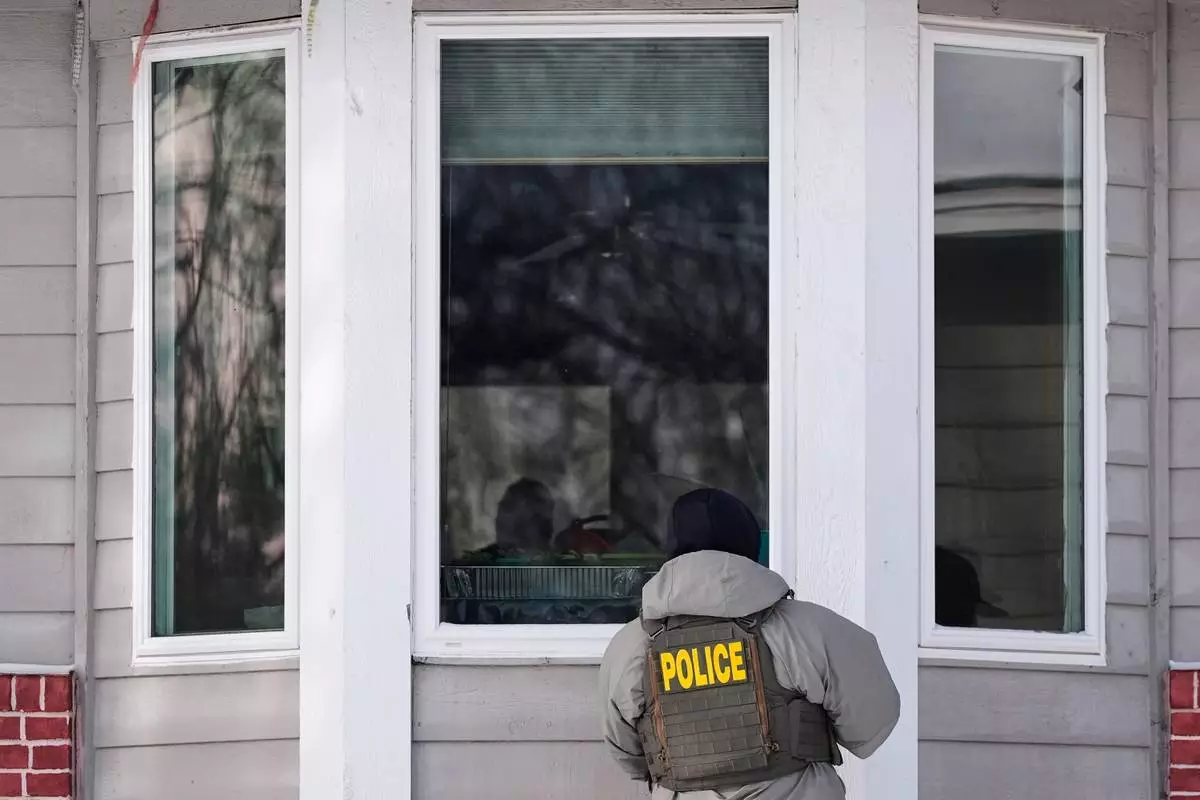
A federal immigration officer looks through a window of a home Tuesday, Jan. 20, 2026, in Maplewood, Minn. (AP Photo/Yuki Iwamura)
A federal immigration officer looks through a window of a home Tuesday, Jan. 20, 2026, in Maplewood, Minn. (AP Photo/Yuki Iwamura)

A federal immigration officer films cars around him as people honk and whistle Tuesday, Jan. 20, 2026, in Roseville, Minn. (AP Photo/Angelina Katsanis)

A federal immigration officer films cars around him as people honk and whistle Tuesday, Jan. 20, 2026, in Roseville, Minn. (AP Photo/Angelina Katsanis)

Cars are parked outside Hennepin County Medical Center on Tuesday, Jan. 20, 2026, in Minneapolis. (AP Photo/Sarah Raza)
Cars are parked outside Hennepin County Medical Center on Tuesday, Jan. 20, 2026, in Minneapolis. (AP Photo/Sarah Raza)

Federal immigration officers look through the window of a home Tuesday, Jan. 20, 2026, in Maplewood, Minn. (AP Photo/Yuki Iwamura)
Federal immigration officers look through the window of a home Tuesday, Jan. 20, 2026, in Maplewood, Minn. (AP Photo/Yuki Iwamura)

BUFFALO, N.Y. (AP) — In two decades of kicking in doors for the U.S. Drug Enforcement Administration, Joseph Bongiovanni often took on the risks of being the “lead breacher," meaning he was the first person into the room.

On Wednesday, he felt a familiar uncertainty awaiting sentencing for using his DEA badge to protect childhood friends who became prolific drug traffickers in Buffalo, New York.

“I never knew what was on the other side of that door — that fear is what I feel today,” Bongiovanni, 61, told a federal judge, pounding the defense table as his face reddened with emotion. “I've always been innocent. I loved that job.”

U.S. District Court Judge Lawrence J. Vilardo sentenced the disgraced lawman to five years in federal prison on a string of corruption counts. The punishment was significantly less than the 15 years prosecutors sought even after a jury acquitted Bongiovanni of the most serious charges he faced, including an allegation he pocketed $250,000 in bribes from the Mafia.

The judge said the sentence reflected the complexity of the mixed verdicts following two lengthy trials and the almost Jekyll-and-Hyde nature of Bongiovanni's career, in which the lawman racked up enough front-page accolades to fill a trophy case.

Bongiovanni once hurtled into a burning apartment building to evacuate residents through billowing smoke. He locked up drug dealers, including the first ever prosecuted in the region for causing a fatal overdose.

“There are two completely polar opposite versions of the facts and polar opposite versions of the defendant,” Vilardo said, assuring prosecutors five years behind bars would pose a considerable hardship to someone who has never been to prison.

Defense attorney Parker MacKay noted the judge had acknowledged Bongiovanni as a “beacon” of the Buffalo community. The government's request for a 15-year sentence, he added, was “completely unmoored to the nature of the convictions.”

“As Mr. Bongiovanni told the judge at sentencing, he is innocent, and we look forward to continuing to work with him to prove that,” MacKay told The Associated Press.

A jury in 2024 convicted Bongiovanni of four counts of obstruction of justice, counts of conspiracy to defraud the United States, conspiracy to distribute controlled substances and making false statements to law enforcement.

Prosecutors said Bongiovanni's “little dark secret” caused immeasurable damage over 11 years. They likened him to Jose Irizarry, a disgraced former DEA agent serving a 12-year federal sentence after confessing to laundering money for Colombian drug cartels.

Bongiovanni upheld an oath not to the DEA, they argued, but to organized crime figures in the tight-knit Italian American community of his North Buffalo upbringing. During sentencing, Bongiovanni’s family dissolved into tears on the front row of the packed courtroom in downtown Buffalo.

Prosecutors said Bongiovanni's corruption involved as much inaction as calculated coverup. They pointed to a turning point in 2008 when Bongiovanni could have acted on intelligence about traffickers he knew whose operation would evolve into a large-scale organization with links to California, Vancouver, and New York City.

He also was accused of authoring bogus DEA reports, stealing sensitive files, throwing off colleagues, outing confidential informants, covering for a sex-trafficking strip club and helping a high school English teacher keep his marijuana-growing side hustle. Prosecutors said he brazenly urged colleagues to spend less time investigating Italians and focus instead on Black and Hispanic people.

“His conduct shook the foundation of law enforcement — and this community — to its core,” Assistant U.S. Attorney Joseph Tripi told the judge. “That's what a betrayal is.”

The ex-agent's downfall came amid a sex-trafficking prosecution that took sensational turns, including an implicated judge who killed himself after the FBI raided his home, law enforcement dragging a pond in search of an overdose victim and dead rats planted outside the home of a government witness who prosecutors allege was later killed by a fatal dose of fentanyl.

It also involved the Pharoah’s Gentlemen’s Club outside Buffalo. Bongiovanni was childhood friends with the strip club’s owner, Peter Gerace Jr., who authorities say has close ties to both the Buffalo Mafia and the violent Outlaws Motorcycle Club. A separate jury convicted Gerace of a sex trafficking conspiracy and of paying bribes to Bongiovanni.

The prosecution also cast a harsh light on the DEA after a string of corruption scandals prompted at least 17 agents brought up on federal charges over the past decade. Last month, prosecutors charged another former agent with conspiring to launder millions of dollars and obtain military-grade firearms and explosives for a Mexican drug cartel.

Frank Tarentino, the DEA’s northeast associate chief of operations, said Bongiovanni’s sentence “sends a powerful message that those who betray their badge will be held accountable to the fullest extent of the law.”

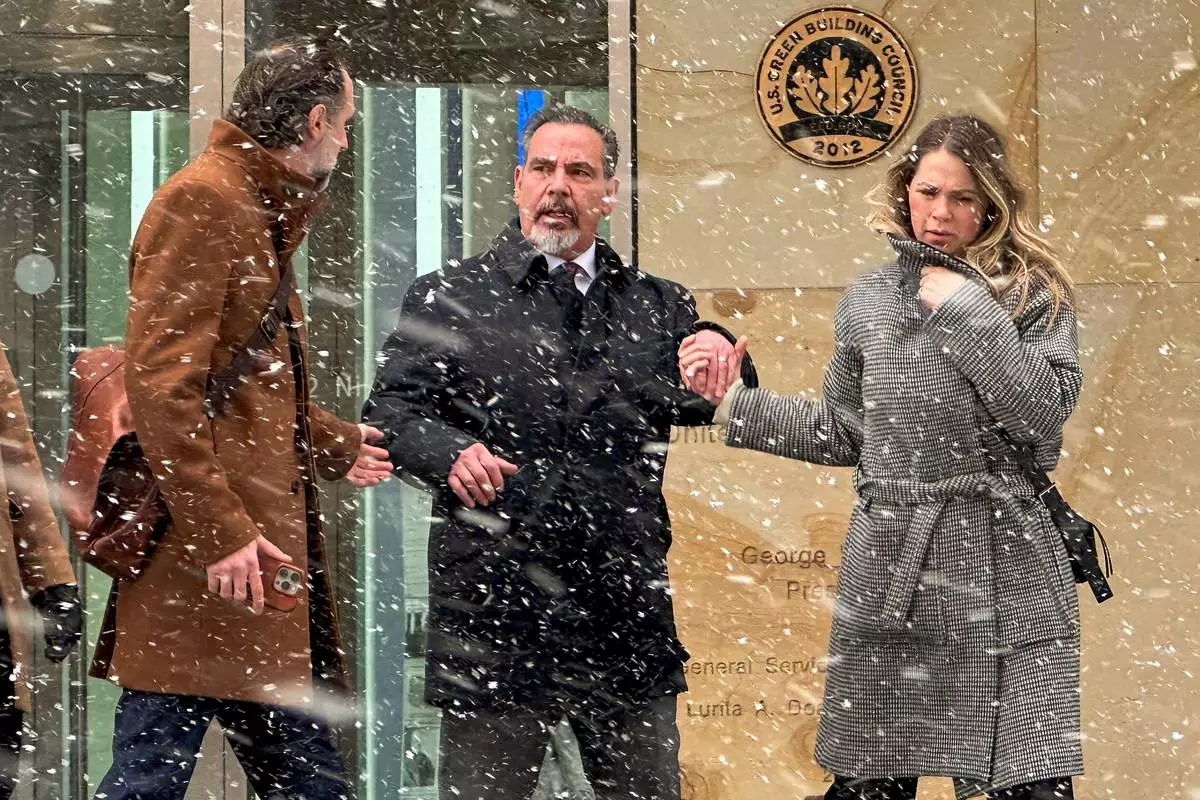
Joseph Bongiovanni, center, leaves federal court with his wife, Lindsay Bongiovanni, right, after being sentenced to 5 years in prison on corruption charges, Wednesday, Jan. 21, 2026, in Buffalo, N.Y. (AP Photo/Jim Mustian)

Joseph Bongiovanni, center, leaves federal court with his wife, Lindsay Bongiovanni, right, after being sentenced to 5 years in prison on corruption charges, Wednesday, Jan. 21, 2026, in Buffalo, N.Y. (AP Photo/Jim Mustian)

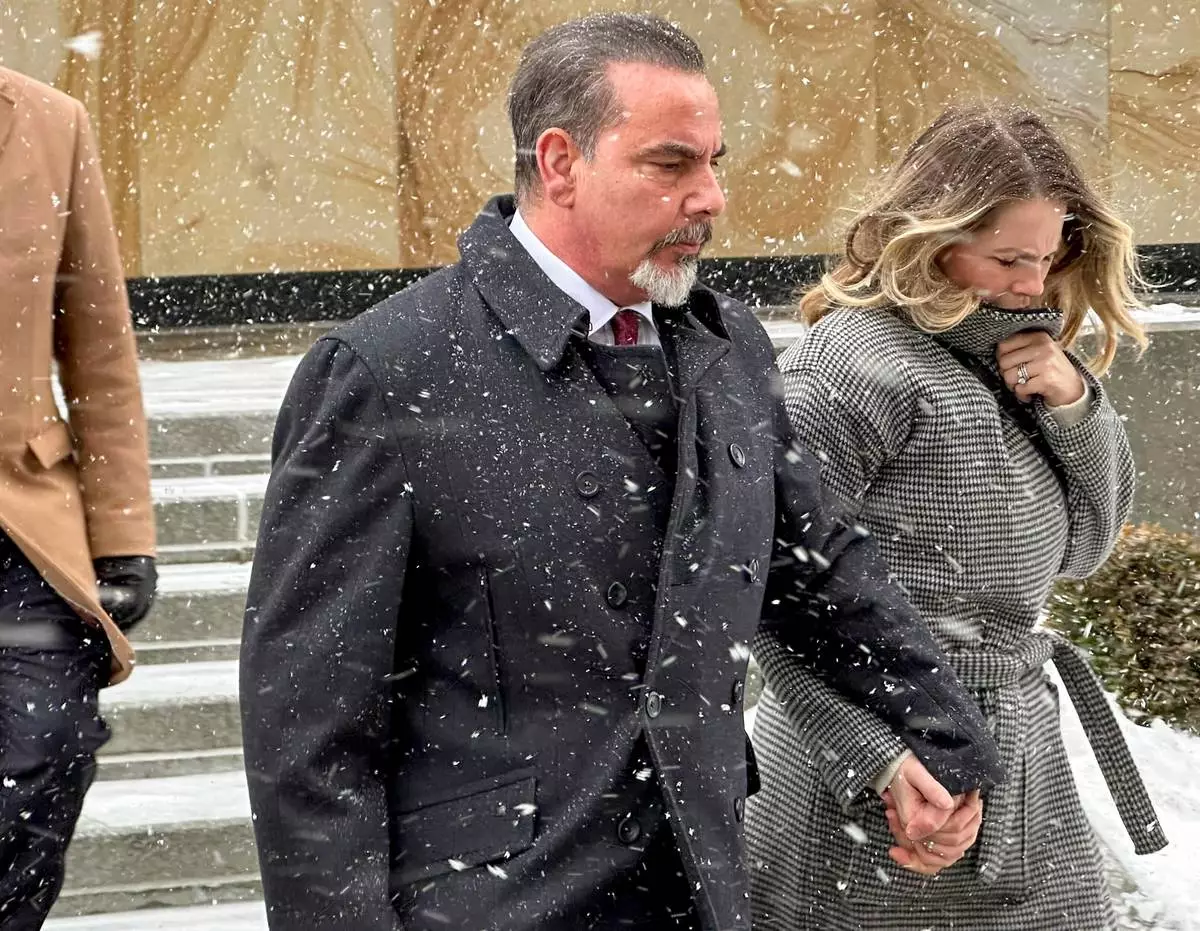
Joseph Bongiovanni, left, leaves federal court with his wife, Lindsay Bongiovanni, after being sentenced to 5 years in prison on corruption charges, Wednesday, Jan. 21, 2026, in Buffalo, N.Y. (AP Photo/Jim Mustian)

Joseph Bongiovanni, left, leaves federal court with his wife, Lindsay Bongiovanni, after being sentenced to 5 years in prison on corruption charges, Wednesday, Jan. 21, 2026, in Buffalo, N.Y. (AP Photo/Jim Mustian)

Recommended Articles