CAPE CANAVERAL, Fla. (AP) — NASA’s Suni Williams — one of two astronauts stuck for months at the International Space Station — has retired.
The space agency announced the news Tuesday, saying her retirement took effect at the end of December.
Williams' crewmate on Boeing’s ill-fated capsule test flight, Butch Wilmore, left NASA last summer.
The pair launched to the space station in 2024, the first people to fly Boeing’s new Starliner crew capsule. Their mission should have lasted just a week, but stretched to more than nine months because of Starliner trouble. In the end, they caught a ride home last March with SpaceX.
Boeing's next Starliner mission will carry cargo — not people — to the space station. NASA wants to make sure all of the capsule's thruster and other issues are solved before putting anyone on board. The trial run will take place later this year.
Williams, 60, a former Navy captain, spent more than 27 years at NASA, logging 608 days in space over three station missions. She also set a record for the most spacewalking time by a woman: 62 hours during nine excursions.
NASA's new administrator Jared Isaacman called her “a trailblazer in human spaceflight.”
"Congratulations on your well-deserved retirement," he added in a statement.
The Associated Press Health and Science Department receives support from the Howard Hughes Medical Institute’s Department of Science Education and the Robert Wood Johnson Foundation. The AP is solely responsible for all content.

FILE - From left, NASA astronaut Butch Wilmore, Russia's Alexander Gorbunov, and NASA astronauts Nick Hague and Suni Williams sit inside a SpaceX capsule onboard the SpaceX recovery ship Megan after landing in the water off the coast of Florida, March 18, 2025. (Keegan Barber/NASA via AP, File)

FILE - Astronaut Suni Williams is interviewed at Johnson Space Center on March 31, 2025, in Houston. (AP Photo/Ashley Landis, File)
KYIV, Ukraine (AP) — For weeks after a missile exploded in front of her apartment block, Oleksandra Horban found pieces of glass in her small apartment.
She threw out her 2-year-old son’s plush toys which were covered with glass shards. Outside her ground-floor home, mangled window frames were piled onto a mountain of debris awaiting removal. Pieces of glass were mixed with autumn leaves on the muddy ground.
“Even now we still find glass,” Horban said. “If we vacuum three times, wash the floor and clean up, we’ll still find those microscopic pieces somewhere, in the bed or in the toys.”
As winter sets in, Ukraine is facing a severe shortage of replacement windows with Russian missile and drone attacks continuing to damage buildings, leaving residents exposed to the cold. Temperatures in Kyiv fell to minus 20 degrees Celsius (minus 4 degrees Fahrenheit) last winter.
Government assistance can take months, skilled installers are in short supply and replacement costs have soared, hitting low-income districts near industrial zones hardest.
Horban lives in a Soviet-era “groundscraper” — an enormous horizontal apartment block in the Ukrainian capital. A missile blast in October damaged a vertical section of apartments and shattered hundreds of facade windows.
Most shattered windows have been temporarily covered with fiberboard or tarps. Some boards have small openings fitted with Plexiglas to let daylight into apartments.
New windows in Horban’s apartment would cost about $1,700, more than three times the country’s average salary. Government compensation can take three to four months.
Many cannot afford to wait. Without proper windows, apartments are exposed to cold, damp and mold, particularly during power outages.
Housing damage is among the largest costs of the war. An estimated 3 million housing units were destroyed or badly damaged by the end of last year, adding $90 billion to Ukraine’s reconstruction needs, according to the World Bank.
Ukraine’s window manufacturers can meet demand for replacement windows. The bottleneck is the shortage of skilled installers.
Mykhailo Orlenko, executive director of the Association of Ukrainian Manufacturers of Transparent Structures, said businesses were unable to exempt their employees from military service, including many installers.
“The market lost a large number of these specialists,” he said.
Factories can manufacture windows in about 10 working days, but installation can be delayed for a lot longer as customers wait for a crew to become available. High demand means installation bills have at least doubled over the past year.
Oleksandr, a 42-year-old installer who has worked in the industry for 25 years, said power outages add to the challenges. His team relies on battery-powered tools and normally has to carry heavy materials up stairs with elevators out of service.
On one recent job, his team replaced balcony doors and windows in a fourth-floor apartment, carrying the materials up by hand.
“That was 18 trips up and down the stairs, carrying heavy loads. It would have been easier with a working elevator, but we didn’t wait for the power to come back on — we got straight to work,” he said.
Oleksandr asked to be identified only by his first name, citing security concerns following Russian attacks on private businesses.
To address the shortage, the industry is investing in training. A vocational college in Kyiv opened a European Union-funded facility in March, where 26 10th graders have started a three-year program to become window, door and facade installers.
Teenagers in new overalls practice around mock window openings built from brick, cinder block, wood and synthetic materials. Their classes are frequently disrupted by missile and drone alerts.
The program was established after professional associations lobbied the government to formally recognize window installation as a profession, allowing the industry to access grants and create structured training courses.
Graduates can expect starting salaries of around $900, on par with those of law graduates due to Ukraine’s acute skill drain, Orlenko said.
Instructor Volodymyr Tserbii hopes the apprentices will help rebuild the country, their training offering students a path into a profession needed for reconstruction.
The massive task of repairing Ukraine’s damaged homes, schools, roads, power plants and other infrastructure will take at least a decade, according to government planners.
For Horban, the wait for new windows is added to a long list of her household’s problems.
Her apartment has no gas, forcing the family to cook on a portable cylinder. They heat their son’s room when electricity is available. A leaking kitchen roof has added to the damage.
The blast also left her toddler son, Viacheslav, frightened. The sounds of war have become part of his vocabulary.
Pressing his nose against a windowpane that survived the attack, he waves to passersby and asks his mother whether more bombing is coming, using the words “bam bam” to describe the explosions.
“Bam bam?” he asks.
“No bam bam,” she answers.
“This is not life, this is surviving,” Horban said. "This is dragging out an existence, not a life.”
Vasilisa Stepanenko, Evgeniy Maloletka and Susie Blann in Kyiv contributed.
Follow the AP’s coverage of the war in Ukraine at https://apnews.com/hub/russia-ukraine
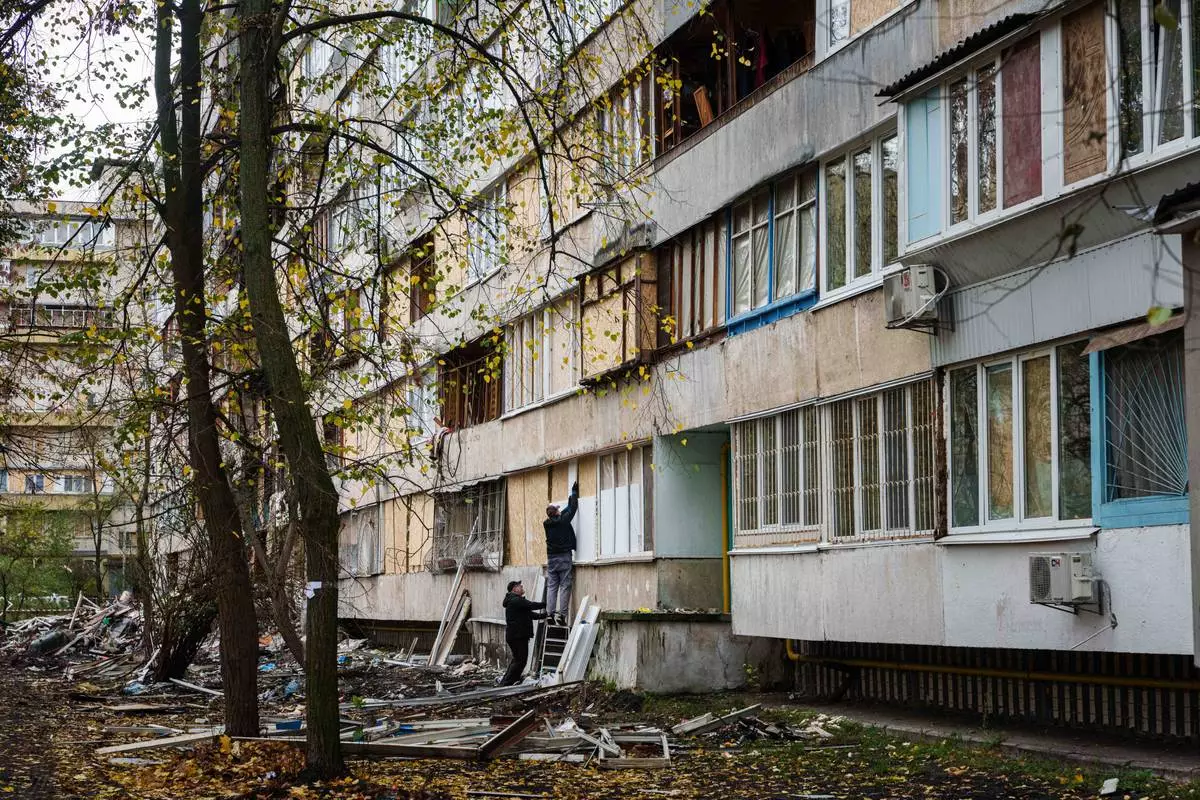
Local residents board up windows with wooden panels at an apartment building damaged in a Russian missile strike in Kyiv, Ukraine, Wednesday, Nov. 4, 2026. (AP Photo/Evgeniy Maloletka)
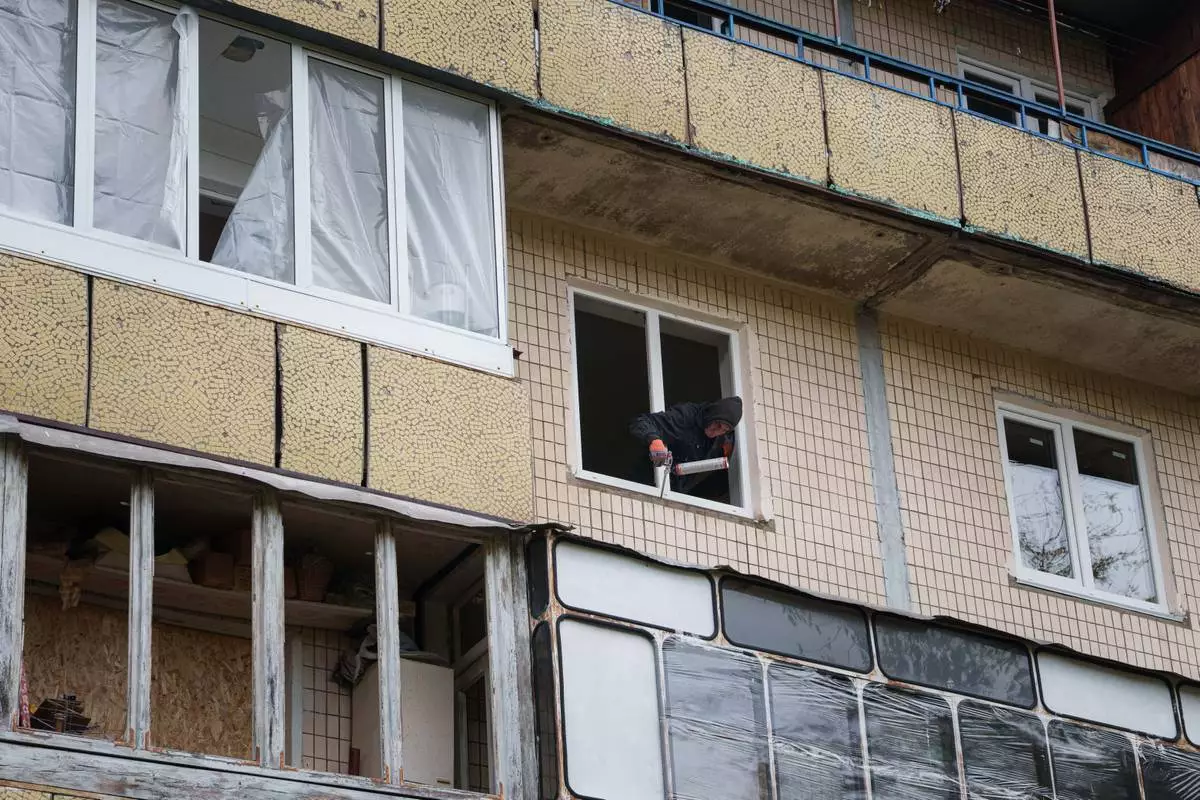
A worker installs a new window at an apartment building damaged in a Russian missile strike in Kyiv, Ukraine, Wednesday, Nov. 4, 2026. (AP Photo/Evgeniy Maloletka)
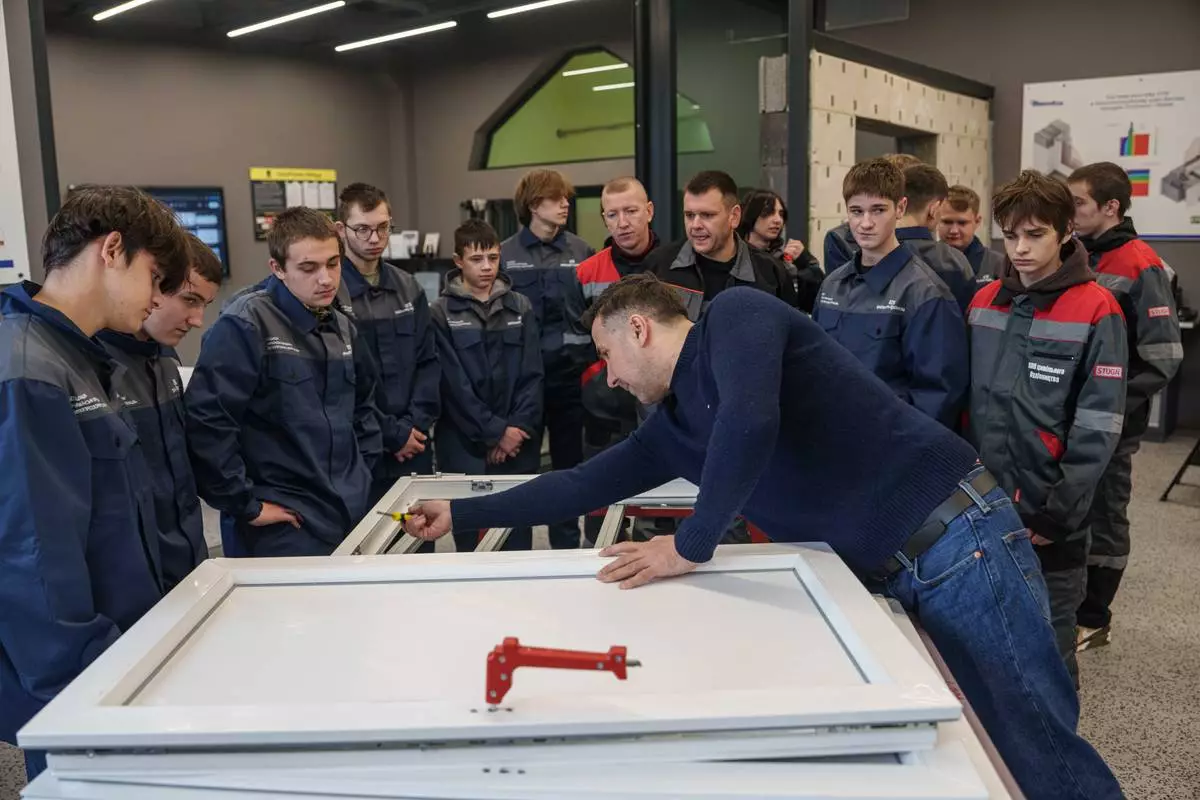
Mykhailo Orlenko, executive director of the Association of Ukrainian Manufacturers of Transparent Structures, explains to students window construction at a technical college in Kyiv, Ukraine, Wednesday, Nov. 4, 2026. (AP Photo/Evgeniy Maloletka)
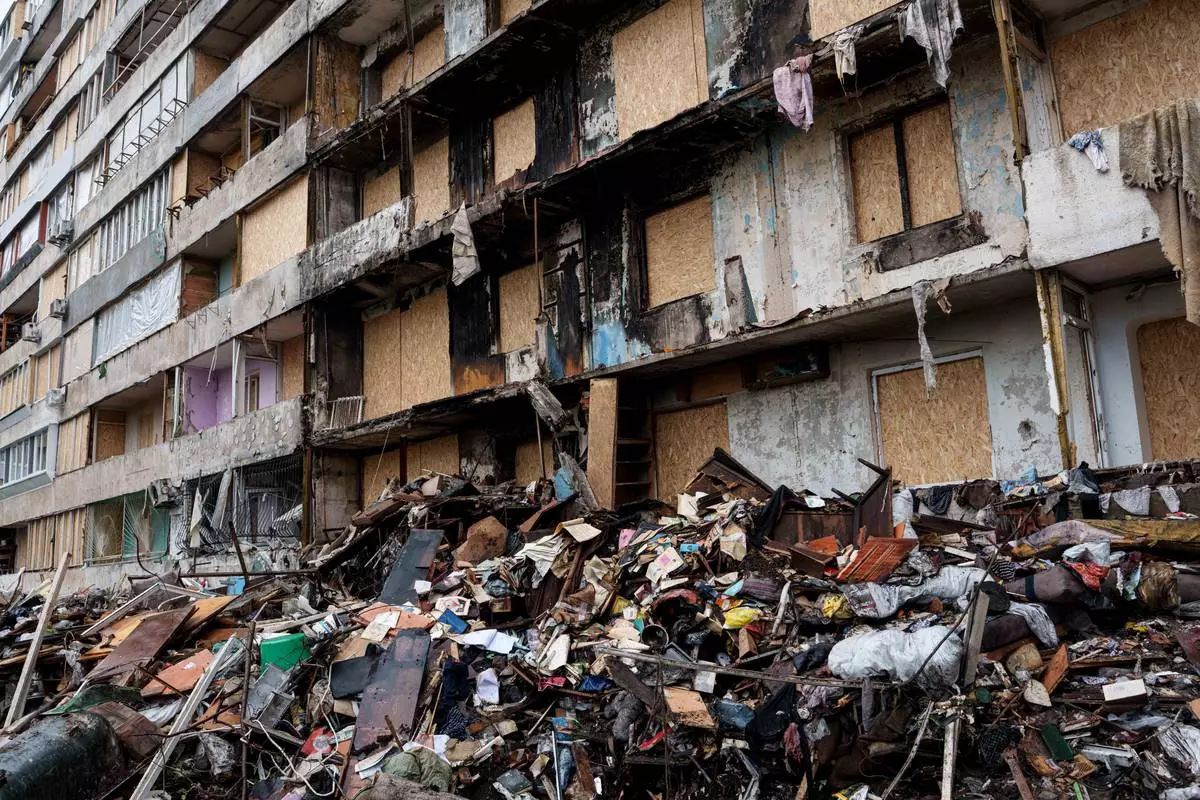
Windows are boarded up with wooden panels in an apartment building damaged in a Russian missile strike in Kyiv, Ukraine, Wednesday, Nov. 4, 2026. (AP Photo/Evgeniy Maloletka)
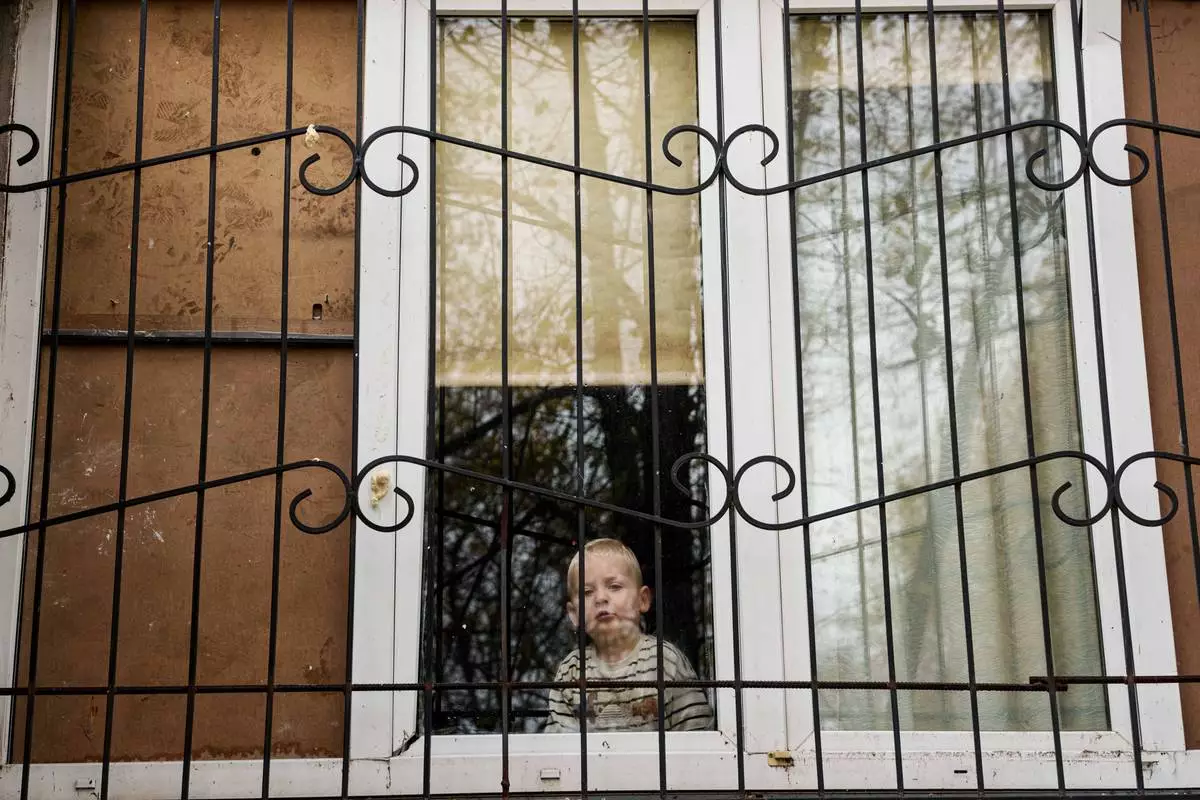
A child looks out from a window of his apartment damaged in a Russian missile strike in Kyiv, Ukraine, Wednesday, Nov. 4, 2026. (AP Photo/Evgeniy Maloletka)